
Introduction
Developmental dysplasia of the hip (DDH) is a congenital malformation of the hip joint in newborns, resulting from abnormal development of the acetabulum and/or femoral head. Both genetic and developmental factors contribute to the etiology of this condition.1 Several risk factors have been identified, including female sex,2 breech presentation—though the risk is reduced when delivery occurs via cesarean section,3 and additional swaddling practices.4 Additional maternal factors associated with DDH include hypothyroidism during pregnancy,5 intramuscular progesterone intake in early pregnancy,6 smoking during pregnancy specifically among mothers of male newborns,7 and advanced parental age.8
Early diagnosis and intervention are crucial in preventing long-term complications. When DDH is missed during infancy, symptoms may not become evident until adolescence, a condition referred to as late-diagnosed dysplasia. Untreated cases frequently progress to degenerative joint disease, resulting in significant morbidity and disability later in life.9 Therefore, ass a comprehensive physical examination of newborns is critical for early detection, particularly in regions with a high burden of risk factors.
Despite the clinical importance of DDH, there is a scarcity of studies conducted in Northern Saudi Arabia that address the condition and its associated health outcomes.10 Limited awareness persists regarding its causes, treatment options, and potential complications among the general population.11,12 Evidence further suggests that awareness tends to be higher among multiparous mothers or those with a child previously diagnosed with DDH.13
In Saudi culture, swaddling—known as Mehad—remains a common traditional practice believed to soothe newborns, reduce crying, and improve sleep quality. However, its widespread use raises concerns among pediatricians and pediatric orthopedic specialists, due to its potential to increase the risk of hip dysplasia when performed incorrectly, particularly with the legs tightly extended.14
Given the limited regional data and the heightened cultural relevance of modifiable risk factors, such as swaddling, there is a pressing need to assess the current level of public awareness and prevalence of DDH in the Northern Border region of Saudi Arabia. Therefore, this study aims to investigate the prevalence of DDH, evaluate the community’s knowledge and perceptions of the condition, and identify determinants that influence health-seeking behavior. The results will support the development of targeted public health strategies focused on early detection, parental education, and prevention of DDH in this population.
Materials and methods
Study design and setting
This study employed a descriptive cross-sectional design to evaluate the prevalence, awareness, and knowledge of developmental dysplasia of the hip (DDH) among the adult general population in the Northern Border region of Saudi Arabia. Data were collected online to ensure a wide population reach across major cities, including Arar, Rafha, Turaif, and Al-Uwayqilah, representing diverse demographic backgrounds within the region.
Study population and eligibility criteria
All adults aged 18 years and above residing in the Northern Border region of Saudi Arabia at the time of data collection were eligible to participate. Individuals were required to be able to read and understand Arabic and to provide informed electronic consent before completing the questionnaire. Since the study aimed to assess the awareness and perceptions of the general community, participants were not restricted based on gender, educational level, occupation, or health status. Exclusion criteria included individuals below 18 years of age, those who were not residents of the Northern Border region, and responses that were incomplete or submitted without valid consent, to ensure the quality and integrity of the data. Persons unable to independently complete the questionnaire due to cognitive impairment or language limitations were also excluded, as they could not provide reliable responses.
Sample size calculation
The study adopted a convenience sampling technique to recruit participants from the general adult population in the Northern Border region of Saudi Arabia. The minimum required sample size was determined using a single population proportion formula, based on a 95% confidence level (Z = 1.96), a 5% margin of error (d = 0.05), and an estimated awareness proportion of 52% from previous studies in Saudi Arabia. The calculation indicated that at least 384 participants were necessary to achieve adequate statistical power. To enhance the reliability and validity of the findings and to account for potential missing or incomplete responses, the final sample size (401) exceeded this minimum requirement.
Data collection tool and technique
Data were gathered through a structured Arabic questionnaire that was developed after reviewing relevant literature concerning DDH awareness, risk factors, screening, and treatment approaches. The questionnaire included items on demographic characteristics and multiple components assessing knowledge and awareness of DDH. It was self-administered digitally to enhance accessibility, accuracy, and confidentiality. The survey design ensured simplicity in answering while covering all intended study variables. It was self-administered digitally and distributed exclusively through social media platforms commonly used in the Northern Border region, including WhatsApp, Telegram, and X (formerly Twitter).
Statistical analysis
Collected data were cleaned, coded, and analyzed using IBM SPSS Statistics version 27. Descriptive statistics, including frequencies and percentages, were used to present demographic characteristics, awareness levels, recognition of risk factors, and perceived complications of DDH. The Chi-square test was applied to determine associations between participants’ awareness levels and demographic characteristics. Statistical significance was set at p < 0.05 for all applied analyses.
Ethical considerations
Ethical approval was obtained from the Local Committee of Bioethics (LCBE) at Northern Border University prior to the initiation of data collection. Participation was fully voluntary, and informed electronic consent was obtained from all respondents. Confidentiality and anonymity were strictly maintained by excluding personal identifiers, with collected data used solely for research purposes and accessible only to the research team.
RESULTS
A total of 401 participants were included in the study. The majority of the participants were residents of Arar city (283, 70.6%). Over than half, 221 (55.1%), were females; nearly half, 191 (47.6%), were aged between 18 – 25 years; and an overwhelming majority, 387 (96.5%), were Saudi nationals. Additionally, most of the participants, 218 (54.4%), had a bachelor’s education and about one-third, 136 (33.9%), had a specialization in health field. About 71 participants (17.7%) had first-degree relative with developmental dysplasia of the hip to be consistent (DDH). Of the 166 participants (41.4%) who had children, most of them, 117 (70.5%), reported that their children had been screened for DDH.
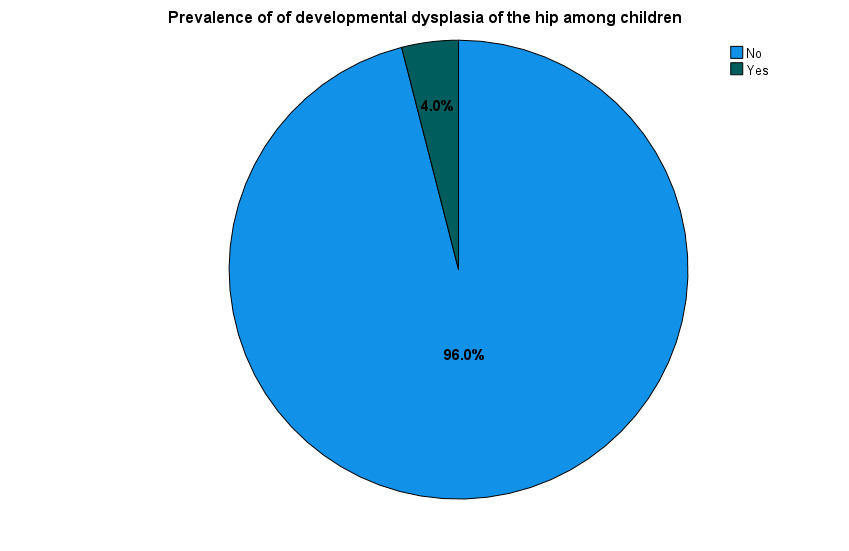
Figure 1 illustrates the prevalence of developmental dysplasia of the hip among children. The study reported 16 cases (4.0%) of DDH in children, while the majority, 385 (96.0%), reported no cases of DDH in children.

Participants’ awareness of DDH (Table 2) revealed that majority of the participants, 241 (60.1%), had heard of DDH, with the common source of knowledge being internet and social media (109, 45.2%), awareness campaigns (93, 38.6%), and doctors (90, 37.3%). Nearly one-quarter, 108 (26.9%), reported to know someone with DDH. About 114 participants (28.4%) were aware of the correct definition of DDH, and nearly half, 180 (44.9%), knew that a person can be diagnosed with the condition from birth to six months of age.
Participants’ awareness of DDH treatment (Table 3) revealed that a considerable proportion of the participants (265, 66.1%) were aware that the ideal time for therapeutic intervention was as soon as possible; in order to prevent complications of DDH if left untreated (281, 70.1%). The study noted significant gaps in knowledge regarding DDH treatment, with majority demonstrating a lack of adequate knowledge about the treatment options.
Participants’ awareness of DDH complications (table 4) shows that more than half, 216 (53.9%), of the participants were aware that congenital hip dislocation causes complications and if left untreated can result in walking problems (256, 63.8%) and chronic hip pain (214, 53.4%).
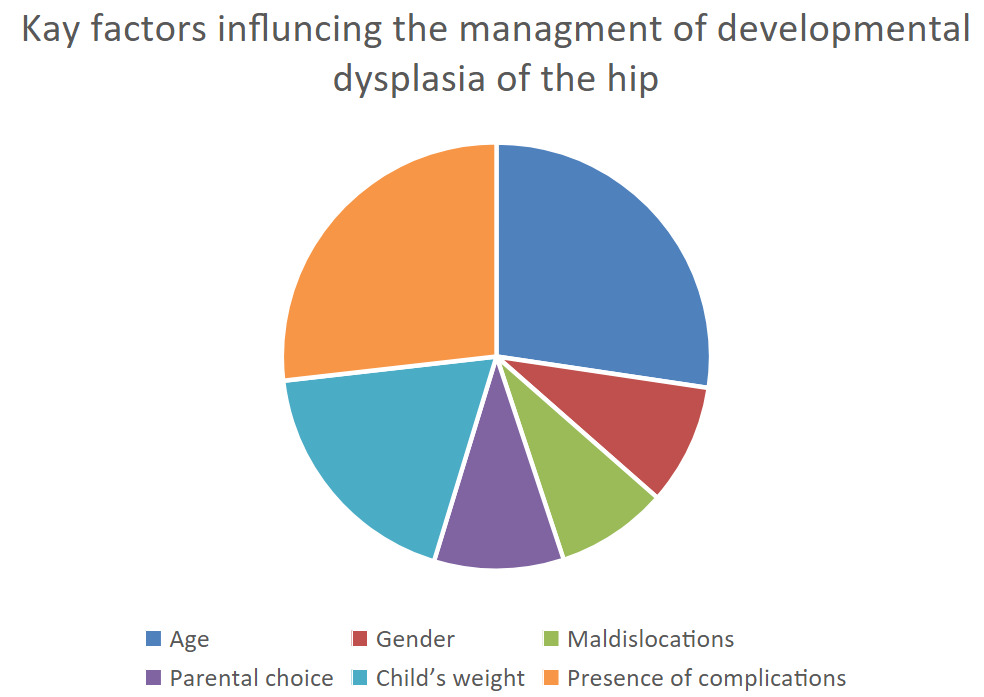
Figure 2 depicts participants’ awareness of factors influencing the management of DDH in children. The frequently reported factors included age (204, 50.9%), presence of complications, (200, 49.9%), and the child’s weight (138, 34.4%).

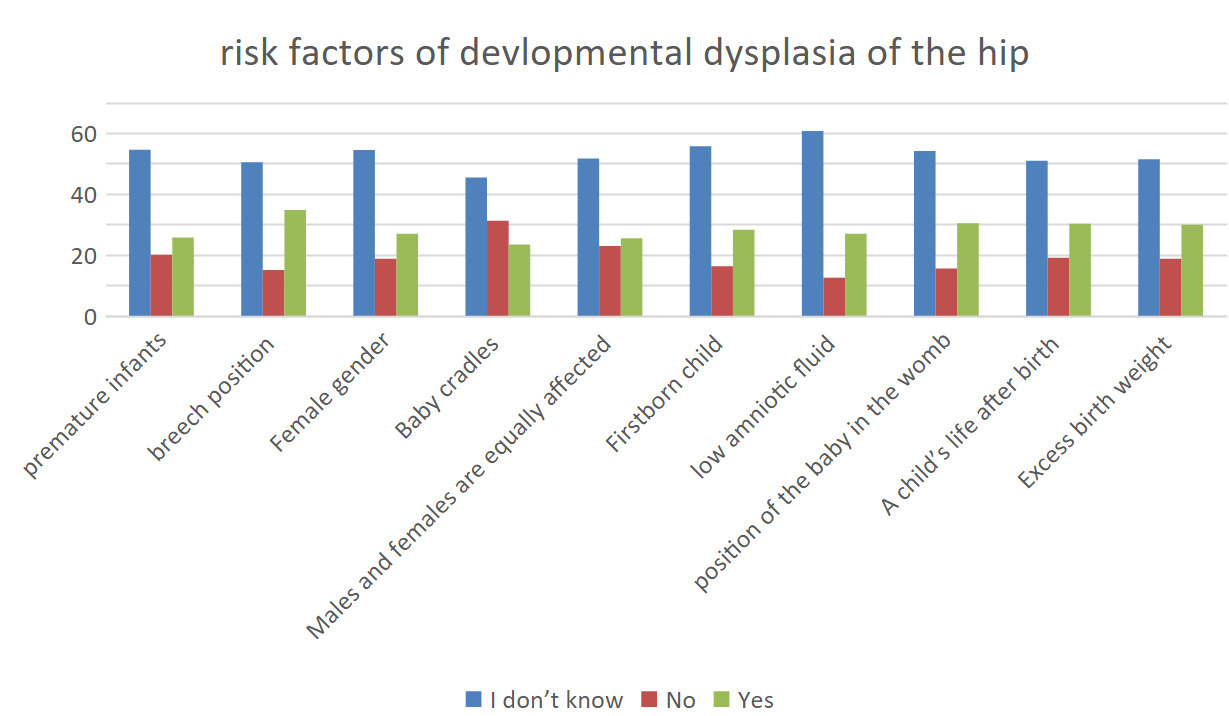
Figure 3 illustrates the participants’ perception about the risk factors for DDH in children. The commonly reported risk factors were breech presentation (139, 34.7%), female gender (108, 26.9%) and firstborn children (113, 28.2%).

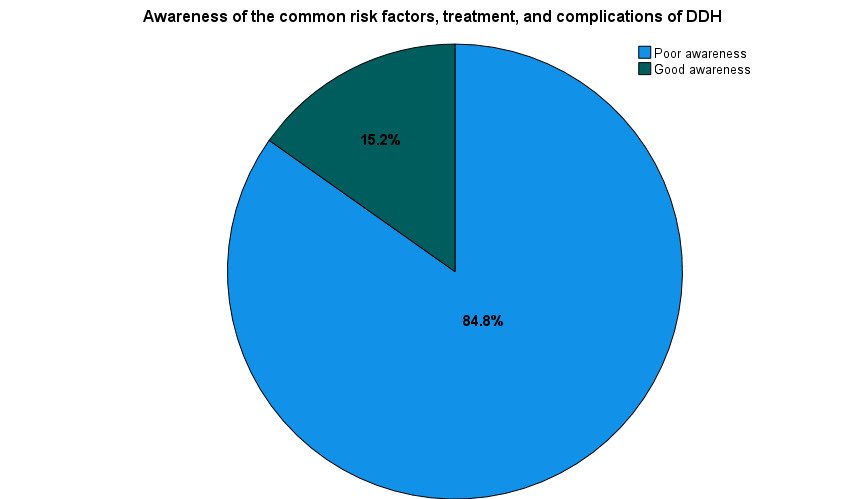
Figure 4 presents participants’ awareness of the common risk factors, treatment, and complications of DDH. About 61 participants (15.2%) demonstrated good awareness, while the majority of them (138, 34.4%) had poor awareness regarding developmental dysplasia of the hip.

The results (Table 5) revealed a statistically significant association between place of residence and age and the awareness level of DDH (p=0.006; p<0.001, respectively). A considerable proportion of participants who were residents of Arar and those aged more than 45 years demonstrated good awareness of DDH.
In the multivariate logistic regression model (Table 6), knowing someone with DDH emerged as the most significant predictor of participants’ good awareness of DDH (AOR = 2.90; 95% CI = 1.807–4.650; p<0.001). Other factors were not statistically significant.
Discussion
Developmental dysplasia of the hip (DDH) represents a significant pediatric orthopedic concern, as delayed diagnosis can result in chronic disability, impaired gait, and reduced quality of life in adulthood.15,16 In Saudi Arabia, the burden of DDH is particularly important due to the high prevalence of modifiable and cultural risk factors such as swaddling practices and consanguineous marriage. Despite these growing concerns, there is limited knowledge about the prevalence of this condition and its awareness levels among populations in the Northern Border region of Saudi Arabia. Therefore, this study aimed to address this gap by assessing both the prevalence of the condition among children and the community awareness levels.
The study found a 4% prevalence of developmental dysplasia of the hip among children, which is lower than the prevalence rate ranging from 6% to 78% reported in a Saudi study by Alrashdi et al.17 This difference may be influenced by variations in study settings, screening programs, and diagnostic methods across different regions. Additionally, relying on parental reporting rather than clinical assessment might have contributed to an underestimation of cases in our study. Strengthening routine newborn screening and implementing standardized diagnostic protocols could help generate more accurate future studies.
Similarly, a recent study conducted in the Al Jouf region by Alanazi et al. (2025) reported comparable findings of limited community awareness of DDH despite the establishment of the Saudi National Hip Dysplasia Program in 2018.18 This suggests that, although national initiatives have improved screening coverage, community-level education remains insufficient in several regions, including the Northern Border.
Consistent with these findings, the majority of participants (241, 60.1%) in the present study reported having heard of DDH, with the most common source of information being the internet and social media (109, 45.2%). This highlights the increasing role of digital platforms in disseminating health information to the public. However, the study revealed inadequate awareness of DDH risk factors, treatment, and complications, as only 61 participants (15.2%) demonstrated good awareness. These findings are consistent with other Saudi studies conducted by Nawawi et al.,19 and Almatari et al.,20 which also reported low levels of awareness—3.2% and approximately 37% of participants, respectively—underscoring the urgent need for targeted awareness campaigns within the community.
The study noted that nearly one-quarter 114 (28.4%) of the participants were aware of the correct definition of DDH. Similarly, the study conducted by Alnowaishiri et al observed that the majority of the participants did not know what DDH is,21 indicating insufficient knowledge and awareness of the condition among the general population.
A considerable proportion of the participants demonstrated awareness of the risk factors, including breech presentation (139, 34.7%), female gender (108, 26.9%) and firstborn children (113, 28.2%). This is consistent with a meta-analysis conducted by De Hundt et al. which reported breech delivery and female sex as significant risk factors for DDH.22 The majority of the participants 265 (66.1%) were aware that therapeutic intervention for DDH was necessary as soon as possible in order to prevent complications of congenital hip dislocation if left untreated (281, 70.1%). The common complications reported were walking problems (256, 63.8%) and chronic hip pain (214, 53.4%).
The study noted that good awareness of DDH was associated with the residents of Arar (p=0.006); likely because it is the capital and largest city in the Northern Border region with better healthcare facilities, screening services, and patients education initiatives. Participants’ awareness appeared to increase with age (p<0.001) with those aged over 45 years demonstrating higher awareness. This is in line with the study conducted by Alkouz et al in Jordan, which reported an increase in knowledge about DDH with the increasing in age of the participants.23
According to the findings, knowing someone with DDH was a significant predictor of good awareness of the condition (AOR = 2.90; 95% CI = 1.807–4.650; p<0.001). This can be explained by the fact that knowing someone allows you to get firsthand information regarding the condition either through caregiving, visitation, or conversation.
A number of limitations were considered when evaluating the findings. First, the cross-sectional design can only assess relationships between study attributes, but not causality. Second, the use of structured online questionnaires for data collection may have introduced bias, as it was not possible to verify the accuracy of participants’ responses. Third, the findings of the study cannot be generalized to other populations, considering that it was conducted in only one region-the Northern Border region in Saudi Arabia.
Conclusion
The study found inadequate awareness of developmental dysplasia of the hip (DDH) among the population, with residents of Arar and those aged over 45 years demonstrating better awareness of DDH. The study identified significant gaps in knowledge and awareness regarding the risk factors, treatment and complications of DDH. These findings highlight the need for targeted awareness and education programs on the need for early detection and treatment of the condition to prevent complications and improve quality of life of affected children.