
Introduction
Hypermobile Ehlers-Danlos Syndrome (hEDS) and hypermobility spectrum disorder (HSD) are becoming increasingly acknowledged within orthopedics for their joint instability, frequent dislocation, and chronic musculoskeletal pain.1 Although these conditions overlap substantially in presentation, hEDS is a distinct heritable connective tissue disorder with defined diagnostic criteria, while HSD is a broader classification for patients with symptomatic joint hypermobility who do not meet the full hEDS criteria; the two are related but not interchangeable, and this distinction is maintained throughout this analysis. Many of these patients also experience hernias, rectal prolapse, and other structural problems related to laxity in connective tissue. Craniocervical and spinal instability are symptoms that are progressively studied as potential indications for surgical evaluation in this patient population.2 While physical therapy and rehabilitation are vital methods of treatment in managing the symptoms of these conditions, physicians report they have limited familiarity with diagnostic criteria and physical presentation of hEDS/HSD.3
Looking beyond musculoskeletal involvement, hEDS/HSD is associated with numerous coexisting conditions that complicate diagnosis and treatment. Cardiovascular autonomic dysfunction, including POTS and hypotension, is often observed in these patients, although experts still do not know how often it occurs.4 Mast cell activation syndrome has also been observed in patients with hEDS, and mast cell dysregulation is thought to be the link between the two, although this proposed connection has received comparably meager attention compared to the musculoskeletal and autonomic complications.5 Neuropsychiatric comorbidities are also well documented. Joint hypermobility has been linked to anxiety and panic disorder since the early 1990s,6 a connection that later studies still support,7 and more recent research shows this also applies to neurodevelopmental conditions. Adults with autism, ADHD, or tic disorders have shown notably higher rates of hypermobility than the general population.8 A study of psychiatric disorders in the Ehlers-Danlos Syndrome population reported a similar phenomenon.9 These comorbidities are not unrelated; they are important factors that add to the hEDS/HSD experience.
A 2025 global survey of more than 3,900 patients with hEDS or HSD found an average of 24 comorbidities per patient and an average delay in diagnosis of more than two decades, with dysautonomia, gastrointestinal disorders, and chronic pain reported by most participants.10 Despite this prevalence, the literature connecting hEDS/HSD to its orthopedic, autonomic, immunologic, and neuropsychiatric comorbidities has yet to be comprehensively studied. To address this gap, a study was performed on the existing scholarly literature, using quantitative and statistical reviews to evaluate scientific productivity, map collaboration networks, and identify emerging research trends within this multidisciplinary field.11 This bibliometric analysis examines the connection between Hypermobile Ehlers-Danlos syndrome and hypermobility spectrum disorder and their comorbidities by analyzing trends in publication and citation, keyword patterns, and collaboration networks in medical literature.
Methods
This bibliometric analysis was conducted using the Web of Science Core Collection (WoSCC). The search was conducted on June 18, 2026, and covered publications from 1967 through that date. Publications were found using the advanced search feature, combining the terms “Hypermobile Ehlers-Danlos syndrome” (topic) and “hypermobility spectrum disorder” (topic) with terms related to at least one of the four domains of comorbidity: orthopedic, autonomic, immunologic, or neuropsychiatric.
The full search query was TS=(Hypermobile Ehlers-Danlos OR hypermobility Ehlers-Danlos OR hEDS OR Hypermobile EDS OR joint hypermobility syndrome OR hypermobility spectrum disorder OR Ehlers-Danlos hypermobility) AND TS=(orthopedic OR orthopaedic OR musculoskeletal OR arthroplasty OR joint instability OR dysautonomia OR autonomic OR POTS OR postural tachycardia OR mast cell OR mast cell activation syndrome OR MCAS OR autoimmune OR autoimmune disorder OR immunologic OR immunological OR allergy OR anxiety OR depression OR neuropsychiatric OR ADHD OR autism OR chronic pain OR fatigue).
This strategy captured all relevant information relating to the comorbidities of hypermobility. All document types were included, without restriction. Each publication was subsequently classified into one or more of the four comorbidity domains based on the presence of domain-related terms in the title, abstract, and keywords (author keywords and Keywords Plus); classification was not mutually exclusive, so a publication addressing more than one domain was counted in each applicable category. Web of Science’s Analyze Results and Citation Report tools were used to evaluate trends in publication and citation, contributing countries, and the most prolific authors and organizations. Country counts reflect all listed author affiliations for a given publication, consistent with Web of Science’s default full-counting method, rather than the corresponding author’s affiliation alone; because many publications had multinational author teams, a single publication could contribute to more than one country’s count, so percentages summed across all countries in the dataset exceed 100%.
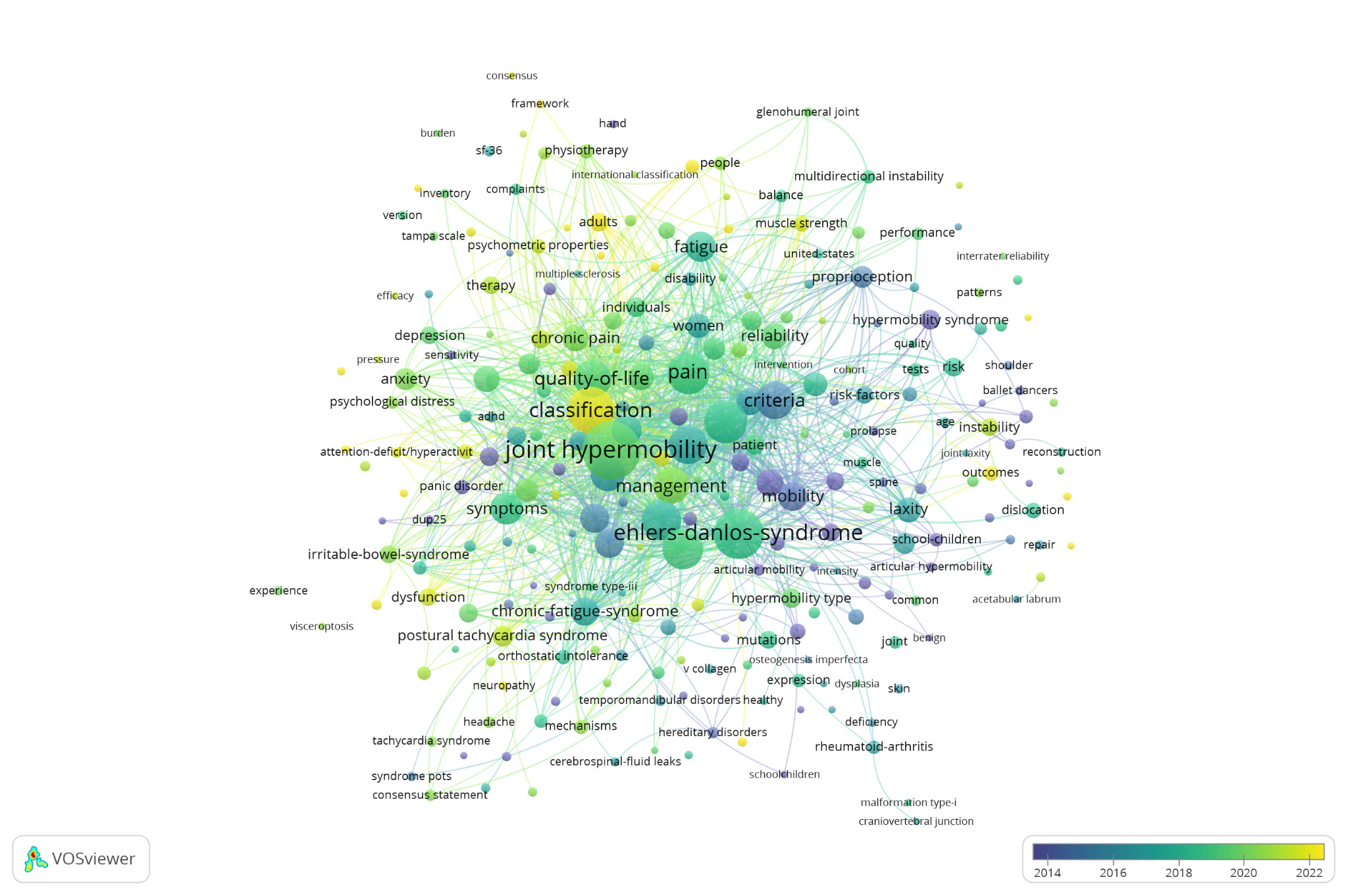
The collected articles were primarily visualized using VOSviewer version 1.6.21.12 Two types of analysis were performed in VOSviewer: keyword co-occurrence analysis and co-authorship analysis. Co-occurrence analysis was performed at the keyword level, drawing on author keywords, using full counting, with a minimum keyword occurrence threshold of three. A thesaurus file was used to merge synonymous or duplicate terms, and terms unrelated to the four domains of comorbidity were removed or merged. Co-authorship analysis used a minimum threshold of two documents per author. This software enabled the creation of maps, which illustrated the keyword co-occurrence, demonstrating the topics that occurred the most in all documents included in the search, and co-authorship networks, which assisted in observing the extent of collaboration between various authors researching similar subjects. Microsoft Excel was also used to visualize the articles with the most citations.
Results
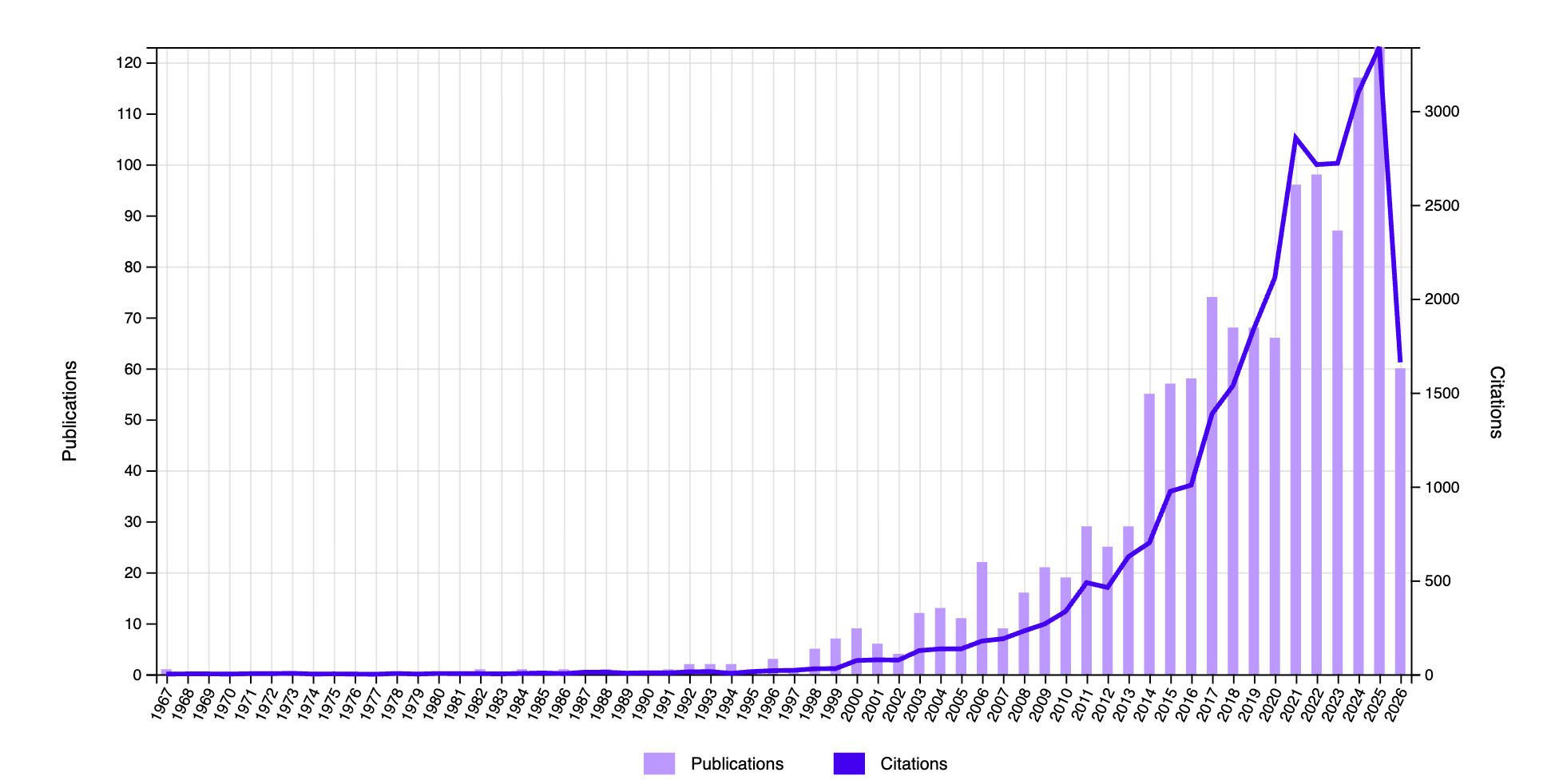
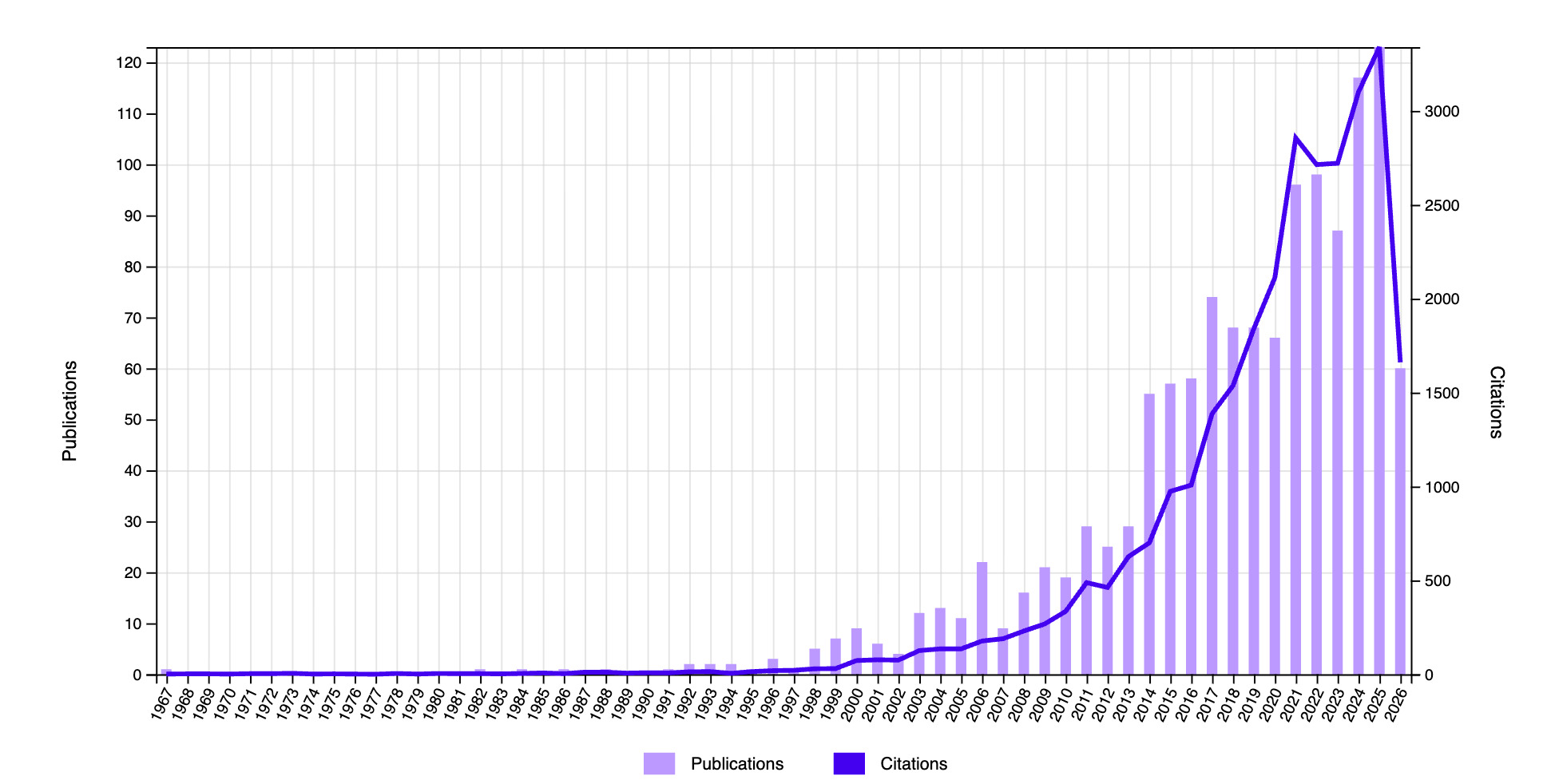
Between 1967 and June 18, 2026, the search resulted in a total of 1,281 publications. Of all the articles studied, 97.1% were written in English. The number of publications grew slowly until the early 2010s, with 65.8% of publications published in the last 10 years. The number of citations similarly increased from approximately 630 in 2014 to approximately 3,050 by 2025. The apparent decline in 2026 can be attributed to the fact that the data is taken from an incomplete year (Figure 1).
The number of publications, total and mean citations, earliest publication year, and recent growth for each of the four comorbidity domains are summarized in Table 1.
Because these domains reflect overlapping clinical comorbidities rather than mutually exclusive categories, most publications addressed more than one: 40.6% of the dataset was tagged to more than one comorbidity domain, most often pairing orthopedic with neuropsychiatric content, while 3.7% of publications did not clearly match any of the four domains and instead addressed hEDS/HSD more generally (e.g., diagnosis, care delivery, or underlying pathogenesis). Orthopedic/musculoskeletal content was the most broadly represented domain, appearing in 63.8% of publications, while immunologic/allergic content, at 10.8%, remained the least represented despite a disproportionately high 88.4% of that domain’s publications appearing since 2017, indicating especially recent but still limited growth.
The country with the highest number of publications was the United States (482 publications, 37.6%), followed by England (223, 17.4%) and Italy (114, 8.9%). The University of London was the most prolific organization in the dataset, publishing 97 articles; because “University of London” is a WoS organization-enhanced name that can aggregate affiliations across its constituent colleges, this figure should be interpreted as reflecting that umbrella designation rather than a single conventional institution. Notably, the People’s Republic of China (PRC) did not rank among the leading contributing countries, despite typically ranking among the top producers in most areas of medical research.
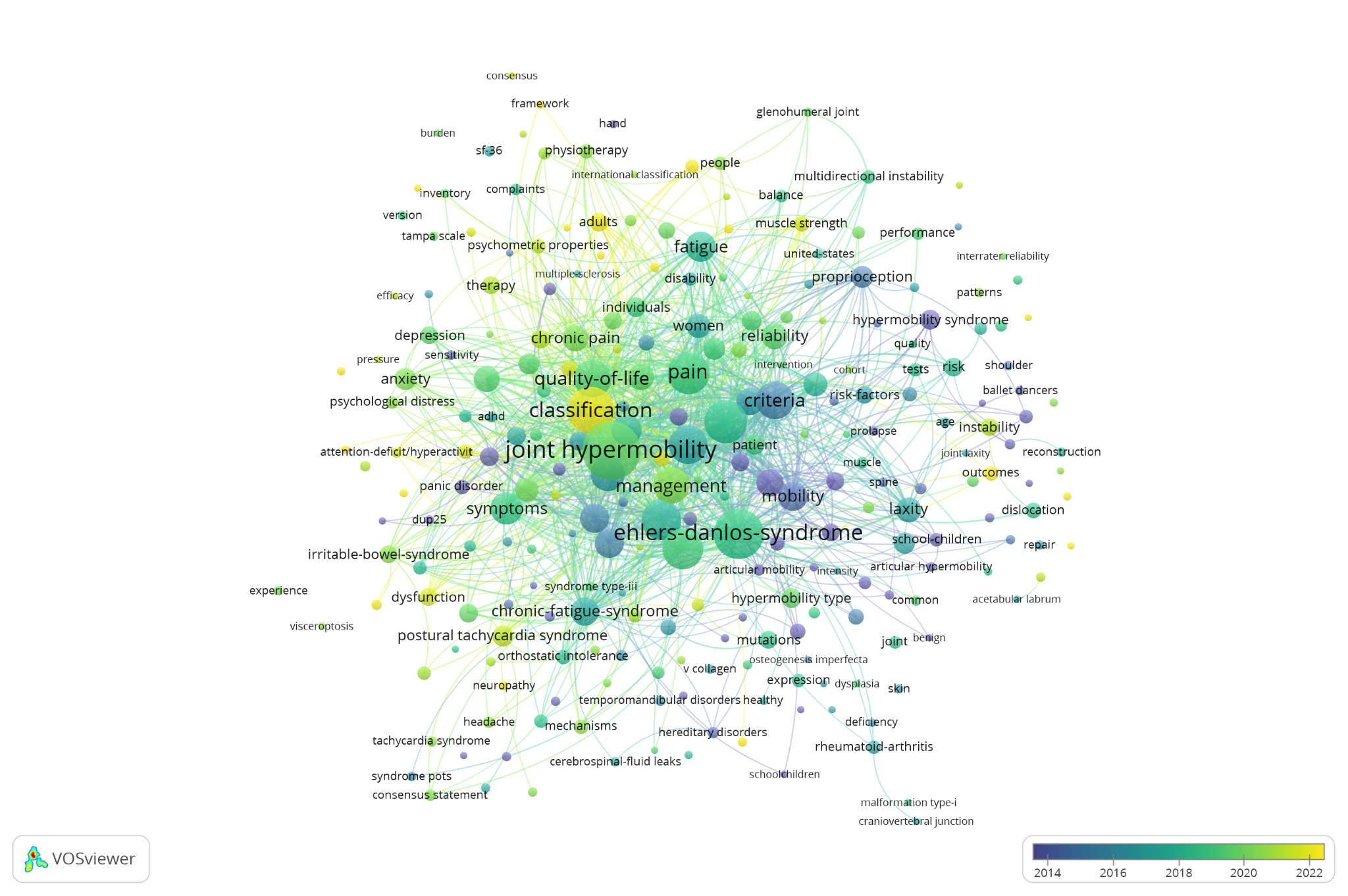
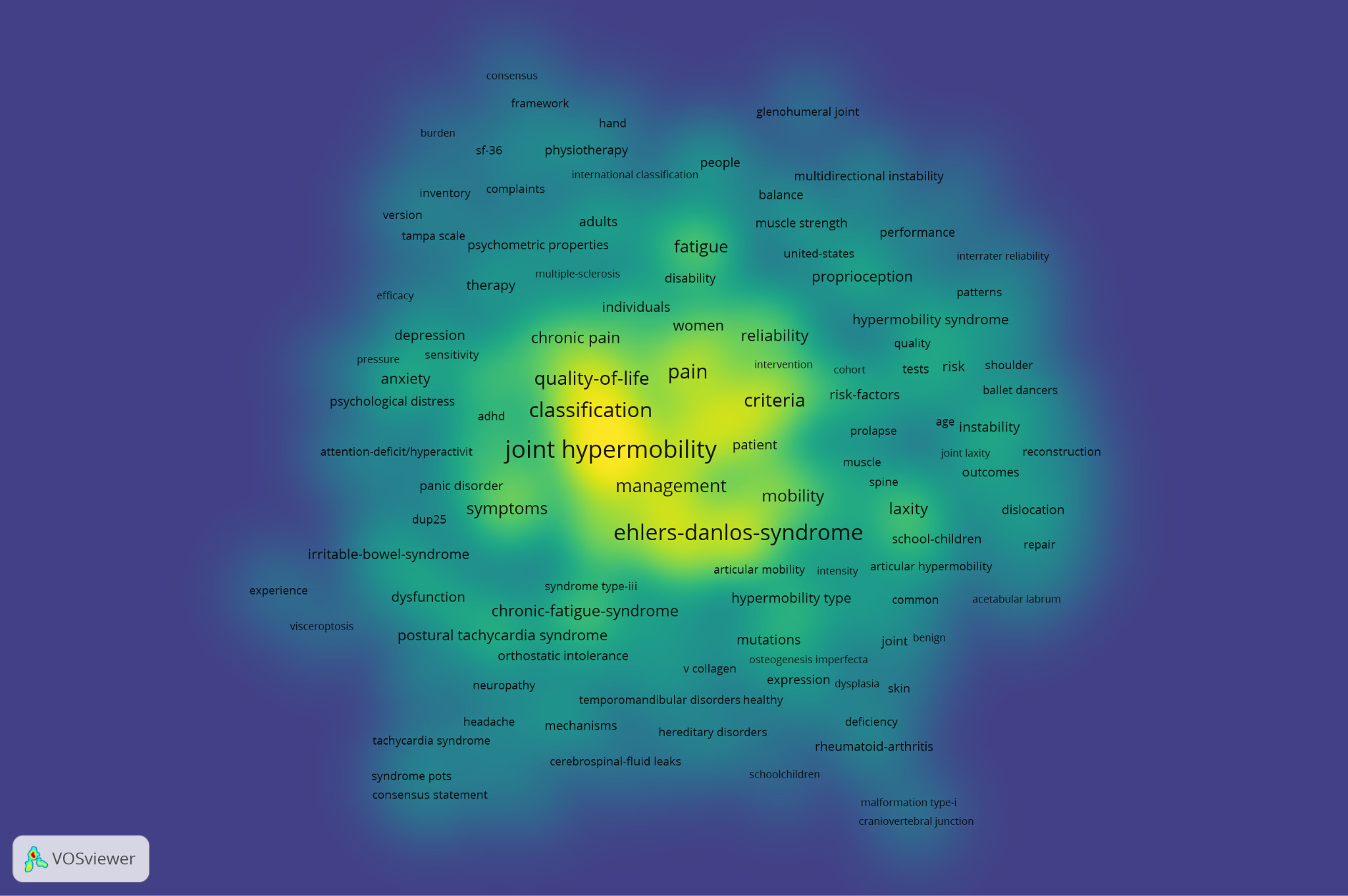
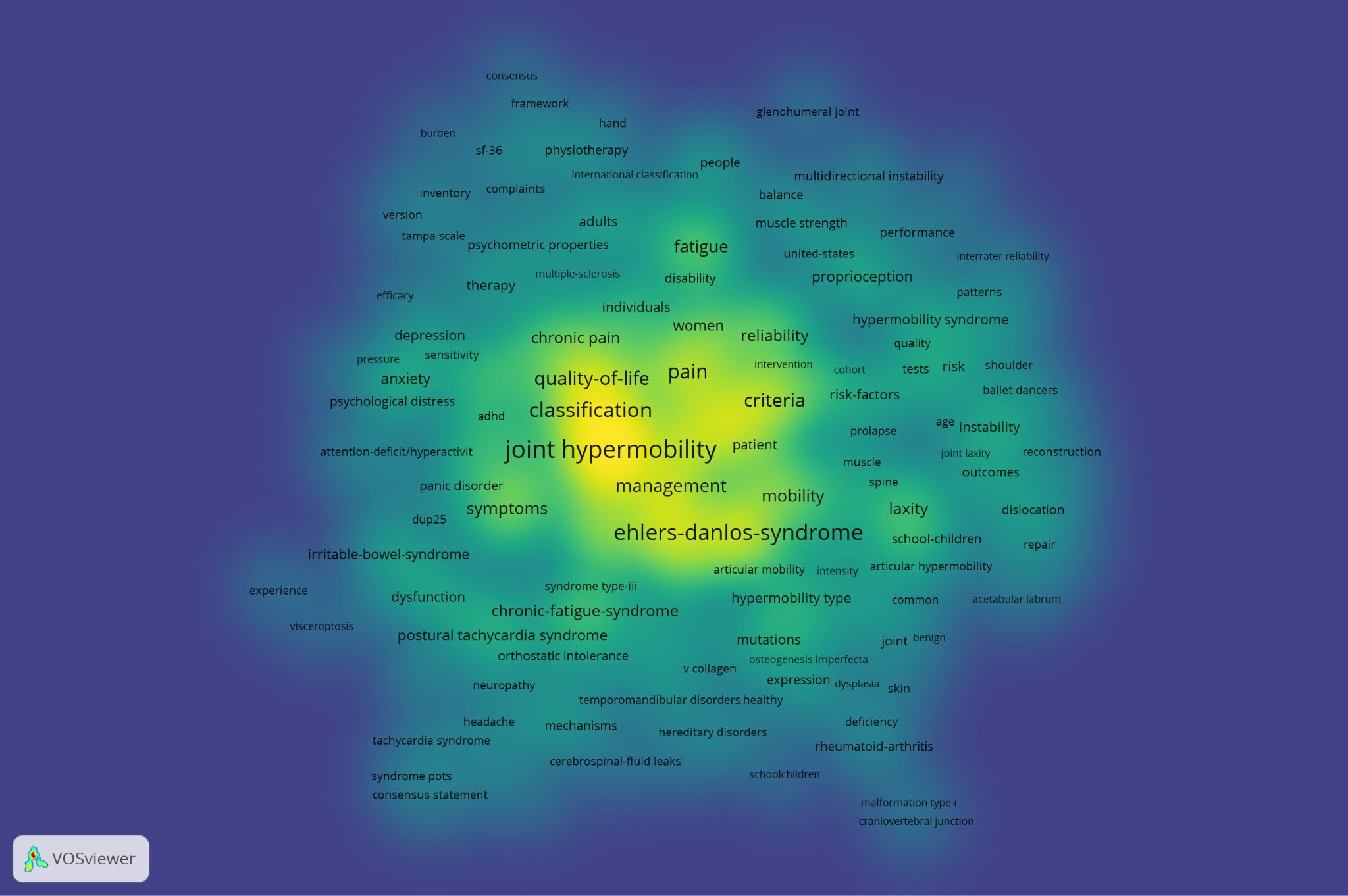
Analyzing keyword co-occurrence identified concentrated areas surrounding joint hypermobility, classification, criteria, pain, and quality of life. Some less prominent groups were related to postural orthostatic tachycardia syndrome, anxiety, and neurodevelopmental conditions such as ADHD. Terms related to mast cell activation, allergy, and autoimmune disease did not appear in either the keyword overlay or the density visualization, despite the extensive focus on the other three comorbidity domains.
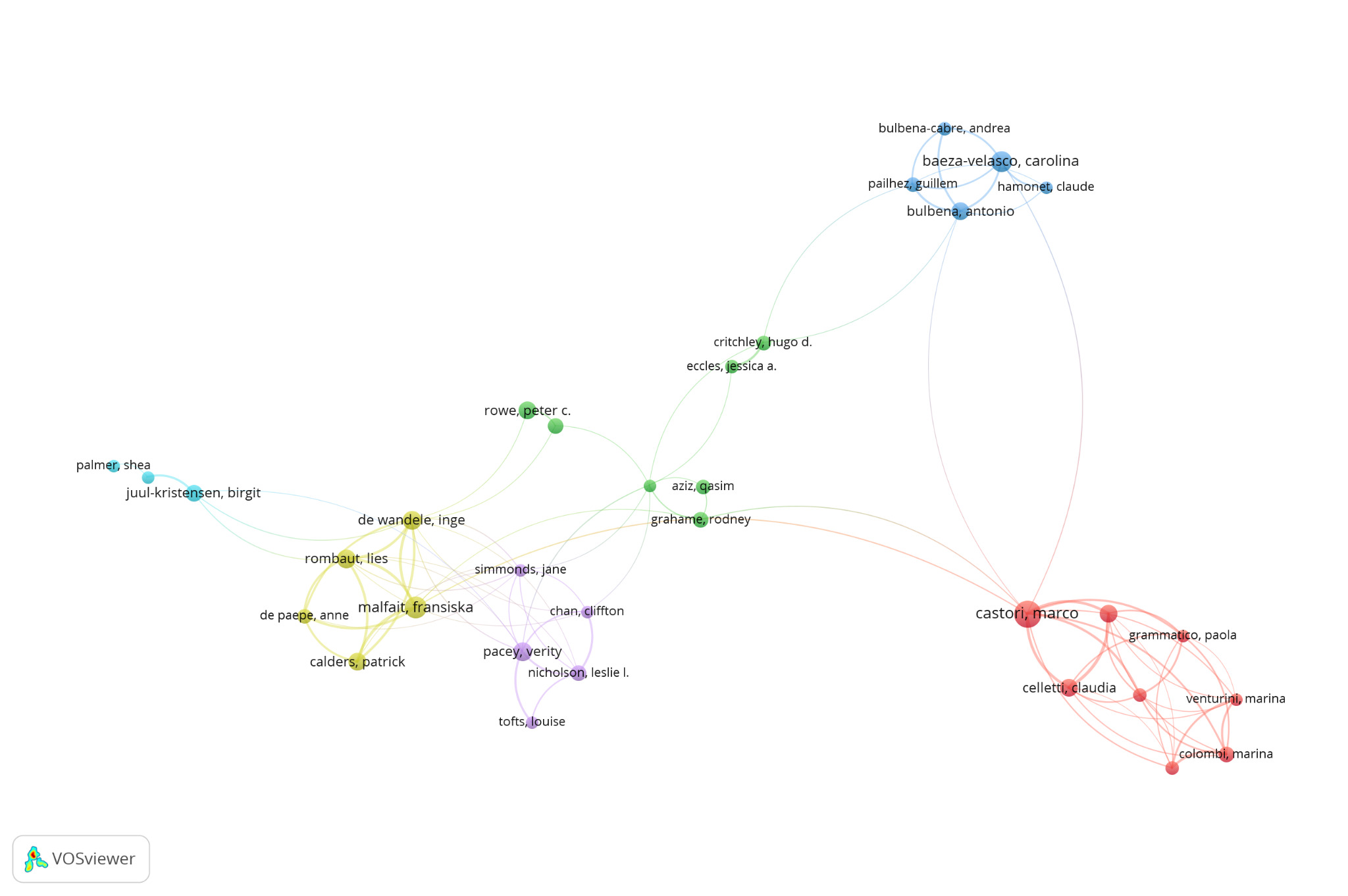
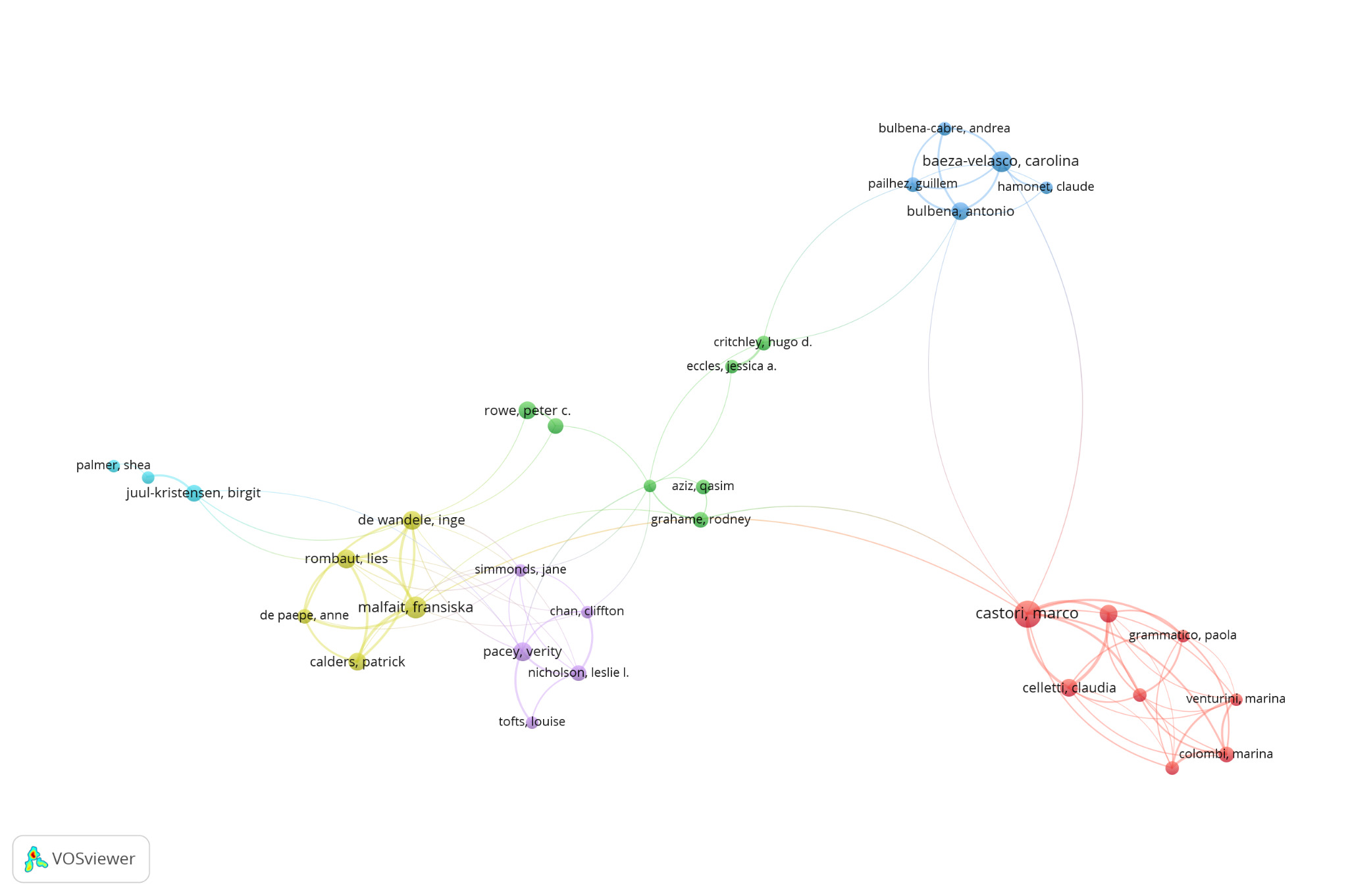
By analyzing co-authorship, five separate groups of collaboration were identified. Author-, document-, and link-level counts reported for individual clusters below were computed directly from the underlying Web of Science records as a proxy for VOSviewer’s own network statistics rather than exported directly from the software. One of the largest was the Italian cluster (5 authors; 69 documents in the dataset involving at least one cluster member; all 10 possible pairwise author links present, with a combined co-authorship count across those links of 80), which includes researchers such as Castori, Celletti, Grammatico, Venturini, and Colombi. Based on author affiliation, this cluster spanned institutions located in Italy, Belgium, the United Kingdom, and Spain. A smaller cluster focused on rehabilitation research was also identified. Collaboration between these groups was minimal: only 8 documents in the dataset linked an Italian-cluster author to a named author from another cluster, with a combined cross-cluster co-authorship count of 17 across those links. (Figure 4).
A majority of the citations were concentrated among a small number of papers. The three most cited articles, Malfait et al.'s 2017 international classification of the Ehlers-Danlos syndromes, Castori et al.'s Framework for the classification of joint hypermobility and related conditions, and Tinkle et al.'s Clinical description and natural history of hEDS, were all published in 2017 in the same issue of the American Journal of Medical Genetics Part C, discussing the classification and description of hEDS/HSD. Together with a 1967 paper by Kirk, Ansell, and Bywaters describing the hypermobility syndrome, these four articles accounted for a substantial share of citations in the dataset (Table 2).
Discussion
The orthopedic relevance of these findings deserves emphasis, since joint instability, recurrent dislocation, and chronic musculoskeletal pain remain the most common presenting features of hEDS/HSD. The comorbidities examined here are directly relevant to orthopedic care: dysautonomia, pain amplification, psychiatric disease, and possible mast-cell disorders all shape how these patients tolerate rehabilitation, physical therapy, and surgery, and craniocervical or spinal instability, perioperative risk, and long-term surgical outcomes in this population are directly affected by the comorbidity burden this analysis quantifies. A bibliometric map of this literature is therefore also a map of where orthopedic clinicians can expect evidence, or its absence, when managing these overlapping concerns.
The rise in both publications and citations after 2014 may have partly reflected the 2017 international classification of hEDS and HSD,13 which gave researchers a baseline diagnostic framework to use and made it possible to study these conditions together. Similar patterns of growth during the emergence of a new classification system have been reported in other bibliometric analyses. A 2025 bibliometric study of familial rickets also found that scientific research grew rapidly once classification and genetic testing were available.14 This suggests that, at least in this one other rare disease, classification may function as an accelerant for scientific research by defining guidelines, though a single comparator condition cannot establish this as a general pattern.
Citation counts in this dataset were highly concentrated. As noted above, three of the four most-cited articles came from the same 2017 special issue, all focused on classification or general clinical description rather than any single comorbidity domain. The remaining article among the four most cited is a notable outlier: Kirk, Ansell, and Bywaters’ 1967 paper describing what they called the hypermobility syndrome, published in the Annals of the Rheumatic Diseases nearly fifty years before the 2017 classification framework.15 The persistence of that paper near the top of the citation count reflects how foundational the clinical observation of hypermobility-related complaints was, even before the modern diagnostic framework existed. The conclusion that can be drawn from this is that the field is still working from a small set of foundational papers, with comparatively little developed literature within each individual comorbidity domain. This gap warrants further research.
The United States, England, and Italy accounted for the highest number of publications. The University of London was the most frequently represented WoS organization-enhanced affiliation. This geographic concentration of output is consistent with broader patterns in rare disease research: a review of international rare disease research funding found that established EU-15 countries captured 88 to 95 percent of EU rare disease research funding across multiple Framework Programmes, reflecting how deeply infrastructure, clinical expertise, and research capacity tend to cluster in the same regions.16
The co-authorship network identified five distinct groups of collaborating authors, including a large Italian cluster of researchers such as Castori, Celletti, Grammatico, Venturini, and Colombi, as well as groups based primarily in Belgium, the United Kingdom, and Spain. A smaller rehabilitation-focused cluster was also present, whose members have co-authored studies examining exercise-based interventions for joint hypermobility in children, including a randomized controlled trial comparing exercise programs for knee pain in children with joint hypermobility syndrome.17 Minimal collaboration was observed between any of these groups. Similar geographic isolation of research clusters has been documented in other rare disease bibliometric analyses: one study of toxic epidermal necrolysis found that international co-authorship ranged from roughly a third of articles in some countries to under 2% for others.18 The same rare disease funding literature that explains geographic concentration of output also suggests a reason for this isolation: despite dedicated funding mechanisms specifically designed to encourage international collaboration in rare disease research, only about 14% of rare disease research projects are international collaborations.16 For a condition like hEDS/HSD that remains under-diagnosed and underfunded globally, this fragmentation likely slows the field considerably.
One absence from the geographic distribution is worth addressing: the PRC, which usually ranks among the top contributors in most areas of medical research, did not appear among the leading countries here. This is plausibly related to the fact that China’s first multidisciplinary clinical guidelines for Ehlers-Danlos Syndrome were not published until 2023, decades after comparable guidelines in Western Europe and North America.19 The geographic distribution observed here may therefore reflect where hypermobility disorders have been clinically named and studied as a distinct entity more than a country’s overall biomedical research output, though this analysis cannot confirm that interpretation.
Despite the wide range of comorbidities associated with hEDS and HSD, terms related to mast cell activation, allergy, and autoimmune disease did not appear in either of the keyword visualizations, even though postural orthostatic tachycardia syndrome and several other neuropsychiatric terms were represented. This matches prior studies that describe the connection between mast cell disorders and hEDS as recent.5 The absence of immunologic terminology from the visualizations suggests that this connection has not yet generated enough literature to be recognized as its own research theme, and this area of inquiry represents an important research gap.
Limitations
This analysis has several limitations. Only the Web of Science was used, so publications from other databases were not included in this study, and WoS organization-enhanced institutional names, discussed above, can aggregate affiliations in ways that are not fully transparent. Citation counts inherently favor older publications, which have had more time to accumulate citations, so the prominence of foundational 2017 and earlier papers in this dataset may partly reflect accumulation time rather than sustained influence alone. The search terms were also broad enough that some articles had little relevance to the comorbidity aspect of hEDS/HSD, and all document types were included without independent screening or a formal inter-reviewer agreement process. Author-name ambiguity and keyword synonym fragmentation may have caused some collaboration or keyword links to be undercounted, and the VOSviewer maps presented here are threshold-dependent, so different minimum-occurrence or minimum-link settings could yield a different visual picture of the same underlying data. Citation and publication counts for 2026 reflect only a part of the year and should not be interpreted as a decline in research. Because the four comorbidity domains examined here overlap clinically, and because bibliometric methods can describe the volume and connectivity of a literature but cannot establish clinical associations or causality, these findings should be read as a map of research activity rather than as evidence of any specific clinical relationship.
Conclusion
Research connecting hypermobile Ehlers-Danlos Syndrome and hypermobility spectrum disorder to their orthopedic, autonomic, immunologic, and neuropsychiatric comorbidities has shown rapid growth over the past decade, largely driven by geographically isolated groups that followed the 2017 international classification. Research output remained concentrated in countries with hypermobility specialty clinics, with China notably absent from the leading contributing countries despite its high biomedical research output in many fields. This suggests that clinical recognition of these conditions influences research output location more than overall research capacity, though this study cannot establish that relationship as causal. Despite the upward trend in research, the immunologic and mast cell activation syndrome literature is comparatively underdeveloped compared to the other three domains, while global collaboration remains limited. Future efforts should prioritize expanding research to bridge the gap in immunologic comorbidity and international collaboration.