
INTRODUCTION
More than 1.7 billion people globally live with musculoskeletal conditions, including osteoarthritis, rheumatoid arthritis, and disabling low back pain. The growing burden of musculoskeletal disease and an aging population have increased demand for orthopedic care; knee arthroplasty volumes alone have been projected to rise substantially.1,2 Artificial intelligence (AI) is simultaneously expanding across medicine and health care.3
AI is an umbrella term encompassing computational approaches such as machine learning, deep learning, computer vision, neural networks, and natural language processing.4,5 In orthopedics, these approaches are being applied to diagnostic imaging, clinical prediction, surgical planning, implant-related decision making, rehabilitation, and other data-intensive tasks.6,7
The large volume of imaging and clinical data generated in orthopedic care creates opportunities for AI-assisted analysis. Machine-learning approaches can support risk prediction and potentially reduce variability in complex clinical decision making, although their performance depends heavily on the quality and representativeness of the underlying data.8,9
Important barriers remain. Methodological limitations include small or homogeneous training datasets, heterogeneous study designs, and incomplete external validation. Translational challenges include regulatory oversight, ethical concerns, workflow integration, and deployment within existing electronic health record and picture archiving systems.10,11
Existing AI research in orthopedics spans multiple subspecialties and application domains, making it difficult to appreciate the field as a whole from individual clinical studies. Bibliometric analysis can provide a complementary macroscopic view by characterizing publication growth, geographic participation, authorship, journals, collaboration networks, and thematic structure. The objective of this study was therefore to map the global research landscape of AI in orthopedics across the full indexed period available in the Web of Science Core Collection.
METHODS
Bibliometric analysis quantitatively evaluates patterns within a body of scholarly literature, including publication output, influential contributors, collaboration patterns, and thematic relationships.12,13 The Web of Science Core Collection was selected because of its broad coverage of indexed peer-reviewed literature and compatibility with bibliometric visualization software.
The Web of Science Core Collection was searched on June 16, 2026, without language restrictions. Publications indexed between 1997 and 2026 were eligible; records from 2026 represent a partial year because indexing was ongoing at the time of the search. The exact topic search was:
TS = (“artificial intelligence” OR “machine learning” OR “deep learning” OR “neural network” OR “computer vision” OR “natural language processing”) AND (“orthopedic” OR “orthopaedic” OR “orthopedics” OR “orthopaedics”).
The search yielded 2,351 records.
Records were exported from Web of Science in plain-text format and imported into VOSviewer (version 1.6.20; Leiden University). Full counting was used for all analyses, with association-strength normalization applied for network visualization. For keyword co-occurrence analysis, a minimum threshold of 10 occurrences was applied; 162 of 11,484 identified keywords met this threshold. For co-authorship analysis, authors were required to have at least five publications; 538 of 7,309 authors met this threshold. For cited-reference co-citation analysis, a minimum of 20 co-citations was required; 157 of 73,975 cited references met this threshold. For each network, only the largest connected set of items was displayed using the VOSviewer default setting. No manual cleaning or harmonization of keyword variants was performed before analysis.
RESULTS
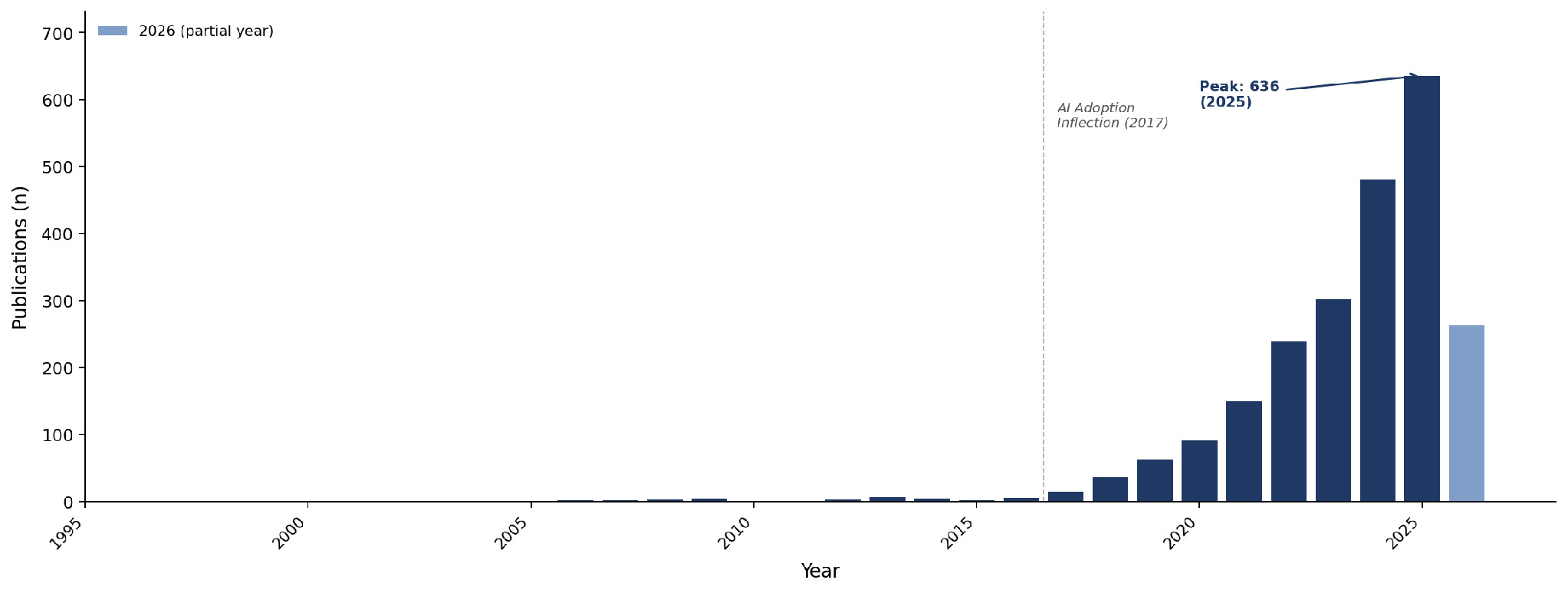
A total of 2,351 publications related to AI in orthopedics were indexed in the Web of Science Core Collection. Publication output increased sharply after 2016, with 97.9% of all publications appearing during 2017 through the partial 2026 period. Output reached 636 publications in 2025, exceeding the cumulative number published through 2021. The 2026 count represents a partial year because indexing was ongoing at the time of the search.
._the_dashed.png)
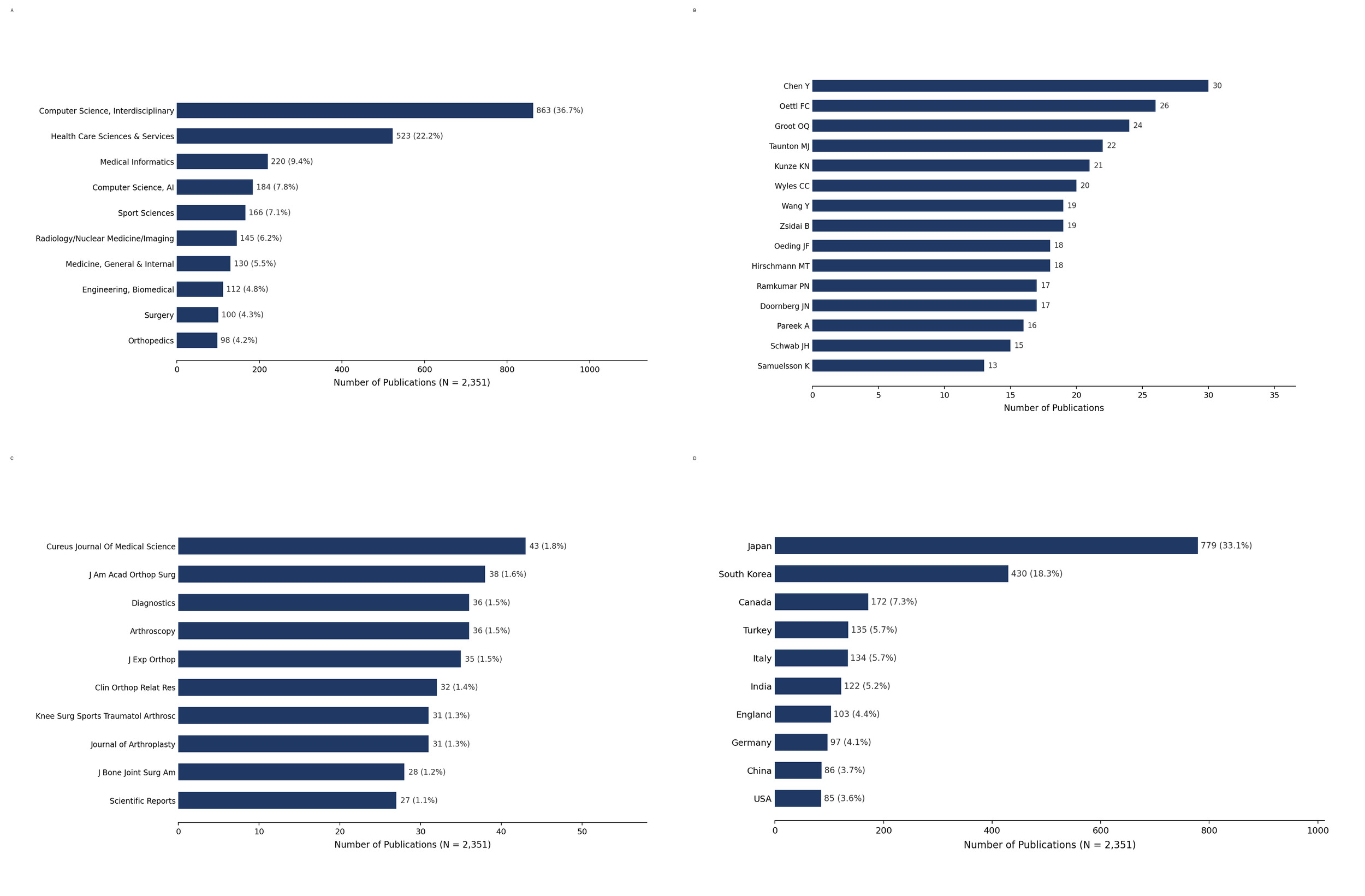
Computer Science, Interdisciplinary Applications (36.7%) and Health Care Sciences & Services (22.2%) were the leading Web of Science categories. Medical Informatics (9.4%), Computer Science, Artificial Intelligence (7.8%), Sport Sciences (7.1%), Radiology/Nuclear Medicine/Medical Imaging (6.2%), Medicine, General & Internal (5.5%), and Engineering, Biomedical (4.8%) were also represented. Orthopedics (4.2%) and Surgery (4.3%) accounted for smaller shares. Because individual articles may be assigned to multiple Web of Science categories, category percentages sum to more than 100%.
Authorship was broadly distributed. Chen Y was the most prolific author with 30 publications (1.3% of the total), followed by Oettl FC (26), Groot OQ (24), Taunton MJ (22), and Kunze KN (21). No single journal accounted for more than 1.8% of all publications. Geographic output was led by Japan (33.1%) and South Korea (18.3%), followed by Canada (7.3%), Turkey (5.7%), Italy (5.7%), India (5.2%), England (4.4%), Germany (4.1%), China (3.7%), and the United States (3.6%).
__(a)_top_web_o.png)
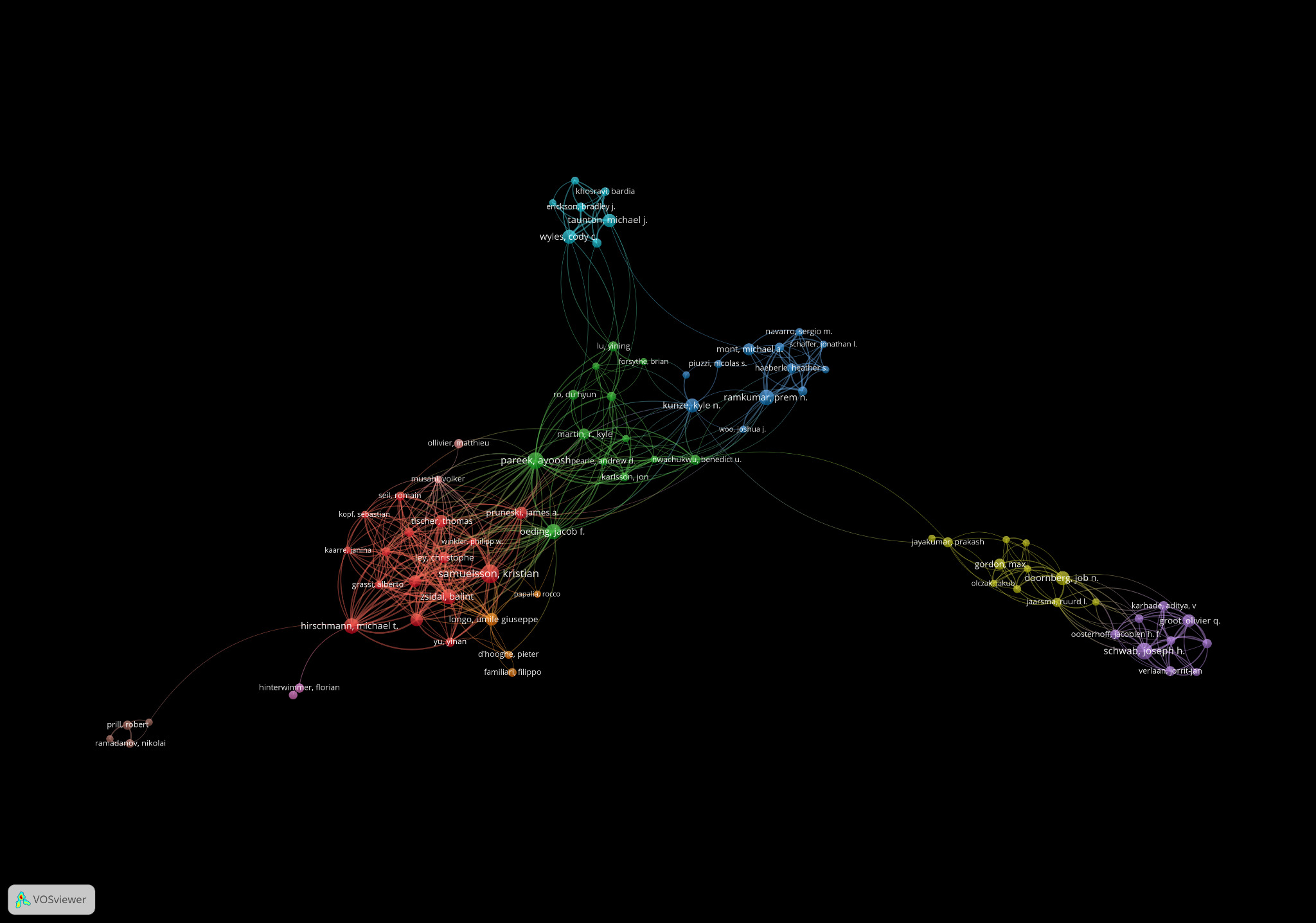
The co-authorship network included investigators from sports medicine, arthroplasty, orthopedic oncology, spine surgery, and computational imaging, indicating parallel development across multiple clinical and technical communities. Several visually distinct clusters were connected by a smaller number of bridging collaborations.
._authors_.png)
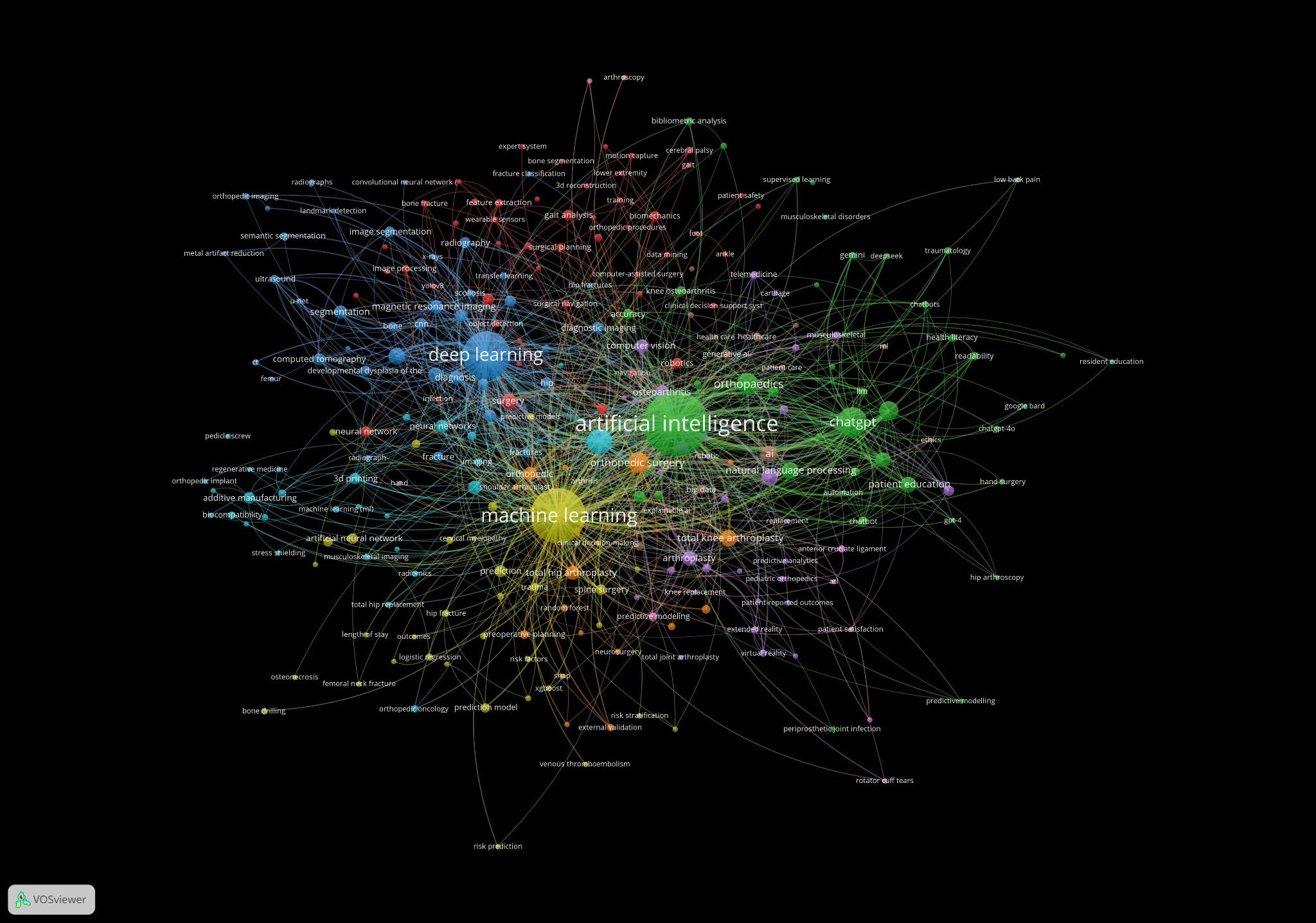
Keyword co-occurrence analysis demonstrated a tripartite structure organized around the co-dominant hubs “artificial intelligence,” “machine learning,” and “deep learning.” The deep-learning cluster was centered largely on imaging-related applications, including convolutional neural networks, MRI, CT, and segmentation. The machine-learning cluster emphasized prediction and outcome modeling, while the artificial-intelligence cluster included newer terms related to generative AI and ChatGPT. Large language model applications appeared primarily in the most recent portion of the literature, particularly from 2023 through 2025.
._keywords_oc.png)
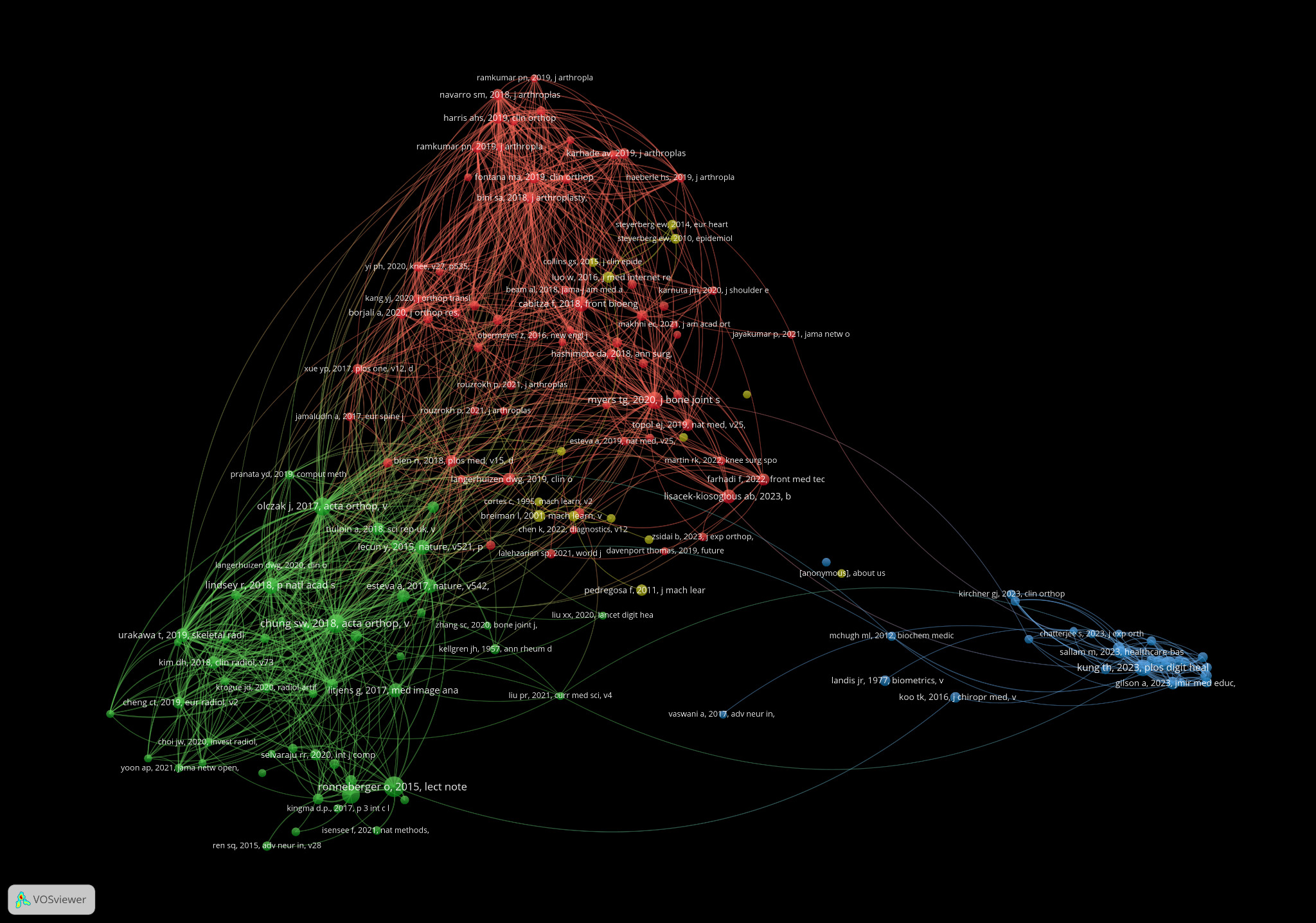
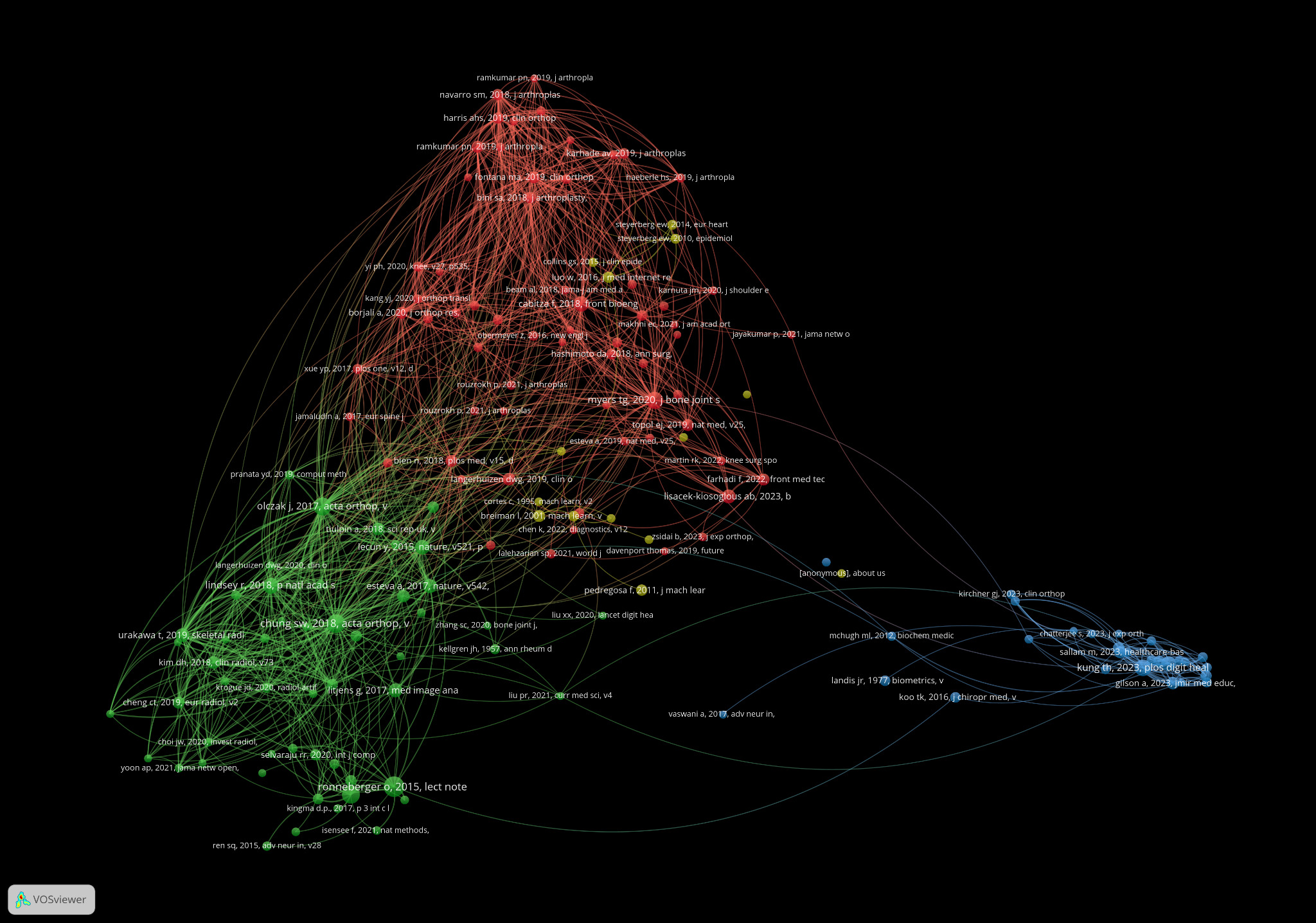
The co-citation network was anchored by foundational computer science publications, including work on U-Net, deep learning, and transformer architectures, rather than by a single foundational orthopedic literature. The Journal of Arthroplasty represented one of the earliest identifiable clinical clusters of AI-related orthopedic publications, with activity emerging in 2018 and 2019.
DISCUSSION
Artificial intelligence research in orthopedics has expanded rapidly, particularly since 2017, coinciding with advances in graphics processing unit computing, increased availability of large imaging datasets, and maturation of machine-learning and deep-learning frameworks. AI applications in orthopedics now encompass diagnostic imaging, outcome prediction, perioperative decision support, and other clinically oriented tasks.14 In the present analysis, 97.9% of the 2,351 indexed publications appeared after 2016, and publication output reached 636 articles in 2025 alone. The partial 2026 output further suggests that this growth has not yet plateaued. Taken together, these findings demonstrate the transition of orthopedic AI from a relatively limited research area into a rapidly expanding interdisciplinary field.
The disciplinary distribution further highlights the intersection between computational science and clinical orthopedics. Computer Science, Interdisciplinary Applications and Health Care Sciences & Services represented the largest Web of Science categories, whereas Orthopedics and Surgery accounted for comparatively smaller proportions of indexed publications. This distribution likely reflects the inherently interdisciplinary nature of AI research, in which algorithm development, biomedical informatics, image processing, and clinical validation often span conventional specialty boundaries. Bibliometric analyses in other areas of medicine have similarly demonstrated how publication and network patterns can reveal the evolution and interdisciplinary structure of emerging research domains.15,16 Rather than indicating limited orthopedic relevance, the present distribution suggests that advances applicable to orthopedic care are frequently generated through collaborations extending beyond traditional orthopedic departments.
Authorship was likewise highly distributed. Chen Y, the most prolific author, accounted for only approximately 1.3% of publications, indicating that no individual investigator or research group dominates the field. The co-authorship network demonstrated multiple clusters involving sports medicine, arthroplasty, orthopedic oncology, spine surgery, and computational imaging. This decentralized structure is consistent with parallel adoption of AI across orthopedic subspecialties rather than development from a single intellectual center. As the field matures, greater collaboration among these currently distinct groups may facilitate external validation, shared datasets, and multicenter studies.
The keyword analysis identified artificial intelligence, machine learning, and deep learning as three prominent and interconnected hubs. Deep learning was strongly associated with imaging applications, including convolutional neural networks, magnetic resonance imaging, computed tomography, and bone segmentation, whereas machine learning was more closely associated with prediction and clinical outcome modeling. This distinction reflects the differing computational demands of orthopedic applications: image-intensive tasks have particularly benefited from deep-learning architectures, while structured clinical datasets are frequently analyzed using conventional machine-learning approaches. Prior work involving AI-based detection of malignant skin lesions illustrates a similar expansion of machine-learning and deep-learning approaches in another visually intensive clinical discipline, supporting the broader applicability of these techniques to image-based diagnostic tasks.17 Although dermatologic applications differ substantially from orthopedic imaging, both demonstrate the particular suitability of AI for clinical domains in which visual pattern recognition plays a central role.
Generative AI represents a newer component of this landscape. The distinct cluster involving ChatGPT and related large language model terminology suggests that generative AI is developing as a recognizable subfield within orthopedic research rather than simply being absorbed into the older machine-learning literature. This finding parallels a previous bibliometric analysis of ChatGPT in medicine, which demonstrated the rapid proliferation of ChatGPT-related publications across medical education, research, and clinical practice soon after the technology became publicly available.18 The emergence of this cluster within orthopedics therefore appears to represent part of a broader transition toward generative AI across medicine. Previous reviews have likewise highlighted both the potential utility and unresolved concerns surrounding ChatGPT in healthcare.19 Future orthopedic applications may extend beyond image interpretation and risk prediction toward clinical documentation, patient education, decision support, research synthesis, and communication; however, these uses will require rigorous evaluation for accuracy, reproducibility, bias, and patient safety.
The co-citation analysis further demonstrates the interdisciplinary foundation of orthopedic AI. Highly influential works included Ronneberger’s U-Net architecture, LeCun and colleagues’ work on deep learning, and subsequent transformer-based approaches to medical imaging.20 These foundational contributions largely originated in computer science rather than orthopedics, illustrating the degree to which advances in the specialty have depended on methodologies developed outside medicine. This pattern also emphasizes the importance of collaboration between orthopedic clinicians, data scientists, engineers, and informaticians when translating computational advances into clinically useful tools.
Several findings also identify important priorities for future research. Much of the current AI literature remains based on retrospective datasets and internally validated models, potentially limiting performance when algorithms are transferred across institutions, patient populations, imaging systems, or healthcare environments. Prospective multicenter validation and evaluation of real-world clinical utility will therefore be increasingly important as the field moves from algorithm development toward implementation. Algorithmic fairness also warrants greater attention. Bias in healthcare algorithms can reproduce or amplify disparities when training datasets or surrogate outcomes inadequately represent the populations in which models are ultimately deployed.21 The relatively limited prominence of fairness and health-equity terminology within the present keyword network suggests that these issues remain underrepresented compared with the rapid growth of technical AI research.
More broadly, the trajectory observed in orthopedics reflects the increasingly pervasive role of AI across health and medicine.3 The field is moving beyond proof-of-concept algorithm development toward questions of implementation, external validity, clinical integration, governance, and responsible use. The rapid emergence of generative AI adds another dimension to this transition and may further broaden the range of orthopedic applications. The challenge for the next phase of research will therefore be not simply to develop increasingly sophisticated models, but to determine whether these tools improve clinically meaningful outcomes, generalize across populations and practice settings, and can be incorporated safely and equitably into orthopedic care.
Limitations
This study has several limitations inherent to bibliometric analysis. First, the analysis was restricted to publications indexed in the Web of Science Core Collection and therefore may not capture relevant literature indexed exclusively in other databases. Second, although no language restrictions were applied, database coverage may underrepresent publications from some regions and non-English-language journals. Third, citation-based measures reflect scholarly influence rather than methodological quality or clinical effectiveness. Fourth, the search strategy identified publications using orthopedic terminology broadly and therefore included literature spanning surgical and nonsurgical orthopedic applications; the findings should consequently be interpreted as representing AI research across orthopedics rather than orthopedic surgery exclusively. No manual harmonization of keyword variants was performed before network analysis, which may have divided conceptually related terms across separate nodes. Finally, the 2026 data represent only a partial year and should not be directly compared with complete annual publication totals.
CONCLUSION
Artificial intelligence has become a rapidly expanding and interdisciplinary area of orthopedic research. This bibliometric analysis of 2,351 publications demonstrates marked growth in publication volume, broad participation across computational and clinical disciplines, distributed authorship, and a tripartite thematic structure centered on artificial intelligence, machine learning, and deep learning. Japan and South Korea led publication output in this dataset, while no single author or journal dominated the literature. Large language models, prospective clinical validation, and health-equity considerations represent important directions for the next phase of AI research in orthopedics.