
INTRODUCTION
Stress fractures are repetitive bone injuries that result from constant mechanical loading that exceeds the threshold of a bone’s remodeling capacity due to the rate of damage outpacing the rate of repair or rebuilding, establishing hairline cracks, especially in the regions of the weight-bearing bones in the lower extremities. Current presentations are subtle, and related factors, such as biomechanics, nutrition treatment, and prevention methods, remain an ongoing challenge. However, by conducting the necessary research synthesis and evaluating different sets of data, literature reviews, and meta-analyses, the empirical frameworks are required to standardize diagnosis and augment patient outcomes.1,2
Bone Stress Injuries (BSI) is the clinical term commonly used by modern sports medicine and orthopedic professionals, which is defined as a skeletal failure to withstand repetitive loading–the continuous force that is applied and removed from a structure–those results in microdamage and pain. Stress factors serve as a subset of the BSI term, and are officially assigned when imaging tests, like MRIs, show a distinct fracture line or cortical break in the bone. A subset of Stress Factors is Fatigue Fractures, which occur when excessive mechanical stress is applied to a healthy bone, in contrast to insufficiency fractures, which occur when stress of normal magnitude is applied to an excessively weak bone. A Bone Stress Injury (BSI) Spectrum shows the imbalance of microdamage formations and the bone’s reformation process through 4 stages: Grade 1 BSI is an early stress reaction with mild-to-moderate periosteal edema and no marrow involvement; Grade 2 is an increased stress reaction with periosteal edema and marrow edema on T2-weighted imaging, indicating increasing microdamage; Grade 3 is a severe stress reaction with extensive marrow and periosteal edema on both T1- and T2-weighted imaging, showing substantial reduction of bone remodeling; and Grade 4 BSI is a true stress fracture, where severe edema and a visible fracture line signify structural failure of the bone.3
The injuries are prevalent among distance runners, track athletes, military recruits, with other high-impact sports–like basketball and gymnastics - showing an increasing level of BSI injuries. Similarly, female athletes face stress fractures more commonly than men, and this can be linked to the Relative Energy Deficiency in Sports (RED-S), or more specifically, the Female Athlete Triad, which causes an imbalance in energy, menstrual dysfunction, and low mineral density throughout the bone. Anatomically, stress fractures are common in the lower extremities, with the Tibia being the most common site, followed by the Metatarsals (especially in runners and recruits), the Femur (common in females), and the Navicular (common in high-impact sports like basketball).4–9
Stress fractures can be shown through various clinical presentations: insidious onset, where pain develops without previous acute trauma; activity-related pain, where symptoms fluctuate, but as the injury grows, the pain starts to persist; point tenderness, where the pain is solely present at a specific spot on the bone; and image findings, such as X-rays and MRIs. The causes of the fractures can vary throughout, with some factors being a sudden increase in training intensity, quantity, or repetitiveness; the switch from soft (grass, turf, etc.) to hard platforms (asphalt, concrete, etc.); inadequate footwear–worn-out shoes, wrong-sized shoes, or shoes without the necessary force absorption; low nutrition and nutrition deficiencies; Low Bone Mineral Densities or previous stress fractures; muscle fatigue, structural abnormalities (flat feet or high arches), walking patterns; and hormonal irregularities like estrogen deficiency, which is common in the Female Athlete Triad.
Low-Risk Fractures consist of stable, non-displaced or minimally displaced fractures that are managed conservatively with few surgical complexities. High-Risk fractures are unstable, significantly displaced, or shattered and typically require surgery to restore biomechanical alignment and prevent avascular necrosis. Conservative management is the use of natural bone healing through closed reduction and casting and usually takes between 4 and 8 weeks (small bones) or 8 and 12 weeks (large bones). While conservative management stops the possibility of soft-tissue trauma and implant complications, it introduces a higher risk of malunion, non-union, and loss of reduction in unstable cases. Surgical management uses plates, screws, or rods to give better anatomical alignment, higher union rates, and earlier functional mobilization. The drawbacks, however, are that surgical management can cause hardware failure, soft tissue issues, and possible infections. The amount of time it takes for an athlete to return to action depends on the magnitude of the injury; however, early stabilization can give athletes opportunities for quicker recoveries to specific training, and full recovery in around 2 to 4 months. Even though both surgical and non-surgical methods exist, systematic reviews show that previous trials have been corrupted with small sample sizes, improper methodologies, and diverse outcomes, which pose a challenge when defining a generalized standard for stress fractures.
This bibliometric analysis uses the Web of Science Core Collection to examine works published between 1974 and 2026. The goal is to present a thorough summary of the ways that different fields, regions, and eras have investigated risk factors for stress fractures in athletes.
METHODS
Bibliometric analysis is a method of quantifying literature that highlights significant works and authors, publication patterns, and the contributions of countries or organizations.10 Standard bibliometric methods for medical literature were employed to ensure repeatability and rigor.11–14 These analyses identify different categories, like authors and keywords, and correlate how their similarities across different institutions.
This bibliometric analysis’s data came from the Web of Science Core Collection and the date of search was June 16, 2026.
The search strategy employed was:
TS = ( “stress fracture” OR “stress fractures” OR “bone stress injury” OR “fatigue fracture” ) AND ( “athlete” OR “athletes” OR “sport” OR “sports” OR “physical activity” )
A total of 2,365 articles, ranging from 1974 to 2026, were retrieved for analysis. Having this vast amount of sources allows a higher statistical reliability, minimizes the impact of outliers on the overall results, and allows a broader scientific horizon to be used to identify the most authentic research trends. Having a larger access to articles allows the isolation of modified results and allows the conclusions drawn from the results to be more generalized and widely accepted.
The primary analysis tool was VOSviewer, which is especially helpful for bibliometric analysis since it offers a powerful tool for building and displaying bibliometric networks.11 VOSviewer allows larger portions of academic data to be translated into comprehensible data and graphic maps. It builds networks based on collaborations and themes. Each graph has three views: Network Visualizations, where items that show up as nodes, and each node color represents distinct clusters; overlay visualizations, where nodes are colored by the publication year; and density visualizations, where items are color-coded by how heavily researched they are.
RESULTS
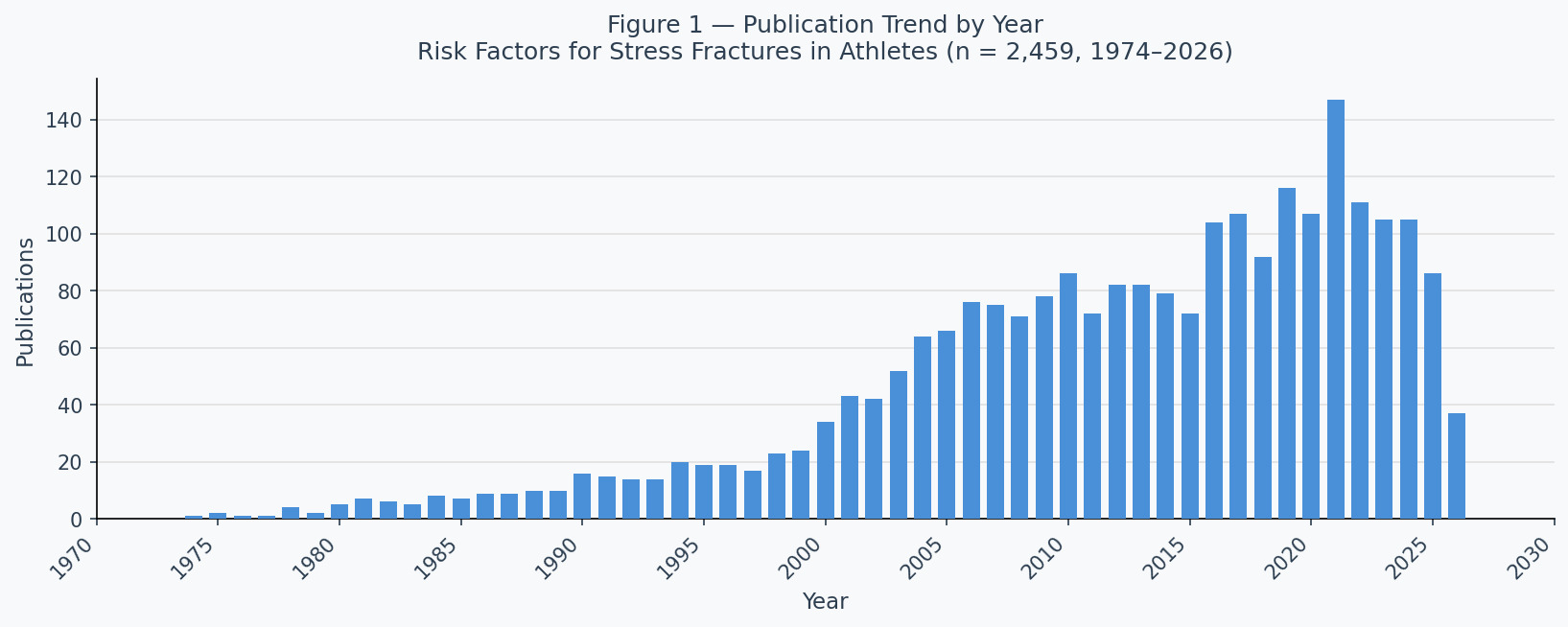
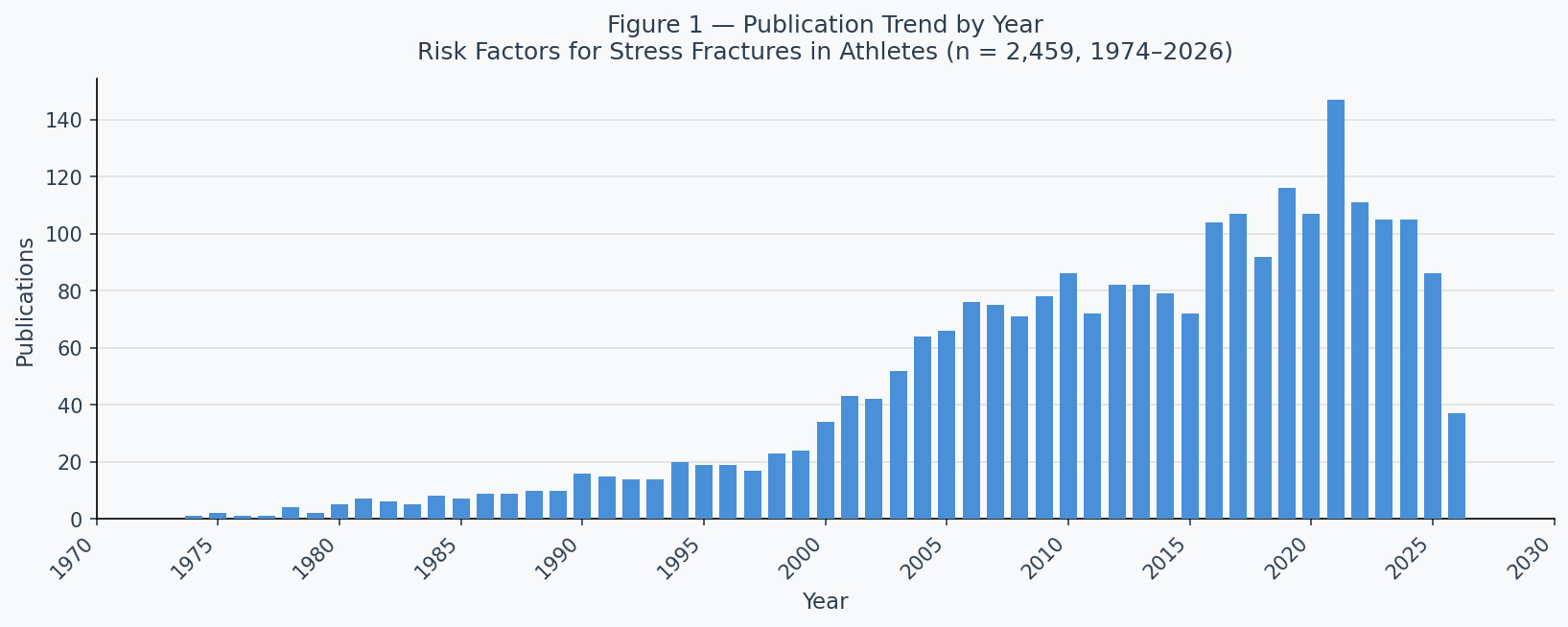
A total of 2,365 articles were received to analyze in VOSviewer. The set had a range of final publication years from 1974 to 2026. (Figure 1)
After the initial publishing in 1975 (1 publication), publications rose gradually throughout the 1990s (20-24 publications per year) until around 1999, then started to grow at a faster rate. The most significant jump was after 2015, as publications grew to 104 in 2016, marking around a 40% increase in publications. After 2015, the index numbers persisted as the highest numbers recorded in history, with the peak publication year of 2021, in which 147 publications were documented. An apparent decline in publications after 2021 was observed. Because recent years are particularly susceptible to indexing lag and evolving terminology (e.g., increased adoption of ‘bone stress injury’), this finding should be interpreted cautiously.
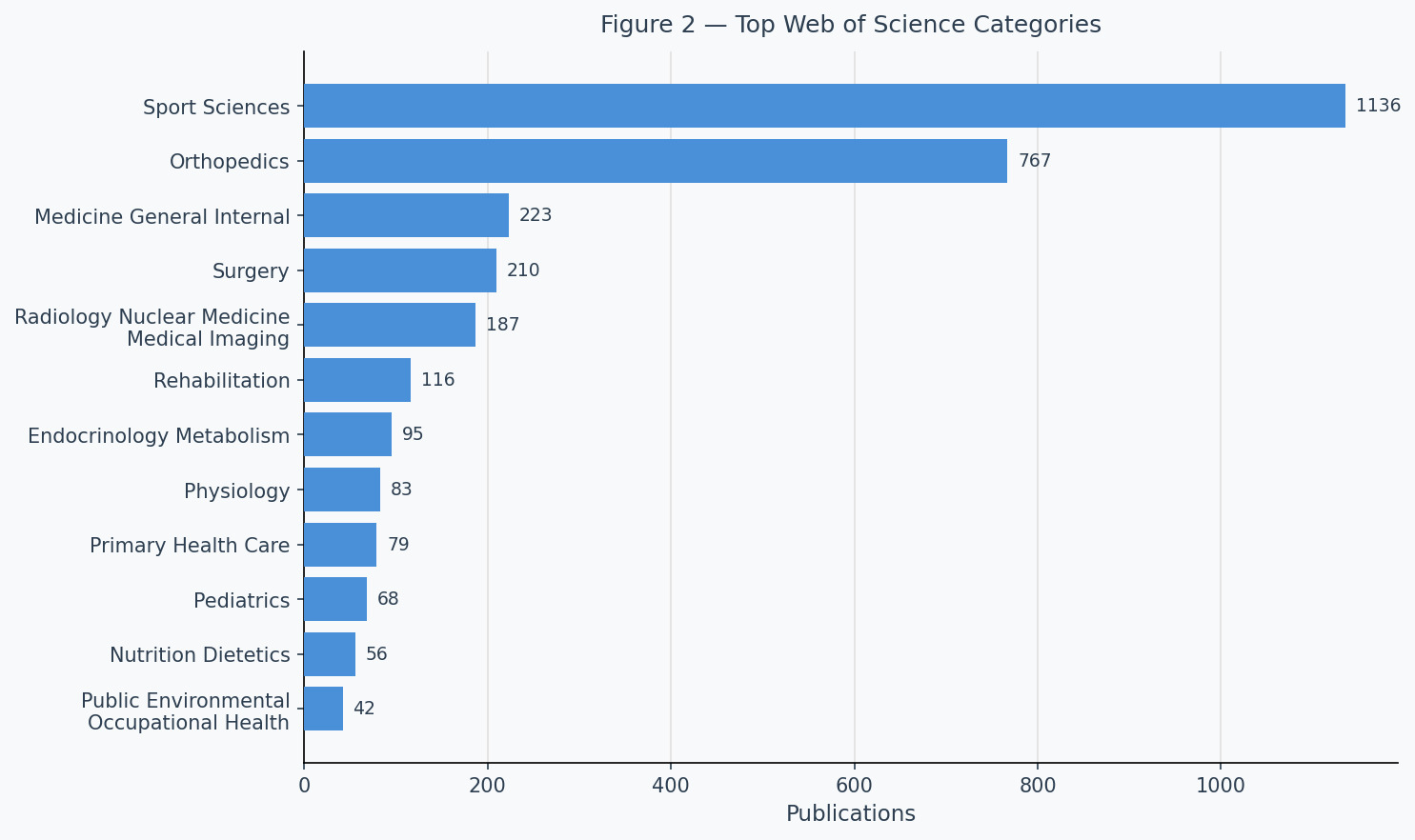
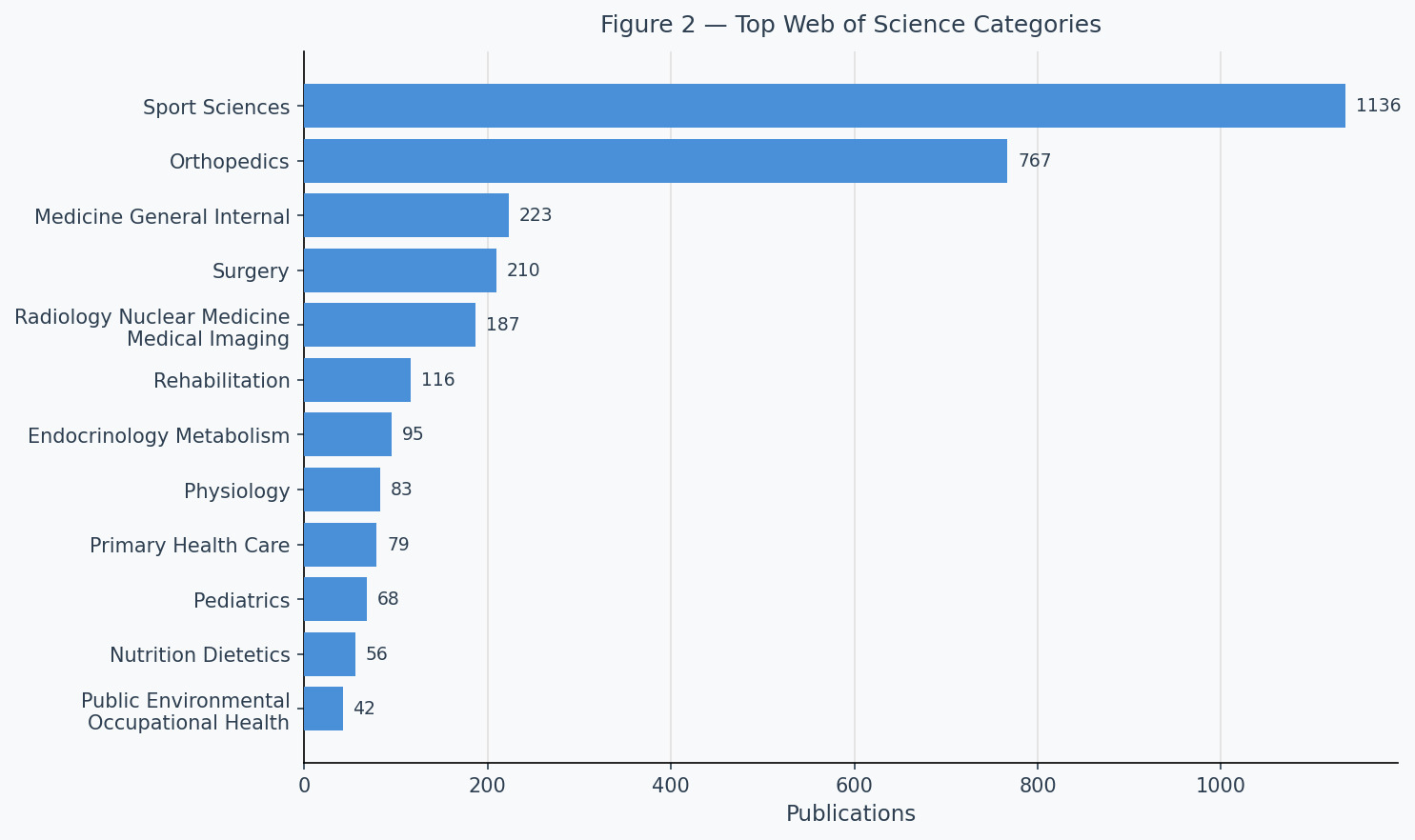
Of the given categories, Sport Sciences (1136 publications) and Orthopedics (767 publications). The distinctive component of newer stress fracture literature is the strong highlighting of Endocrinology & Metabolism (95), Nutrition & Dietetics (56), and Physiology (83), linking bone health, hormonal status, and energy availability to the possibilities of bone fractures. The incorporation of Pediatrics (68) and Rehabilitation (116) represents the incoming research regarding athlete development and an athlete’s return-to-sport recovery. The effective framing differentiates the research on factors of stress fractures from solely mechanical or surgical orthopedic publications.
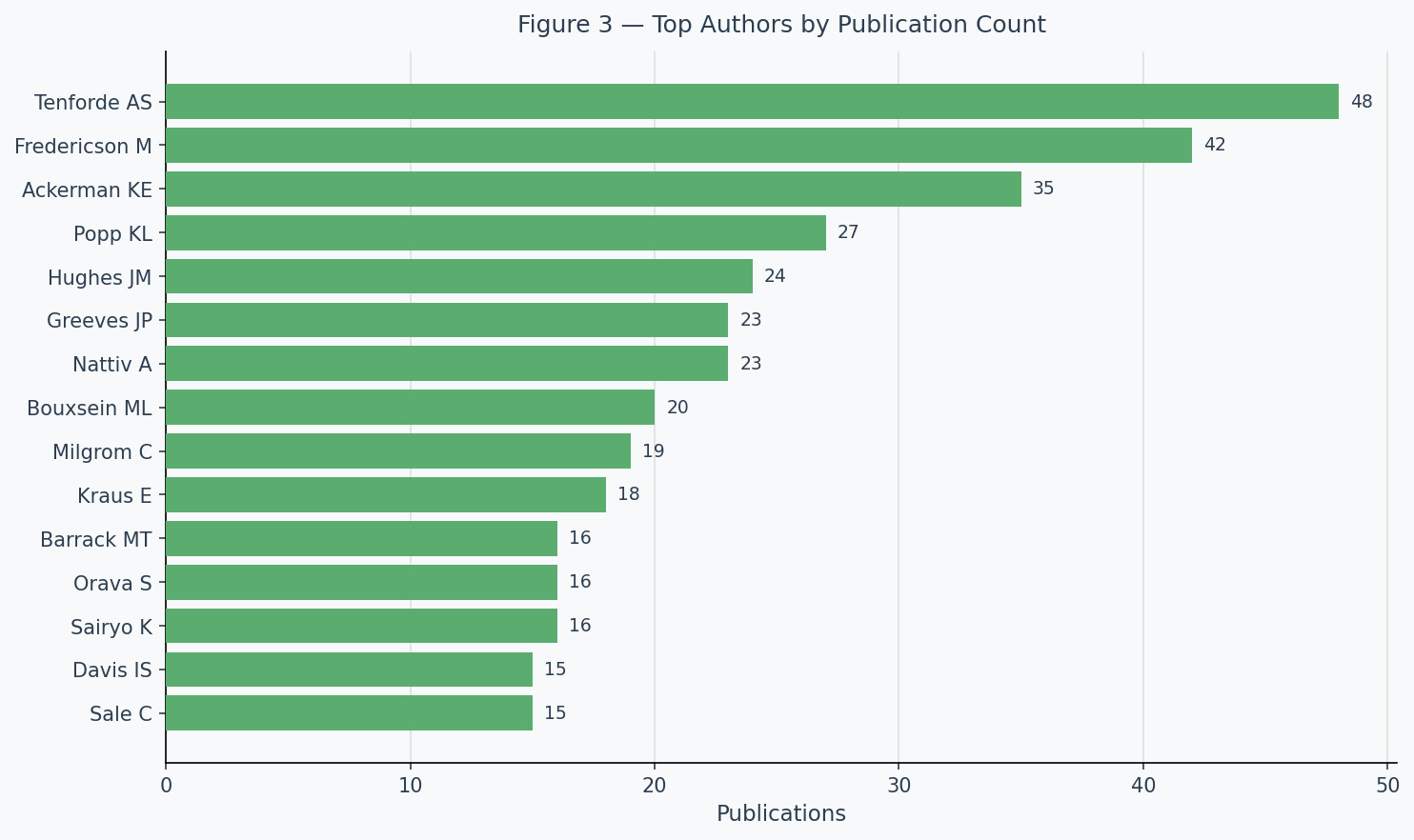
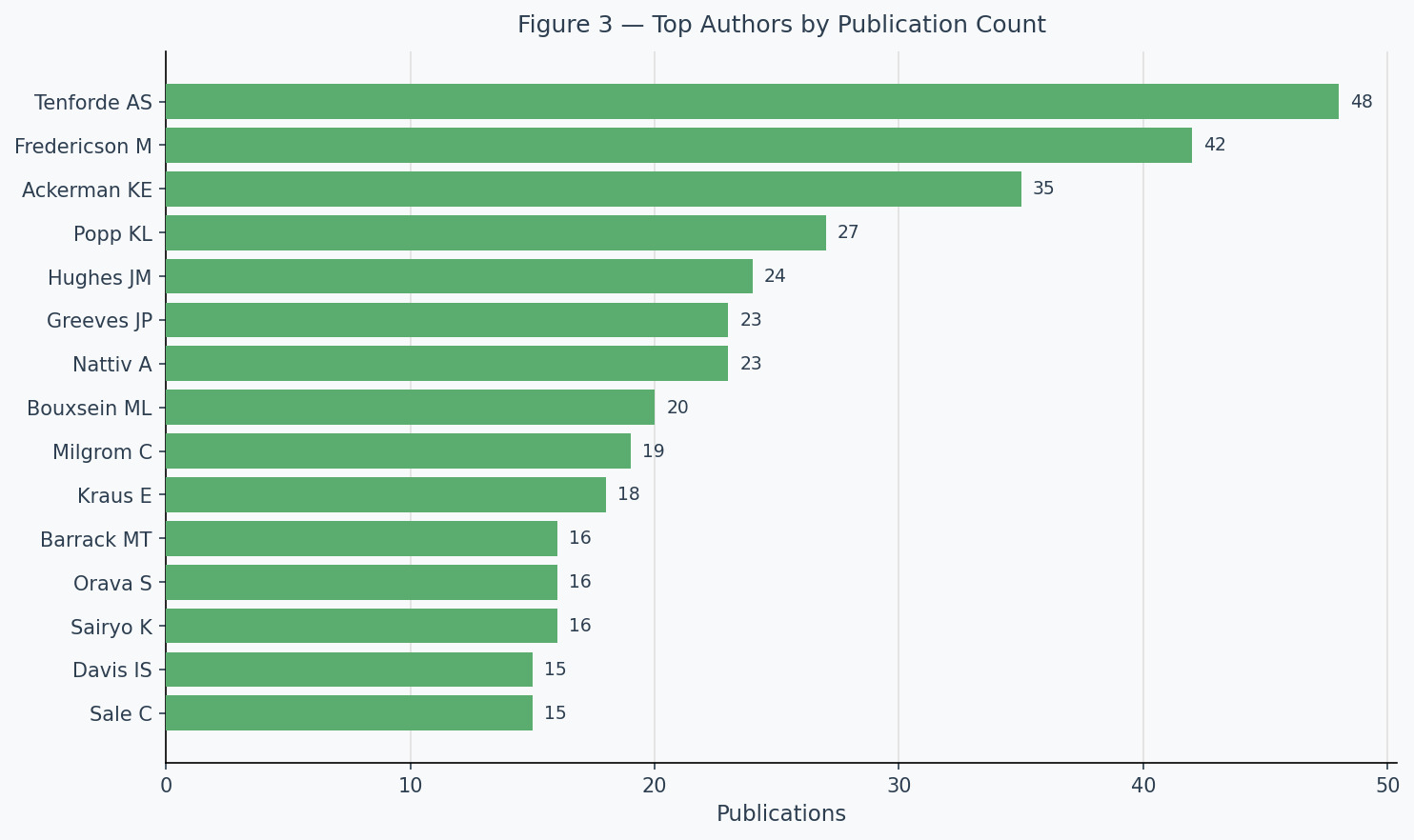
There are several ubiquitous authors within the field, with Adam Tenforde having 48 publications, followed by Michael Fredericson (42) and Kathryn Ackerman (35) to conclude the top three authors. With respect to Stress Fractures, the top 11 authors have previously worked with bone health, female athlete physiology, energy deficiency, and military stress. Authors like Ackerman, Nattiv, Barrack, and De Souza have been affiliated with the Female Athlete Triad, and authors like Greeves, Hughes, and Milgrom have emerged in military fracture research. Other substantial researchers in the field include Popp with 27 publications, Bouxsein with 20 publications, and Orava with 16 publications.
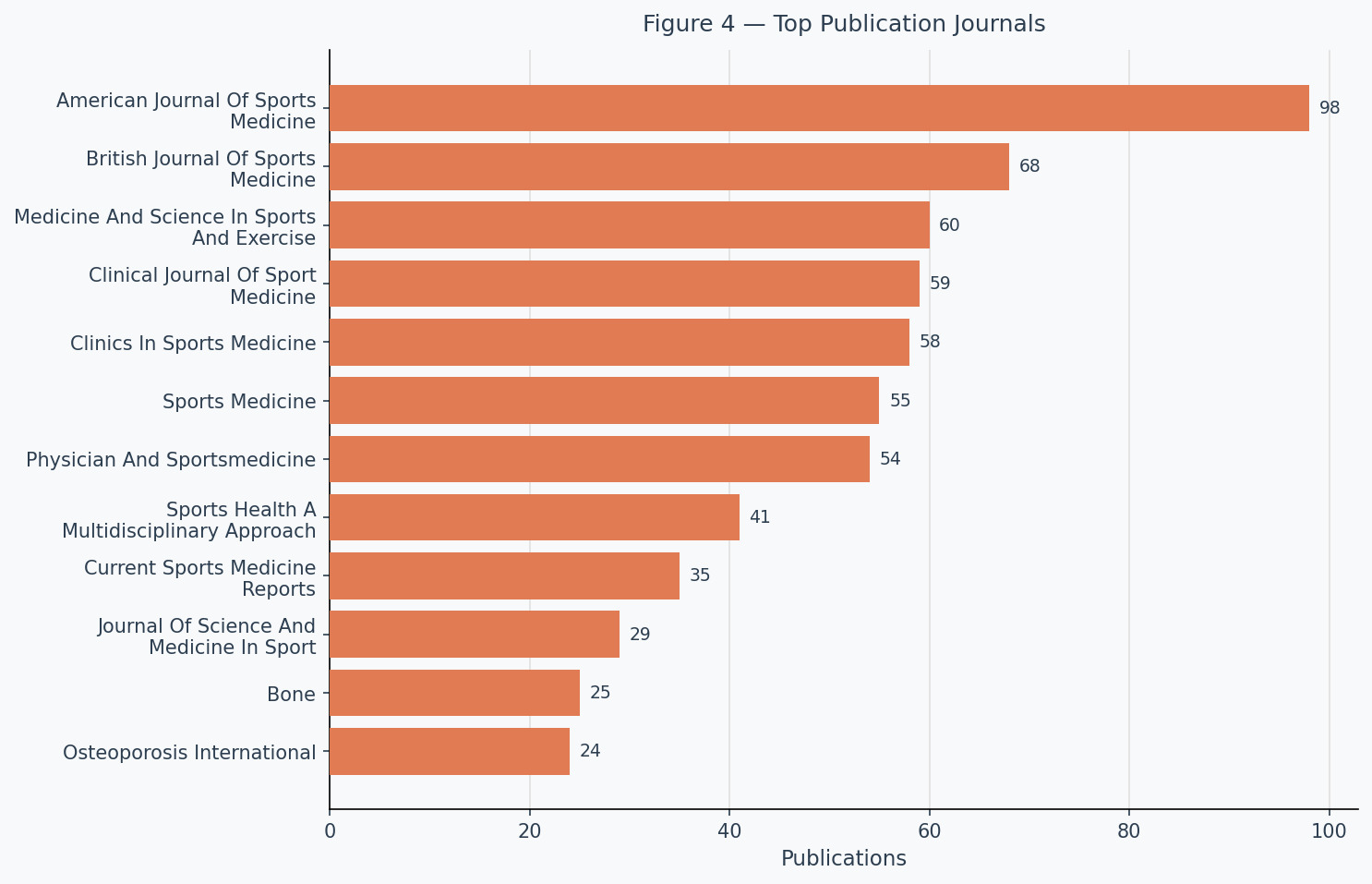
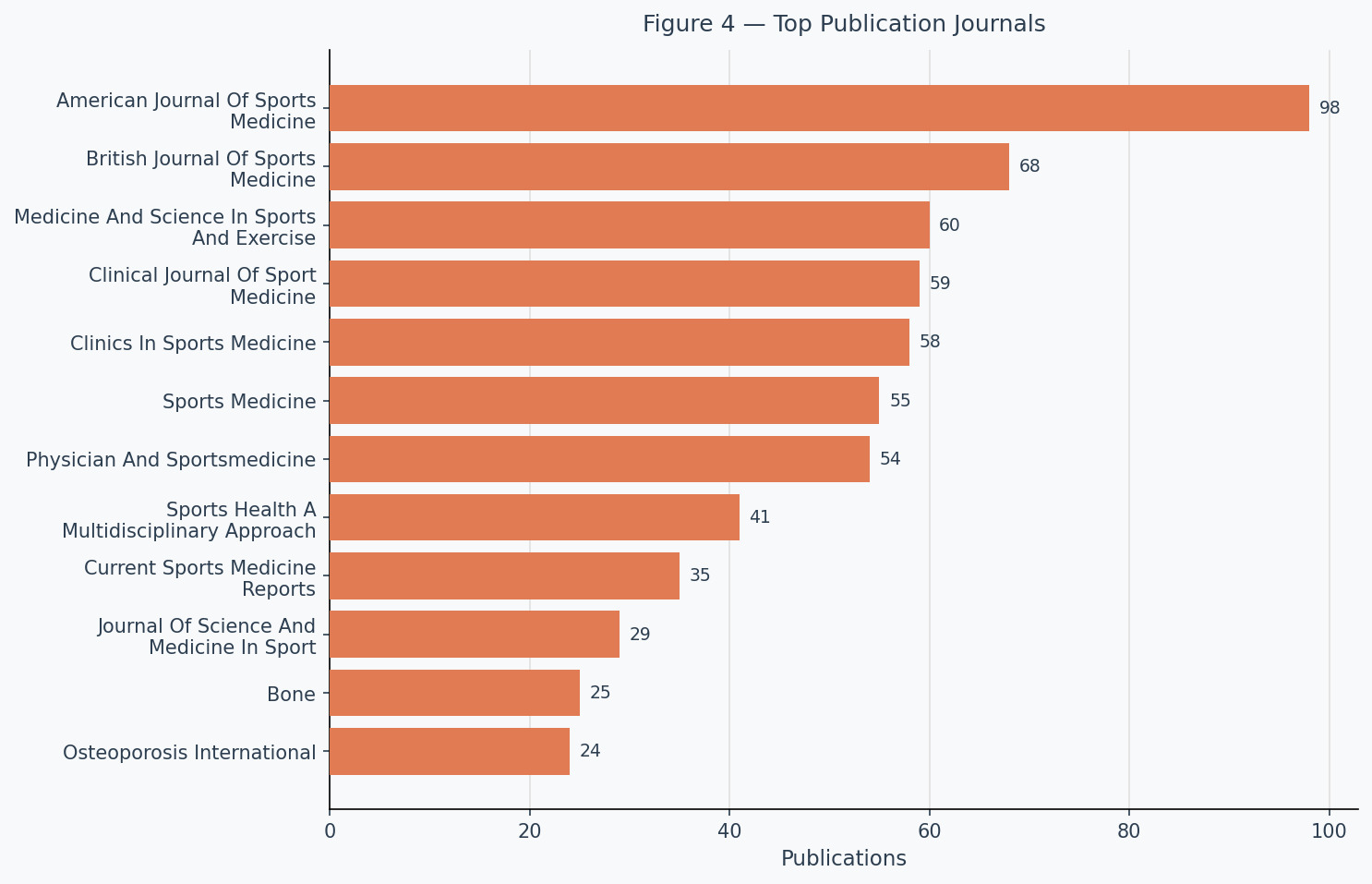
The figure above yields the top journals that have frequently published research regarding stress fractures. The American Journal of Sports Medicine holds the top publication spot with a significant majority, publishing 98 papers, creating a gap of 30 publications to the next journal. The top 10 encases only sports journals, showing a distinct isolation for stress fractures literature. The Bone Journal, publishing 25 papers, affirms a spot as a credible publication journal in this field, especially since the top 10 are completely isolated to sports-based medical journals. This shows that sports-medical journals are preferred among the clinical community, and confirms that stress fractures should be framed in and where it is commonly read. Physician and Sports medicine (54) is a notable journal as they incorporate clinical practice and scientific research, showing the factual view of this literature.
.png)
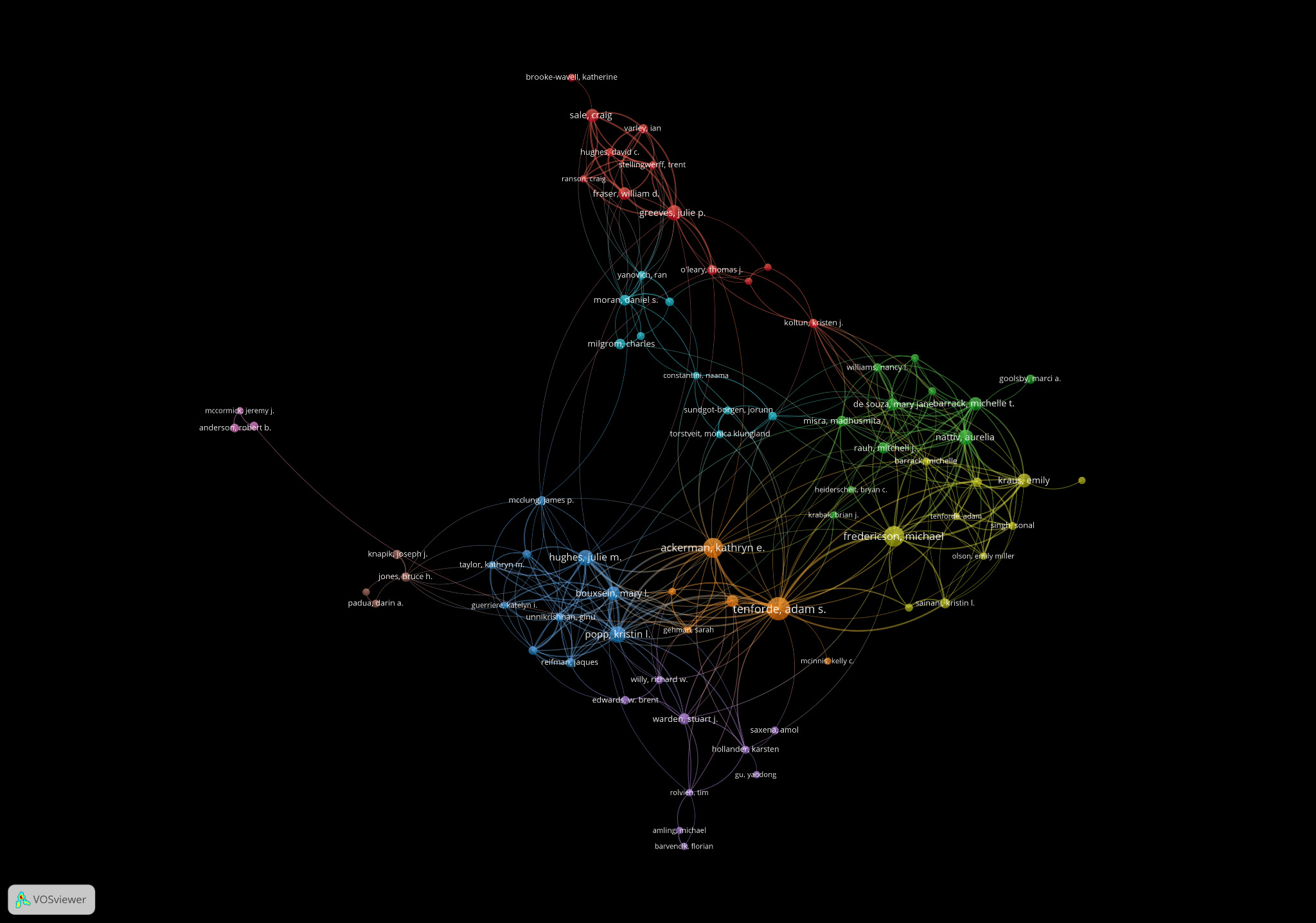
This network cluster shows the co-authorship of research, where each node represents an author, the edges indicate co-authored publications, the size of each node indicates the strength of each linkage, and the color of the cluster isolates each community. The network reveals 5 unique research clusters that reflect the various angles present in stress fracture publications. Adam S. Tenforde (46 publications; 81 co-author links; 233 link strength) and Kathryn E. Ackerman (35 publications; 70 co-author links; 186 link strength) represent the two largest nodes, and together they create the central orange cluster and provide the imperative connection between communities.
Michael Fredericson (36; 57; 178) anchors the gold cluster, presented on the right of the central orange cluster, as the most prominent author in the respective region. Also residing in this region are Emily Kraus (18; 40; 115) and Aurelia Nattiv (20; 37; 133), and collectively they represent the Stanford-related sports medicine perspective.
The most significant author in the green cluster is Mary Jane De Souza(13; 28; 72). Other authors in the cluster are Nancy T. Williams, Marci A. Goolsby, Madhusmita Misra, and Mitchell J. Rauh. All of these authors have been related to the Female Athlete Triad and bone health within female athletes.
Towards the center of the network is a relatively large blue cluster, which centers at Julie M. Hughes (23; 48; 153). Other significant authors that influence this cluster are Mary L. Bouxsein (19; 47; 156), Kristen L. Popp (26; 55; 185), and they share the cluster with military researchers like Joseph J. Knapik and Bruce H. Jones, who are also represented in this cluster.
At the top of the graph sits the red cluster, and the most outstanding author here is Julie P. Greeves (20; 27; 84). Also tangled in this cluster are authors Craig Sale, William D. Fraser, Trent Stellingwerff, Craig Ranson, and Katherine Brooke-Wavell. The authors in the red cluster associate with the UK and European military and sport nutrition research groups.
A cyan community joins Charles Milgrom and Daniel S. Moran, amidst Jorunn Sundgot-Borgen and Monica Glungland, Tostviet, combining both Israeli military research with Scandinavian female athlete work.
Finally, the isolated purple nodes, with Jeremy J. McCormick and Robert B. Anderson, situate themselves on the left, stating that they have minimal ties among the stress fracture community.
.png)
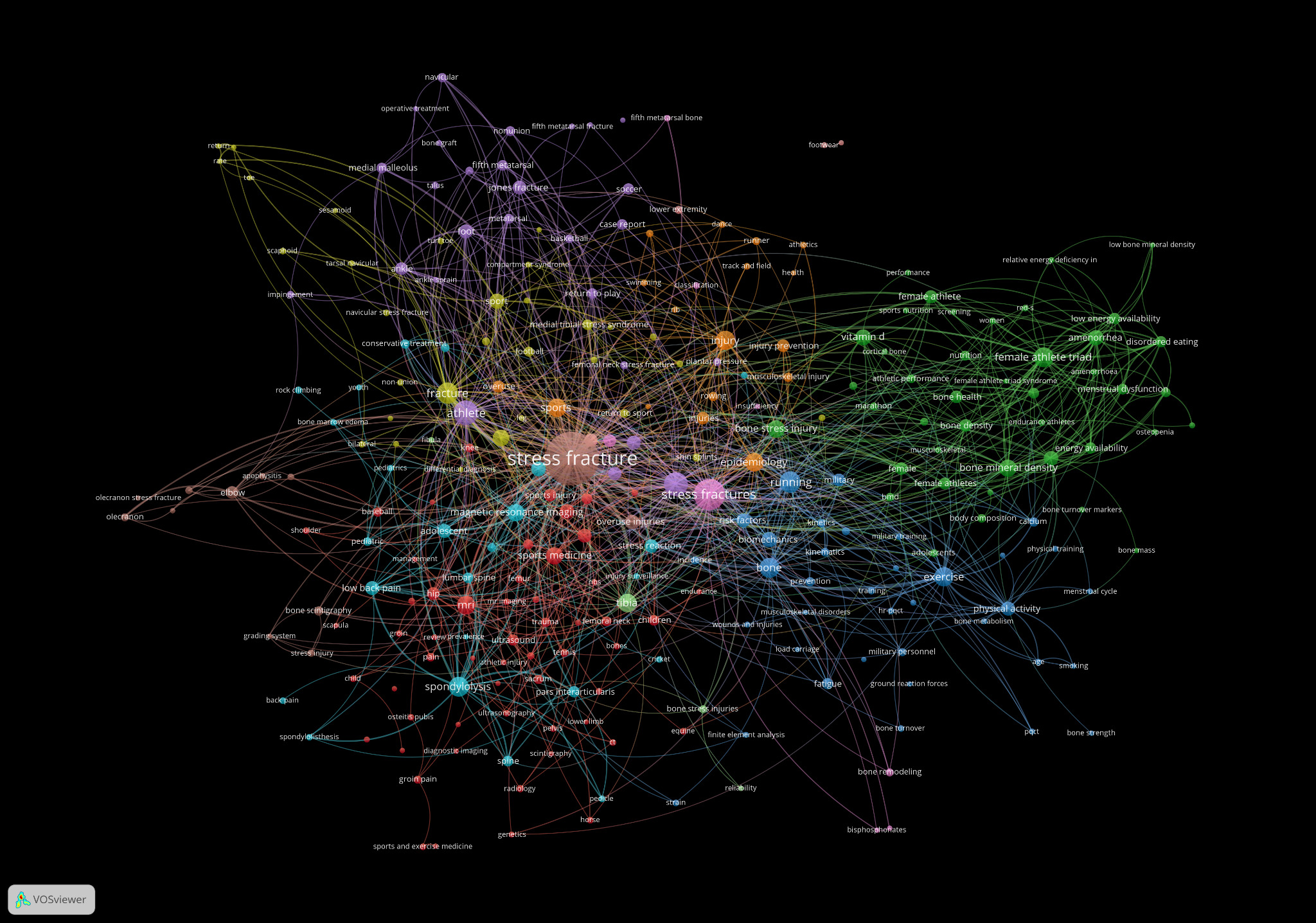
Within this network, each node represents the keywords that authors have assigned, and the edges show keywords that co-appear in the same paper. “Stress Fracture” (438 occurrences; 224 co-occurrences; 1,067 link strength) is the definite, dominating term amongst the network, and resides as the undisputable central term throughout the network; “Stress Fractures” (148 occurrences; 86 co-occurrences; 278 link strength) simply shows the inconsistent keyword standardization across the field, and when combined–the plural and non-plural keywords–they undoubtedly represent the center of the entire cluster.
A large pink cluster, including the keywords “Athlete” (95; 53; 278), “Athletes” (88; 52; 179), “Fracture” (72; 55; 181), “Sports” (53; 33; 96), “Sport”, “Injury” (58; 36; 109), and “Epidemiology” (52; 37; 109), represent the epidemiology and athletic exposures in the existing literature.
In the upper left resides the purple cluster, where keywords like “Jones Fracture,” “Fifth Metatarsal,” “Foot,” “Ankle,” and “Navicular” align foot-specific keywords and categories.
Towards the left is a dark red cluster, grouping “Spondylolysis” (62; 37; 151), “Hip,” “Low Back Pain,” “MRI” (52; 34; 111), and “Lumbar Spine,” and this group represents the spinal stress fracture publications, specific to young athletes.
Towards the rightward portion of the network, a green cluster is centered by “Female Athlete Triad” (61; 40; 161), and other keywords within the cluster are “Amenorrhea” (37; 30; 107), “Low Energy Availability,” and “Relative Energy Deficiency in Sport.”
As seen under the center-right region, a blue cluster groups “Bone Mineral Density” (48; 31; 107), “Biomechanics,” “Running” (72; 40; 154), “Military,” and “Load Carriage.” This blue cluster mirrors both biomechanical and military research disciplines.
The teal cluster branches both the center and lower regions of the network, linking “Sports Medicine,” “Adolescent,” “Magnetic Resonance Imaging” (46; 34; 96), and “Overuse Injuries.” Since “MRI” and “Magnetic Resonance Imaging” appear in different clusters, it shows the inconsistency with keyword usage in the literature.
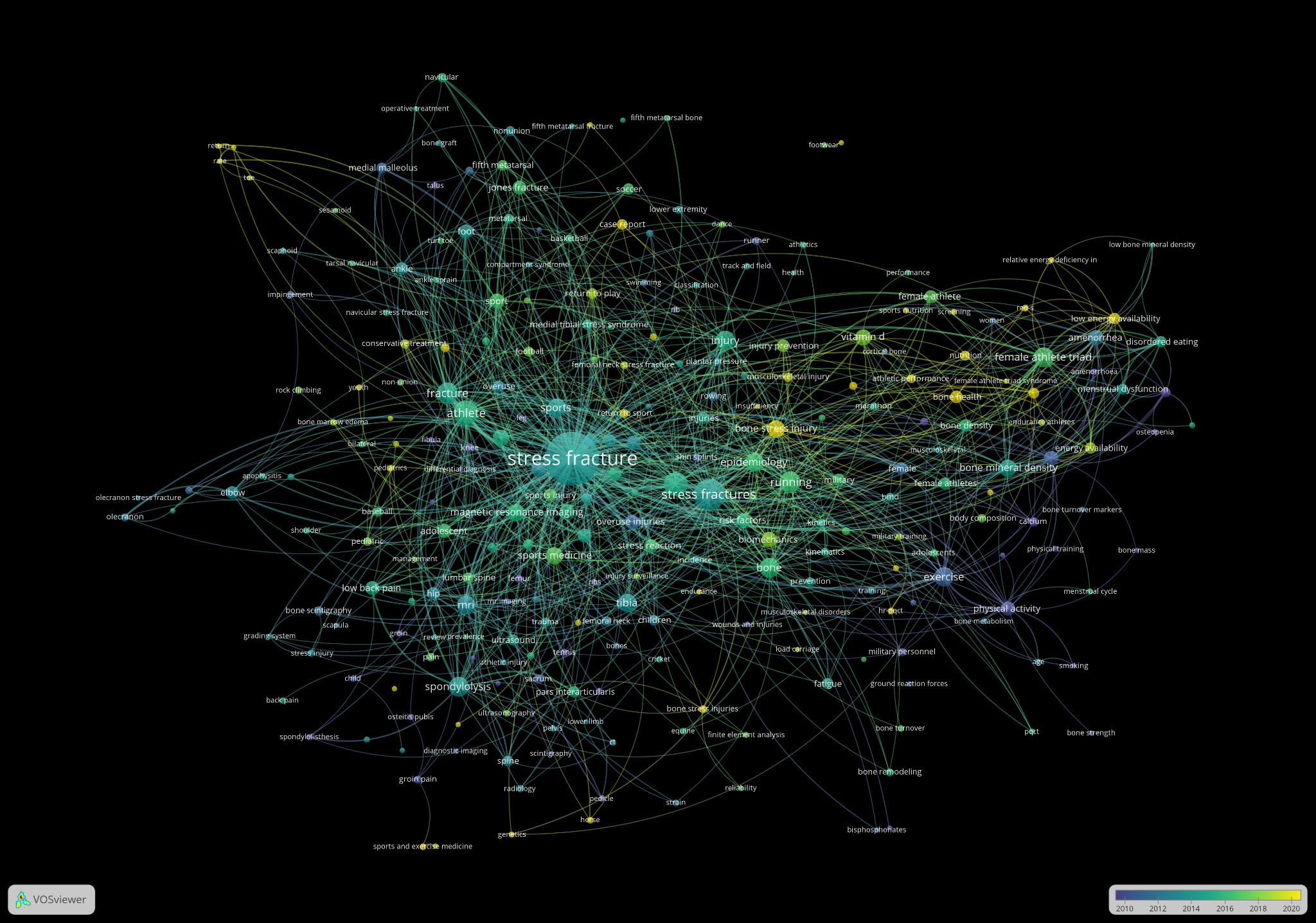
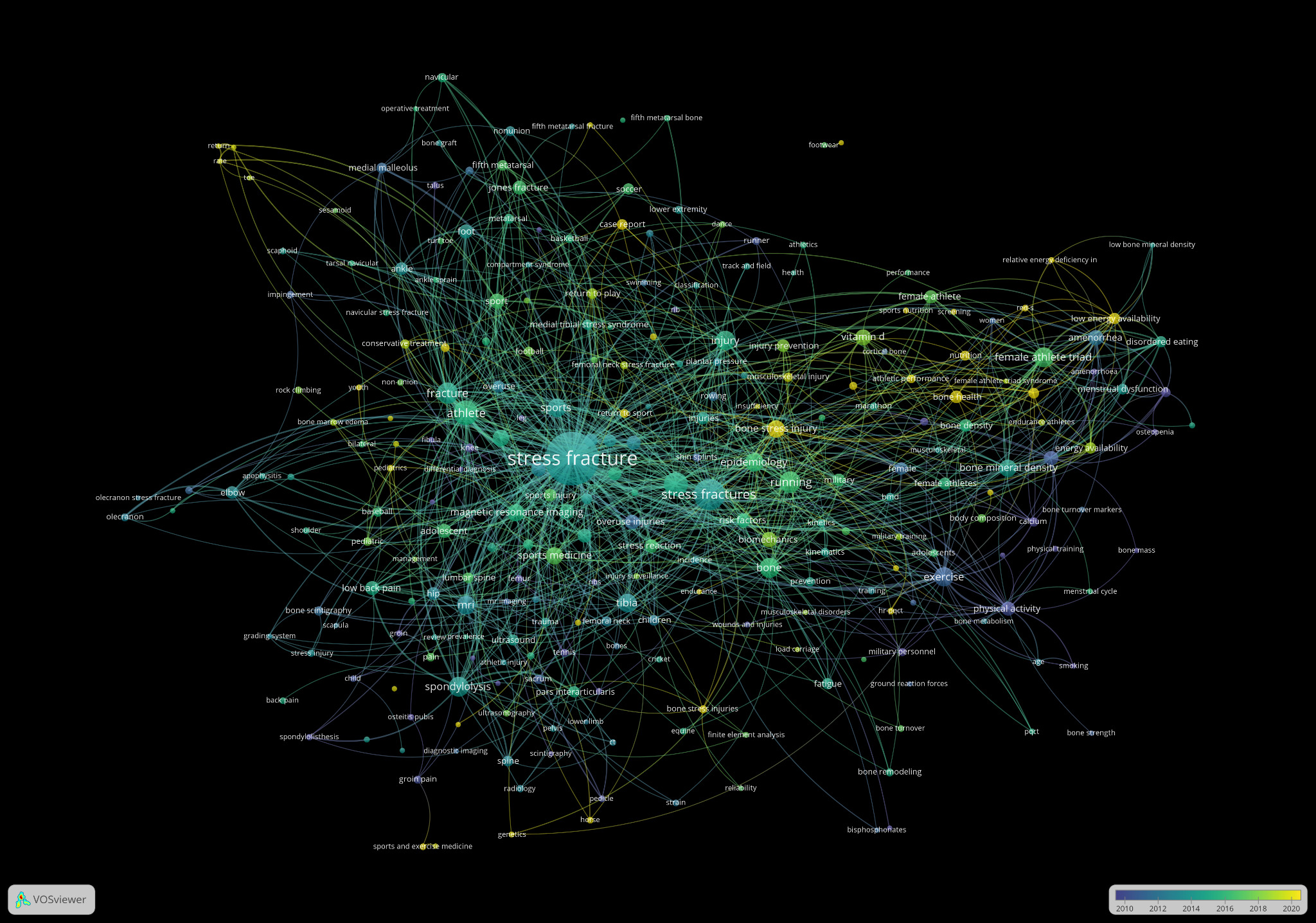
While the network presented in this graph has the same items as the previous graph, this graph shows the overlay visualization, where each color indicates the relevance of the node with respect to the current year. The nodes that appear with a yellow hue resemble the keywords that have been used in recent literature, whereas the blue nodes show the nodes that aren’t being circulated now and that were used in older literature. “Bone stress injuries” and “low-energy availability” are presented as yellow nodes, indicating their prevalence in newer publications. “Physical activity” and “overuse injuries” are purple and dark blue, respectively, and represent keywords that were used around 2010 and 2012, towards the beginning of the literature, and have been circulated out of the field.
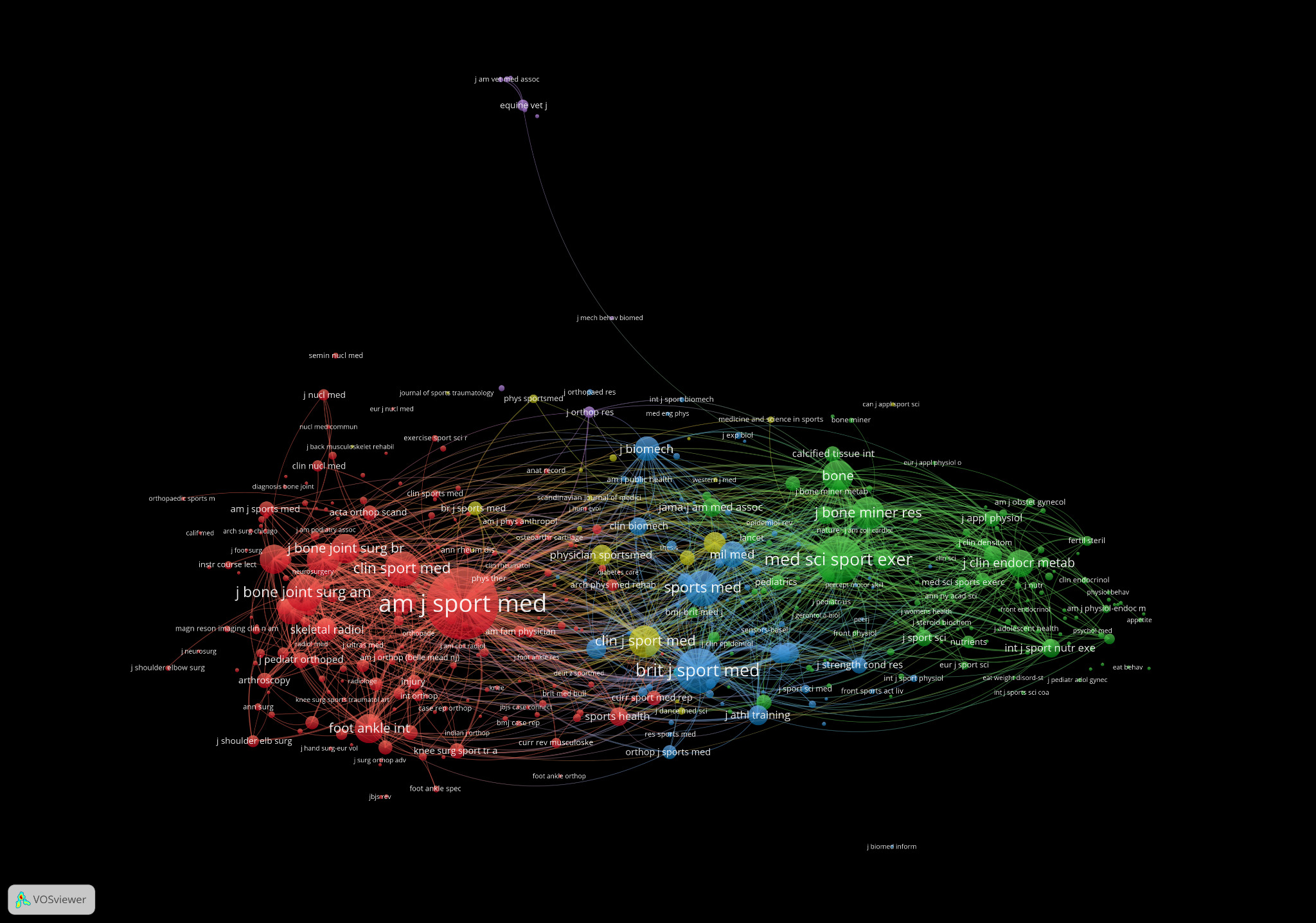
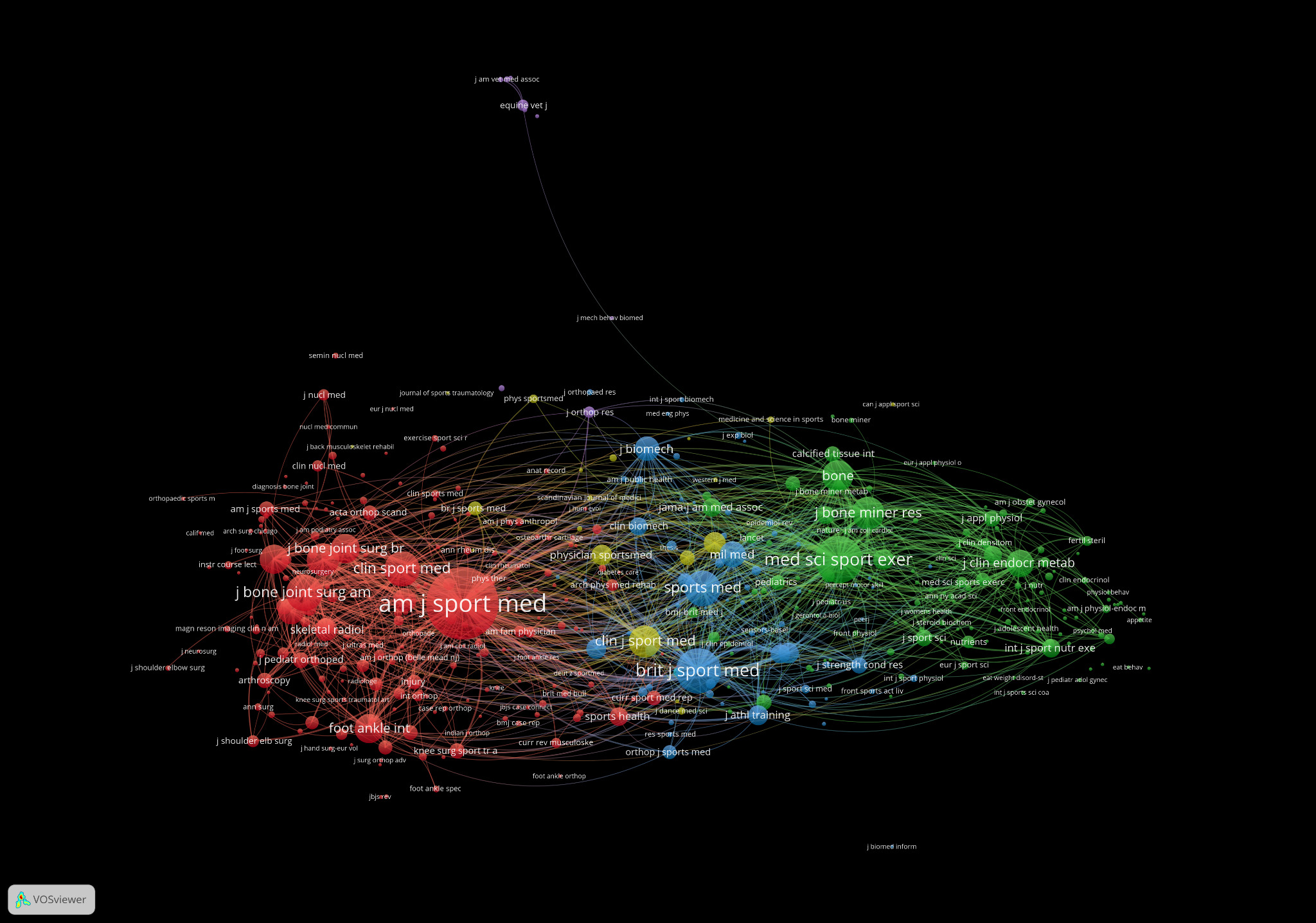
The nodes present in this diagram represent the journals that have been cited throughout the entirety of the literature, and the edges reflect the journals that were cited congruently on the same paper: together, they form a network that shows journal co-citations. The American Journey of Sports Medicine (8,544 citations; 1,241 co-cited links; 40,391 link strength) stands alone as the largest node on the map and has a link strength of nearly 42% more than the second-strongest journal, Medicine & Science in Sports & Exercise (3,663 citations; 1,102 co-cited links; 28,454 link strength). The node is positioned at the center of the large red cluster aligned towards the left, which also includes journals such as the Journal of Bone & Joint Surgery (am) (2,195 citations; 839 co-cited links; 21,024 link strength), Clinics in Sports Medicine (2,054 citations; 964 co-cited links; 22,872 link strength), Foot & Ankle International, Arthroscopy, and Skeletal Radiology. Collectively, the red cluster provides the orthopedic and surgical backbone of the entire network.
The British Journal of Sports Medicine (3,302; 1,091; 28,104) centralizes the blue cluster towards the lower portion of the network. Other journals in this cluster are the Clinical Journal of Sport Medicine (1,649; 1,011; 23,383), Sports Medicine (2,123; 1,082; 26,080), Sports Health, and Physician and Sports medicine.
A yellow cluster connects with the center, and its most prominent journal is the Military Medicine (1,104; 659; 11,242). Another journal in this cluster is the JAMA journal.
Towards the rightward region resides the green cluster, which aligns with bone metabolism and endocrine literature, in which the Journal of Bone & Mineral Research (1,758; 838; 16,441) journal is the largest. Other journals in the cluster include Bone (1,592; 817; 15,627), Calcified Tissue International, Journal of Clinical Endocrinology & Metabolism, and Nutrients. It should be noted that these journals are not profound in orthopedic citations but are relevant in this discussion due to the Female Athlete Triad and the RED-S literature.
At the top left of the network is a small, purple cluster that has nuclear medical journals within it that tie to bone scintigraphy research.
Once again, the top six journals in the field all have the “sports medicine” title, showing the specialty of the citation. The Journal of Bone & Mineral Research and Journal of Clinical Endocrinology & Metabolism (1,231; 647; 11,455) are the only non-sports-medicine-titled journals that are present at the top of the literature thread, showing the importance of bone and endocrine publications and research. Similarly, the Military Medicine journal also falls within this tier, showing the relevance of military stress fractures within the study. Within the network also lies the Equine Veterinary Journal and the Journal of the American Veterinary Medical Association at the top, and the Biomed Informatics journal at the bottom right— their isolation shows that there are some cross citations, but there are no meaningful network integrations within the literature.
.png)
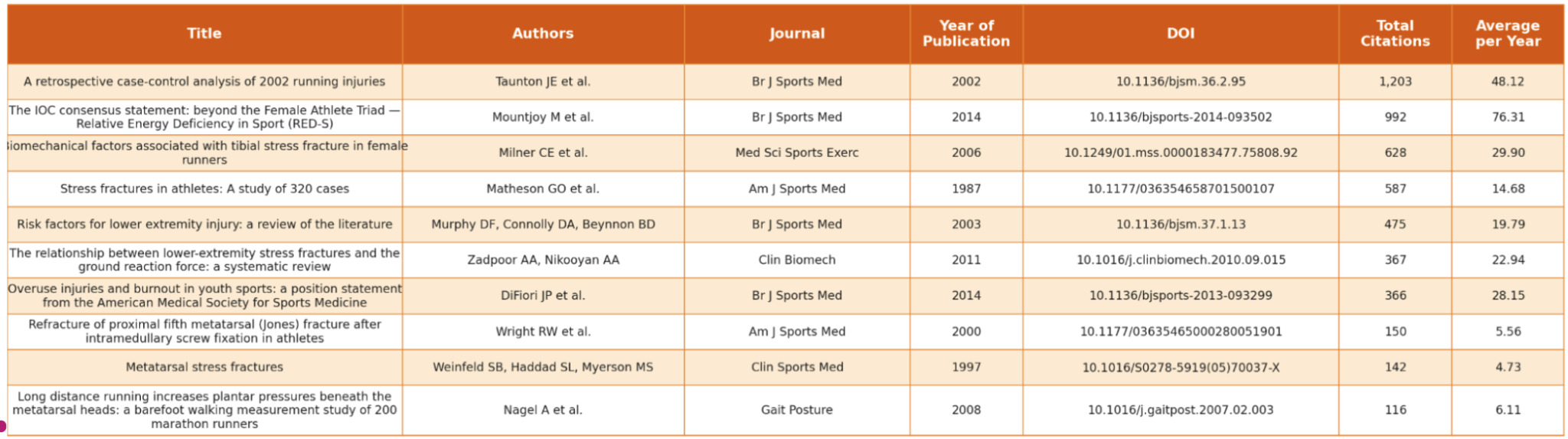
Through a citation analysis within the Web of Science, the top ten most cited articles were portrayed in Figure 8. The most ubiquitous citation comes from Taunton et al. in the Br J Sports Med (Published in 2002; 1,203 citations), who conducted a large study on running injuries and linked training loads and biomechanical factors to running-related stress fractures. Mountjoy et al. published in both the Br J Sports Med (published in 2014; 992 citations) and the Int J Sport Nutr Exerc Metab (published in 2018; 584 citations) and had the second- and fifth-most-cited papers in the literature. Mountjoy’s papers consisted of International Olympic Committee (IOC) consensus statements and reflected the field’s emphasis on energy availability and hormonal risk factors; the 2014 study defined the RED-S, and the 2018 study expanded the framework to male athletes. Milner et al. published in the Med Sci Sports Exerc (2006; 628), and addressed biomechanical and training-load predictions, which was the third most common paper in the study. Both of the DiFori articles centered on AMSSM positions and how there is growing attention to the younger athlete population.
DISCUSSION
Since the initial research in 1974, the research on stress features risks among athletes has increased, despite the plateau in publications within the last 5 years, and the growth can be split into two waves, distinguishing the literature from broader sports medicine publications trends. Around the year 2000 was the first wave, likely attributable to international sports participation and advances in military bone stress injury technology, such as MRI-based fracture staging. The more prominent wave between 2016 and 2021, including the peak year of 2021, with 147 publications, is parallel to the increase in the Female Athlete Triad and RED-S studies after the 2014 IOC consensus statement. As seen by Saunier and Chapurlat describe injuries as results of abnormal and repetitive loading, showing the historical emphasis on the use of mechanical interpretations of bone stress injuries.1 However, the newer perspectives of the Female Athlete Triad and RED-S can be seen through research conducted by Emran and Ganti, who reported a growth in the study after the introduction of the RED-S framework.9 This wave shows the shift in perspective from originally mechanical towards one that integrates endocrine, nutritional, and energy-availability hinders of bone stress injuries; this mirrors the developments in sports medicine, as pure biomechanical factors are being replaced by multifaceted injury models. The field, yielding approximately 105 publications per year, signaled a decline after 2021, which contradicts the growth pattern of the previous years.4–6 This decline can be because the literature had nearly been fulfilled; however, due to newer emerging factors like low energy availability and nutritional depletion, this is not the case. Yet due to these newer, specialized terminologies, the decrease seen in Figure 1 can be attributed to the search not covering the publications that use these new terminologies, showing a decrease in the search over time, but not the complete literature regarding stress fractures.
Within the literature, Sports Sciences leads the Web of Science categories, which differentiates the risk factors from metatarsal fractures within Orthopedics. This distinction indicates the field’s primary focus on exercise-based science and prevention, instead of surgical management. More interesting, however, are the Endocrinology & Metabolism, Nutrition & Dietetics, and Physiology categories situated at the top of the categories graph, because they are not abstract mechanical orthopedic injury studies. This essentially confirms the centralization of hormonal and nutritional components of risk factors residing as research themes, and recognizes that stress fractures can be metabolic as well as mechanical. The interpretation is similar to the research conducted by Fredericson et al., as they emphasize that stress fractures are prone to biomechanics, training methods, and nutrition or diets, suggesting that risks cannot be labeled to only repetitive loading.12 Trends of endocrinology and nutrition further indicate that the overall study has evolved past labeling stress fractures as only orthopedic injuries and more as a condition arising from connections between endocrine function, energy availability, bone metabolism, and mechanical loading.
Stress fracture risk factor research is led by a small group of highly productive researchers.
Existing research regarding stress fracture risk factors shows that the authors provide a centralized base for the study. The dominance shown by Tenforde, Fredericson, and Ackerman shows that the literature relies on a select number of influential writers. The field appears to be driven by a relatively small group of highly collaborative investigators. Highly recognized authors segment into two groups that differentiate stress fracture research from broader sports medicine publications. The first population represents the Relative Energy Deficiency in Sport (RED-S), and more specifically, the Female Athlete Triad, which is represented by authors like Ackerman, Nattiv, Barrack, and De Souza; the emergence of this community likely shows the impact of the growing recognition of endocrine and nutritional irregularities as bone stress factors. The second group targets another common stress fracture group prone to injuries: military recruits. European military communities within these papers show an increase in the diversity of the field and show that nutritional status and stress fracture research stay partially fragmented. Reputable authors in this cluster are Greeves, Hughes, and Milgrom. Milgrom’s early studies with military recruits in Israel established a precedent for succeeding researchers to build upon for future publications.2 The thematic distinctions between the clusters and research groups show that the overall research remains fractured, as there is a clear segment between the communities; since stress fractures arise from a compilation between both segments–hormonal function and energy availability in the first group, and the second talks about military recruits and repetitive loading–the limited collaboration inhibits the development of ideal models and prevention strategies.
Six clusters— from epidemiological exposure, Female Athlete Triad and RED-S, biomechanics and military loading, spinal stress fractures, foot-specific injuries, to various forms of imaging for younger athletes — revolving around keyword co-occurrence align directly with the layers of risk factors mentioned in the introduction. The Female Athlete Triad and RED-S category is especially relevant to the field because it confirmed the existence of hormonal risk factors and energy availability risk factors, and the coexistence of epidemiological, biomechanical, hormonal, imaging, and anatomical clusters shows the progression of the study into a multi-perspective field that investigates energy availability, skeletal adaptation, and interactions among physiology. Additionally, the separation between foot-specific and spinal clusters shows the growing specialization within research, where contemporary research has become focused on one anatomical region. Despite all this, a limitation occurs regarding keywords, and it is the representation of the term “Stress Fracture” in both a singular and plural form. This shows a community-wide error and inconsistency, which complicates the compilation of relevant studies for systematic reviews.
The American Journal of Sports Medicine conjoins the network system with a link strength of above 42%, higher than the second listed journal. Inevitably, it shows the trust given by the community as it serves as a major hub for publications and serves as a good indication of where a chunk of the primary research resides. The Journal of Bone & Mineral Research and the Journal of Clinical Endocrinology & Metabolism appear in the list of the topic-cited journals, and even though the journals are not centralized at solely mechanical orthopedic networking. Similarly, Military Medicine’s high placement reflects the new contributions of military studies to the literature. Among the co-cited authors, Bennell KL is the most outstanding in this field, as her reviews and publications have been cited virtually throughout every paper in this study.8
The citation landscape shows that, throughout the literature, the most-cited papers fall into two discrete themes: energy availability and hormonal factors– as seen in Mountjoy et al., 20145; Mountjoy et al., 20186; Nattiv et al., 20074– and biomechanical or training-load factors–seen in Taunton et al., 200213; Milner et al., 200614; Murphy et al., 2003.15 Furthermore, the prominence of the IOC RED-S consensus statements throughout the most-cited publications indicates the relevance of the Female Athlete Triad and the RED-S framework and shows that these topics have created a new perspective under which stress fracture risks are perceived and understood. The DiFori et al. AMSSM statements16,17 show how there is a new focus with the younger generation and youth athletes, and because of this, the literature requires distinct prevention protocols. Despite the existing literature showing developments in the study, the most-cited paper–Taunton et al., 2002–states that no influential or large study can be attributed to show causation and lacks evidence-based prevention protocols, creating a gap in the existing research specific to stress fracture prevention. The lack of highly cited intervention studies and unique prevention-based keyword clusters indicates that the existing research is oriented towards fracture risk identification rather than evidence-based risk prevention.
This bibliometric analysis discusses several trends and identifies priorities throughout the field. The literature itself has inconsistencies with the terminology used in systematic reviews, seen through the “Stress Fracture” term, which should be addressed through generalized indexing methods. Successive research should focus on the analysis of hormonal and biomechanical risk factors together, and the co-authorship network shows that these groups do not collaborate enough to fulfil the needs of the subject. Publications are confined mainly to the United States, the United Kingdom, and Australia, which limits the generalization and the applicability for the field’s validity. These three countries likely represent most of the publication space due to their world-renowned publication language (English) and their participation in organized athletics. Furthermore, due to this being a bibliometric analysis, it is subject to only the Web of Science, and therefore, the data is limited to several categories. Likewise, all bibliometric analysis is also limited by the restricted keyword sensitivity and citation lags throughout contemporary society. Regardless, as categories like the Female Athlete Triad and RED-S publications continue to grow and mature, the study positions itself ideally for the next set of integrated research.9,16,17 The overlay visualization further enforces this switch, as basic keywords like “Physical activity” switch to niche keywords like “energy availability,” showing that the literature is moving away from generalized descriptions of mechanical factors and towards newer frameworks that highlight the various determinants of bone health. Future bibliometric studies should evaluate whether increasing adoption of the terminology ‘bone stress injury’ alters apparent publication trends and keyword network structures.
Limitations
Bibliometric analyses evaluate publication patterns rather than methodological quality. Highly cited studies are not necessarily the highest-quality evidence and older publications inherently accumulate more citations.
CONCLUSION
This bibliometric analysis exposes the growing research focus on risk factors for stress fractures specific to athletes from 1974 to 2026, with the leading countries of publication quantity and collaboration being the United States, the United Kingdom, and Australia. The overall growth of the study can be isolated into two phases, with one beginning around 2000 and the other around 2016, from which the second wave stemmed from the Female Athlete Triad and the RED-S literature after the release of the 2014 IOC consensus statement. An evident nuance in the field is present when examining the keyword and co-authorship patterns, where a shift shows a movement from solely mechanical and orthopedic views to including hormonal, nutritional, and energy-based perspectives when discussing risk factors. The results also reveal a poor standardization of keywords–like the difference between the singular “stress fracture” versus the plural “stress fractures”–creating a field-wide indexing problem that makes review efforts more difficult. Future research can delve into integrated hormonal and biomechanical risk factor analysis and greater geographic diversity beyond high-income nations, both of which would be crucial to improve prevention and clinical outcomes within athletes.