

INTRODUCTION
Performance-related musculoskeletal disorders (PRMDs) are highly prevalent amongst musicians, with studies estimating lifetime prevalence rates of musculoskeletal complaints in professional musicians ranging from 62% to 93%.1 A total of 8.6 million injuries per relating to recreational activities or sports have been reported from 2011-2014,2 While performing arts medicine is a growing field, one of the major challenges to the betterment of the health of performing artists is the lack of research evidence supporting preventative approaches.3 Two subtypes within PRMDs are overuse syndromes, also known as repetitive strain injuries, and focal dystonia.
Overuse syndrome is characterized by pain and loss of function in muscles and ligaments through repetitive use and is a mechanical, load-related syndrome.4 A task-specific movement disorder, focal dystonia (FD), is characterized by a loss of voluntary motor control in highly trained movements.4 Affected musicians frequently experience career termination due to the disorder.5 While in the past, FD was classified as psychological, over time, the problem has been reclassified as neurological, although the specific pathophysiology of the disorder is still unclear.5 Although focal dystonia affects only approximately 1% of professional musicians, it is considered the most disabling PRMD due to its neurological basis and poor prognosis relative to overuse injury.6
Musculoskeletal disorders are highly prevalent across musician populations, with nearly three-quarters of instrumentalists reporting at least one PRMD over the course of their career.7 Female musicians and those playing string instruments have been consistently identified as particularly vulnerable compared to other musicians and instrument types, reporting both higher prevalence and greater injury severity than their counterparts.1 Recovery from PRMDs is often incomplete, with fewer than one in three affected musicians achieving full rehabilitation, highlighting the substantial and lasting occupational burden these disorders impose on performing artists.7
The primary symptoms of PRMDs are composed of a combination of muscular fatigue, localized inflammation, and compression of nerve fibers, presenting as pain, stiffness, and motor control loss, amongst others.8 Depending on the musician’s instrument and their posture, the affected anatomy varies although two major focal points exist: the cervical and thoracic spine, and the distal upper extremities.9 Chronic strain in the neck, shoulders, and upper back in the first focal point are prevalent primarily in string musicians and in flute players, some of the most affected musicians in terms of instrument type.8 Injury in the wrists, hands, and fingers comprise the other common anatomical site and typically present in pianists and guitarists.9
Risk factors of developing PRMDs have not been formally established due to the presence of methodological concerns in the literature, inconsistency amongst studies, particularly in their terminology, as well as the lack of longitudinal studies.10 However, there is growing evidence for biomechanical and technical factors such as posture, changes in intensity and playing hours, and repetition and overuse; psychological factors, specifically perfectionism and burnout; and intrinsic demographic factors, with research showing that female musicians and younger students have higher vulnerabilities to PRMDs.10
PRMDs experienced by musicians often become chronic, painful, disabling health problems that last, on average, from 2 to 5 years.11 The economic burden of PRMDs among musicians is significant, as they have pivotal effects on musical practice and performance, impacting career pathways.12 Underreporting is also a major part of PRMD exacerbation, as musicians often treat physical discomfort and repetitive strain as unavoidable parts of their craft, fueled by fear or stigma and job insecurity, delaying care until symptoms become severe.3
Unfortunately, part of the challenge for musicians with PRMDs is finding effective treatment options. Currently, there is no strong evidence of any specific, particular therapy working for musicians, as the effectiveness of methods varies drastically person-to-person and also depends heavily on the characteristics and symptoms of the PRMD they experience.13
Musicians represent a unique population of patients with overuse injuries involving the cervical spine, shoulder, elbow, wrist, and hand. Understanding publication trends in this field provides orthopedic surgeons with insight into evolving prevention strategies, rehabilitation approaches, and neurologic complications such as focal dystonia that may influence clinical management.
METHODS
Bibliometric analysis is a technique that quantifies literature and identifies important papers and authors, publication trends, and the contributions of nations or institutions. This paper will look to analyze the productivity and the impact of the published research for this field. To guarantee rigor and repeatability, standard bibliometric techniques for medical literature were used.14 By having and maintaining specific key words for this paper, it maintains replicability for future research.
Data for this bibliometric analysis were retrieved from the Web of Science Core Collection on June 16th, 2026.
For replicability purposes, this research was conducted by searching up specific key terms. The search strategy employed for this study was:
TS=( “musculoskeletal disorders” OR “musculoskeletal pain” OR “overuse syndrome” OR “repetitive strain injury” OR “focal dystonia” OR “performing arts medicine” OR “medical problems” OR “upper extremity” ) AND ( “musicians” OR “musician” OR “instrumentalist” OR “performing arts” OR “orchestral” OR “music students” OR “conservatory” )
The search strategy was intentionally broad to maximize sensitivity, with subsequent screening for relevance. A total of 1,094 articles ranging from 1984 to 2026 were retrieved for analysis. Having 1,094 accessible articles provides researchers with statistical depth for figures presented within this paper. This large sample size allows for an accurate representation of data.
VOSviewer was the principal tool of analysis and is particularly useful in bibliometric analysis, as it provides a robust tool for constructing and visualizing bibliometric networks.14 The counting method that was used for VOSviewer was “full counting” which means that each co-authorship and co-citation link has the same weight and is accounted for equally. Conversely, fractional counting, which fractionalizes the weights of the link, was not included in this bibliometric analysis.
RESULTS
A total of 1,094 articles were retrieved for analysis in VOSviewer, the ranging from final publication years 1984 to 2026. (Figure 1)
Since the first paper on musculoskeletal disorders in musicians was indexed in 1984, research output has grown steadily. At first, the research output grew gradually, then more noticeably after 2009, when 35 relevant studies were indexed. The publication output reached its peak in 2018, with 59 publications, and the numbers have remained consistently elevated since. There were 51, 53, and 48 publications that were recorded in the years 2021, 2022, and 2023, respectively. The 41 publications recorded in 2025 and 20 recorded in 2026 likely reflect indexing delays rather than a decline in research activity. Because the indexed period that was chosen for this research ended May 2026, there appears to be a significant decline in publications. Nevertheless, the decline in publications for this field has been shown due to the index period rather than a loss of funding or interest in this field. Given the trend over this year, research output for the year of 2026 shows that there will be an increase in publications, in comparison to other years. This continues the neutral trends shown from years after 2019. (Figure 1)
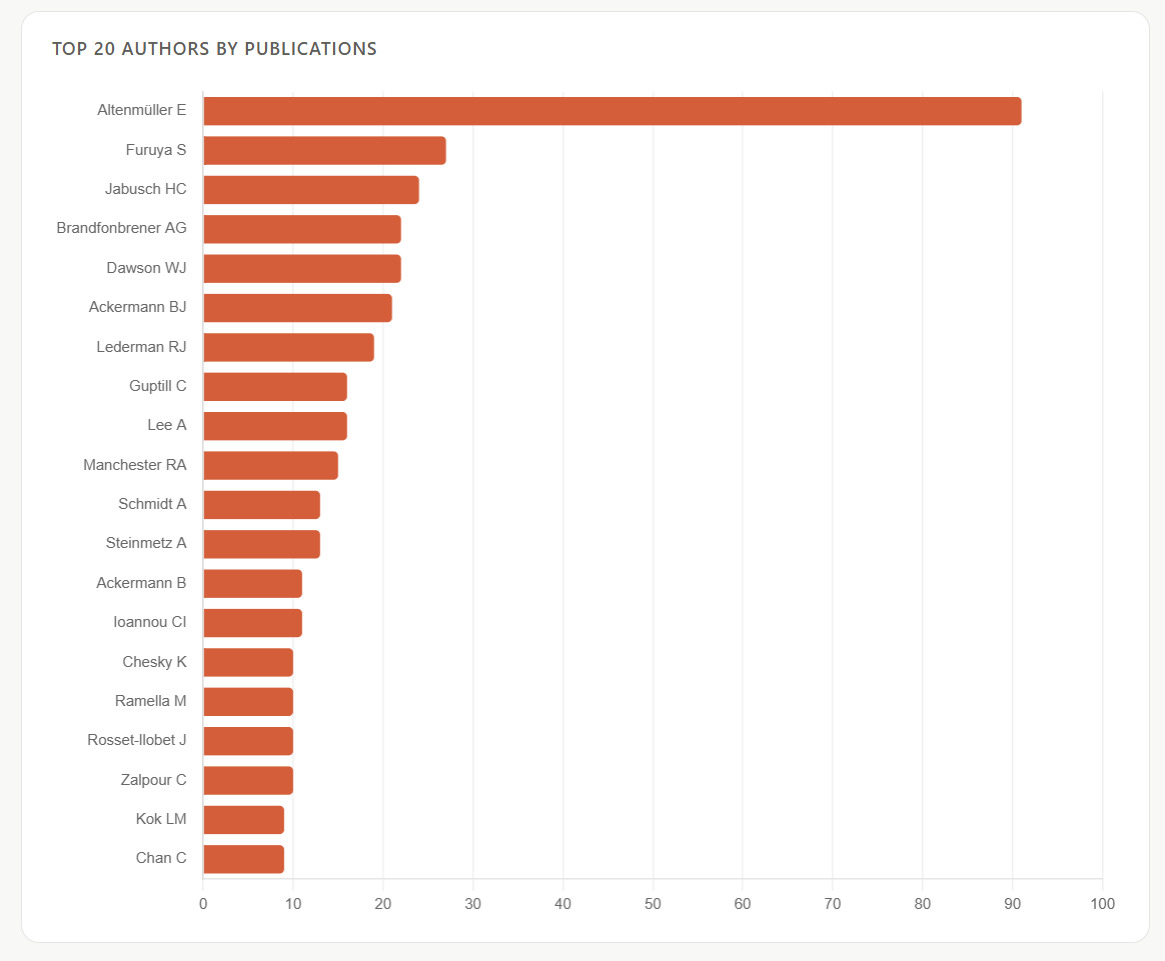
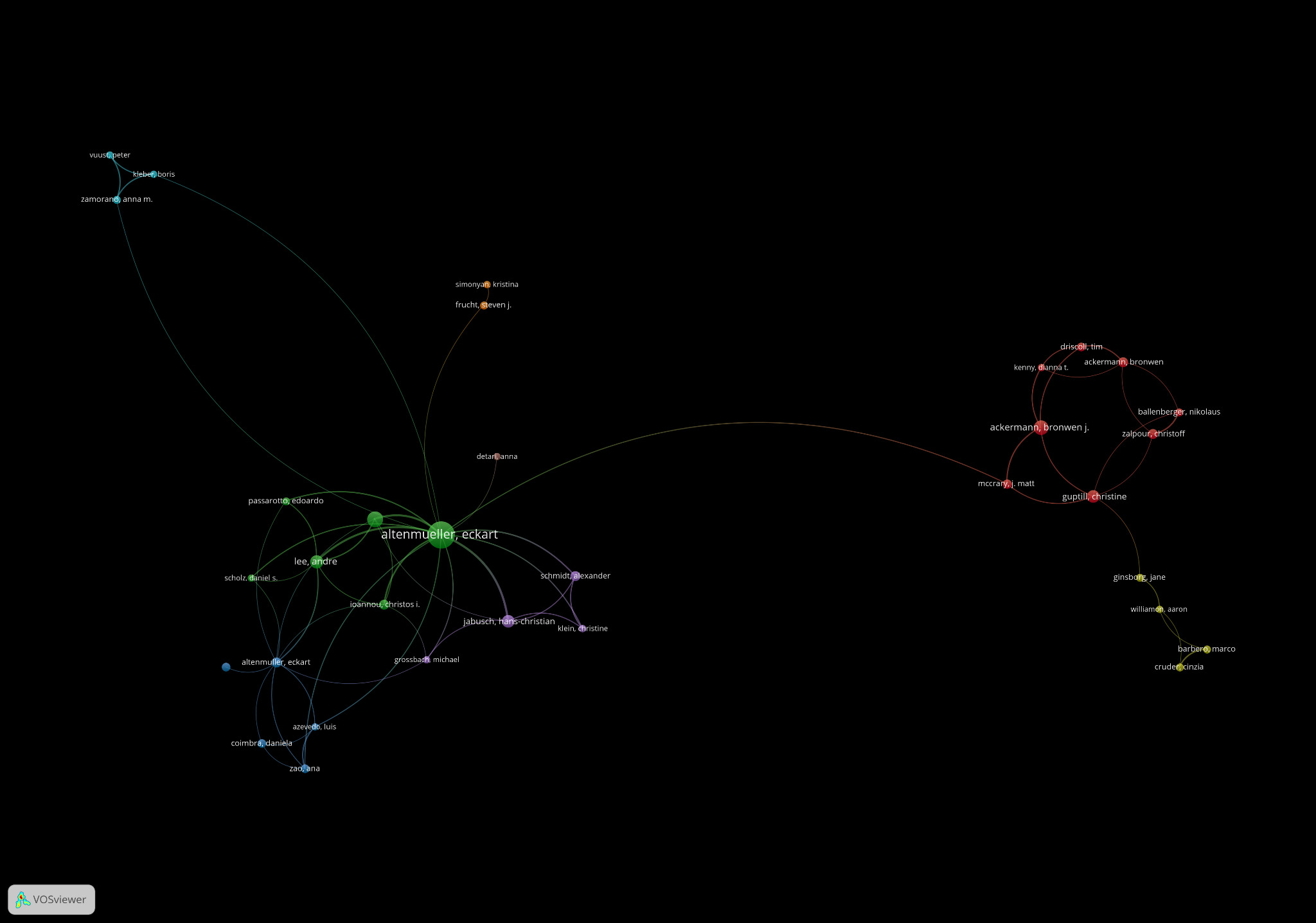
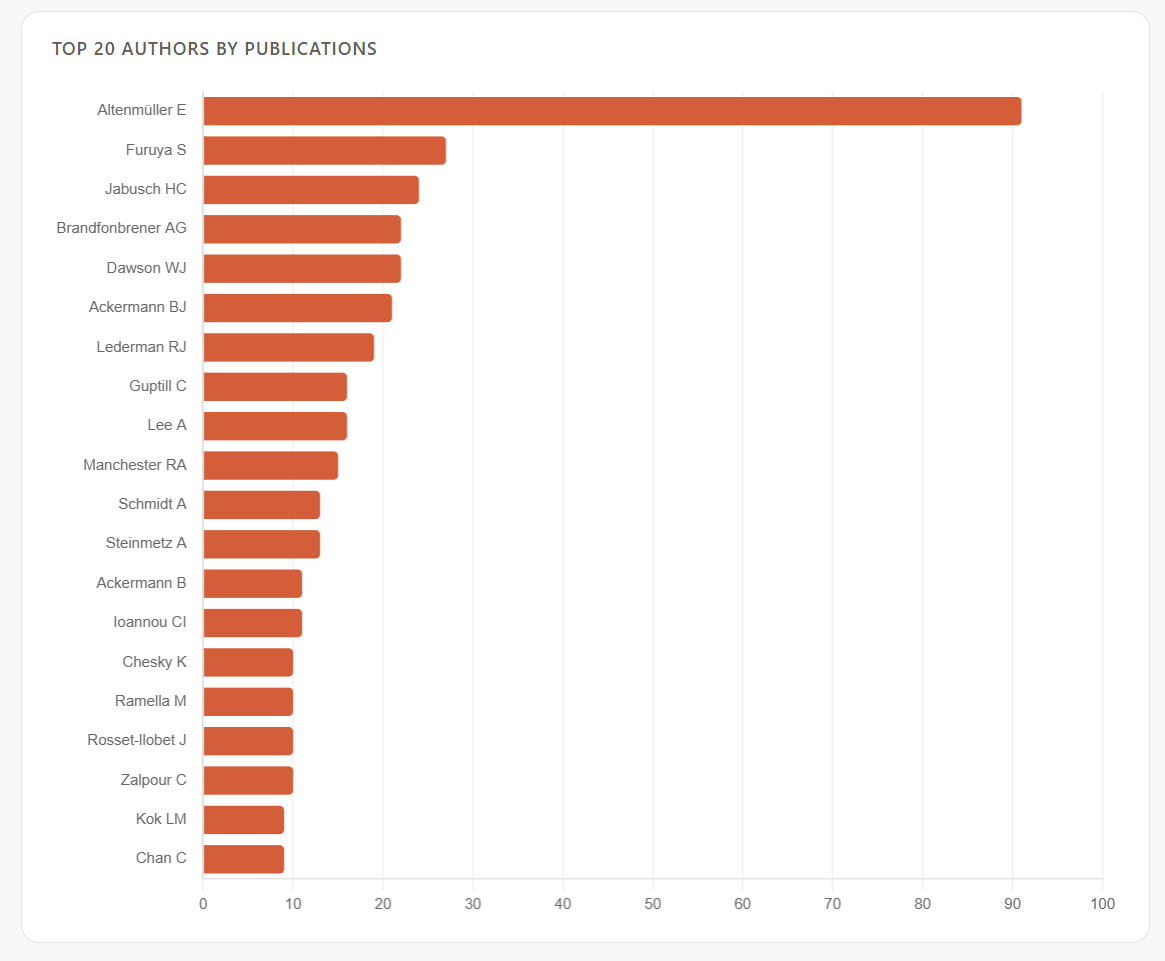
An analysis overview of the authorship of the articles revealed a concentrated core of highly productive and well-connected researchers driving this field (Figure 2). Eckart Altenmueller of the Hanover University of Music, Drama, and Media, emerged as the most prolific contributor by a substantial margin. Altenmueller led their field with 91 publications - more than tripling the output of the second most productive author, Satoshi Furuya. Satoshi Furuya (27 publications), Hans-Christian Jabusch (24), Alice Brandfonbrener (22), and William Dawson (22) rounded out the top five. The prominence of Altenmueller and Jabusch, both affiliated with the Institute of Music Physiology and Musicians’ Medicine in Hanover, reflects the outsized role of that institution in shaping this field.4,5
The co-occurrence analysis of keywords in titles and abstracts revealed two dominant and partially overlapping research clusters. (Figure 5) The first cluster centered on musculoskeletal and occupational health terminology — including “musicians,” “musicians’ health,” “overuse injury,” “muscle fatigue,” and “student musicians” — reflecting the clinical epidemiological thread of the literature. The second cluster was concentrated around neurological and motor control terminology, with “focal dystonia,” “hand dystonia,” “writer’s cramp,” “motor learning,” and “neuroplasticity” forming a tightly interconnected subgroup. This structural separation reflects the two major research traditions within the field, as described in the introduction, and suggests that while both streams are active, cross-disciplinary integration between the occupational health and neurological subfields remains limited. The color gradient for this figure shows the evolution of terms through a ten-year period between 2012-2022. The yellow color gradient indicates what will be defined as the current terms between 2021-2022 because the scope of the VOSviewer only indicates this range. This can be considered a limitation of this paper as there are still four years not mentioned within the range. Current terms within this time period include but are not limited to musicians’ health, musculoskeletal pain, music education, and playing related musculoskeletal. The green color gradient for this figure serves to represent the relatively old key terms circulated during the time period of 2016-2020. Terms mentioned within this period include, musicians, musician, epidemiology, and performing arts medicine. Epidemiology, a major term circulated during 2016-2020, serves to question how diseases spread, start, and how to parent them. The precursor to these green gradient terms are the blue gradient terms. These terms range between the period of 2012-2015, but are illustrated through VOSviewer graphs as more widespread and less clustered, differentiating from the other color gradient counterparts. Terms include overuse, hand, pianist, and focal dystonia. The graph clearly illustrates the clustering of both the green and yellow gradients while the blue gradient remains widespread. This represents less interdisciplinary work and less co-citations for the periodic range for 2012-2015.
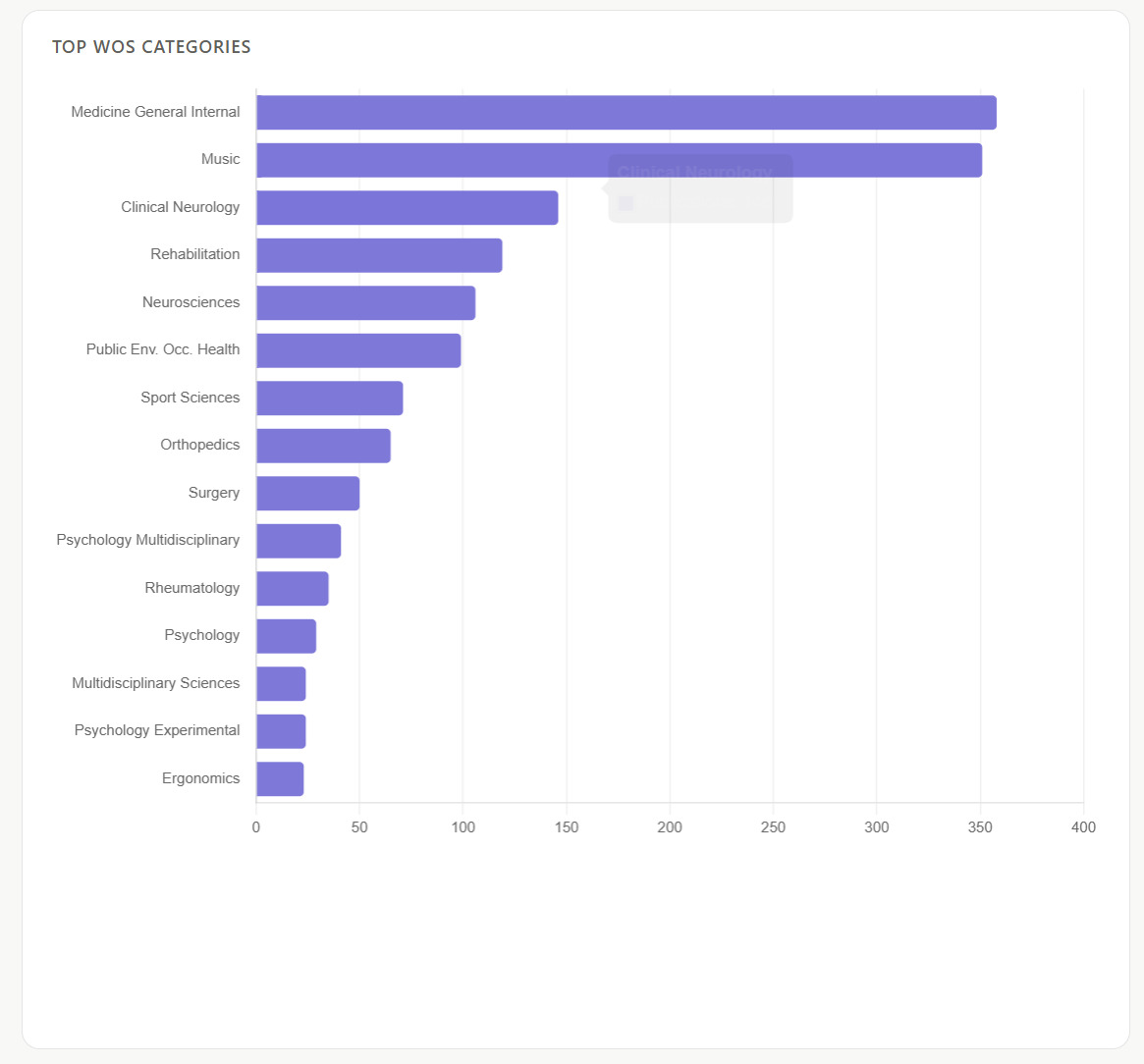
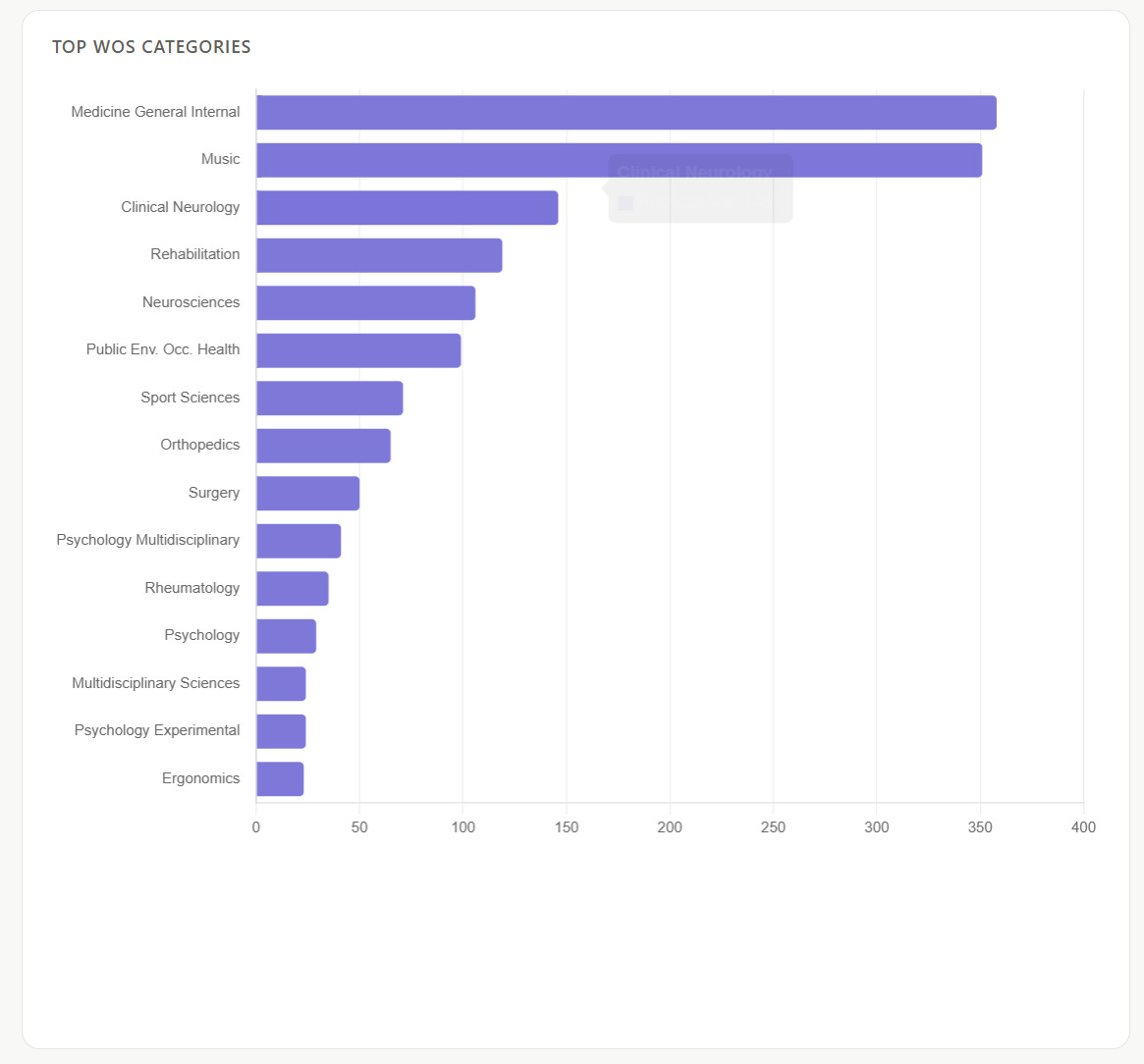
Surveying the WoS categories and research areas of included publications revealed a markedly interdisciplinary field. (Figure 3) General Internal Medicine (358 publications) and Music (351) were nearly tied as the most common categories, together accounting for the majority of indexed output. These were followed by Neurosciences and Neurology (211), Rehabilitation (119), Psychology (102), and Public, Environmental and Occupational Health (99). The breadth of categories — spanning sport sciences, orthopedics, surgery, ergonomics, and education — underscores that musician PRMD research does not belong to any single discipline and is distributed across a wide range of journals and fields.
The journal co-citation analysis of journals revealed that Medical Problems of Performing Artists dominated the field as the primary outlet for musician PRMD research. (Figure 6) This journal accounted for a disproportionately large share of the most-cited publications in the network, with a link strength substantially exceeding all other journals. Secondary outlets included journals in rehabilitation, neurology, and occupational medicine, though none approached the centrality of Medical Problems of Performing Artists. This concentration suggests the field relies heavily on a single specialty journal as its primary knowledge hub.
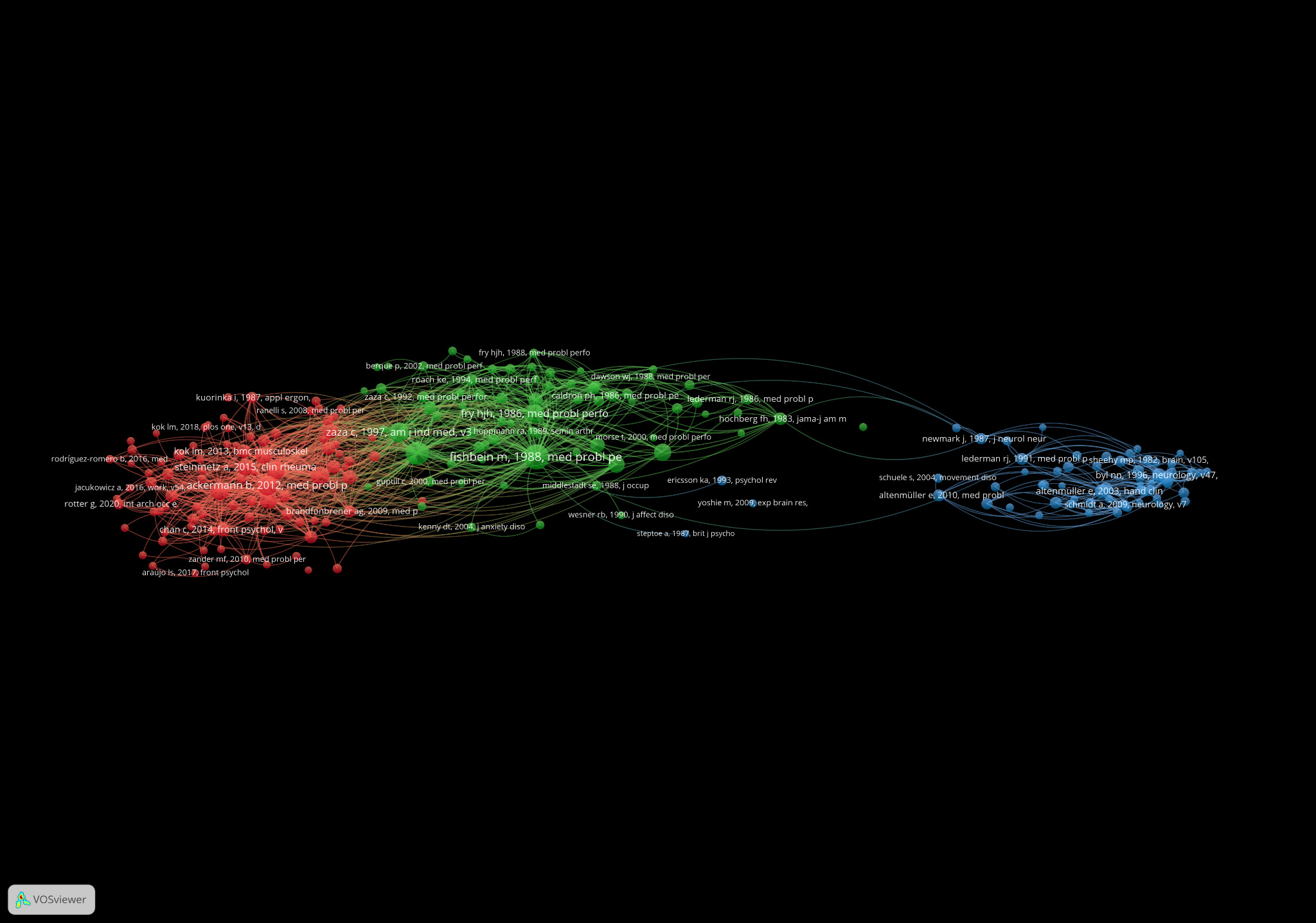
The author co-citation network, displaying the most frequently co-cited authors across all 1,094 publications, identified Eckart Altenmueller and William Dawson as the two most central figures in the intellectual structure of the field. (Figure 4) Other highly co-cited authors included Lederman RJ, Fry HJH, and Zaza C — foundational researchers whose early work on overuse syndromes and PRMD prevalence established the empirical base for the field. The circular structure of the network reflects a densely interconnected citation ecosystem, with a clear inner core of foundational authors surrounded by a larger ring of more specialized contributors.
This paper also takes the top ten most cited publications from the Web of Science. These ten publications which were retrieved from the citation report show that there remain two underlying distinct intellectual traditions for the field of research for PRMD (Table 1). The work from Muente et al. (2002, Nat Rev Neurosci, n=669 citations), which was presented as the highest cited publication, serves as a review for neuroplasticity adaptations in the musician’s brain. Taub et al. (1999, n=651), which presented information on Constraint-Induced Movement Therapy and author Elbert et al. (1998, n=333) on somatosensory cortical recognition, in focal hand dystonia, confirms the outsized citation influence of neuroscience literature. Zara et al. (1998, n=248) serves in the top ten as the most cited work on epidemiological benchmark while other sources such as Lockwood et al. (1989) as well as Lederman et al. (2003) are mentioned within the top ten as foundational clinical overviews. Both of these publications are cited because they establish the medical framework for performing arts medicine.

._network_visualization_in_which_each_node_represents_an_.png)
._overlay_visualization_in_which_yellow_represent.png)
DISCUSSION
The findings from this study determined that the research surrounding musculoskeletal disorders and overuse injuries for musicians has become a problem far greater than the simple documentation of “pain in musicians.” The bibliometric findings from this field of knowledge increasingly conceptualizes PRMDs as complex occupational and neurological conditions, developing within one of the most physically specialized artistic professions. Unlike other physical occupations where strain is openly acknowledged for its field, it is often socially understood that musicians are expected to maintain their technical precision, emotion composure, expression, and perform consistently: despite the discomfort and the repetitive physical strain. Research over the past four decades has experienced a sustained growth of publications on musician PRMD. This growth has not only shown the further development of academic attention for musician PRMD, but has also shown the overall shift which recognizes the substantial physiological and neurological demands of artistic performance.
The increase shown after 2009 of the increase in publication outputs may also reflect the growth of performing arts medicine, alongside growing awareness of occupational health risks within conservatories and professional orchestras. Pieces of literature published before 2009 had remained limited in amount, and remained that way, potentially because of the fact that physical strain, at the time, was historically normalized. The normalization of physical strain within the performance culture was seen as a consequence of discipline, endurance, or technical dedication. These traits were viewed positively by the performance culture and were not considered to be a legitimate medical concern for musicians. The normalization of physical strain may serve to explain partially the reason why PRMDs often evolve in musicians to become chronic, before any treatment is pursued. Musicians may delay reporting symptoms because of stigma, career instability, or fear of lost performance opportunities, which further increases the severity of PRMD in delayed care patients. At the same time, the emergence of specialized institutions such as the Institute of Music Physiology and Musicians’ Medicine in Hanover could have likely contributed substantially to the increasing international exposure of this research area to the public.1,3,15
Even though there has been a significant expansion, the trends shown within the publication trends suggest that there remains consistency in the gradual growth of the developments, rather than happening explosively over a short period of time. PRMD research has shown to be different from the highly commercialized medical specialties which are backed by neo-pharmaceutical developments or major tech investments. PRMD research is being constrained by the diverse factor of the disorders. Musicians repetitively engage in highly specialized motor behaviors which include, but aren’t limited to, asymmetrical posture, prolonged endurance, fine neuromuscular coordination, and extreme precision developed through years of repetitive training. Consequently, PRMD would have likely emerged due to a composite of interactions. These interactions include biomechanical strain, neurological adaptation, repetitive overuse, psychological stress, and perfectionism which all separately remain difficult to isolate experimentally. Furthermore, without a universal solution to serve as an effective treatment, literature surrounding this field may reflect the complexity of the underlying mechanisms rather than limited clinical interest alone.
The authorship and co-citation networks additionally highlight how a relatively small number of researchers and institutions have shaped the intellectual development of this field. Eckart Altenmueller’s dominance in both publication productivity and citation influence suggests that musician health research has been strongly influenced by a limited number of specialized research programs, particularly the Hanover group. While highly productive researchers are common within niche medical disciplines, the concentration identified in this analysis indicates that expertise within performing arts medicine remains comparatively centralized rather than broadly distributed across institutions. This structure demonstrates both the strengths and vulnerabilities of the field: musician PRMD research appears highly collaborative and interdisciplinary, yet still comparatively small relative to mainstream orthopedic, neurological, and rehabilitation specialties.
One of the most significant findings emerged from the keyword co-occurrence analysis, which suggested the presence of two partially distinct but related research traditions. One cluster focused primarily upon occupational health concepts such as “overuse injury,” “muscle fatigue,” and “student musicians,” emphasizing repetitive playing, postural strain, and injury prevalence. In contrast, the second cluster centered around neurological concepts including “focal dystonia,” “motor learning,” “cortical reorganization,” and “neuroplasticity,” reflecting literature concerned with maladaptive motor control and neurological adaptation. This separation suggests that PRMDs are not conceptualized uniformly throughout the literature; rather, different research communities appear to approach musician injuries through distinct biomechanical and neurological frameworks.
The ever so prominence of focal dystonia in the neurological cluster may be a partially important factor as this disorder aims to challenge the simplistic and transient interpretations of injuries in musicians, claiming it to be fundamentally a mechanical overuse. However, unlike the inflammatory conditions including tendonitis or muscular strain, focal dystonia targets and aims to disrupt the refined and repeated motor patterns that professional musicians spend years developing. In several cases that were studied the affected musicians have muscular strength, but at the same time lose the neurological precision necessary to complete relatively simplistic technical passages for professional musicians. With publications growing for this field of study, the increasing emphasis of neuroplasticity and motor learning, within these pieces of literature, suggests a general trend to transition away from the previous psychogenic interpretations toward models. This field emphasizes the use of maladaptive neurological adaptation, associated with extreme repetitive specialization.16,17
The diversity of Web of Science categories shows that there is a complex view of PRMDs involving more than just one specialty to framework. There is strong representation from general medicine, neuroscience, rehabilitation, psychology, ergonomics, orthopedics, and music, reflecting how cooperation across many fields is important in coming to a consensus on both treatment and diagnosis of PRMDs. While many occupational injuries can be categorized to an orthopedics or public health literature, musician PRMD research is clearly unorthodox in its makeup of clinical frameworks. This is likely important for communication of knowledge through clinicians, rehabilitation specialists, and music educators often access different portions of the literature through separate journal networks.15,18
One other finding that impacts this study involves the centrality of Medical Problems of Performing Artists within the journal co-citation network. The lack of diversity and interconnectedness within the landscape of the research on the journal level represents a larger issue of isolation of performing arts medicine from larger orthopedic, neurological, and rehabilitation journals and medical communities. Therefore, it is imperative that there is greater integration into medical literature to both highlight the significance of the field, drawing clinical visibility, and to draw from the effectiveness of translational research efforts.
The findings of this study point to the suggestion that PRMD for musicians is approaching a mature and integrative stage of development. Nevertheless, the findings of this study suggest that musician PRMD research is entering a more mature and integrative stage of development. Earlier literature focused primarily upon documenting prevalence and identifying vulnerable populations, whereas more recent work increasingly attempts to explain the neurological, biomechanical, and psychosocial mechanisms underlying injury development. Future research may benefit from greater integration between occupational health, neuroscience, rehabilitation, and music pedagogy, particularly through longitudinal studies capable of examining biomechanics, motor learning, psychological stress, and training intensity simultaneously. Ultimately, the evolution of this field reflects a growing recognition that musicians should not simply be viewed as artists performing through pain, but rather as highly specialized occupational performers whose physical and neurological health remain essential to sustaining long-term artistic performance and career longevity.19
The modest count for this paper’s citation count of the epidemiological benchmark1 compared to the work that is produced for neurological can suggest that the prevalence and dimensions of PRMD research are not taken in the same weighted equivalency within the cross-disciplinary citation networks. For the citation profile on the top ten most cited works illustrates the intellectual identity of this field has been more heavily influenced by neuroscience than by occupational medicine. Of the top four papers, three are focused primarily on both cortical reorganization and neuroplasticity.16,17,20 These two influences are disproportionate to the clinical burden of neurological PRMDs relative to mechanical overuse injuries. Without any sign of having a randomized controlled trial or even a prospective intervention study (research where investigators assign different people to get specific interventions) within the top ten most cited papers, this confirms that the evidence-based treatment protocols for musician PRMDs require substantially more investment.
The citation pattern shows that PRMD research is primarily influenced by two bodies of work. Neuroscience research done on sensorimotor control and neuroplasticity and the early clinical studies in performing arts medicine is where it is drawn from. This field having a prominence of highly cited neuroscience papers suggests that the primary frameworks used to explain PRMD have been produced from external sources outside the immediate field through research done on cortical reorganization and focal dystonia. Conversely, the high citation rate of broad medical and population studies indicates that these foundational/older articles have remained the guide for diagnosing and treating PRMD in clinical practice as they are used so many times throughout various publications.
Nevertheless, the prominent patterns show that PRMD research hasn’t been developed from one centralized-single-dominant internal literature base. This suggests that the research has been developed rather by the continued utilization of a controlled small amount of works from neighboring disciplines. In one case, neuroscience provides authors with the main mechanistic framing, the clinical and epidemiological studies provide the background information and practical steps. Furthermore, the continuation of the citing of the provided older sources indicates that the aren’t being fully emerged with the newer, PRMD-specific frameworks.
Limitations
The analysis of this paper is exclusively relied upon by the Web of Science Core collection. Because of the exclusivity of the source, relevant studies that are indexed in other databases may not have been included or captured for the study. Additionally, a limitation that arises from the nature that this paper is a bibliometric analysis is that it evaluates citation structures and thematic relationships rather than the methodological quality or clinical validity of other individual studies. Furthermore, an issue that arose from the process of this paper was the inconsistent terminology of the term PRMDs which remained a persistent issue throughout this literature. The inconsistency remained particularly when regarding PDRMs as overuse syndromes, repetitive strain injuries, and musician-specific neurological disorders. An area of this literature that was affected by this inconsistency specifically would be the keyword mapping structures and obscure relationships between subfields
CONCLUSION
This bibliometric analysis demonstrates the sustained growth of global research on performance-related musculoskeletal disorders (PRMDs) in musicians over the past four decades. The steady increase in publication output reflects the growing recognition of musician health as an important interdisciplinary field that spans orthopedics, occupational medicine, rehabilitation, neuroscience, and the performing arts. Germany, the United States, and Australia emerged as leading contributors to the literature, while specialized research groups, particularly those centered in Hanover, have played a pivotal role in shaping the intellectual development of the field.
The findings reveal two dominant and interconnected research themes: occupational health, which focuses on overuse injuries, musculoskeletal pain, and injury prevention, and neurological disorders, particularly focal dystonia and motor control dysfunction. Although both areas have matured substantially, the bibliometric network suggests that greater integration between these research traditions is needed to advance a more comprehensive understanding of musician health.
Future research should emphasize the development of evidence-based prevention strategies, longitudinal studies examining the natural history and risk factors of PRMDs, and stronger interdisciplinary collaboration among orthopedic surgeons, neurologists, rehabilitation specialists, occupational health researchers, and music educators. Such efforts will be essential to improving prevention, diagnosis, and treatment approaches, ultimately supporting the long-term health, performance, and career longevity of musicians worldwide.