
Introduction
Greater trochanteric pain syndrome is a common cause of lateral hip pain and encompasses several potentially overlapping disorders involving the greater trochanteric region, including trochanteric bursitis, gluteus medius or minimus tendinopathy, and abnormalities of the iliotibial band.1–3 Patients commonly report pain localized over the lateral hip that may worsen with walking, stair climbing, prolonged standing, direct pressure, or lying on the affected side. The diagnosis is frequently made clinically through a combination of symptom localization, tenderness over the greater trochanter, and reproduction of pain with provocative maneuvers. Imaging may be used when the diagnosis is uncertain, symptoms are refractory, or additional pathology is suspected.3,4
Initial management generally includes activity modification, physical therapy, a home exercise program, and nonsteroidal anti-inflammatory drugs.3,4 Corticosteroid injections are also commonly used and may provide relatively rapid pain relief.5,6 However, the duration of benefit may vary, and some patients experience only transient improvement. Other patients may prefer to avoid corticosteroid injections because of concerns regarding repeated steroid exposure, potential local tissue effects, systemic effects, or prior limited therapeutic benefit.5–7
Platelet-rich plasma (PRP) is an autologous blood-derived product containing concentrated platelets and associated bioactive mediators.8–12 PRP has been proposed as a treatment for various musculoskeletal conditions because of its potential to modulate inflammation and influence local tissue healing.8–10,12 We present three patients with clinically diagnosed greater trochanteric bursitis who underwent fluoroscopically guided PRP injections after failing conservative treatment, experiencing limited duration of benefit from corticosteroid injections, or declining corticosteroid treatment.
Case Presentation
Case 1
A woman in her 50s presented with persistent left lateral hip pain clinically consistent with greater trochanteric bursitis. Her pain was localized over the left greater trochanteric region and was reproduced with palpation of the affected area. She had completed conservative treatment that included physical therapy, a home exercise program, nonsteroidal anti-inflammatory drugs, and muscle relaxants without adequate or sustained improvement.
The patient had previously undergone two corticosteroid injections into the left greater trochanteric bursa. The first injection provided meaningful pain relief for approximately two months. A second corticosteroid injection was subsequently performed but provided only approximately three weeks of relief. Given the progressively shorter duration of benefit and persistence of her symptoms, additional treatment options were reviewed.
The patient was counseled regarding the possible role of PRP for greater trochanteric bursitis and greater trochanteric pain syndrome. After discussion of the potential benefits, limitations, alternatives, and uncertain duration of response, she elected to proceed with a fluoroscopically guided PRP injection into the left greater trochanteric bursa.
A total of 4cc of PRP was injected and the procedure was completed without complications. At three-month follow-up, the patient reported approximately 50% sustained improvement in her left lateral hip pain. No adverse events or delayed complications were noted.
Case 2
A woman in her 40s presented with bilateral lateral hip pain clinically consistent with bilateral greater trochanteric bursitis. Examination demonstrated tenderness over both greater trochanteric regions, corresponding to the locations of her typical pain. She had attempted physical therapy, a home exercise program, nonsteroidal anti-inflammatory drugs, and duloxetine without adequate improvement.
The patient had previously undergone a corticosteroid injection for her greater trochanteric pain, which provided only approximately one week of relief. Since she had limited duration of response, she was interested in exploring PRP as a treatment. After proper discussion and counseling, the patient elected to proceed with bilateral fluoroscopically guided PRP injections targeting the greater trochanteric bursae.
A total of 3cc of PRP was injected on the bursa with an additional 2cc injected around the supporting musculature The injections were completed without immediate complication. At six-week follow-up, she reported approximately 70% sustained improvement in her bilateral lateral hip pain. No complications were reported.
Case 3
A man in his 50s presented with persistent left lateral hip pain. His symptoms and physical examination were clinically consistent with left greater trochanteric bursitis, and the diagnosis was additionally supported by magnetic resonance imaging. He had attempted physical therapy, a home exercise program, and nonsteroidal anti-inflammatory drugs without adequate relief.
Treatment options were reviewed, including continued conservative management and a corticosteroid injection into the greater trochanteric bursa. The patient was not interested in receiving a corticosteroid injection and expressed a preference for a non-corticosteroid treatment. After being counseled regarding PRP treatment, he elected to undergo a fluoroscopically guided PRP injection into the left greater trochanteric bursa.
At four-week follow-up, the patient reported approximately 25% improvement in pain. Given the partial response and absence of complications, a repeat PRP injection was performed two weeks later. At three-month follow-up after the repeat injection, the patient reported approximately 85% sustained pain relief. No adverse events or delayed complications were noted following either procedure. During both injections a total of 4cc of PRP was injected on the bursa.
A summary of the patient outcomes is shown in Table 1 below.
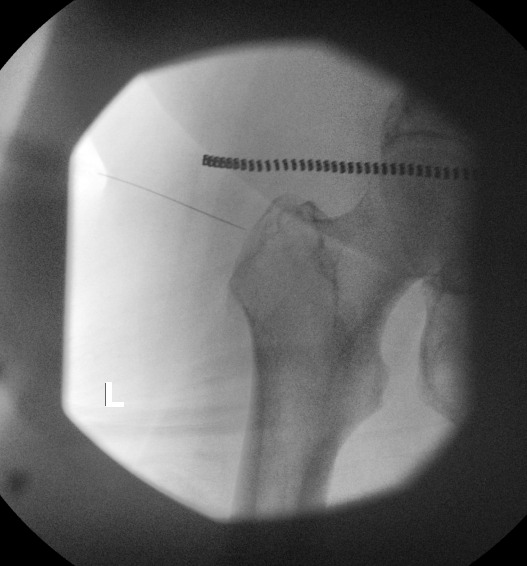
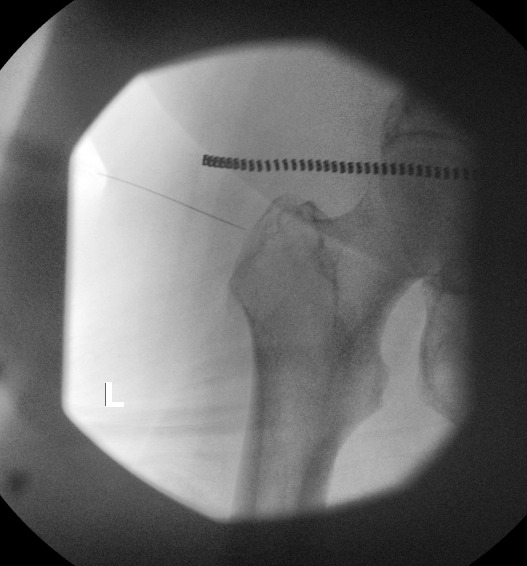
An example of the injection technique is shown in Figure 1 below.
Discussion
All three patients in this case series experienced clinically meaningful pain relief following PRP injection for greater trochanteric pain syndrome. Differences in the magnitude and duration of pain relief may reflect several factors, including individual patient characteristics, chronicity and severity of symptoms, timing of PRP administration, injection technique, and the number of injections performed.13,14 Despite these variations, consistent improvement observed across all three cases supports the potential role of PRP as a treatment option for patients with persistent greater trochanteric pain who have failed more conservative therapies.
The available literature also supports the potential effectiveness of PRP for chronic tendinopathic conditions involving the lateral hip. In a double-blind randomized controlled trial comparing a single PRP injection with a single corticosteroid injection for gluteal tendinopathy, patients receiving PRP demonstrated greater clinical improvement at 12 weeks.15 Importantly, subsequent long-term follow-up of the same cohort suggested that the benefit associated with PRP was sustained for up to 2 years. In contrast, the improvement associated with corticosteroid injection was not maintained beyond approximately 24 weeks.16 These findings are particularly relevant in the treatment of greater trochanteric pain syndrome, where corticosteroid injections may provide short-term analgesic benefit but are not always associated with durable symptom control.
PRP has also been evaluated for other musculoskeletal pain conditions, including axial low back and buttock pain related to the lumbar facet joints, with several studies reporting improvements in pain and functional outcomes following treatment.17–19 Although the underlying pathology differs from greater trochanteric pain syndrome, these studies add to a growing body of literature suggesting that PRP may have therapeutic value across a range of chronic musculoskeletal disorders.
Additional evidence specifically addressing extra-articular hip pathology is also encouraging. One systematic review evaluating PRP for conditions such as greater trochanteric pain syndrome and proximal hamstring pathology included 11 randomized controlled trials and reported improvements in both pain and function following PRP injection. Clinically meaningful outcome thresholds and pooled analyses generally favored PRP treatment, further supporting its potential utility for selected patients with extra-articular hip pain.20 However, heterogeneity in PRP preparation, injection protocols, comparator treatments, and follow-up durations remains an important limitation across the existing literature.
Taken together, these findings suggest that PRP may provide a valuable nonoperative treatment option for patients with persistent musculoskeletal pain, particularly when standard conservative therapies have been unsuccessful. PRP may also offer an alternative to repeated corticosteroid injections, especially in patients seeking a treatment strategy that may provide more durable symptom relief. Another favorable feature reported across much of the literature is the relatively low rate of significant adverse events associated with autologous PRP injections. Nevertheless, the available evidence remains heterogeneous, and standardized protocols regarding platelet concentration, leukocyte content, injection volume, number of treatments, and use of image guidance have not been firmly established.
This case series has several limitations. Most importantly, it includes only three patients and is descriptive in nature, without a control group or standardized treatment protocol. The patients underwent somewhat different PRP treatment approaches, and standardized patient-reported outcome measures were not consistently available. Consequently, the observed improvements cannot establish causality or demonstrate superiority of PRP over other treatments. However, the purpose of this case series is to provide real-world examples of PRP use specifically for greater trochanteric pain syndrome and to illustrate the favorable clinical responses observed despite variation in treatment approach. Given the relatively limited literature specifically describing PRP treatment for greater trochanteric pain syndrome in routine clinical practice, these cases provide additional supportive clinical observations. Larger prospective studies with standardized PRP preparation, injection protocols, validated outcome measures, and longer-term follow-up are needed to better define the role of PRP in the treatment of greater trochanteric pain syndrome.
Conclusion
This case series demonstrates favorable clinical outcomes following PRP injection in three patients with greater trochanteric pain syndrome who had persistent symptoms despite conservative treatment. Although the PRP preparation and treatment approaches varied between patients, all three experienced meaningful pain relief without significant reported complications. These findings support PRP as a potentially useful nonoperative treatment option for selected patients with refractory greater trochanteric pain syndrome, particularly when repeated corticosteroid injections are undesirable or have provided limited durability.