
Introduction
1. The Federal Anti-Kickback Statute (AKS)
The Federal Anti-Kickback Statute (42 U.S.C. § 1320a-7b(b)) prohibits the knowing and willful exchange of remuneration to induce or reward referrals for services or items reimbursable under federal health care programs.1,2 Remuneration is broadly defined and includes cash, gifts, below-market leases, consulting fees and profit-sharing.3 Violations are felonies and can result in fines up to $100,000 per violation and imprisonment up to 10 years.4,5 Because legitimate business arrangements can implicate the AKS, safe harbor regulations identify payment and business practices that are not treated as AKS offenses when every required element to the safe harbor is satisfied.6,7 The safe harbor regulations include various protected categories: investments, leases, personal services arrangements, value based arrangements, cybersecurity technology, and electronic health records arrangements.8
The AKS is distinct from the Physician Self-Referral Law (Stark Law). The Stark Law is a civil statute that prohibits physicians from referring Medicare or Medicaid patients for designated health care services (e.g., imaging, physical therapy) to entities with which they or immediate family members have a financial relationship, unless an exception applies (for example: referrals to academic medical centers).9 The Stark Law exceptions include select services from academic medical centers, bona fide employment relationships/contracts, and fair-market leases in exchange for designated health services. Notably, Ambulatory Surgery Centers (ASCs) are not designated health services, so the Stark Law does not typically apply to ASC ownership; however, AKS safe harbors may still be relevant to ASC activities when an affiliated practice separately furnishes or bills designated health services such as imaging or therapy.10
2. Why Orthopedics?
Existing literature discusses AKS safe harbors in surgical practice and ambulatory care, but relatively little literature focuses specifically on orthopedic practice. Satiani’s review of anti-kickback laws for vascular surgeons highlights the importance of understanding protections for private practice.7 Morrison discusses how physician ownership and self-referrals create AKS concerns; similarly, DeMuro discusses how AKS concerns can stem from ASCs.11,12 Other publications have also examined how Stark Law and AKS rules affect orthopedic practice, particularly when physicians participate in imaging, therapy, leasing, or ownership models.9,13,14 These sources suggest that AKS compliance is not a one size fits all issue, which is especially important in orthopedics; orthopedic procedures are increasingly performed in outpatient settings and where surgeon involvement in ASCs, imaging, rehabilitation, implants, and value based payment models may cause opportunities for heightened regulatory scrutiny.
Orthopedic surgeons often provide high cost procedural care through ASCs, bundled payment programs, and other value based models.10,15–17 These arrangements may involve imaging leases, physical therapy contracts, implantable devices, and rehabilitation services, creating multiple points where AKS safe harbor considerations become relevant.1,9,11,14 Together, these factors make orthopedics distinct from many other specialties in both the frequency and complexity of AKS and safe harbor considerations.1,2,9 This specialty’s combination of expensive implantable devices, industry collaboration, outpatient surgical practice ownership, and high procedural reimbursement creates a regulatory landscape in which compliance becomes especially necessary. This risk is compounded by a notable gap in existing literature: while the clinical benefits of these coordinated models are well documented, there is a lack of clear, orthopedic-specific literature on how to structure these modern business arrangements to meet strict legal safe harbors. The expansion of digital health (remote rehabilitation, wearable sensors) and shift toward value-based reimbursement further blur the lines between care delivery and potential inducements of AKS.8,16 As surgeons take on the role of both provider and business owner, these “gray areas” of compliance can create a significant barrier to innovation, leaving practitioners to navigate complex federal regulations without guidance. This review aims to show how AKS safe harbors apply in orthopedics and provide practical insight for compliance.
Methods
This study was conducted as a modified PRISMA-guided rapid review to provide a structured synthesis of literature and regulatory sources relevant to Anti-Kickback Statute (AKS) safe harbors in orthopedic practice. A rapid, bifurcated review approach was selected because the purpose of this paper was not to perform a meta analysis or assess clinical outcomes quantitatively, but rather to identify and organize literature relevant to AKS safe harbor compliance. The available literature consists largely of heterogeneous legal reviews, regulatory materials, and specialty specific commentaries rather than comparable quantitative analyses. Because AKS safe harbor interpretation depends on evolving federal regulations, the review combined a structured literature search with supplementary findings for further support.
1. Search Strategy
A structured search was performed by combining AKS terminology with safe-harbor and orthopedic keywords: (“Anti-Kickback Statute”[tiab] OR “anti kickback”[tiab] OR “anti-kickback”[tiab]) AND (“safe harbor”[tiab] OR “safe harbors”[tiab] OR “safe-harbor”[tiab]) AND (orthop*[tiab] OR orthopaed*[tiab] OR “ambulatory surgery center”[tiab] OR ASC[tiab]). We searched PubMed, PMC, and Google Scholar from inception to October 29, 2025, when the search was conducted. OIG, CMS, Federal Register, DOJ, AAOS, and statutes/regulations relevant to AKS safe harbors were all searched and analyzed for the inception of this study.
2. Eligibility Criteria
Duplicate studies were removed in Covidence. Titles and abstracts were screened independently by two reviewers. Full texts of potentially eligible articles were reviewed against inclusion criteria: U.S. jurisdiction, explicit discussion of AKS safe harbors, and relevance to orthopedic practice or ASC ownership. Data extraction captured citation details and orthopedic examples (total knee arthroplasty (TKA) at ASCs, imaging leases, and call coverage). Supplemental sources added after the formal PRISMA search were eligible for contextual inclusion if they were official federal materials, current regulatory provisions, OIG advisory opinions, DOJ enforcement releases, or professional ethical guidance directly relevant to AKS, Stark Law, and/or safe harbors.
3. Data Extraction and Additional Sources
The included sources consisted of legal reviews, federal regulations, health policy commentaries, and orthopedic clinical or practice-based articles. Because these sources varied substantially in design and purpose, findings were synthesized narratively by safe harbor category rather than through quantitative analysis. Supplemental regulatory and enforcement sources were extracted separately for further narrative support. This approach preserved the transparency of the original rapid review while allowing the final manuscript to reflect current legal guidance and recent orthopedic Kickback enforcement examples.
After completion of the formal PRISMA search, additional sources were added to update the legal and practice context of the manuscript. These supplemental sources included OIG compliance guidance, Federal Register final rules, Code of Federal Regulations provisions, recent OIG advisory opinions, DOJ enforcement materials, statutory materials, and professional ethics guidance relevant to orthopedic practice. These sources were used to support the Introduction, Discussion, Conclusion, tables, and practical recommendations with current regulatory and enforcement context.
Results
1. Study Selection and Source Characteristics
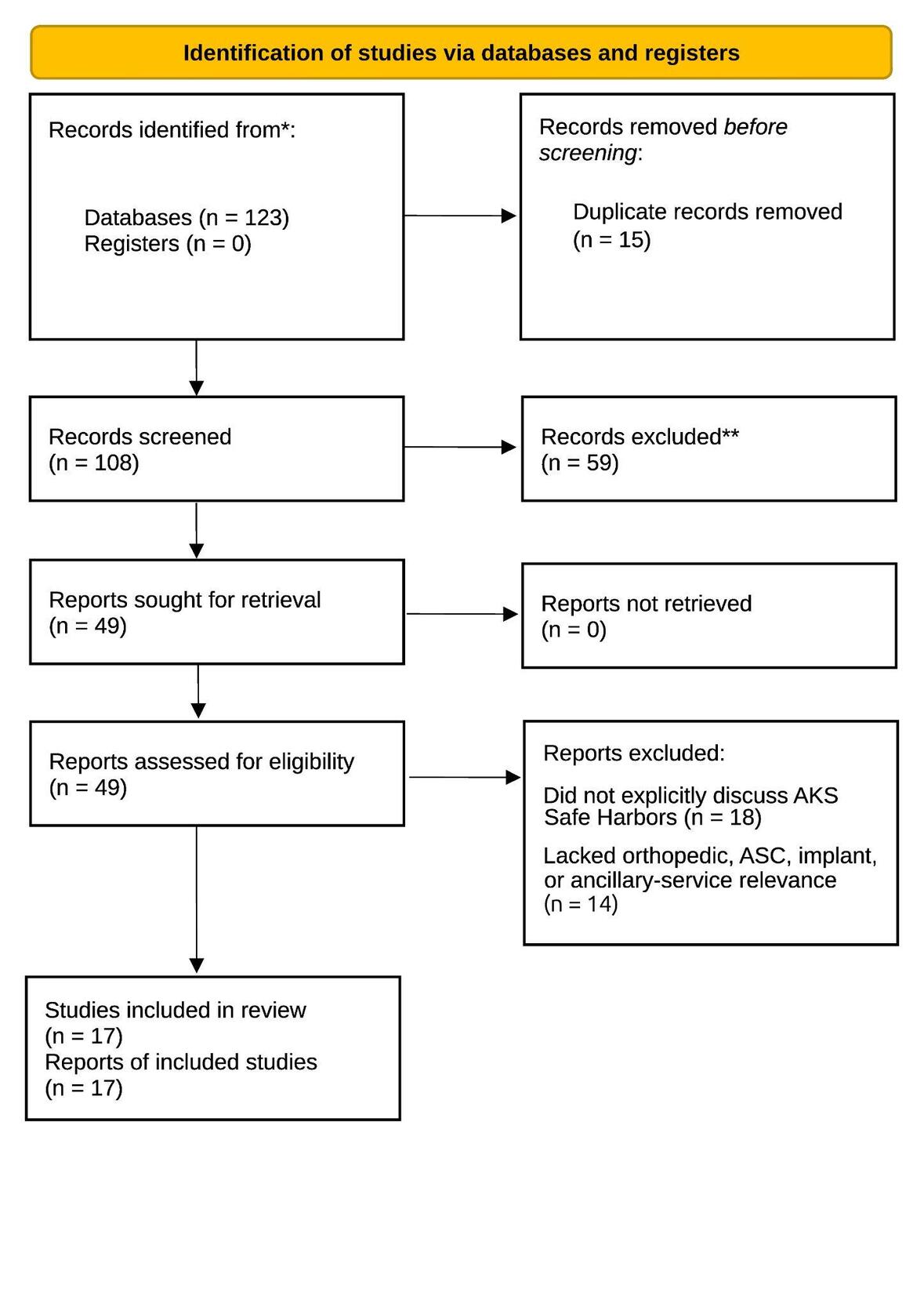
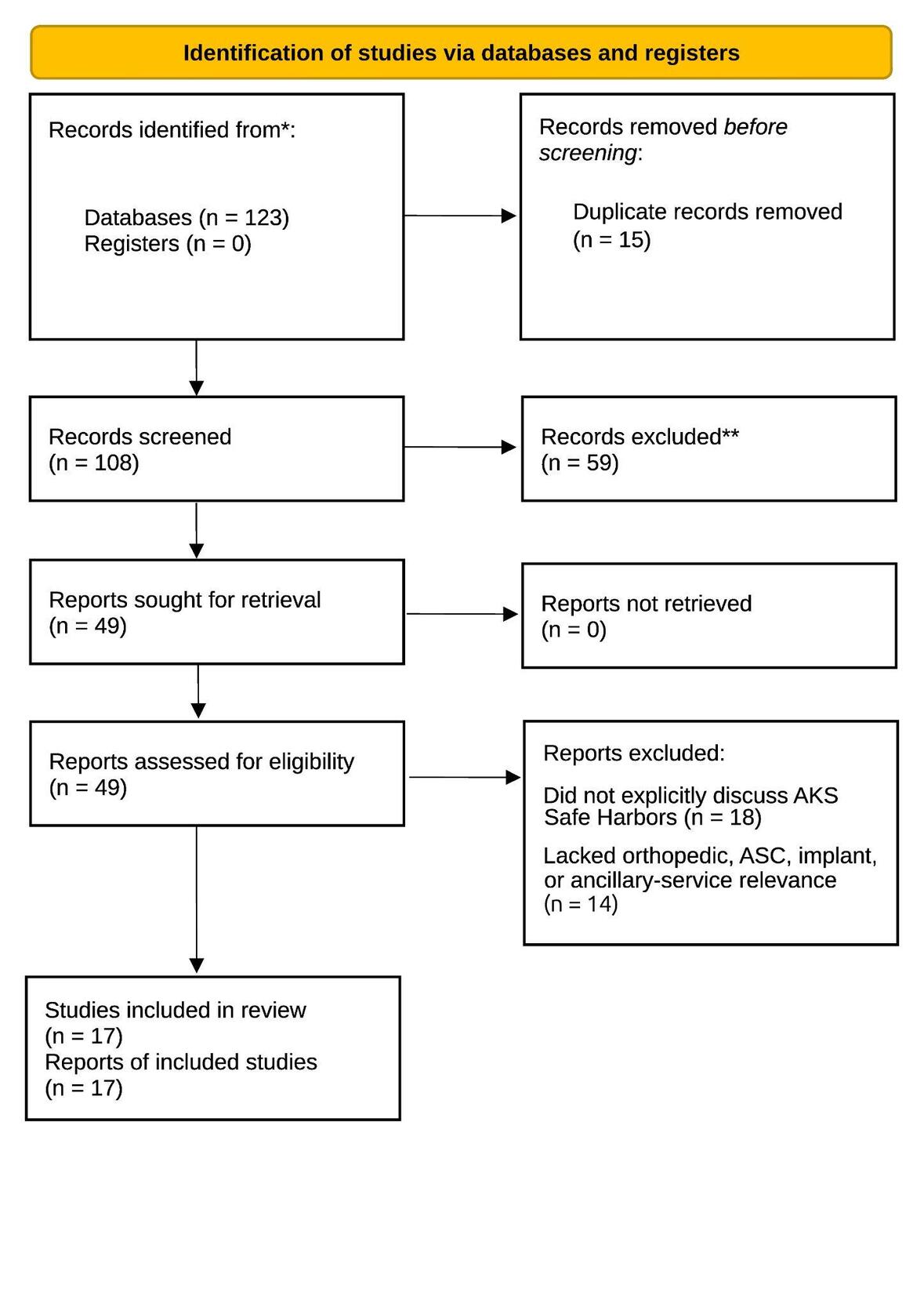
Out of 123 records (108 after de-duplication), 17 publications met inclusion criteria. 59 records were excluded as irrelevant during title/abstract screening. 32 full text sources were excluded for either not discussing safe harbors (n = 18) or for lacking orthopedic relevance (n = 14). The included studies comprised legal reviews (n = 7), orthopedic clinical/policy articles (n = 5), federal regulations (n = 4) and policy commentaries (n = 1). An additional 18 sources were added after the October 29, 2025 PRISMA search to update the manuscript and further support this study. These post search sources consisted of federal regulatory or statutory materials and compliance guidance (n = 6), OIG advisory opinions (n = 3), DOJ enforcement or settlement materials (n = 6), and professional ethics or clinical ethics guidance (n = 3).
Across the complete 35 source bibliography, the evidence base remained narrative, legal, regulatory, or policy based rather than quantitative. The PRISMA derived sources established the core safe harbor framework relevant to orthopedics, while the supplemental sources updated that framework with current OIG guidance, codified AKS and Stark Law exceptions, recent federal enforcement examples, and ethical guidance for orthopedic surgeons. Together, the sources supported a practical synthesis emphasizing written agreements, fair market value compensation, commercial reasonableness, patient disclosure when appropriate, separation of compensation from referral volume or implant use, documentation of legitimate services, and ongoing compliance review.
2. ASC Ownership Safe Harbor
The included sources described the ASC safe harbor, or aspects within the scope of safe harbor, under 42 C.F.R. § 1001.952(r). Legal analyses summarized the general conditions: the entity must be a Medicare-certified ASC in which patients must be informed of physician ownership, investment terms cannot be related to the volume or value of referrals, investors may not receive loans or loan guarantees to acquire their interest, distributions must be proportional to capital investment, services must be integral to primary procedures and not separately billed, and Medicare beneficiaries must be treated in a nondiscriminatory manner.11,12,18 Orthopedic specific practice articles highlighted the growth of TKA and other joint procedures in ASCs,15 emphasizing that compliance with the safe harbor can enable surgeon-owned centers to participate in protected payment models while mitigating the risk of fraud. However, improper documentation of compliance remains a frequent enforcement target; for instance, law-firm commentaries stressed that buy-in prices must reflect fair-market value and cannot be subsidized by existing investors. Documentation of commercial reasonableness and patient disclosure forms are critical to defending an ASC’s structure during audits.18,19
3. Equipment and Space Rental Safe Harbors
Orthopedic groups commonly lease MRI, CT, fluoroscopy and physical therapy space. The equipment rental safe harbor (42 C.F.R. § 1001.952(c)) and space rental safe harbor (42 C.F.R. § 1001.952(b)) allow such leases when specific criteria are met: the lease must be written and signed, specify a term of at least one year, clearly identify the equipment, and set the price to be consistent with fair-market value. The arrangement must remain commercially reasonable even if no referrals occur. Several included sources provided examples where clinics leased imaging machines at nominal rates in exchange for referrals; the OIG characterized these arrangements as disguised kickbacks. Clinics must obtain independent fair market value (FMV) appraisals and conduct annual compliance audits to ensure compliance.18,19
4. Personal Services and Management Contracts
Orthopedic physician employment and service arrangements may also implicate both AKS and safe harbor regulations. Under the personal services and management contracts safe harbor (42 C.F.R. § 1001.952(d)), written agreements must cover all services provided, have a term of at least one year, specify compensation in advance, ensure FMV and forbid compensation tied to referrals.18 Various legal reviews noted that part-time and sporadic services previously fell outside the safe harbor; the OIG’s 2020 Final Rule now provides flexibility for part-time arrangements and introduces outcomes-based payments. This change allows practices to incentivize surgeons for improving functional outcomes or reducing readmissions without violating the AKS, provided payments are linked to objective, predefined standards and exclude high-risk entities.18,20
5. Value based Care Arrangements
Recent policy evolution reflects a shift toward value-based care. The 2020 OIG Final Rule introduced three new safe harbors for value-based arrangements: care coordination arrangements (no risk required), arrangements with substantial downside risk and arrangements with full financial risk.18,20 These harbors protect non-cash benefits (items of value to physicians such as remote monitoring devices or software), and the latter two also protect monetary payments when parties assume financial risk. Orthopedic commentaries argued that specific bundled payments for TKA, digital rehabilitation platforms, and joint replacement registries fit within these harbors.16,18,20
Discussion
Orthopedic surgeons should view AKS safe harbors as structured compliance frameworks rather than blanket authorization for any business arrangement. Orthopedic practice frequently requires coordination among surgeons, hospitals, ASCs, imaging centers, physical therapy providers, implant manufacturers, durable medical equipment suppliers, and other ancillary service lines. Modern orthopedic care depends on collaboration, technical training, outpatient surgical efficiency, implant innovation, and coordinated rehabilitation. The compliance challenge is determining when a legitimate relationship becomes remuneration intended to induce or reward referrals, implant selection, facility use, or ordering of services reimbursable by federal health care programs.18,19,21,22
For the practicing U.S. orthopedic surgeon, AKS analysis is fact-specific; safe harbors identify arrangements that, if every element is satisfied, are protected from AKS liability. Failure to satisfy a safe harbor does not automatically establish an AKS violation, but it does mean the arrangement requires individualized analysis of the facts and intent. Important factors include the nature of the remuneration, fair market value, commercial reasonableness, the parties’ referral relationship, documentation, and whether compensation is connected to the volume or value of federal health care program business.18–20,22,23 This differs from the Stark Law, which is a civil, self referral statute focused on Medicare designated health services and applicable exceptions.21,23 Therefore, surgeons should avoid treating “fair market value,” “written contract,” or “Stark compliant” as complete answers to an AKS question. These safeguards are important, but they do not cure an arrangement that is otherwise intended to induce or reward referrals.
1. Gray Zones in Orthopedics
The highest risk areas in orthopedics are often not explicit cash for referral agreements. More commonly, they are gray zone relationships that have a plausible clinical, educational, operational, or innovation purpose while also creating financial incentives that could affect clinical judgment. Examples include consulting agreements, royalty arrangements, industry funded travel, speaker programs, product development agreements, medical directorships, ASC ownership, physician owned distributorships, discounted products, data registry payments, co-management agreements, lease arrangements, and ancillary service ownership.18–21,23–25
Consulting and royalty arrangements are particularly important gray zones. Orthopedic surgeons often provide legitimate value to device companies by advising on implant design, instrumentation, surgical technique, clinical education, and product evaluation. These services may support innovation and patient care when they are based on genuine expertise, documented in writing, paid at fair market value, and supported by actual work product. Risk increases when compensation is tied directly or indirectly to product sales, product line revenue, implant utilization, or the surgeon’s ability to influence purchasing decisions. In OIG Advisory Opinion 26-10, OIG issued an unfavorable opinion regarding a proposed arrangement in which an orthopedic medical technology company would pay certain consultants, often physicians, for product line consulting services. OIG recognized that consulting arrangements can serve legitimate purposes, but expressed concern that product line royalty payments could incentivize loyalty to, advocacy for, or recommendations of the company’s products.24 A lower risk consulting agreement should define the services, document the company’s legitimate need, use objective criteria to select consultants, set compensation in advance, avoid any link to referrals or product use, require contemporaneous time records or deliverables, and separate the surgeon’s clinical purchasing decisions from personal financial benefit.18–20,24
Educational activities present a similar risk. Industry support for training may be appropriate when the education is modest, clinically relevant, and not conditioned on referrals or product selection. However, the risk profile changes when “education” becomes a vehicle for entertainment, luxury travel, excessive meals, or access to high volume surgeons.25 Recent DOJ settlements in the orthopedic and spine device space illustrate this concern. In 2025, Aesculap Implant Systems agreed to pay $38.5 million to resolve False Claims Act allegations related to knee replacement devices and alleged unlawful remuneration to a physician, including consulting payments, free international travel, and entertainment.26 In 2024, Innovasis Inc. and two executives agreed to pay $12 million to resolve allegations that they provided improper remuneration to orthopedic surgeons and neurosurgeons through consulting fees, intellectual property and licensing fees, registry payments, performance shares, travel, dinners, and holiday parties.27 It is important to note that these settlements are better described as allegations resolved by settlement, rather than findings of liability.
Device representatives in the operating room are another familiar gray zone. Representatives may provide useful technical information regarding trays, instrumentation, implants, and product specific logistics. Their presence should not substitute for surgeon training or independent clinical judgment. The surgeon remains responsible for knowing the implant, understanding the technique, selecting the appropriate device, and protecting the patient’s interests. When a representative’s role becomes indistinguishable from surgical decision-making or operative instruction, the concern is both legal and ethical.28
2. Risk Management for Practicing Orthopedic Surgeons
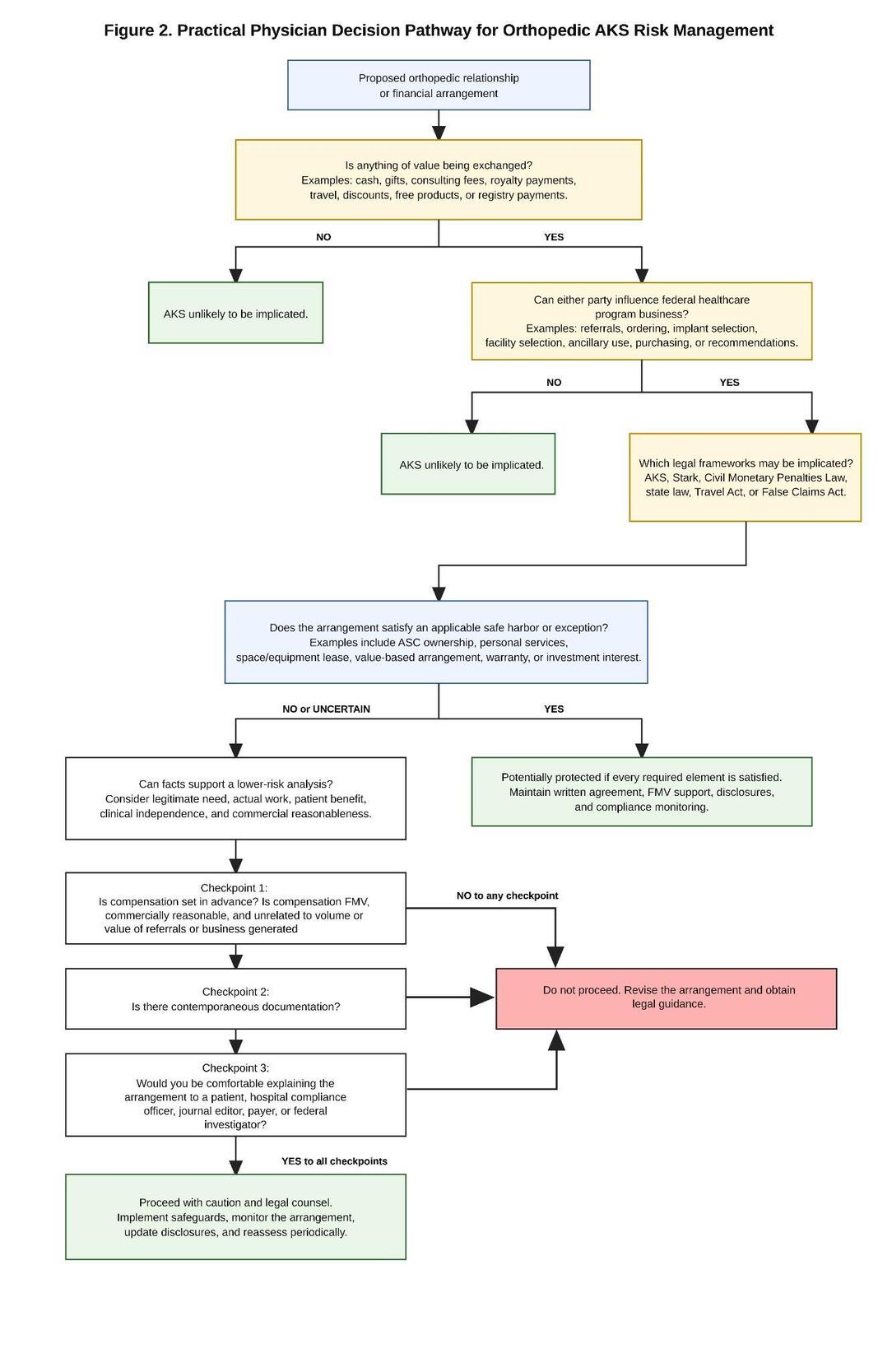
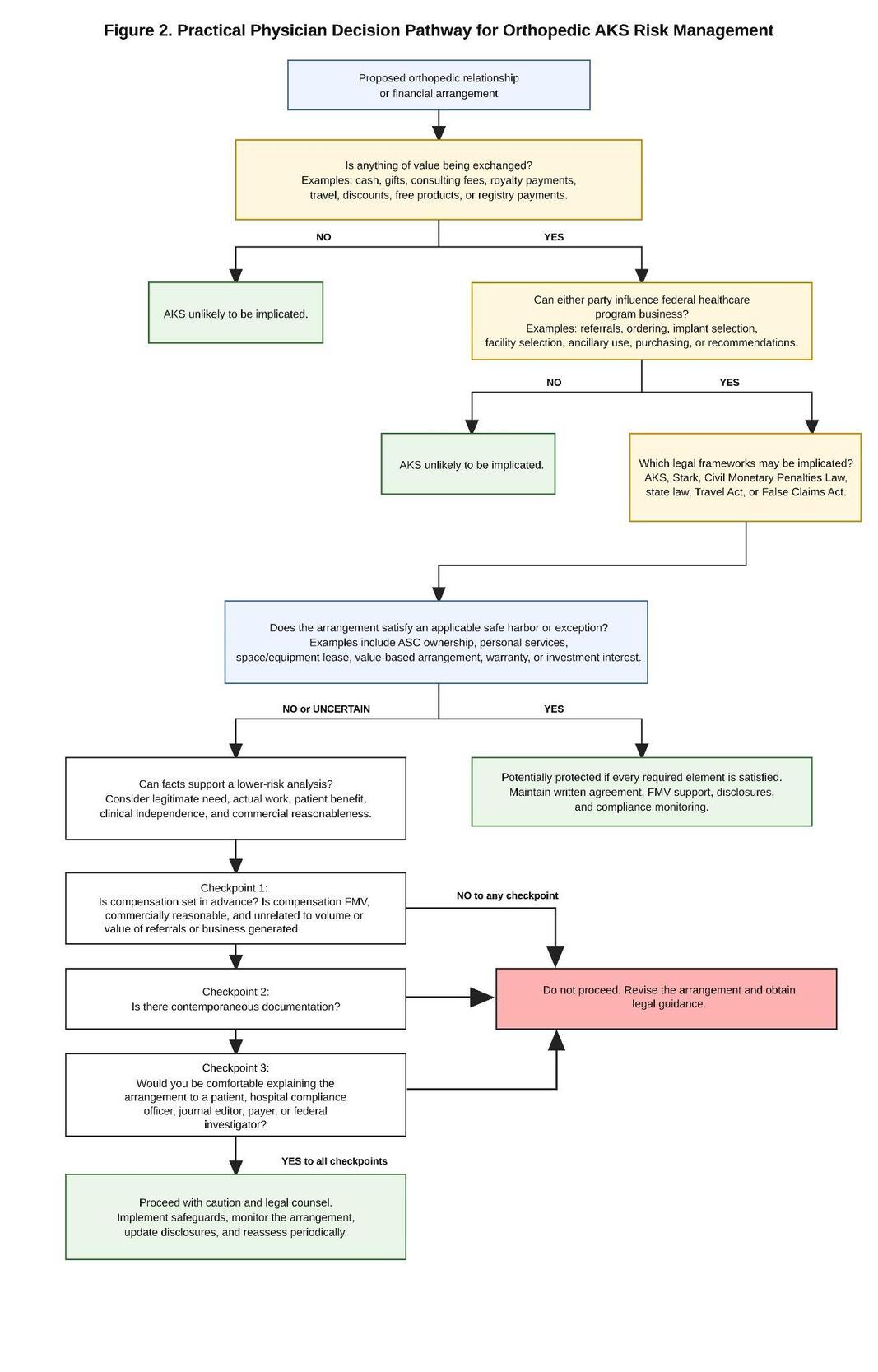
Compliance review should involve institutional compliance personnel or legal counsel before implementation of high risk arrangements and a practical AKS risk review should start before the arrangement is signed. The surgeon should assess whether anything of value is being exchanged; whether either party can refer, order, recommend, purchase, lease, arrange for, or influence federally reimbursable items or services; whether the arrangement is connected to implant selection, procedure location, ancillary utilization, or patient referrals; whether compensation is set in advance, commercially reasonable, and consistent with fair market value; whether the arrangement satisfies an AKS safe harbor and, if applicable, a Stark exception; and whether there is contemporaneous documentation showing real work, legitimate need, patient benefit, and independence of medical judgment.18–21,23
Written agreements are essential but not sufficient. For consulting, medical directorships, personal services, leases, co-management agreements, and outcomes based arrangements, the agreement should identify the parties, define the services, specify the term, set the compensation methodology in advance, and require documentation of services actually performed. The personal services and management contracts safe harbor requires, among other elements, that the agreement be in writing, signed by the parties, cover all services, last at least one year, and use compensation methodology that is set in advance, fair market value, commercially reasonable, and not determined in a manner that takes into account the volume or value of referrals or other federal program business generated between the parties.18
The same principles apply to medical directorships and co-management arrangements. These arrangements may be legitimate when surgeons provide administrative leadership, quality improvement, protocol development, operating room efficiency work, peer review, or service line management. Risk increases when the title exists on paper but little work is performed; when compensation exceeds the value of the services; when payments are distributed based on case volume, referral volume, or implant use; or when metrics reward underutilization of medically necessary care.18–21,23
Disclosures should also be treated as a routine risk management tool. Orthopedic surgeons should review their industry relationships and disclose relevant financial interests to hospitals, ASCs, journals, professional societies, research institutions, and patients when required or ethically appropriate. Disclosure does not make an improper arrangement lawful, but nondisclosure can compound the appearance of impropriety. AAOS ethics guidance states that conflicts of interest must be resolved in the patient’s best interest and that orthopedic surgeons should disclose relevant financial interests when they may influence patient care, research, or reporting of clinical experience.29
3. Implants and Device Industry Relationships
Implants are central to orthopedic innovation, but they also create concentrated financial incentives. Surgeons may appropriately help design implants, improve instrumentation, teach new techniques, and evaluate clinical performance. However, implant selection must remain grounded in patient specific anatomy, pathology, evidence, surgeon training, FMV, and institutional policy rather than personal financial return.24,29
Recent DOJ settlements show recurring enforcement themes in device relationships. In Arthrex, the company agreed to pay $16 million to resolve allegations that royalty payments to an orthopedic surgeon were intended to induce use and recommendation of Arthrex products.30 In DePuy Synthes, the company agreed to pay $9.75 million to resolve allegations that free spinal implants and instruments were provided to a Massachusetts orthopedic surgeon to induce use of DePuy products in domestic surgeries.33 In 2024, the surgeon involved in the DePuy matter separately agreed to pay $200,000 to resolve allegations that he solicited and received free products in return for ordering DePuy products.34 These examples are directly relevant to orthopedic practice because they involve the types of relationships surgeons may encounter: royalties, free products, product support, consulting, and educational or charitable activity.
The key lesson is that form does not control substance. Calling a payment a royalty, consulting fee, registry payment, research payment, or educational support does not determine whether it is compliant. Regulators will evaluate what the payment is actually for, how it is calculated, whether work was performed, whether the amount is commercially reasonable, whether the surgeon is positioned to generate business, and whether the arrangement could steer device selection.18–21,23,24
Physician owned device entities require special care. OIG has long expressed concern regarding physician owned entities that derive revenue from devices ordered by their physician owners for procedures they perform or influence. In Advisory Opinion 25-09, OIG issued a favorable opinion regarding remuneration to physicians with ownership interests in a device manufacturer because, based on the requestor’s certifications, the arrangement satisfied the small entity investment safe harbor. However, OIG cautioned that similar physician owned entities that do not satisfy all safe harbor conditions may raise fraud and abuse risk, particularly if physician owners recommend their own devices over competitor devices or use their own devices when other treatments may be more clinically appropriate.31 This opinion is useful because it shows both sides of the analysis: physician ownership is not categorically prohibited, but safe harbor structure and clinical independence are essential.
Hospitals and ASCs should also maintain implant selection processes that reduce conflict risk. Value analysis committees, standardized contracting, documented clinical rationale for preference items, conflict disclosures, and recusal policies can help separate legitimate surgeon preference from financial self interest. Surgeons with consulting, royalty, equity, or research relationships should be particularly cautious when influencing institutional purchasing decisions.19,29,31
4. Ownership, Ancillary Services, and Referral Risk
Ownership is common in orthopedics because musculoskeletal care often requires imaging, injections, bracing, surgery, postoperative rehabilitation, and durable medical equipment. Properly structured ownership may improve access, coordination, efficiency, and patient convenience. However, ownership creates compliance risk when the surgeon’s financial return depends on where the patient is referred, which service is ordered, or which product is used.18,21,31
ASC ownership is the most common example. The AKS ASC safe harbor protects certain returns on investment in certified ASCs when specific requirements are met, including requirements related to ASC structure, investor categories, use of ASC space, and patient disclosure of the investor’s ownership interest.18 Orthopedic surgeons may appropriately invest in ASCs, but distributions should reflect bona fide ownership and should not be a disguised payment for referrals. Red flags include investment opportunities offered selectively based on anticipated referral volume, pressure to shift cases, unequal ownership terms tied to case generation, distributions not proportional to ownership, or arrangements that include ancillary revenue streams designed to reward referrals.18–20
Ancillary services such as in office imaging, physical therapy, and bracing may improve timely diagnosis and care coordination for patients with musculoskeletal disease. AAOS has argued that the in office ancillary services exception to the Stark Law is important for efficient diagnosis and treatment of musculoskeletal conditions, including imaging and physical therapy in orthopedic offices. At the same time, ancillary ownership can create overutilization risk if services are ordered because of financial return rather than medical necessity. The surgeon’s documentation should support the clinical indication, patient choice, and appropriateness of the service.18,19,21,23
Physician owned distributorships remain one of the highest-risk ownership models in spine and implant practice. In 2022, Reliance Medical Systems, its owners, and two physician owned distributorships agreed to pay $1 million to resolve allegations that they paid physicians to use Reliance spinal devices in surgeries on their own patients. DOJ alleged that the PODs functioned as vehicles for kickbacks, including payments based on referrals and termination of physicians who did not refer enough patients.35 For orthopedic surgeons, the point is straightforward: profit from a device used in one’s own case or recommended to a hospital requires careful legal review and strong clinical safeguards, if pursued at all.
5. Practical Recommendations in Practice
The goal of this review is not to discourage legitimate collaboration. Orthopedic surgery depends on surgeon leadership in device development, operative training, ASC quality, postoperative pathways, bundled care, and value-based innovation. The goal is to help surgeons separate clinically useful arrangements from structures that place reimbursement, ownership, or industry money too close to clinical decision-making. Consulting agreements, royalty arrangements, educational support/funding, device usage, ASC ownership, and ancillary ownership should be disclosed when appropriate, structured to meet applicable safe harbors or exceptions when possible, and monitored for utilization patterns. All arrangements should be clinically justified and insulated from personal financial benefit.
Value based arrangements deserve special attention because they are increasingly relevant in orthopedic care. The 2020 OIG safe harbor final rule added and modified protections for care coordination and value based arrangements, including arrangements involving substantial downside financial risk, full financial risk, patient engagement tools, CMS sponsored models, cybersecurity technology, and warranties.20 CMS also modernized Stark regulations to create new exceptions for value based arrangements.23 For orthopedic surgeons, this creates opportunities in bundled payments, revision risk programs, episode based care, and coordinated postoperative pathways. However, value based terminology does not itself create protection. The arrangement must be structured to satisfy the applicable regulatory requirements and should be designed to improve quality, outcomes, coordination, or efficiency rather than to steer referrals, restrict medically necessary care, or reward implant use.20,23,32
OIG Advisory Opinion 26-12 provides a useful orthopedic example. OIG issued a favorable opinion regarding an orthopedic surgery provider’s proposed warranty program in which certain concierge fees would be refunded to patients who required revision surgery within two years of the initial surgery, based on the specific facts certified by the requestor.32 This does not mean that all orthopedic warranties are protected. It does show that outcomes-oriented arrangements may be lower risk when they are transparent, limited, properly documented, not conditioned on exclusive use of the provider’s services, and structured within an applicable safe harbor analysis.18,20,32
In practice, the safest orthopedic financial relationships share several features: a legitimate clinical or business purpose, written terms, fair market value compensation, commercial reasonableness, documentation of actual work, no link to referral volume or implant use, appropriate disclosure, and ongoing monitoring. The surgeon’s guiding question should be simple: does this arrangement help patients, training, quality, access, or innovation without compromising independent medical judgment? If the answer is uncertain, the arrangement should be reviewed before implementation rather than defended after scrutiny begins.
Limitations
The included literature primarily consists of legal reviews and commentaries; empirical evidence on the efficacy of safe-harbor compliance in improving orthopedic outcomes is limited. Rapid review methodology may miss relevant sources outside indexed databases or published after October 29, 2025. Furthermore, AKS enforcement is dynamic; regulatory updates after May 2026 were not captured. The review did not perform a quantitative synthesis; rather, supplementary sources were purposefully selected to provide current, practical context. Many sources are legal commentaries, regulations, agency guidance, and enforcement materials rather than empirical studies. Individual state laws were not comprehensively reviewed. Settlement examples reflect allegations resolved by settlement, not criminal charges.
Conclusion
Safe harbors to the Federal Anti-Kickback Statute are tools that assist orthopedic surgeons in structuring ASCs, equipment leases, management contracts, and value-based care initiatives while reducing AKS liability risk.18,20,23 Recent OIG reforms provide greater flexibility for care coordination, outcomes-based payments and digital health, offering opportunities for orthopedics to lead in value-based innovation.20 Still, compliant arrangements must be rigorously documented to minimize legal risk; safe harbor protection requires satisfaction of all applicable regulatory elements and does not replace individualized legal review. Ongoing education, legal counsel, and proactive compliance review remain vital for navigating this evolving regulatory landscape.
Acknowledgements
The authors received no financial support for the research, authorship, and/or publication of this article. The authors would like to thank the Kirk Kerkorian School of Medicine, Department of Orthopaedic Surgery for their support.
Author Contributions
Theodore Couris: Conceptualization; Methodology; Formal analysis; Data curation; Visualization; Writing (original draft, review, and editing); Supervision.
Parker Lehmann: Methodology; Investigation; Data Curation; Writing (original draft, review and editing).
Paul Cappiello: Investigation; Writing (review and editing).
Matthew Michelberger: Investigation; Writing (review and editing).
Christopher Fang: Conceptualization; Methodology; Formal analysis; Writing (review and editing); Supervision.
All authors reviewed and approved the final manuscript.
Funding Information
The authors received no specific funding for this work.
Conflict of Interest Statement
The authors declare no conflicts of interest.