
Introduction
Regenerative orthopedic therapies encompass a heterogeneous group of interventions, including platelet-rich plasma (PRP), bone marrow aspirate concentrate, and cell-based products. These approaches have attracted interest for osteoarthritis and tendinopathy, although the evidence varies by intervention, preparation, and indication. Systematic reviews of PRP illustrate the importance of evaluating specific clinical applications rather than assuming that all regenerative treatments have equivalent effects.1–3
The commercial availability of these interventions creates challenges for patient education. Reports concerning US stem cell clinics and direct-to-consumer advertising have identified concerns about patient safety, unsupported claims, and marketing of unproven interventions.4–6 Recognition of a treatment name does not necessarily indicate familiarity with its evidence, limitations, or suitability for an individual patient.
Research on patients seeking stem cell therapy has examined their motivations and the implications for counseling.7 Physicians also have an important role in helping patients evaluate unproven treatments.8 Understanding public perceptions may help clinicians anticipate questions about effectiveness, safety, physician recommendations, and out-of-pocket payment. This study assessed these domains in an anonymous, opt-in survey of 100 US adults.
Methods
Study design and participants
This cross-sectional study used an anonymous, web-based survey of US adults. Participation was voluntary and opt-in. Respondents were recruited through an online survey platform using Random Device Engagement methodology. The analyzed dataset contained 100 completed responses. Recruitment across US regions did not constitute probability sampling, and the sample was not assumed to represent the US adult population. The study was granted an exemption from institutional review board review.
Survey instrument and data sources
The questionnaire contained 14 items covering awareness of regenerative orthopedic therapies, self-rated knowledge, perceptions of evidence and safety, perceived exaggeration of benefits by clinics, willingness to consider physician-recommended treatment, payment and travel preferences, willingness to recommend treatment, insurance coverage preferences, perceived barriers, and primary sources of medical information. The final item allowed an open-ended response. The questionnaire is reproduced in Appendix 1.
Items used single-response options, multiple-response options, and five-point self-rating scales. Knowledge was self-assessed rather than measured with an objective test. The questionnaire was not treated as a validated measure of knowledge or health literacy. Demographic characteristics and musculoskeletal history were obtained from the platform profile fields included in the export. These health-history selections were not clinically verified. Race and ethnicity were summarized using the export’s combined “Ethnicity (Simplified)” variable.
Statistical analysis
All analyses were descriptive and unweighted. Although the export included weights and stratified summaries, these were not used. Categorical variables were summarized as counts and percentages, and age as mean, standard deviation, and range. All 100 respondents had recorded responses to Q1–Q13. For multiple-response items, percentages used respondents as the denominator and could sum to more than 100%. Ratings of 1 or 2 on the knowledge item were combined as little or no knowledge; ratings of 4 or 5 on the recommendation item were combined as likely or definitely willing to recommend. Selected subgroup summaries were exploratory, used subgroup-specific denominators, and were not subjected to inferential testing. Open-ended responses were not included in the quantitative analysis.
Results
Respondent characteristics
The sample included 100 respondents, of whom 64 (64%) were female and 36 (36%) were male. Mean age was 63.5 ± 9.6 years (range, 47–85 years); 62 (62%) were aged 60 years or older. Twenty-seven respondents (27%) had completed some college, 21 (21%) had a bachelor’s degree, and 15 (15%) had a master’s degree. Using the combined race/ethnicity classification, 89 (89%) were White. Fifty respondents (50%) reported household income below $50,000, and 12 (12%) reported income of $100,000 or more. One declined to report income. Respondents resided in the South (45%), Midwest (24%), Northeast (21%), and West (10%). Profile selections included osteoarthritis in 49 (49%), rheumatoid arthritis in 45 (45%), joint replacement in 27 (27%), and osteoporosis in 13 (13%) (Table 1).
Awareness and self-rated knowledge
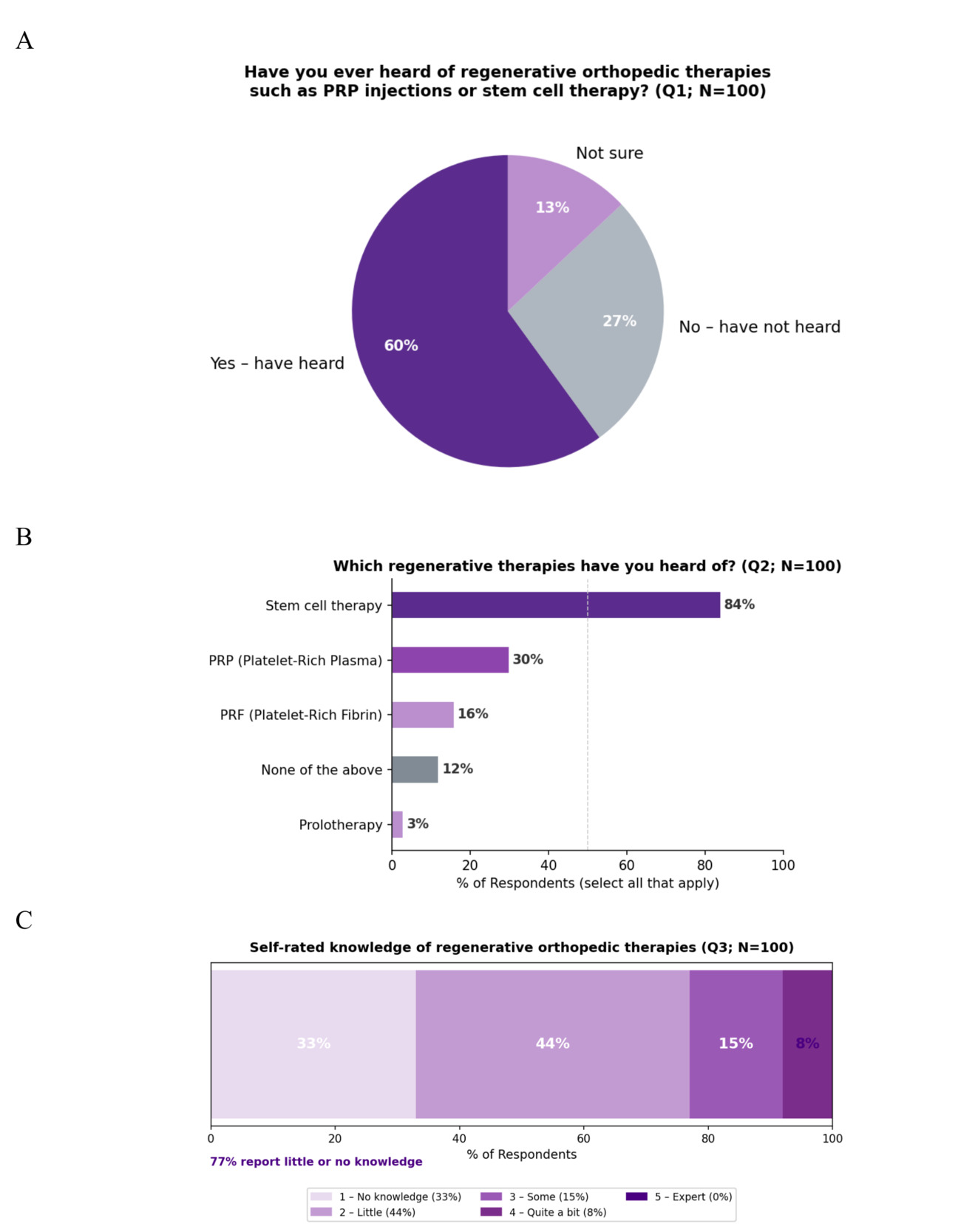
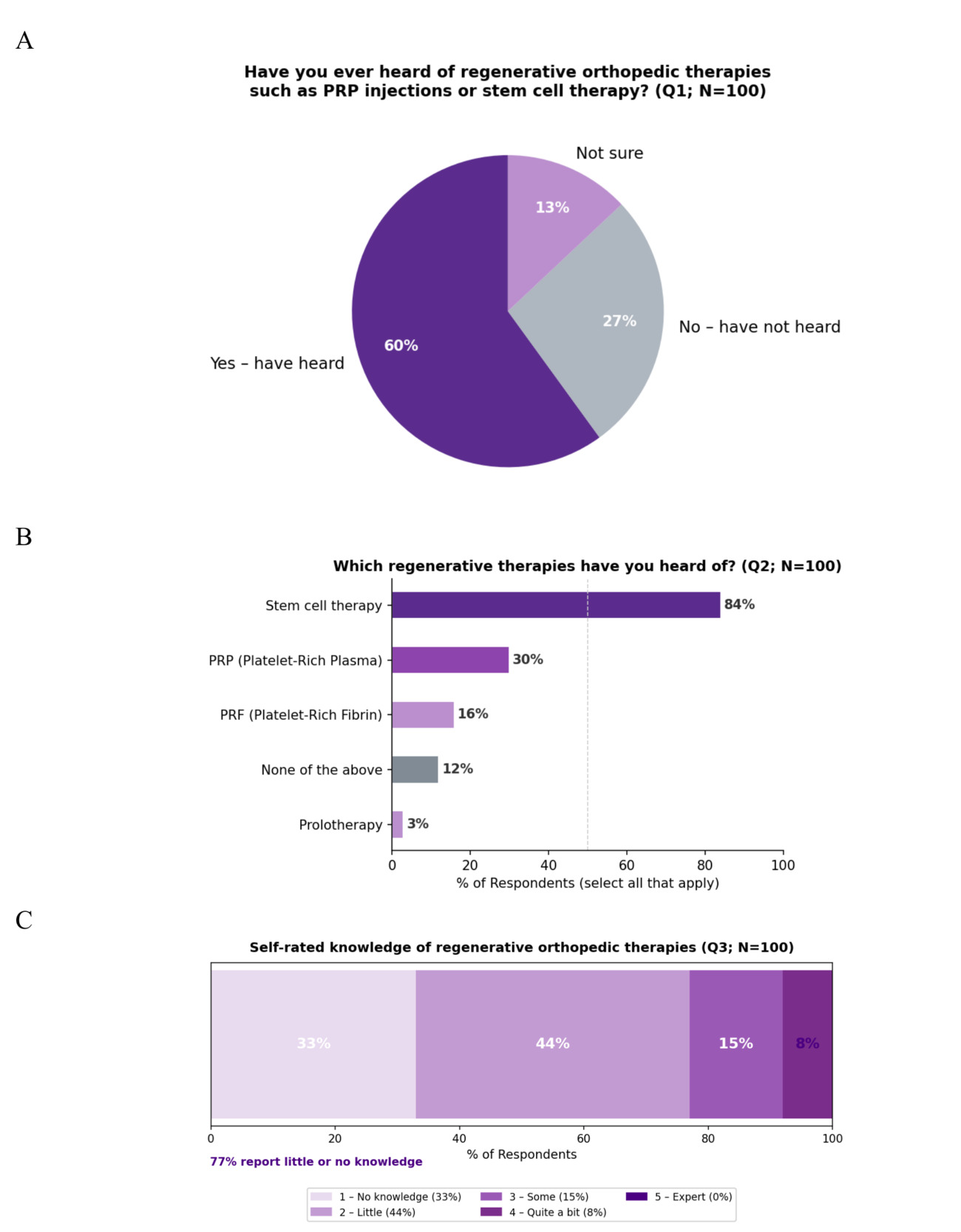
Sixty respondents (60%) reported having heard of regenerative orthopedic therapies, 27 (27%) had not, and 13 (13%) were unsure. Across all 100 respondents, 84 (84%) recognized stem cell therapy, 30 (30%) recognized PRP, 16 (16%) recognized platelet-rich fibrin, and 3 (3%) recognized prolotherapy; 12 (12%) selected none of these options. Thirty-three respondents (33%) rated their knowledge as none and 44 (44%) as little, yielding 77 (77%) with low self-rated knowledge. No respondent selected expert knowledge (Table 2; Figure 1).
Perceptions of evidence and safety
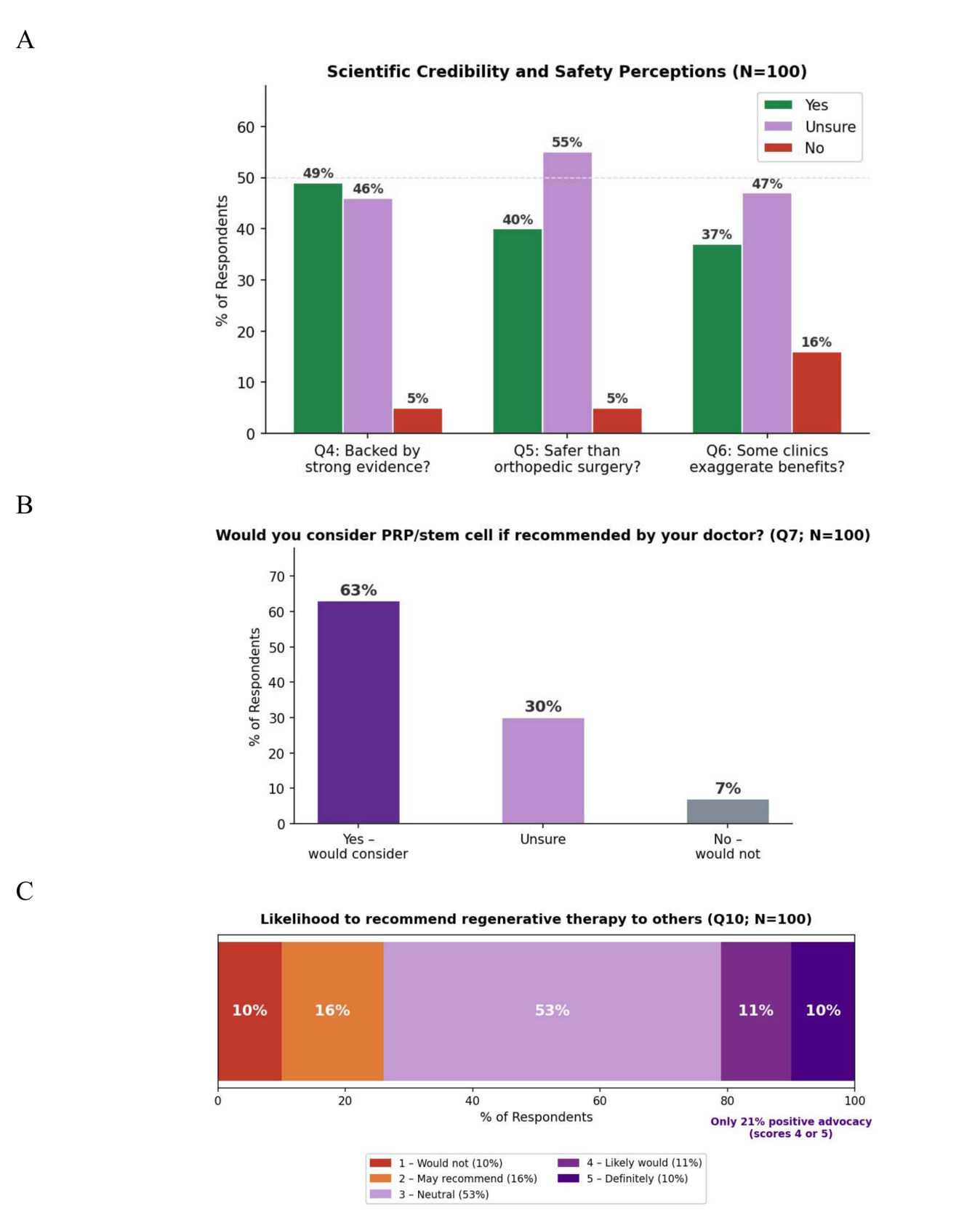
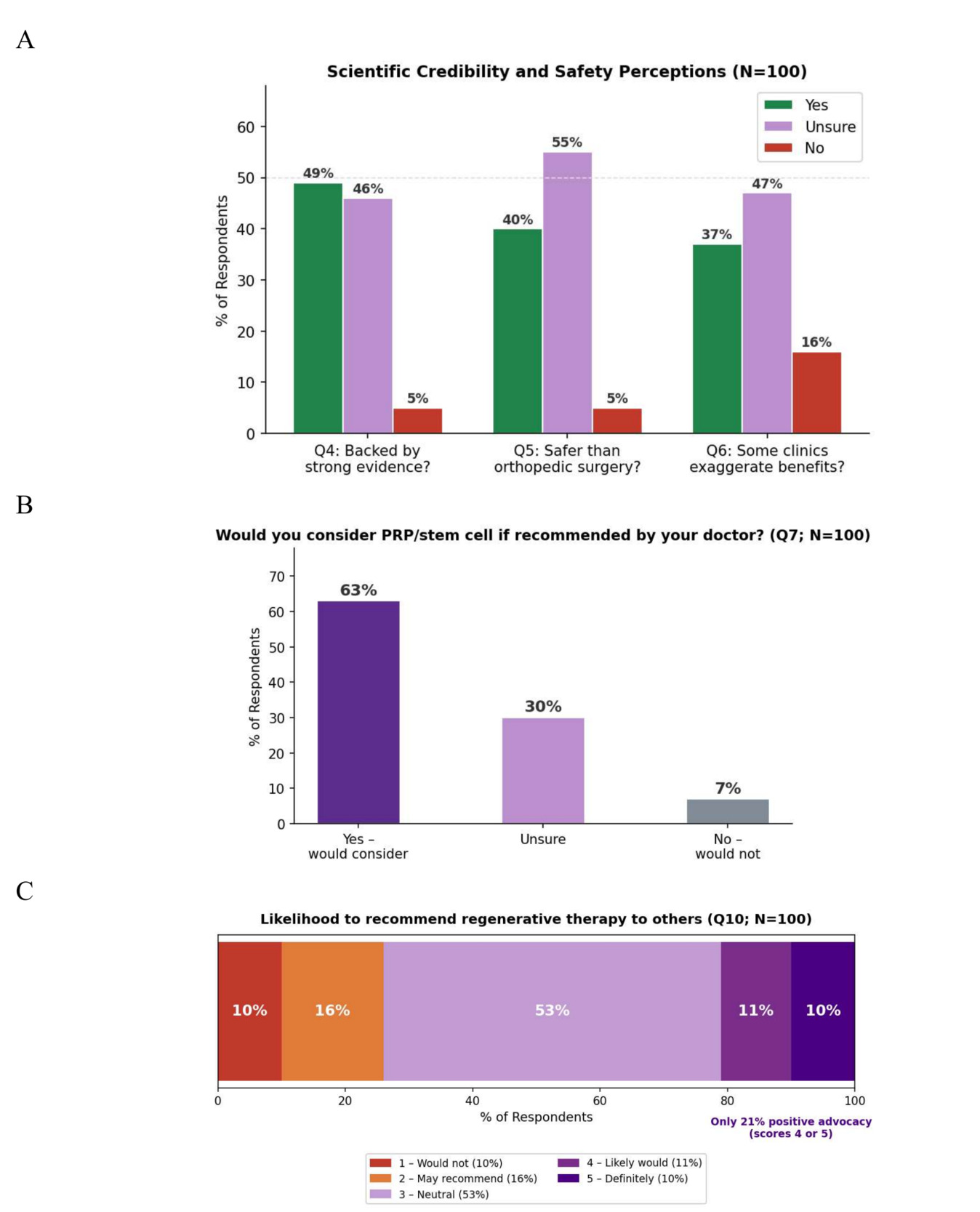
Forty-nine respondents (49%) believed regenerative orthopedic therapies were supported by strong scientific evidence, 46 (46%) were unsure, and 5 (5%) answered no. Forty (40%) believed the therapies were generally safer than orthopedic surgery, while 55 (55%) were unsure and 5 (5%) answered no. Thirty-seven (37%) believed some clinics exaggerated treatment benefits, 47 (47%) were unsure, and 16 (16%) answered no. Uncertainty was the most common response for safety and clinic exaggeration, but not for scientific evidence (Table 3; Figure 2A).
Treatment consideration and recommendations
Sixty-three respondents (63%) would consider PRP or stem cell therapy as an alternative to surgery if recommended by their doctor, 30 (30%) were unsure, and 7 (7%) would not. Thirty-five (35%) would travel out of state if treatment were unavailable locally, 34 (34%) were unsure, and 31 (31%) would not. Twenty-one (21%) selected likely or definitely willing to recommend regenerative therapy to others; 53 (53%) were unsure, 16 (16%) selected “may recommend,” and 10 (10%) would not recommend it (Table 4; Figure 2B–C).
Payment preferences and perceived barriers
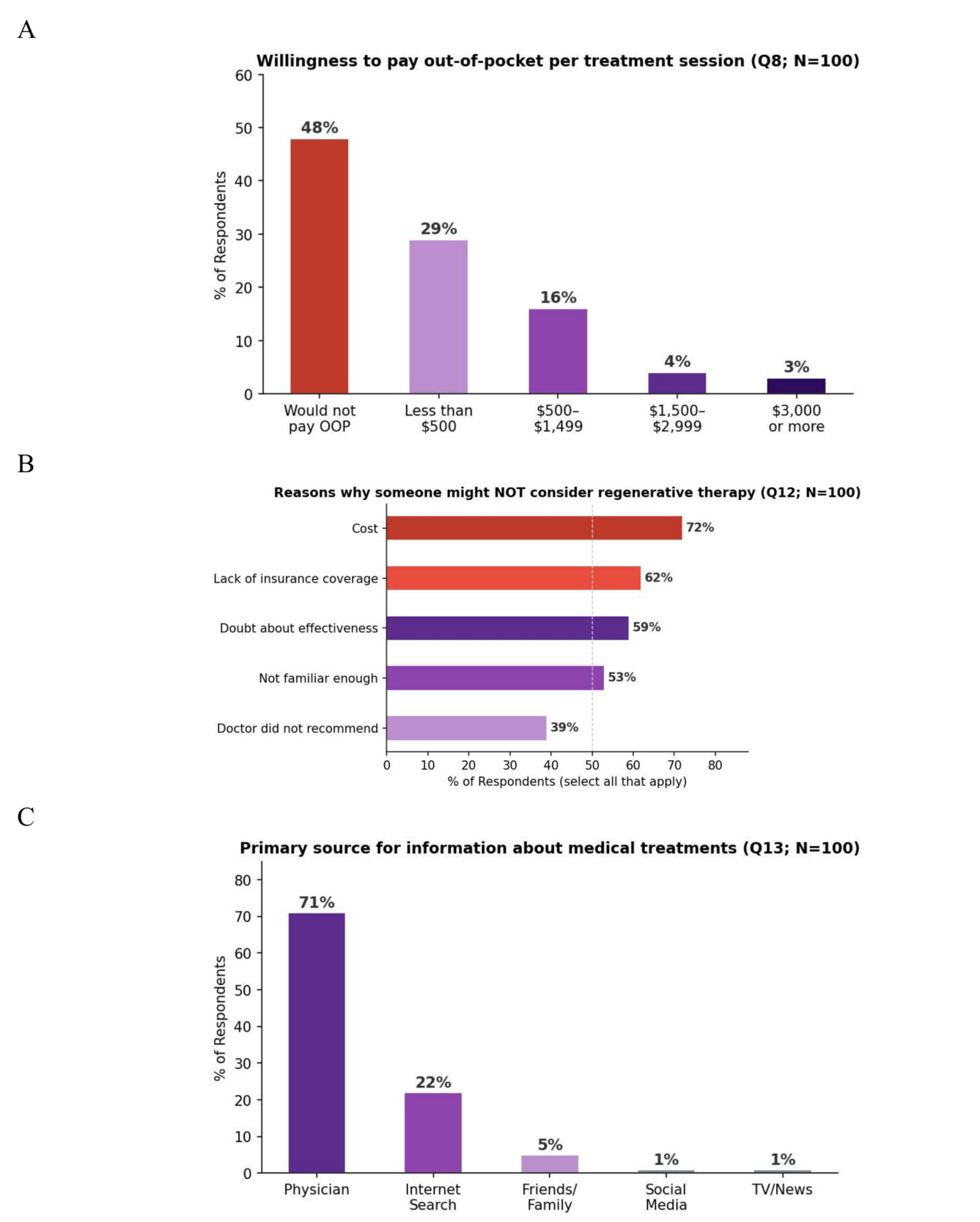
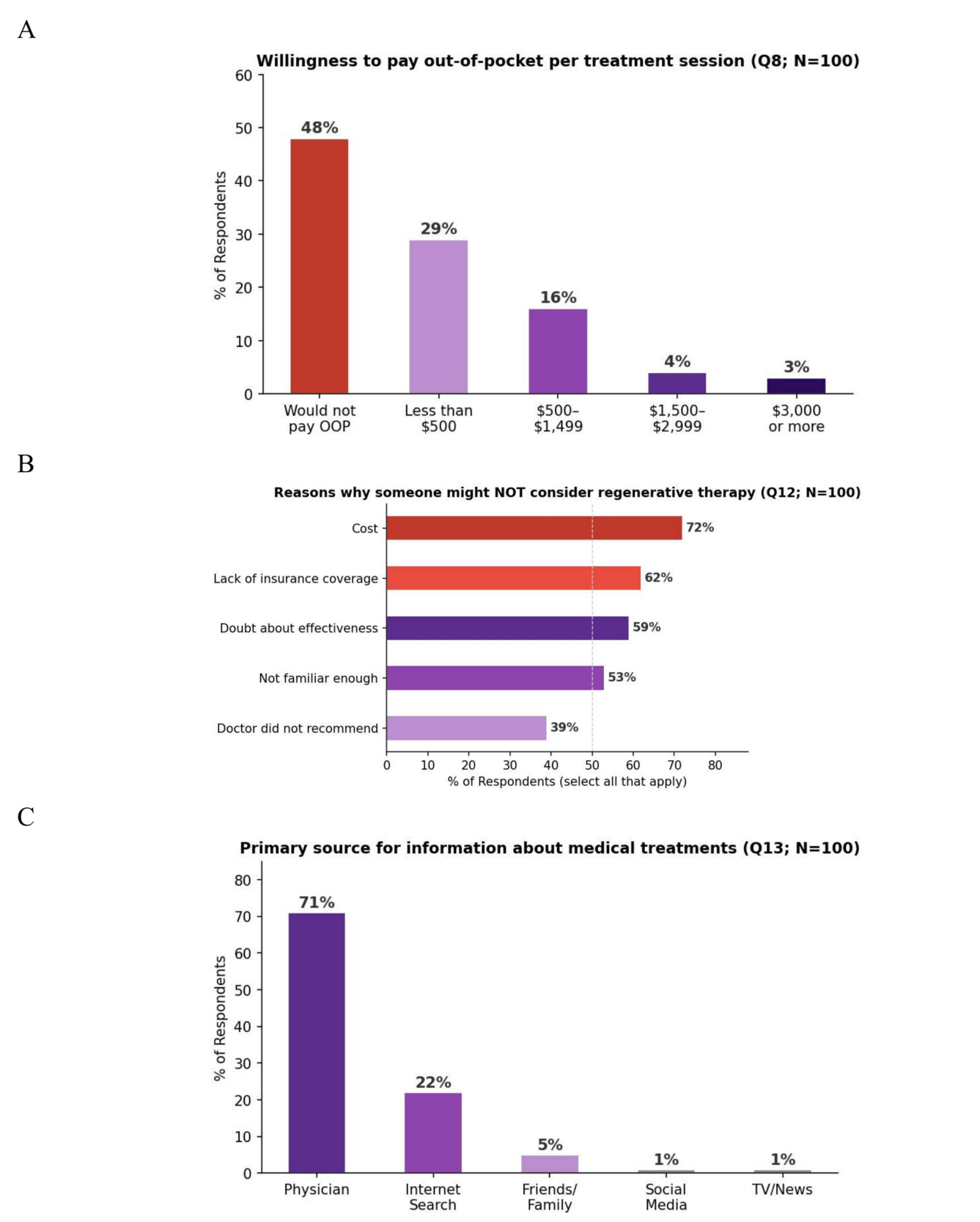
Forty-eight respondents (48%) would not pay out of pocket for a treatment session, and 29 (29%) would pay less than $500. Sixteen (16%) would pay $500–$1,499, 4 (4%) would pay $1,500–$2,999, and 3 (3%) would pay $3,000 or more. Seventy-seven (77%) believed insurance should cover regenerative orthopedic treatments (Table 5). Perceived reasons someone might not consider treatment included cost (72%), lack of insurance coverage (62%), doubt about effectiveness (59%), insufficient familiarity (53%), and absence of physician recommendation (39%) (Table 6; Figure 3A–B).
Information sources and exploratory subgroup summaries
Physicians were the primary source of general medical treatment information for 71 respondents (71%), followed by internet searches for 22 (22%), friends or family for 5 (5%), and social media and television/news for 1 (1%) each (Table 7; Figure 3C). Willingness to consider physician-recommended therapy was reported by 27 of 36 men (75.0%) and 36 of 64 women (56.3%), and by 14 of 15 respondents with a master’s degree (93.3%) and 4 of 10 with an associate’s degree (40.0%). Among 41 respondents aged 65 years or older, 28 (68.3%) were unsure about recommending treatment to others. These comparisons were descriptive.
Discussion
This survey identified a difference between recognition of regenerative orthopedic therapies and self-rated knowledge. Although 60% reported prior awareness and 84% recognized stem cell therapy when prompted, 77% rated their knowledge as little or none. These findings describe perceived familiarity; they do not demonstrate objectively poor comprehension or an inability to make informed decisions. Recognition of a specific term may also differ from recognition of the broader category “regenerative orthopedic therapies.”
Physicians were the predominant source of general medical information, and most respondents would consider treatment if their doctor recommended it. Prior research has examined the influence of physician recommendations on treatment decisions.9 However, this survey did not compare willingness with and without a recommendation, so it cannot quantify a recommendation effect. Likewise, the difference between considering treatment personally and recommending it to others may reflect different decision contexts rather than distrust. General medical information sources were measured, but sources of awareness about regenerative therapies were not; the findings therefore do not establish that social media or physician education generated respondents’ awareness.
Substantial uncertainty concerned scientific evidence, relative safety, and clinic claims. The questionnaire grouped diverse therapies and indications together, which limits interpretation of these responses. PRP studies and reports concerning unproven cell-based interventions address different products and clinical contexts.1–4 Reports of adverse events related to unapproved regenerative interventions further underscore the importance of product-specific counseling.10 Clinicians should distinguish evidence for a particular intervention from broad claims about regenerative medicine, discuss alternatives, and avoid implying that all interventions have the same benefits, risks, or regulatory status.
Cost and lack of insurance coverage were the most frequently selected perceived barriers. Most respondents would pay nothing or less than $500 per session. These findings indicate payment preferences, not verified inability to afford treatment or actual treatment utilization. The survey did not collect clinic prices or insurance policy details and cannot determine whether respondents’ preferred spending would cover a particular procedure. Respondents’ support for insurance coverage also does not establish the clinical effectiveness or cost-effectiveness of the treatments.
Exploratory differences by gender, age, and education may help generate questions for future research. They should not be interpreted as established associations because no inferential comparisons were performed and several subgroups were small. Although prior research has considered health literacy in medical decision-making, health literacy was not measured here and cannot be inferred from educational attainment.11 Counseling research supports further attention to how clinicians discuss unproven regenerative treatments with interested patients.12
Limitations
This study used a small, anonymous, opt-in online sample and is susceptible to self-selection and coverage bias. Respondents were predominantly White and female, and all were aged 47–85 years, limiting generalizability to the broader US adult population. Medical-history profile selections were self-reported and not verified. The study measured hypothetical intentions and self-rated knowledge rather than treatment uptake, objective knowledge, or clinical outcomes. The broad grouping of therapies obscured differences between interventions. The recommendation scale included “may recommend” below “unsure,” which may not represent a uniformly ordered scale. Analyses were unweighted and descriptive, and subgroup findings require confirmation. The cross-sectional design cannot establish causality.
Conclusion
In this opt-in sample of 100 US adults, recognition of regenerative orthopedic therapies coexisted with low self-rated knowledge and uncertainty about evidence and safety. Physicians were the principal source of general medical information, and cost and insurance coverage were prominent perceived barriers. Clear, balanced counseling should address intervention-specific evidence, risks, alternatives, and financial considerations. These descriptive findings should be interpreted within the limits of the sample and survey design.
Ethics statement
As survey results were obtained in a de-identified manner without the ability of the study authors to ever identify the individuals, the study meets the definition of Non-Human Subjects research in accordance with U.S. Federal Regulations (45 CFR 46.102).