
Introduction
Enhanced recovery after surgery (ERAS) is an evidence-based, multimodal model of perioperative care designed to reduce the physiologic stress of surgery, limit avoidable variation in care, accelerate functional recovery, and shorten hospitalization without compromising safety.1,2 Although the modern ERAS concept arose outside orthopaedics, its principles have been incorporated into procedure-specific pathways across musculoskeletal surgery.
Formal ERAS Society recommendations now address total hip and total knee replacement and lumbar spinal fusion, reflecting the increasing adoption of enhanced-recovery principles in high-volume orthopaedic procedures.3,4 Clinical studies in joint replacement have associated structured enhanced-recovery pathways with shorter length of stay and lower complication burden.5,6
The clinical relevance of this work is likely to increase as demand for major orthopaedic procedures rises. Contemporary projections anticipate substantial growth in total hip and knee arthroplasty volumes through 2050, while the global burden of hip fracture continues to increase.7,8
Despite the clinical maturity of ERAS, the structure of the orthopaedic ERAS evidence base is less clear. Bibliometric analysis can identify not only publication volume but also the countries, institutions, journals, collaborative relationships, influential articles, and recurring concepts that shape a field.9,10 The objective of this study was therefore to characterize the growth, geographic and institutional distribution, collaboration patterns, citation structure, and thematic evolution of enhanced-recovery research in orthopaedic surgery.
Materials and methods
Study design and data source
A bibliometric study was performed using records exported from the Web of Science Core Collection. Reporting and analytic decisions were informed by published guidance for conducting and reporting bibliometric analyses.9,10 The exported Web of Science files supplied for this analysis were dated June 15, 2026. Citation counts therefore represent the database status at that time and should be interpreted as time-dependent measures.
Search strategy and eligibility
The original search was limited to the title field and used the following strategy: TI=((“enhanced recovery after surgery” OR “ERAS” OR “enhanced recovery program*” OR “enhanced recovery protocol*” OR “enhanced recovery pathway*” OR “fast track surgery” OR “fast-track surgery” OR “rapid recovery”) AND (orthop* OR “orthopedic surgery” OR “orthopaedic surgery” OR arthroplast* OR “joint replacement” OR “total knee arthroplasty” OR “TKA” OR “total hip arthroplasty” OR “THA” OR “spine” OR “spinal surgery” OR trauma OR “fracture*”)). No language restriction was applied.
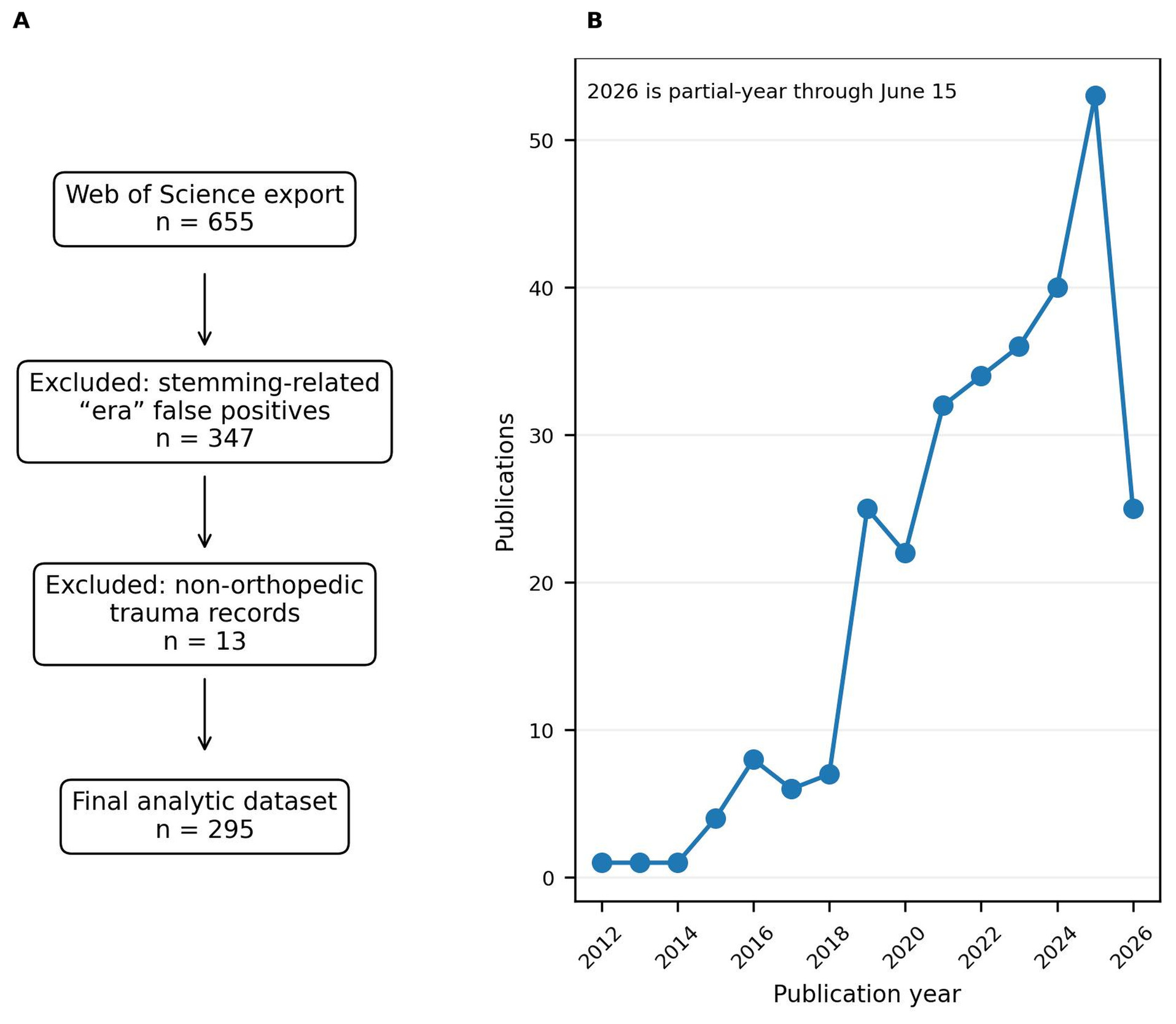
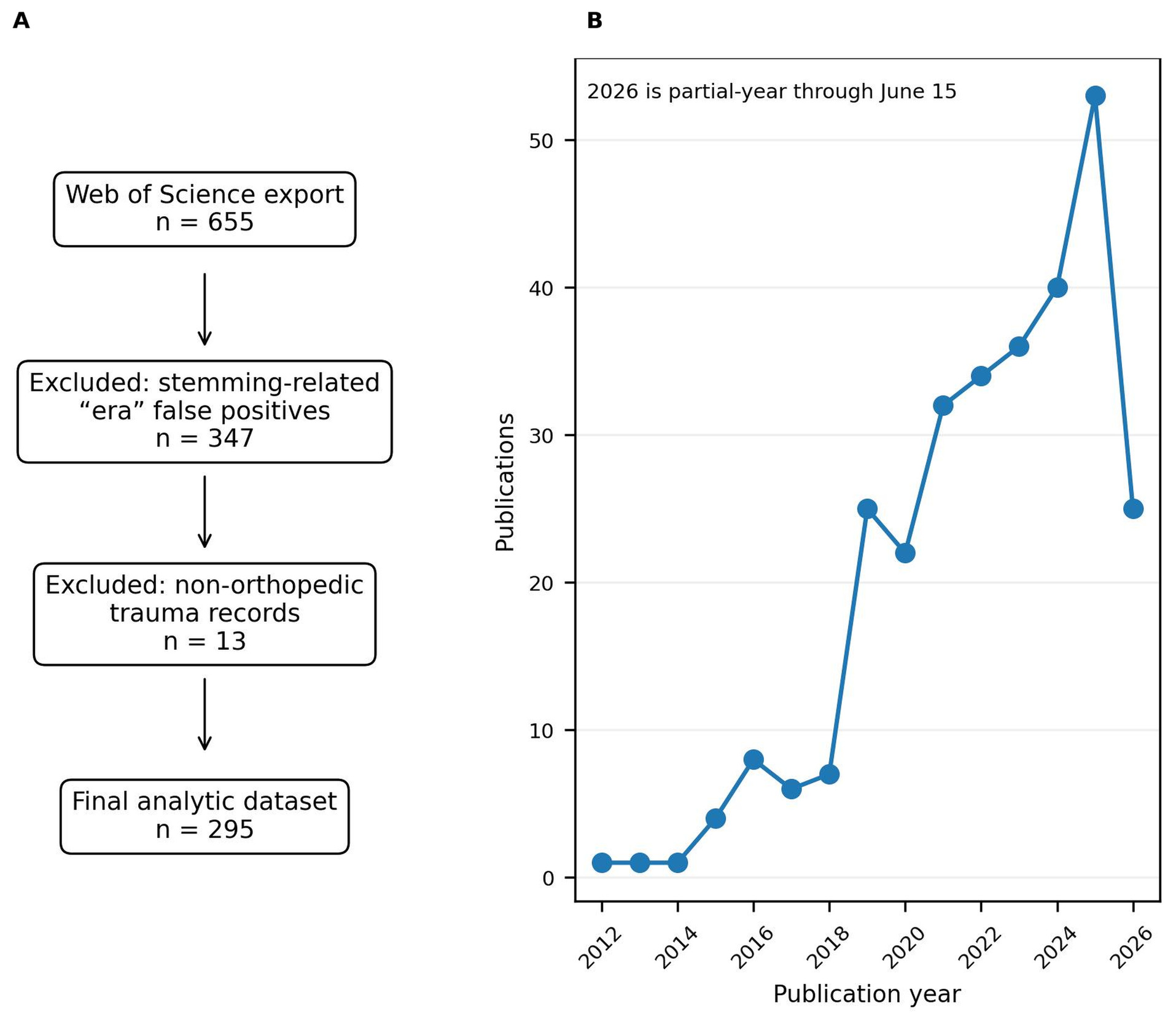
The original export contained 655 records. During reproducibility review, Web of Science stemming was found to have treated the acronym term “ERAS” as matching the common word “era,” creating extensive off-topic retrieval. A deterministic two-stage screen was therefore applied before analysis. First, 347 titles lacking a true enhanced-recovery signal (enhanced recovery, standalone ERAS, fast-track/fast track, or rapid recovery) were excluded as stemming-related false positives. Second, the remaining titles were reviewed for orthopaedic relevance; 13 true enhanced-recovery records retrieved solely through the broad trauma term but concerning non-orthopaedic trauma care were excluded. The final analytic dataset contained 295 publications (Fig. 1).
Bibliometric variables and descriptive analysis
For each eligible record, publication year, source journal, author affiliations, standardized organization names, total citation count, author keywords, Keywords Plus terms, and cited references were extracted from the Web of Science export. Annual publication counts and journal rankings were summarized descriptively. A country was credited to a publication when at least one author affiliation was located in that country; consequently, multinational publications could contribute to more than one country count. Institutional rankings used the standardized organization field supplied in the export rather than post hoc aggregation of distinct institutions or health-system affiliates.
Network analysis
Country co-authorship networks were constructed from publications listing affiliations in two or more countries. Countries with at least 5 eligible publications were retained for visualization; node size represented publication output, and edge width represented the number of shared publications. Keyword analysis combined author keywords and Keywords Plus terms after normalization of obvious spelling and hyphenation variants and common ERAS synonyms. The most frequent terms were mapped using within-record co-occurrence relationships. Reference co-citation analysis identified cited works that appeared together within reference lists; references cited by at least 20 records were retained for the displayed network.
Results
Study selection and publication growth
After screening 655 exported records, 360 were excluded and 295 were retained for analysis (Fig. 1A). The eligible literature began in 2012 and remained limited through 2018, with annual counts ranging from 1 to 8 publications. Output then increased to 25 publications in 2019, 22 in 2020, 32 in 2021, 34 in 2022, 36 in 2023, 40 in 2024, and 53 in 2025. The 2026 count was 25 through the June 15 export date and therefore represents only a partial year (Fig. 1B). Overall, 242 of 295 publications (82.0%) appeared from 2020 through June 2026.
Journals and geographic distribution
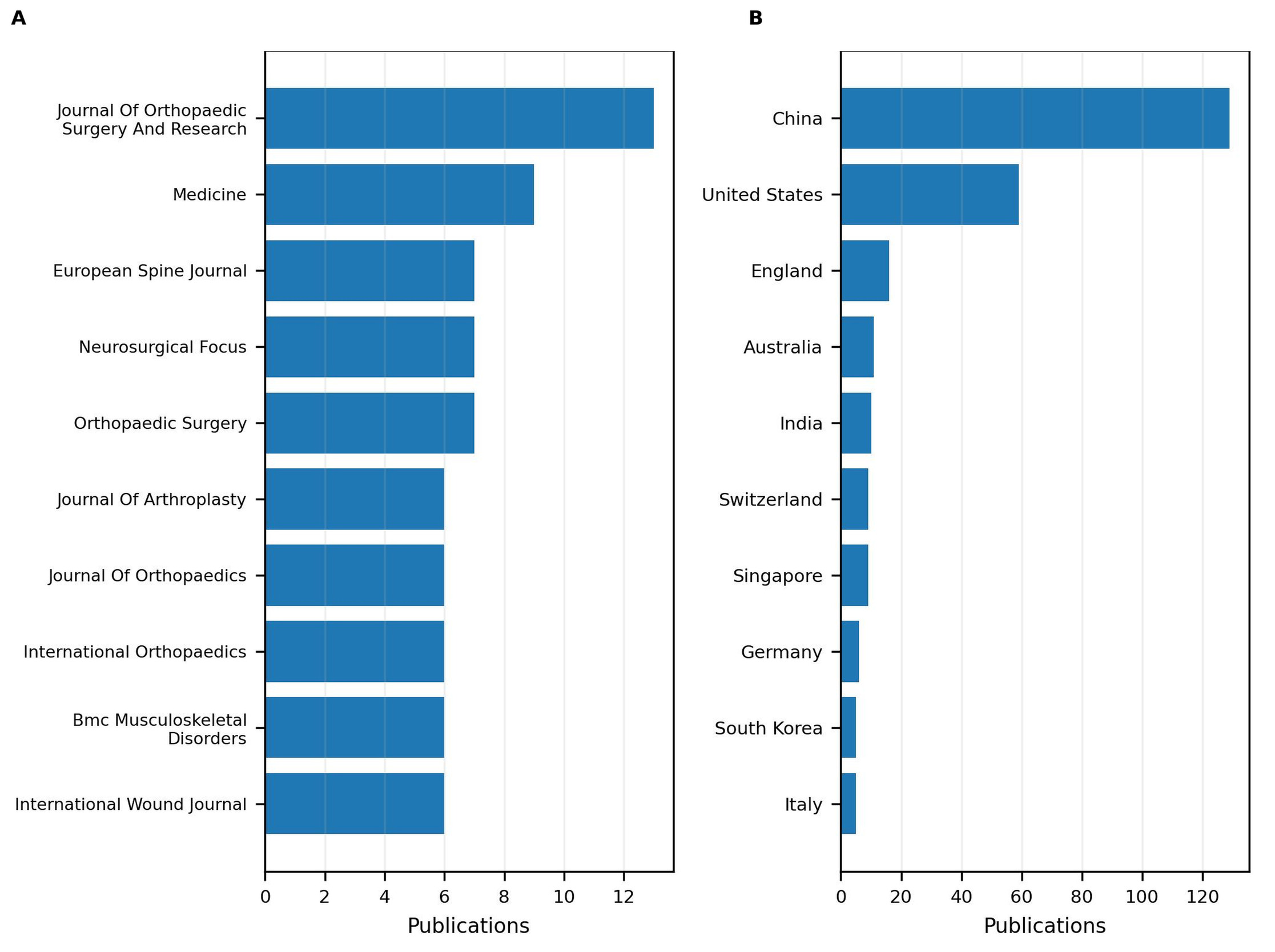
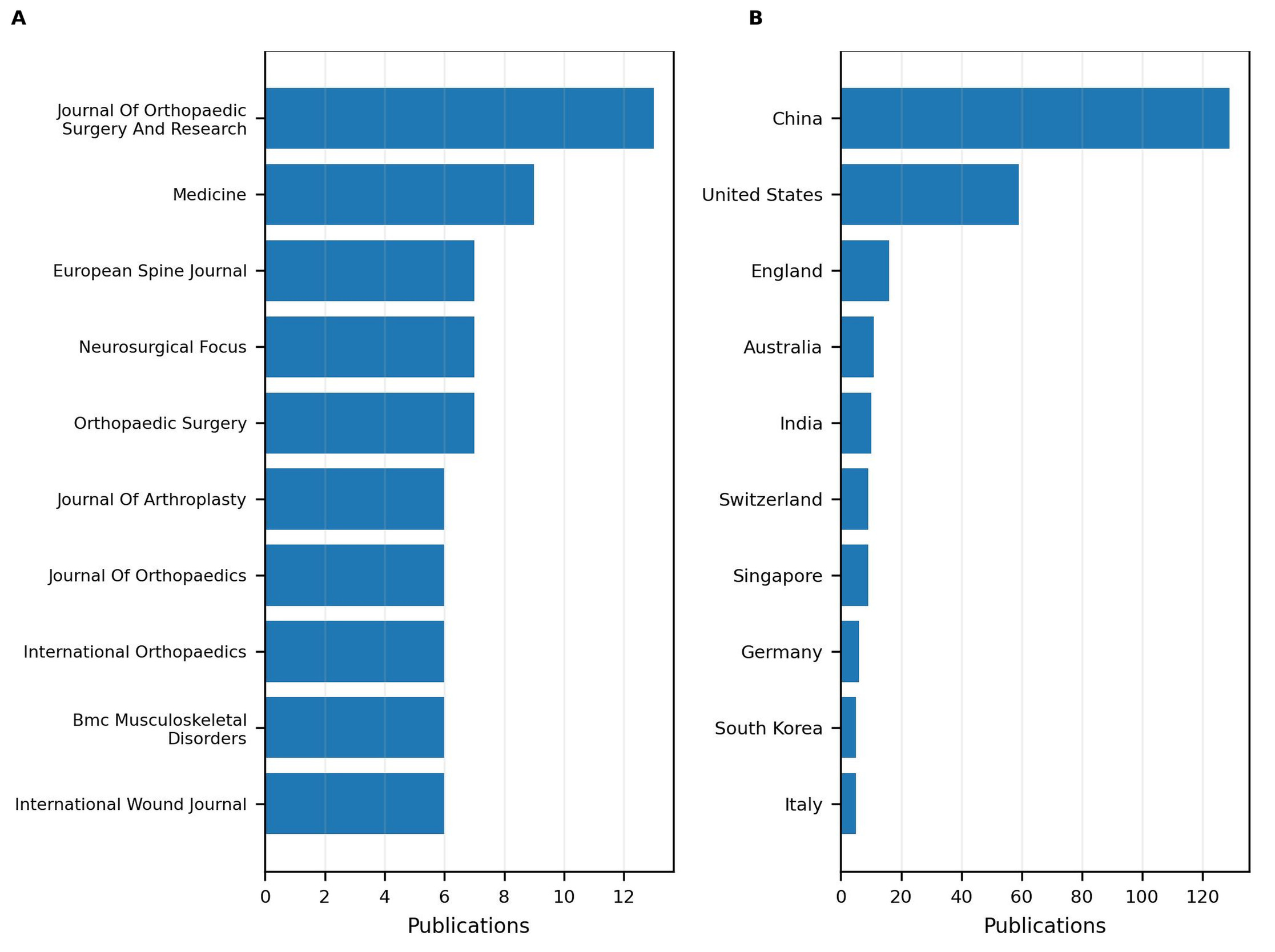
The literature was dispersed across orthopaedic, spine, anesthesia, rehabilitation, and general clinical journals. The Journal of Orthopaedic Surgery and Research published the most eligible records (n=13), followed by Medicine (n=9). European Spine Journal, Neurosurgical Focus, and Orthopaedic Surgery each published 7 records, while Journal of Arthroplasty, Journal of Orthopaedics, International Orthopaedics, BMC Musculoskeletal Disorders, and International Wound Journal each published 6 (Fig. 2A).
China was represented in 129 publications (43.7%), followed by the United States in 59 (20.0%) and England in 16 (5.4%). Australia contributed to 11 records, India to 10, Switzerland and Singapore to 9 each, Germany to 6, and South Korea and Italy to 5 each (Fig. 2B). Because a multinational paper was counted once for each represented country, country counts are not mutually exclusive.
Institutions and international collaboration
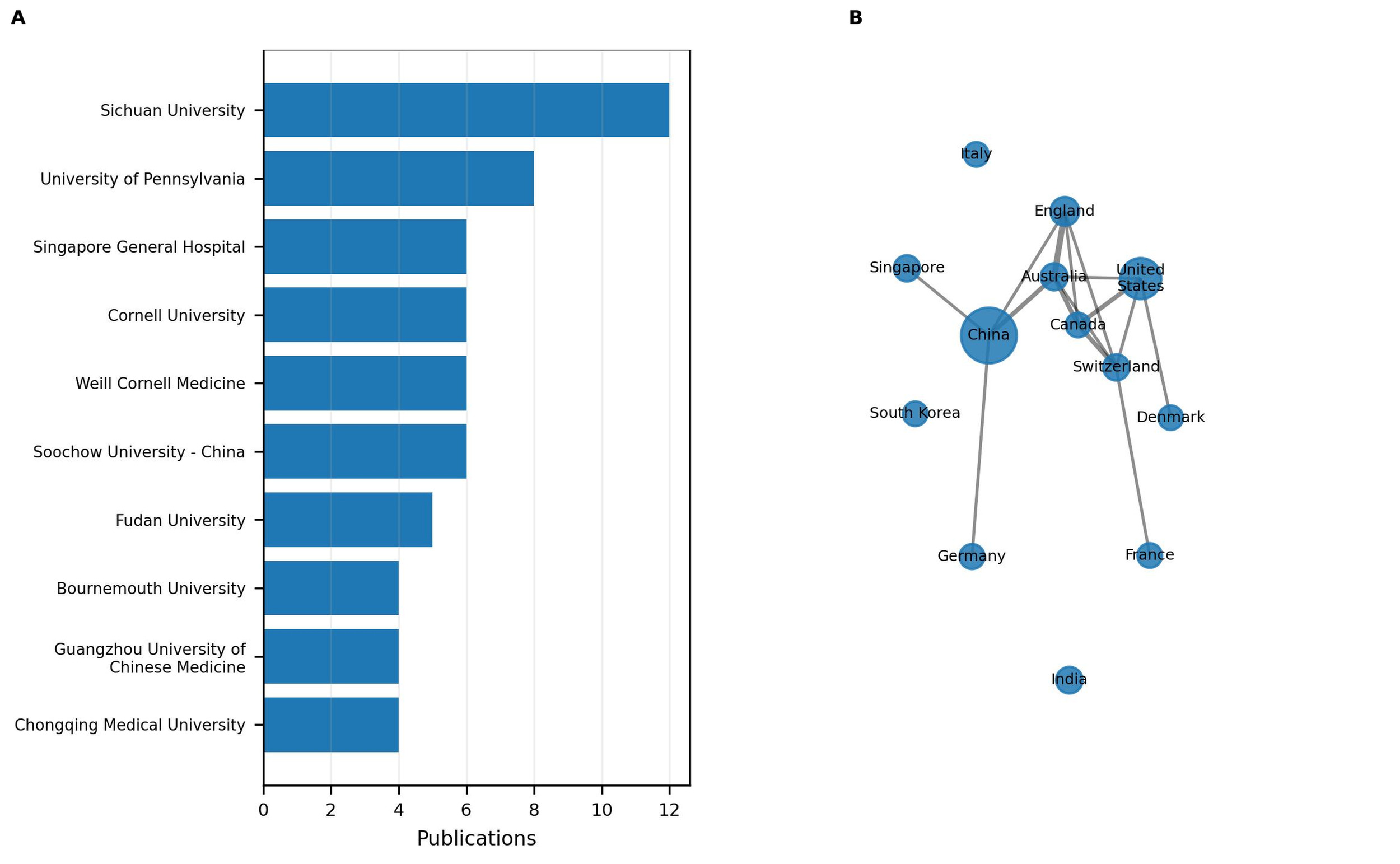
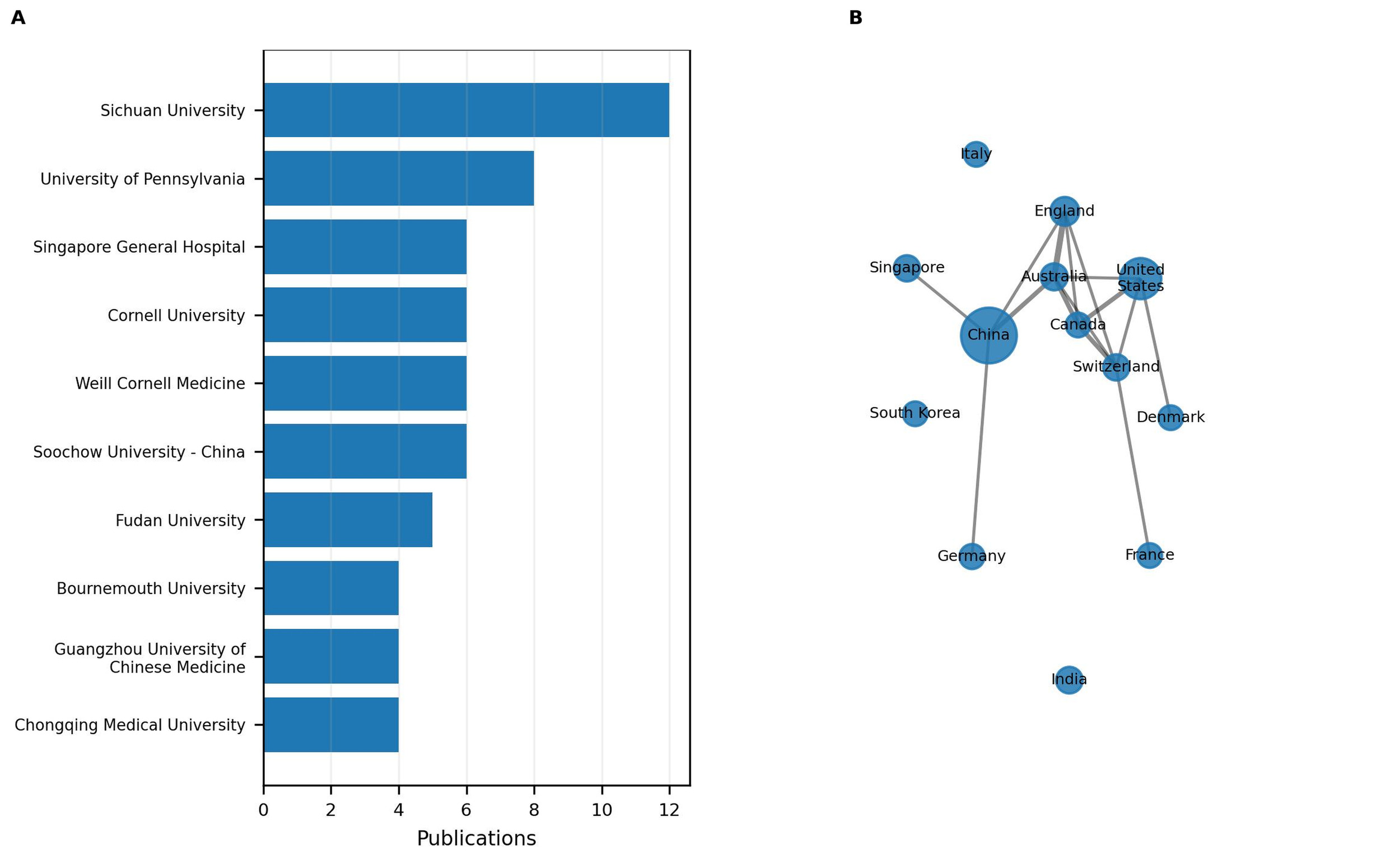
Using standardized Web of Science organization names, Sichuan University was the most frequently represented institution (n=12), followed by the University of Pennsylvania (n=8). Singapore General Hospital, Cornell University, Weill Cornell Medicine, and Soochow University - China each appeared in 6 publications, and Fudan University appeared in 5. The remaining institutions in the top 10 contributed 4 publications each (Fig. 3A). No single standardized organization accounted for more than 4.1% of the 295-record corpus, indicating broad institutional dispersion despite country-level concentration.
The international co-authorship network was relatively sparse compared with the volume of nationally produced research. China and the United States were the largest nodes, with cross-country links involving England, Australia, India, Switzerland, Singapore, Germany, South Korea, Italy, Canada, and Denmark among countries meeting the 5-publication threshold (Fig. 3B). The network suggests that a substantial portion of the literature remains organized within national or regional research systems rather than a densely integrated global collaboration network.
Research themes and citation influence
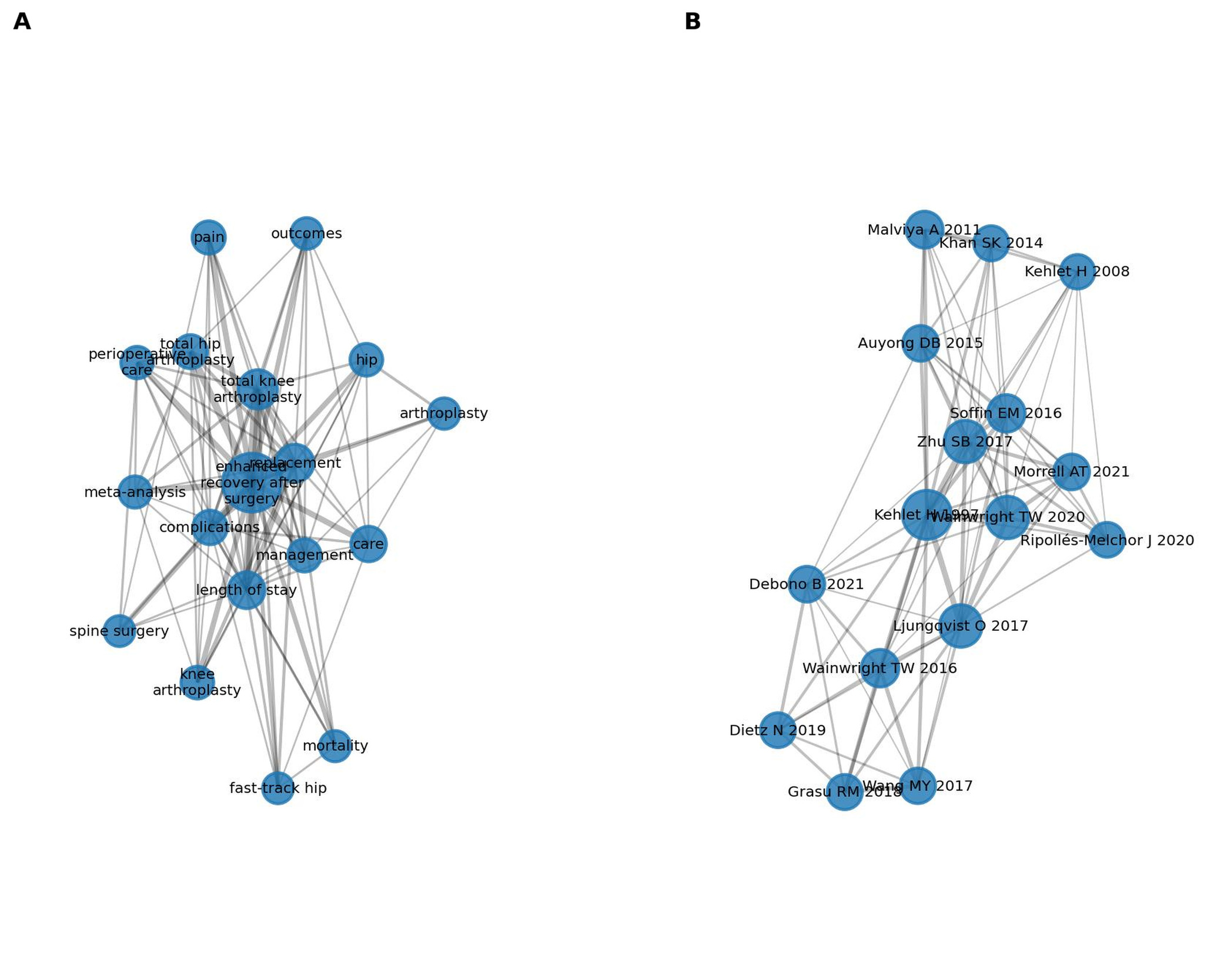
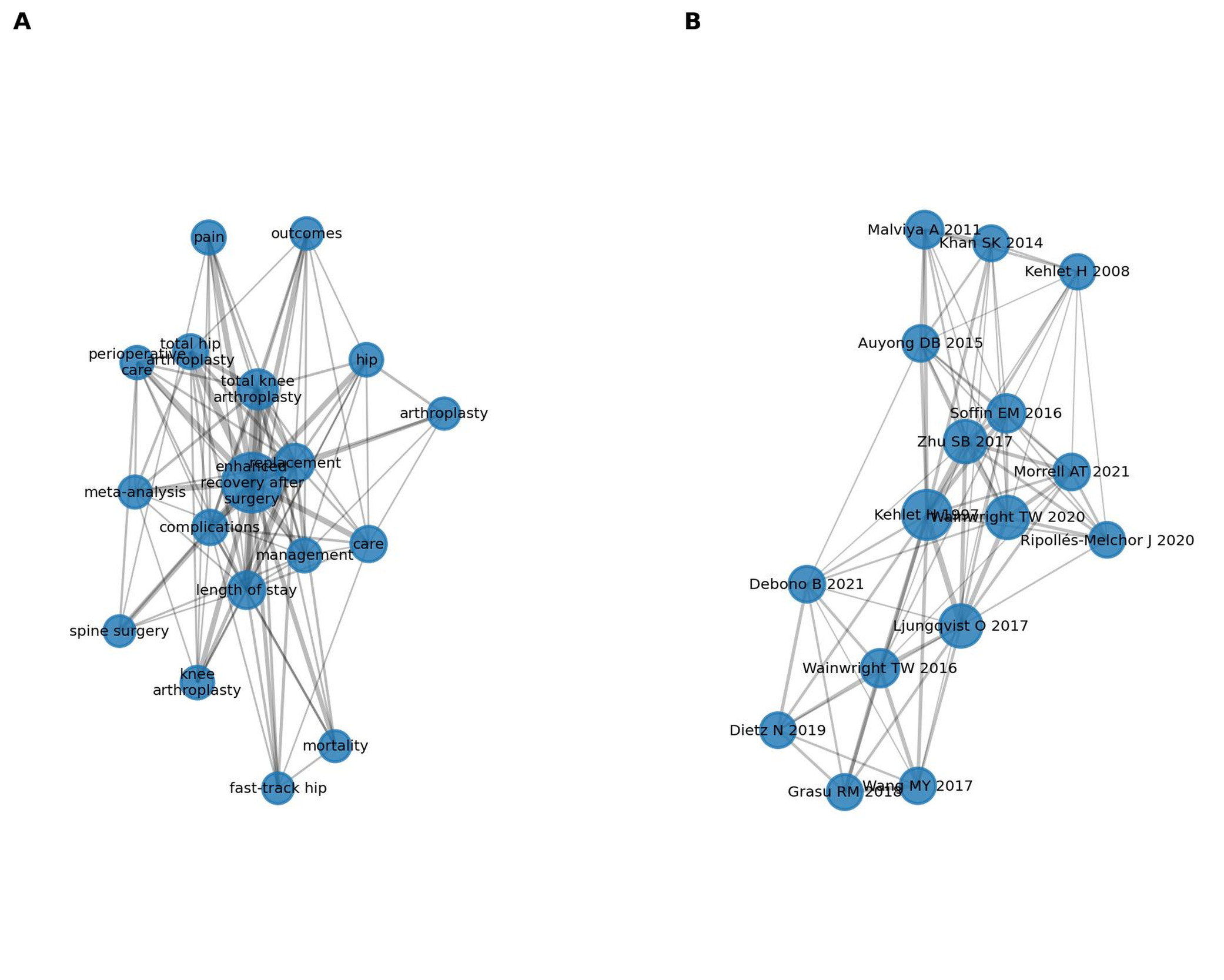
Keyword analysis showed that “enhanced recovery after surgery” was the dominant normalized term (171 records). Other frequent terms included total knee arthroplasty (56), replacement (50), length of stay (45), care (39), complications (35), total hip arthroplasty (33), pain (30), management (30), perioperative care (27), meta-analysis (26), outcomes (24), arthroplasty (23), and spine surgery (21). The co-occurrence network linked procedure-focused terms to outcome and care-process concepts, with length of stay, complications, pain, and perioperative care occupying central positions (Fig. 4A).
Reference co-citation analysis identified several foundational works repeatedly cited together. Kehlet’s 1997 framework for multimodal postoperative rehabilitation was the most frequently cited reference within eligible reference lists, appearing in 75 records, while the ERAS Society hip and knee consensus statement, Zhu et al.'s arthroplasty meta-analysis, and Ljungqvist et al.'s ERAS review each appeared in 48 records. Procedure-specific spine and arthroplasty publications formed strongly connected parts of the same co-citation network (Fig. 4B).1–3,11
The most highly cited eligible article by Web of Science total citation count was the 2019 systematic review of ERAS for spine surgery by Dietz et al. (238 citations).12 It was followed by Soffin and YaDeau’s review of primary hip and knee arthroplasty (237 citations)13 and Zhu et al.'s systematic review and meta-analysis of hip and knee arthroplasty (233 citations).11 Other highly cited studies addressed ERAS applicability to major spine surgery, reduced hospitalization after total knee arthroplasty, orthopaedic enhanced-recovery pathways, elective hip and knee arthroplasty outcomes, and spine-specific implementation (Table 1).14–21
Discussion
Principal findings
This reanalysis identifies a rapidly expanding but unevenly distributed literature on enhanced recovery in orthopaedic surgery. After removal of stemming-related and non-orthopaedic false-positive records, 295 publications remained, more than four-fifths of which were published from 2020 onward. Contrary to the apparent plateau produced by the uncleaned 655-record dataset, the eligible literature continued to grow from 2022 through 2025, reaching its highest annual output in 2025. Arthroplasty, length of stay, complications, pain, perioperative care, and spine surgery dominated the thematic landscape, while the most-cited works were reviews, consensus-oriented publications, and pathway studies that helped establish the clinical case for ERAS.
Growth and clinical maturation of orthopaedic enhanced recovery
The sustained increase in publication volume is clinically plausible. ERAS has moved from a broad perioperative philosophy to increasingly standardized pathways for joint replacement and spine surgery, and the high co-citation prominence of the hip/knee consensus recommendations reflects that transition.3,4 The citation leaders likewise trace the field’s progression: early arthroplasty pathway studies demonstrated reduced hospitalization and favorable outcomes, later reviews synthesized the evidence, and spine-specific programs extended the model into another high-volume orthopaedic domain.11–21
This trajectory is particularly relevant given expected growth in arthroplasty demand.7 The 2026 publication count should not be interpreted as a decline because the underlying export ended on June 15. Similarly, short-term fluctuations around 2020 should be interpreted cautiously in light of the major disruption to elective orthopaedic surgical volume during the COVID-19 pandemic.22
Geographic and institutional concentration
The geographic distribution also changed materially after data cleaning. China, rather than the United States, was the most frequently represented country in the eligible corpus. This distinction matters because bibliometric rankings are sensitive to search specificity: when hundreds of generic “era” records remain in the dataset, apparent institutional and national leaders can be driven by off-topic literature rather than enhanced-recovery research. Using the cleaned dataset, country-level output was concentrated in China and the United States, but institutional productivity was much more diffuse, with no standardized organization contributing more than 12 records.
The broader issue of geographic concentration is not unique to ERAS. Orthopaedic research output and authorship remain disproportionately centered in high-income settings, while lower-resource countries bear substantial musculoskeletal disease burden and often face greater barriers to protocol implementation, rehabilitation resources, and perioperative infrastructure.23,24 For ERAS, this creates a specific translational challenge: a pathway can be strongly supported in well-resourced centers yet remain difficult to implement in settings with different staffing, anesthesia capacity, rehabilitation access, discharge pathways, or follow-up systems.
From efficacy to implementation
The keyword and citation structures suggest that the orthopaedic ERAS literature is mature around efficacy and near-term perioperative outcomes. Length of stay, complications, pain, arthroplasty, and postoperative care were among the most frequently connected concepts, while many of the citation leaders focused on whether ERAS pathways reduce hospitalization or improve recovery.5,6,11–13,15,17,18 This is an important foundation, but it leaves a some questions unanswered such as: which components are consistently implemented, which are most difficult to sustain, how adherence varies across institutions, and how pathways should be adapted to different health systems and patient populations.
Implementation research outside orthopaedic-specific bibliometrics has documented persistent barriers even when clinicians recognize the benefits of ERAS.25 For orthopaedic surgery, the next phase of scholarship may therefore benefit from multicenter implementation studies, pragmatic comparisons of pathway components, standardized reporting of protocol adherence, economic analyses, and collaborations that include institutions beyond the countries currently dominating publication output.
Limitations
This study has several limitations. First, Web of Science was the only bibliographic database used, so eligible studies indexed only in Scopus, PubMed/MEDLINE, Embase, or regional databases may have been missed. Second, the search was restricted to titles to maximize specificity; relevant orthopaedic ERAS publications that discussed enhanced recovery without using an eligible term in the title may therefore have been omitted. Third, the original use of the acronym “ERAS” produced substantial stemming-related false positives. Although the reproducibility screen corrected this problem in the supplied export, a future update should rerun the search with syntax that disables or otherwise avoids stemming of the acronym and should prospectively validate the retrieval set. Fourth, country and institution counts depend on affiliation metadata and normalization within Web of Science; multicountry publications contribute to more than one country count, and closely related institutions can remain separate standardized entities. Fifth, citation counts favor older publications because they have had more time to accumulate citations, and the 2026 publication count represents only records available through June 15. Finally, keyword and co-citation networks depend on normalization choices and display thresholds and should be interpreted as maps of the indexed literature rather than direct measures of clinical importance.
Conclusion
Enhanced-recovery research in orthopaedic surgery has expanded markedly, with 82.0% of the cleaned 295-publication corpus appearing from 2020 onward and annual output continuing to rise through 2025. China and the United States accounted for the largest shares of publications, whereas institutional output was comparatively dispersed. Arthroplasty, length of stay, complications, perioperative care, pain, and spine surgery formed the central research themes, and highly cited reviews and pathway studies established a strong evidence base for clinical efficacy. The field is now positioned to move beyond demonstrating that enhanced recovery can work toward determining how reliably it is implemented, which pathway components matter most in routine practice, and how the evidence can be generalized across a broader range of institutions and health systems.