
Introduction
Total knee arthroplasty (TKA) is one of the most effective and commonly performed orthopedic procedures for the management of symptomatic knee joint disease refractory to conservative treatment. The procedure has demonstrated excellent outcomes in patients with osteoarthritis, inflammatory arthropathies, post-traumatic arthritis, and other conditions resulting in severe pain, deformity, and functional limitation. Despite the overall success of the procedure, a considerable proportion of patients—reported in the literature to approach 15–20%—remain dissatisfied following surgery.1–4 This dissatisfaction has been attributed to several factors, including persistent pain, functional limitations, instability, and the perception that the prosthetic joint does not replicate the natural kinematics of the native knee.
In recent years, increasing attention has been directed toward implant designs that more closely reproduce physiological knee motion. Among these, the medial pivot concept has gained particular interest due to its biomechanical rationale. By providing a stable medial compartment that acts as a pivot point and allowing controlled lateral femoral rollback, this design attempts to mimic the normal kinematic pattern observed in the native knee during flexion.5–10 Clinical, fluoroscopic, and biomechanical studies have further demonstrated that medial pivot designs may better reproduce physiological motion patterns and improve joint stability compared with conventional implant designs.7,10,11
The 5C® MEDic knee system has been developed based on these principles, incorporating design features intended to optimize femorotibial congruency and restore more physiological movement patterns. In parallel, alignment strategies in TKA have evolved considerably. Traditional mechanical alignment has been increasingly challenged by more individualized approaches, including kinematic and functional alignment concepts.12–14
The Coronal Plane Alignment of the Knee (CPAK) classification, as described by MacDessi et al. ,15 offers a structured method for categorizing knee alignment phenotypes based on constitutional limb alignment and joint line obliquity. This framework allows for a more patient-specific approach to TKA and has been increasingly incorporated into contemporary surgical planning.16–18
The purpose of the present study was to evaluate the short- and mid-term clinical, radiographic, and patient-reported outcomes of primary cemented TKA performed using the 5C® MEDic knee system. In addition, implant survivorship and complication rates were assessed.
Materials and Methods
Study Design and Patient Population
This retrospective cohort study included 372 patients who underwent primary cemented total knee arthroplasty using the 5C® MEDic knee system between 2022 and 2025. A total of 419 knees were included, with a minimum follow-up of 12 months.
Patients were eligible for inclusion if they underwent primary TKA for degenerative osteoarthritis and received the 5C® MEDic implant. All procedures were performed by a single orthopedic surgeon in a high-volume arthroplasty center, using a standardized surgical protocol.
Indications
The 5C® MEDic knee system is primarily indicated for patients undergoing total knee arthroplasty for degenerative joint disease. Appropriate indications include primary osteoarthritis of the knee, post-traumatic arthritis, and varus deformity or neutral constitutional alignment. The implant is particularly suited for cases in which restoration of physiological knee kinematics and medial pivot stability is desired. The system may also be advantageous in patients requiring improved anteroposterior stability and enhanced femorotibial congruency through a medial pivot design philosophy.
Contraindications
Contraindications for use of the 5C® MEDic system include conditions associated with severe ligamentous insufficiency or major coronal deformity that may compromise implant stability and soft-tissue balancing. These include excessive varus deformity associated with severe ligamentous laxity, knee recurvatum, generalized joint hyperlaxity, rheumatoid arthritis and other inflammatory arthropathies, and severe valgus deformity. In such cases, alternative implant designs or additional levels of implant constraint may be required to achieve adequate stability and long-term fixation.
Surgical Technique
All procedures were performed through a medial parapatellar approach. Bone resections and soft-tissue balancing were carried out with the aim of restoring functional alignment and achieving balanced flexion and extension gaps.
The 5C® MEDic system was implanted according to a medial pivot philosophy, emphasizing stability in the medial compartment and controlled lateral rollback. Cemented fixation was used in all cases. This approach is supported by biomechanical evidence demonstrating improved femorotibial stability and more physiological kinematics in medial pivot systems.7,11
A tibial stem extension was utilized in 89 cases (21%), based on intraoperative assessment of bone quality, alignment, and implant stability. The decision to use a stem was made at the discretion of the operating surgeon.
Radiographic Assessment
Standardized long-leg radiographs were obtained preoperatively and postoperatively. The following parameters were measured: hip–knee–ankle angle (HKAA), lateral distal femoral angle (LDFA), medial proximal tibial angle (MPTA), arithmetic hip–knee–ankle angle (aHKA), and joint line obliquity (JLO). Each knee was classified according to the CPAK system both preoperatively and postoperatively (Table 1).15,16
Clinical and Functional Outcome Measures
Patients were evaluated at 6 months and 12 months postoperatively. Validated outcome measures included the Knee Society Score 2011 (KSS 2011), Knee injury and Osteoarthritis Outcome Score-12 (KOOS-12), Oxford Knee Score (OKS), Forgotten Joint Score-12 (FJS-12), and visual analogue scale (VAS) satisfaction score.19–22
Survivorship Analysis
Implant survivorship was assessed using Kaplan–Meier analysis, with revision for any reason defined as the endpoint.23
Statistical Analysis
Continuous variables are presented as means ± standard deviations, while categorical variables are presented as frequencies and percentages. Statistical comparisons between follow-up intervals were performed using paired-sample analyses. A p value < 0.05 was considered statistically significant. Kaplan–Meier analysis was used to estimate implant survivorship at one year.
Results
Patient Demographics and Alignment
A total of 419 knees were included in the analysis (Table 2).
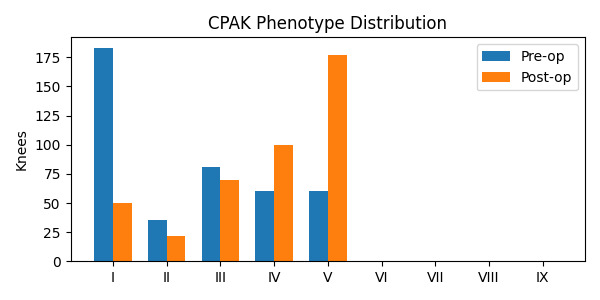
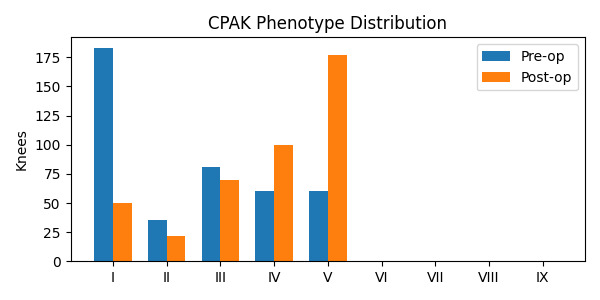
Preoperatively, CPAK phenotype I was the most prevalent alignment phenotype, accounting for 183 knees (43%). Following surgery, CPAK phenotype V became the predominant phenotype, representing 177 knees (42%). This shift suggests that the applied alignment strategy resulted in a more balanced postoperative distribution of coronal knee phenotypes (Figure 1, Table 3).
Clinical Outcomes
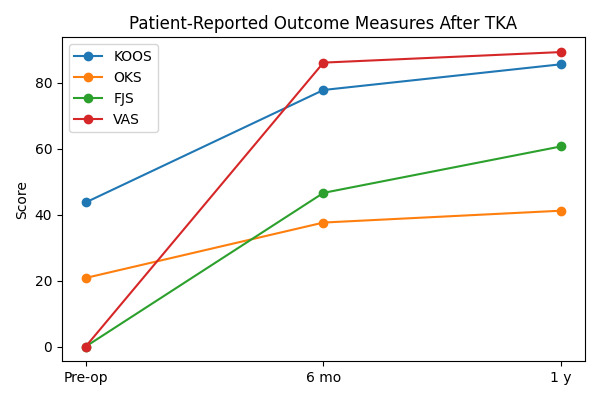
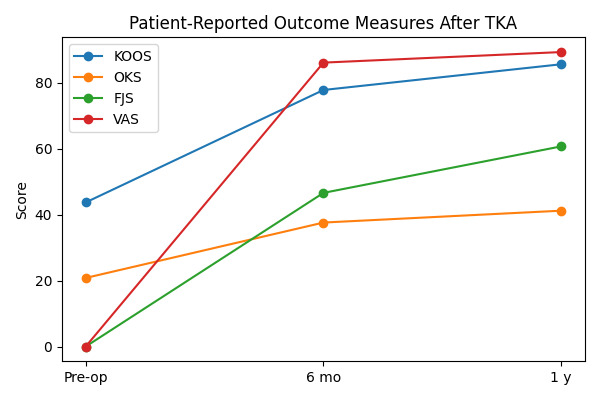
At one-year follow-up, patients demonstrated significant functional improvement across all evaluated patient-reported outcome measures (PROMs) (Table 4).
Substantial improvement was observed in all functional domains throughout follow-up. KOOS subscales demonstrated marked postoperative improvement in symptoms, pain, activities of daily living, sports participation, and quality of life. The Oxford Knee Score (OKS) also improved significantly during follow-up, indicating enhanced knee function and patient satisfaction.
Forgotten Joint Score (FJS) values increased progressively between 6 months and 1 year, suggesting reduced prosthetic awareness during daily activities and a more physiological subjective knee function. Similarly, high postoperative VAS satisfaction scores reflected favorable patient perception of the implant and overall surgical outcome. Collectively, these findings support the ability of the 5C® MEDic system to provide substantial early and mid-term functional recovery with high patient satisfaction following total knee arthroplasty (Figure 2).
Range of Motion and Functional Recovery
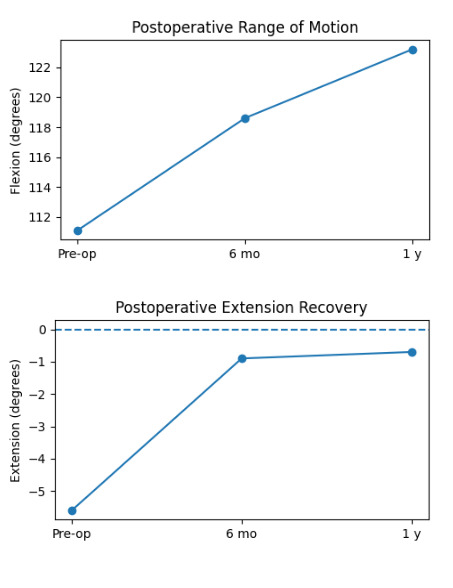
Significant improvement in knee range of motion was observed throughout follow-up. Mean extension improved from −5.6° preoperatively to −0.9° at 6 months and −0.7° at 1 year postoperatively. Similarly, mean knee flexion increased from 111.1° preoperatively to 118.6° at 6 months and 123.2° at final follow-up (Figure 3, Table 5).
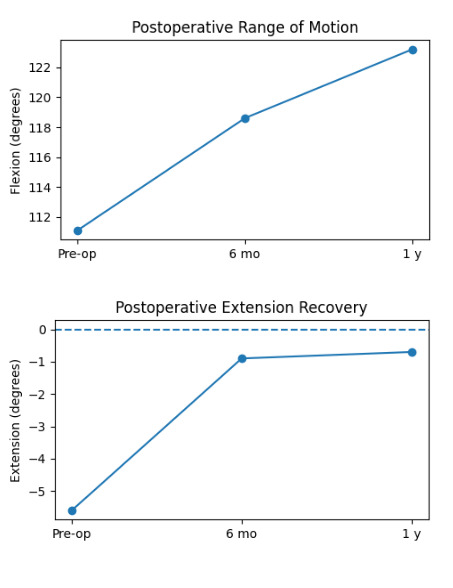
These findings demonstrate progressive postoperative improvement in both flexion and extension, reflecting favorable restoration of knee mobility and functional recovery following implantation of the 5C® MEDic system. The improvement in extension suggests restoration of sagittal balance and reduction of flexion contracture, while the increase in flexion may reflect improved femoral rollback and joint stability associated with the medial pivot design philosophy.
Complications and Revisions
No cases of early mechanical implant failure, aseptic loosening, instability, or periprosthetic fracture were observed during the follow-up period.
One patient (0.2%) developed an acute early periprosthetic joint infection 20 days following the index total knee arthroplasty. The infection was treated successfully with surgical irrigation and debridement, antibiotic therapy, and polyethylene insert exchange (DAIR procedure), while retaining the femoral and tibial components. No recurrent infection was observed during the follow-up period.
Additionally, one patient (0.2%) developed postoperative deep venous thrombosis (DVT), which was managed successfully with prolonged anticoagulant therapy. No pulmonary embolism or additional thromboembolic complications occurred.
Overall, the complication profile was favorable, with no early implant-related complications identified during the study period. These findings are consistent with previously published reports demonstrating low early complication rates and reliable short-term survivorship in contemporary medial pivot total knee arthroplasty systems.24,25
Survivorship
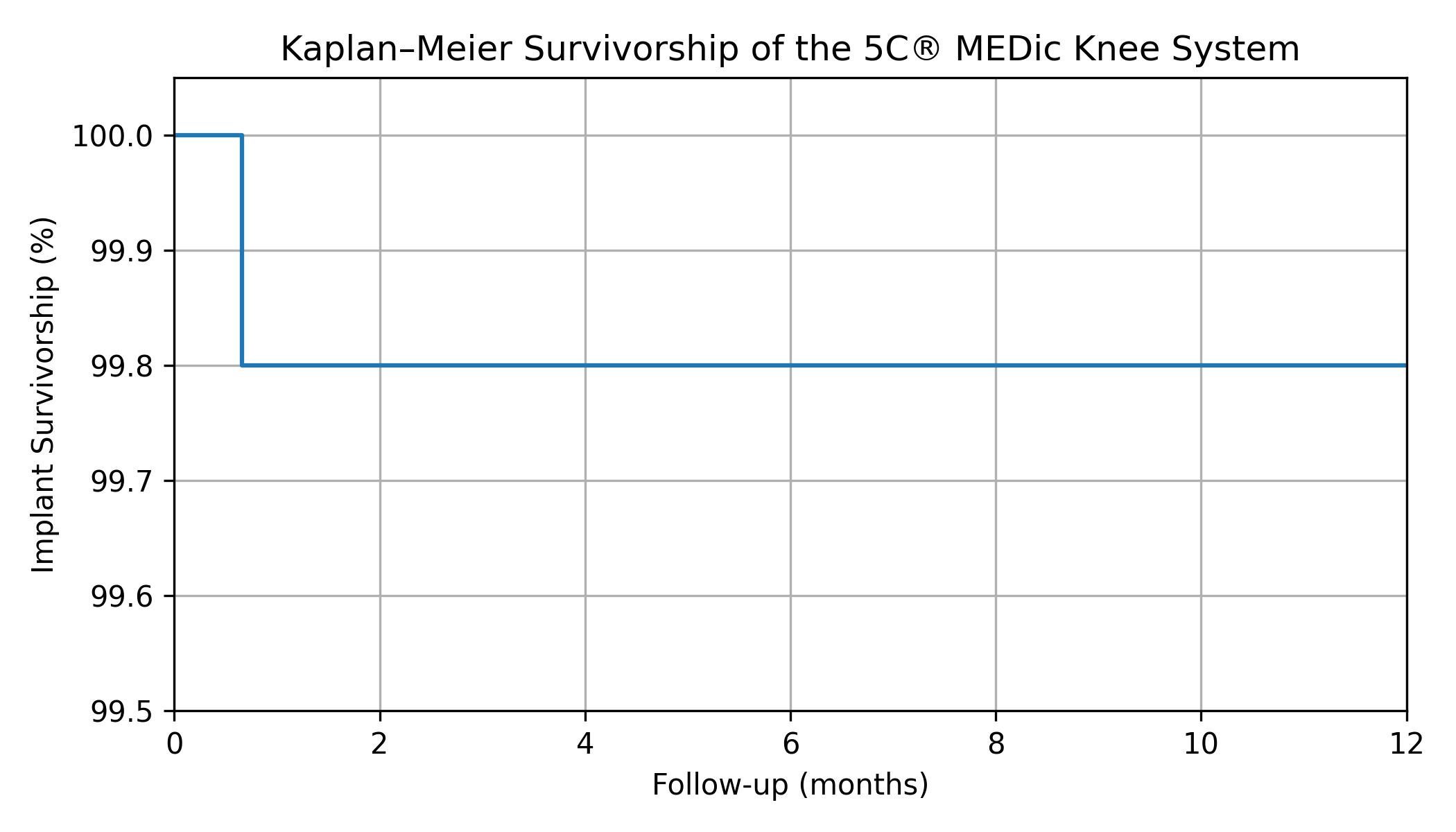
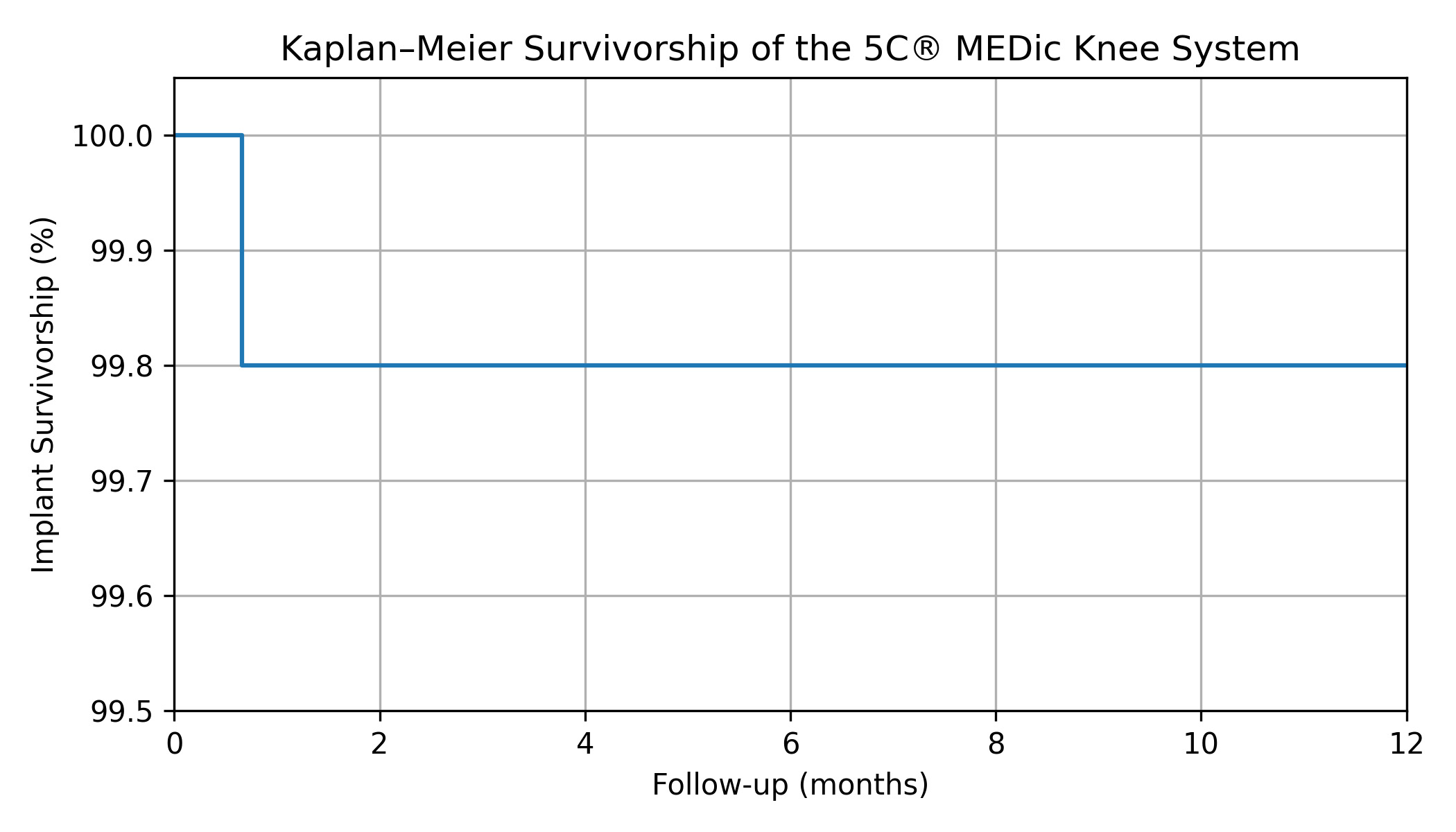
Kaplan–Meier analysis demonstrated a cumulative implant survivorship of 99.8% at 1-year follow-up, with revision for any reason defined as the endpoint (Figure 4). The only reoperation occurred 20 days postoperatively and was performed for the treatment of an acute periprosthetic joint infection using a debridement, antibiotics, and implant retention (DAIR) procedure. No cases of aseptic loosening, mechanical failure, instability requiring revision, or periprosthetic fracture were observed. These findings indicate excellent early implant durability and are consistent with survivorship rates reported for contemporary medial pivot total knee arthroplasty systems.
Discussion
The present study demonstrates that the 5C® MEDic knee system provides excellent short- and mid-term clinical and functional outcomes in primary total knee arthroplasty.
The observed improvements in clinical and functional scores indicate not only substantial functional recovery but also a high level of patient satisfaction. The FJS-12, which reflects joint awareness, has gained increasing importance as a measure of success in TKA, as it captures the patient’s perception of the joint during everyday activities.20 The FJS-12 results reported in this study suggest that the implant may contribute to a more physiological knee perception.
Another important finding was the excellent implant survivorship observed during the study period. Kaplan–Meier analysis demonstrated a cumulative survivorship of 99.8% at 1 year, with only one reoperation recorded. No cases of aseptic loosening, mechanical failure, or revision due to instability were identified. Although the follow-up period remains relatively short, these findings support the reliability of the 5C® MEDic system and are comparable to survivorship rates reported for other contemporary medial pivot implants.
The 5C® MEDic knee system incorporates several implant-specific characteristics intended to reproduce more physiological knee kinematics while improving implant stability, functional recovery, and patient satisfaction. The implant was developed according to medial pivot principles, emphasizing a stable medial compartment and controlled lateral femoral rollback during flexion. Contemporary biomechanical studies have demonstrated that reproduction of medial pivot motion may reduce paradoxical anterior femoral translation, improve quadriceps efficiency, and restore more native knee mechanics compared with conventional posterior-stabilized systems.7,10,11
Several design characteristics may contribute to these favorable biomechanical properties. The implant utilizes a posterior referencing system that facilitates controlled femoral rotation and accurate component positioning during surgery. In addition, the single-radius femoral design aims to improve femorotibial congruency and optimize quadriceps function, particularly during early flexion. The implant allows a broad functional range of motion, reported from approximately −8° to 155°, potentially supporting deep flexion activities and improved postoperative mobility.
The observed improvement in knee extension from −5.6° preoperatively to −0.7° at final follow-up is clinically important because restoration of full extension has been strongly associated with improved gait mechanics, quadriceps efficiency, and patient satisfaction after TKA. Likewise, the increase in flexion to 123.2° at one year suggests that the implant design permits functional activities requiring deep knee flexion while maintaining stability throughout the range of motion.
Additional implant-specific advantages include the use of an anatomic tibial component with broad size compatibility and optimized tibial coverage. Polyethylene inserts are available in 1-mm increments, allowing more precise soft-tissue balancing and gap management intraoperatively. The implant also incorporates an XLPE Vitamin E polyethylene liner, which may improve wear resistance and long-term durability. Furthermore, additional tibial stem and augment options are available in selected cases requiring enhanced fixation or management of compromised bone stock.
Short posterior femoral condyles represent another important design feature of the 5C® MEDic system. By facilitating soft-tissue relaxation during flexion, this design may improve deep flexion capability while maintaining implant stability. Collectively, these characteristics are intended to minimize kinematic conflict, improve stability, reduce polyethylene wear, and reproduce native knee motion more effectively than traditional implant systems.
Another important finding is the absence of implant failures and the high survivorship rate. While the follow-up period is relatively short, these results are encouraging and suggest reliable early performance of the implant. The single case of periprosthetic joint infection was managed successfully without removal of the implant and falls within expected complication rates.
The use of CPAK classification provided additional insight into alignment changes following TKA. The shift toward phenotype V postoperatively may reflect the application of functional alignment principles, aiming to optimize soft-tissue balance and joint mechanics rather than strictly adhering to neutral mechanical alignment. This approach has been increasingly supported in recent literature.13,14,18
Comparison Between Medial Pivot and Posterior-Stabilized Total Knee Arthroplasty
Medial pivot (MP) and posterior-stabilized (PS) total knee arthroplasty systems differ substantially in both biomechanical philosophy and implant design. Posterior-stabilized implants utilize a cam-and-post mechanism intended to substitute for the posterior cruciate ligament and facilitate femoral rollback during knee flexion. Although PS systems have demonstrated reliable long-term survivorship and remain widely used, concerns have been raised regarding paradoxical anterior femoral translation, patellofemoral complications, increased bone resection, and less physiological knee kinematics.26,27 In contrast, medial pivot systems were specifically developed to reproduce native knee biomechanics by creating a highly congruent and stable medial compartment while allowing controlled lateral femoral rollback and rotational movement.3,23
Biomechanical and fluoroscopic studies have demonstrated that medial pivot implants more closely replicate the normal kinematic pattern of the native knee, including improved femoral rollback, enhanced rotational stability, and reduced paradoxical motion during gait and stair-climbing activities.14,17,27 Furthermore, several investigations have suggested that MP implants may improve quadriceps efficiency and reduce joint awareness, resulting in superior Forgotten Joint Scores and greater patient satisfaction compared with PS systems.8,20,23 These findings are particularly relevant given that persistent instability and the sensation of an unnatural knee remain important causes of dissatisfaction following TKA.
Despite these theoretical and biomechanical advantages, clinical studies comparing MP and PS designs have produced mixed results. Mid- and long-term investigations generally demonstrate comparable implant survivorship and complication rates between the two systems.19,28 However, medial pivot implants have been associated with improved subjective stability, more physiological gait patterns, and higher patient-reported functional outcomes in selected patient populations.23,24 Conversely, PS implants may provide slightly greater early postoperative flexion due to the cam-post mechanism facilitating femoral rollback during deep flexion.3,19
Another important distinction concerns surgical technique and implant constraint. Medial pivot systems are more sensitive to soft-tissue balancing and component positioning because the highly congruent medial compartment may become overconstrained if alignment is inaccurate.13 PS systems are generally considered technically more forgiving and remain familiar to many surgeons due to their long-standing clinical use.16 Nevertheless, contemporary alignment strategies, including kinematic and functional alignment, appear particularly well suited to MP implants because they aim to preserve native joint line orientation and physiological soft-tissue tension.7,15,22
Overall, current evidence suggests that both MP and PS systems provide excellent clinical outcomes and survivorship following TKA. However, medial pivot designs may offer biomechanical and patient-reported advantages by more closely reproducing physiological knee kinematics and improving joint stability and awareness. Further prospective randomized studies with long-term follow-up are required to determine whether these biomechanical advantages translate into clinically superior long-term outcomes.
Comparison with Existing Literature
The results of the present study are consistent with previous reports demonstrating favorable outcomes with medial pivot knee designs. Several authors have reported improved kinematic behavior and higher patient satisfaction with such implants, while systematic reviews and meta-analyses have confirmed reliable outcomes and survivorship.6,9,12,26,29–32
The favorable outcomes observed in the present series may be attributed to the combination of medial pivot implant design and individualized alignment principles. The high patient satisfaction scores, improvement in joint awareness, restoration of knee motion, and excellent early survivorship suggest that the 5C® MEDic system successfully reproduces key aspects of physiological knee function. These findings support the growing body of evidence favoring modern medial pivot arthroplasty designs in appropriately selected patients.33–35
Limitations
Several limitations should be acknowledged. First, the retrospective design introduces the potential for selection bias. Second, the absence of a comparative control group limits direct comparison with alternative implant systems and alignment philosophies. Third, the relatively short follow-up period does not permit evaluation of long-term implant survivorship, polyethylene wear, or late aseptic loosening. Nevertheless, to the authors’ knowledge, this study represents the largest clinical series evaluating the 5C® MEDic medial pivot knee system to date and provides valuable insight into its early clinical, functional, and radiographic performance.
Future prospective, randomized studies with longer follow-up are required to confirm these findings and to compare outcomes with alternative implant designs and alignment strategies.
Conclusion
The 5C® MEDic knee system demonstrated excellent short- and mid-term clinical, radiographic, and patient-reported outcomes following primary total knee arthroplasty. The implant was associated with high survivorship, low complication rates, and substantial functional improvement. Restoration of physiological knee kinematics through medial pivot design principles and individualized alignment strategies may contribute to improved patient satisfaction and reduced prosthetic joint awareness. Further prospective comparative studies with longer follow-up are required to confirm these findings.
Authors’ Contributions
Vasileios Kosmas: Conceptualization, methodology, investigation, data curation, formal analysis, visualization, writing – original draft, and writing – review and editing.
Georgios Papadimitriou: Investigation, data curation, formal analysis, and writing – review and editing.
Hayiyia Mousa: Investigation, data curation, validation, and writing – review and editing.
Iason Papaskarlatos: Investigation, data curation, validation, and writing – review and editing.
Vasileios Sakellariou: Conceptualization, investigation/surgery, methodology, supervision, project administration, validation, and writing – review and editing.
Declaration of Interest
Dr. Sakellariou serves as a Consultant and Trainer for Implantcast GmbH. The remaining authors declare that they have no known competing financial interests or personal relationships that could have appeared to influence the work reported in this paper.
Funding
This research did not receive any specific grant from funding agencies in the public, commercial, or not-for-profit sectors. Implantcast GmbH had no role in the study design; the collection, analysis, or interpretation of data; the writing of the manuscript; or the decision to submit the manuscript for publication.