
Introduction
Young adulthood is a period of transition in which individuals increasingly assume responsibility for arranging care, understanding insurance, communicating with clinicians, and making health decisions. In the United States, insurance coverage and continuity of care can be disrupted during this transition, and readiness to move from pediatric to adult-oriented systems is often incomplete.1–3
Access barriers may include cost, transportation, difficulty locating a clinician, and appointment availability. Young adults have reported delaying or avoiding care because of cost-related concerns, and transportation barriers can further restrict timely access.4–6 These structural barriers may persist even when a person understands health information and knows how to seek care.
Health literacy is a related but distinct construct. Young adults may be comfortable finding health information while still having difficulty with specific tasks such as interpreting insurance terminology or evaluating online information.7–9 These challenges raise an important practical question: does greater health literacy translate into fewer barriers to obtaining care, or should literacy and access be addressed as separate targets?
Health literacy has a practical application in orthopedic care, where patients may need to understand an injury, postoperative restrictions, medication instructions, and a staged rehabilitation plan. In a prospective comparative cohort of orthopedic trauma patients, supplementing verbal discharge instructions with a written and pictorial document improved comprehension of injury and postoperative care.10 The orthopedic relevance of health literacy therefore extends beyond recognition of medical terminology to understanding instructions that patients are expected to use during musculoskeletal recovery.
Access is a separate concern along the orthopedic care pathway. In a national simulated-patient study, physical therapy practices were substantially less likely to accept Medicaid than private insurance for postoperative rotator cuff rehabilitation.11 This example illustrates an access constraint that improved patient knowledge alone would not remove. For young adults who need fracture care, sports injury evaluation, or rehabilitation, examining knowledge-related needs separately from practical barriers may offer a useful framework for future research. The present general young-adult survey provides an exploratory perspective on these constructs rather than estimates specific to orthopedic patients.
This study examined healthcare access and health literacy together in U.S. young adults aged 18-25 years. We evaluated the correlation between composite access and literacy scores and explored whether patterns differed across household-income and education groups.
Methods
Study design and participants
We conducted a cross-sectional survey using an anonymous online questionnaire distributed to adults aged 18-25 years in the United States. One hundred participants completed the survey. Because recruitment was voluntary, anonymous and online, the sample should be considered a nonprobability sample rather than a population-representative national sample.
Measures
The questionnaire assessed healthcare access, health literacy, insurance knowledge, confidence navigating the healthcare system, and demographic characteristics. Access was represented by five items addressing cost-related barriers, transportation, difficulty finding a provider, difficulty scheduling appointments, and confusion following medical encounters. Health literacy was represented by four items addressing confidence understanding medical information, knowledge of insurance terminology, use of online health information, and self-advocacy during clinical encounters.
Composite access and literacy scores were calculated by averaging the relevant item responses. Higher access scores indicated fewer reported barriers, and higher literacy scores indicated greater confidence or knowledge.
Statistical analysis
Pearson correlation was used to assess the linear relationship between composite health-literacy and healthcare-access scores. Weighted descriptive comparisons were also examined across household-income and education groups. Given the sample size and small cell counts in several subgroups, subgroup findings are presented as exploratory and should not be interpreted as population estimates.
Results
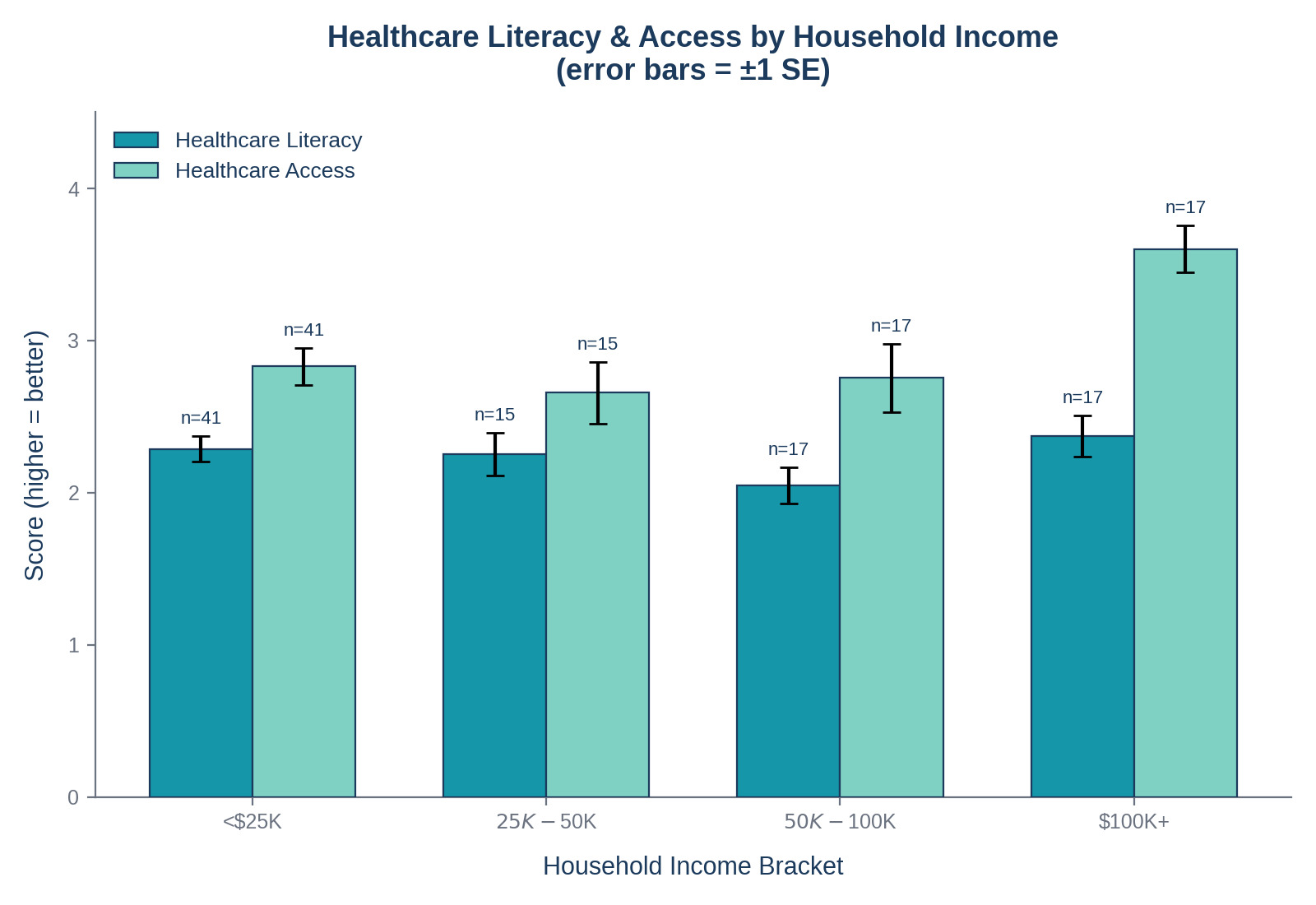
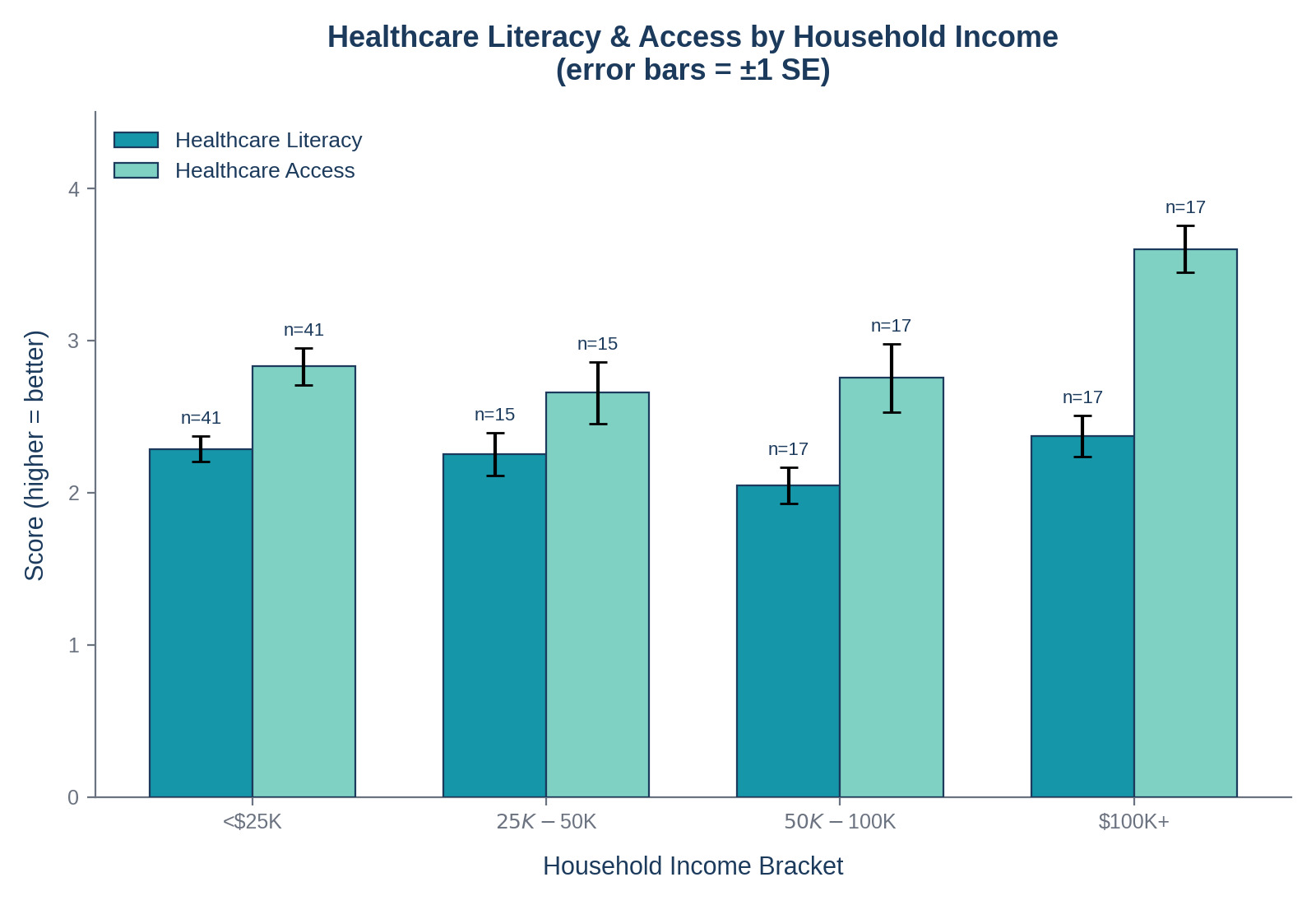
Among 100 participants, household-income groups included less than $25,000 (n=41), $25,000-$50,000 (n=15), $50,000-$100,000 (n=17), and $100,000 or more (n=17); income was not reported or otherwise categorized for the remaining participants. Access scores were descriptively higher in the $100,000-or-more group, whereas literacy scores were comparatively similar across income categories (Figure 1).
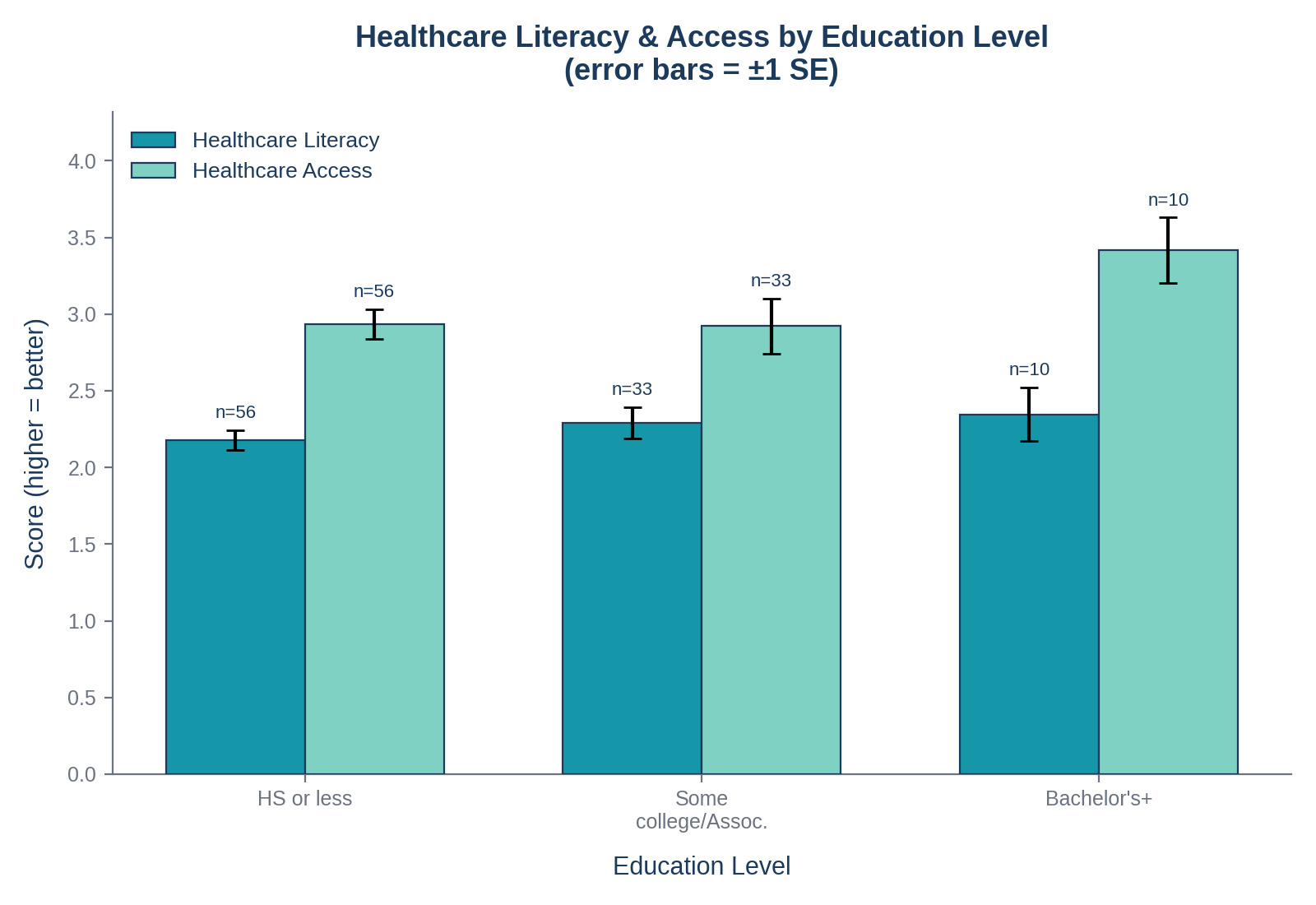
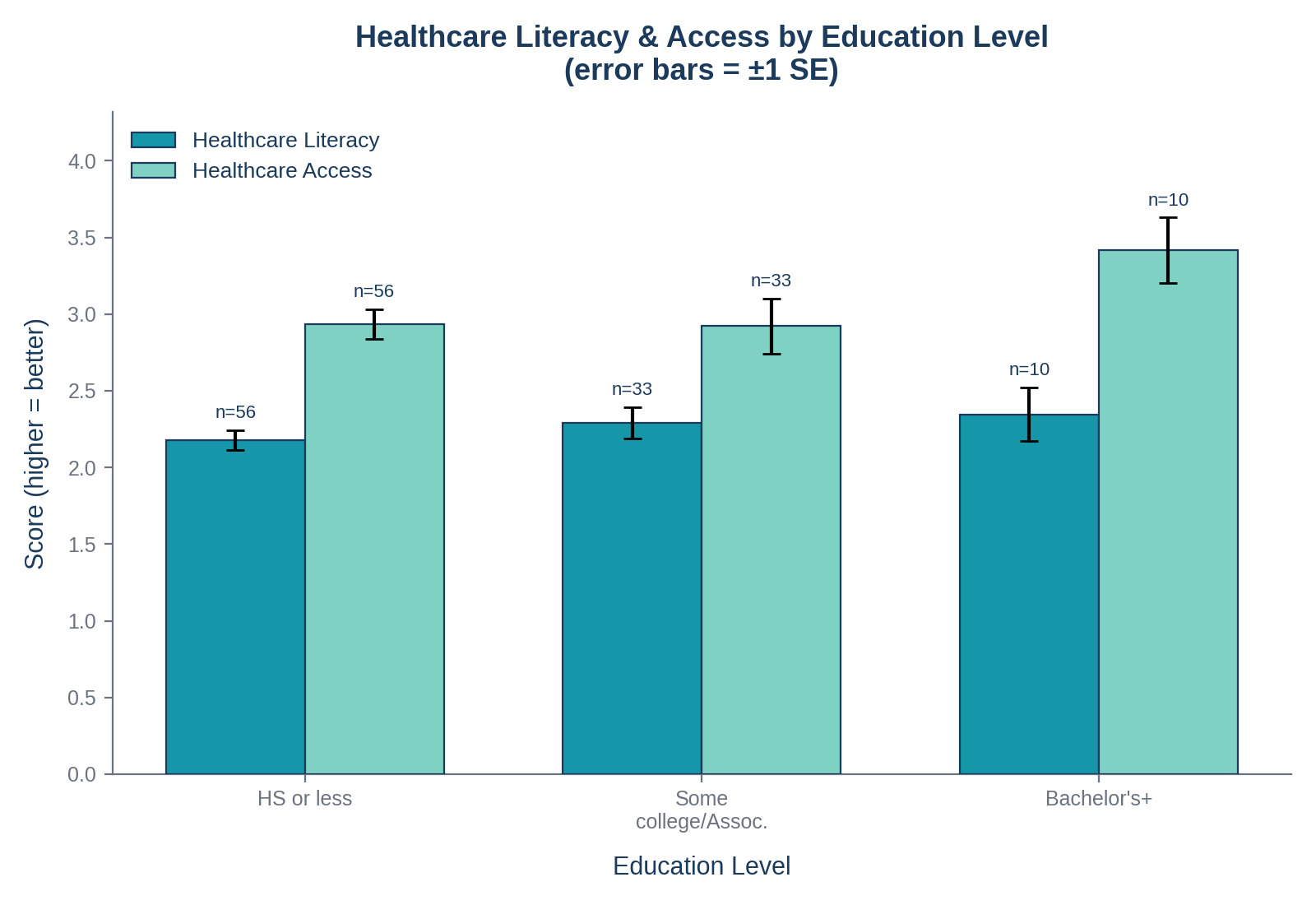
By education, 56 participants had completed high school or less, 33 had some college or an associate degree, and 10 had a bachelor’s degree or higher. Participants with a bachelor’s degree or higher had descriptively higher access scores than the other education groups, while literacy scores showed less variation (Figure 2). Because of the small size of the highest-education group, these comparisons should be interpreted cautiously.
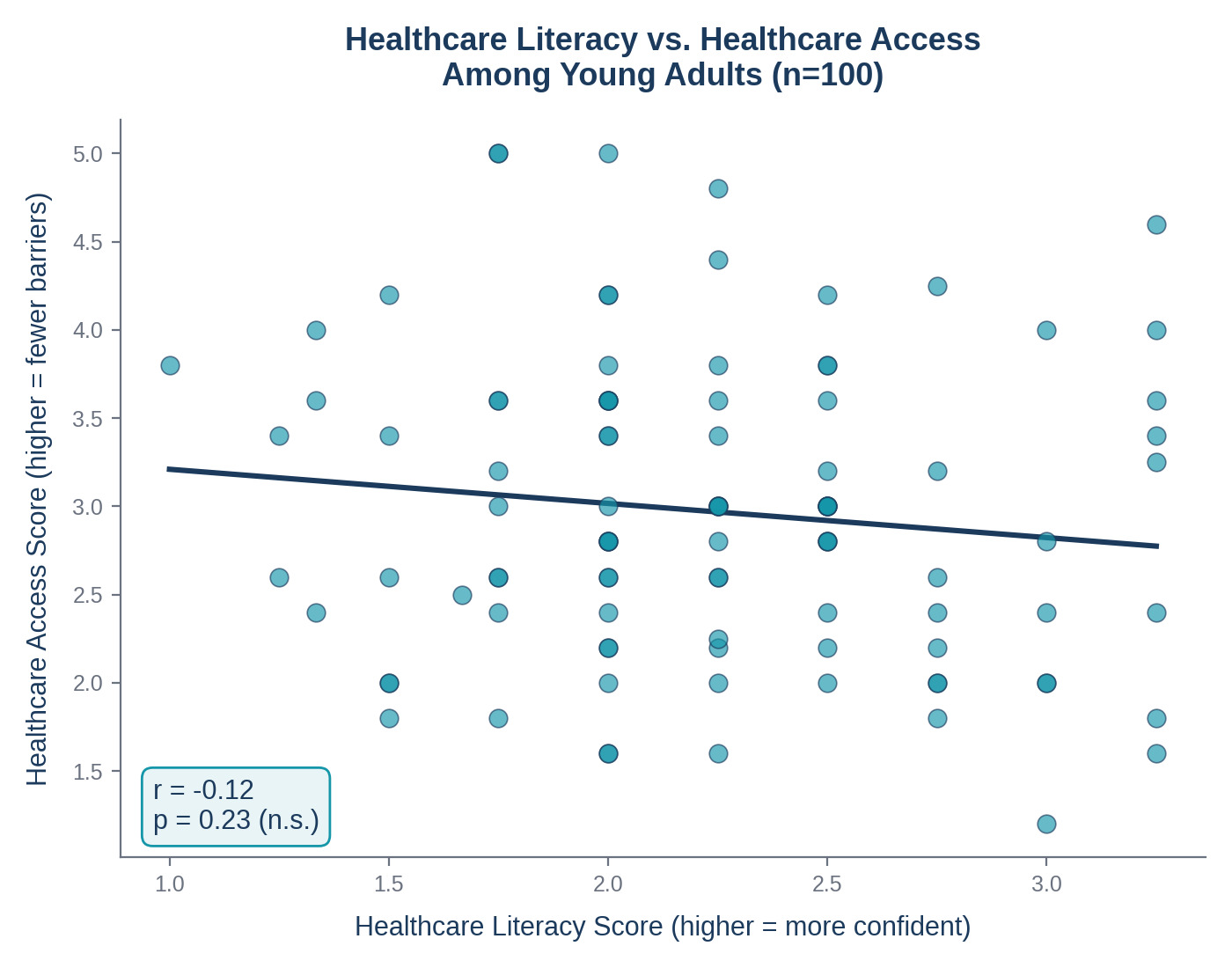
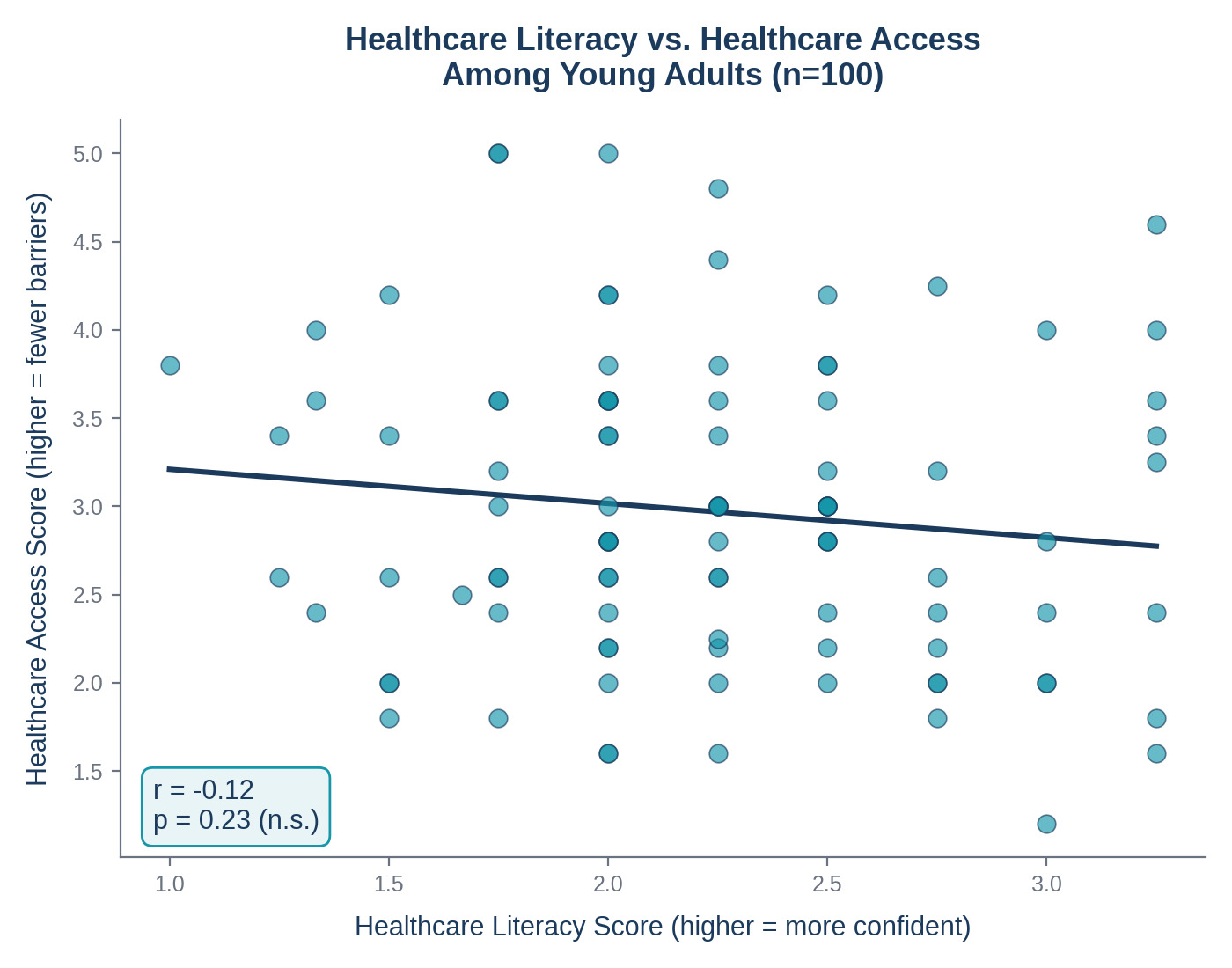
The correlation between composite health-literacy and healthcare-access scores was weak and not statistically significant (r = -0.12, p = 0.23; Figure 3).
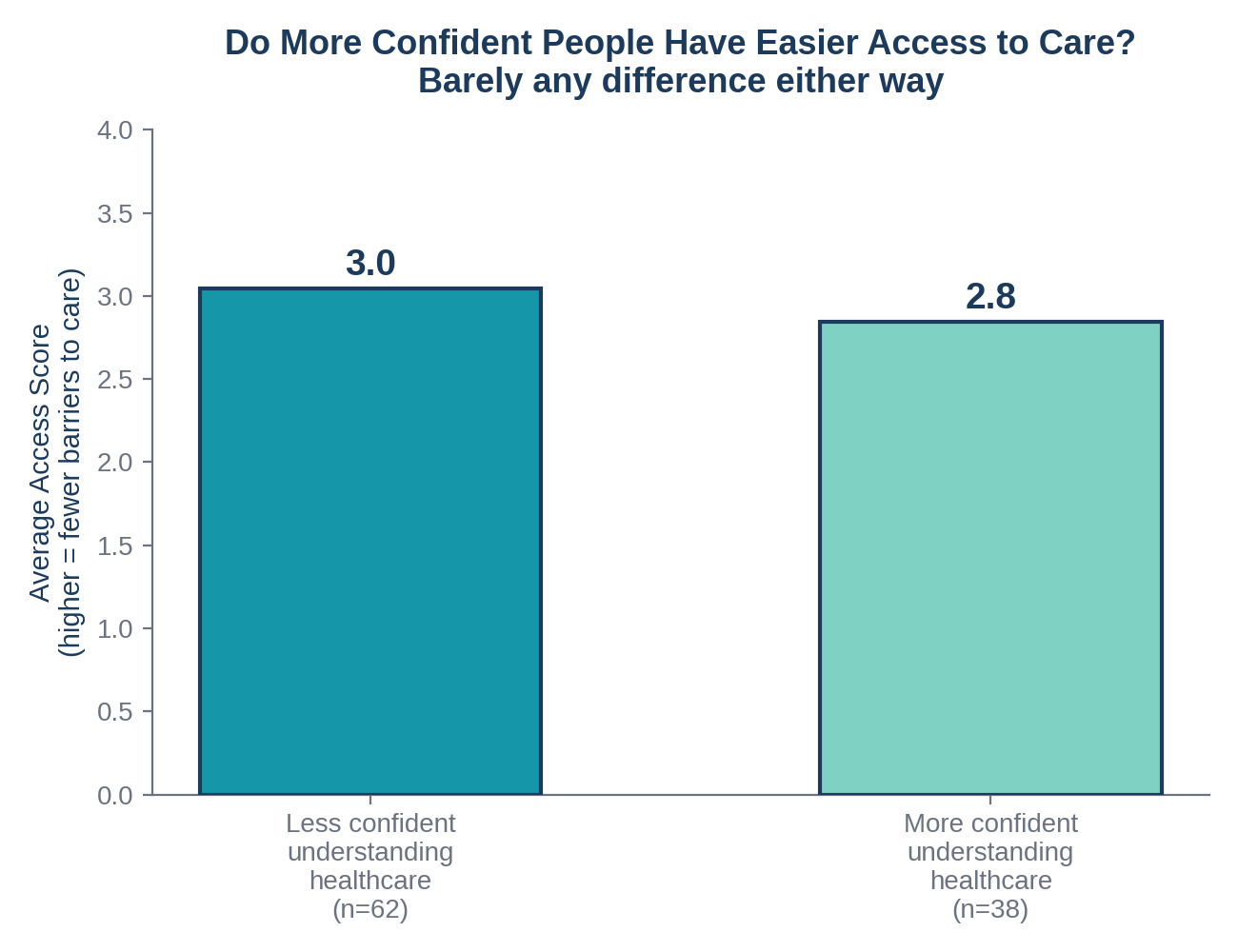
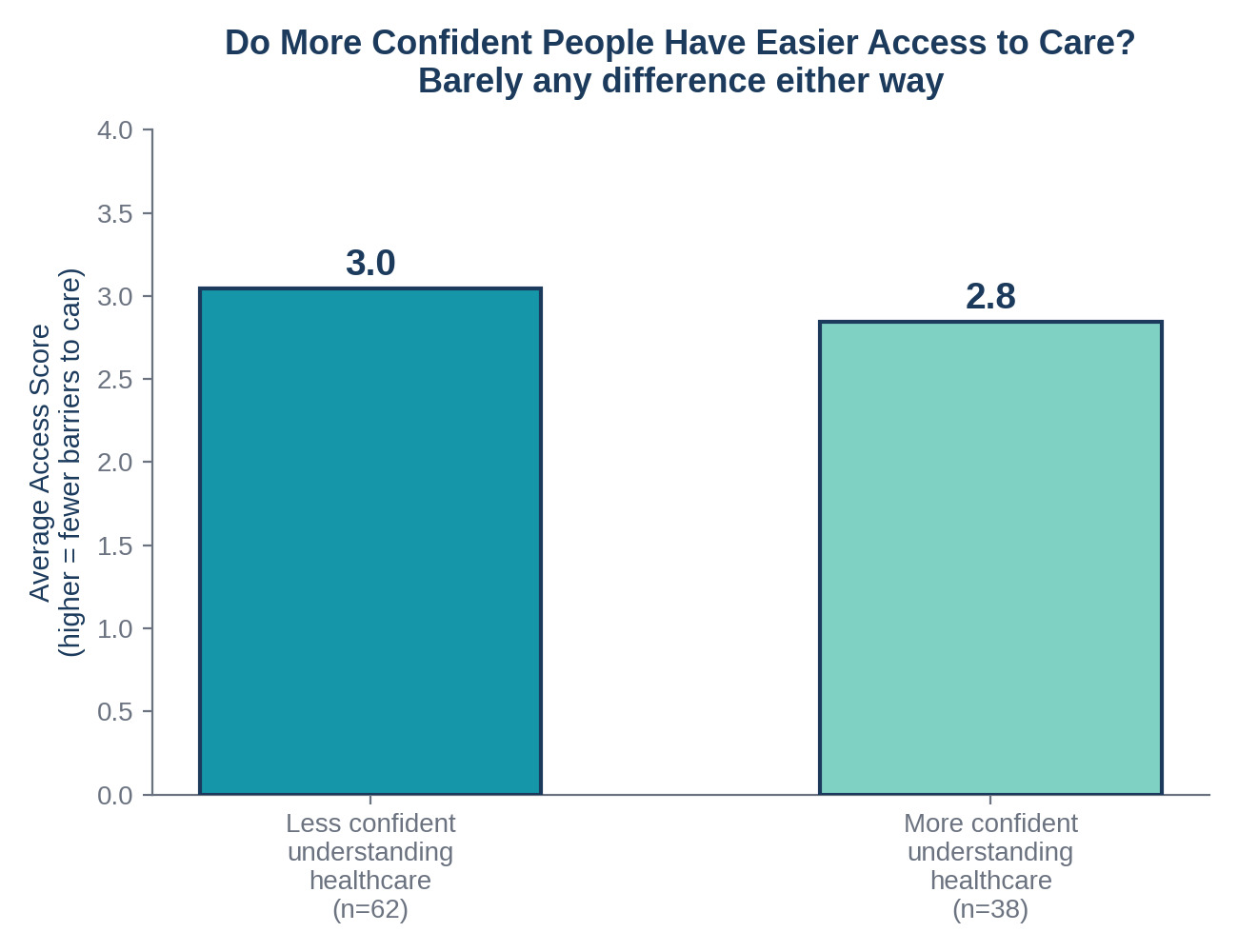
The same overall pattern was reported at the individual-item level. When participants were divided by confidence in understanding healthcare information, mean access scores were similar in the lower-confidence and higher-confidence groups (3.0 and 2.8, respectively; Figure 4).
Discussion
This survey did not detect a statistically significant linear association between study-specific health-literacy and healthcare-access scores in young adults. The result does not establish that the constructs are independent. It nevertheless supports examining whether understanding health information and being able to obtain care capture different needs, particularly when structural constraints are present. Prior work has similarly shown that health literacy is not uniformly associated with all patient-reported outcomes.12
The descriptive subgroup patterns reinforce this distinction. Access scores were higher among participants in the highest income and education categories, whereas literacy scores varied less across these groups. Income, insurance affordability, transportation, and other socioeconomic factors are well-established determinants of access to care.5,13,14 By contrast, widespread use of online health information may reduce some differences in information exposure among younger adults, although online information seeking can also introduce misinformation and variable-quality content.9,15
These findings have practical implications. Interventions intended to improve healthcare access should address structural constraints such as affordability, transportation, provider availability, and scheduling. Health-literacy interventions may require a different strategy, including broadly available education about insurance, medical terminology, credible online resources, and self-advocacy. Programs addressing social determinants among adolescents and young adults support the value of targeted structural approaches for groups experiencing access barriers.16
For orthopedic services, these findings suggest a hypothesis for clinical workflow design: assess understanding of the care plan and feasibility of obtaining recommended care as complementary tasks. An individual may correctly explain weight-bearing restrictions or the purpose of physical therapy yet still be unable to obtain an appointment, afford a visit, or arrange transportation. Conversely, an available appointment does not confirm understanding of the diagnosis or instructions. Orthopedic education and access studies provide separate precedents for addressing these domains.10,11 Plain-language or pictorial instructions and checks of comprehension could be evaluated alongside assistance with referrals, insurance navigation, and rehabilitation scheduling; the present survey did not test these interventions.
This study has several limitations. The sample was small, voluntary, and recruited online, limiting generalizability. The composite measures were created from study-specific survey items rather than established validated instruments. Weighting cannot fully correct selection bias in a nonprobability sample. Subgroup sizes were small, particularly for participants with a bachelor’s degree or higher, and the cross-sectional design does not permit causal inference. Finally, a nonsignificant correlation in a sample of 100 participants does not establish that literacy and access are universally independent; larger studies with validated measures are needed. Participants were not recruited as orthopedic patients, and the analyses presented here did not assess orthopedic diagnoses, treatment-specific comprehension, or musculoskeletal outcomes. Application to orthopedic practice is therefore hypothesis-generating rather than a demonstrated specialty-specific association.
Future research should test these relationships in larger, more representative samples using validated measures. Within orthopedics, prospective studies could examine comprehension and access together during fracture follow-up or rehabilitation, and evaluate whether education-focused and access-focused interventions address different barriers. Such studies would need to measure treatment engagement and musculoskeletal outcomes directly rather than infer them from general healthcare perceptions.
Conclusion
Among 100 surveyed U.S. young adults, study-specific health-literacy and healthcare-access scores were not significantly correlated (r = -0.12, p = 0.23). Access showed greater descriptive variation across socioeconomic groups than literacy. The small, nonprobability sample and nonvalidated measures preclude a conclusion that literacy and access are independent.
For orthopedic practice, the potential implication is to evaluate whether patients both understand the recommended plan and can obtain the visits or rehabilitation needed to carry it out. Clear instructions should not be assumed to resolve financial, transportation, or scheduling barriers, just as access to a visit should not be assumed to ensure comprehension. These are proposed applications of general healthcare findings, not effects established in orthopedic patients. Prospective studies using validated measures in fracture, sports medicine, and rehabilitation settings are warranted.
Declaration of Conflicting Interests
The authors declare that there is no conflict of interest.
Funding
The authors received no financial support for the research, authorship, and/or publication of this article.
Data Availability
The data that support the findings of this study are available from the corresponding author, upon reasonable request.