
Introduction
Open bicondylar tibial plateau fractures represent a relatively uncommon but particularly challenging subset of lower extremity trauma. These injuries are typically the result of high-energy mechanisms such as motor vehicle collisions, falls from height, and crush injuries, and are characterized by extensive articular disruption in conjunction with compromise of the surrounding soft tissue envelope.1 Unlike closed fracture patterns, open injuries involve direct communication between the fracture site and the external environment, creating additional biological challenges that extend beyond restoration of skeletal anatomy alone.2 As a result, treatment priorities frequently include management of contamination, preservation of soft tissue viability, and prevention of fracture-related complications in addition to achieving stable fixation and joint reconstruction.3 Injury to surrounding musculature, periosteum, vascular structures, and neurovascular tissues may significantly impair the local biological environment required for healing,4,5 and management frequently requires a staged approach involving temporary stabilization followed by delayed definitive fixation once soft tissue conditions have improved.6
Because of the combination of severe osseous injury and soft tissue compromise, patients are susceptible to a broad spectrum of complications. Acute complications such as compartment syndrome, infection, venous thromboembolism, and neurovascular injury may occur early following injury or surgical intervention,7,8 whereas impaired fracture healing, hardware-related complications, and reoperation may occur later.9 The intra-articular nature of bicondylar tibial plateau fractures additionally places patients at risk for chronic joint deterioration.10 Disruption of the articular surface, chondral injury, altered load transmission, and residual deformity may contribute to the development of post-traumatic osteoarthritis even in patients who achieve successful fracture union.11
Prior studies have evaluated surgical techniques and functional outcomes following bicondylar tibial plateau fractures; however, long-term outcome data remain relatively sparse,12 and few studies have specifically isolated open displaced bicondylar tibial plateau fractures despite their unique combination of severe soft tissue injury, contamination risk, and heightened susceptibility to postoperative complications. In particular, there is limited information regarding how complications such as infection, hardware removal, revision surgery, neurovascular injury, and osteoarthritis accumulate over time following definitive treatment. The purpose of this study was to characterize short-, mid-, and long-term outcomes following open displaced bicondylar tibial plateau fractures using a large multicenter database, with emphasis on postoperative complications, reoperation, infection rates, and the development of osteoarthritis through five years of follow-up.
Materials and Methods
Ethical Considerations
This study analyzed pre-existing, de-identified electronic health record data and involved no direct interaction with human participants. Because the analysis used only previously collected, de-identified records, the requirement for informed consent was waived and no oral or written consent was obtained from individual participants. All data within the TriNetX Research Network are de-identified in accordance with the Health Insurance Portability and Accountability Act (HIPAA) Privacy Rule; the investigators had no access to protected health information, direct identifiers, or identifiable patient-level records, and all analyses were performed on aggregate output within the secure TriNetX analytic environment. A copy of the waiver determination is provided as a supplementary file.
Study Design and Data Source
A retrospective case series was conducted using the TriNetX Research Network, a federated database containing de-identified electronic health record data from participating healthcare organizations. The platform provides longitudinal clinical information from multiple institutions and has been widely utilized for outcomes research across a variety of orthopaedic conditions.
Patient Selection
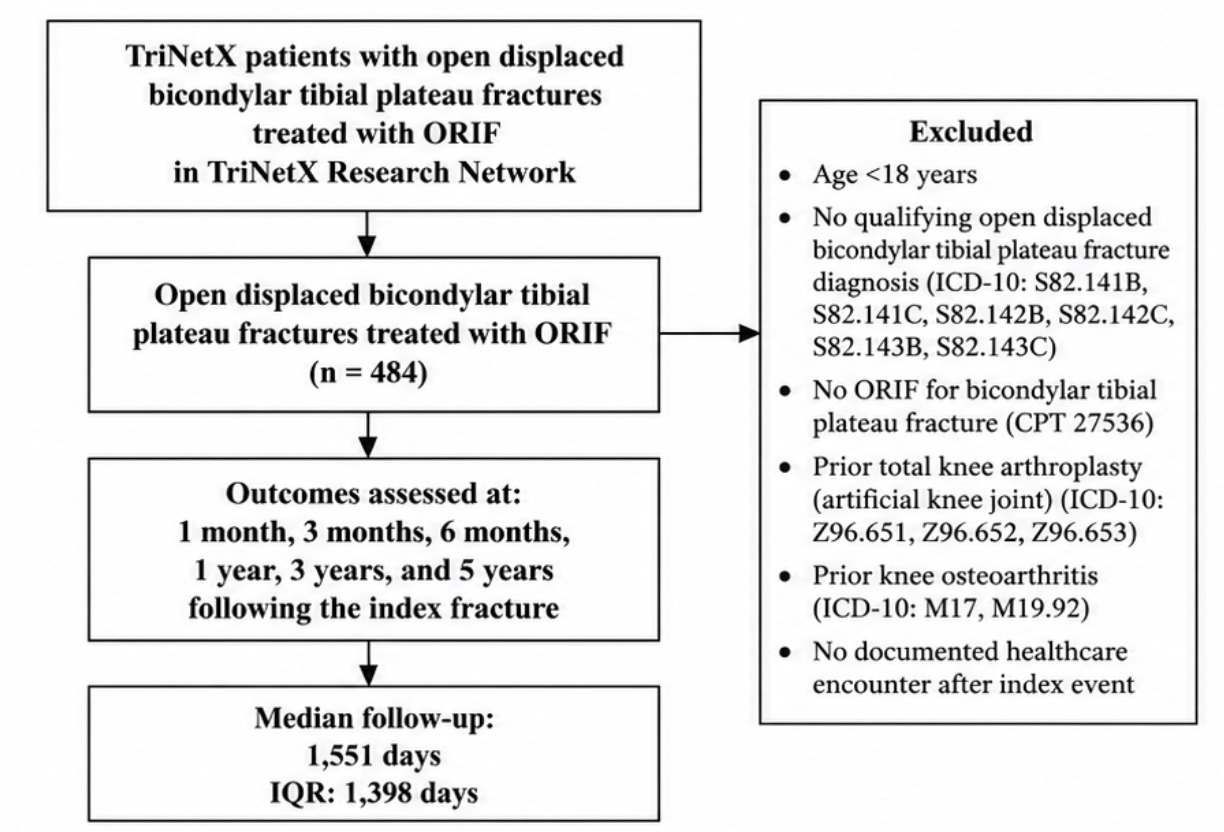
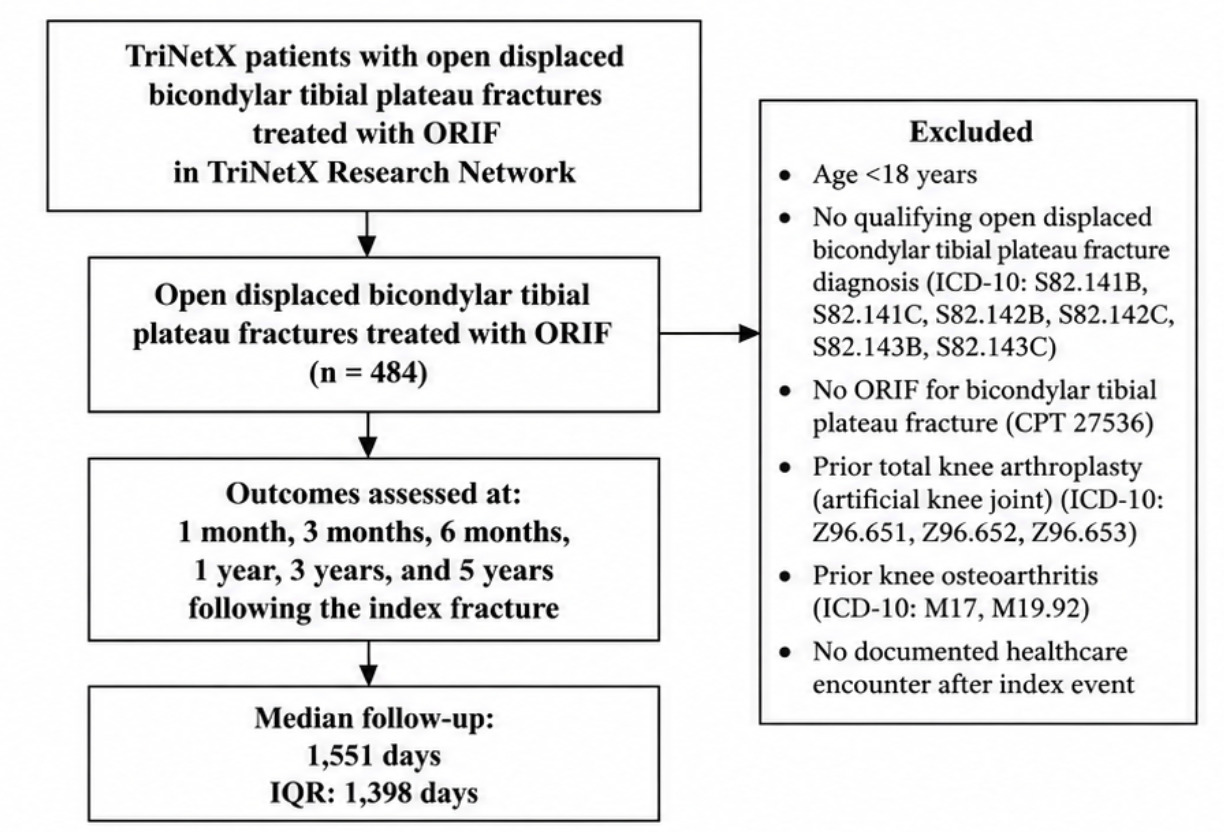
Adult patients aged 18 years and older with a diagnosis of open displaced bicondylar tibial plateau fracture between April 1, 2006 and April 1, 2021 were identified within the TriNetX network. Open bicondylar fractures were defined using International Classification of Diseases, Tenth Revision (ICD-10) diagnosis codes corresponding to displaced bicondylar tibial plateau fractures with an initial encounter for open fracture type I, II, IIIA, IIIB, or IIIC. Patient-level Arbeitsgemeinschaft für Osteosynthesefragen/Orthopaedic Trauma Association (AO/OTA) classification was unavailable in TriNetX. Although the included displaced bicondylar fracture codes describe a complete-articular injury pattern consistent with AO/OTA 41C, 41C1–41C3 subclassification could not be determined.13 Similarly, the qualifying ICD-10 codes encompassed Gustilo-Anderson types I through IIIC, but the distribution of individual grades was unavailable. To ensure operative management of the index injury, patients were required to undergo open reduction and internal fixation (ORIF) as identified by Current Procedural Terminology (CPT) code 27536.
The date of the qualifying fracture diagnosis was designated as the index event. Patients with a history of total knee arthroplasty prior to the index fracture were excluded using ICD-10 status codes indicating the presence of an artificial knee joint. Additionally, patients with a diagnosis of knee osteoarthritis recorded prior to the index fracture were similarly excluded, so that osteoarthritis identified during follow-up represented newly recorded degenerative disease rather than pre-existing arthrosis. Patients were required to have at least one post-index encounter; no minimum follow-up duration was required. Variable follow-up was addressed through censoring at the last documented encounter. A complete list of cohort identification codes is provided in Supplementary Table 1.
Outcome Assessment
Clinical outcomes were evaluated at 1 month, 3 months, 6 months, 1 year, 3 years, and 5 years following the index fracture. Outcomes included postoperative infection, venous thromboembolism (VTE), compartment syndrome, neurovascular injury, revision surgery, hardware removal, and osteoarthritis and were identified using prespecified ICD-10 Clinical Modification (ICD-10-CM), ICD-10 Procedure Coding System (ICD-10-PCS), and CPT codes. Osteoarthritis was assessed beginning at 3 months and revision surgery at 21 days; all other outcomes were assessed beginning 1 day after the index date. Detailed outcome definitions, component codes, and analytic windows are provided in Supplementary Table 2.
Statistical Analysis
Descriptive analyses were performed within the TriNetX analytic environment. Crude outcome proportions were calculated at the predefined follow-up intervals. Kaplan-Meier methods were additionally used to estimate event-free survival while accounting for variable follow-up, with patients censored at their last documented healthcare encounter. Because this study characterized a single injury cohort, no comparison group was defined and no between-group hypothesis testing was performed.
Results
Patient Characteristics
A total of 484 patients with open displaced bicondylar tibial plateau fractures met inclusion criteria (Figure 1). The mean age at the time of injury was 46.1 ± 15.1 years (range, 18–80 years). The cohort consisted of 357 males (73.8%) and 127 females (26.2%). Median follow-up duration was 1,551 days (4.25 years) with an interquartile range (IQR) of 1,398 days (3.83 years) and a range of 90 to 1,825 days.
Reoperation and Mechanical Complications
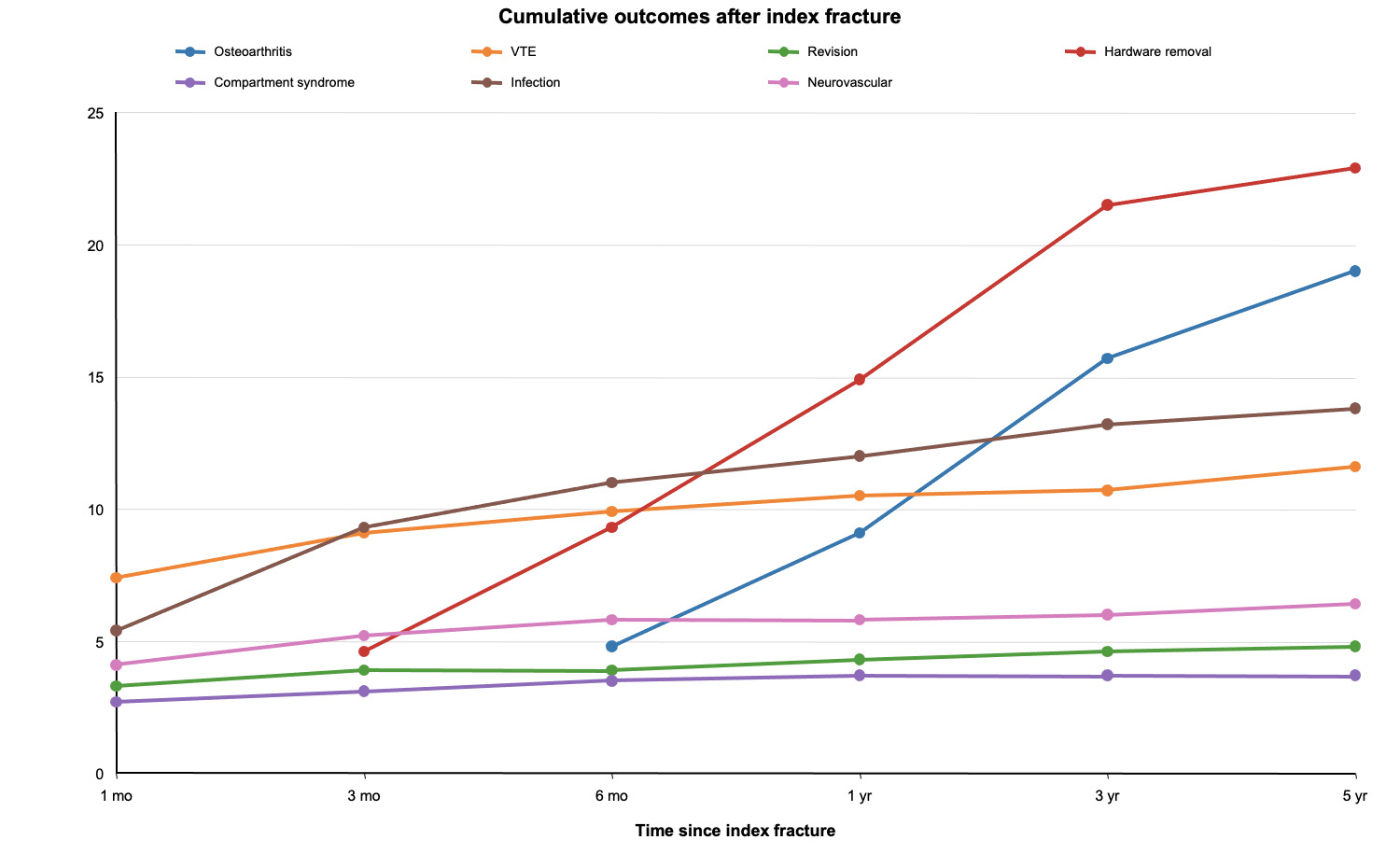
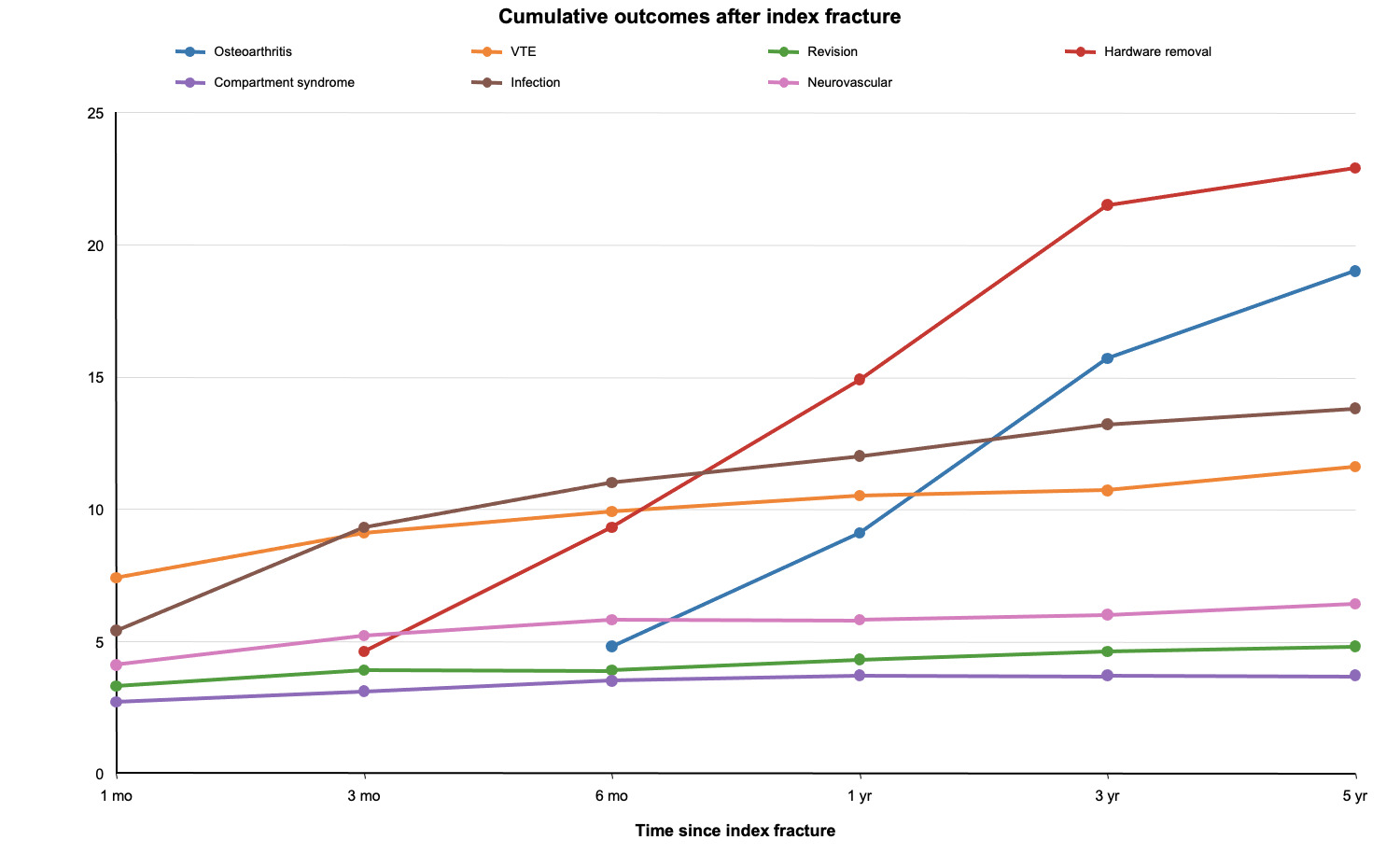
Reoperation-related outcomes demonstrated progressive accumulation throughout follow-up and were primarily driven by hardware-related procedures. Revision surgery was identified in 16 patients (3.3%) within the first month following injury and increased gradually to 23 patients (4.8%) at 5 years. Hardware removal occurred more frequently, affecting 22 patients (4.6%) at 3 months, 72 patients (14.9%) at 1 year, and 111 patients (22.9%) at 5 years, representing the most common reoperation-related outcome observed in the cohort. Table 1 demonstrates a progressive decline in hardware retention over time consistent with the cumulative nature of implant-related secondary procedures.
Infection and Acute Complications
Several complications occurred predominantly during the early postoperative period. Postoperative infection was identified in 26 patients (5.4%) within 1 month and increased to 67 patients (13.8%) by 5 years, although 58 of the 67 infections identified through 5 years (86.6%) occurred within the first year following fixation. Compartment syndrome occurred in 13 patients (2.7%) at 1 month and reached 18 patients (3.7%) by 1 year, with no appreciable increase thereafter. Similarly, neurovascular injury was observed in 20 patients (4.1%) at 1 month and increased only modestly to 31 patients (6.4%) at 5 years, suggesting that most neurovascular complications were identified during the early post-injury period.
Venous thromboembolism represented one of the more frequent complications observed. VTE occurred in 36 patients (7.4%) within the first month and increased to 56 patients (11.6%) by 5 years. Fifty-one of these 56 events (91.1%) were identified within the first postoperative year, with relatively few additional events identified thereafter.
Osteoarthritis and Long-Term Outcomes
Osteoarthritis represented one of the most common long-term outcomes in this population. Diagnoses of osteoarthritis were identified in 23 patients (4.8%) at 6 months and increased steadily throughout follow-up to 44 patients (9.1%) at 1 year and 92 patients (19.0%) at 5 years. Kaplan-Meier analysis demonstrated progressive decline in osteoarthritis-free survival over time, consistent with ongoing accumulation of degenerative joint disease following these injuries.
Overall, osteoarthritis and hardware removal demonstrated the greatest long-term accumulation, whereas compartment syndrome, neurovascular injury, and many infection-related events occurred predominantly during the early postoperative period (Figure 2).
Discussion
This study characterized the longitudinal course of open displaced bicondylar tibial plateau fractures treated operatively within a multicenter cohort. Within this cohort, a substantial burden of postoperative morbidity was observed, characterized by both early complication development and progressive long-term degeneration. Among all evaluated outcomes, infection and osteoarthritis emerged as particularly important findings, highlighting the dual challenges of managing both the acute biological consequences of open injury and the long-term sequelae of intra-articular trauma.
Infection represented one of the most common complications identified in this cohort, occurring in 12.0% of patients within 1 year and increasing to 13.8% at 5 years. Most infections (86.6%) accumulated during the first postoperative year, with a more gradual increase thereafter. Prior studies have consistently demonstrated higher rates of fracture-related infection among open fractures compared with closed injuries, particularly in the setting of high-energy periarticular trauma.14,15 The elevated infection burden observed in this study highlights the importance of meticulous soft tissue management, staged fixation strategies when appropriate, and vigilant postoperative surveillance in this patient population.
While infection represented a major source of early morbidity, osteoarthritis emerged as the dominant long-term complication. Osteoarthritis was identified in 9.1% of patients within the first year and increased to 19.0% at 5 years, demonstrating continuous accumulation throughout follow-up. Unlike infection, which largely plateaued after the first postoperative year, osteoarthritis demonstrated a progressive pattern suggestive of ongoing joint deterioration over time. This finding is not unexpected given the severe intra-articular disruption associated with bicondylar tibial plateau fractures.16 Chondral injury, subchondral bone damage, residual articular incongruity, and altered joint mechanics may all contribute to accelerated cartilage degeneration following injury.10 The substantial osteoarthritis burden observed in this cohort indicates that long-term morbidity following open bicondylar tibial plateau fractures extended beyond fracture healing alone and emphasizes the importance of continued monitoring and patient counseling regarding future joint deterioration.
Other complications demonstrated distinct temporal patterns. Hardware removal represented the most common reoperation-related outcome and continued to accumulate throughout follow-up, ultimately affecting nearly one-quarter of the cohort. This finding likely reflects the substantial soft tissue compromise associated with open bicondylar fractures, where prominent implants, symptomatic hardware, irritation of surrounding soft tissues, and fracture-related complications may necessitate secondary procedures.17,18 In contrast, compartment syndrome and neurovascular injury occurred predominantly during the early post-injury period and demonstrated minimal increase thereafter. This finding is biologically plausible, as both complications are most commonly related to the initial high-energy traumatic event rather than delayed postoperative processes.19,20 Similarly, venous thromboembolism was most frequently identified within the first postoperative year, consistent with the recognized thromboembolic risk associated with lower extremity trauma and postoperative immobilization.21,22
Despite the constraints described below, the present study provided a comprehensive assessment of both short-term and long-term outcomes following open displaced bicondylar tibial plateau fractures within a large multicenter cohort. The findings demonstrate that these injuries are associated with a substantial burden of morbidity characterized by high rates of postoperative infection in the early recovery period and progressive osteoarthritis over time. Together, these results highlight the importance of both acute complication prevention and long-term joint preservation strategies when managing this challenging injury pattern.
Limitations
Several limitations should be considered when interpreting these findings. The study was descriptive and included no comparison cohort, so the reported event rates characterize the longitudinal course of this injury pattern but do not permit comparison with closed injuries or with alternative treatment strategies. This study relies on administrative coding within a large electronic health record database and is therefore subject to potential miscoding, undercoding, and variability in coding practices across participating institutions. Additionally, the TriNetX platform does not provide detailed fracture-specific information, including AO/OTA subgroup (41C1, 41C2, or 41C3), Schatzker classification, degree of contamination, soft tissue injury severity, fixation strategy, or quality of reduction. Because the database contains no fracture classification data, outcomes could not be stratified by AO/OTA subgroup, by Gustilo-Anderson grade, or by wound contamination and soft tissue coverage requirements. As a result, it was not possible to stratify outcomes according to injury severity or surgical technique. Because no minimum follow-up was required for inclusion, patients with brief observation periods contributed to early estimates only, and longitudinal database studies are inherently susceptible to incomplete follow-up and loss of event capture over time, despite the use of Kaplan-Meier methodology to account for censoring. Patient-reported outcome measures, radiographic findings, and functional measures are not available within the database and therefore could not be assessed, and no a priori power analysis was performed because the study was descriptive and the cohort size was fixed by the available data. Finally, the observational nature of this study precludes causal inference, and the reported findings should be interpreted as associations rather than direct consequences of treatment.
Conclusion
Open displaced bicondylar tibial plateau fractures were associated with substantial early and long-term morbidity. Infection occurred predominantly within the first postoperative year, whereas osteoarthritis and hardware-related procedures continued to accumulate throughout follow-up. These findings support both early complication prevention and long-term surveillance following these injuries.
Acknowledgements
None Declared.
Authors’ contributions
Bashar Jawich: conceptualization, methodology, data curation, formal analysis, manuscript drafting, and manuscript revision.
Abdel Kareem Hilo, Tarek Harhash, and Tyler Forbes: literature review, data interpretation, manuscript drafting, and critical revision of the manuscript.
Ahmad Almaat, Magd Boutany, Mahmoud Teran, and James Ha: literature review, data interpretation, and critical revision of the manuscript.
Malik Al-Jamal, Abdul-Lateef Shafau, and Yuyang Chu: study supervision, data interpretation, and critical revision of the manuscript.
Rahul Vaidya: conceptualization, study supervision, methodology, data interpretation, manuscript revision, and final approval of the manuscript.
All authors take responsibility for every aspect of the work, ensuring that any concerns about its accuracy or integrity are thoroughly examined and addressed. All authors have read and approved the final version of the manuscript.
Conflict of interest statement
The authors declare that they have no potential conflicts of interest with respect to the research, authorship, or publication of this article.
Funding
The authors received no financial support for the research, authorship, or publication of this article.
Further information
This work has not been presented at a conference and has not been published elsewhere in whole or in part.