
1. INTRODUCTION
Population ageing is a global trend, accompanied by a rapid increase in the number of centenarians. According to United Nations estimates, the global population aged 100 years and older is expected to rise from approximately 451,000 in 2015 to more than 25 million by 2100.1 Proximal femoral fractures are among the most serious injuries in older adults and are strongly associated with loss of mobility, reduced independence in daily living, increased need for long-term care, and excess mortality.2,3 In centenarians, this burden is even greater because of severe frailty, limited physiological reserve, multiple comorbidities, and a high risk of perioperative complications.4 Previous studies of hip fractures in centenarians have reported 1-year mortality rates ranging from 39.3% to 53.8%, while postoperative functional recovery remains poor; in the multicenter cohort reported by Jang et al., only 16.1% of patients were able to walk outdoors after 1 year.4,5 These findings highlight the particular challenges of treating proximal femoral fractures in patients aged 100 years and older, requiring clinicians to balance the benefits of surgery with the patients’ very limited tolerance. In this patient group, the goal of surgery is not only to treat the fracture but also to reduce pain, facilitate early mobilization, facilitate nursing care, and prevent complications related to prolonged bed rest.
Alongside recognition of this clinical burden, many centres have adopted orthogeriatric care pathways for older patients with hip fractures. This model emphasizes early comprehensive assessment, rapid optimization of medical conditions before surgery, multidisciplinary collaboration throughout treatment, prevention and early management of complications, and support for early mobilization after surgery. Recent studies suggest that orthogeriatric care may improve early outcomes in very old patients with hip fractures, including reduced delirium, shorter hospital stay, and lower early mortality.6–9 Even in settings where formal geriatric co-management is not available, several of these principles may be incorporated into multidisciplinary perioperative care. This approach is especially relevant in centenarians, who are at particularly high risk of complications and poor functional recovery.
Although research on hip fractures in centenarians has increased in recent years, including systematic reviews, national cohorts, and multicenter studies, important gaps remain. Most published studies still focus on mixed hip-fracture populations and primarily emphasize mortality and early complications. Reports specifically describing centenarian patients selected for hemiarthroplasty, with detailed perioperative and longitudinal functional outcomes, remain limited. Therefore, this study aimed to describe the perioperative characteristics, complications, survival, and functional outcomes during the first postoperative year in centenarian patients undergoing hemiarthroplasty for proximal femoral fractures within a multidisciplinary care pathway incorporating orthogeriatric principles.
2. SUBJECTS AND METHODS
2.1. Study design and patient selection
This retrospective descriptive case series was conducted at the Orthopedic Trauma Centre, Viet Duc University Hospital. Between January 2021 and January 2025, 28 patients aged 100 years and older with proximal femoral fractures were identified. Of these, 16 underwent hemiarthroplasty, seven underwent internal fixation, and five were managed nonoperatively because they either declined surgery or were considered medically unfit for surgery. The present study included the 16 patients who underwent hemiarthroplasty.
Inclusion criteria were: age 100 years or older at the time of surgery; proximal femoral fracture, including femoral neck fracture or intertrochanteric femoral fracture; treatment with hemiarthroplasty; complete medical records; and availability of follow-up information through 12 months or documented death before 12 months. Patients who died within 12 months after surgery remained included in the study.
Exclusion criteria were pathological fractures secondary to tumor or other non-osteoporotic causes, periprosthetic fractures, incomplete key clinical data, or unavailable postoperative follow-up.
2.2. Multidisciplinary care pathway incorporating orthogeriatric principles
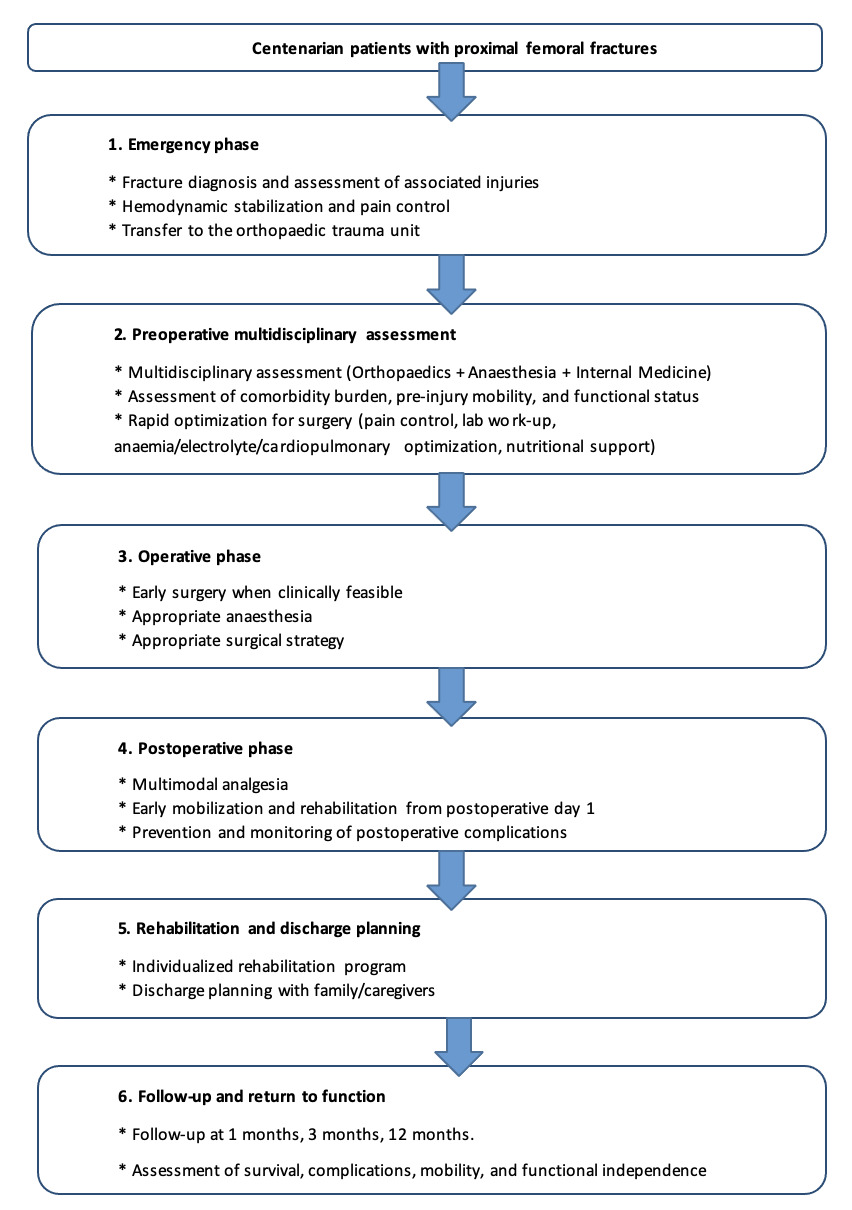
At our institution, centenarian patients with proximal femoral fractures were managed using a multidisciplinary care pathway incorporating orthogeriatric principles from admission through postoperative follow-up.6,9,10 (Figure 1) A dedicated geriatrician was not available at our institution. The pathway was led by the orthopedic trauma team in collaboration with anesthesiologists and internal medicine physicians, with cardiology, nutrition, and rehabilitation consultations when clinically indicated. On admission to the emergency department, the diagnosis was confirmed by radiography, and patients underwent initial assessment of hemodynamic status, respiratory status, and associated injuries. Patients without other urgent traumatic conditions requiring priority treatment were transferred to the orthopedic trauma unit.
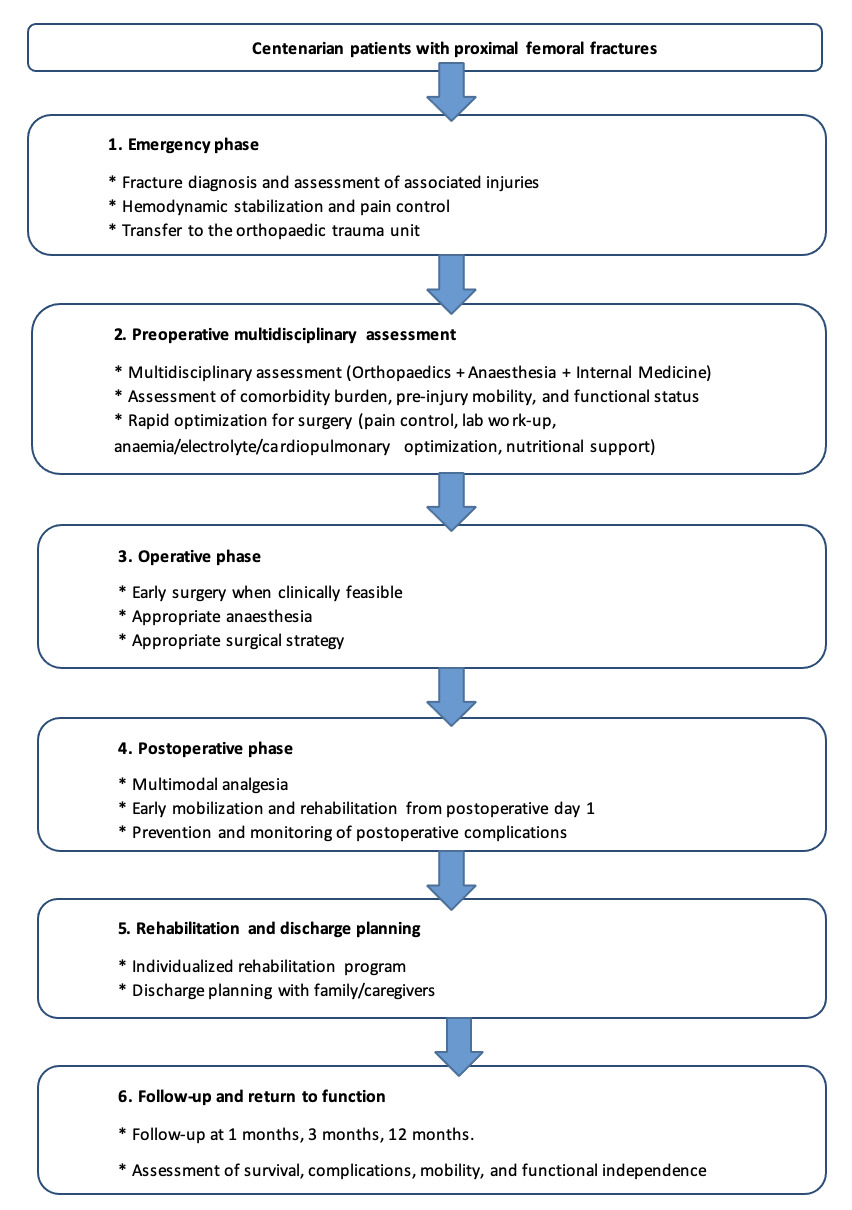
At the orthopedic trauma unit, patients were assessed by orthopedic surgeons and anesthesiologists, with internal medicine consultation when required, to evaluate general condition, comorbidities, and reversible medical abnormalities that could affect surgical indication or timing, such as hemodynamic instability, respiratory compromise, anemia, or electrolyte imbalance. Pre-injury mobility, functional independence, and baseline comorbidities were also documented to help guide treatment goals. Preoperative management focused on pain control, nutritional support, required laboratory work-up, and rapid optimization of modifiable medical conditions in order to allow surgery as early as clinically feasible.
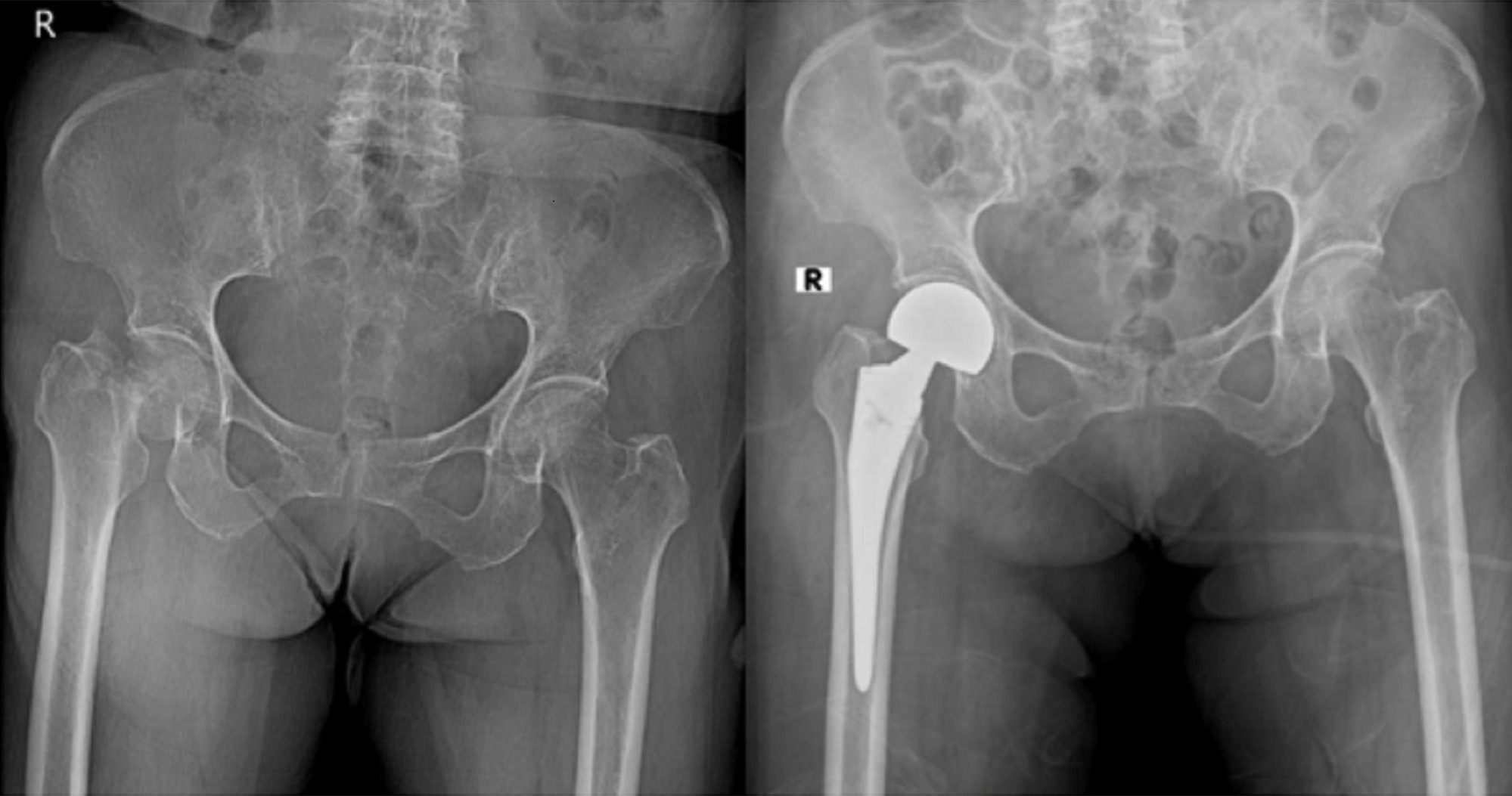
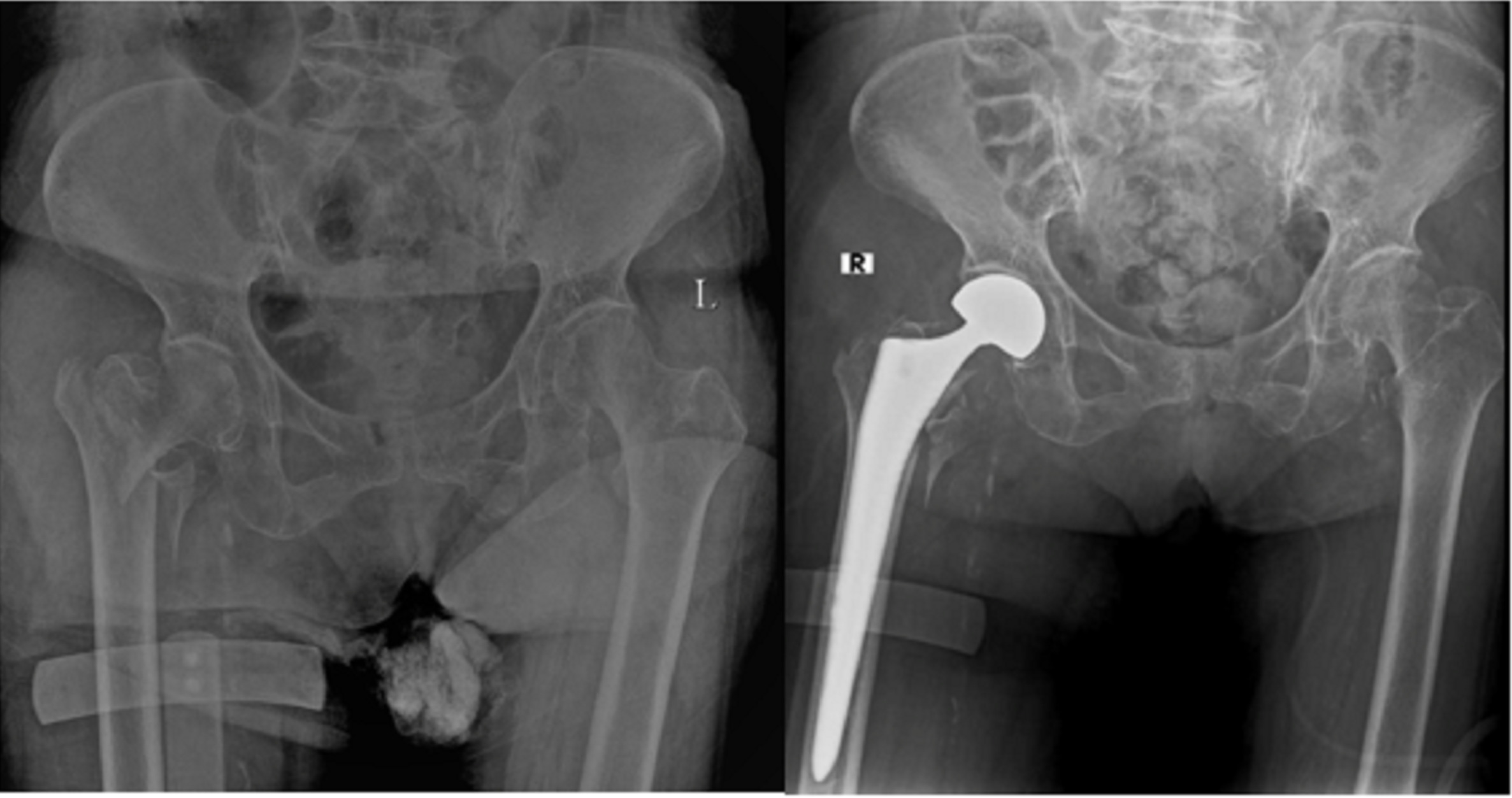
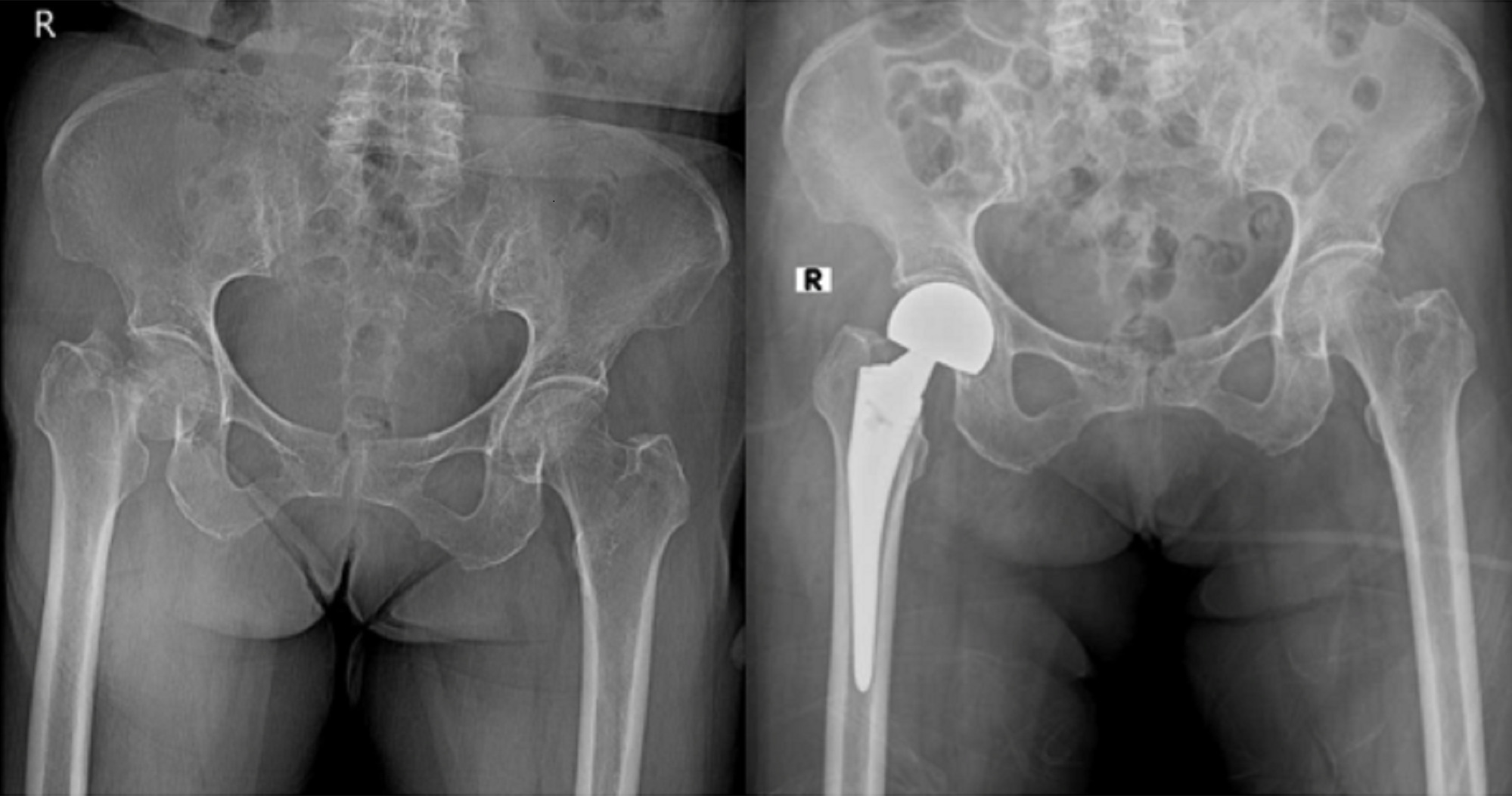
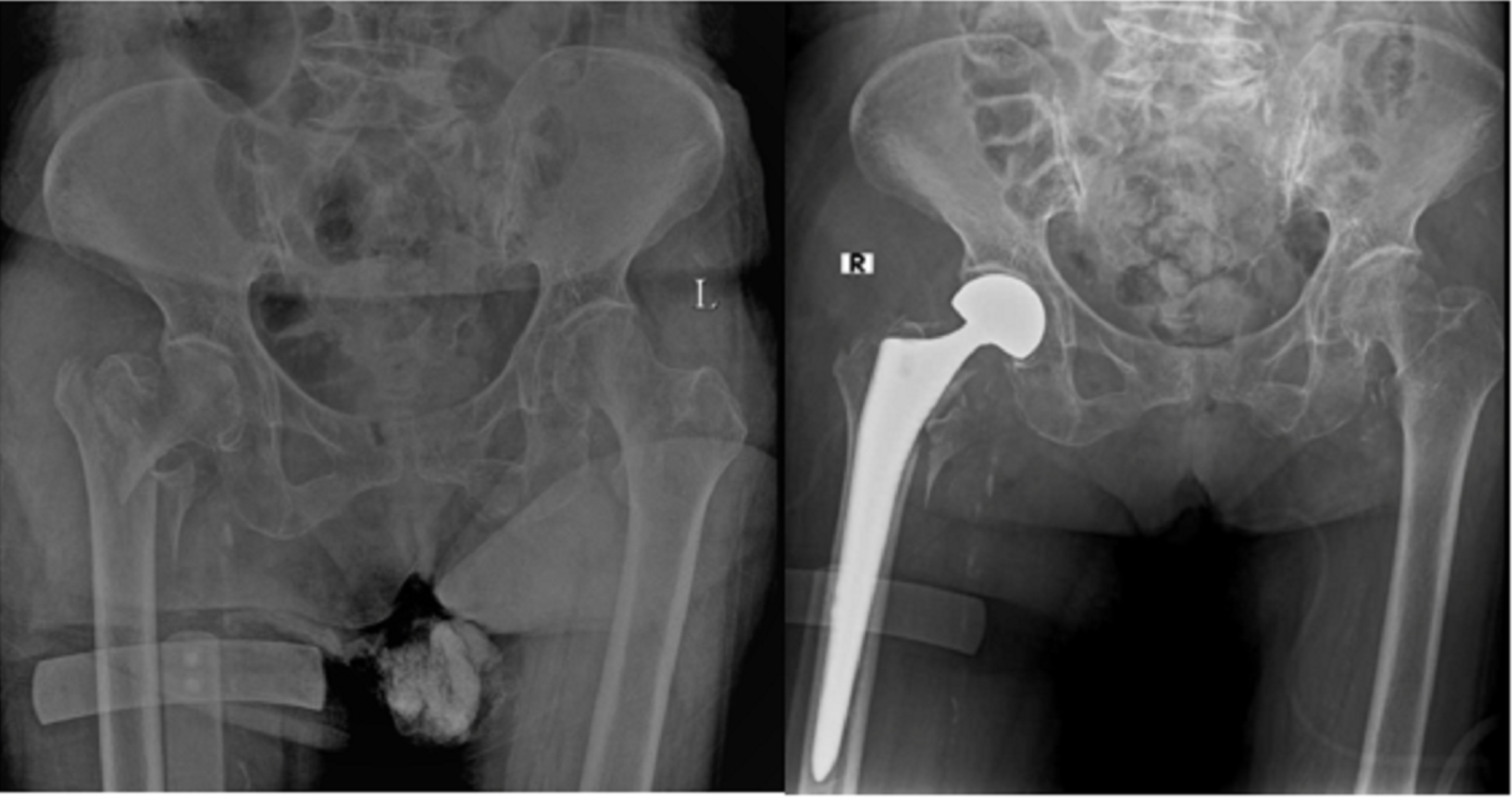
During the operative phase, spinal anesthesia was preferred when not contraindicated. All procedures were performed through a posterior approach, and tranexamic acid was used to reduce blood loss. Short-stem hemiarthroplasty was used for patients with femoral neck fractures (Figure 2). Preoperative radiographs were retrospectively reviewed to classify intertrochanteric fractures according to the AO/OTA classification and proximal femoral morphology according to the Dorr classification. Although internal fixation remains the conventional treatment for intertrochanteric fractures, hemiarthroplasty was selectively performed in these centenarian patients when a combination of unstable comminuted fracture morphology, compromised radiographic proximal femoral morphology/bone quality, extreme age, and the need for early weight bearing and mobilization raised concern regarding the ability to achieve sufficiently reliable internal fixation.11,12 In these cases, long stems were used to bypass the compromised proximal femoral segment and obtain distal femoral fixation (Figure 3).
Postoperatively, patients continued to receive multidisciplinary care with emphasis on multimodal analgesia, early mobilization, rehabilitation, venous thromboembolism prophylaxis when clinically indicated, and close monitoring for complications. Patients were encouraged to sit up and begin mobilization on the first postoperative day when clinically stable, and rehabilitation programs were individualized according to pre-injury mobility and overall clinical condition. During hospitalization, common complications in this extremely old population, including delirium, pneumonia, heart failure, acute kidney injury, infection, and consequences of prolonged immobilization, were closely monitored.
After discharge, patients were followed at 1, 3, and 12 months. Follow-up assessments focused on survival status, surgical complications, mobility, and functional independence. Patients who died before 12 months remained included in the study, with follow-up ending at the time of death.
2.3. Variables and outcomes
Data were collected from medical records, operative records, outpatient follow-up records, and post-discharge follow-up information.
The study variables were divided into two groups. The first group included preoperative and perioperative characteristics: age, sex, fracture type, proximal femoral morphology according to the Dorr classification,13 AO/OTA fracture classification in patients with intertrochanteric fractures,14 pre-injury functional status, ASA classification,15 Charlson Comorbidity Index,16 pre-injury Barthel Index,17 pre-injury Parker Mobility Score,18 time from admission to surgery, type of hemiarthroplasty, anesthesia method, operative time, and blood transfusion.
The second group included treatment outcomes: early postoperative mobilization, medical and surgical complications, length of hospital stay, survival status, postoperative mobility, functional independence, and late events or reinterventions, if any.
Survival status was assessed at 1, 3, and 12 months after surgery. Mobility and functional independence were assessed using the Parker Mobility Score and Barthel Index, respectively, before injury and at 1, 3, and 12 months after surgery. At each postoperative time point, functional outcomes were assessed only among surviving patients with available follow-up data; patients who had died before that time point were not assigned functional scores. Barthel Index scores were categorized as severe or total dependence (0–60), moderate dependence (61–90), or mild dependence/near independence (91–100).
2.4. Statistical analysis
Data were analyzed using SPSS version 26.0. Given the small sample size and descriptive nature of this case series, all analyses were descriptive. Continuous variables were summarized as mean ± standard deviation (SD), and categorical variables as frequencies and percentages. No inferential statistical analyses were performed.
2.5. Ethics approval
The study was approved by the Ethics Committee of Viet Duc University Hospital. Given the retrospective nature of the study and the use of existing clinical data, the requirement for individual informed consent was waived. The study procedures were in accordance with the standards of the Helsinki Declaration of 1975, as revised in 2013.
3. RESULTS
The clinical, fracture, and perioperative characteristics of the study population are summarized in Table 1. The mean age was 101.75 ± 1.88 years, with a predominance of women (93.75%). Most patients were classified as ASA II (62.5%), and the mean Charlson Comorbidity Index was 6.69 ± 0.79. Femoral neck fractures accounted for 56.25% of cases and intertrochanteric fractures for 43.75%. The mean time from admission to surgery was 45.38 ± 15.28 hours.
Among the seven patients with intertrochanteric fractures, five (71.4%) were classified as AO/OTA 31-A2.3 and two (28.6%) as 31-A2.2. Four of these seven patients (57.1%) had Dorr type C proximal femoral morphology and three (42.9%) had type B morphology. All seven underwent long-stem hemiarthroplasty.
Delirium was the most common postoperative medical complication, occurring in six patients (37.5%), while pneumonia occurred in two (12.5%). Surgical complications included one dislocation and one surgical-site hematoma, with no surgical-site infection, periprosthetic fracture, or reoperation recorded.
Survival and functional outcomes during the first postoperative year are presented in Table 2. The cumulative mortality rates were 6.25% at 1 month, 12.50% at 3 months, and 31.25% at 12 months. Among surviving patients, both mobility and functional independence declined substantially at 1 month after surgery and subsequently improved over time. The mean Parker Mobility Score increased from 1.47 ± 1.13 at 1 month to 3.09 ± 2.26 at 12 months, while the mean Barthel Index increased from 36.00 ± 17.94 to 52.73 ± 25.43. However, both measures remained below their pre-injury levels at 12 months. At 12 months, among the 11 surviving patients, one (9.09%) had mild dependence/near independence, five (45.45%) had moderate dependence, and five (45.45%) remained severely or totally dependent.
4. DISCUSSION
In our study, two main findings emerged: postoperative survival in centenarian patients was relatively favourable compared with some previous reports, whereas functional recovery remained limited. Regarding survival, the cumulative mortality rates at 1, 3, and 12 months were 6.25%, 12.5%, and 31.25%, respectively. This 12-month mortality rate was slightly lower than that reported in some previous studies of centenarian patients with hip fractures. Jang et al. reported a 12-month mortality rate of 39.25%, Barrett-Lee et al. reported 55%, while a recent systematic review noted a 12-month mortality rate of approximately 53.8%.4,5,19 However, direct comparison between studies should be interpreted cautiously because of differences in patient selection, baseline characteristics, treatment strategies, and healthcare settings. The relatively lower mortality observed in our series may partly reflect the small sample size, selection of patients considered suitable for hemiarthroplasty, and differences in pre-injury functional status between studies. A notable finding in our study was the relatively limited comorbidity burden for this age group, and the majority belonged to the ASA II–III group. This may reflect the healthy survivor effect, consistent with the observation of Mosfeldt et al., who found that patients over 100 years old with proximal femoral fractures had fewer comorbidities than younger individuals, although the mortality rate was higher at all follow-up time points.20 However, centenarians remain a highly vulnerable patient group, as evidenced by the 37.5% rate of postoperative delirium and 12.5% rate of pneumonia. In addition, surgical complications included one case of dislocation (6.25%) and one case of hematoma/bleeding at the surgical site (6.25%).
Regarding mobility and independence in daily living, functional recovery was progressive but remained incomplete. Among survivors, both the Parker Mobility Score and Barthel Index declined substantially at 1 month and subsequently improved, but remained below their pre-injury levels at 12 months; 10 of the 11 survivors remained moderately or severely/totally dependent. These findings are consistent with previous reports showing substantial functional limitations after hip fracture in centenarians. Jang et al. reported that, although a substantial proportion of patients survived beyond 12 months, only 16.1% were able to walk outdoors, while most remained limited to indoor mobility.5 Morice et al., in a study of 39 patients, also showed that only 10% of patients were able to walk independently without assistance after surgery.21 Similarly, Tarity et al., in a study of 23 patients, found that only 4% of patients could walk independently after surgery, and as many as 82.6% required assistance.22 Previous studies have identified pre-injury mobility as an important prognostic factor for functional recovery after hip fracture.5,23
One potential advantage of arthroplasty in very elderly patients with proximal femoral fractures is the immediate stability that facilitates early weight bearing and mobilization, which may be particularly relevant in centenarians. Although cephalomedullary fixation remains the standard treatment for unstable intertrochanteric fractures, hemiarthroplasty has been reported as an alternative in selected elderly patients, with potential advantages in earlier weight bearing and fewer fixation-related mechanical complications.11,12 In our series, this approach was selectively used in seven patients with unstable intertrochanteric fractures. Given the small subgroup and absence of a fixation comparator, our findings should not be interpreted as supporting hemiarthroplasty as a routine alternative to cephalomedullary fixation.
Multidisciplinary perioperative care is particularly relevant in centenarians because of their high risk of medical complications and functional decline. Orthogeriatric care models have been associated with lower mortality, reduced delirium, shorter hospital stay, and improved early mobility after hip fracture, and current guidelines emphasize coordinated multidisciplinary management and timely surgery after appropriate medical optimization.7–9,24 At our centre, a dedicated geriatrician was not available; therefore, our pathway should not be considered a formal orthogeriatric co-management model. Instead, patients were managed through a multidisciplinary care pathway incorporating orthogeriatric principles, with a mean time from admission to surgery of 45.38 ± 15.28 hours. Given the descriptive nature of this case series and the absence of a comparison group, however, the contribution of this pathway to the observed outcomes cannot be determined.
This study provides longitudinal data on survival and functional recovery at predefined time points during the first postoperative year in a selected group of centenarian patients undergoing hemiarthroplasty. However, several limitations should be acknowledged, including the retrospective single-centre design, small sample size, absence of a comparison group, and potential treatment-selection and referral bias. Functional outcomes were assessed only among survivors at each follow-up time point. Therefore, the findings should be interpreted as descriptive and should not be used to infer the relative effectiveness of hemiarthroplasty or the multidisciplinary care pathway.
5. CONCLUSION
In this descriptive case series, centenarian patients selected for hemiarthroplasty were managed within a multidisciplinary care pathway incorporating orthogeriatric principles. The cumulative 12-month mortality was 31.25%. Among survivors, mobility and functional independence improved progressively after the first postoperative month but remained below pre-injury levels at 12 months. These findings underscore the importance of considering functional recovery alongside survival when evaluating outcomes in this exceptionally old patient population.