
Introduction
Wide-Awake Local Anesthesia No Tourniquet (WALANT) has gained increasing attention because it offers potential benefits for both patients and healthcare systems. By avoiding sedation or general anesthesia, WALANT may facilitate shorter hospital stays, faster recovery, and high patient satisfaction while reducing dependence on perioperative resources. At the same time, healthcare systems worldwide face workforce shortages, increasing surgical demand, resource constraints, and growing pressure to maintain operative capacity during routine care as well as crises, disasters, and armed conflicts.1,2 Against this broader context, WALANT has evolved from a technique used primarily for minor hand procedures to an increasingly adopted approach for elective hand surgery and fracture fixation.3
Initially developed for procedures such as carpal tunnel release and trigger finger surgery, WALANT has since expanded to tendon repair and fracture fixation procedures.4–6 As indications for WALANT have expanded, research has likewise shifted from establishing feasibility toward evaluating comparative clinical outcomes, patient experience, resource utilization, and perioperative efficiency.7,8
By eliminating the need for preoperative fasting, anesthetic assessment, sedation, recoveryroom monitoring, and other anesthesia-related resources, WALANT may streamline perioperative pathways and improve operating-room efficiency.3,9 Patients may benefit from earlier discharge, avoidance of sedation-related adverse effects, and the opportunity to actively participate during surgery.10 At the health-system level, WALANT may improve surgical throughput and facilitate ambulatory care pathways.10,11
Despite these potential advantages, adoption remains variable across institutions and healthcare systems. Concerns have been raised regarding patient anxiety, tolerance of awake surgery, applicability in trauma settings, and the generalizability of findings across different procedures and patient populations.7,10 Furthermore, although many studies have reported favorable outcomes, substantial heterogeneity in outcome definitions, comparator techniques, reporting methods, and outcome measures limit direct comparison across studies.7,8
The focus of recent research has increasingly shifted toward determining whether WALANT provides clinical outcomes comparable to conventional anesthesia while improving perioperative efficiency—an increasingly relevant question as healthcare systems seek more resource-efficient models of care.7,8,12
Beyond routine practice, recent pandemics, disasters, armed conflicts, and supply-chain disruptions have highlighted the importance of resource-efficient surgical pathways that preserve operative capacity under constrained conditions.2,13–15 Although preparedness benefits cannot be inferred directly from clinical efficiency, approaches that reduce dependence on anesthesia personnel and perioperative infrastructure may strengthen healthcare system resilience during periods of resource scarcity.13–15
The evidence base has evolved substantially over the past decade. Early clinical studies primarily established the feasibility and safety of awake surgery for selected elective hand procedures.3,9 More recent studies have expanded to comparative evaluations of fracture fixation, perioperative efficiency, patient-reported outcomes, and healthcare resource utilization.4–7,16 As a result, the literature has become increasingly heterogeneous, encompassing diverse procedures, comparator techniques, outcome measures, and healthcare settings.7,8
Existing systematic reviews have primarily focused on individual procedures or selected outcome domains rather than providing an integrated evaluation across both elective hand surgery and acute fracture fixation.7,8,16 Consequently, evidence remains fragmented across procedures and outcome domains, limiting a comprehensive understanding of WALANT performance across the broader spectrum of upper-extremity surgery.
The aim of this systematic review was to synthesize the comparative evidence on the safety, clinical outcomes, patient-reported outcomes, and perioperative efficiency of WALANT in elective hand surgery and acute fracture fixation of the hand, wrist, and forearm, including predefined subgroup analyses to evaluate the consistency of outcomes between these clinical settings.
Materials and Methods
Review Design
This systematic review and meta-analysis followed a prespecified protocol registered in the International Prospective Register of Systematic Reviews (PROSPERO; CRD420251073722) and was conducted in accordance with the Preferred Reporting Items for Systematic Reviews and Meta-Analyses (PRISMA 2020) guidelines17 and the Meta-analysis of Observational Studies in Epidemiology (MOOSE) recommendations.18 The review aimed to evaluate the clinical outcomes, safety, patient-reported outcomes, and perioperative efficiency of Wide-Awake Local Anesthesia No Tourniquet (WALANT) compared with conventional anesthesia techniques in elective hand surgery and acute fracture fixation.
The review protocol, including eligibility criteria, outcomes, and planned analyses, was registered prospectively in PROSPERO prior to study selection. A completed PRISMA 2020 checklist is provided in Supplementary Table S11.
Eligibility Criteria
Studies were eligible for inclusion if they met the following criteria:
-
Adult patients (≥18 years) undergoing elective hand surgery or acute fracture fixation of the hand, wrist, or forearm.
-
Comparison of WALANT with a conventional anesthesia technique, including general anesthesia, regional anesthesia, intravenous regional anesthesia (IVRA), axillary block, wrist block, sedation, or local anesthesia with tourniquet.
-
Reporting at least one predefined outcome of interest, including complications, revision surgery, anesthetic failure, postoperative pain, functional outcomes, patient-reported outcomes, perioperative efficiency, healthcare resource utilization, or length of hospital stay.
-
Randomized controlled trials, prospective cohort studies, retrospective comparative studies, or matched cohort studies.
The eligibility criteria are summarized according to the PICOS framework in Table 1
For this review, WALANT was defined as the use of local anesthetic combined with epinephrine to provide both anesthesia and hemostasis without routine tourniquet use and without planned procedural sedation or general anesthesia.3 Studies were considered eligible if the intervention was explicitly described by the authors as WALANT or if the reported anesthetic technique fulfilled these core characteristics. Minor variations in anesthetic formulation, buffering practices, injection technique, or procedural setting were permitted, provided that the core principles of wide-awake surgery without a tourniquet and without systemic anesthesia were maintained.
Because contemporary WALANT literature remains relatively limited, uncontrolled prospective and retrospective studies were retained for narrative synthesis when they provided relevant data regarding feasibility, safety, or efficiency. However, these studies were excluded from the quantitative meta-analysis.
Eligibility was restricted to studies published between January 1, 2018, and November 30, 2025. The year 2018 was selected because it coincided with the publication of several influential comparative studies and the expansion of WALANT beyond minor elective hand procedures into fracture fixation and trauma surgery.4,5
Information Sources and Search Strategy
A comprehensive search was conducted in PubMed, Embase, and the Cochrane Library from database inception through November 2025. Search terms combined keywords and controlled vocabulary terms related to WALANT, wide-awake surgery, local anesthesia, hand surgery, fracture fixation, trauma surgery, upper-extremity surgery, regional anesthesia, and general anesthesia.
The search strategy was intentionally designed to maximize sensitivity because of the heterogeneous terminology used in the WALANT literature. In addition, reference lists of all included studies and relevant reviews were manually screened to identify additional eligible studies.
Detailed search strategies for each database are provided in Supplementary Table S1.
Study Selection
All retrieved records were imported into Rayyan (Rayyan Systems Inc., Cambridge, MA, USA) for screening and duplicate management. Title and abstract screening and full-text review were performed independently by two reviewers using predefined eligibility criteria, with disagreements resolved through discussion and consensus. Rayyan’s artificial intelligenceassisted prioritization and recommendation functions were not used during the screening process.
After removal of duplicates, records were screened by title and abstract. Full-text articles were subsequently assessed against predefined eligibility criteria.
Comparative studies meeting all inclusion criteria were included in the quantitative synthesis whenever sufficient numerical data were available. Studies lacking comparator groups were retained for narrative synthesis but excluded from the quantitative meta-analysis.
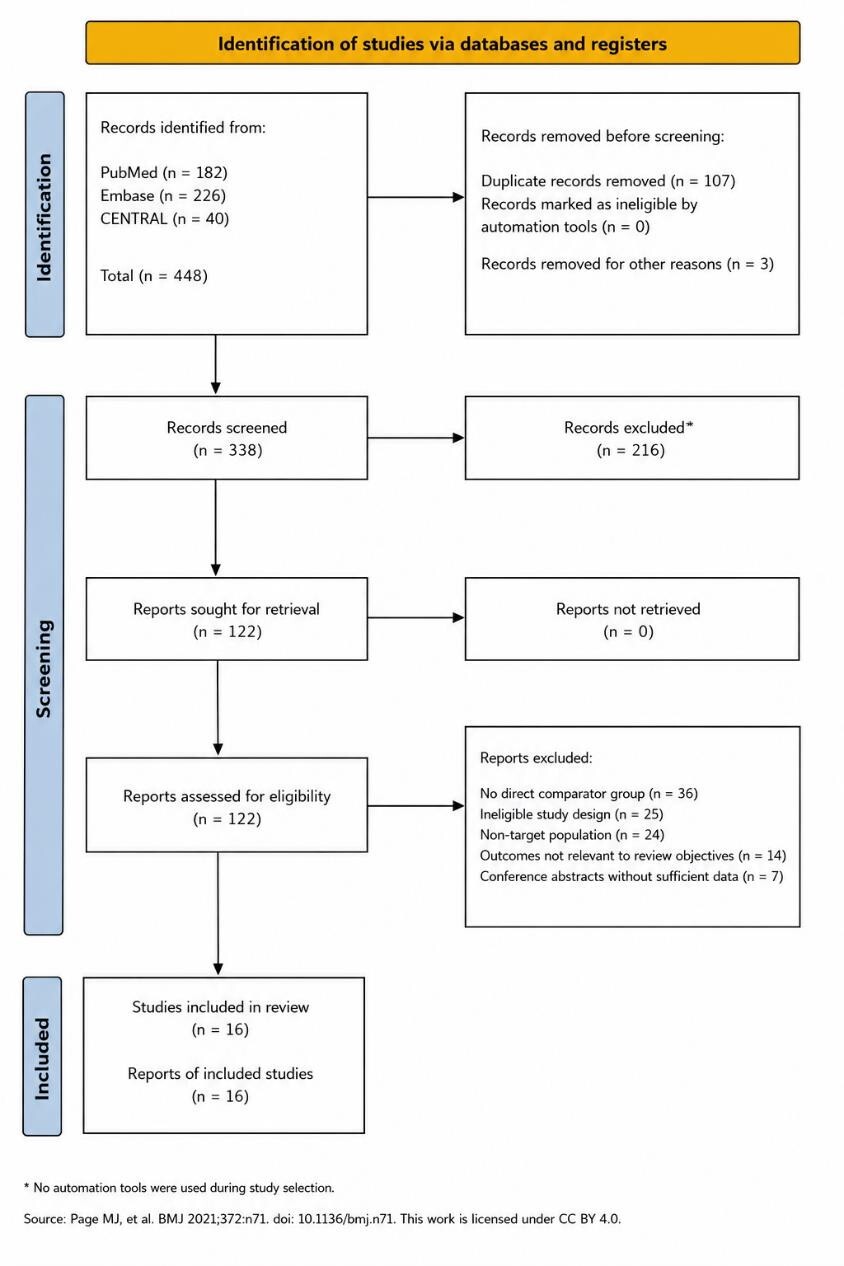
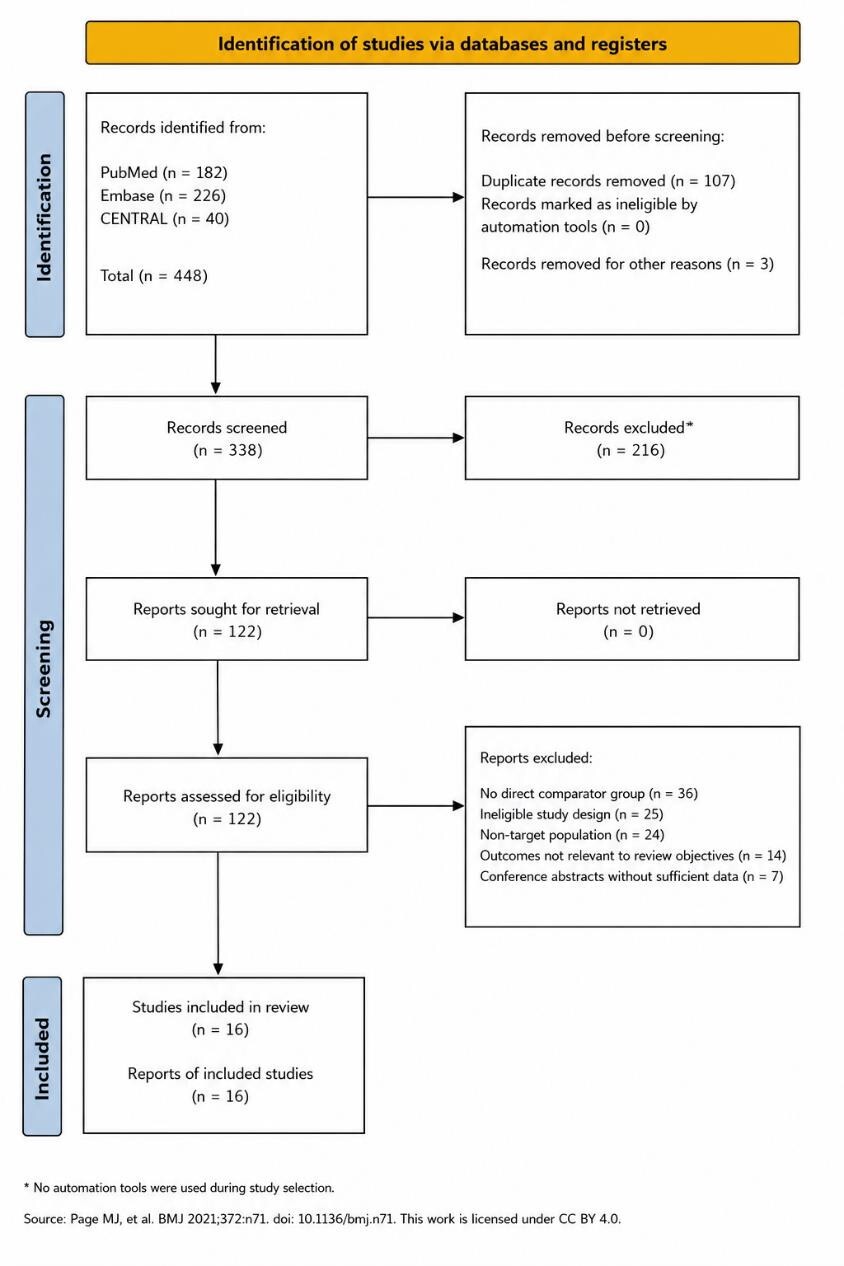
The study selection process is presented in the PRISMA flow diagram (Figure 1).
Studies meeting the predefined eligibility criteria were included in the review. Detailed eligibility criteria are provided in Supplementary Table S2.
Studies were excluded if they involved pediatric populations, cadaveric studies, simulation studies, biomechanical studies, technical notes, reviews, editorials, commentaries, or conference abstracts without full-text publication. Studies lacking a comparator group were excluded from the quantitative synthesis but could be included in the narrative synthesis if they provided relevant data on clinical outcomes or efficiency. Articles that did not report extractable outcome data relevant to the review objectives were also excluded.
Data Extraction
A standardized data extraction template was developed prior to data collection and is provided in Supplementary Table S3. Two reviewers independently extracted study-level data and resolved discrepancies through discussion and consensus.
For each study, the following information was collected: author and publication year, study design, surgical procedure, sample size, comparator anesthesia technique, follow-up duration, and reported clinical, patient-reported, and perioperative outcomes. Extracted outcome data included operative time, perioperative throughput measures, length of stay, postoperative pain scores, functional outcome measures, patient-reported outcomes (including QuickDASH, DASH, BCTQ, and patient satisfaction), complication rates, revision surgery, anesthetic failure or conversion, patient satisfaction, analgesic consumption, and postoperative nausea and vomiting (PONV).
Where available, mean values, measures of dispersion (standard deviations or 95 % confidence intervals), event counts, and sample sizes were extracted. Studies reporting only medians, ranges, graphical data, or outcomes that could not be converted into a common quantitative metric were retained for narrative synthesis but excluded from quantitative pooling for that outcome. Complete study-level outcome extraction data are presented in Supplementary Tables S7–S9.
Risk of Bias Assessment and Certainty of Evidence
Risk of bias was assessed independently by two reviewers. Randomized controlled trials were evaluated using the Cochrane Risk of Bias 2 (RoB 2) tool.19 Non-randomized comparative studies were evaluated using the ROBINS-I tool.20 Given the predominantly retrospective comparative design of the included studies, the assessment focused on domains considered most relevant to internal validity, including confounding, participant selection, intervention classification, missing data, and outcome measurement. No studies were excluded on the basis of methodological quality. Instead, risk-of-bias assessments were incorporated into the interpretation of findings and the certainty-of-evidence assessment using the GRADE framework.21 Evidence was rated as high, moderate, low, or very low certainty based on risk of bias, inconsistency, indirectness, imprecision, and publication bias. The assessed risk-of-bias domains are summarized in Supplementary Table S4, with study-level assessments provided in Supplementary Tables S5–S6.
Quantitative Synthesis
The selected outcomes were prespecified because they represent the most consistently reported measures of clinical effectiveness, safety, patient-reported outcomes, and perioperative efficiency across the contemporary WALANT literature. Meta-analyses were performed when at least two studies reported sufficiently comparable outcome measures and provided extractable data. Continuous outcomes were analyzed using mean differences (MD) when identical scales were used and standardized mean differences (SMD) when outcomes were measured using different instruments. Dichotomous outcomes were analyzed using risk ratios (RR). Funnel plots and Egger’s regression were planned but not conducted because fewer than ten studies contributed to any pooled outcome.22
Given the anticipated clinical and methodological heterogeneity across included procedures, patient populations, and comparator anesthesia techniques, a random-effects model using the DerSimonian–Laird estimator was prespecified for all pooled analyses.23 Statistical heterogeneity was assessed using Cochran’s Q statistic and the I2 statistic.24,25 All statistical tests were twosided, and statistical significance was defined as p < 0.05.
The primary outcomes included overall complications, revision or reoperation, postoperative nausea and vomiting (PONV), operative and perioperative time-related outcomes, and early postoperative pain. Outcomes that could not be pooled because of heterogeneous outcome measures, inconsistent reporting formats, lack of measures of dispersion, or limited numbers of studies were synthesized narratively.
Narrative Synthesis
Although quantitative pooling was possible for several outcomes, many studies reported results using heterogeneous outcome measures, procedure-specific endpoints, medians without measures of dispersion, or descriptive reporting that precluded formal meta-analysis. To ensure that all relevant evidence contributed to the review, a structured narrative synthesis was conducted alongside the quantitative synthesis.
The narrative synthesis was informed by the guidance proposed by Popay et al.,26 with studies grouped by outcome domain and findings compared systematically across studies.
Studies were grouped by outcome domain, including perioperative efficiency, patient satisfaction, functional recovery, safety, and feasibility in fracture fixation. Findings were compared across studies to identify recurring patterns, consistencies, and differences in reported outcomes. Particular attention was given to outcomes reported across multiple studies but unsuitable for quantitative pooling because of differences in outcome definitions or reporting methods.
This approach enabled integration of evidence from both comparative studies and uncontrolled cohorts while maintaining a clear distinction between quantitatively pooled findings and those derived from narrative synthesis.
Statistical Software
All statistical analyses, data management, and figure generation were performed using Python version 3.13 with the pandas (version 2.3.2), NumPy (version 2.3.2), SciPy (version 1.16.1), and statsmodels (version 0.14.5) libraries. Forest plots and summary figures were generated using the matplotlib visualization library.
Use of Generative Artificial Intelligence
Generative artificial intelligence (AI) tools (Microsoft Copilot) were used solely for limited language editing, identification of alternative wording, and preparation of visual elements for the PRISMA flow diagram. AI was not used for academic writing, study design, literature searching, study selection, data extraction, statistical analysis, interpretation of results, or scientific decision-making. All scientific content, analyses, and conclusions were developed, verified, and approved by the authors.
Results
Study Selection
The database search identified 448 records: 182 from PubMed, 226 from Embase, and 40 from the Cochrane Central Register of Controlled Trials (CENTRAL). After removal of duplicate records (n = 107) and records removed for other reasons (n = 3), 338 records underwent title and abstract screening (Figure 1). Of the 122 full-text reports assessed, 106 were excluded, most commonly because they lacked a direct comparator group, followed by ineligible study design, non-target populations, conference abstracts without sufficient data, or outcomes not relevant to the review objectives (Supplementary Table S10).
Ultimately, 16 studies met the inclusion criteria and were included in the systematic review. Thirteen comparative studies contributed to the quantitative synthesis, whereas three uncontrolled WALANT cohorts were included exclusively in the narrative synthesis.
All included studies were published in English between January 1, 2018, and November 30, 2025.
Characteristics of Included Studies
Three studies were randomized controlled trials, whereas the remaining comparative studies consisted of prospective, retrospective, propensity-matched, and within-patient comparative cohort studies. Procedures included carpal tunnel release, trigger finger release, other minor elective hand procedures, distal radius fracture fixation, metacarpal and phalangeal fracture fixation, and other upper-extremity procedures (Table 2).
Across the 16 included studies, a total of 1,288 unique patients were enrolled. Of these, 617 underwent surgery using WALANT and 684 received a comparator anesthetic technique (Table 2). The within-patient comparative study contributed to paired observations without increasing the total number of unique participants.27 Comparator techniques included general anesthesia, regional anesthesia, intravenous regional anesthesia (IVRA), axillary block, wrist block, sedation, and conventional local anesthesia with tourniquet.
Risk of Bias
Risk-of-bias assessment was performed for all comparative studies included in the quantitative synthesis (n = 13). Three additional uncontrolled WALANT cohorts contributed only to the narrative synthesis and were therefore not subjected to formal comparative risk-of-bias assessment.
Three randomized controlled trials were assessed using the Cochrane Risk of Bias 2 (RoB2) tool and were judged to have an overall low risk of bias. Although blinding of participants and surgeons was not feasible because of the nature of the WALANT technique, no major concerns regarding randomization, missing outcome data, or outcome assessment were identified.
The remaining comparative studies were evaluated using the ROBINS-I tool. Most observational comparative studies were judged to have a moderate risk of bias, primarily because of nonrandomized treatment allocation and the potential for residual confounding inherent to observational study designs. Two retrospective cohort studies were judged to have a serious risk of bias because treatment allocation may have been influenced by clinical or logistical factors that were not fully accounted for in the analyses (Table 3). These studies were primarily limited by selection bias and incomplete adjustment for potential confounders.
Overall, randomized trials demonstrated a low risk of bias, whereas most observational comparative studies demonstrated a moderate risk of bias. No studies were excluded based on methodological quality.
Detailed study-level assessments are presented in Table 3, with complete domain-level RoB 2 and ROBINS-I assessments provided in Supplementary Tables S5 and S6.
Clinical Outcomes
The outcomes most frequently reported across studies were complications, revision procedures, postoperative pain, patient satisfaction, functional recovery, operative efficiency, and resource utilization. Quantitative pooling was feasible for complications, revision procedures, operative and perioperative time-related outcomes, and early postoperative pain. Postoperative nausea and vomiting (PONV), functional outcomes, and patient satisfaction were synthesized descriptively because of the limited number of studies or heterogeneity in outcome reporting. A summary of the findings is presented in Table 4, with study-level data provided in Supplementary Tables S7–S9.
Complications
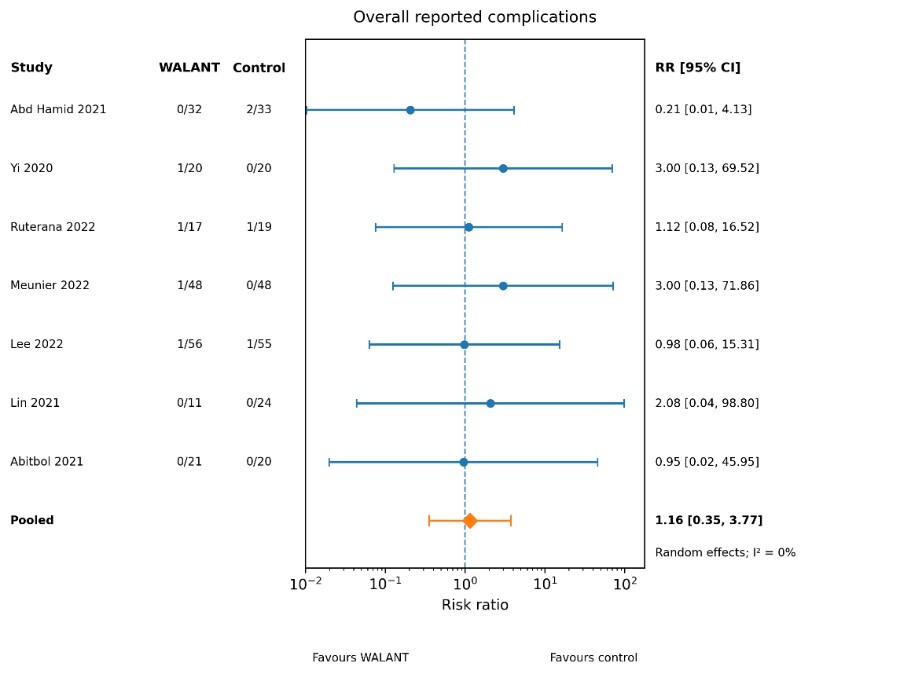
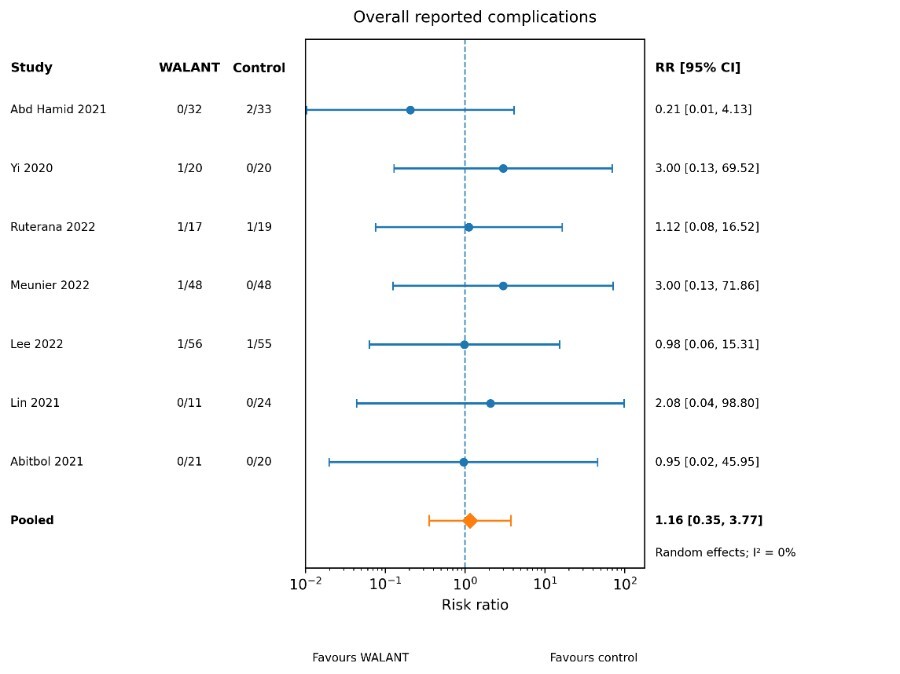
Complications were infrequent across all comparative studies, and no consistent safety concerns associated with WALANT were identified. Meta-analysis demonstrated no statistically significant difference between WALANT and comparator anesthesia techniques (RR 0.37, 95% CI 0.12–1.16; Figure 2; Table 4). Reported complications were primarily isolated superficial infections and minor wound complications, with no study reporting epinephrine-related ischemia, tissue necrosis, permanent vascular compromise, or other serious anesthesia-related adverse events.
Postoperative Nausea and Vomiting (PONV)
PONV was infrequently reported but consistently favored WALANT, likely reflecting avoidance of systemic anesthetic and sedative agents rather than procedure-specific effects. Because only two studies reported this outcome, no formal meta-analysis was performed (Table 4).
Early postoperative Pain
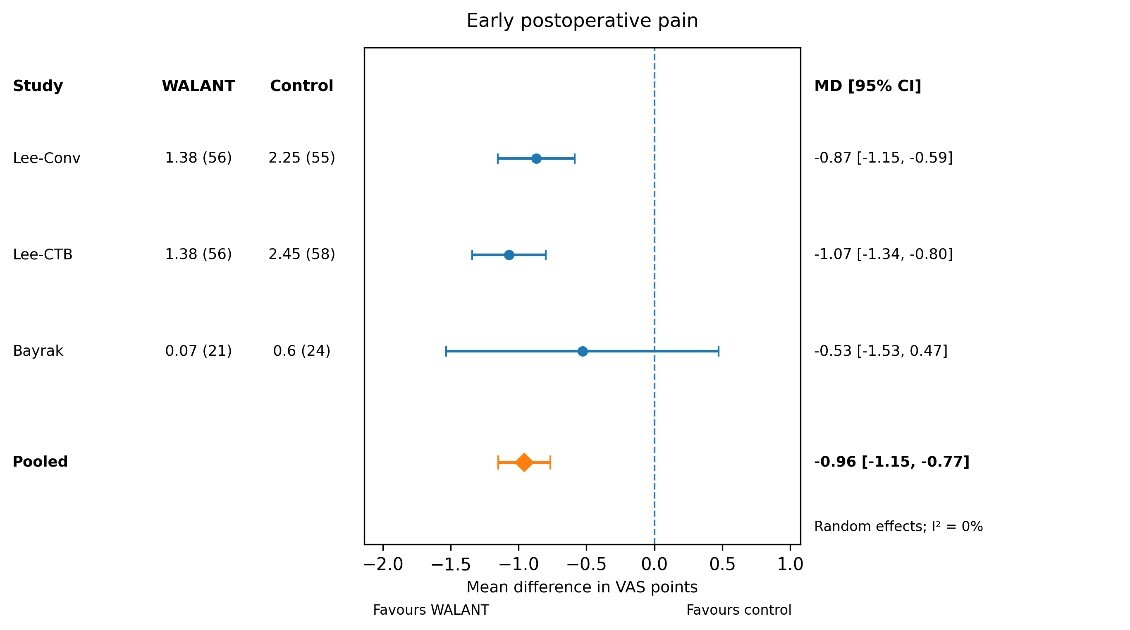
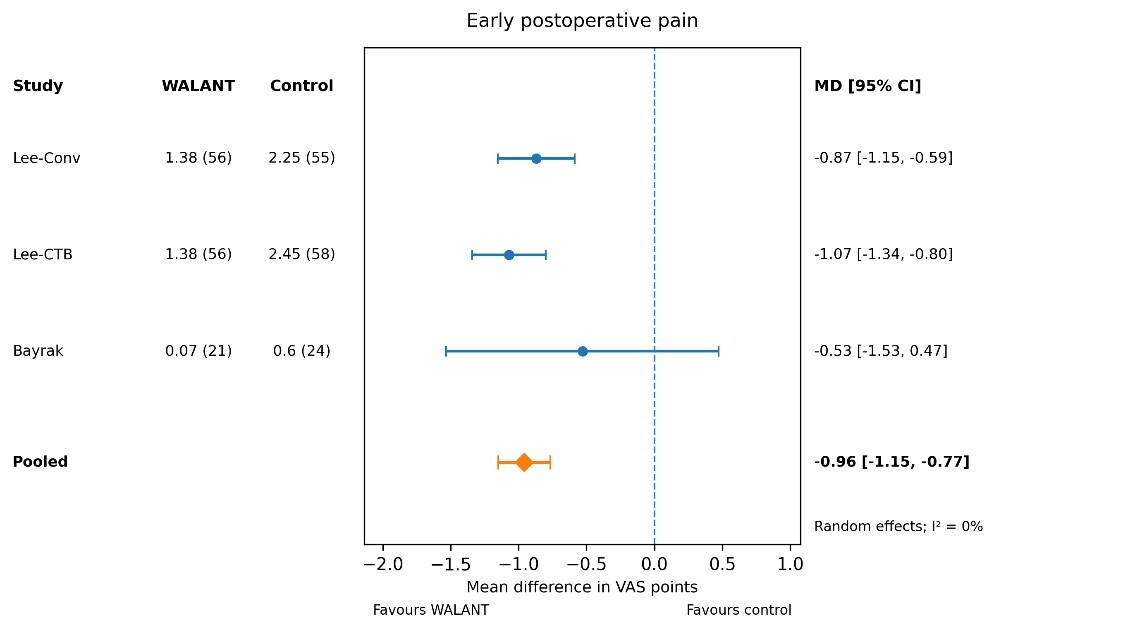
Meta-analysis of early postoperative pain demonstrated a pooled mean difference of −2.08 VAS points (95% CI −4.36 to 0.19). The point estimate favored WALANT; however, the confidence interval crossed zero and heterogeneity was substantial (I2 = 95%; Figure 3; Table 4). No statistically significant difference in early postoperative pain was observed between WALANT and conventional anesthesia.
Revision and Reoperation
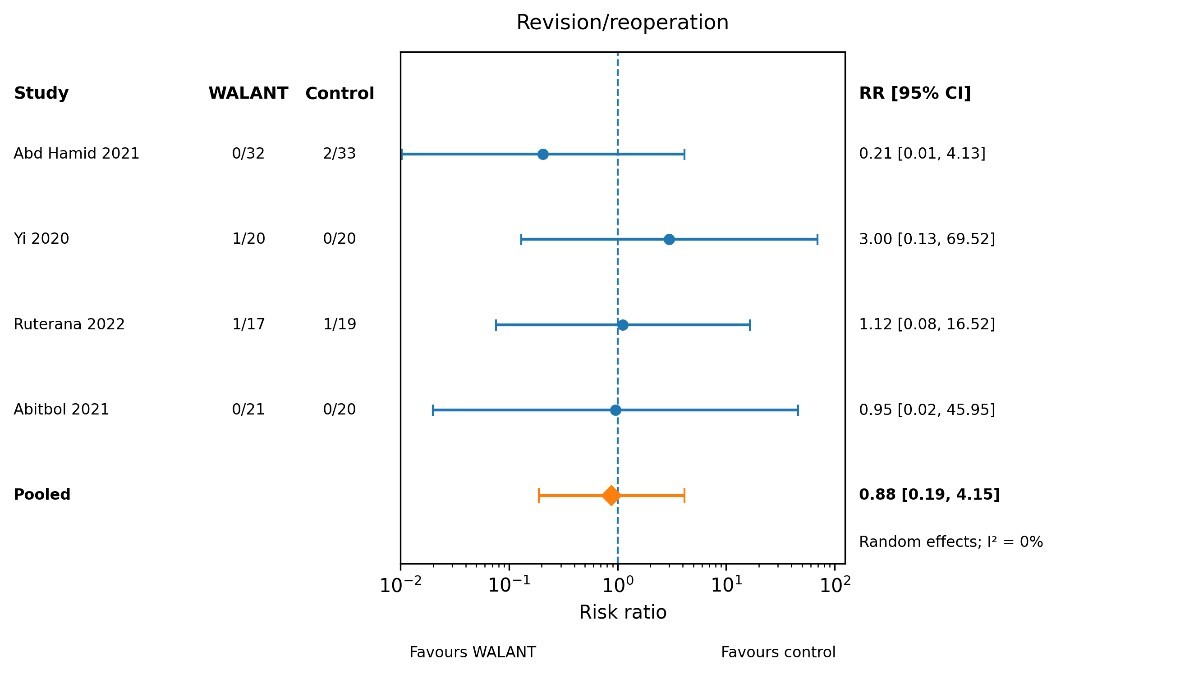
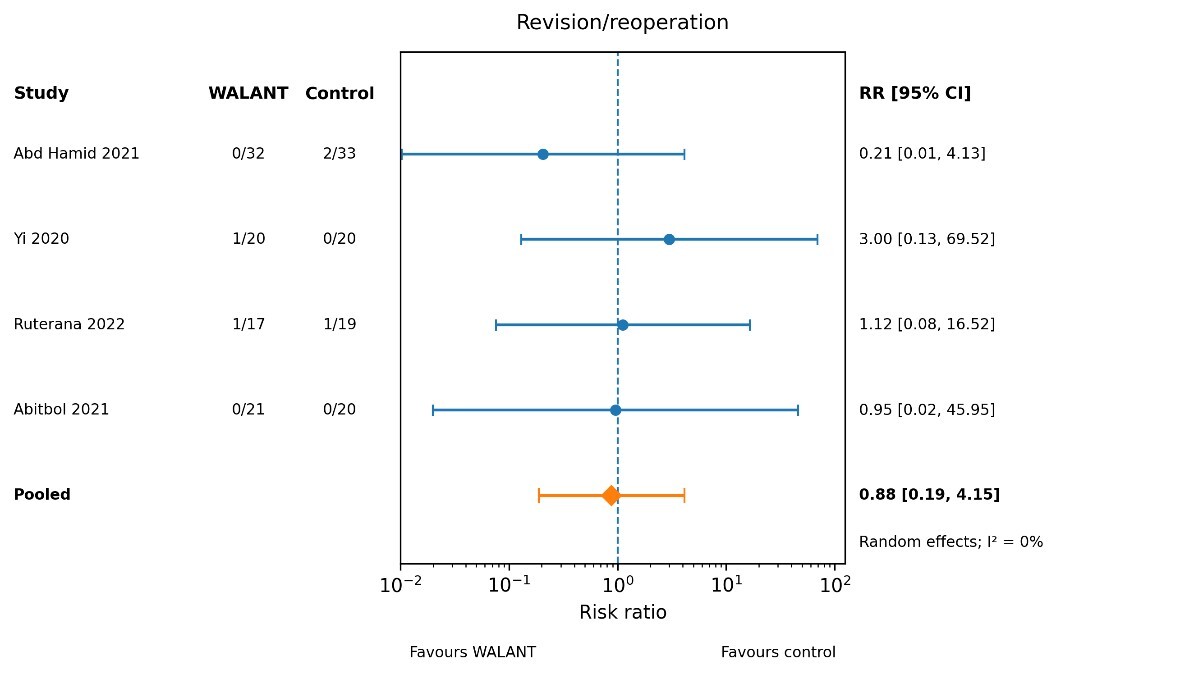
Meta-analysis of revision procedures demonstrated no statistically significant difference between WALANT and comparator anesthesia techniques (RR 0.88, 95% CI 0.19–4.15; Figure 4; Table 4). Revision procedures were uncommon across the included comparative studies, and no study reported an increased need for reoperation associated with WALANT.
Functional Outcomes
Functional recovery was evaluated using QuickDASH, DASH, Boston Carpal Tunnel Questionnaire (BCTQ), grip strength, range of motion, and procedure-specific outcome measures. Quantitative pooling was not feasible because studies used different outcome measures, follow-up intervals, and reporting formats, and several lacked sufficient data for meta-analysis. Accordingly, findings were synthesized narratively (Supplementary Tables S7–S9). No study demonstrated inferior functional outcomes following WALANT. Functional recovery was generally comparable between WALANT and comparator groups in both elective hand surgery and fracture fixation studies (Table 4; Supplementary Tables S7–S9).
Perioperative Efficiency
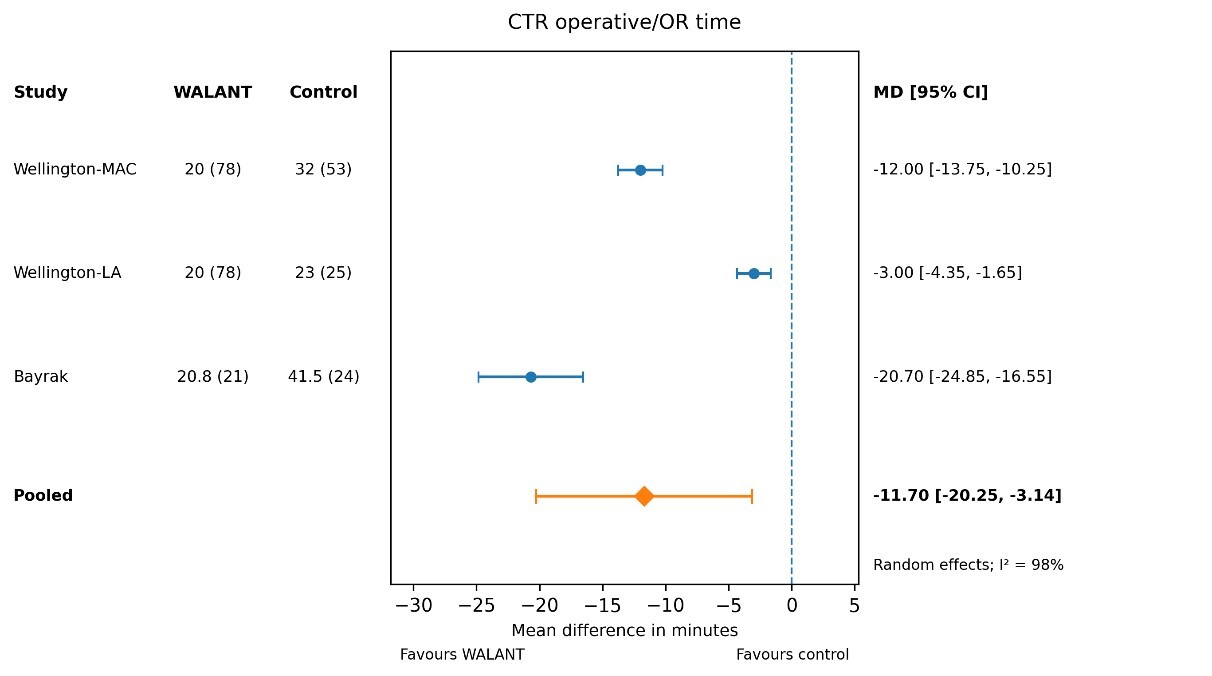
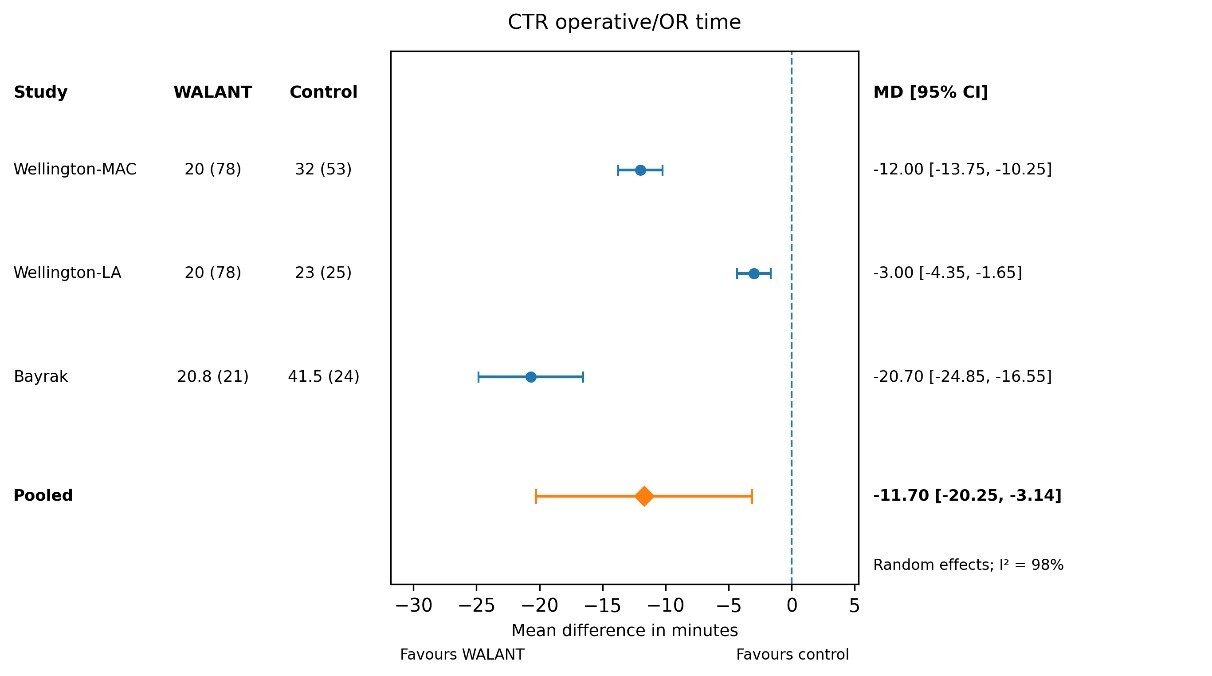
Perioperative efficiency outcomes were assessed quantitatively and narratively. Meta-analysis demonstrated a pooled reduction of approximately 11 minutes in operative or perioperative pathways with WALANT compared with conventional anesthesia techniques (MD −11.2 min, 95% CI −15.4 to −6.9; I2 = 86%; Figure 5; Table 4). Across the included comparative studies, WALANT was consistently associated with shorter operative or perioperative pathways, reduced recovery-room utilization, and shorter hospital stays or earlier return to activity (Supplementary Tables S7–S9).
Patient Satisfaction
Patient satisfaction was generally high across the included comparative studies. Although differences in outcome measures precluded quantitative pooling, satisfaction scores were comparable to those reported in comparator groups, with several studies reporting higher satisfaction following WALANT (Table 4). Several studies also reported that most participants would choose WALANT again if repeat surgery were required, indicating high acceptance of the technique. Detailed satisfaction outcomes are presented in Supplementary Tables S7–S9.
Narrative Synthesis
Although quantitative pooling was feasible for several outcomes, additional clinically relevant findings could not be incorporated into the meta-analysis because of heterogeneous outcome measures, procedure-specific endpoints, inconsistent reporting methods, or insufficient data for pooling. These findings were therefore synthesized narratively (Table 5; Supplementary Tables S7–S9).
The narrative synthesis demonstrated consistently high patient satisfaction, improved perioperative workflow, reduced healthcare resource utilization, and comparable functional outcomes. It also supported the feasibility of WALANT for fracture fixation procedures and highlighted procedural advantages unique to awake surgery, including intraoperative assessment of active movement, tendon gliding, and fixation stability. In addition, no emerging safety concerns were identified, and successful implementation was consistently associated with appropriate patient selection, surgeon familiarity with the technique, and established perioperative pathways (Table 5; Supplementary Tables S7–S9).
Consistency of findings across procedure types and study designs
Because the number of studies contributing to individual outcomes was insufficient for formal meta-regression, procedure type was explored descriptively through subgroup synthesis comparing elective hand surgery and acute fracture fixation (Table 6). Across both procedure groups, the overall direction of findings was consistent, with comparable safety, postoperative pain, functional outcomes, and patient satisfaction, whereas perioperative efficiency consistently favored WALANT. Although fewer studies evaluated acute fracture fixation, no clinically important differences in the overall pattern of findings were identified between procedure types.
Certainty of Evidence
The certainty of evidence was assessed using the GRADE framework. Overall certainty ranged from low to moderate, with the highest certainty observed for perioperative efficiency outcomes (Table 7). Certainty was downgraded across outcomes because of study limitations, inconsistency, and imprecision, although the contributing domains differed between outcomes.
Detailed study-level risk-of-bias assessments are provided in Supplementary Tables S5 and S6.
Discussion
This meta-analysis and narrative synthesis found that WALANT provides safety, clinical, and functional outcomes comparable to those of conventional anesthesia techniques across elective upper-extremity surgery and fracture fixation procedures. The principal advantage of WALANT was not superior clinical outcomes but improved perioperative efficiency achieved through reduced anesthesia-related resource utilization. Complication rates, revision procedures, and functional outcomes were comparable between groups, whereas operating-room utilization, recovery-room requirements, waiting time to surgery, and patient throughput consistently favored WALANT. These findings are consistent with previous systematic reviews suggesting that the principal value of WALANT lies in optimizing perioperative care rather than improving procedure-specific clinical outcomes.7,8
The absence of evidence indicating increased complication or revision rates is clinically important because concerns regarding safety have historically represented one of the principal barriers to wider adoption of WALANT. Early skepticism primarily focused on the use of epinephrine-containing local anesthetic solutions, concerns regarding digital ischemia, and the perception that awake surgery might compromise operative conditions.3,40,41 Large clinical series and more recent systematic reviews have consistently reported low rates of ischemic complications and no evidence of increased major adverse events attributable to WALANT.3,16 The findings of the present review further support this evidence, as complication rates remained low across both elective and fracture-related procedures, and no comparative study demonstrated increased risks of infection, neurovascular injury, or reoperation associated with WALANT.
Functional outcomes demonstrated a similarly consistent pattern. Across studies reporting Disabilities of the Arm, Shoulder and Hand (DASH), QuickDASH, Boston Carpal Tunnel Questionnaire (BCTQ) scores, grip strength, range of motion, and procedure-specific outcome measures, recovery trajectories were comparable regardless of anesthetic technique. These findings suggest that the logistical advantages associated with WALANT do not compromise surgical reconstruction, rehabilitation, or medium-term functional recovery. Although some studies reported earlier functional recovery following WALANT, particularly after distal radius fixation,42 these early advantages were not reflected in superior overall functional outcomes across the comparative evidence synthesized in the present review.
Patient-reported outcomes, particularly patient satisfaction, were generally favorable for WALANT. Despite longstanding concerns that awake surgery may increase anxiety, discomfort, or procedural intolerance, patient satisfaction was generally comparable to or higher than that reported following conventional anesthesia techniques. Several studies found that most participants would choose WALANT again if repeat surgery were required, suggesting that patient acceptance is substantially higher than traditionally assumed.11,36 These findings are consistent with previous systematic reviews reporting high patient satisfaction, positive surgical experiences, and a strong willingness to undergo repeat procedures under WALANT.7,16Although postoperative pain outcomes were heterogeneous, the overall direction of effect favored WALANT, although the magnitude of benefit varied across procedures and outcome measures.
An important contribution of the present review is its broader comparative scope. Whereas recent systematic reviews have primarily focused on the safety profile and complications associated with WALANT,7,16 the present review provides a comprehensive synthesis of comparative evidence on clinical outcomes, patient-reported outcomes, perioperative efficiency, and healthcare resource utilization across elective hand surgery and selected fracture fixation procedures. Historically, WALANT has been primarily used for ambulatory procedures such as carpal tunnel release and trigger finger release.3,7,8 By integrating evidence across these clinical settings, the present review provides a more comprehensive assessment of the role of WALANT in contemporary upper-extremity surgery. Importantly, our findings demonstrate that the comparable safety and functional outcomes previously established in elective hand surgery also extend to selected fracture fixation procedures, including distal radius, metacarpal, and phalangeal fractures. Although the evidence base for fracture fixation remains smaller than that for elective hand surgery, the consistency of findings across the available comparative studies suggests that the favorable outcomes observed in elective hand surgery are also evident in fracture fixation.
These findings have important implications from a healthcare systems perspective. Elective hand surgery and acute fracture fixation differ substantially with respect to urgency, patient flow, perioperative logistics, and resource requirements. Accordingly, the potential benefits of WALANT also differ between these clinical settings. In elective procedures, the principal advantages relate to reduced anesthesia preparation, decreased recovery-room utilization, and streamlined patient pathways. In fracture fixation, the most important benefits appear to be shorter waiting times for surgery, reduced hospital stays, and decreased dependence on anesthesiology services. Despite these differences, the overall pattern of findings suggests that WALANT can improve perioperative efficiency without compromising clinical outcomes.
Such advantages may become increasingly important as healthcare systems face persistent workforce shortages, operating-room constraints, growing surgical backlogs, and, in some regions, disruption associated with armed conflict or other large-scale emergencies.2,13,14,43 In such environments, surgical pathways that reduce dependence on anesthesia-related resources without compromising patient outcomes may enhance healthcare system resilience and increase surge capacity.
Taken together, the available evidence suggests that WALANT should not be viewed solely as an alternative anesthetic technique for minor elective procedures. Rather, it represents a pragmatic surgical care pathway capable of maintaining comparable clinical outcomes while reducing perioperative resource requirements across a broad range of upper-extremity procedures.
Limitations
This review has several methodological strengths. First, it provides a comprehensive synthesis of comparative evidence spanning both elective hand surgery and fracture fixation, allowing assessment of the consistency of findings across these distinct clinical settings. Second, the review followed a prospectively registered protocol and adhered to PRISMA recommendations while incorporating formal risk-of-bias assessment and GRADE to enhance methodological transparency and certainty assessment.
Nevertheless, several limitations should be acknowledged. Although findings were generally consistent across study designs, most included studies were observational, leaving the possibility of residual confounding. Accordingly, the certainty of evidence was downgraded for several outcomes because of study limitations, imprecision, and heterogeneity. Considerable heterogeneity was observed for postoperative pain and perioperative efficiency outcomes, likely reflecting differences in surgical procedures, healthcare settings, comparator techniques, and outcome definitions. Consequently, pooled estimates for these outcomes should be interpreted with appropriate caution.
Evidence for fracture fixation remains more limited than for elective hand surgery, and conclusions regarding acute trauma should therefore be interpreted with appropriate caution. Likewise, conclusions regarding preparedness should be interpreted with caution, as these implications are inferred rather than directly supported by the included studies. Publication bias could not be formally assessed because fewer than ten studies contributed to any pooled outcome. These limitations highlight the need for additional high-quality comparative research, particularly in fracture fixation.
Conclusion
The available comparative evidence suggests that WALANT provides comparable safety and clinical outcomes to conventional anesthesia techniques while consistently improving perioperative efficiency across elective upper-extremity surgery and fracture fixation. Rather than improving surgical outcomes, its principal value appears to lie in achieving equivalent clinical results through less resource-intensive perioperative pathways. As healthcare systems increasingly face workforce shortages and capacity constraints, WALANT may represent a scalable model of care that supports more efficient use of perioperative resources while maintaining comparable patient outcomes. Additional high-quality multicenter studies are needed to strengthen the evidence base, particularly for fracture fixation and acute trauma surgery.
Acknowledgments
The authors would like to thank their respective employers and institutions for supporting the academic and professional activities that made this work possible. The authors also acknowledge the contributions of the investigators whose studies formed the basis of this systematic review, meta-analysis and narrative synthesis.
Supplementary Materials
Supplementary Table S1: Database Search Strategies; Supplementary Table S2: Eligibility Criteria; Supplementary Table S3: Data Extraction Form; Supplementary Table S4: Risk-of-Bias Tools; Supplementary Table S5: RoB2 – Randomized Controlled Trials; Supplementary Table S6: ROB-INS-I – Comparative Cohort Studies; Supplementary Table S7: Data Extraction Matrix – Acute Fracture Fixation Cohorts and Comparative Studies; Supplementary Table S8: Data Extraction Matrix – Elective Hand Surgery Studies; Supplementary Table S9: Data Extraction Matrix – Comparative Fracture Surgery Studies; Supplementary Table S10: Table of Excluded Studies; Supplementary Table S11: Completed PRISMA 2020 Checklist.
Author Contributions
I.L.K. and K.L.K. jointly conceptualized and designed the study. Both authors contributed to the development of the methodology, independently screened studies for eligibility, performed data extraction, conducted risk-of-bias assessments, interpreted the findings, and validated the results. I.L.K. performed the quantitative analyses, prepared the figures and tables, and drafted the original manuscript. Both authors critically reviewed and revised the manuscript, approved the final version for publication, and agreed to be accountable for all aspects of the work.
Funding
This research received no external funding
Institutional Review Board Statement
Not applicable.
Informed Consent Statement
Not applicable. This study is based exclusively on previously published studies.
Data Availability Statement
All data generated or analyzed during this study are included in this published article and its Supplementary Materials. Study-level extraction data, risk-of-bias assessments, and outcome datasets supporting the findings of this systematic review, narrative synthesis and meta-analysis are available within the Supplementary Files accompanying this manuscript.