
Introduction
Traumatic brain injury (TBI) in childhood can affect cognition, behavior, and educational functioning beyond the initial injury, making prevention and follow-up important components of pediatric trauma care.1 Motor vehicle collisions expose children to direct impacts and acceleration-deceleration forces that can produce head injury alongside spinal, thoracoabdominal, and extremity injuries.2 Evaluating neurologic outcomes within pediatric trauma cohorts can therefore complement broader assessments of injury burden.
Seatbelts reduce injury among pediatric crash occupants, although protection depends on appropriate restraint selection and use.3,4 Contemporary child passenger safety literature emphasizes the continued problems of restraint misuse and premature transitions between restraint types.5 Studies of restraint selection and crash testing demonstrate why a binary record of seatbelt use cannot establish correct installation, appropriate fit, or suitability for a child’s size.6,7 Registry research also distinguishes appropriate restraint from restraint use alone, an important difference when interpreting retrospective clinical data.8
Prior studies have examined TBI-specific outcomes. Jandhyala and colleagues studied 169 children aged 5–17 years and reported associations between lack of seatbelt use and greater TBI severity, admission, and CT abnormalities.9 An adult collision cohort likewise reported less favorable neurologic and hospital outcomes among unbelted occupants.10 Nichols and colleagues identified lack of seatbelt use, loss of consciousness, and alcohol consumption as predictors of greater TBI severity in adults after collisions.11 These studies support examining multiple outcomes while recognizing differences in age, case selection, and available covariates.
Clinical severity and structural imaging findings describe different aspects of TBI. In children aged 0–4 years, Anbalagan and colleagues associated lower pediatric Glasgow Coma Scale (GCS) scores and traffic-related mechanisms with abnormal CT findings.12 Adult studies demonstrate that patients classified as having mild TBI, including those with GCS scores of 15, can nevertheless have CT abnormalities.13,14 The present study evaluated associations between documented seatbelt use and ED TBI severity, head CT findings, neurologic presentation, and hospital admission in a pediatric collision cohort.
Materials and Methods
Ethical Considerations
This study was approved by the Institutional Review Board (IRB) through expedited review with a Health Insurance Portability and Accountability Act (HIPAA) waiver (study #1882011).
Study design and population
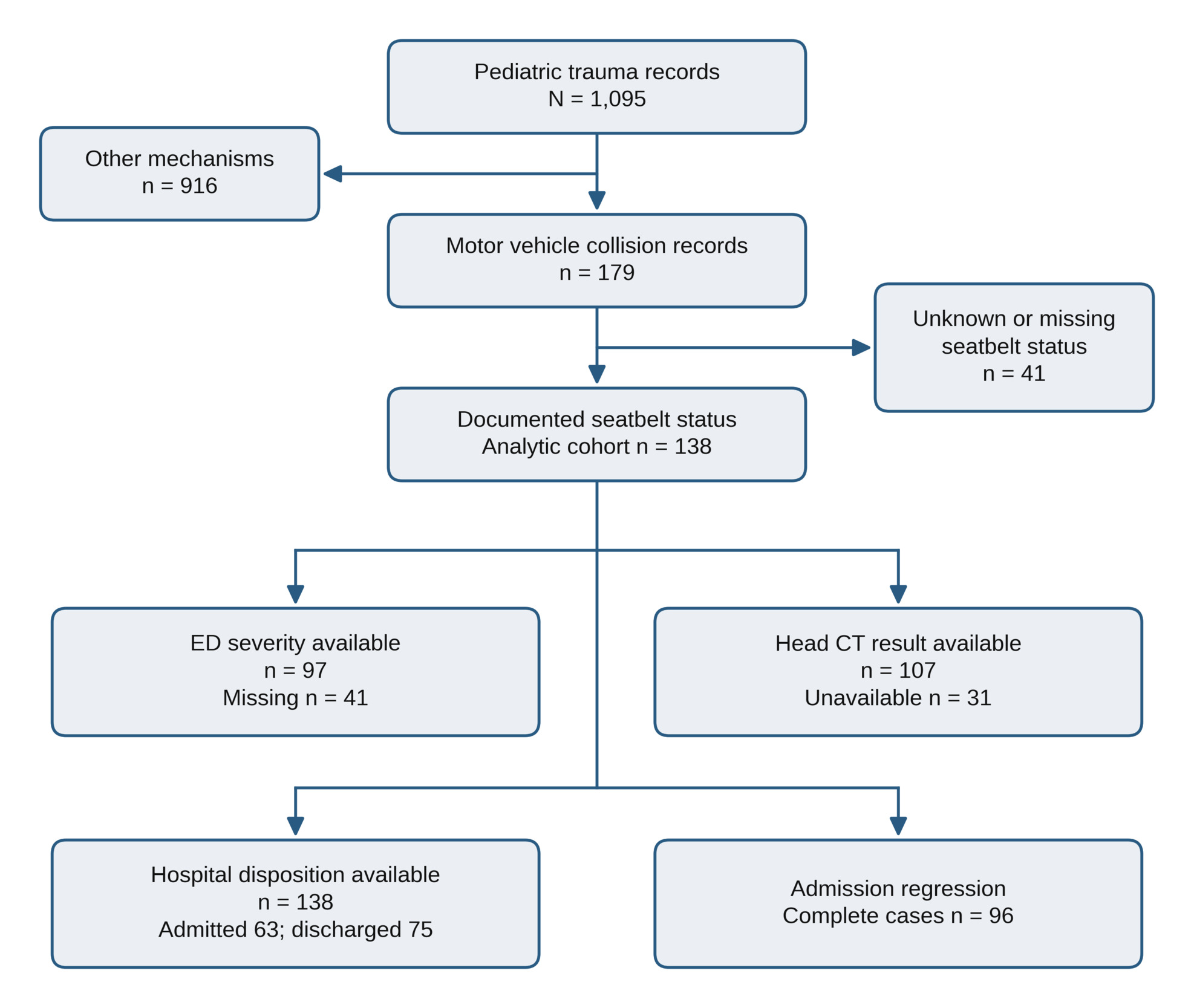
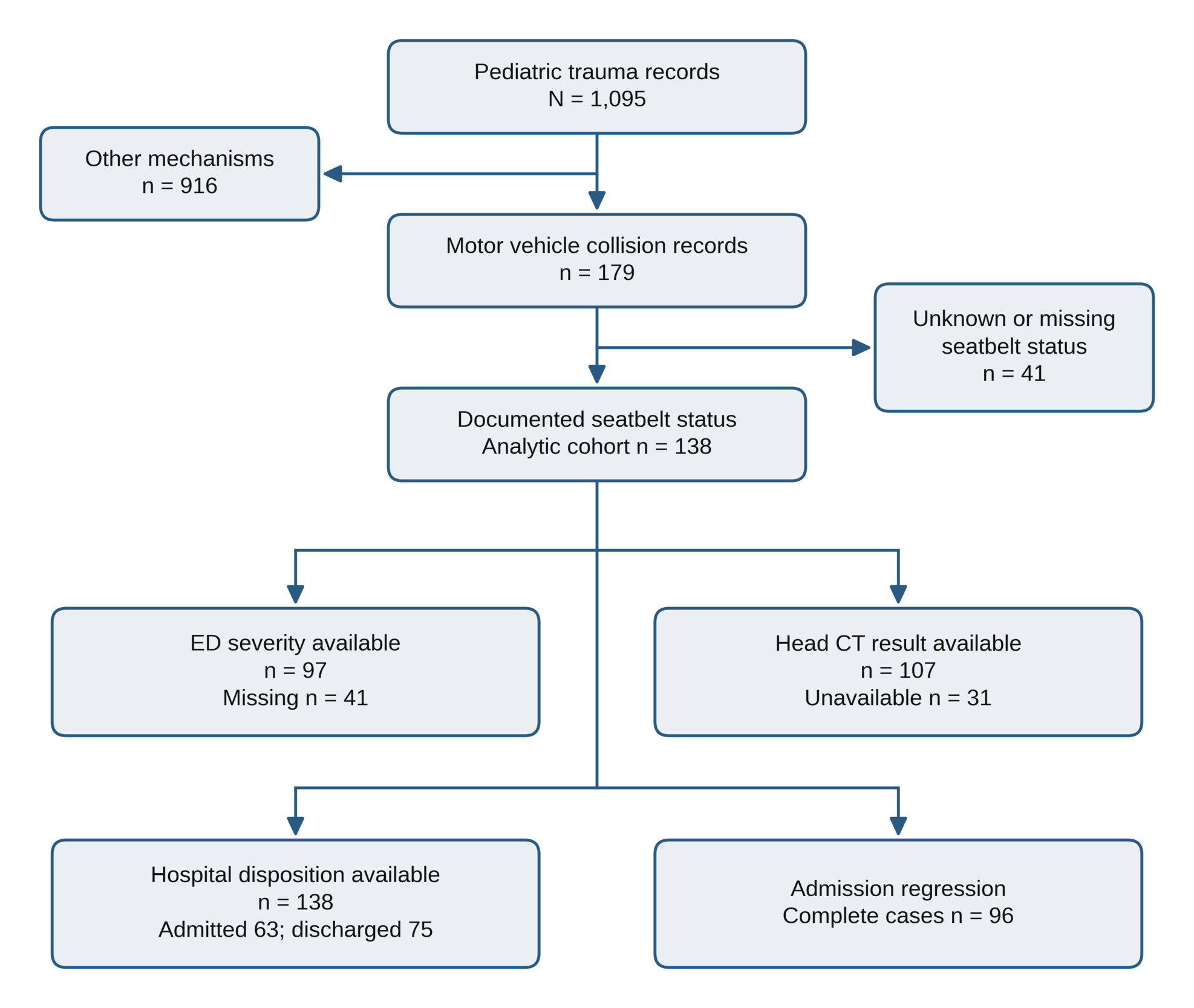
This retrospective study used trauma registry and electronic medical record data from a Level I pediatric trauma center. Among 1,095 pediatric trauma records, 179 involved motor vehicle collisions. Patients with noncollision mechanisms were excluded. Of the 179 collision-related cases, 41 had unknown or missing seatbelt status, leaving 138 patients in the analytic cohort. Analysis-specific denominators depended on availability of each outcome (Figure 1).
Variables and outcomes
The exposure was documented seatbelt use, categorized as used or not used. This variable did not distinguish restraint type, correct fit, installation, or age appropriateness. Abstracted variables included age, sex, prehospital and ED GCS scores, loss of consciousness, transfer status, CT findings, hospital admission, ICU admission, and disposition. ED TBI severity categories were derived from the recorded ED GCS: mild (13–15), moderate (9–12), and severe (3–8). Two stored severity labels conflicted with the numeric GCS and were reconciled using the recorded score; the component scores agreed with the numeric totals in both cases.
The primary comparison was the distribution of ED TBI severity by seatbelt status. Secondary comparisons included abnormal head CT findings and prehospital neurologic status. Hospital and ICU admission were summarized by severity category. An abnormal CT was defined by its classification in the recorded imaging results; this outcome was analyzed separately from GCS-based severity.
Statistical analysis
Original analyses were performed in JMP and independently recomputed from the patient-level dataset using Python and SciPy 1.17. Head CT findings were compared using Pearson’s chi-square test without continuity correction, with Fisher’s exact test as a sensitivity analysis. Prehospital GCS was compared using Welch’s two-sample t test. All tests were two-sided with a nominal P < .05 threshold; no multiplicity adjustment was applied. Analyses used available observations without imputation.
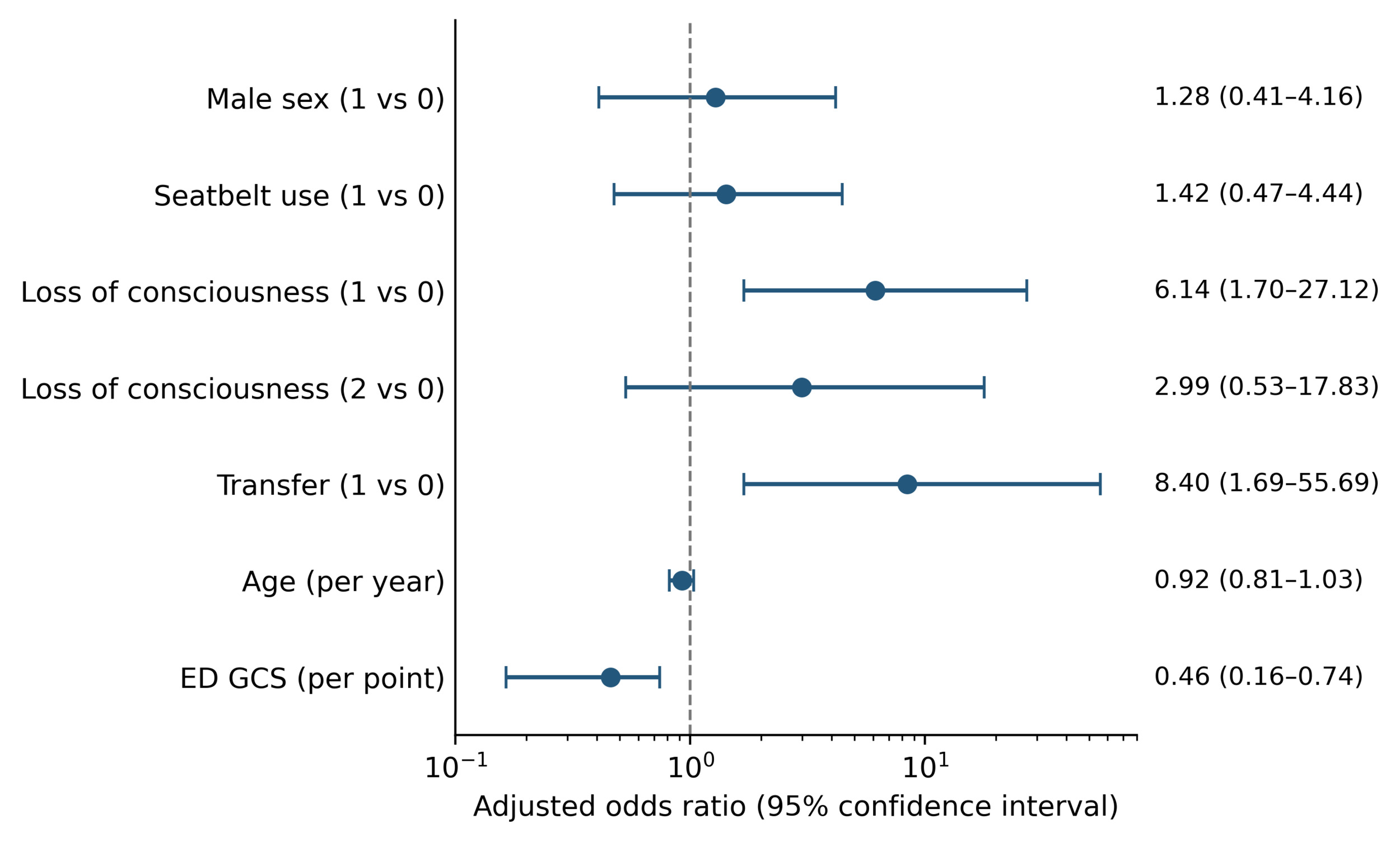
Multivariable binary logistic regression evaluated hospital admission using the original covariates: age, sex, seatbelt use, loss-of-consciousness category, transfer status, and ED GCS. Age and GCS entered as linear continuous terms; loss of consciousness entered as a three-level categorical variable. The model included 96 complete cases, of whom 52 were admitted. Adjusted odds ratios (aORs) and profile-likelihood 95% confidence intervals (CIs) are reported. The model was exploratory and was not validated as a prediction tool.
Results
Cohort and available outcomes
Of 179 collision-related cases, 138 (77.1%) had documented seatbelt status. The 138 patients were aged 0–17 years (median, 14; interquartile range, 8–16); 68 (49.3%) were recorded as male. Seatbelts were documented as used in 76 patients and not used in 62. ED TBI severity was available for 97 patients: 74 had mild, 6 moderate, and 17 severe TBI. Severity data were unavailable for 41 patients. Head CT was recorded as performed in 108 patients; results were available for 107, including 65 normal and 42 abnormal results. Thirty patients had no recorded CT performed and one scanned patient lacked a recorded result. Overall, 63/138 patients (45.7%) were admitted to the hospital and 75/138 (54.3%) were discharged from the ED. Figure 1 summarizes cohort selection and outcome availability.
Seatbelt status and neurologic findings
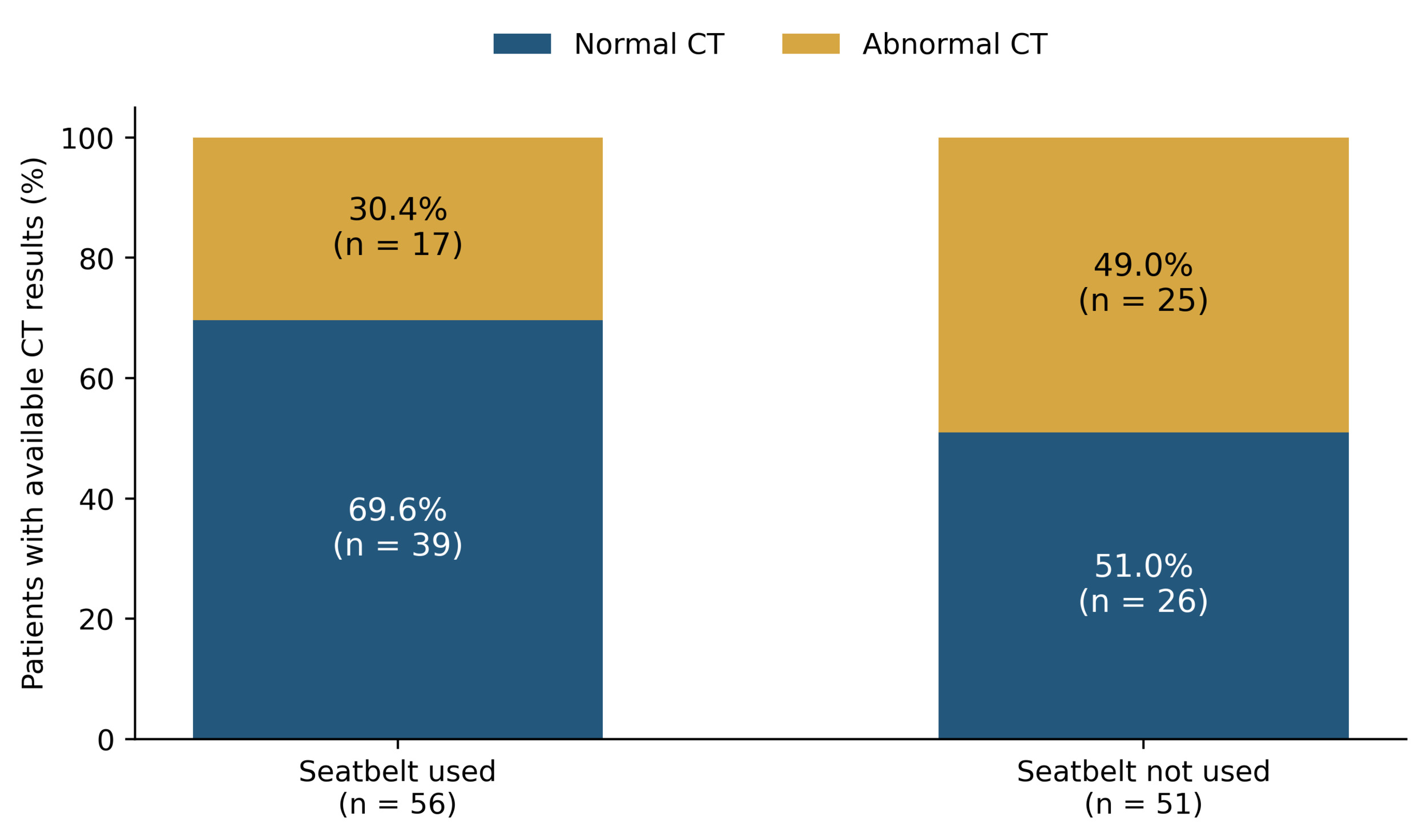
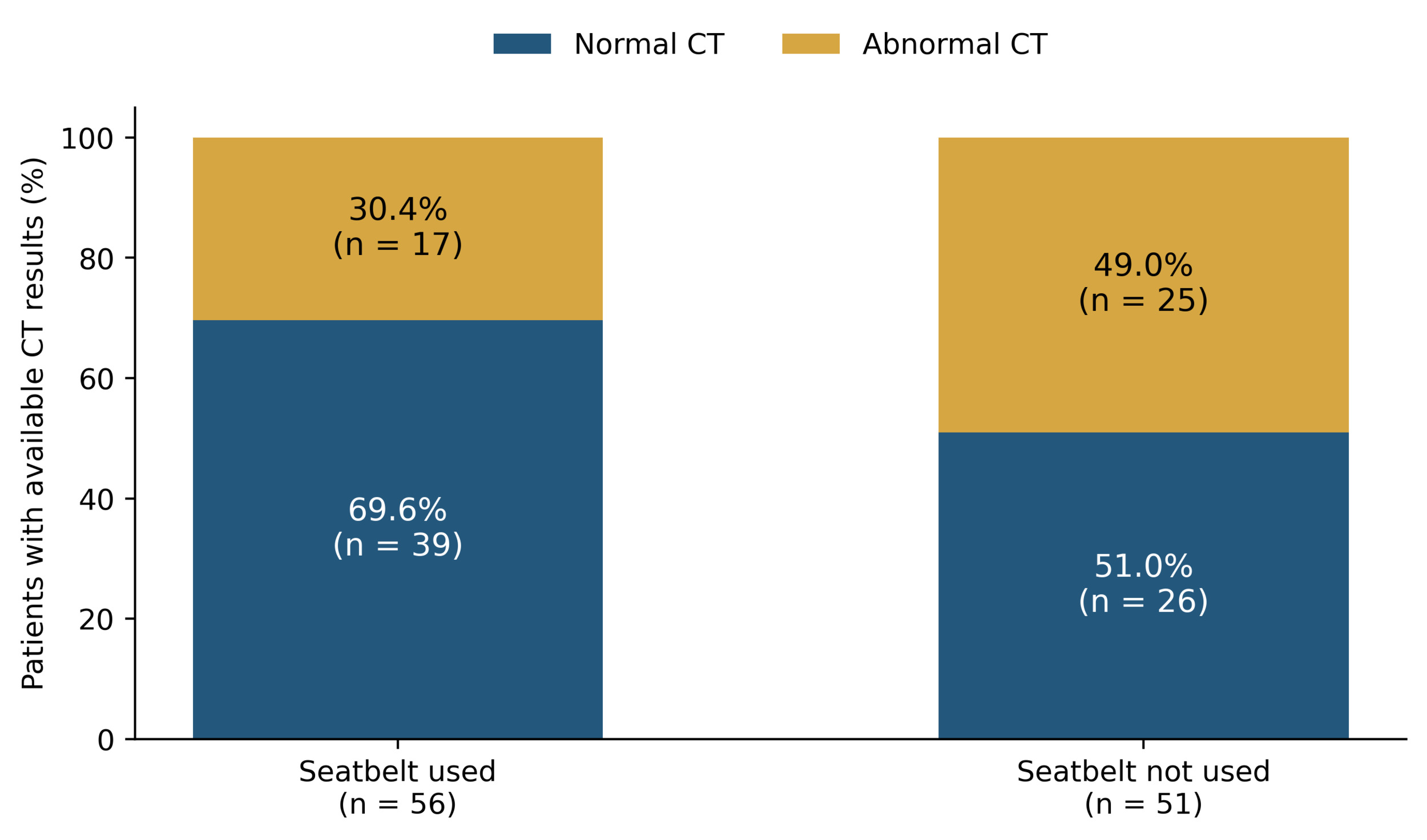
Seatbelt use was not significantly associated with ED TBI severity (P = .098). Among patients with available ED GCS, the mild/moderate/severe counts were 43/3/5 with seatbelt use (n = 51) and 31/3/12 without seatbelt use (n = 46). Among patients with available CT results, abnormal findings occurred in 17/56 (30.4%) with seatbelt use and 25/51 (49.0%) without seatbelt use (Pearson P = .048; Fisher exact sensitivity analysis P = .074). Corresponding proportions with normal CT results were 39/56 (69.6%) and 26/51 (51.0%) (Figure 2).
Prehospital GCS was available for 80 patients. Mean (SD) scores were 13.68 (3.20) with seatbelt use (n = 41) and 12.15 (4.26) without seatbelt use (n = 39); the Welch t-test comparison was not statistically significant (P = .075).
Factors associated with hospital admission
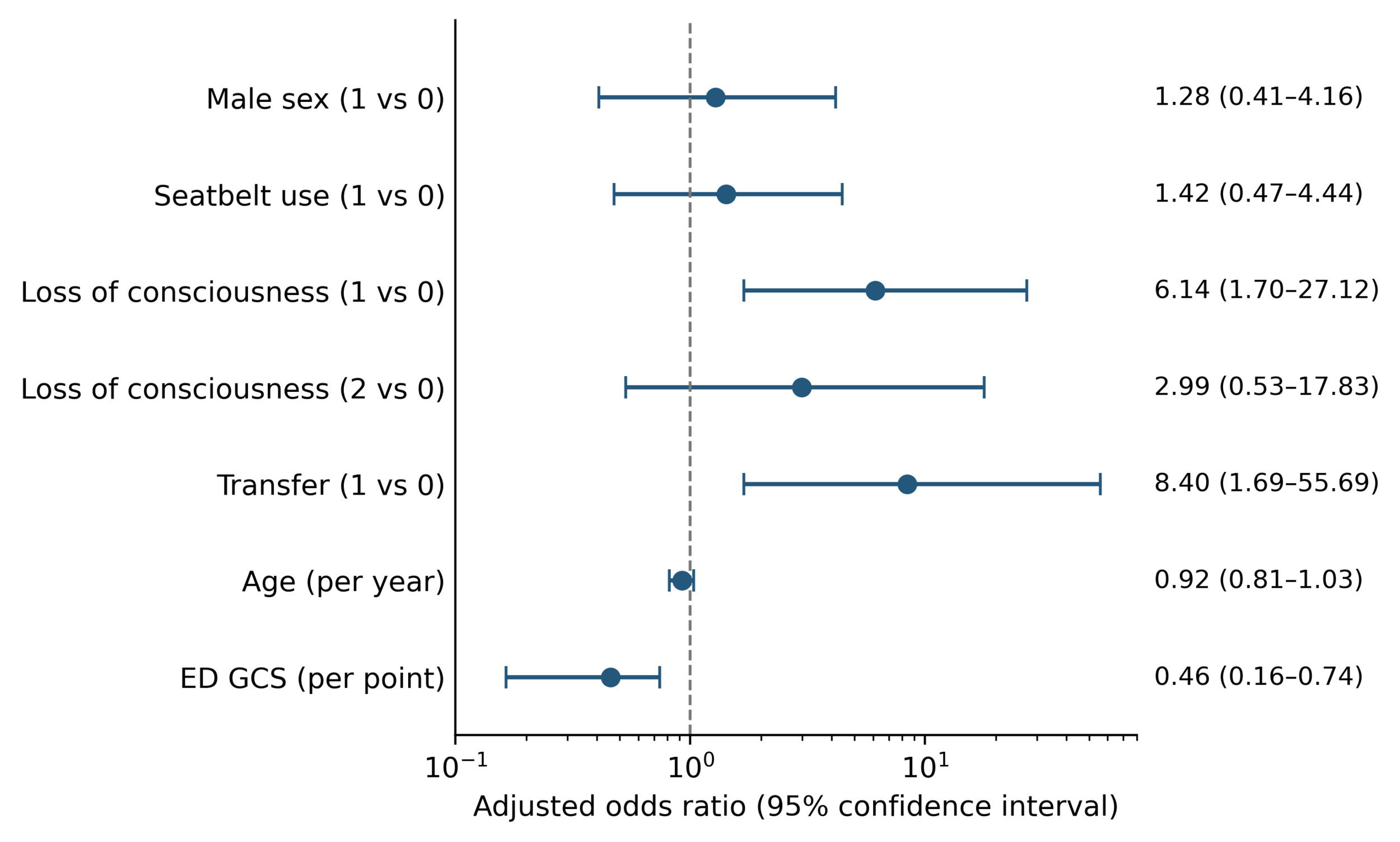
In the complete-case multivariable model (n = 96), the loss-of-consciousness category 1 versus 0 contrast was associated with higher odds of admission (aOR, 6.14; 95% CI, 1.70–27.12), as was transfer status (aOR, 8.40; 95% CI, 1.69–55.69). Each one-point increase in ED GCS was associated with lower odds of admission (aOR, 0.46; 95% CI, 0.16–0.74). Seatbelt use was not independently associated with admission in this model (aOR, 1.42; 95% CI, 0.47–4.44). Figure 3 presents all model estimates.
Admission by ED TBI severity
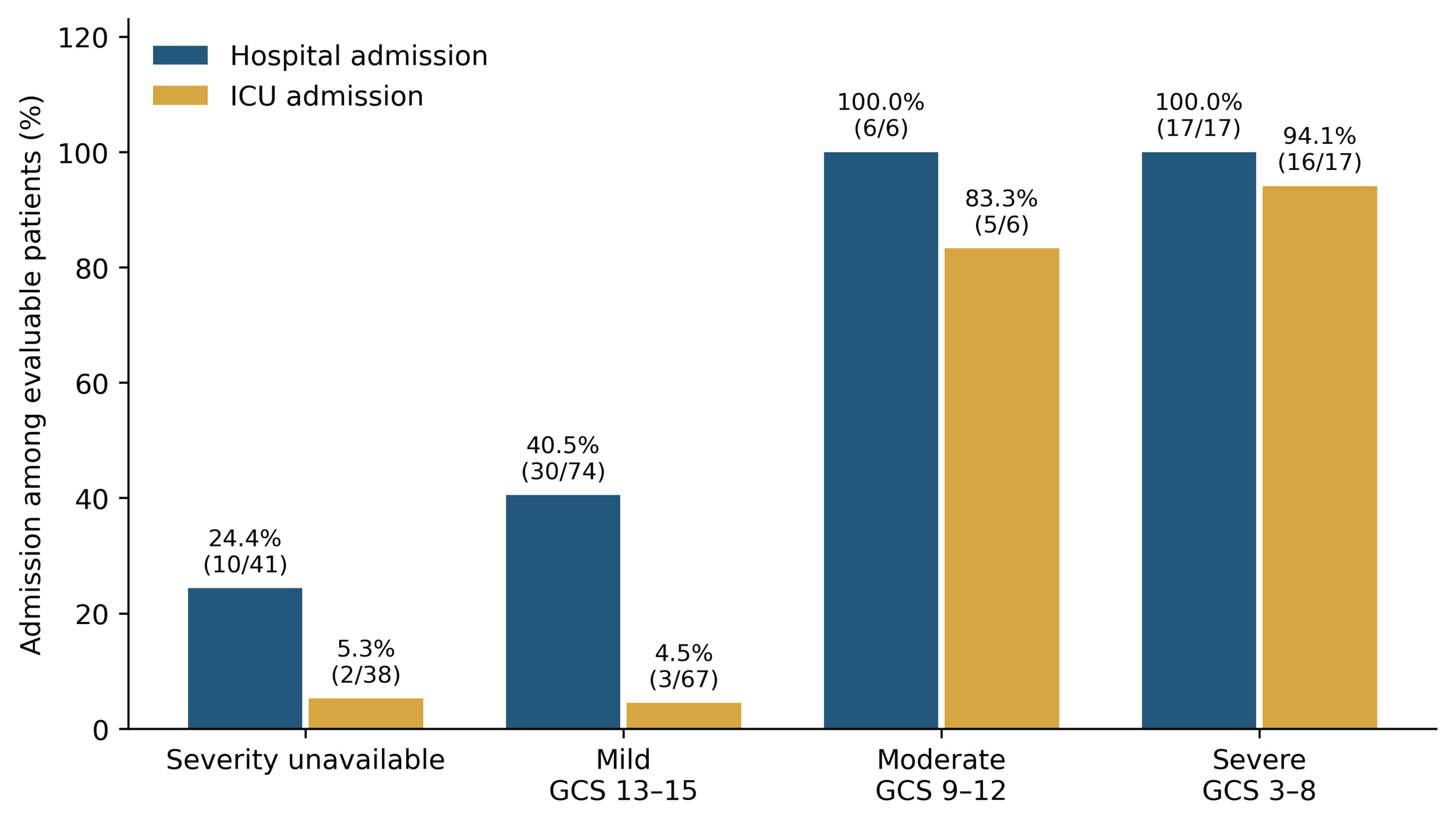
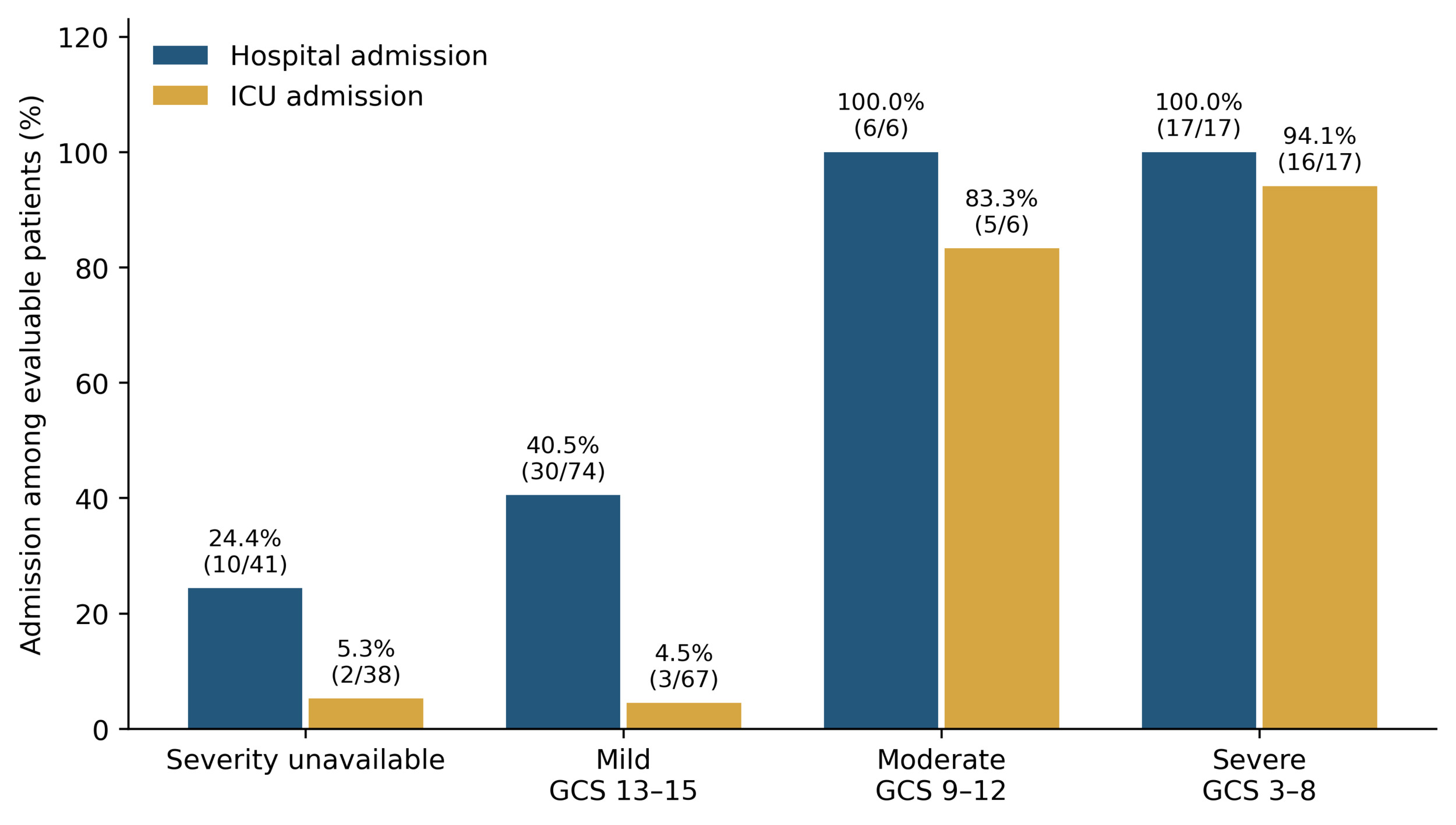
All patients with moderate TBI (6/6, 100%) and severe TBI (17/17, 100%) were admitted, compared with 30/74 (40.5%) with mild TBI. ICU admission occurred in 5/6 (83.3%) with moderate TBI, 16/17 (94.1%) with severe TBI, and 3/67 (4.5%) with mild TBI and known ICU status. Among patients with unavailable severity data, 10/41 (24.4%) were admitted to the hospital and 2/38 (5.3%) with known ICU status were admitted to the ICU (Figure 4). ICU status was missing for 7 patients with mild TBI and 3 with unavailable severity data.
Discussion
Interpretation of the seatbelt associations
Documented seatbelt use was associated with a lower proportion of abnormal head CT findings, while comparisons of ED TBI severity and prehospital GCS did not reach statistical significance. The distinction matters: the data support an association with the recorded imaging outcome, not a uniform improvement across all measures of neurologic injury. The CT result crossed the significance threshold with Pearson’s test but not Fisher’s exact test and should be interpreted cautiously in the context of several comparisons, incomplete data, and an observational design.
The imaging association is directionally consistent with adult and pediatric collision studies.9–11 However, the present severity comparison was nonsignificant. Differences in age distribution, cohort selection, missing values, and analytic methods may contribute to differences between reports. Prior studies should not be treated as directly interchangeable populations. The small numbers of moderate and severe injuries also limit precision; a nonsignificant result does not establish that seatbelt use has no association with severity.
Crash characteristics remain potential confounders. Hillary and colleagues found that collision configuration was related to TBI severity, while the pediatric injury literature emphasizes passenger position and restraint characteristics.2,15 The present binary seatbelt variable cannot distinguish a correctly fitted restraint from inappropriate or incorrect use. Restraint selection, installation, and occupant positioning therefore remain relevant even when a child is documented as belted.6,7
Clinical severity and imaging
GCS-based severity and CT findings should be interpreted together. Ganti and colleagues described structural abnormalities and adverse acute outcomes in an adult cohort presenting with GCS 15, while Vasista and colleagues identified clinical features associated with CT abnormalities among adults with mild TBI.13,14 Anbalagan and colleagues demonstrated age-specific clinical and imaging relationships in very young children.12 These studies provide context for the different associations observed here, but do not validate a pediatric imaging rule derived from seatbelt status. Imaging decisions should follow validated pediatric risk assessment and clinical evaluation, rather than restraint status alone.16
Admission and recovery
Loss of consciousness, transfer status, and lower ED GCS were associated with hospital admission in the exploratory model. The relationship between loss of consciousness and admission is compatible with prior studies.12,13 Transfer status may also reflect referral practices, available resources, and selection of patients perceived to require higher-level care, as discussed in research on regional pediatric trauma transfers.17 It should not be interpreted as a causal determinant of admission independent of those processes.
The adjusted seatbelt estimate for hospital admission was imprecise and did not demonstrate an independent association. Moreover, ED GCS and loss of consciousness may lie on pathways between collision forces and admission. A model that conditions on these injury manifestations does not necessarily estimate the total effect of seatbelt use. Hospital admission is also influenced by extracranial injuries and clinical practice, so it is not a pure measure of brain injury severity.
Acute imaging and disposition do not capture the full recovery experience. Lumba-Brown and colleagues reported different symptom-recovery trajectories after pediatric collision-related concussion compared with other mechanisms.18 Ganti and colleagues’ prospective adult studies examined post-concussion symptoms and the prognostic value of early neurocognitive assessment, while their study of early ED returns demonstrated additional care needs after initial discharge.19–21 These adult findings cannot be assumed to apply quantitatively to children, but they reinforce the value of incorporating validated pediatric symptom measures, school functioning, and follow-up into future studies.
Injury prevention implications
The results are consistent with continued counseling about appropriate restraints, but this study did not test an educational intervention. Stead and colleagues identified gaps in concussion knowledge among middle school students, illustrating the need for age-appropriate injury education.22 Pediatric trauma research by Elkbuli and colleagues also emphasizes parent and driver education about restraint use.23 Clinical encounters can support counseling and referral for child passenger safety assessment; current CDC guidance emphasizes restraints appropriate to age and size and access to trained child passenger safety technicians.24 Education should accompany practical attention to correct use and access, rather than relying on knowledge alone.5,8
Limitations
This retrospective, single-center study depends on the completeness and accuracy of clinical documentation. Selection from a trauma-center cohort limits generalizability to all children involved in crashes, including those with no injury, those treated elsewhere, and those who do not reach hospital. Exclusion of 41 patients with unknown or missing seatbelt status may introduce selection bias. Additional missing severity, imaging, and ICU data produced different analytic samples, and the regression was limited to 96 complete cases. Reasons for missing clinical variables were not established, and CT availability also reflected imaging selection. Because imaging was not obtained in every patient, the CT analysis may be affected by selection bias.
The moderate and severe TBI groups were small, and several regression confidence intervals were wide. Multiple outcomes were examined without multiplicity adjustment, making the borderline CT association particularly uncertain. No adjusted model for abnormal CT findings was presented, and the study cannot distinguish the effects of seatbelt use from unmeasured collision speed, direction of impact, seating position, ejection, airbags, correct restraint use, or associated injuries. Normal CT findings do not exclude concussion, and the recorded abnormal-CT category does not establish clinically important TBI. Finally, no longitudinal cognitive, functional, or quality-of-life outcomes were evaluated.
Conclusion
Among pediatric collision patients with documented seatbelt status, abnormal head CT findings were less frequent with seatbelt use. Differences in ED TBI severity and prehospital GCS were not statistically significant. Loss of consciousness, transfer status, and lower ED GCS were associated with hospital admission in the exploratory model; seatbelt use was not independently associated with admission. These findings support further study of specific neurologic outcomes while reinforcing established recommendations for correctly used, age-appropriate restraints. Larger studies with complete crash information and longitudinal follow-up are needed to clarify the observed associations.