
Introduction
Total hip arthroplasty (THA) is a commonly performed orthopedic procedure, with continued growth projected in the United States.1 Venous thromboembolism, including pulmonary embolism (PE), remains an important perioperative concern, and prevention after hip and knee arthroplasty has been extensively discussed.2 Identifying characteristics associated with postoperative PE may support further investigation of risk assessment, but association estimates alone do not establish the effectiveness of a preventive strategy.
The American College of Surgeons National Surgical Quality Improvement Program (ACS-NSQIP) provides standardized perioperative data and 30-day outcomes across participating institutions.3 Previous research has examined predictors of PE following THA using NSQIP.4–6 The present study evaluated associations of age, sex, body mass index (BMI), chronic steroid use, and disseminated cancer with 30-day PE following primary THA in the 2017–2021 dataset, based on standard NSQIP analysis methods.7 It also assessed the apparent discrimination and calibration of the five-variable logistic regression model.
Methods
Data source and cohort
This retrospective cohort analysis used the ACS-NSQIP data extract covering 2017–2021. All 199,967 records in the extract had primary Current Procedural Terminology (CPT) code 27130. Records were included in the analytic cohort when age, sex, cleaned BMI, steroid-use status, disseminated-cancer status, and the PE outcome were available. No restriction to elective procedures was applied. Records were analyzed as supplied, without imputing missing values.
Variables and data cleaning
The outcome was postoperative PE within 30 days, identified by NPULEMBOL = 1; this indicator agreed with the PULEMBOL category “Pulmonary Embolism.” The predictors were age in years, female versus male sex, BMI in kg/m2, steroid use (Yes versus No), and disseminated cancer (Yes versus No).
BMI was taken from the cleaned “BMI 2” field. Its nonmissing values were verified against 703 × weight in pounds / height in inches squared using the supplied “WEIGHT 2” and “HEIGHT 2” fields. The original BMI field included calculations based on −99 missing-value codes in height or weight and was not used. Missing values in the cleaned fields were left missing. No additional trimming or winsorization of nonmissing BMI values was performed. Missing age values were not assigned an age category or replacement value.
Statistical analysis
Continuous variables were summarized as means and standard deviations, and categorical variables as counts and percentages. The five specified predictors were entered jointly into a multivariable logistic regression model fitted by maximum likelihood.8 No univariable screening, stepwise selection, or additional covariate adjustment was performed in this analysis. Age and BMI were modeled as linear terms in the log odds. Binary predictors were coded 1 for female sex, steroid use, or disseminated cancer, and 0 for their respective reference categories. No interaction terms were included. Adjusted odds ratios (ORs), Wald 95% confidence intervals (CIs), and two-sided Wald P values were calculated. ORs describe changes in odds rather than absolute risk differences.9
Overall model fit was compared with an intercept-only model using a likelihood-ratio test. Discrimination was assessed by the area under the receiver operating characteristic curve (AUC), with a 95% CI calculated using the nonparametric DeLong variance. Calibration was assessed with the Hosmer–Lemeshow statistic using ten groups formed from quantiles of predicted probabilities and eight degrees of freedom. All performance measures were calculated in the same records used to fit the model and represent apparent performance. No bootstrap validation, cross-validation, held-out validation, or external validation was performed. Statistical significance was defined as P < .05.
Results
Cohort and event frequency
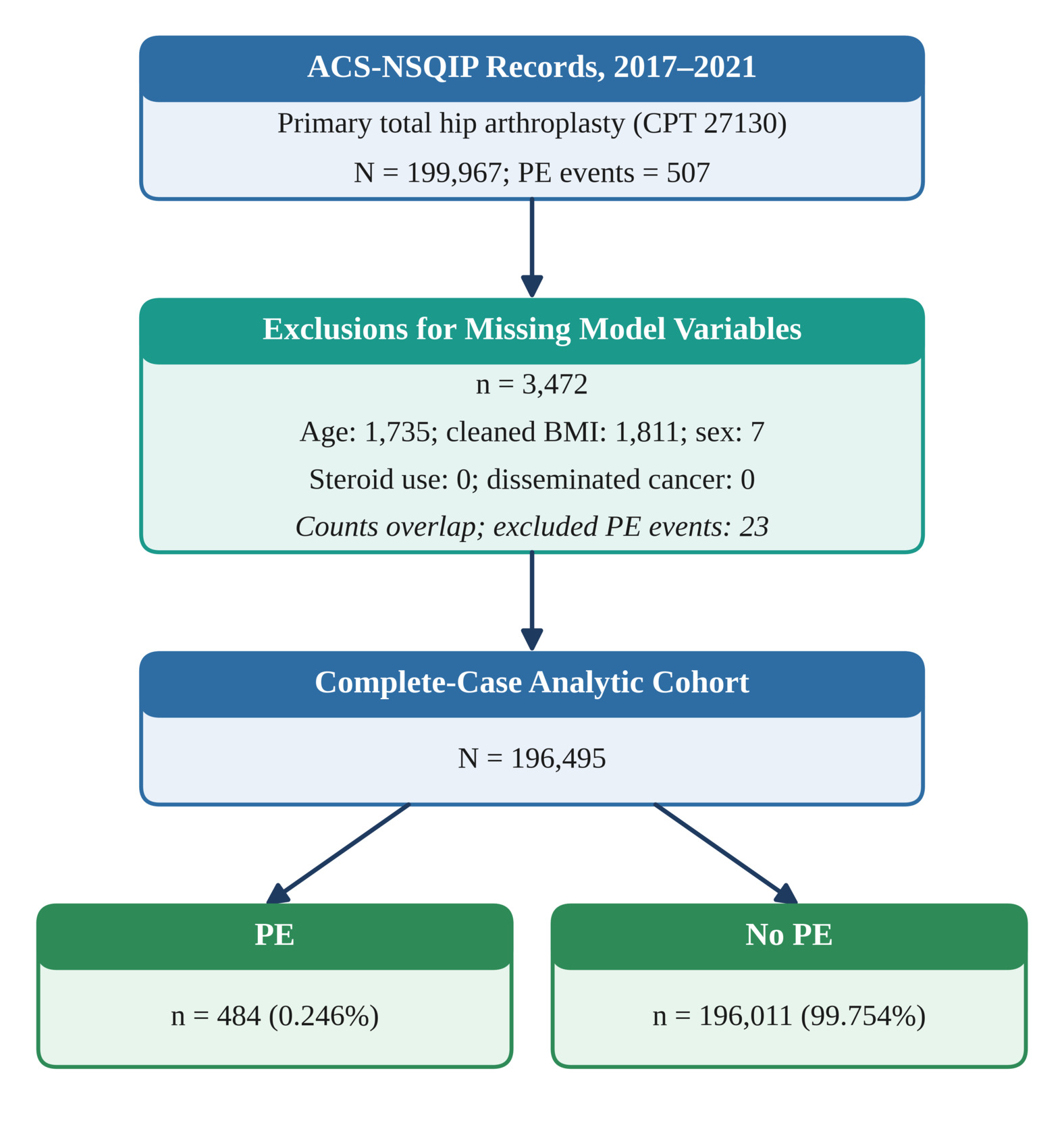
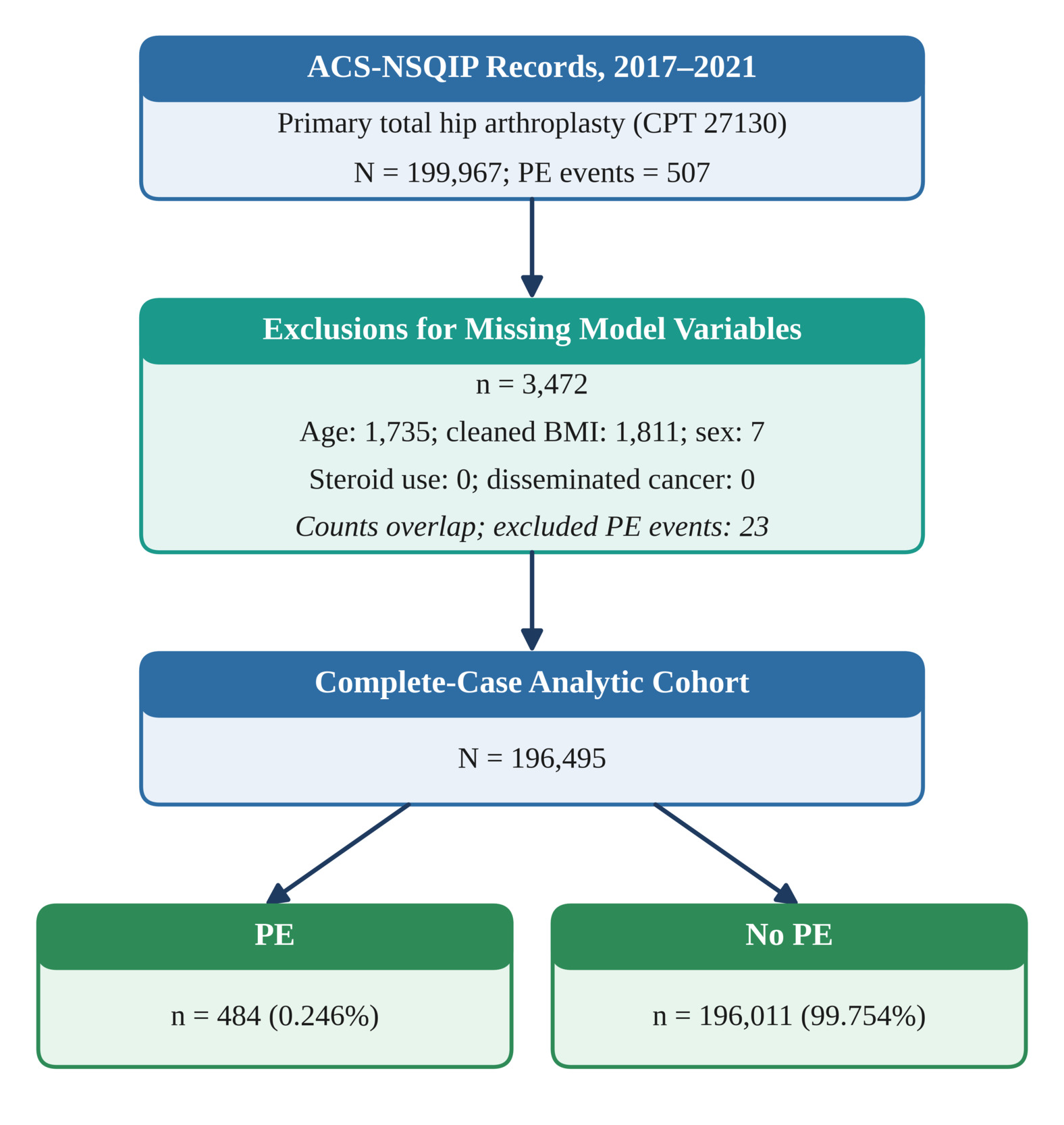
The initial dataset contained 199,967 records, including 507 PE events. Age was missing in 1,735 records, cleaned BMI in 1,811, and sex in 7; steroid use, disseminated cancer, and PE status had no missing values. Because missingness overlapped across variables, 3,472 unique records were excluded, including 23 PE events. The final complete-case cohort comprised 196,495 records, with 484 PE events (0.246%) and 196,011 records without PE (99.754%) (Figure 1).
The analytic cohort had a mean age of 65.5 ± 11.1 years (range, 18–89 years) and mean BMI of 30.3 ± 6.2 kg/m2 (range, 10.49–103.22 kg/m2). Female sex was recorded in 107,336 cases (54.6%), steroid use in 7,410 (3.8%), and disseminated cancer in 895 (0.5%). Cohort characteristics are presented in Table 1.
Adjusted associations
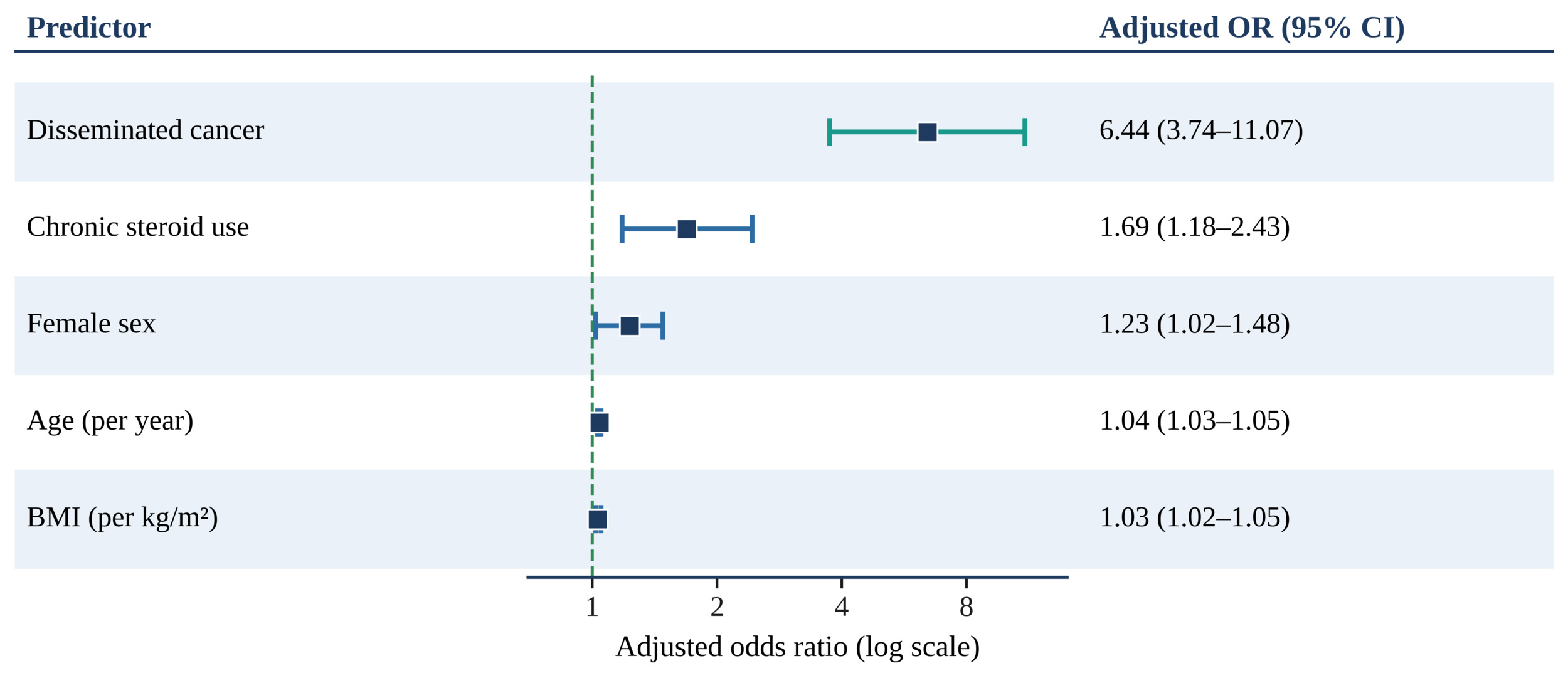
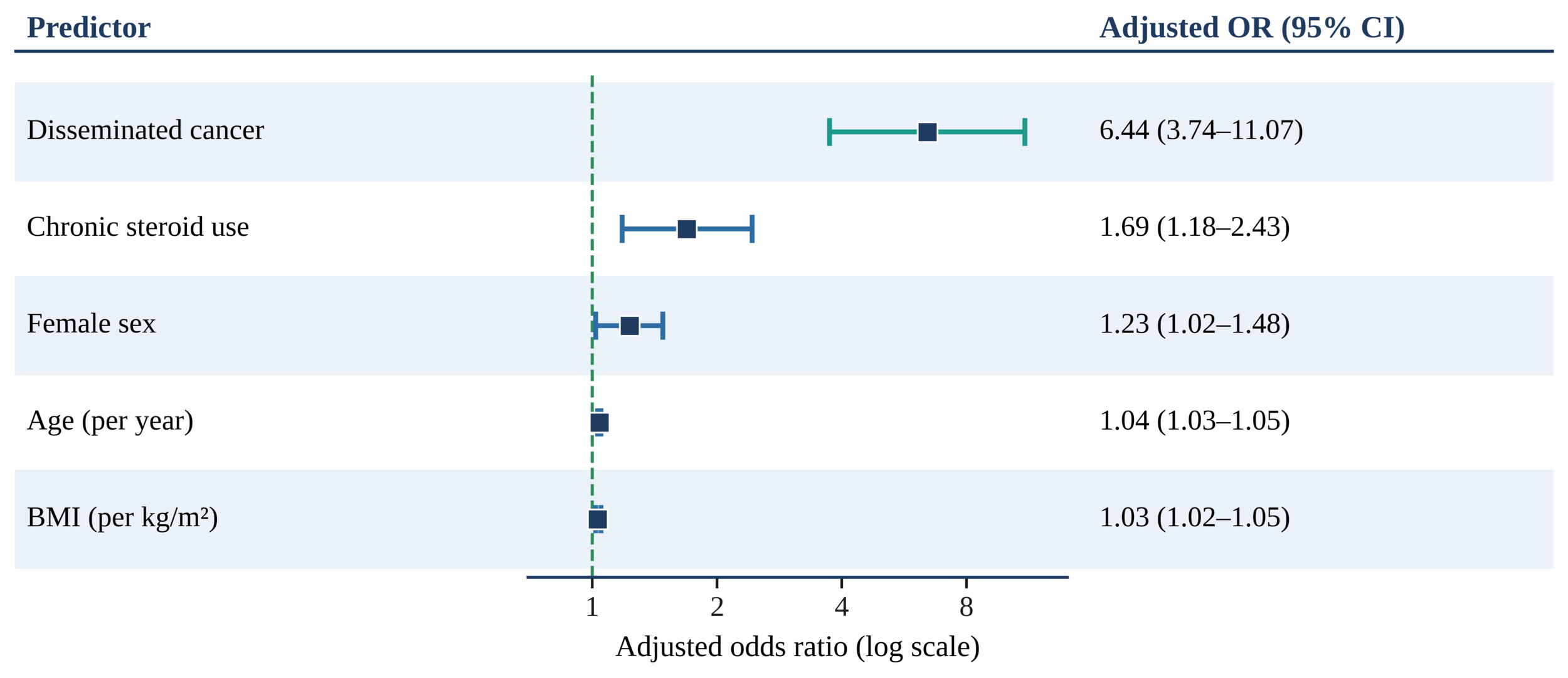
Disseminated cancer was associated with higher odds of PE (adjusted OR, 6.44; 95% CI, 3.74–11.07; P < .001), as were steroid use (OR, 1.69; 95% CI, 1.18–2.43; P = .005) and female sex (OR, 1.23; 95% CI, 1.02–1.48; P = .029). Each additional year of age was associated with an OR of 1.041 (95% CI, 1.031–1.050; P < .001), and each additional kg/m2 of BMI with an OR of 1.031 (95% CI, 1.017–1.046; P < .001). These estimates are adjusted for the other four predictors in the model (Table 2; Figure 2).
Apparent model performance
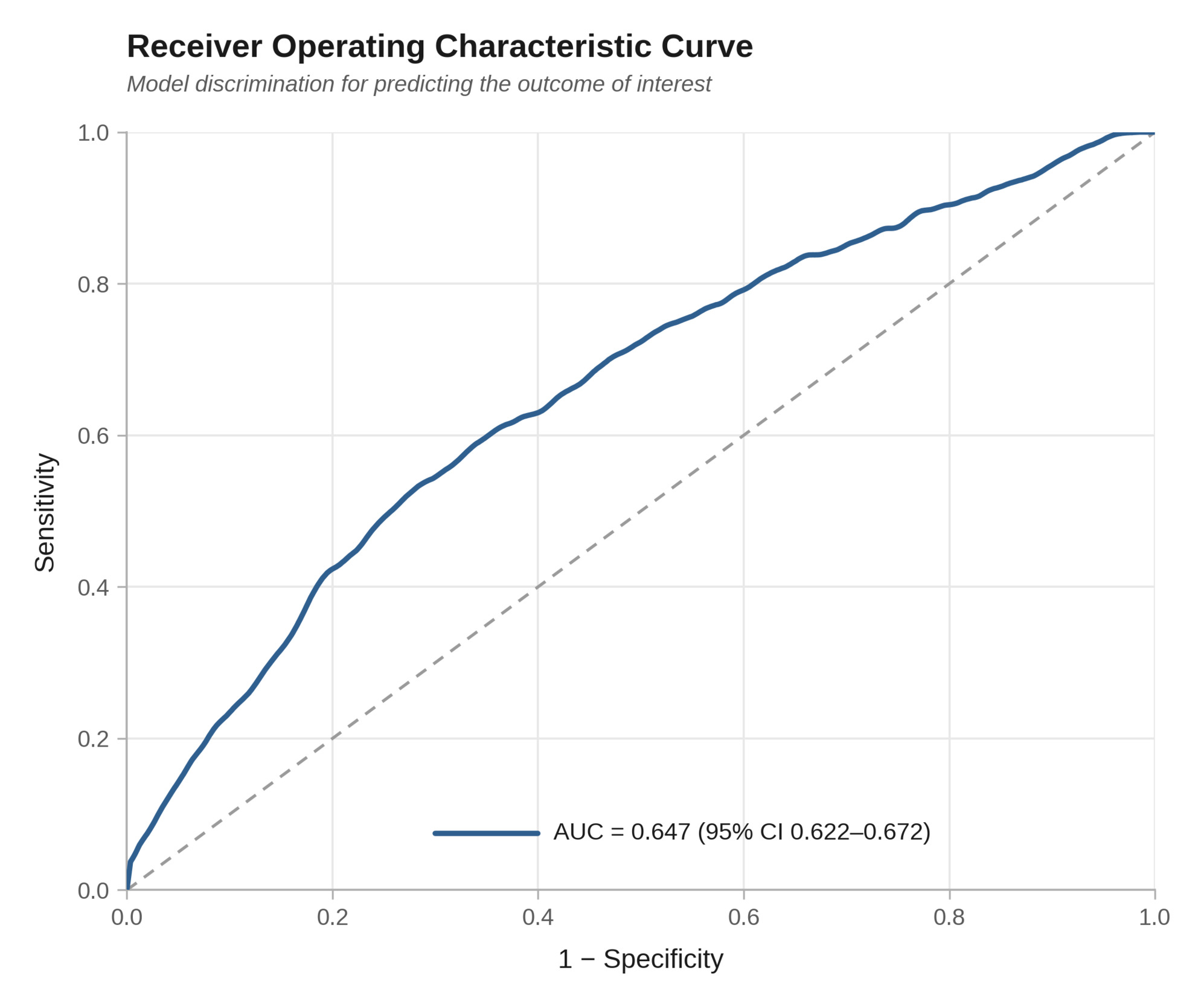
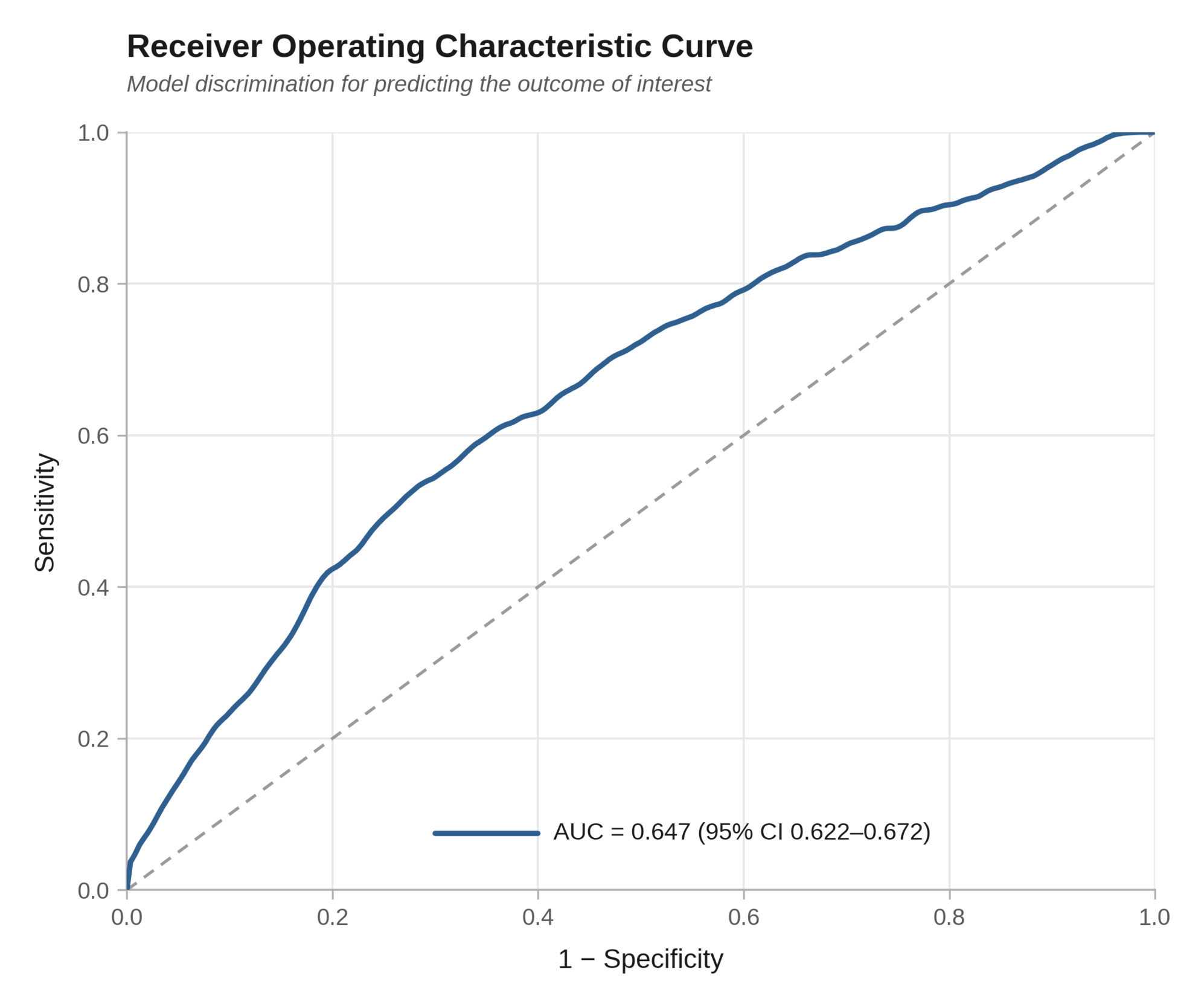
The likelihood-ratio statistic was 128.67 with five degrees of freedom (P < .001). Apparent AUC was 0.647 (95% CI, 0.622–0.672), indicating modest discrimination (Figure 3). The Hosmer–Lemeshow statistic was 19.56 with eight degrees of freedom (P = .012), indicating evidence of lack of fit across the ten predicted-risk groups. These findings do not establish good calibration or clinical utility.
Discussion
In this analysis of 196,495 primary THA records, 484 PE events were recorded within 30 days. Disseminated cancer, steroid use, female sex, older age, and higher BMI were associated with greater odds of PE after adjustment for the other included variables. The model showed modest apparent discrimination and evidence of calibration limitations. The findings describe associations within the available complete-case cohort and do not demonstrate that these variables form a validated clinical prediction tool.
Disseminated cancer had the largest adjusted OR among the categorical predictors. Cancer-associated thrombosis has been examined extensively, and metastatic disease has also been studied in relation to complications after primary hip and knee arthroplasty.10,11 The present extract does not establish which cancer characteristics, treatments, or surgical indications account for the association. The reference group was absence of disseminated cancer, not necessarily absence of all cancer. The analysis cannot determine an appropriate prophylaxis agent or duration for this subgroup.
Steroid use was associated with higher PE odds, but the analysis did not separate a medication effect from the conditions for which steroids were prescribed. Steroid dose, duration, indication, and perioperative supplementation were not included in the model. Consequently, the result should not be used to recommend changes to steroid treatment or to infer a specific mechanism.
Age and BMI were associated with PE when modeled as continuous variables. Prior literature has examined associations between obesity and venous thromboembolism, as well as age-related changes in thrombosis biology.12,13 These sources provide context, but the present analysis did not measure biological mechanisms or test whether risk changed nonlinearly with age or BMI. Similarly, the association with female sex cannot establish an explanation involving hormone exposure, anatomy, or operative positioning. Those explanations were not tested.
The AUC of 0.647 indicates limited separation between records with and without PE. A low event rate does not, by itself, justify describing this discrimination as strong. The significant likelihood-ratio test establishes improvement in fit over an intercept-only model, but does not demonstrate useful clinical thresholds, favorable clinical consequences, or suitability for individualized treatment decisions. The significant Hosmer–Lemeshow result also argues against describing calibration as good. No conclusions about benefit from intensified prophylaxis or enhanced surveillance can be drawn from this analysis.
Limitations
The analysis was retrospective and limited to the supplied NSQIP extract. It was not a probability sample of all US THA procedures. Complete-case exclusion removed 3,472 records and 23 PE events, and no imputation was performed. Results therefore apply to the analyzed records and may differ from those in excluded records. The original BMI field contained values derived from missing-value codes; use of the supplied cleaned BMI field avoided those calculations, but remaining measurement error cannot be excluded.
Adjustment was limited to five predictors. Anesthesia type, functional status, and transfusion information were present in the extract but were not included in this model. The analysis did not evaluate prophylaxis regimens, prior VTE, cancer subtype, steroid indication, or postoperative mobility. Residual confounding is possible. The dataset included elective and nonelective procedures, and this analysis did not estimate separate effects by operative indication. Outcomes were limited to 30 days, so the study does not describe later PE events.
The model assumed linear log-odds relationships for age and BMI and did not include interactions. It treated records as independent without a hospital-level adjustment. Performance was assessed in the development data, without internal or external validation or optimism correction. No clinical-utility analysis was performed. The reported associations and apparent performance should therefore not be interpreted as evidence supporting clinical deployment.
Conclusion
Among 196,495 complete records of primary THA from 2017–2021, 484 (0.246%) had PE within 30 days. Disseminated cancer, steroid use, female sex, age, and BMI were associated with PE in a five-variable logistic regression model. Apparent discrimination was modest, and the calibration test indicated lack of fit. These results support further evaluation of the observed associations, but do not establish a validated risk calculator or a basis for changing thromboprophylaxis.
Ethics statement
The Brown University Regulatory Advisory Unit, Office of Research Integrity, reviewed this study and determined that it does not constitute human subjects research under applicable U.S. Department of Health and Human Services (DHHS) and Food and Drug Administration (FDA) regulations. The study involved secondary analysis of de-identified data from the American College of Surgeons National Surgical Quality Improvement Program (ACS NSQIP) database. Because investigators had no direct interaction with participants and no access to identifiable private information, institutional review board (IRB) review and approval were not required. Informed consent was not required for this secondary analysis of de-identified data.