
Introduction
The adverse effects of nicotine on bone physiology, tissue perfusion, and postoperative orthopedic outcomes are well documented and known to surgeons. The literature has traditionally been focused on the effects of cigarette smoking as the source of nicotine, and patient use has been consistently associated with poor outcomes in orthopedics: increased rates of fragility fractures, fracture nonunion, complications following spinal decompressions, periprosthetic joint infection, and delayed wound healing.1–4 As a result, orthopedic surgeons routinely assess tobacco use as part of the standard patient evaluation. However, in the 21st century, the assessment of nicotine consumption isolated to cigarettes is no longer sufficient.
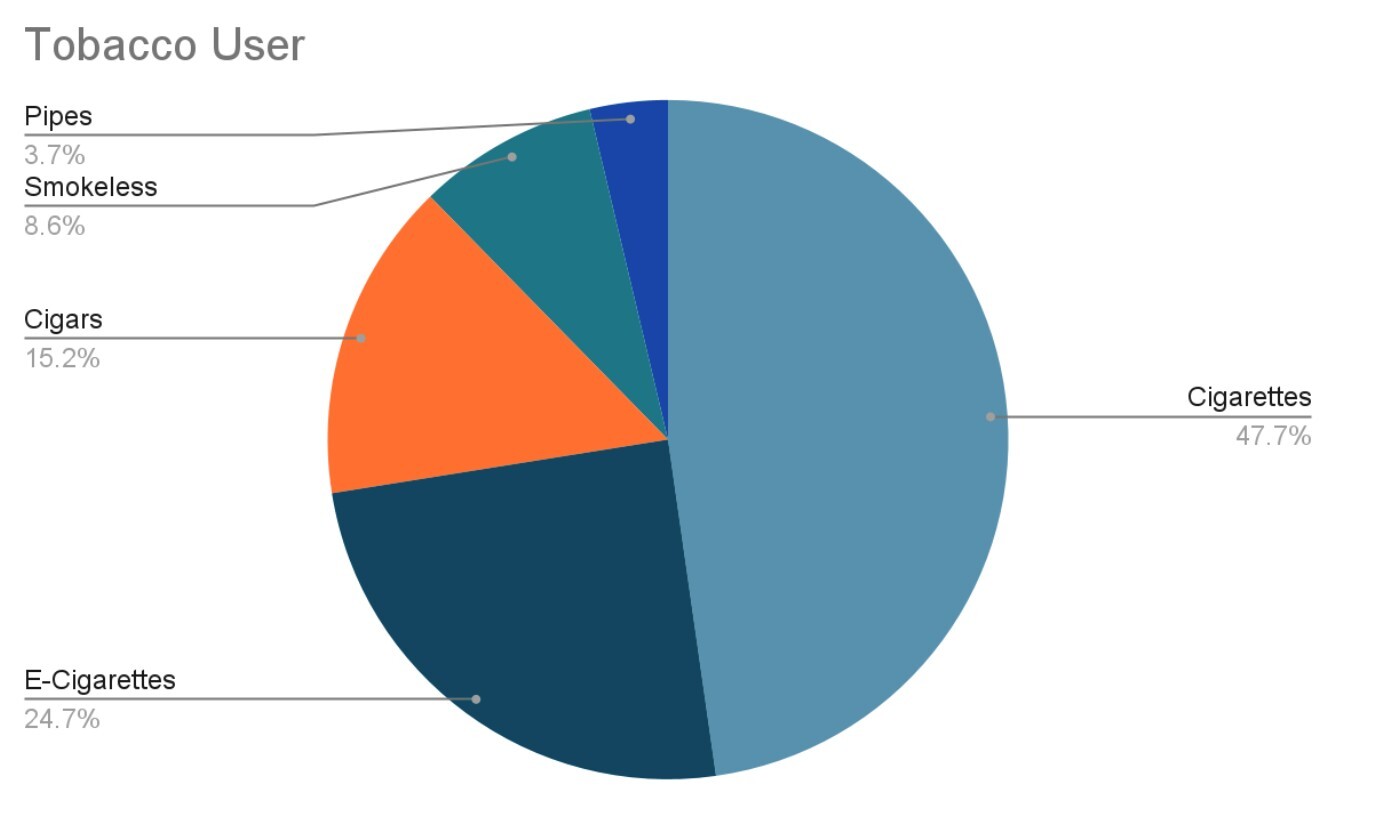
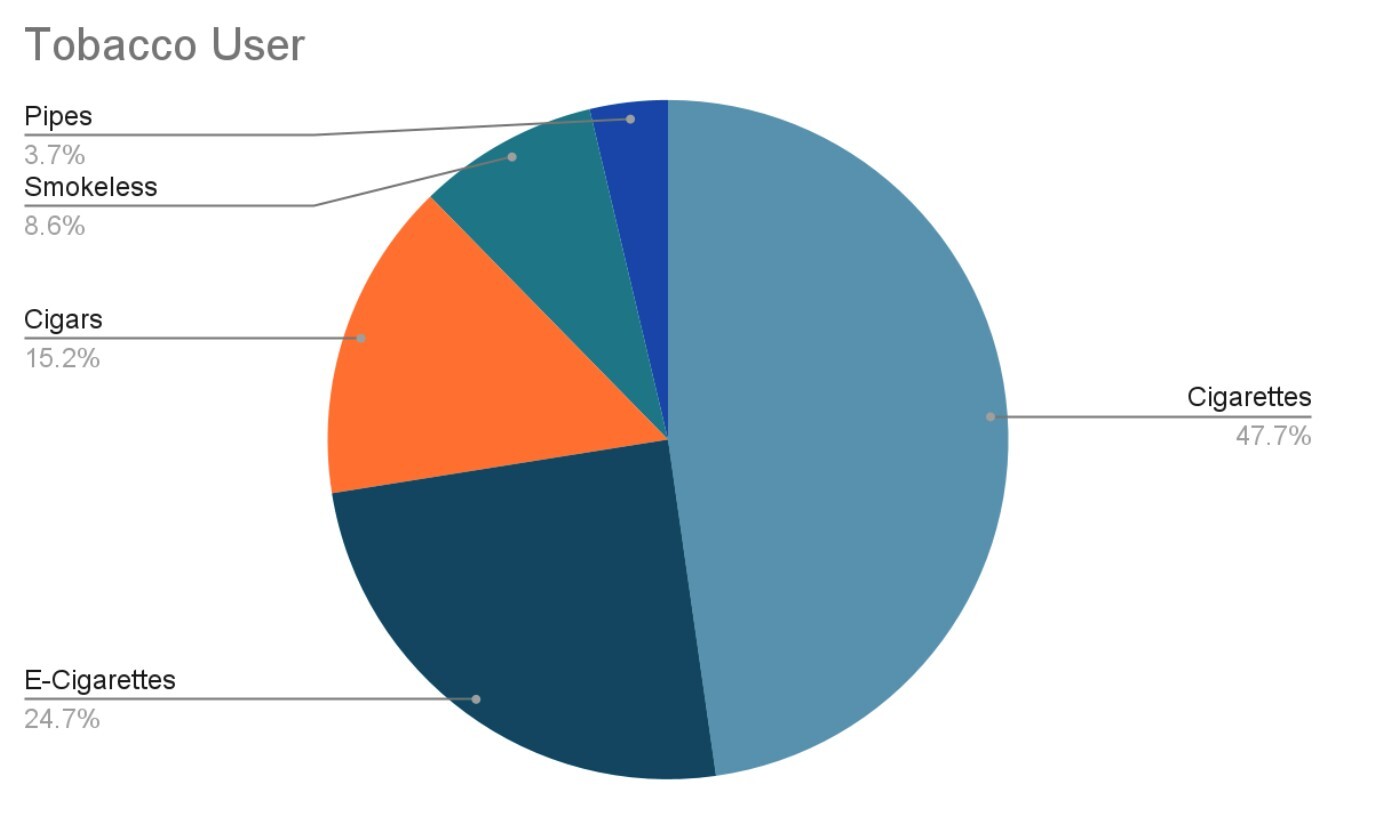
In 2022, 19.8% of U.S. adults reported using a tobacco product. Of this population, approximately 50% of users still use cigarettes, 25% use electronic cigarettes (vapes), and the remainder use other forms of nicotine (Figure 1).5 In recent years, the widespread availability and marketing of alternative nicotine delivery systems, such as electronic cigarettes and oral nicotine pouches, have dramatically altered patterns of nicotine use for patients. Younger patients, in particular, are increasingly adopting these newer nicotine delivery products, reversing years of progress in public health efforts aimed at reducing nicotine initiation and dependence among adolescents and young adults.6 These products are frequently misinterpreted by patients as low-risk or unrelated to traditional definitions of “smoking”, and as such, are often omitted during history-taking. Additionally, many older patients switch to alternative nicotine delivery systems as a method of smoking cessation, unaware of the health effects of continued nicotine use. More than 30% of U.S. adults believe e-cigarettes to be less harmful than traditional cigarettes.7 Compounding this issue, many physicians remain unaware of the nicotine content and pharmacologic profiles of these emerging products, which may result in inadvertent misclassification of high-risk individuals as nicotine-free, as well as missed opportunities for patient education.
Importantly, while the mode of delivery may differ, the biological effects of nicotine are largely conserved across product types.8 Nicotine exposure, regardless of source, induces vasoconstriction, impairs osteogenesis, disrupts angiogenesis, and diminishes the host’s immune response.9 These mechanisms have direct implications for bone healing, implant integration, and surgical outcomes.
This review seeks to provide orthopedic surgeons with a comprehensive and contemporary understanding of nicotine exposure. We summarize the nicotine content, absorption kinetics, usage patterns, and clinical equivalence of traditional and emerging products. Additionally, we review the biological impact of nicotine on musculoskeletal health and offer practical recommendations for perioperative assessment and patient counseling.
Methods
This narrative review was conducted using structured searches of PubMed, Google Scholar, and Scopus databases using the following search terms: nicotine, electronic cigarettes, vaping, oral nicotine pouches, nicotine replacement therapy, bone healing, fracture, orthopedic surgery, and perioperative outcomes. Searches were limited to English-language publications through 2024. Reference lists of included articles were manually searched to identify additional relevant studies. Priority was given to systematic reviews, meta-analyses, pharmacokinetic studies, and national surveillance data.
To develop the nicotine equivalency framework, we identified the top-selling U.S. brands in each product category.10,11 For each product, we extracted manufacturer-reported nicotine concentrations, published pharmacokinetic data on systemic absorption, and large-scale behavioral surveys of typical usage patterns. Systemic nicotine delivery was estimated using the following route-specific bioavailability assumptions derived from published pharmacokinetic studies: approximately 8–10% for inhaled cigarette smoke, approximately 50% for buccal absorption (oral pouches, gum, lozenges), and approximately 82% for transdermal delivery (patches).12–15 Cigarette pack equivalents were then calculated by dividing systemic nicotine delivered by product by 20 mg (the estimated systemic nicotine per pack of cigarettes). This model is intended as a pragmatic clinical approximation rather than a validated pharmacokinetic model.
Overview of Nicotine and Bone Biology
While cigarette smoking is well known to have numerous deleterious systemic effects due to the inhalation of thousands of combustion byproducts (including carbon monoxide, tar, and carcinogens), it is nicotine that has been most directly implicated in impaired wound healing.8 The clinical literature on orthopedic outcomes has historically focused on smoking as the exposure variable. However, mechanistic and preclinical studies have consistently demonstrated that nicotine itself is a principal mediator of the adverse effects on bone biology.16 Nicotine found in traditional cigarettes is chemically the same molecule as that found in e-cigarettes. The differences lie in the formulation and delivery. Cigarettes usually contain free-base nicotine, which is volatile and rapidly absorbed in the lungs during smoke inhalation. In electronic cigarettes, the compound is instead delivered as a nicotine salt, a protonated form of nicotine that allows higher concentrations to be inhaled with less irritation of the airway.17 The implications of nicotine use within orthopedics are well studied. In trauma, nicotine delays endochondral ossification, suppresses callus formation, and is associated with a 2.3 times increase in the odds of nonunion.4 In spine injuries, it increases rates of pseudoarthrosis by approximately 20% and reduces the odds of union following lumbar and cervical fusion procedures by 55%.18,19 Following arthroplasty procedures, smokers demonstrate an 80% increased risk of prosthetic joint infection and 47% higher risk of wound complications when compared to non-smokers.3 Across all subspecialties, nicotine impairs innate immune responses, particularly neutrophil chemotaxis and macrophage activation, thereby increasing the risk of infection.1,20 The literature has also demonstrated a dose-response relationship between nicotine consumption levels and adverse orthopedic outcomes. Both quantity and duration of nicotine exposure have been linearly associated with poorer outcomes.21
Nicotine Delivery Systems
A standardized approach to estimating nicotine exposure across modern delivery systems would be highly valuable in surgical risk assessment and patient counseling. Currently, no such system exists. In the management of opioid use, morphine milligram equivalents (MME) is a standardized metric to quantify and compare the potency of various opioid formulations.22 This system facilitates risk stratification, supports clinical decision-making, and provides a common language across healthcare settings. To address this gap, we developed a pragmatic nicotine equivalency model based on the most used products in these rapidly growing market segments. The goal of this model is to offer clinicians a simplified, clinically interpretable approximation of nicotine exposure, expressed in terms of traditional cigarette pack equivalents (Table 1). This framework allows for intuitive comparisons across product types and supports more informed perioperative risk assessment.
Cigarette pack equivalent gives the clinician a rough understanding of how much nicotine is in each alternative-nicotine product based on the standard understanding of the ‘pack-per-day’ medical history.
The top-selling U.S. brands in each category were selected based on national retail data from 2023–2024. For disposable vapes, the most widely used products included Vuse and JUUL.10 For oral nicotine pouches, the leading brands were Zyn, On!, and Velo.11 Manufacturer-reported nicotine concentrations, published pharmacokinetic data, and large-scale behavioral studies were used to estimate total nicotine per unit, systemic nicotine absorption per unit, and cigarette package equivalence. (Table 1) While these models necessarily simplify complex pharmacokinetics, they offer a clinically actionable tool for approximating patient nicotine exposure in the context of surgical risk. (Table 2)
Cigarettes
Traditional cigarettes are sold as 20 to a package. They typically contain 10-15 mg of nicotine per cigarette, with 0.5-1.5 mg absorbed per cigarette. This equates to 250 mg of total nicotine in a package, with 20 mg of nicotine absorbed. Inhaled nicotine reaches peak serum levels within minutes, with a rapid spike-and-decline pattern. The half-life is approximately 2 hours, necessitating frequent redosing to maintain plasma levels. The use of traditional cigarettes has steadily decreased in the last decade.5
Electronic Cigarettes (Vapes)
‘Vaping’ is a term referring to the inhalation of aerosols from a heated liquid delivering either nicotine or tetrahydrocannabinol (THC). Vapes initially increased in usage as a ‘cigarette-alternative’, advertising health benefits through the omission of tar and other harmful additives in cigarettes, in addition to aiding with cigarette cessation. However, the market they particularly succeeded in is adoption amongst never-smokers: children, teens, and young adults. At the beginning of the 21st century, youth tobacco use had been steadily declining.6 However, this trend shifted in the 2010s with the rapid introduction and popularity of e-cigarettes, reversing this progress. This growth is attributed to their variety of flavor additives.23 As a result, e-cigarettes have now become the dominant form of tobacco use, driving the recent increase in total tobacco product use after years of decline.6
There are two main types of nicotine-containing devices: disposable or refillable. Disposable vapes are pod-based systems (Vuse, JUUL, and Elf Bar, etc.) with an advertised number of available puffs. With refillable vapes, users instead refill their devices with e-liquid nicotine solutions. These devices often contain varying numbers of puffs and nicotine volumes at a concentration of usually 5%. The variation in the number of puffs dispensed in one pod, concentration of nicotine in each puff, mass lost in each puff, and user technique can complicate standardization. For JUUL pods, nicotine delivery per puff was calculated between 0.07 mg and 0.16 mg across several studies.12 This equates to approximately 43 mg of total nicotine in a single pod and 22 mg of nicotine delivered systemically, equivalent to slightly more than a single package of cigarettes.12,24 Elf Bar is another popular cartridge-based vape that is sold at a concentration of 5% in the US.25 Across multiple Elf products, the total nicotine content of a single pod was approximately 271 mg, with an estimated 0.2 mg dispensed per puff.25
Refillable vapes are more variable than disposable vapes in their nicotine delivery, which can make it more challenging to accurately assess how much nicotine a patient is exposed to. This is complicated by the fact that most patients know very little about their device specifics, including metrics such as wattage or the nicotine concentration.26 The systemic absorption of the refillable vapes varies depending on the wattage of the device, the nicotine in the e-liquid, puff duration, and size. All of these factors mean that puffs from even the same device can vary in nicotine delivery, with one study showing that 15 puffs from the same device delivered varying nicotine concentrations by more than 50-fold.27
Oral Nicotine Pouches
Unlike chewing tobacco, products like Zyn are pouches of nicotine that allow for buccal absorption of nicotine and do not require the user to spit out saliva. Pouches can come in either 3 mg or 6 mg forms, and a standard most commonly contains 15 pouches, but can be found in larger quantities. These are placed in the gums, and buccal absorption bypasses hepatic first-pass metabolism, yielding approximately 50 % systemic absorption per pouch.13 This equates to 45 mg and 90 mg of total nicotine in a standard package for 3 mg and 6 mg forms, respectively. This in turn equates to approximately 23 mg and 45 mg of nicotine delivered, or slightly more than 1 and 2 packs each.13 Daily use of 8-15 pouches is common. Some users consume an entire can a day. They are sometimes incorrectly perceived by patients to be nicotine-free, as they are advertised as tobacco-free.28 Between 2021 and 2024, sales of nicotine pouches tripled, with an increase in sales particularly amongst young people.11,29
Nicotine Gum and Lozenges
These are commonly used by patients as part of smoking cessation. They are available in 2 mg and 4 mg strengths, and each unit delivers approximately 50% of its labelled nicotine content via buccal absorption.14 While there is significant variation in the number of tabs sold per package, a single tab is equivalent to either 1 mg or 2 mg of delivered nicotine. This in turn equates to approximately 0.05 or 0.1 of a package of cigarettes. These products have a slower onset compared to inhalation, with peak plasma concentrations reached in 30-60 minutes. Plasma levels are lower but more prolonged compared to typical smoking.
Transdermal Nicotine Patches
Transdermal patches are also commonly used by patients as part of smoking cessation. Patches are formulated to deliver either 7 mg, 14 mg, or 21 mg of nicotine over a 24-hour period. The bioavailability is high, with systemic delivery reported to be 82%.15 These patches are also sold in varying quantities per package. A single patch containing 7 mg, 14 mg, or 21 mg of nicotine provides approximately 6 mg, 11 mg, and 17 mg of systemic absorption, respectively. This equates to 0.3, 0.6, or 0.9 packages of cigarettes for the three dosage forms. In addition to the benefits of ease in titration to lower nicotine demand, the transdermal patch provides stable plasma nicotine concentrations with minimal fluctuations, in contrast to the peak-trough pattern seen with smoking or vaping.
Nicotine Spray
The primary function of nicotine replacement therapies is to address symptoms of withdrawal quickly and effectively.30,31 Nicotine sprays aim to increase the efficacy of treatment by providing quicker systemic absorption than other NRT options.31 The spray is applied directly to the inner mouth or nose and absorbed through the mucosa. The intervention, however, can lead to local irritation of the area.30,31 Oral and nasal sprays are sold in varying amounts at 10 mg of nicotine per mL of solution. For the nasal spray, one dose consists of 2 puffs (1 in each nostril) containing 1 mg of nicotine total. The oral spray consists of a single puff also containing 1 mg of nicotine total.32 Pharmacokinetic studies have shown that while the spray reaches maximum nicotine concentration faster than other NRTs such as lozenges or gum, the two interventions have approximately equivalent total systemic absorption of nicotine.33
Clinical Recommendations
Given the evolving nicotine landscape and its impact on musculoskeletal health, orthopedic surgeons must adopt a broader and more systematic approach to nicotine risk assessment and perioperative management. Accurate identification of nicotine exposure begins with explicit, product-specific history-taking. Asking patients solely about “smoking” is insufficient. Intake protocols should directly reference contemporary products by name and type, such as vapes, JUULs, Zyn, or nicotine gum and patches, to capture usage patterns more effectively. This approach is particularly critical for younger patients, who may use these products exclusively and view them as unrelated to traditional tobacco use.7 Clinicians should document nicotine exposure as pack-equivalents in a standardized system.
The development of a standardized clinical method for quantifying nicotine consumption is imperative. In the absence of such a framework, some investigators have proposed practical approaches, such as asking patients how frequently they purchase new vaping devices and the typical device size measured in estimated puffs.34,35 For context, one such product’s standard disposable vape stick contains a marketed 5,000 puffs, which delivers nicotine equivalent to roughly 25 packs of cigarettes.24 This provides clinicians with a pragmatic, though imprecise, means of estimating nicotine exposure. It also allows them the opportunity to counsel patients on their actual nicotine consumption quantities.
Understanding the pharmacokinetics and dose equivalence of modern products is equally important. For instance, a disposable vape may deliver the systemic nicotine equivalent of 25 packs of cigarettes.24 A patient using 10 to 15 nicotine pouches per day is likely absorbing nicotine at levels similar to a one to two pack a day smoker.11,29 These exposures must be viewed through the same clinical lens as combustible tobacco use when assessing risk for impaired bone healing, infection, or nonunion.
Equally critical is the need for structured cessation support. Surgeons should counsel patients on the potential orthopedic consequences of ongoing nicotine use and encourage complete cessation for a minimum of four weeks prior to elective procedures. Referral to smoking cessation resources, including pharmacologic therapies and behavioral counseling, should be considered standard care in the preoperative setting. This is particularly relevant for patients who are unaware that their nicotine use may impact surgical healing. Research has demonstrated that the role that orthopedic surgeons have in preoperative smoking cessation can be durable and can lead to patients making life-long changes.36,37 It is essential to continue this counseling into the post-operative period, as patients are most at risk for smoking relapse at the three-month post-operative mark.
Finally, increased education on the pharmacology, usage patterns, and physiologic consequences of emerging nicotine products should be encouraged in medical schools, residency training programs, and allied health programs. As these products continue to evolve in form and popularity, increased provider awareness through education at multiple levels of clinical training is beneficial to maintaining evidence-based, patient-centered surgical care.
Several limitations of this review and the proposed equivalency framework should be acknowledged. The proposed model is intended as a pragmatic clinical approximation rather than a validated pharmacokinetic model. Estimates of nicotine exposure were derived from manufacturer reports, published data on systemic absorption, and behavioral surveys, which may not fully capture real-world variability in nicotine delivery and absorption. In particular, nicotine absorption from disposable vapes varies substantially based on individual user behavior, including puff duration, puff frequency, inhalation depth, device wattage, device airflow settings, and nicotine formulation. As a result, systemic nicotine exposure may differ considerably even among users of the same product. Moreover, new nicotine devices and formulations are introduced to the market frequently, and pharmacokinetic data are often unavailable or limited for these emerging products. The equivalency estimates presented in this framework should be interpreted as dynamic approximations that will require ongoing revision as additional pharmacologic and behavioral data become available.
In conclusion, nicotine exposure remains a significant modifiable risk factor in orthopedic surgery. As product formulations evolve and traditional definitions of “smoking” become less clinically informative, orthopedic surgeons must update their assessment practices to capture all forms of nicotine use. The equivalency framework presented here offers a practical tool for quantifying exposure across modern delivery systems in clinically interpretable terms. Recognizing and addressing all forms of nicotine use is a key aspect of accurate history-taking and a prerequisite for optimizing surgical outcomes in the modern era.
Acknowledgments
None
Author contributions
Katherine Esser: Conception and Design, Data Acquisition & Analysis, Drafting and Revising, Final Approval
Kashif Javid, MD: Conception and Design, Data Acquisition & Analysis, Drafting and Revising, Final Approval
Damon Ross Jr., MD: Conception and Design, Data Acquisition & Analysis, Drafting and Revising, Final Approval
Ali Mehaidli, MD: Conception and Design, Data Acquisition & Analysis, Drafting and Revising, Final Approval
Muhammad J Abbas MD: Conception and Design, Data Acquisition & Analysis, Drafting and Revising, Final Approval
Lafi Khalil MD: Conception and Design, Data Acquisition & Analysis, Drafting and Revising, Final Approval
Stuart T Guthrie MD: Conception and Design, Data Acquisition & Analysis, Drafting and Revising, Final Approval
Kevin Taliaferro MD: Conception and Design, Data Acquisition & Analysis, Drafting and Revising, Final Approval
Conflicts of interest
The authors declare that they have no known competing financial interests or personal relationships that could have appeared to influence the work reported in this paper.
Ethics statement
The authors confirm that the work described in this manuscript has not been published previously and is not currently under consideration for publication elsewhere. If accepted, this article will not be published elsewhere in the same form, in English or any other language, including electronically, without prior written consent from the copyright holder.
Funding
This research received no specific grant from any funding agency in the public, commercial, or not-for-profit sectors.