
Introduction
The United States has become increasingly diverse across race, ethnicity, language, culture, and other demographic characteristics, with important implications for healthcare delivery and workforce composition.1 A healthcare workforce able to communicate effectively with and understand the communities it serves may support access, trust, patient engagement, and quality of care.2–4
Diversity in healthcare encompasses more than demographic representation alone. Language concordance, cultural understanding, disability inclusion, socioeconomic background, and respectful communication may all influence patients’ experiences. Language barriers, in particular, can complicate clinical encounters and contribute to miscommunication and reduced satisfaction.5,6
Healthcare institutions and training programs have adopted a range of initiatives intended to broaden participation and strengthen inclusion. At the same time, institutional and policy approaches to such initiatives continue to evolve, making empirical assessment of stakeholder perspectives particularly relevant. Prior literature has identified barriers including discrimination and bias, limited mentorship, caregiving burdens, attrition, and obstacles to advancement among underrepresented groups in healthcare and scientific careers.3,7
These considerations have a specific application in orthopedic practice, where communication must translate a diagnosis and treatment plan into instructions patients can use during recovery. In a prospective comparative cohort of orthopedic trauma patients, adding a written and pictorial discharge document improved comprehension of injury and postoperative care compared with verbal instructions alone.8 This places communication within a concrete musculoskeletal context: understanding the injured bone, the treatment performed, weight-bearing status, anticipated recovery, and prescribed prophylaxis. Language access and respectful communication can therefore be considered alongside technical care when evaluating the orthopedic patient experience.8,9
Workforce representation provides a second orthopedic rationale. An analysis of U.S. orthopedic residency programs from 2002-2003 through 2016-2017 documented limited racial and ethnic representation at the program level.10 Orthopedic outreach research has also examined early specialty exposure and mentorship, including the Perry Initiative’s program for women medical students, which reported changes in participants’ perceptions and interest in the field.11 Young adults’ views on career access and representation may help generate questions for such initiatives, although a general-population survey cannot establish barriers to orthopedic training or the effectiveness of a particular recruitment strategy.
Young adults represent an important population in this discussion because they are both healthcare consumers and potential entrants into the future healthcare workforce. This study surveyed adults aged 18-25 years to examine perceptions of workforce diversity, cultural concordance, language barriers, trust in healthcare professionals, barriers to healthcare careers, and support for programs intended to broaden opportunity and representation. Potential implications for orthopedic communication and workforce development are discussed.
Methods
A cross-sectional survey was conducted using an anonymous online questionnaire via web-based platform to 100 U.S. adults aged 18-25 years. The questionnaire contained 18 multiple-choice, multiple-response, and open-ended items addressing the perceived importance of healthcare-workforce diversity, cultural concordance, language barriers, trust in healthcare professionals, representation, perceived barriers to healthcare careers, and support for diversity-related programs. The complete survey instrument is provided as Supplementary file 1.
Descriptive statistics were calculated for survey responses. Exploratory subgroup comparisons were conducted across selected demographic characteristics using chi-square or binary comparisons as appropriate in the original analysis. Because several demographic cells were small, subgroup findings were interpreted cautiously and were not treated as population-level estimates. Open-ended responses were grouped into broad themes relating to educational/career access and hiring/representation, and response tone was categorized as positive, neutral, or negative.
Results
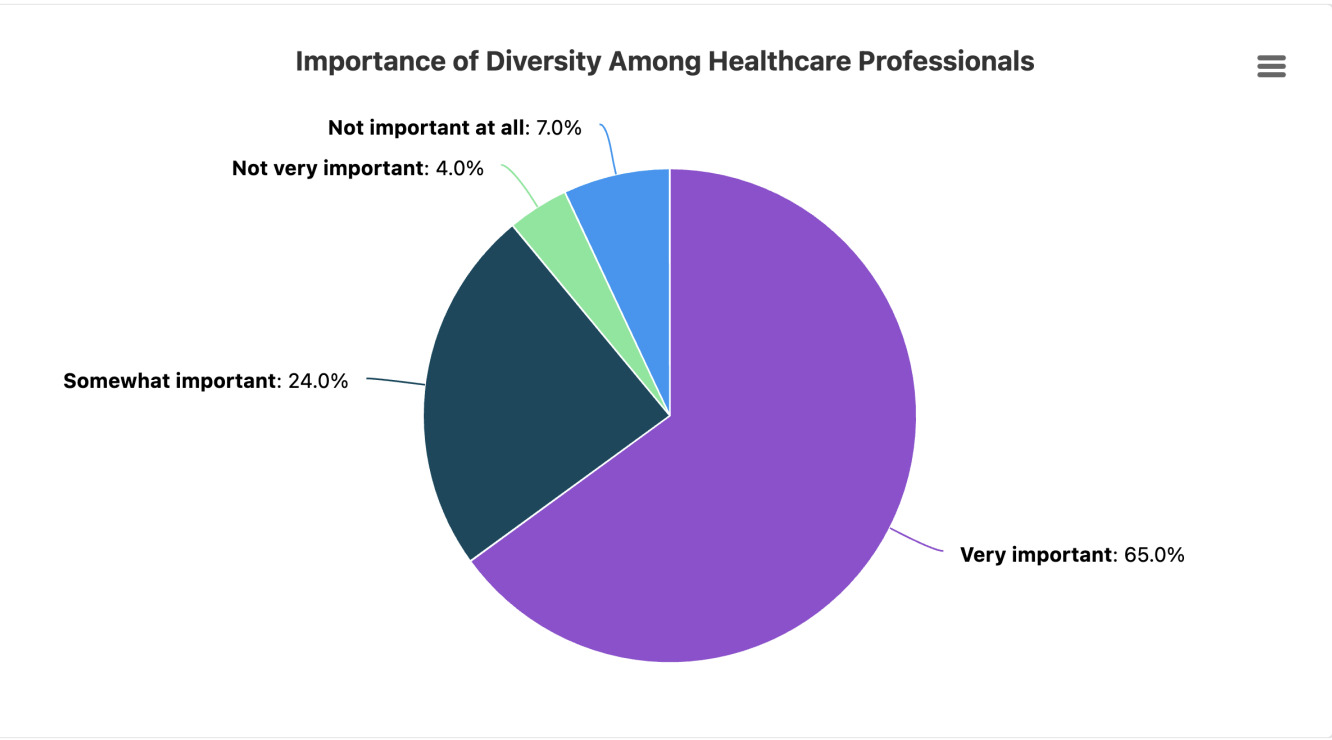
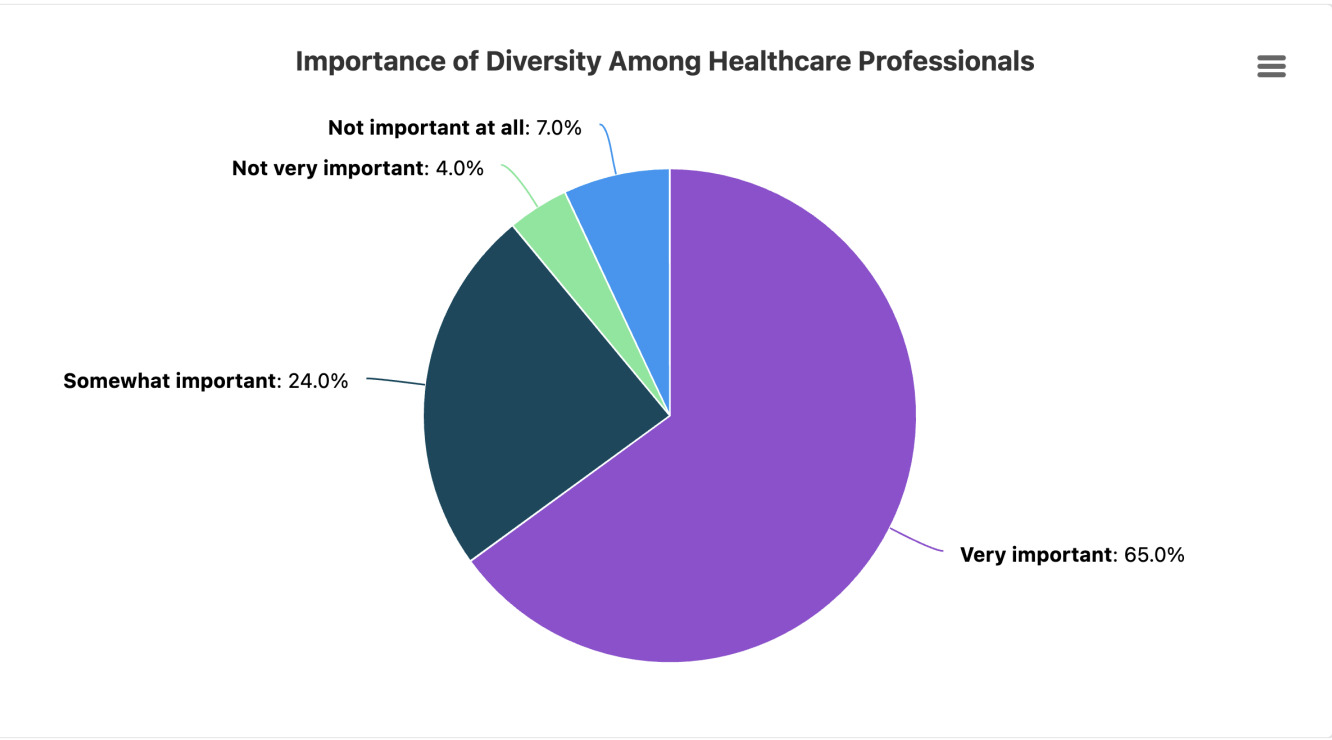
Overall, 89% of respondents considered diversity among healthcare professionals at least somewhat important: 65% rated it very important and 24% somewhat important (Figure 1). Eighty-five percent rated racial/ethnic diversity at least somewhat important, and 82% did so for gender diversity. Exploratory comparisons by age and gender did not identify statistically significant differences in overall ratings of diversity importance.
Participants also connected cultural understanding with care quality. Sixty-one percent reported that patients benefit to a great extent when clinicians understand their cultural background, and another 32% reported benefit to some extent. Ninety-one percent believed diversity improves health outcomes to at least some extent.
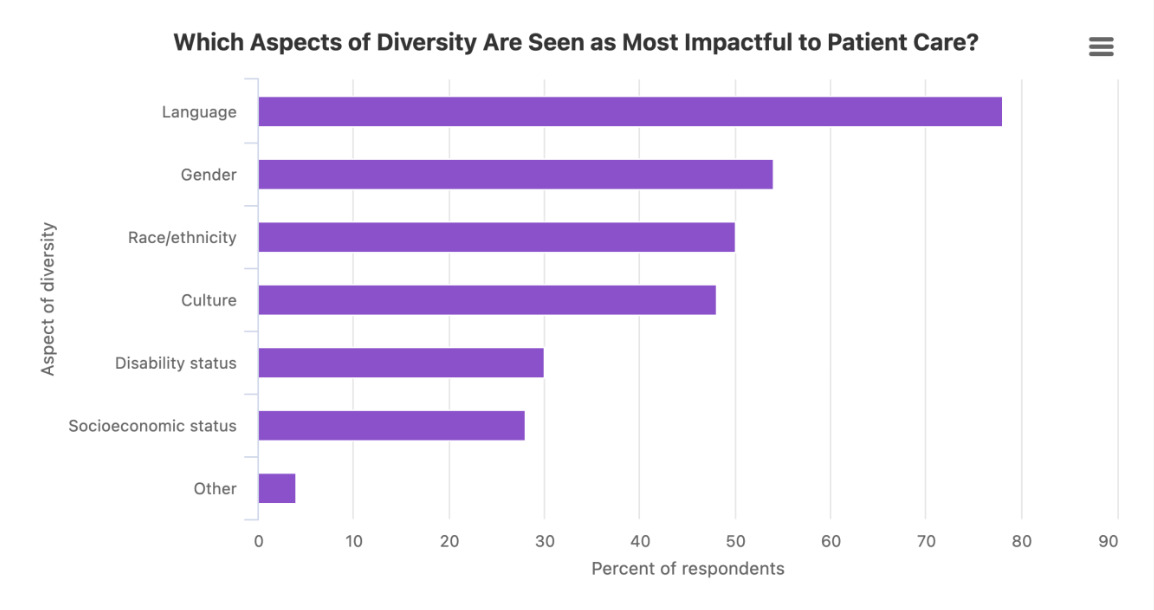
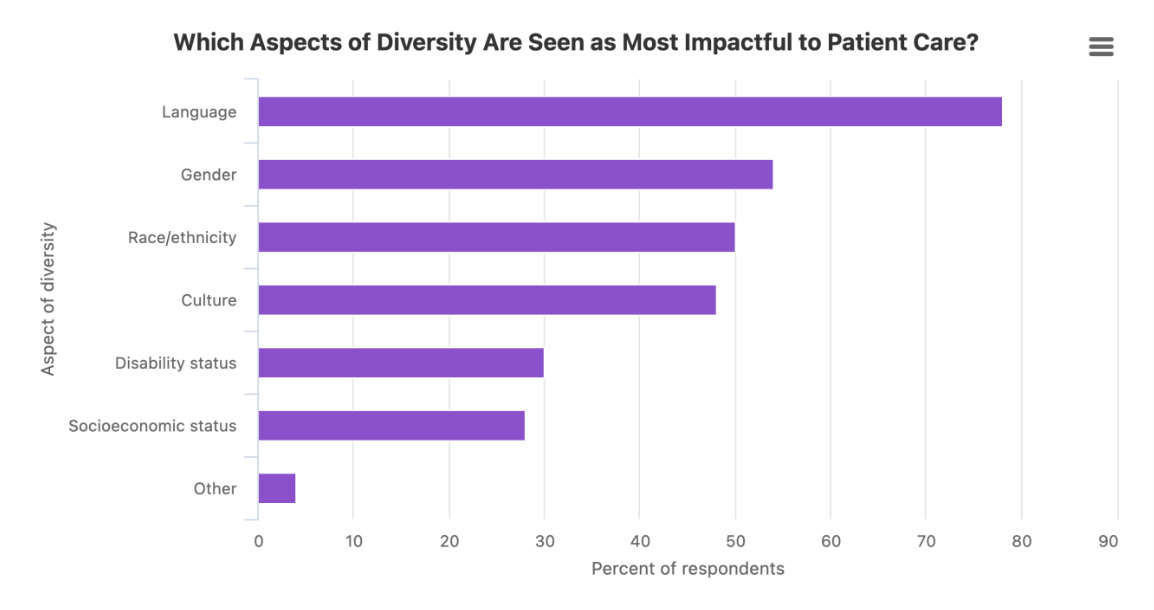
Language was the most frequently selected aspect of diversity affecting care (78%), followed by gender (54%), race/ethnicity (50%), culture (48%), disability status (30%), and socioeconomic status (28%) (Figure 2). Forty percent reported that language barriers affect care to a great extent and 55% to some extent, for a combined 95% reporting at least some negative effect.
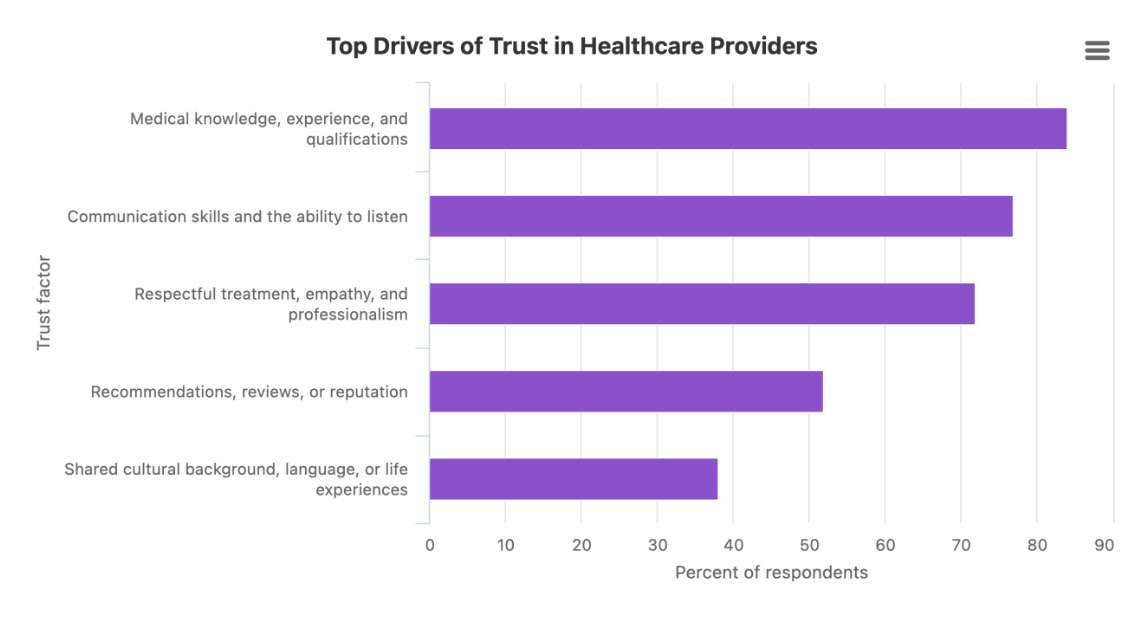
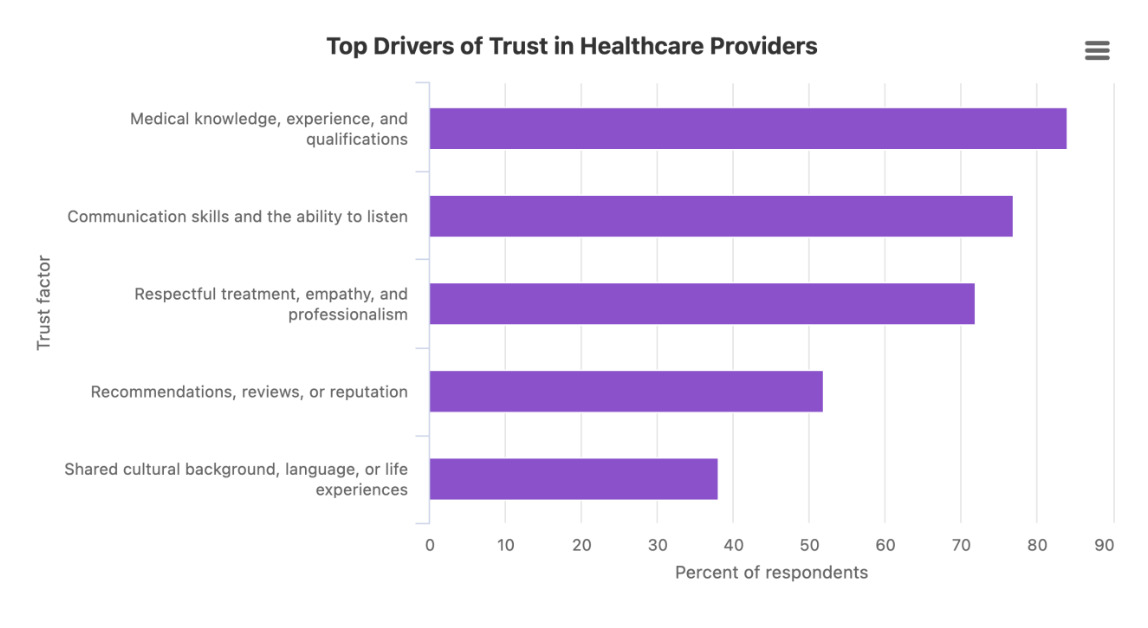
Trust was most frequently attributed to medical knowledge, experience, and qualifications (84%), followed by communication and listening (77%), respect/empathy/professionalism (72%), recommendations or reputation (52%), and identity or cultural similarity (38%) (Figure 3). Nevertheless, 82% reported that they had at least sometimes felt more comfortable with a clinician because of shared background or experience.
Twenty-four percent reported an experience in which a clinician’s lack of respect for a cultural or religious practice affected their care. Twenty-two percent reported seeking a new clinician based on race, ethnicity, gender, or cultural background, and 12% reported doing so after a negative prior experience. These subgroup estimates should be interpreted cautiously because of small cell sizes.
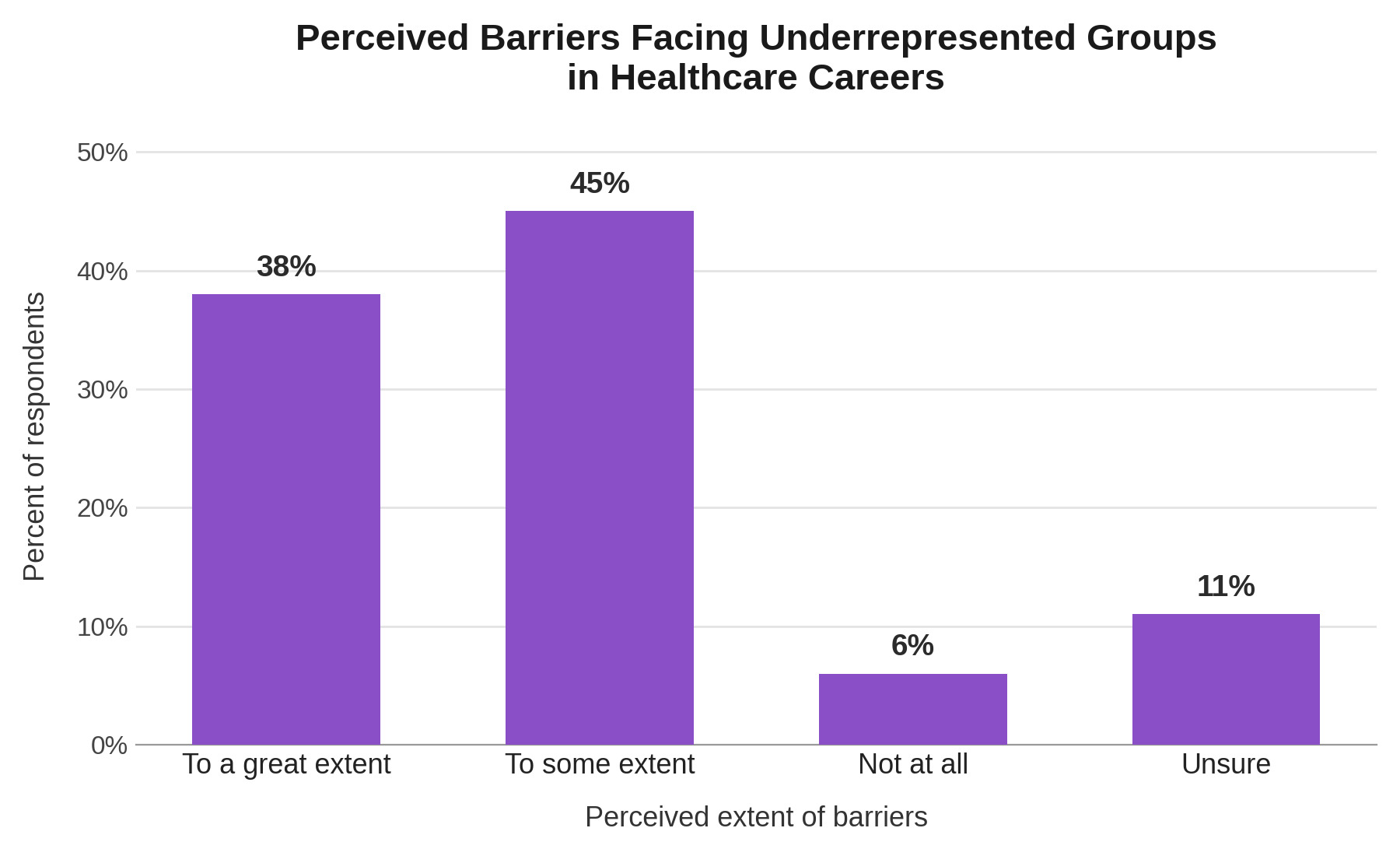
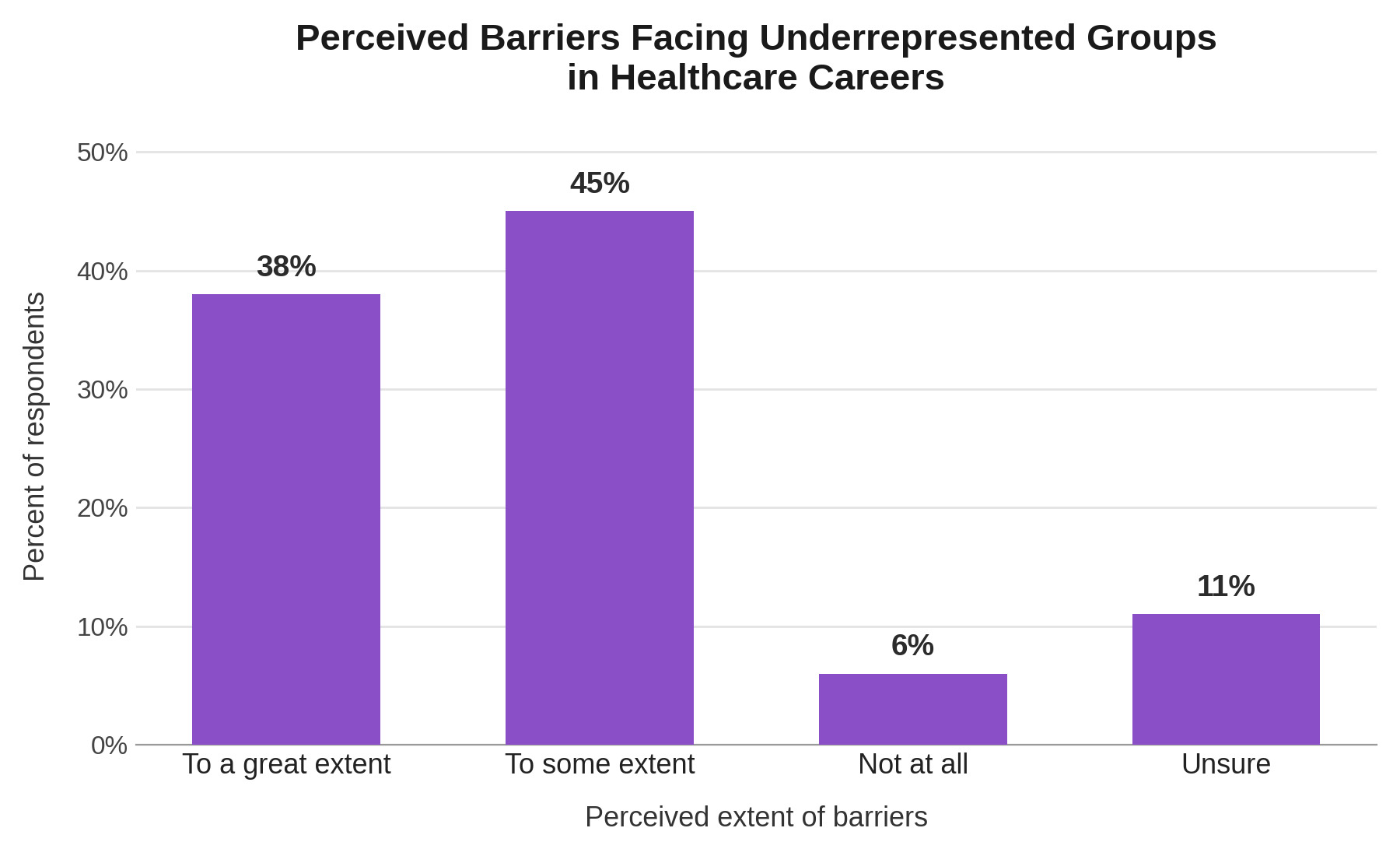
Only 32% believed the healthcare workforce reflects U.S. diversity to a great extent, while 55% selected “to some extent” and 9% selected “not at all.” Eighty-three percent believed that underrepresented groups face barriers to entering healthcare careers to at least some extent (Figure 4).
Support for workforce-diversity initiatives was also common: 48% were very likely and 38% somewhat likely to support relevant policies or programs. In the open-ended item, 70.8% of coded responses emphasized improving educational or career access, while 29.2% focused primarily on hiring and representation. Across the tone classification used in the original analysis, 65% of responses were categorized as positive, 31% neutral, and 4% negative.
Discussion
This exploratory survey suggests that young adults view healthcare-workforce diversity through several practical dimensions, particularly communication, language, cultural understanding, and access to healthcare careers. Respondents generally valued workforce diversity, but their strongest reported drivers of trust remained professional expertise, communication, and respectful behavior. This distinction is important: demographic or cultural concordance may contribute to comfort and engagement, but respondents did not view it as a substitute for clinical competence or interpersonal quality. These patterns are consistent with prior work on racial/cultural concordance and patient engagement.12,13
Language emerged as the most prominent diversity-related factor in perceived care quality. This finding is consistent with literature linking language barriers to miscommunication, reduced satisfaction, and patient-safety concerns.5,6,9 Qualified interpreter services and other language-access strategies therefore remain directly relevant to patient-centered care, regardless of broader debates about workforce composition.
Respondents also perceived gaps between the diversity of the U.S. population and that of the healthcare workforce, and many believed that underrepresented groups encounter barriers to healthcare careers. Prior literature has documented challenges involving educational access, mentorship, advancement, financial barriers, and unequal experiences within healthcare training and employment.3,4,7,14,15 The open-ended responses in this study similarly emphasized education, scholarships, mentoring, and fair access to career opportunities.
For orthopedic teams, respondents’ emphasis on expertise, listening, and respect suggests that a specialty-specific application should focus on how care is explained and delivered rather than assuming that demographic concordance alone creates trust. Candidate targets for future evaluation include preferred-language communication, use of qualified interpreters when indicated, discussion of treatment choices, and checking understanding of activity restrictions and rehabilitation plans. The orthopedic trauma education literature provides a concrete example of evaluating comprehension,8 but the present survey does not test whether these approaches improve adherence, satisfaction, or recovery.
For orthopedic training programs, perceived barriers to healthcare careers and respondents’ emphasis on educational access support examining access to early specialty exposure, mentorship, and affordable participation in preparatory opportunities. Programs such as the Perry Initiative provide an orthopedic model for studying exposure and mentoring.11 However, respondents were not sampled as orthopedic applicants, and their views should not be interpreted as evidence about residency selection or the effectiveness of workforce-diversity interventions. Subsequent research could assess whether young adults interested in orthopedics identify similar barriers and which aspects of outreach they find useful.
Some demographic subgroup patterns were observed, but these should be considered hypothesis-generating only. The sample size was 100, and several racial/ethnic and educational categories contained few participants. Differences such as those reported among specific racial/ethnic groups or education levels may therefore be unstable and should not be generalized beyond this sample.
The study has additional limitations. Participation was voluntary and online, creating potential selection bias. All measures were self-reported, and terms such as “diversity” and “cultural background” may have been interpreted differently across respondents. The cross-sectional design does not establish causal relationships between workforce characteristics and patient outcomes. The open-ended thematic and tone classifications were also based on a limited number of responses and should be viewed as descriptive. Larger probability-based studies using validated measures and prespecified qualitative coding procedures are needed. Participants were recruited from the general young-adult population rather than an orthopedic clinical or training cohort. The analyses presented here therefore do not establish the experiences or outcomes of orthopedic patients or trainees.
Conclusion
In this exploratory sample of U.S. young adults, respondents valued healthcare workforce diversity and representation while emphasizing clinical expertise, communication, respect, and language access as central to trust and perceived care quality. Many also perceived barriers to healthcare careers and supported educational-access and mentorship strategies. These findings describe general healthcare perspectives.
The relevance to orthopedic practice lies in patient-centered communication and equitable opportunities to explore the specialty. Clear explanations of treatment and recovery, attention to language needs, and accessible mentoring are reasonable priorities for specialty-specific evaluation. Larger studies should determine whether these priorities are shared by young adults receiving musculoskeletal care and students considering orthopedic careers, and whether targeted approaches affect engagement or other outcomes.
Funding
The authors declare that no funds, grants, or other support were received during the preparation of this manuscript.
Competing interests
The authors have no relevant financial or non-financial interests to disclose.
Ethics approval
As survey results were obtained in a de-identified manner without the ability of the study authors to ever identify the individuals, the study meets the definition of Non-Human Subjects research in accordance with U.S. Federal Regulations (45 CFR 46.102).
Data availability
The data that support the findings of this study are available from the corresponding author, upon reasonable request.