
1. Introduction
The knee is the joint most commonly affected by osteoarthritis, and the global number of prevalent cases is projected to rise by approximately three quarters between 2020 and 2050.1 For advanced symptomatic disease requiring arthroplasty, total knee arthroplasty (TKA) constitutes an increasingly important component of surgical care, with national modelling anticipating substantial growth in both primary and revision procedure volumes over the next three decades.2
Outcome after TKA depends substantially on execution, including component position in three planes, restoration of the intended limb alignment, and symmetry of the flexion and extension gaps. Jig-based referencing in conventional manual TKA produces a well-documented spread around any intended target. What that spread costs the patient is less clear, as survivorship at fifteen years did not differ between knees within three degrees of a neutral mechanical axis and those outside it.3 Alignment practice has also broadened, and kinematic and functional strategies may deliberately accept coronal positions that a mechanical alignment framework would classify as outliers.
Robot-assisted TKA was introduced to narrow this variability. These systems combine preoperative or intraoperative planning with controlled bone preparation and quantitative feedback on resection depth and gap balance, reducing reliance on manual instrumentation and surgeon estimation. Randomized comparisons support the accuracy claim. One trial reported no mechanical-axis alignment outliers after robotic preparation, compared with 24% after conventional manual TKA.4 In a randomized trial of a current-generation platform, robotic assistance also reduced the frequency of extreme coronal alignment deviation.5
Whether this greater precision translates into benefit perceived by the patient, as measured by patient-reported outcome measures (PROMs) and knee function, remains less certain. Two years after surgery, one randomized trial found no difference in Oxford Knee Score or Knee Society scores, with differences confined to selected quality-of-life domains.6 Another randomized trial, with a mean follow-up of thirteen years, found no difference in clinical outcome scores or implant survivorship.7 A meta-analysis restricted to randomized trials of mechanically aligned robot-assisted TKA reached a similar conclusion, while also reporting longer operative times.8 More recently, the large pragmatic RACER-Knee randomized trial found no clinically meaningful advantage in its primary PROM at twelve months.9
The evidence base remains uneven. Previous syntheses have combined randomized and observational designs, pooled first-generation autonomous milling systems with contemporary imageless and image-based platforms, and frequently included follow-up shorter than one year, when postoperative recovery may still influence PROM trajectories. Radiographic endpoints, which have shown the most consistent advantage with robotic assistance, have also often been considered alongside patient-centered outcomes without clearly separating technical precision from clinical benefit. Contemporary randomized evidence, including large multicenter evaluations of modern robotic systems, has further expanded the available evidence base. We therefore undertook a systematic review and meta-analysis of randomized trials comparing robot-assisted TKA with conventional manual TKA at a minimum of twelve months, assessing separately the magnitude of the radiographic advantage and the extent to which it corresponds to measurable clinical benefit. We hypothesized that robotic assistance would provide a more consistent radiographic advantage than improvement in PROMs or knee function.
2. Methods
2.1. Study Design and Reporting Standards
This systematic review and meta-analysis compared clinical and radiographic outcomes of robot-assisted and conventional manual total knee arthroplasty (TKA) in randomized comparative studies with at least 12 months of follow-up. Reporting followed the PRISMA 2020 statement.
2.2. Literature Search Strategy
PubMed/MEDLINE, Scopus, Web of Science, and the Cochrane Central Register of Controlled Trials (CENTRAL) were searched from inception through August 2026. The strategy combined controlled vocabulary and free-text terms related to TKA, robotic assistance, and randomized trials, including: (“total knee arthroplasty” OR “total knee replacement” OR TKA OR TKR) AND (“robotic” OR “robot-assisted” OR “robotic-assisted” OR “robotic arm” OR ROBODOC OR ORTHODOC OR MAKO OR ROSA OR NAVIO OR CORI) AND (“randomized” OR “randomised” OR “randomized controlled trial” OR RCT).
Search syntax was adapted for each database. Reference lists of eligible studies and relevant reviews were also screened, and duplicate records were removed before study selection.
2.3. Eligibility Criteria
Eligible studies compared robot-assisted with conventional manual primary TKA and reported clinical or radiographic outcomes at ≥12 months. Randomized parallel-group and randomized paired bilateral studies were considered for the systematic review. Studies of uncompartmentalized or revision arthroplasty, navigation without robotic assistance, non-comparative designs, and studies with follow-up <12 months were excluded.
Outcomes of interest included knee-specific patient-reported outcome measures (PROMs), knee flexion or range of motion, mechanical-axis alignment and alignment outliers, perioperative outcomes, complications, and revision-related outcomes.
Quantitative synthesis required sufficient numerical data to estimate an intervention effect and its variance without unsupported imputation. The paired bilateral study by Song et al. was retained qualitatively but excluded from pooling because the within-patient correlation required for an appropriate paired variance estimate was unavailable. Adamska et al. was evaluated separately in sensitivity analyses because the report described allocation on alternate surgical days despite also identifying the study as randomized.
2.4. Study Selection and Data Extraction
Records underwent title and abstract screening followed by full-text eligibility assessment. Companion publications from the same randomized cohort were linked to avoid duplicate inclusion.
Extracted data included study design, country, sample size, robotic platform, comparator technique, implant and alignment strategy, follow-up duration, and outcome-specific numerical data. For continuous outcomes, means, standard deviations, and analyzable sample sizes were extracted; for dichotomous outcomes, event counts and denominators were recorded.
For each outcome, the latest eligible time point with sufficiently reported and comparable data was used. Missing standard deviations, denominators, correlations, or event counts were not imputed when they could not be established from the source report. Internal reporting inconsistencies were retained as source-level uncertainties and explored in sensitivity analyses.
2.5. Statistical Analysis
Meta-analysis was performed when at least two independent studies reported sufficiently comparable data. Random-effects models were used throughout. For continuous outcomes, between-study variance was estimated using restricted maximum likelihood (REML), and Hartung-Knapp adjustment was applied to confidence intervals and significance testing. Statistical heterogeneity was quantified using Cochran’s Q, I2, and τ.2
For knee-specific PROMs, one measure per study was selected to avoid double-counting correlated outcomes from the same participants. Endpoint scores were preferred when directly available and sufficiently comparable across trials, while change scores were not combined with endpoint scores in the primary PROM analysis. When multiple eligible PROMs were reported, the measure providing the greatest comparability with the other included trials was selected. Effects were expressed as Hedges’ g standardized mean differences with 95% confidence intervals, with scale direction harmonized so that positive values consistently favored robot-assisted TKA. Knee flexion and range-of-motion outcomes were pooled as mean differences (MDs) in degrees.
Mechanical-axis alignment outliers were pooled as risk ratios (RRs) with 95% confidence intervals using the study-reported threshold of deviation greater than 3° from neutral mechanical alignment. The radiographic synthesis used a generalized linear mixed-effects model with binomial likelihood, allowing zero-event studies to contribute without continuity correction to the pooled estimate. Where study-specific log-risk-ratio estimates were displayed for zero-event comparisons, a continuity correction was applied for graphical presentation only.
Perioperative and safety outcomes were synthesized narratively when differences in definitions, units, or reporting formats precluded meaningful pooling.
2.6. Sensitivity Analyses and Small-Study Effects
Sensitivity analyses assessed the influence of potentially influential trials and methodological uncertainties. The PROM analysis was repeated after exclusion of the large Kim trial and after inclusion of Adamska et al. Knee-motion analyses were similarly examined after exclusion of Kim and inclusion of Adamska.
For mechanical-axis outliers, analyses were repeated after excluding Möller et al. because of an internal discrepancy between the reported outlier percentages and radiographic denominators, and separately after exclusion of Song et al.
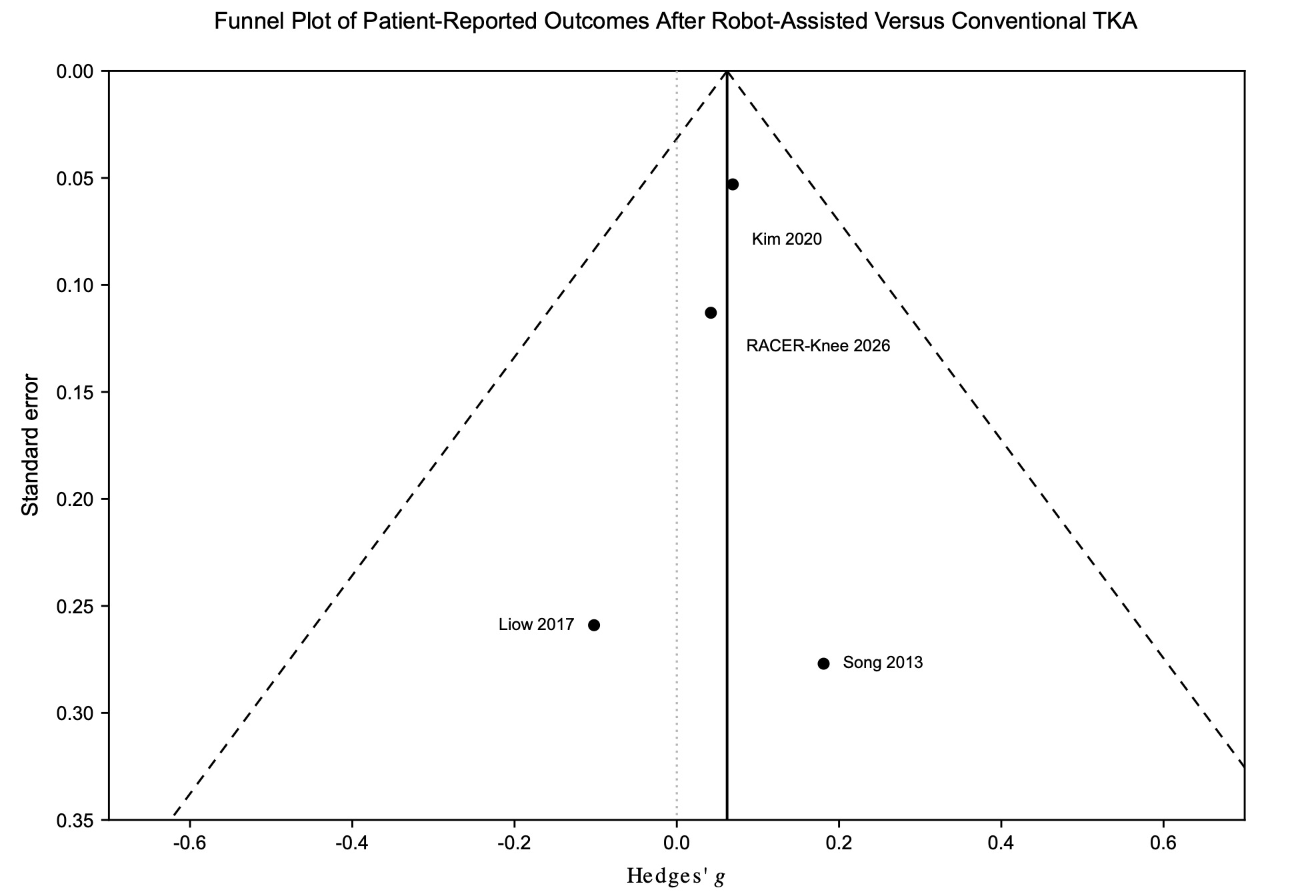
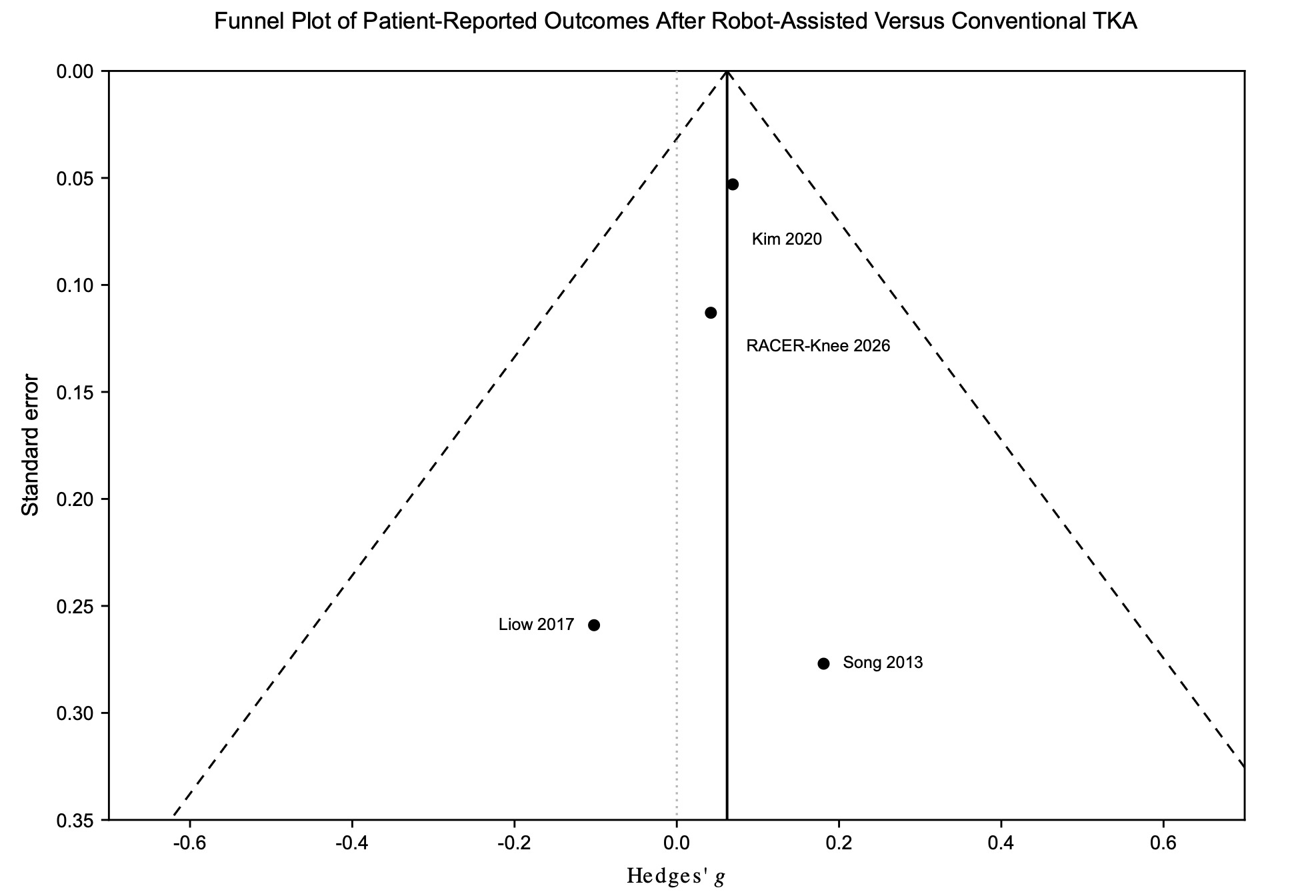
Small-study effects were explored using a funnel plot of Hedges’ g against standard error for the primary PROM analysis. Because only four studies contributed to this analysis, the plot was interpreted descriptively, and no formal test of funnel-plot asymmetry was performed.
3. Results
3.1. Study Selection
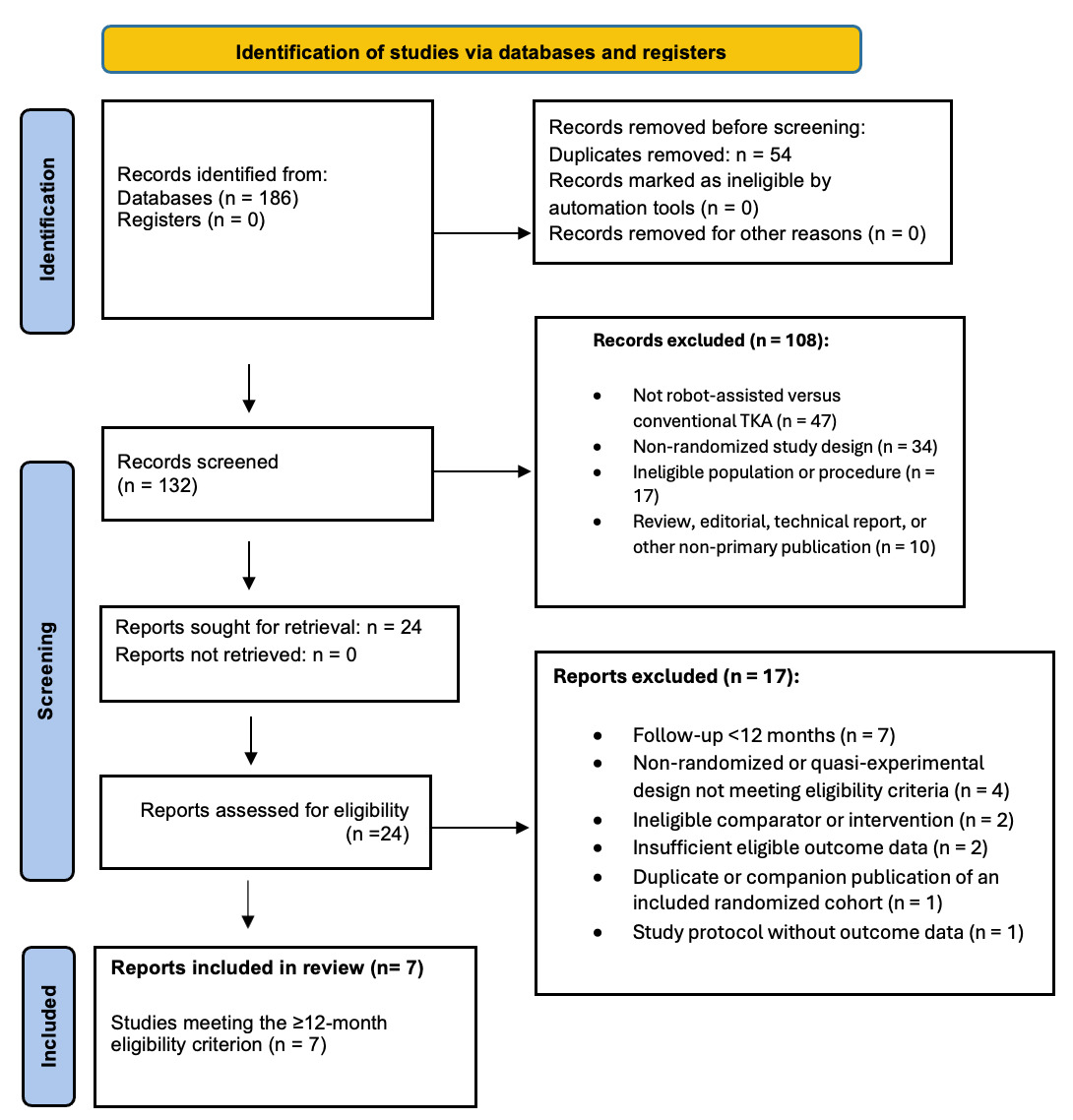
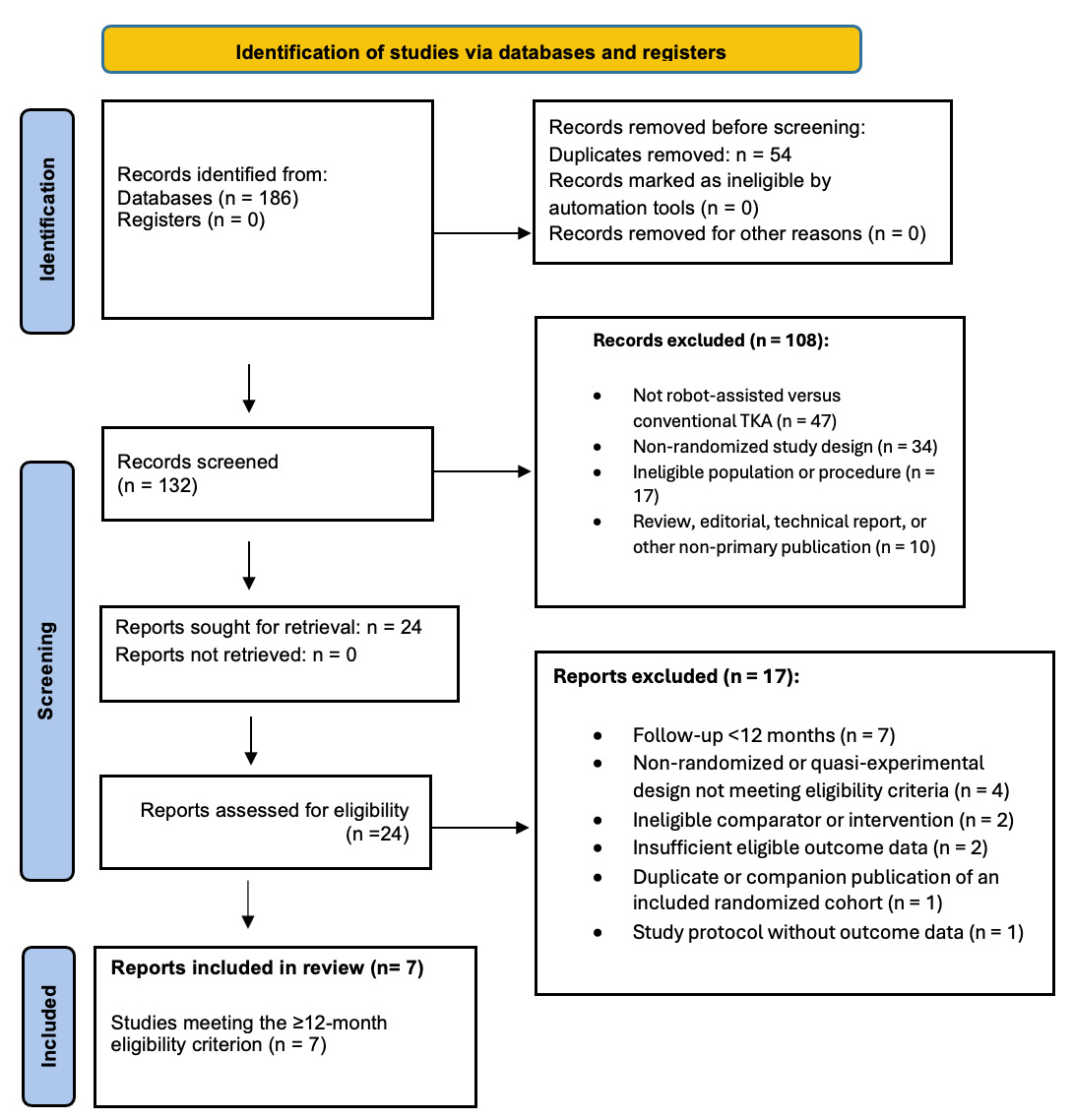
The database search identified 186 records, of which 54 duplicates were removed before screening. A total of 132 records underwent title and abstract screening, and 108 were excluded because they did not meet the prespecified population, intervention, comparator, or study-design criteria. Twenty-four full-text reports were assessed for eligibility, of which 17 were excluded, primarily because of follow-up shorter than 12 months, ineligible study design, or an ineligible intervention or comparator. Seven studies ultimately met all eligibility criteria and were included in the systematic review. The complete study-selection process and reasons for full-text exclusion are presented in Figure 1.
3.2. Study Characteristics
Seven eligible trials published between 2011 and 2026 compared robot-assisted with conventional total knee arthroplasty at follow-up of at least 12 months (Table 1). The studies were conducted in South Korea, Singapore, Poland, Germany, and Great Britain and ranged from small single-center trials to a large pragmatic multicenter RCT. Sample sizes varied substantially, from 30 patients in a paired bilateral study to more than 1,400 randomized participants in the largest long-term trial.
Robotic platforms also differed considerably across studies. Earlier trials primarily evaluated CT-based ROBODOC systems using active or autonomous bone preparation, whereas more recent studies assessed imageless NAVIO and CORI systems, ROSA robotic guidance, and the CT-based Mako robotic arm. Conventional comparators generally used manual jig-based or measured-resection techniques, although implant systems and alignment strategies varied.
Methodological differences were notable. Song et al. 2011 used a paired within-patient bilateral design, Song et al. 2013 had substantial long-term attrition, and Liow et al. reported robotic-to-manual conversions. Adamska et al. was distinct because the report described both computer randomization and allocation on alternate surgical days, raising concern for quasi-random assignment. RACER-Knee used remote computerized randomization, participant and assessor masking, and intention-to-treat analysis.
3.3. Patient-Reported Clinical Outcomes
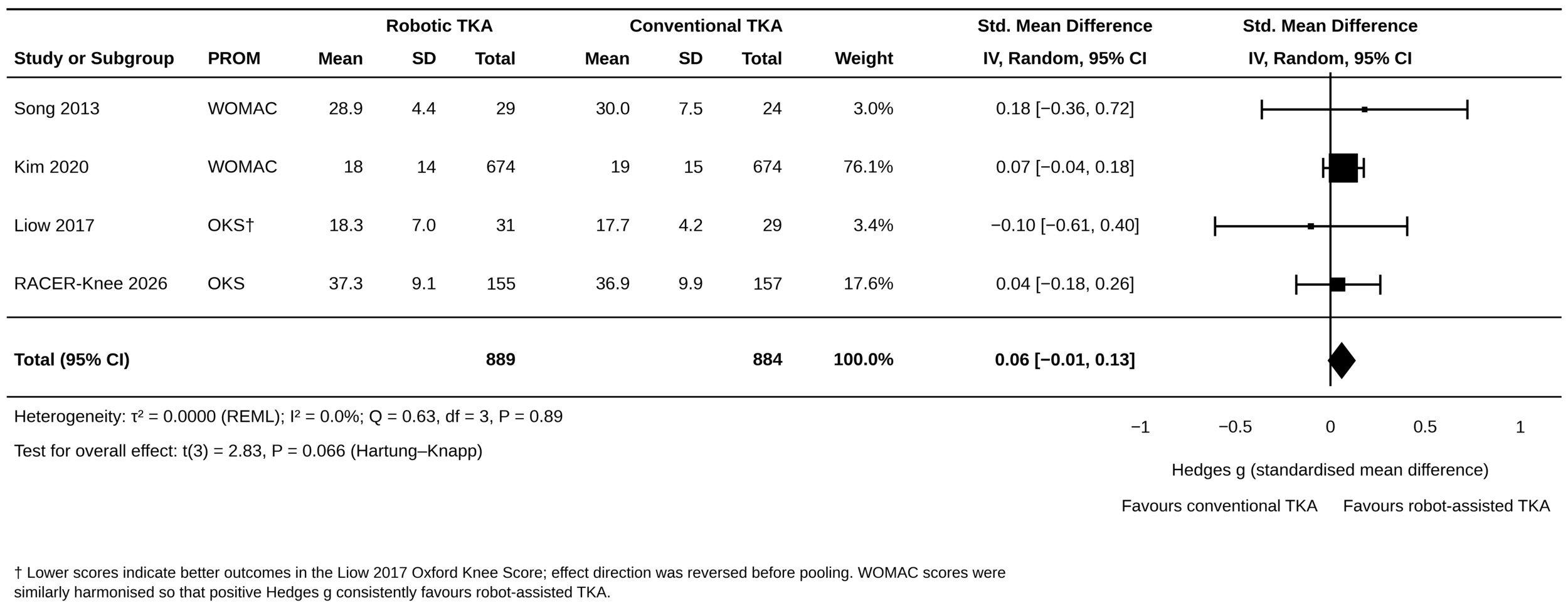
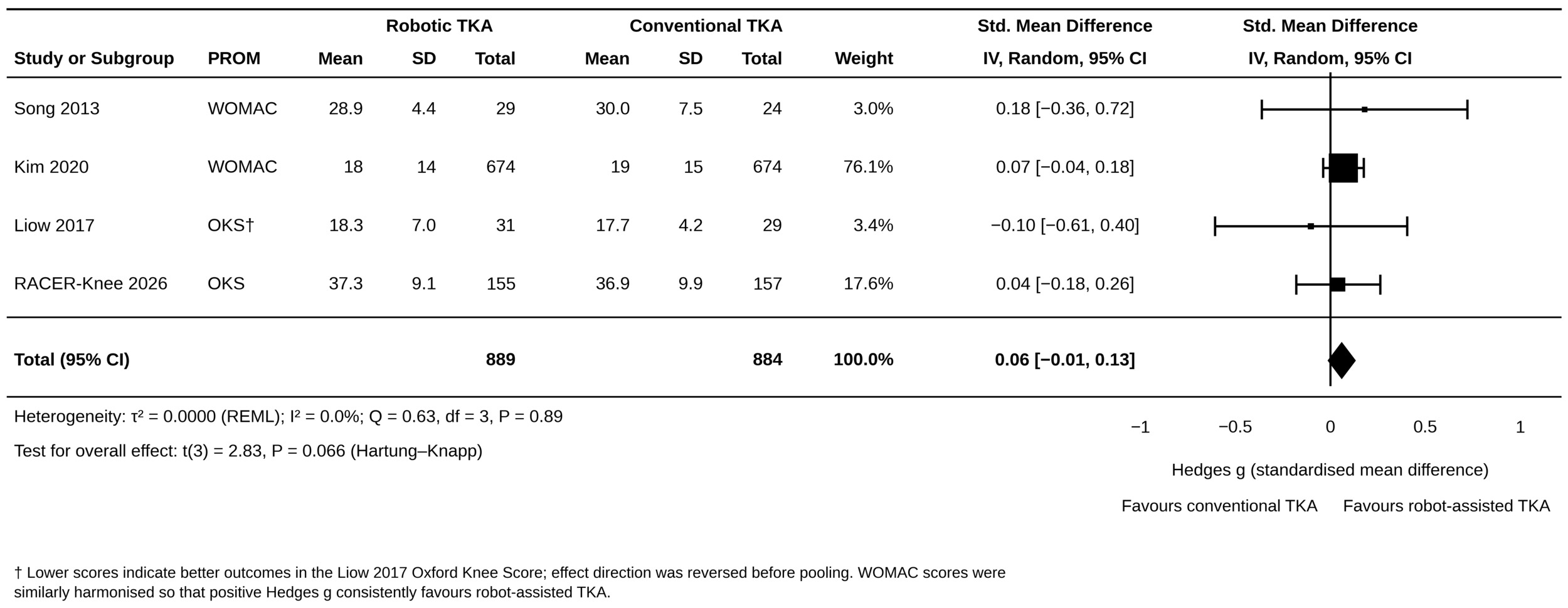
Four randomized controlled trials comprising 1,773 participants contributed to the pooled analysis of knee-specific patient-reported outcomes at ≥12 months (Figure 2). Robot-assisted TKA was associated with a small, standardized effect favoring the robotic approach, but the difference was not statistically significant (Hedges’ g = 0.06, 95% CI -0.01 to 0.13; P = 0.066). No observed statistical heterogeneity was detected (I2 = 0%; τ2 = 0.000; Q = 0.63, P = 0.89). These findings provide no evidence of a detectable patient-reported advantage of robot-assisted TKA over conventional TKA beyond 12 months.
3.4. Radiographic Precision
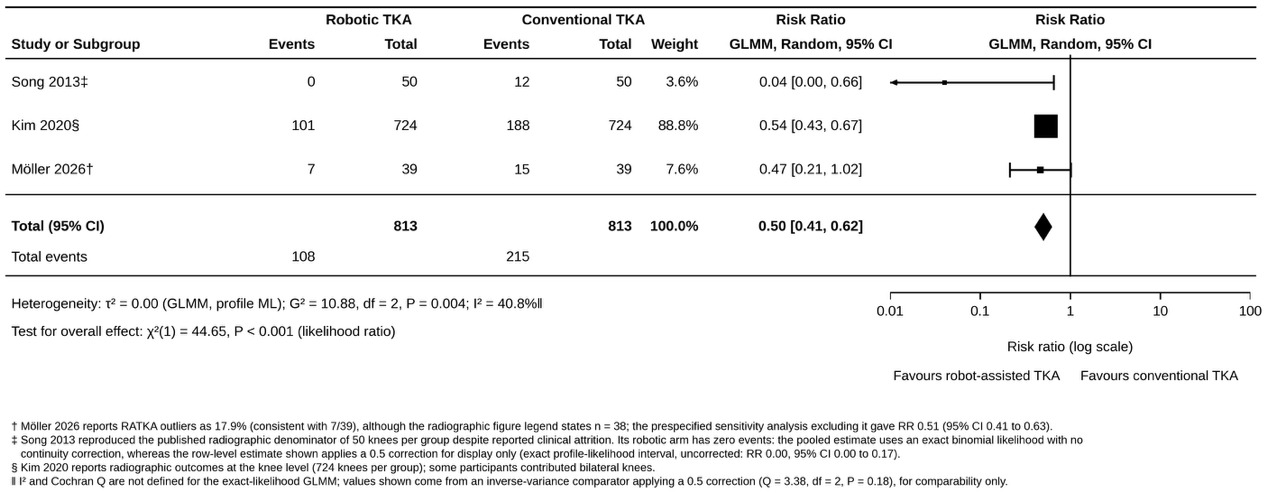
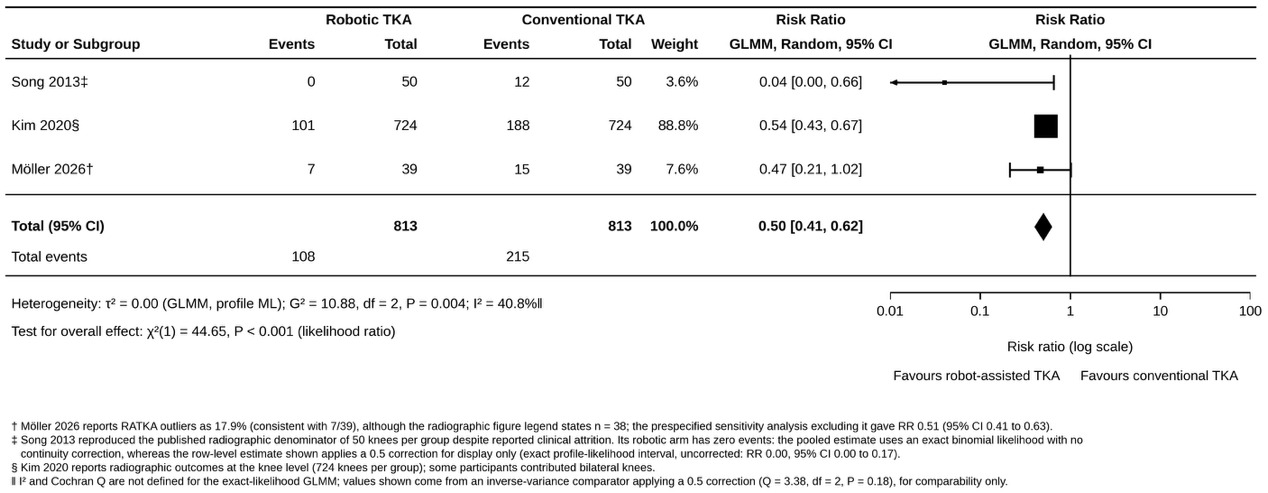
Three randomized trials contributed to the radiographic analysis (Figure 3). Robot-assisted TKA was associated with a lower risk of mechanical-axis alignment outliers than conventional TKA. Because Möller et al. reported an internal discrepancy between the stated percentages and radiographic denominators, this study was interpreted cautiously and was examined in sensitivity analysis. Excluding Möller et al. yielded a pooled RR of 0.51 (95% CI 0.41-0.63), with the direction and magnitude of the effect remaining unchanged. Overall, the findings consistently favored greater radiographic precision with robot-assisted TKA.
3.5. Functional Outcomes
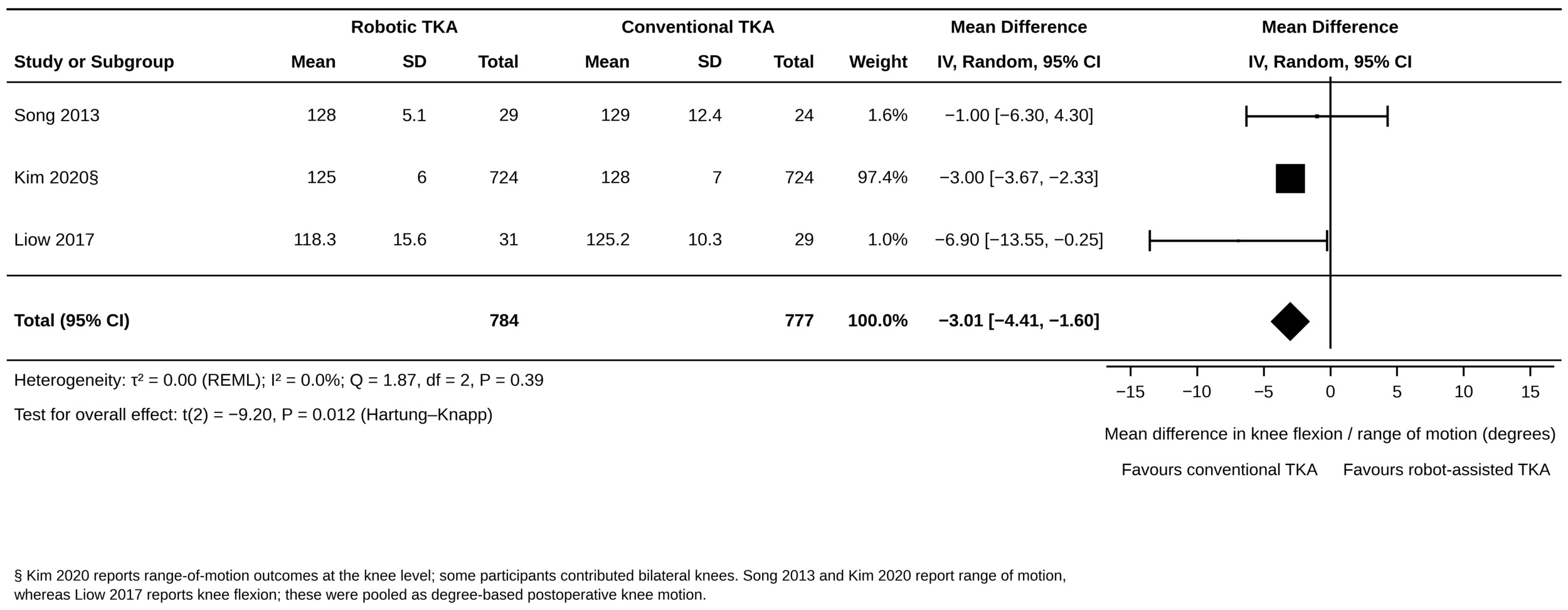
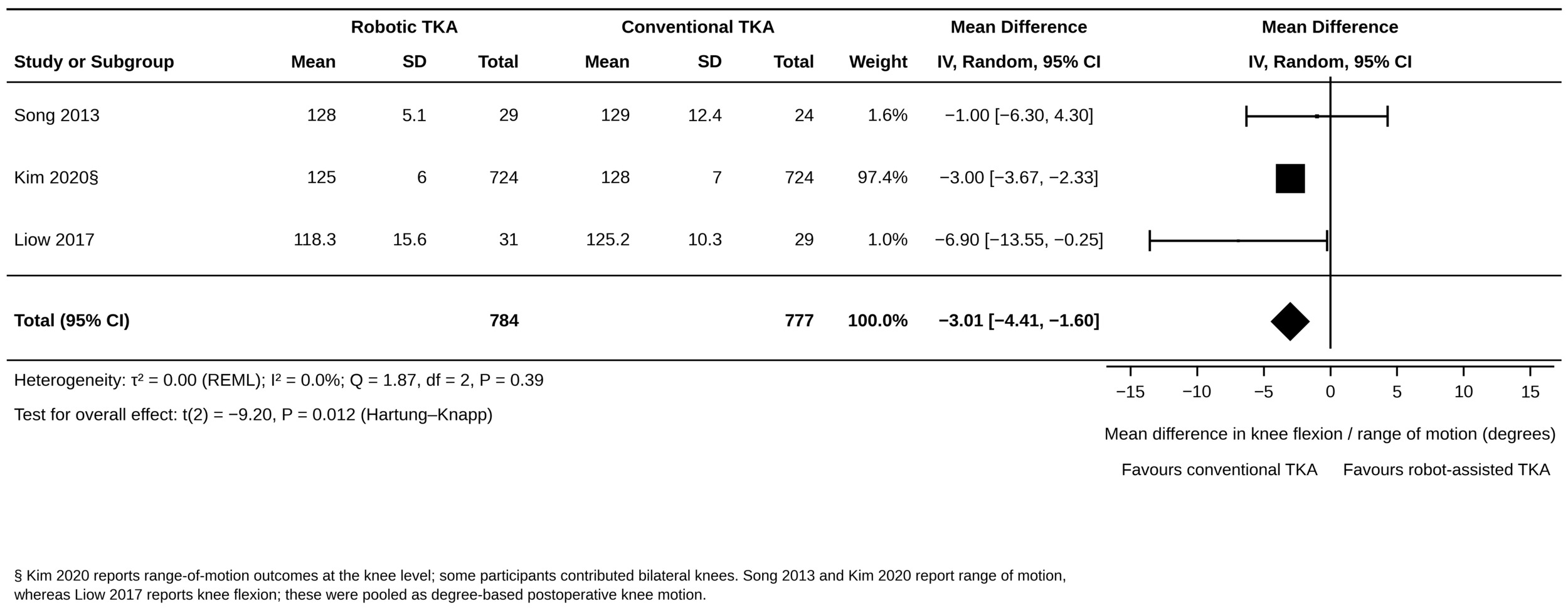
Three randomized trials contributed to the analysis of postoperative knee motion (Figure 4). Robot-assisted TKA was associated with a small reduction in knee flexion/range of motion compared with conventional TKA (MD -3.01°, 95% CI -4.41 to -1.60; P=0.012), with no observed statistical heterogeneity (I2=0%; τ2=0.00). The pooled estimate was predominantly driven by the large Kim 2020 trial, which accounted for 97.4% of the meta-analytic weight.
3.6. Perioperative and Safety Outcomes
Operative duration was reported by six cohorts and was longer with robotic assistance in five. Song 2013 reported 99 ± 11 versus 74 ± 10 minutes (P < 0.001), Möller 2026 reported 75.8 ± 10.6 versus 56.3 ± 7.8 minutes (P < 0.001), Kim 2020 reported a mean of 97 minutes (range 81 to 123) versus 69 minutes (56 to 81) (P < 0.001), Adamska 2023 reported a significant between-group difference (P = 0.003), and RACER-Knee 2026 reported an adjusted increase of 10.5 minutes (95% CI 6.8 to 14.3). In contrast, Liow 2017 found no difference in surgical duration (91 ± 10 vs 93 ± 14 minutes). Definitions and summary formats varied across trials, so operative time was not pooled.
Blood-loss outcomes were not directly comparable. Song 2013 reported lower postoperative drainage with robotic TKA (613 ± 318 vs 933 ± 467 mL; P < 0.001), whereas Kim 2020 found no difference in intraoperative blood loss or drainage volume. Möller 2026 reported a greater postoperative haemoglobin reduction with robotic TKA (1.2 ± 0.5 vs 0.9 ± 0.4 mmol/L; P = 0.029). Length of stay was similar where reported. Safety data were sparse. RACER-Knee 2026 recorded serious adverse events in 16 of 168 robotic and 16 of 171 conventional participants. Liow 2017 reported complications in 4 of 31 versus 2 of 29 patients, with two reoperations in the robotic group and three robotic procedures aborted and completed manually. Safety definitions differed and event counts were limited, precluding a meaningful pooled comparison.
3.7. Sensitivity and Influence Analyses
Excluding Kim 2020 from the primary patient-reported outcome analysis yielded a pooled Hedges’ g of 0.04 (95% CI -0.18 to 0.26; P = 0.53; I2 = 0%; τ2 = 0.000), leaving the overall conclusion unchanged. Including the quasi-randomised Adamska cohort increased the pooled estimate to g = 0.16 (95% CI -0.14 to 0.46; P = 0.22) and introduced substantial heterogeneity (I2 = 62.1%; τ2 = 0.037; Q = 10.56, df = 4, P = 0.032), while the overall effect remained non-significant. Adamska was therefore retained only as a sensitivity analysis because the report describes allocation on alternate surgical days. For knee flexion and range of motion, adding Adamska 2023 shifted the pooled mean difference to -1.21° (95% CI -8.76 to 6.34; P = 0.64) and increased heterogeneity to I2 = 84.5%. Excluding Kim 2020, which contributed 97.4% of the weight in the primary analysis, yielded an imprecise mean difference of -3.59° (95% CI -40.80 to 33.62; P = 0.44), indicating that the statistically significant primary estimate was strongly dependent on the largest trial.
For mechanical-axis outliers, excluding Möller 2026 because of its internal denominator discrepancy produced a pooled RR of 0.51 (95% CI 0.41 to 0.63; P < 0.001). Excluding Song 2013 instead yielded an RR of 0.53 (95% CI 0.43 to 0.65; P < 0.001). Both analyses preserved the direction and magnitude of the primary radiographic finding. A denominator-substitution sensitivity analysis for Song 2013 was not performed because no alternative radiographic denominator was reported. Song 2011 was not incorporated quantitatively because its paired bilateral design would require an unreported within-patient correlation.
3.8. Small-Study Effects and Funnel Plot Assessment
Visual inspection of Figure 5 showed variation in study precision across the four randomized trials contributing to the primary patient-reported outcome meta-analysis. The two larger and more precise trials clustered close to the pooled estimate, whereas the smaller trials were more widely dispersed. However, because only four trials were available, the funnel plot had insufficient power for a reliable assessment of asymmetry or publication bias. Accordingly, the figure was interpreted descriptively only, and no formal statistical tests for small-study effects were performed.
4. Discussion
This systematic review and meta-analysis identify a clear separation between technical precision and patient-centered benefit after robot-assisted total knee arthroplasty. Across randomized comparisons with at least 12 months of follow-up, robotic assistance substantially reduced the risk of mechanical-axis alignment outliers, and the direction of this effect remained stable across sensitivity analyses. By contrast, knee-specific patient-reported outcomes showed no clear evidence of superiority, with a pooled standardized effect close to zero. These findings suggest that greater reproducibility of surgical execution does not necessarily translate into measurable improvements in symptoms or function over the time horizon examined.
The PROM findings should be interpreted as an absence of demonstrated superiority rather than evidence of equivalence. No equivalence or non-inferiority margin was prespecified, and the confidence interval remained compatible with small effects in either direction. Importantly, the pooled effect was standardized across different instruments and therefore cannot be directly compared with a clinically important difference expressed in points on an individual scale. The Oxford Knee Score, for example, has an established patient-centered threshold for clinically important improvement following TKA.10 More broadly, postoperative recovery is influenced by factors beyond implant positioning, including preoperative pain, expectations, baseline function, rehabilitation, and psychosocial factors. Patient satisfaction after TKA is therefore not determined solely by technical accuracy, and a substantial minority of patients remain dissatisfied despite technically successful surgery.11 No statistical heterogeneity was detected in the primary PROM analysis, although this should be interpreted cautiously because only four trials contributed to the pooled estimate.
The radiographic findings were more consistent. Robot-assisted TKA reduced mechanical-axis alignment outliers by approximately half, and the estimate remained similar after exclusion of Möller et al. because of its internal denominator discrepancy and after separate exclusion of Song et al. This robustness supports a genuine advantage in reproducibility of alignment execution. The clinical meaning of such precision, however, is less straightforward. Mechanical-axis outliers are defined relative to a neutral alignment target, whereas contemporary arthroplasty practice increasingly incorporates mechanical, kinematic, functional, and other individualized alignment strategies.12 A deviation from neutral alignment may therefore reflect intentional surgical planning rather than technical error. The most defensible interpretation is that robotic systems improve the ability to reproduce a selected target, not that one specific alignment target is inherently superior.
The pooled knee-motion analysis also warrants restrained interpretation. Although the overall estimate suggested approximately 3 degrees less postoperative flexion or range of motion with robotic assistance, Kim 2020 contributed 97.4% of the meta-analytic weight. Excluding this study produced an extremely imprecise estimate spanning substantial benefit and harm, whereas adding the quasi-randomized Adamska cohort attenuated the pooled difference and markedly increased heterogeneity. The original Kim trial reported no statistically significant between-group difference in knee motion using its repeated-measures analytical approach, while the present synthesis used endpoint summary statistics within a meta-analytic framework. These analyses address the data differently and should not be viewed as contradictory. Accordingly, the pooled knee-motion estimate appears highly dependent on the largest contributing trial and should not be interpreted as evidence of clinically important functional harm.
Perioperative findings were less uniform. Operative duration was longer with robotic assistance in five of six cohorts, reflecting additional steps related to registration, planning, and robotic execution. Blood-loss outcomes were inconsistent, with some studies favoring robotic techniques and others showing no difference or greater hemoglobin reduction. Safety outcomes were too sparse and inconsistently defined to support a reliable pooled comparison. A prospective cohort study has reported faster early functional recovery and shorter time to hospital discharge following robotic TKA.13 Such early advantages could coexist with the absence of detectable PROM differences at 12 months or later if any initial recovery benefit diminishes as both treatment groups reach a similar functional plateau.
Several features strengthen the present review. The analysis was restricted to randomized comparative evidence with at least 12 months of follow-up, reducing the influence of short-term recovery effects and confounding inherent to non-randomized comparisons. Radiographic, patient-reported, and functional outcomes were analyzed separately rather than combined into a broad assessment of superiority. Sensitivity analyses specifically addressed influential studies, quasi-random allocation, paired bilateral design, and inconsistencies in reported denominators. Unreported standard deviations, correlations, denominators, and event counts were not silently imputed, preserving traceability to the original trial reports.
Important limitations remain. Only three or four trials contributed to the main quantitative analyses, limiting precision and the reliability of heterogeneity estimates. Robotic systems differed substantially across generations and platforms, ranging from earlier autonomous milling systems to contemporary image-based and imageless technologies. PROM instruments were not uniform, and individual large studies dominated some pooled estimates, particularly the knee-motion analysis. Reporting of complications, blood loss, and revision-related outcomes was heterogeneous and insufficient for robust quantitative synthesis. The available follow-up also remains inadequate to determine whether improved alignment reproducibility affects implant survival or late revision. With only four studies in the primary PROM analysis, the funnel plot had little ability to distinguish true small-study effects from random dispersion and cannot exclude publication bias.
From a clinical perspective, improved radiographic execution should therefore be regarded as a technical advantage rather than evidence of superior overall TKA performance. Registry evidence has not yet demonstrated a reduction in early revision associated with robotic assistance.14 Future randomized studies should prioritize durable patient-centered endpoints, implant survival, revision, cost-effectiveness, and predefined alignment strategies, while determining whether specific robotic platforms or patient subgroups derive measurable clinical benefit. Until such evidence emerges, greater surgical precision should not be assumed to confer superior long-term outcomes.
5. Conclusion
Robot-assisted total knee arthroplasty demonstrates greater radiographic precision, with a consistent reduction in mechanical-axis alignment outliers compared with conventional manual TKA. However, this technical advantage did not translate into a clear improvement in knee-specific patient-reported outcomes at 12 months or longer. The observed difference in postoperative knee motion should be interpreted cautiously because the pooled estimate was largely driven by a single high-weight trial. Operative time was generally longer with robotic assistance, while available safety data were insufficient to establish a meaningful between-group difference. Overall, current randomized evidence supports robot-assisted TKA as a more precise method of executing the intended surgical target, but does not demonstrate superior patient-centered outcomes. Longer-term randomized studies are needed to determine whether greater surgical precision translates into meaningful differences in implant survival, revision risk, cost-effectiveness, or outcomes within specific alignment strategies and patient subgroups.
Acknowledgments
The authors would like to acknowledge King Fahad Medical City (KFMC), Riyadh, Saudi Arabia, for its support and contribution to the completion of this article.
Author Contributions
All authors contributed to the study conception, design, analysis, interpretation, and manuscript preparation. All authors reviewed and approved the final manuscript.
Ethics Approval
Not applicable. This study is a systematic review of previously published trials and did not involve new studies with human participants or animals.
Clinical Trial Number
Not applicable
Consent to Participate
Not applicable.
Funding
The authors declare that no funding was received for this study.
Conflicts of Interest
The authors declare no financial or non-financial interests that are directly or indirectly related to the work submitted for publication.
Consent for Publication
Not applicable.
Availability of Data and Materials
All data generated or analyzed during this study are included in this published article and its supplementary information files.
Code Availability
Not applicable.