
Introduction
Anterior cruciate ligament injuries are among the most common ligamentous injuries of the knee in both the general and athletic populations.1 The peak incidence occurs between 14 and 18 years of age in females and between 19 and 25 years in males; however, the rate of ACL rupture is increasing across all age groups, now affecting even adults over 50 years of age.2,3 The mechanism of injury may be traumatic (direct contact) or non-traumatic (without direct contact), particularly in sports involving sudden changes of direction, rapid deceleration, or jumping.4,5 Treatment can be either conservative or surgical, depending on the specific case. Several variables are taken into consideration when selecting the appropriate management approach, including patient age, pre-injury level of sports activity, associated injuries, and the degree of instability perceived by the patient.6 The standard surgical treatment for ACL rupture is ligament reconstruction, aimed at restoring knee stability. The ligament can be replaced using autografts, allografts, or synthetic grafts. At present, autografts are considered the gold standard in surgical practice; however, they may lead to donor site morbidity, inadequate graft harvesting, and prolonged postoperative rehabilitation.7 Allografts, on the other hand, carry risks of allergic reactions, host immune responses, and transmission of infectious diseases.8 To overcome these limitations, attention has shifted toward artificial grafts due to their high tensile strength, the absence of donor site harvesting, and shorter surgical times. Artificial ligaments were first introduced in the 1970s, but the early first- and second-generation materials (carbon fibers, Gore-Tex, Dacron, Leeds-Keio) resulted in poor biocompatibility, high rates of reactive synovitis, and elevated long-term revision rates. Since 1992, the LARS, made of high-tenacity polyethylene terephthalate (PET), has demonstrated greater strength, improved anatomical design, the possibility of preserving the native ligament remnant, and consequently better tissue integration. Among the advantages of using the LARS are shorter hospital stays with reduced economic impact on healthcare facilities, absence of muscle atrophy, and faster postoperative functional recovery.9 Both autologous and allogenic grafts require a process of tendon re-ligamentization a slow biological remodeling phase that usually takes between 6 months and 1 year after reconstruction, due to the gradual revascularization of the graft tissue. This process involves alternating phases of necrosis and bone graft substitution, making the graft susceptible to collapse and loosening. During this critical period, the bone tunnel wall is replaced by fibrous tissue, which promotes tunnel widening. Synthetic grafts, by contrast, do not undergo this re-ligamentization process, making them more mechanically stable over time.10 The LARS represents an innovation compared with previously used synthetic materials, thanks to the orientation of its fibers: in the intra-articular portion, they are arranged longitudinally and interwoven at 90 degrees, while in the intraosseous portion, they are oriented both longitudinally and transversely. This configuration is specifically designed to mimic the anatomy and biomechanics of the native ACL. Such fiber arrangement allows for a more physiological distribution of loads, reducing mechanical stress on the implant and contributing to greater durability and functional integration.9 The aim of our retrospective study is to present the largest single-surgeon case series of ACL reconstruction using the LARS ligament reported in the literature and to evaluate the long-term outcomes of anterior cruciate ligament reconstruction with the LARS graft.
Patients and methods
Patients selection
From a total of 2.300 arthroscopic ACL reconstructions using the LARS graft performed between January 2007 and December 2020 by the same senior surgeon, 475 patients were selected (423 males and 52 females). Ages ranged from 14 to 62 years, with a mean age of 31.6 years. Out of 475 patients, 260 involved right knees (54.7%) and 215 involved left knees (45.3%). For patients between 50 and 65 kg, a LARS AC80 fiber with two 6.5 mm tunnels and two 8/25 mm interference screws was used; from 65 to 85 kg, a LARS AC100 fiber with a 7.0 mm drill and two tunnels with two 9/25 mm-9/30 mm interference screws was used; over 85 kg, a LARS AC120 fiber, a double tunnel with a 7.5 mm drill and two 9/30 mm screws. Laterality was always respected in the choice of LARS .In this study, LARS ligament grafts AC100 and AC120 were used. Inclusion criteria were ACL reconstruction using the LARS implant. Exclusion criteria included multiple additional ligament injuries in the knee to be operated on; ACL revision surgery; previous surgical procedures on the affected knee; systemic infectious diseases; rheumatologic diseases; and Kellgren–Lawrence grade >3 osteoarthritis. All patients provided written and oral informed consent for the publication of their clinical data in this study.
Clinical evaluation
Evaluation was conducted through a structured telephone interview using the Lysholm Score. This is an eight-section questionnaire assessing knee function and daily life symptoms. Each section has a specific score, for a total maximum of 100 points, categorized as follows: 95–100 excellent; 84–94 good; 65–83 fair; <65 poor. Higher scores indicate better perceived knee function.11 The questionnaire was administered by external, non-clinical personnel to minimize bias related to authority or the doctor–patient relationship.
Surgical technique
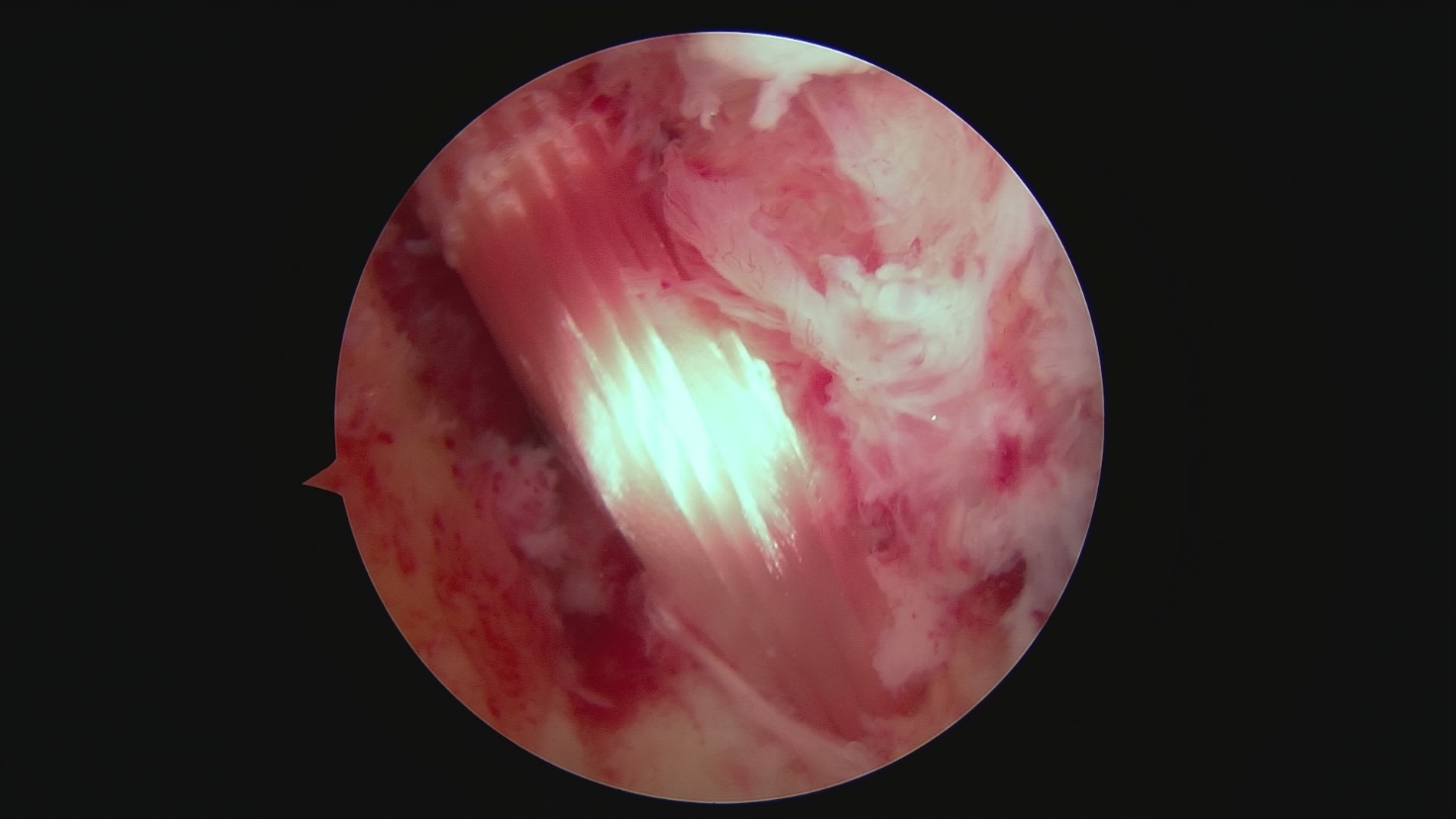
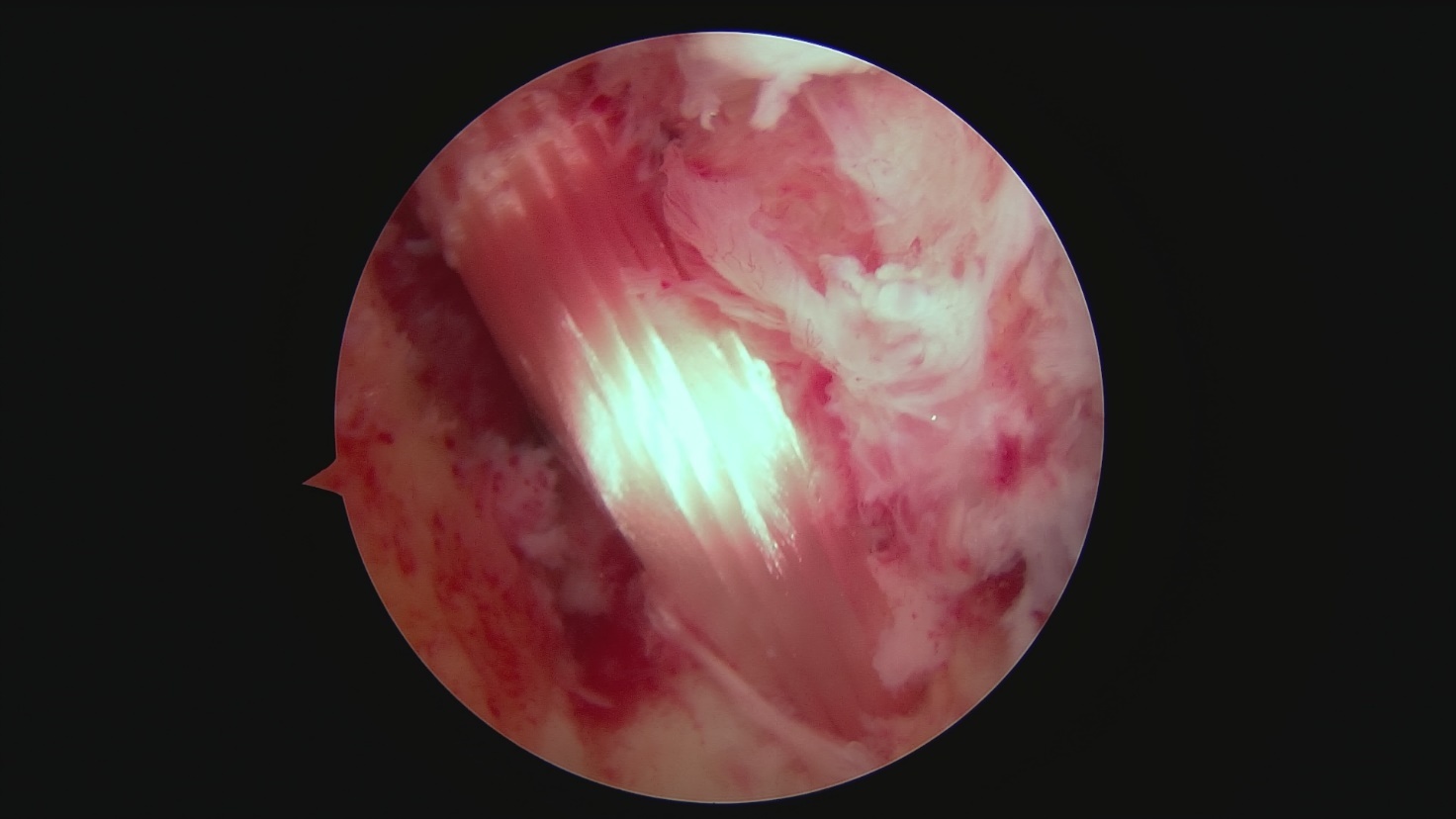
The surgical technique involves the three standard arthroscopic portals: anteromedial, anterolateral, and superomedial for diagnostic exploration of the joint. Through a fourth medial parapatellar Magi portal, the tibial guide is inserted at the proximal third of the tibia in the anteromedial region, and the exit point of the guide wire is identified on the remnant of the torn ACL. The tibial and femoral tunnels are then created using ACUFEX™ ACL guides (Smith & Nephew, Andover, MA, USA) while always preserving the native ligament remnant. A key step is performing a notchplasty with the assistance of a shaver, taking care to address all possible causes of impingement. The synthetic ligament is first passed through the femoral tunnel and then through the tibial tunnel. With the knee flexed at 15 degrees, the ligament is fixed using two interference screws. The postoperative course included early mobilization, full weight-bearing with two crutches, and a standardized rehabilitation protocol.
Results
Of the 475 patients who responded to the telephone questionnaire, 383 patients (80.6%) reported an excellent outcome on the Lysholm Score; 36 patients (7.6%) a good score; 37 patients (7.8%) a fair score; and 19 patients (4%) a poor score. Overall, 96% of patients achieved positive outcomes (excellent or good), highlighting a high rate of satisfaction and postoperative functional recovery. The follow-up period ranged from a minimum of 3 years to a maximum of 15 years. The distribution of the 475 patients according to follow-up intervals was as follows: 180 patients (37.9%) with 3–5 years, 140 patients (29.5%) with 6–8 years, 90 patients (18.9%) with 9–11 years, and 65 patients (13.7%) with 12–15 years of follow-up. The average functional recovery time was between 40 and 90 days, with early weight-bearing and return to work and sports activities.12
Complications and management
Five patients (1.1%) required ACL revision surgery, confirming a low failure rate and good durability of the LARS graft over the follow-up period. Lysholm scores in the revised patients were high in most cases: three patients scored 100, one scored 97, and one scored 80.
Discussion
The LARS represents a third-generation synthetic ligament. Despite initial skepticism due to failures associated with previous generations of synthetic grafts, some orthopedic surgeons continued to use the LARS, achieving clinically satisfactory results. The scientific literature on this topic is steadily expanding, with an increasing number of studies reporting favorable outcomes associated with the use of this device. A recent systematic review with meta-analysis published in 2020 compared long-term outcomes of ACL reconstruction using autografts versus synthetic grafts. All included studies assessed clinical and functional scores, including the International Knee Documentation Committee (IKDC), the Lysholm Score, and the Tegner Activity Score.10 The results showed no statistically significant differences in failure risk between two techniques, confirming the findings of our study and demonstrating favorable clinical outcomes. The choice between synthetic grafts, such as the LARS, and autografts for ACL reconstruction remains an open question, particularly with regard to patient age and pre-injury activity level. Recent studies report satisfactory functional outcomes, although up to 40% of patients13 are unable to return to their pre-injury level of physical activity, suggesting that a return to high-level sports is not always guaranteed. Reported failure rates are low, confirming the improved biocompatibility and mechanical reliability of third-generation synthetic grafts compared with earlier experiences. Anterior cruciate ligament injuries can keep athletes away from sports for several months, but approximately 83% of high-level athletes are able to resume activity after injury. Female athletes are particularly vulnerable to this type of injury, likely due to a narrower intercondylar notch, which increases the risk of femoral impingement. This anatomical configuration may predispose both the native and reconstructed ligament to rupture, making proper notchplasty during ACL reconstruction essential to prevent failure of the neoligament.14,15 The use of LARS may represent a valid therapeutic option in middle-aged patients, where a faster postoperative recovery and fewer complications are desired. In our study patients in the 40-50 age group showed higher Lysholm scores. Moreover, the literature shows that even in patients over 50 years of age, it is possible to achieve comparable results in terms of joint stability and functional knee recovery compared with younger patients.3 The main causes of LARS failure are primarily attributed to technical errors during surgery. Malpositioned bone tunnels for example, too anterior or too vertical, can compromise graft biomechanics, causing residual instability or abnormal stress on the artificial ligament. Inadequate notchplasty can lead to neoligament impingement, accelerating deterioration of the synthetic material and functional failure of the implant. For these reasons, ACL reconstruction with a synthetic graft should be performed by experienced surgeons.16,17
According to our experience, it is important to preserve the ACL stump to promote rapid healing and graft fixation, as well as to maintain the proprioceptive properties of the remnant, in agreement with the study by Povviden et al., where all failures occurred at the femoral tunnel because, in the absence of the remnant, the graft fibers were more susceptible to abrasion.18 Despite the positive results reported, this study has several limitations. First, its retrospective nature, as the data were collected retrospectively. Second, the use of a telephone interview to collect functional data may introduce response bias and limit the accuracy of the information, particularly regarding the subjective assessment of joint function. Additionally, the patient age range (14–62 years) is quite broad, which may make it more difficult to compare outcomes between groups with different levels of physical activity, recovery capacity, and anatomical conditions. Finally, the study includes patients operated on by a single senior surgeon, which limits the generalizability of the results to other surgical settings.
In conclusion our data support the use of LARS as a reliable and safe graft for ACL reconstruction, demonstrating low failure rates, high postoperative function, and rapid recovery when the procedure is performed correctly. Proper surgical technique, including notchplasty, remains crucial to prevent impingement and early neoligament rupture, particularly in female patients and individuals with a narrow intercondylar anatomy.