
Introduction
Total hip arthroplasty (THA) is a highly successful procedure for the treatment of end-stage hip disorders, providing reliable pain relief and restoration of function.1 Long-term implant survival depends on several factors, among which bearing surface selection plays a pivotal role.2 Currently, the most widely used bearing couples include metal-on-polyethylene, metal-on-metal, ceramic-on-ceramic, and ceramic-on-polyethylene articulations.2–6 The development of ceramic bearings was driven by the need to reduce wear particle generation and the biological complications associated with wear debris, thereby improving implant longevity.3,4
The introduction of modern ceramic-on-ceramic bearings has significantly improved the durability of total hip arthroplasty.4 Contemporary hip implant systems employing ceramic articulations have demonstrated excellent clinical outcomes, low wear rates, and high long-term survivorship in both registry-based analyses and cohort studies. These implants typically utilize alumina matrix composite ceramic components characterized by enhanced mechanical strength and greater resistance to crack propagation compared with previous generations of ceramics.5
Although fractures in modern ceramic liners and femoral heads have become exceedingly rare due to advances in ceramic materials and manufacturing techniques, they remain among the most serious complications associated with ceramic bearings in total hip arthroplasty.3 When they occur, these failures may lead to extensive damage in adjacent prosthetic components, dissemination of abrasive ceramic debris, and the need for complex revision surgery.3–6
Several factors have been implicated in the risk of ceramic failure, including traumatic injury, obesity, component malposition, and high activity levels, as well as taper abnormalities and technical errors during implantation.7–10 Furthermore, recent reports of atraumatic ceramic head fractures suggest that failure mechanisms may be multifactorial and involve progressive crack propagation over time.11,12
We report a case of traumatic ceramic liner fracture in an alumina-on-alumina, cementless total hip arthroplasty occurring three years following the primary bilateral procedure. This case highlights the persistence of this rare complication despite the excellent clinical performance of contemporary ceramic bearings, and discusses the challenges associated with its management.
Case Report
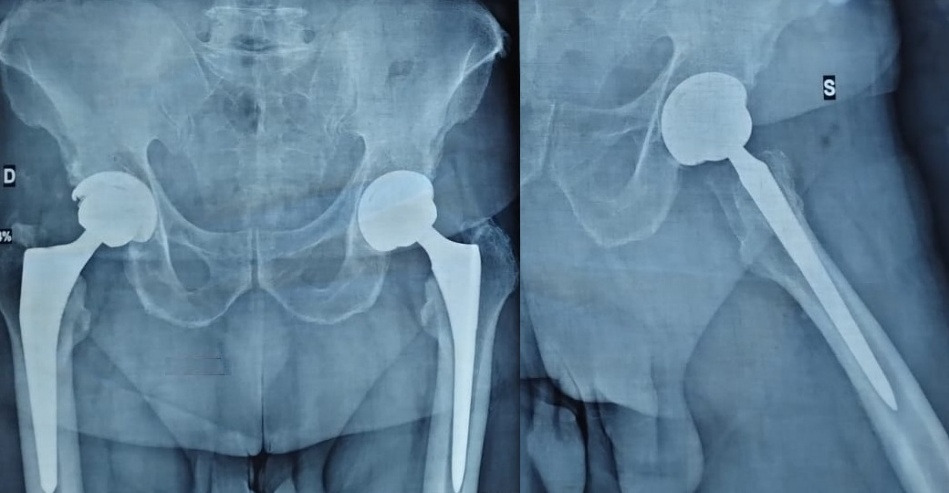
A 66-year-old man with a body mass index (BMI) of 30.4 kg/m2 (height: 172 cm; weight: 90 kg) and no significant medical comorbidities underwent a staged bilateral total hip arthroplasty (THA) for severe hip osteoarthritis. The right hip was replaced first, followed by the left two years later. Both procedures were performed using cementless ceramic-on-ceramic total hip arthroplasty implants (Figure 1).
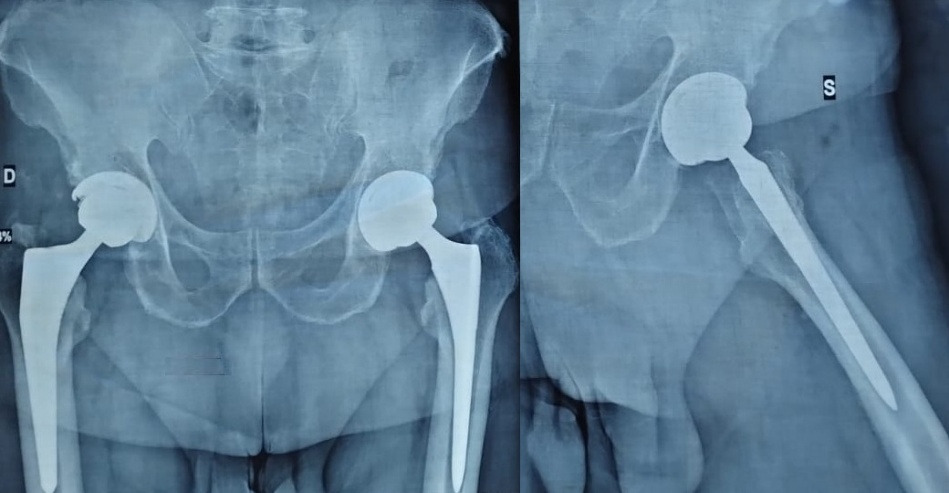
The construct used consisted of a 54 mm acetabular cup paired with a 36 mm ceramic liner. Femoral reconstruction, in the left hip, was performed utilizing a size 3 standard femoral stem and a 36 mm ceramic femoral head component with a +8.5 mm neck length. Three years after the procedure, the patient sustained a domestic fall resulting in direct trauma to the left hip. The event was immediately followed by an audible clicking sensation, with the subsequent development of pain and progressive mechanical limitation. Due to persistent symptoms, the patient presented to the Emergency Department three days post-injury, complaining of severe left hip pain and a significantly restricted range of motion.
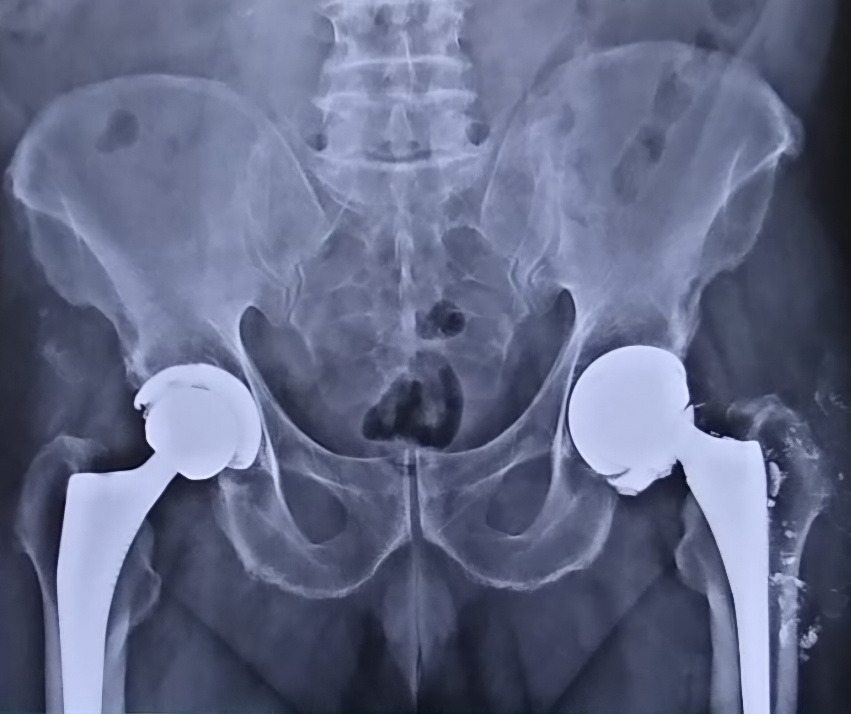
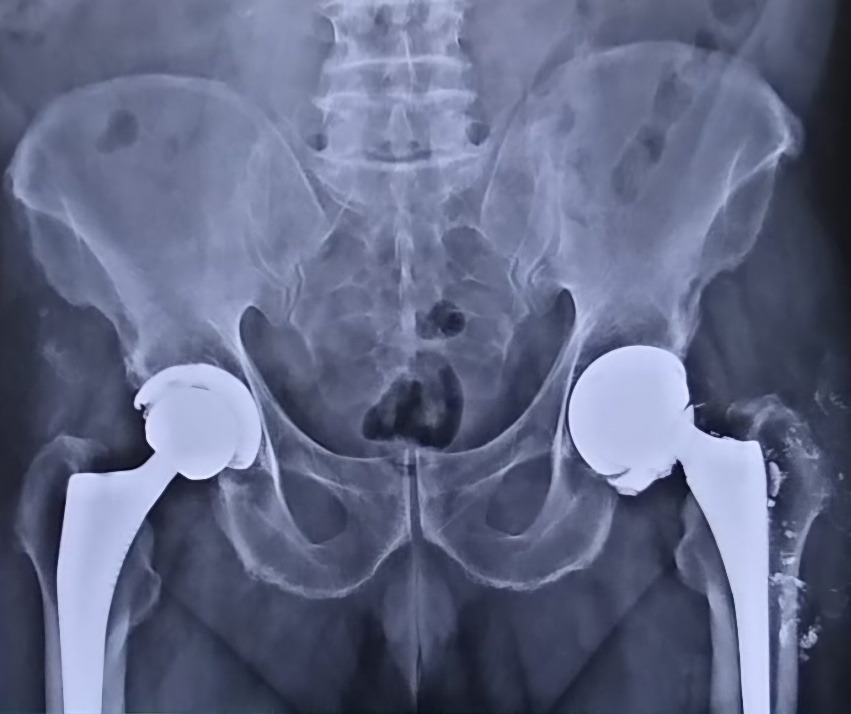
The radiograph and computed tomography (CT) scan demonstrated a ceramic liner fracture with several fragments extruded to the region of the greater trochanter, read as an atypical appearance involving the articular component which may be related to hardware failure (Figure 2). On radiographs, the femoral stem and acetabular component remained in an acceptable position without osteolysis or failure.
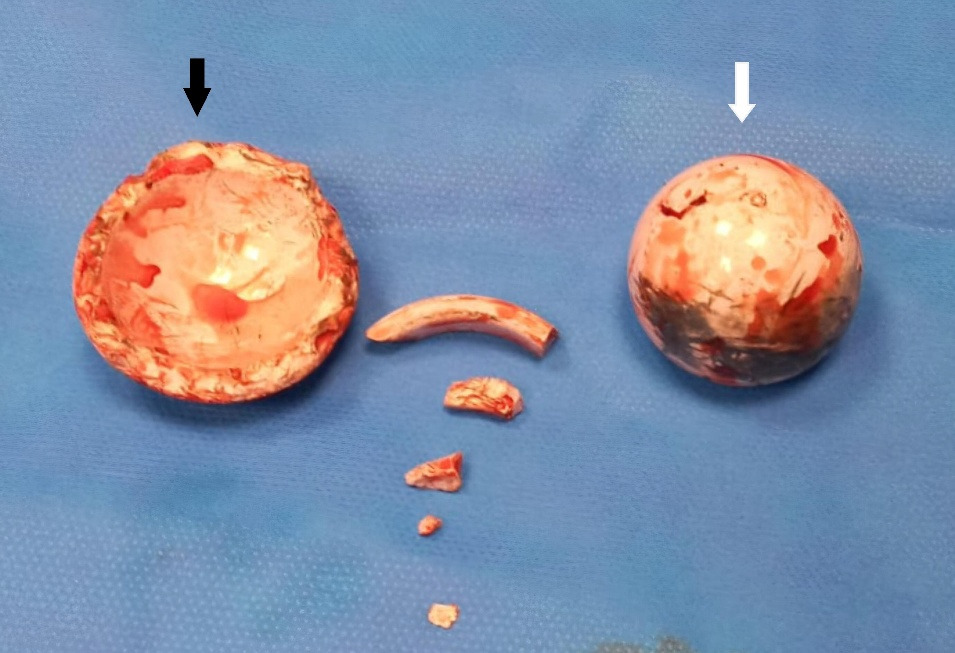
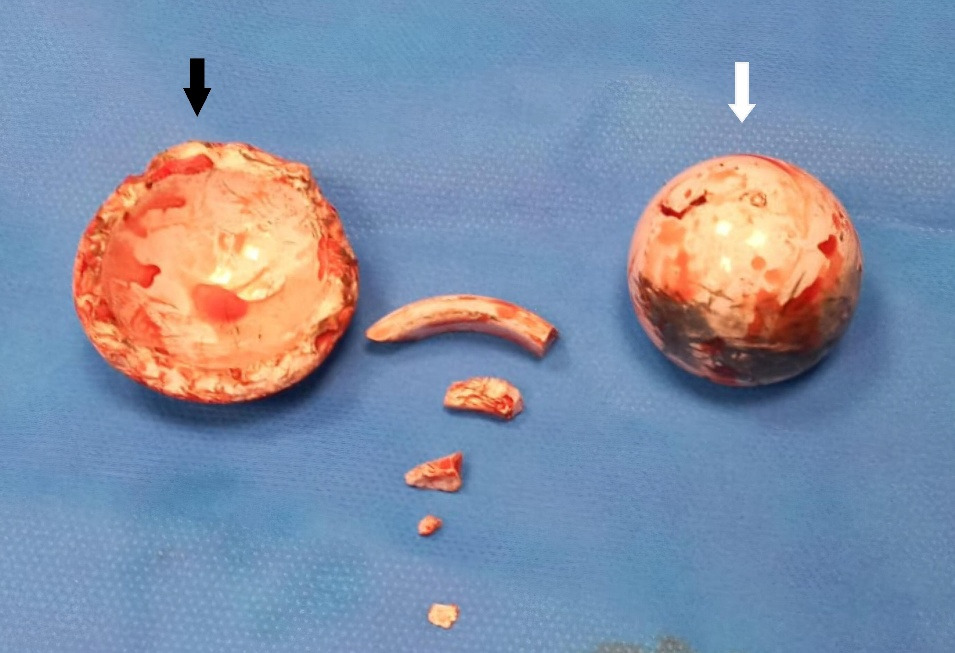
Surgical exposure of the hip revealed the fragmentation of the ceramic liner, with damage to the femoral head. All detected fragments were removed, and the hip was irrigated to aid in the removal of fragments (Figure 3). An extensive debridement of synovial tissue was carried out. The acetabular cup and femoral stem appeared to have perfect osteointegration. Revision of the bearing surfaces was performed using a 36 mm ceramic femoral head with a +8.5 mm neck length and a matching 36 mm polyethylene acetabular liner.
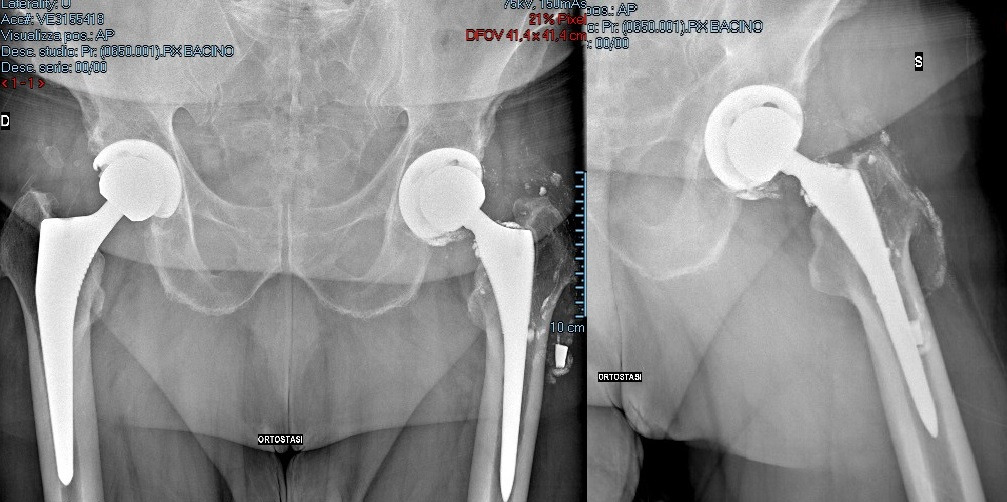
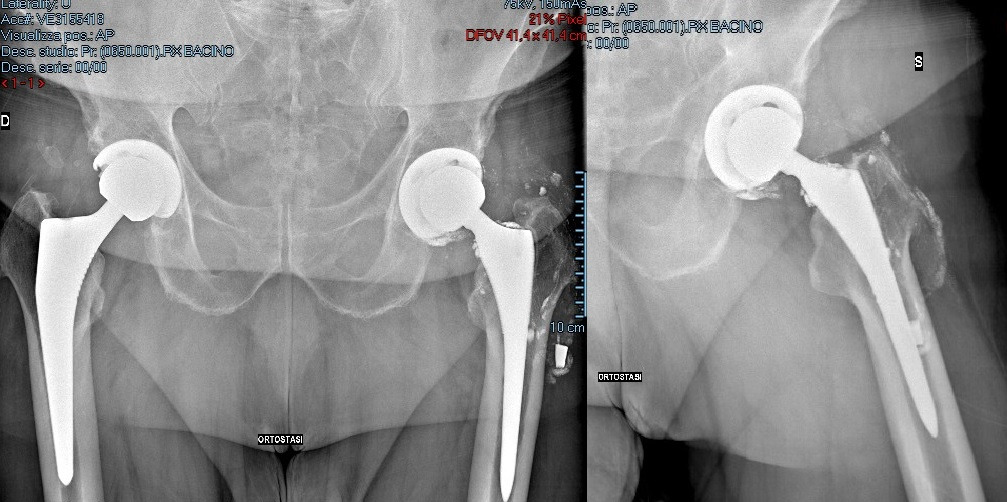
The patient was discharged home on postoperative day five. Postoperative radiographs were satisfactory, demonstrating well-positioned revision components (Figure 4). The subsequent clinical recovery and postoperative evaluation progressed without complication.
At the one-, three-, six- and 12-month postoperative follow-up intervals, the patient remained entirely asymptomatic with complete restoration of hip function and was able to return to full activity without any discomfort in the hip at six months’ follow-up.
Discussion
Ceramic-on-ceramic (CoC) bearings have become an established option in total hip arthroplasty because of their excellent tribological properties, low wear rates, and favourable long-term survivorship.13–16 The introduction of fourth-generation alumina matrix composite ceramics has markedly reduced the risk of catastrophic component failure compared with earlier generations, with contemporary ceramic head fracture rates reported between 0.009% and 0.02%.13 Despite these improvements, ceramic head fracture remains a rare but potentially devastating complication that may require complex revision surgery and compromise surrounding prosthetic components.17–21
The present case describes a traumatic fracture in a ceramic linner in a ceramic-on-ceramic THA occurring three years after the index procedure. Following a fall, the patient developed progressive mechanical symptoms characterized by abnormal noise, pain, and severe functional limitation. Radiographic evaluation confirmed fragmentation of the ceramic, while the femoral stem and acetabular component remained apparently well fixed. This presentation is consistent with previous reports in which traumatic events represented the triggering factor for the failure of otherwise well-functioning modern ceramic bearings.8,10
Although ceramic fractures have become increasingly uncommon, they continue to be reported in the literature. Yin13 recently described a fourth-generation BIOLOX delta ceramic head fracture occurring two years and three months after the primary THA following a fall from a ladder, emphasizing that traumatic failure remains possible despite advances in ceramic technology.13 Similarly, Philippeau14 highlighted that contemporary ceramic fractures are multifactorial events influenced by material properties, taper characteristics, and implant geometry, as well as surgical technique and patient-related factors. The similarities between these reports and the present case support the notion that modern ceramic components, although highly reliable, are not immune to catastrophic failure.
The mechanism responsible for ceramic fracture is likely multifactorial. In the present patient, trauma appears to have been the principal precipitating factor. Ceramic materials exhibit excellent compressive strength but remain susceptible to crack initiation and propagation when exposed to excessive tensile or shear stresses.12 Previous studies have identified obesity, a high activity level, component malposition, taper contamination, improper impaction, and microscopic damage at the head-neck junction as additional risk factors for fracture.14 It is therefore conceivable that trauma acted either as the sole causative factor or as the final event leading to propagation of a pre-existing microscopic defect.
An important consideration following ceramic fracture is the management of residual ceramic debris. Fragmentation generates microscopic particles that may remain within the joint despite extensive debridement. These particles can act as third-body abrasives, accelerating wear in revision bearings and potentially leading to metallosis, osteolysis, or early implant failure.18 For this reason, most authors advocate meticulous synovectomy, extensive irrigation, and the removal of all visible fragments during revision surgery.19–22 In the present case, particular attention was paid to the removal of ceramic debris to minimize the risk of subsequent third-body wear.
Assessment of the femoral trunnion is another critical step during revision surgery. Ceramic fracture may damage the taper surface, creating irregularities that increase local stresses and predispose to future implant failure. Allain20 emphasized the importance of addressing taper damage when revising fractured ceramic components, while Koo21 reported higher complication rates when damaged retained components remained in situ. Consequently, careful intraoperative evaluation of taper integrity should guide the decision to retain or revise a well-fixed femoral stem.22
The optimal bearing choice during revision remains debated. Historically, the use of metal heads following ceramic fracture has been discouraged because residual ceramic particles may accelerate abrasive wear and increase the risk of metallosis. More recent studies have reported favourable outcomes when revision is performed using new ceramic-on-ceramic articulations combined with extensive debridement and correction of any component malposition.19 Therefore, bearing selection should be individualized according to trunnion condition, component stability, and the extent of ceramic contamination identified intraoperatively.19,22
Several lessons can be derived from this case. First, the onset of hip noise, pain, or mechanical symptoms after trauma in a patient with a ceramic-bearing THA should raise immediate suspicion of ceramic component fracture, even when radiographic findings are subtle. Second, prompt diagnosis and revision are essential to limit secondary damage caused by ceramic debris. Third, successful management requires meticulous fragment removal, thorough synovectomy, and careful assessment of taper integrity. Finally, although modern ceramic-on-ceramic bearings demonstrate outstanding long-term performance, catastrophic failure remains possible and surgeons should remain familiar with the principles of revision surgery for fractured ceramic components.
Conclusions
This case highlights a rare traumatic fracture of a modern alumina-on-alumina ceramic liner. Despite the excellent durability of contemporary ceramic bearings, traumatic failure remains possible. Early recognition, comprehensive debridement, and an appropriate revision strategy are essential to optimize outcomes and reduce the risk of subsequent complications.
Author Contributions
Conceptualization, H.Z. and G.C..; methodology, F.D. and H.Z.; software, F.D.; validation, M.M.; resources, L.D.; data curation, L.D. and M.M.; writing—original draft preparation, G.C. and A.L.; writing—review and editing, F.D.; supervision, M.M., H.Z. All authors have read and agreed to the published version of the manuscript.