
Introduction
Feedback is integral to clinical education, but its educational value depends on more than the provision of performance information. A large meta-analysis of educational feedback research demonstrated substantial variation in feedback effects according to the information conveyed and the conditions under which it was delivered.1 Contemporary feedback theory has therefore shifted from a predominantly transmission-based model toward one that emphasizes learner engagement, interpretation, and the capacity to act on information. For feedback to support learning, learners must be able to interpret its meaning, relate it to expected performance, and use it to inform subsequent practice.2 This perspective is particularly relevant to procedural specialties, where trainees must integrate technical execution, clinical judgement, self-regulation, and progressive independence within complex supervised encounters.
Orthopaedic training presents distinctive conditions for effective feedback. Operative learning occurs across a broad procedural repertoire, exposure varies between trainees and institutions, and opportunities for direct observation must be integrated with service demands and operating-room workflow. Competency-based reforms in orthopaedic residency have increasingly emphasized progressive demonstration of operative capability rather than reliance on training duration or case volume alone.3 In parallel, orthopaedic certifying bodies have developed structured assessment systems intended to document progression toward independent practice while providing actionable feedback on performance.4 These developments have encouraged a range of educational approaches, including surgical coaching, video-assisted review, workplace-based assessment, structured briefing and debriefing, and technology-supported feedback delivered during or after clinical activity.
The evidence supporting these approaches is heterogeneous. Studies differ in learner population, educational setting, feedback modality, comparator, assessment method, and timing of evaluation, and they often examine outcomes at different levels. A systematic review and meta-analysis of video-based coaching in surgical education reported improvements in technical performance, while also identifying substantial variation in the structure and delivery of coaching interventions.5 Evidence across the health professions similarly suggests that feedback can influence procedural and communication skills, although modalities, sources, timing, and outcome measures vary considerably between studies.6 Learner perceptions of usefulness, satisfaction, or confidence therefore represent a different level of educational evidence from objectively measured performance and should not be treated as interchangeable. This distinction is particularly important when feedback is embedded within broader educational programmes in which its independent contribution cannot be isolated.
Implementation adds a further dimension to evaluating feedback-based education. Reviews of operative coaching for surgical residents emphasize that successful adoption depends on institutional capacity, faculty engagement, appropriate resources, and processes that support programme sustainability.7 An integrated synthesis is therefore needed to clarify how feedback has been operationalized in orthopaedic and musculoskeletal education, what learner outcomes have been reported, and what factors influence implementation across training environments. This systematic review aimed to characterize feedback-based educational approaches in orthopaedic and musculoskeletal education, synthesize reported learner outcomes, and examine the feasibility and implementation of feedback across training settings.
Methods
2.1. Study Design
A systematic review was conducted to examine feedback in orthopaedic and musculoskeletal education, including the educational approaches used, learner outcomes, and the feasibility and implementation of feedback across training settings. The review was conducted and reported in accordance with the Preferred Reporting Items for Systematic Reviews and Meta-Analyses (PRISMA 2020) statement. The review protocol was not prospectively registered.
2.2. Eligibility Criteria
Eligibility criteria were defined according to population, educational intervention or exposure, comparator where applicable, outcomes, and study design. The study population comprised learners in orthopaedic and musculoskeletal education, including postgraduate orthopaedic surgical trainees at any level of training and undergraduate medical learners undertaking orthopaedic or musculoskeletal clinical training. Studies involving faculty assessors were also eligible when faculty were examined alongside trainees in relation to feedback practices.
Eligible educational interventions or exposures included feedback-based approaches of any format, including video-supported feedback and surgical coaching, structured workplace-based assessment incorporating formative feedback, briefing and debriefing models, real-time intraoperative feedback, and asynchronous expert feedback on recorded learner performance. Studies in which feedback formed an explicit and identifiable component of a broader educational intervention were eligible, as were studies examining existing feedback practices without introducing an experimental intervention.
Comparators, where present, included no feedback, an alternative feedback modality, structured feedback without video augmentation, conventional teaching, or an expert reference group. Studies without a comparator were also eligible. Outcomes were organized into four domains. The first comprised objectively measured learner performance, including outcomes assessed using the Objective Structured Assessment of Technical Skills (OSATS), task-specific checklists, global rating scales, Objective Structured Clinical Examination (OSCE) measures, and objective procedural performance measures. The second comprised learner-reported and qualitative outcomes, including reflection, clarity of learning expectations, confidence, engagement, satisfaction, perceived educational value, and learner–faculty interaction. The third comprised assessment instrument properties, including inter-rater reliability and discrimination between levels of training. The fourth comprised feasibility, acceptability, and implementation outcomes, including participation and completion rates, compliance, timeliness of feedback, compatibility with clinical workflow, and reported barriers and facilitators.
Empirical studies of any design were eligible, including randomized controlled trials, non-randomized and quasi-experimental studies, quantitative descriptive studies, qualitative studies, and mixed methods studies. Studies were excluded if they were reviews, commentaries, or editorials without original empirical data; did not include feedback or debriefing as a distinct or evaluated educational component; involved non-orthopaedic or non-musculoskeletal learners without separately reported relevant data; were psychometric validation studies of assessment instruments without an accompanying feedback component; or reported no educational outcomes and focused exclusively on clinical or patient outcomes. Only English-language reports were eligible.
2.3. Literature Search and Information Sources
A systematic electronic search was conducted in PubMed, Embase, Scopus, ERIC, and the Cochrane Central Register of Controlled Trials (CENTRAL) from database inception to 30 September 2026. Search strategies combined controlled vocabulary, where available, with free-text terms relating to orthopedics, orthopaedic surgery, musculoskeletal education, surgical training, residency and postgraduate medical education, feedback, formative feedback, surgical coaching, video review, briefing and debriefing, workplace-based assessment, entrustment, and competency-based medical education. Search syntax was adapted to the indexing structure of each database. Reference lists of included studies and relevant reviews were screened manually to identify additional potentially eligible reports. Duplicate records were identified and removed before study selection.
2.4. Study Selection
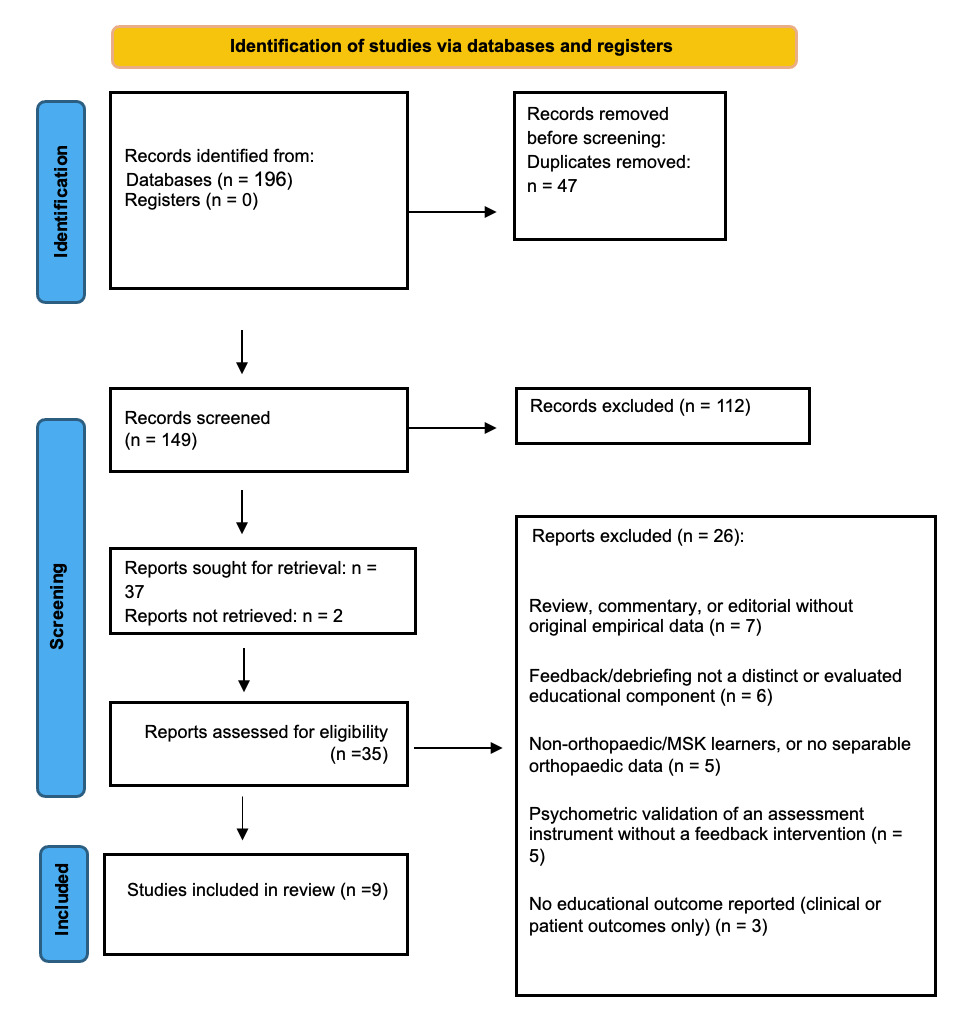
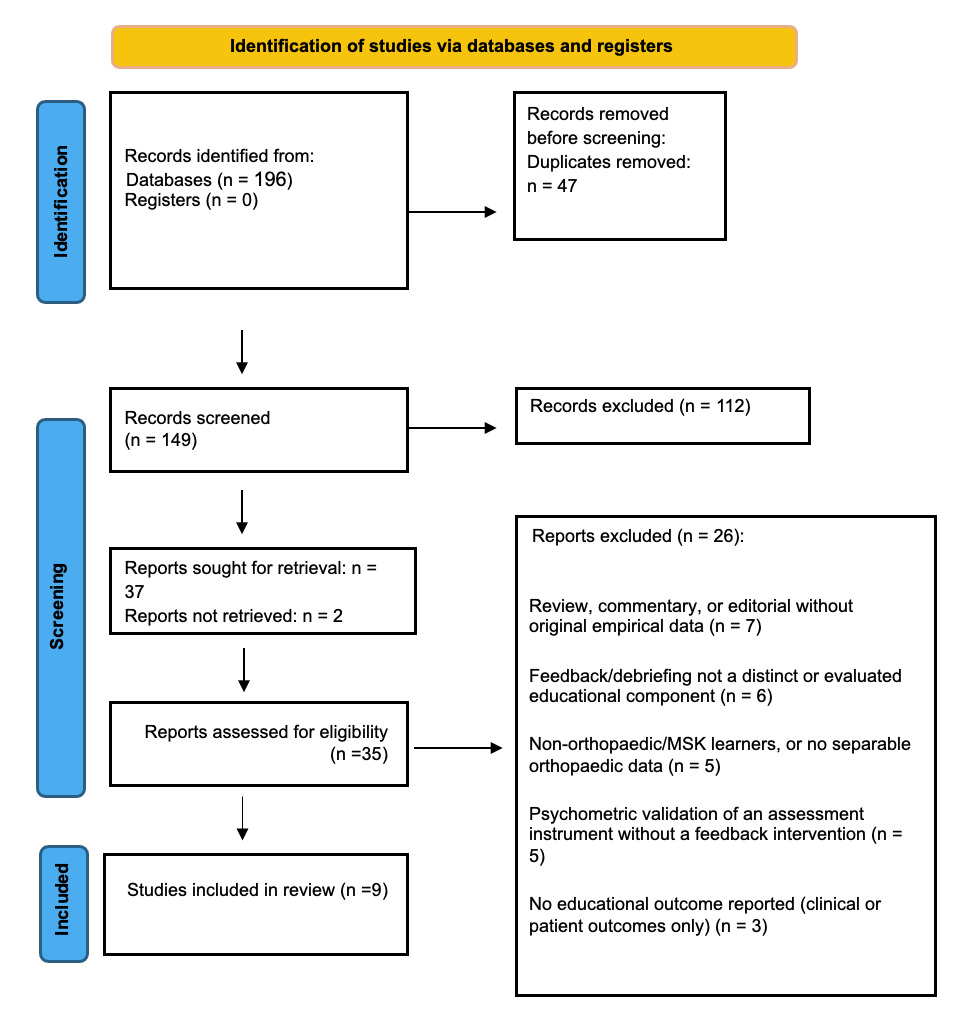
Two reviewers independently screened titles and abstracts against the eligibility criteria. Potentially eligible reports subsequently underwent independent full-text assessment. Disagreements were resolved through discussion and consensus. Reports that could not be obtained in full text after repeated retrieval attempts were recorded as not retrieved. Reasons for exclusion at the full-text stage were documented and categorized. The study-selection process is summarized in a PRISMA 2020 flow diagram (Figure 1).
2.5. Data Extraction
Two reviewers independently extracted data using a standardized extraction form. Extracted variables included publication year, country, educational setting, study design, participant characteristics and sample size, level of training, characteristics and timing of the feedback approach, the role of feedback within the broader educational intervention, comparator condition, outcome measures and assessment instruments, reassessment interval where applicable, and findings relevant to each outcome domain. Discrepancies were resolved through discussion and consensus. For studies reporting different participant counts across sequential phases of implementation, participant numbers were retained separately for each phase rather than combined, and the relevant unit of analysis was recorded. For studies nested within a parent trial, only data pertaining to the included report were extracted, while the design of the parent trial was noted where necessary to clarify the study context.
2.6. Methodological Quality Appraisal
Methodological quality was independently appraised by two reviewers using the Mixed Methods Appraisal Tool (MMAT), version 2018. The MMAT was selected because it permits appraisal of qualitative, randomized controlled, non-randomized, quantitative descriptive, and mixed methods studies within a common framework. The two MMAT screening questions were applied to each study, followed by the five design-specific criteria corresponding to the relevant methodological category. For mixed methods studies, the qualitative component, quantitative component, and mixed methods criteria were appraised separately, while screening judgments were reported once per study. Each criterion was rated as yes, no, or cannot tell. A rating of cannot tell was assigned when reporting in the primary study was insufficient to support a judgment and was distinguished from a confirmed methodological limitation. In accordance with MMAT guidance, no overall numerical score, percentage score, or summary quality classification was calculated, and no study was excluded based on methodological appraisal. Disagreements concerning study classification or individual criterion ratings were resolved through discussion and consensus.
2.7. Data Synthesis
Findings were synthesized narratively because of substantial clinical and methodological heterogeneity across learner populations, educational settings, study designs, feedback approaches, comparator conditions, outcome measures, and assessment timing. Quantitative pooling was considered inappropriate because the included studies were not sufficiently comparable with respect to intervention, design, outcome definition, or measurement approach. The synthesis was organized according to four outcome domains: objective learner performance; learner-reported and qualitative outcomes; assessment instrument properties; and feasibility, acceptability, and implementation. Feedback approaches were described separately before the outcome-based synthesis.
Effect estimates, summary statistics, and statistical comparisons were reported as presented in the primary studies. Simple descriptive proportions, including attrition where applicable, were calculated directly from reported numerators and denominators. Effect estimates were not recalculated or converted between metrics.
Where primary studies reported between-group comparisons without corresponding within-group significance testing, this distinction was retained in the synthesis. Similarly, where learner-reported outcomes related to an overall educational programme rather than specifically to the feedback component, they were described as programme-level findings and were not attributed to feedback alone. Studies in which feedback formed one component of a multicomponent educational intervention were interpreted accordingly. Publication bias was not formally assessed because no sufficiently homogeneous set of studies was available for quantitative meta-analysis or funnel-plot-based assessment.
Results
3.1. Study Selection
The database search identified 196 records. After removal of 47 duplicates, 149 records underwent title and abstract screening, of which 112 were excluded for not meeting the predefined eligibility criteria. The full texts of 37 reports were sought for retrieval; two reports could not be retrieved, leaving 35 reports for full-text eligibility assessment. Of these, 26 were excluded: seven were reviews, commentaries, or editorials without original empirical data; six did not include feedback or debriefing as a distinct or evaluated educational component; five involved non-orthopaedic or non-musculoskeletal learners or did not provide separable orthopaedic data; five were psychometric validation studies of assessment instruments without a feedback intervention; and three reported no educational outcomes, focusing exclusively on clinical or patient outcomes. Ultimately, nine studies met the eligibility criteria and were included in the systematic review (Figure 1).
3.2. Study Characteristics
The nine included studies were published between 2004 and 2025 and were conducted in five countries. Four studies were conducted in the United States, two in Canada, and one each in the United Kingdom, Chile, and France. Eight studies involved postgraduate orthopaedic trainees, with training levels ranging from PGY1 to PGY6. Arteaga et al. was the only study conducted with undergraduate learners and included final-year medical students. Study samples were generally small, with the largest randomized study enrolling 42 orthopaedic residents. Wagner et al. differed from the other studies because participation varied across four implementation phases and the study reported 182 completed assessment tools rather than a single fixed learner cohort.
The methodological designs varied across studies. Backstein et al., Karam et al., and Dickerson et al. used randomized allocation. Arteaga et al. used a quasi-experimental pre-post design with an expert reference group. Ode et al. prospectively evaluated the feasibility and implementation of a structured feedback programme, while Wagner et al. used a four-phase mixed-methods design to develop and evaluate a competency-based assessment framework. James et al. conducted a qualitative study nested within the intervention arm of a randomized trial. Gundle et al. and Samargandi used cross-sectional designs. The educational settings included simulation laboratories, cadaveric training, online learning combined with OSCE assessment, and workplace-based learning in the operating room.
Feedback constituted the primary intervention or principal educational focus in five studies. Backstein et al. compared video self-review and expert-assisted review with no feedback. Karam et al. evaluated a multicomponent intervention combining an expert performance video with personalized video review and coaching. Dickerson et al. examined the additional contribution of point-of-view video when structured faculty coaching was provided to both groups. Wagner et al. embedded feedback within a competency-based assessment framework, while Ode et al. implemented an electronic postoperative feedback programme. In James et al., Arteaga et al., and Samargandi, feedback was one component of a broader educational intervention and was not evaluated independently. Gundle et al. introduced no intervention and examined existing feedback practices.
Four studies included a formal comparison group or condition. Backstein et al. included an internal no-feedback condition, Karam et al. compared the video-based intervention with no interim intervention, and Dickerson et al. compared video-augmented coaching with structured verbal coaching alone. Arteaga et al. used an expert reference group but did not include an untrained learner control group. Samargandi asked residents to compare the educational model with traditional teaching retrospectively rather than using a concurrent control group. The remaining studies did not include an intervention comparator.
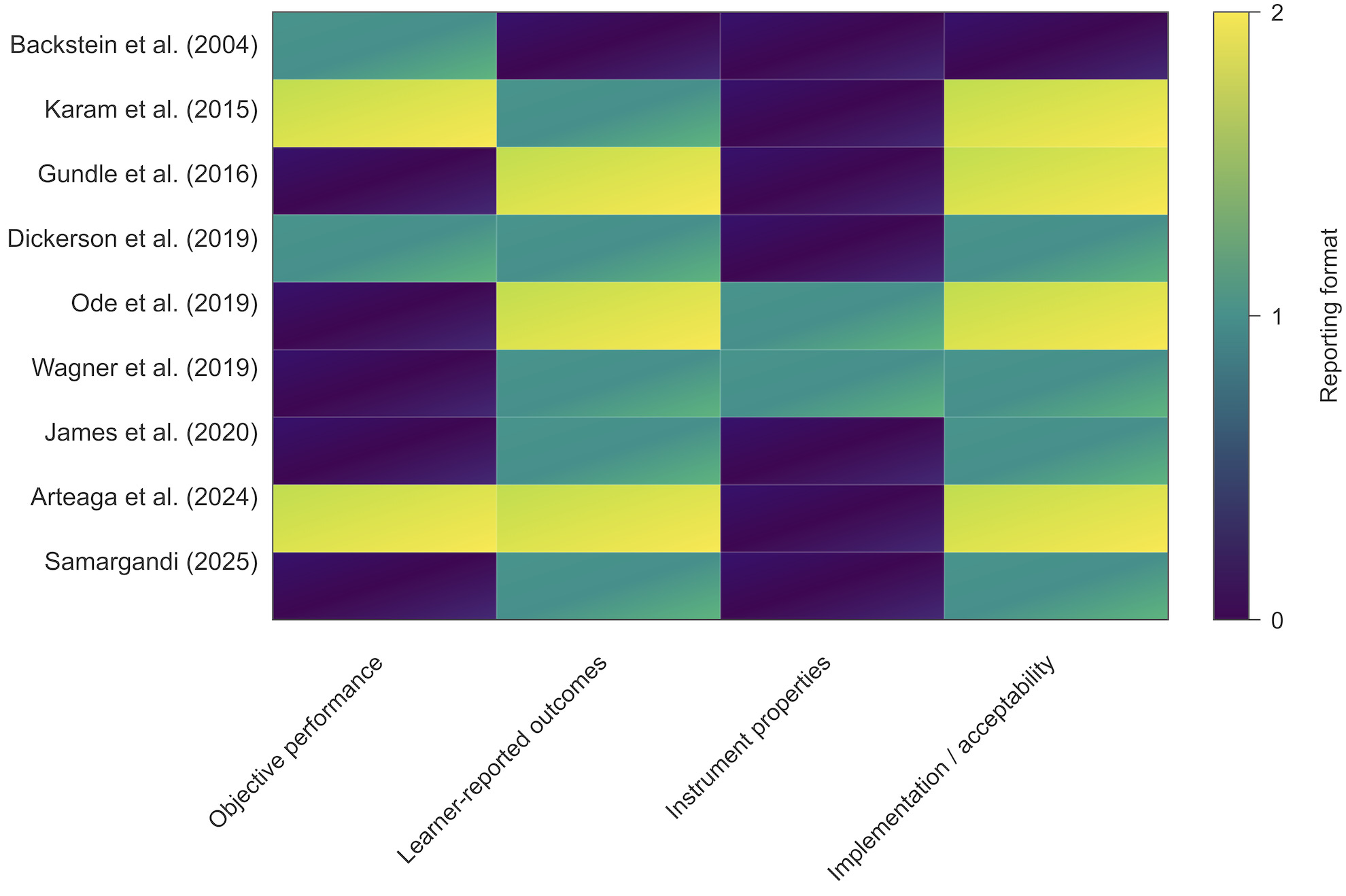
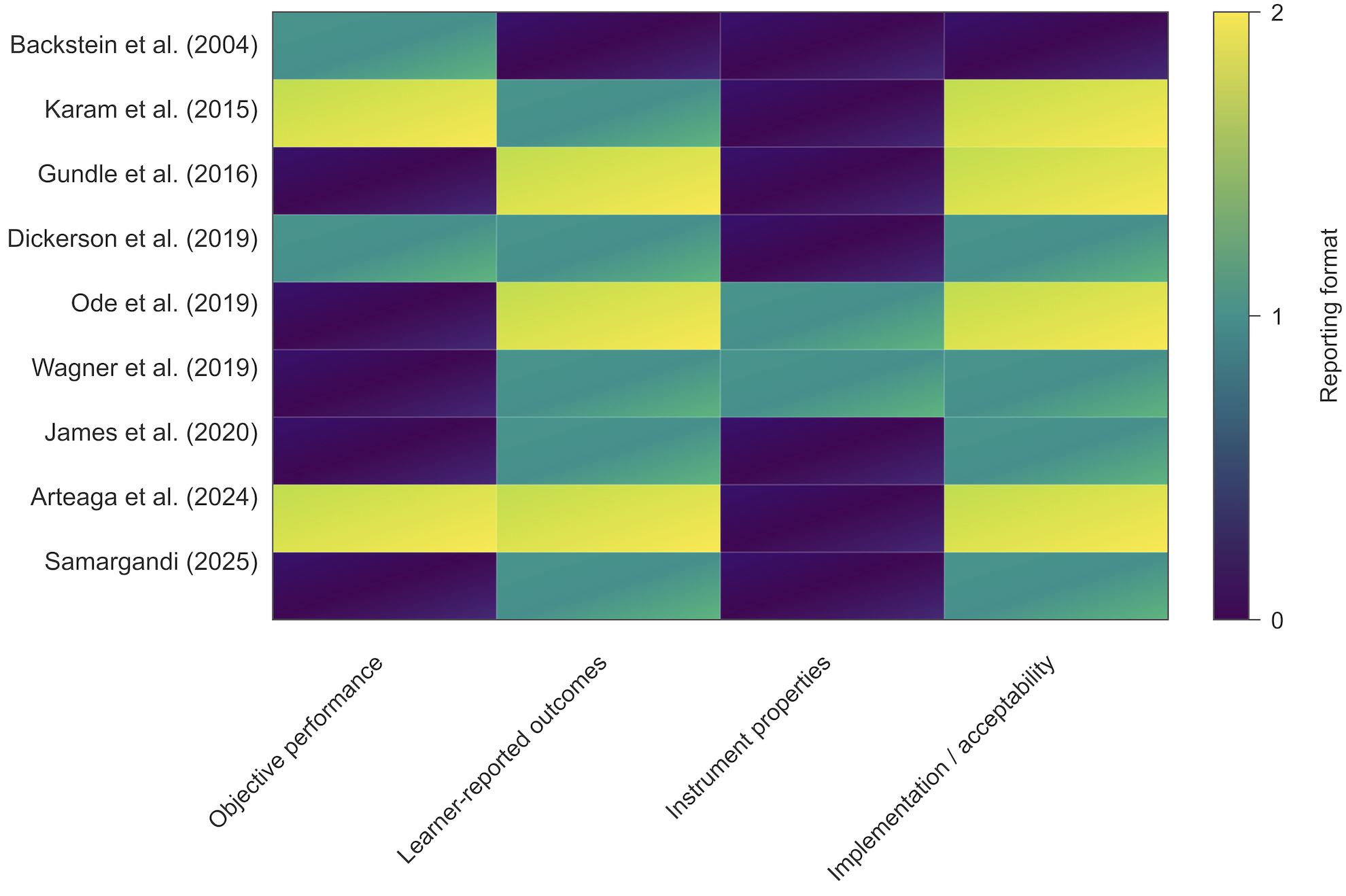
Objective learner performance was assessed in four studies: Backstein et al., Karam et al., Dickerson et al., and Arteaga et al. Learner-reported or qualitative outcomes were available in eight studies. Karam et al., Dickerson et al., and Arteaga et al. reported both objective performance and learner-centered outcomes, whereas Backstein et al. assessed objective performance without corresponding learner-reported outcomes. Wagner et al. and Ode et al. also reported quantitative findings related to instrument performance, but these represented psychometric properties rather than changes in learner performance. Implementation, feasibility, or compliance outcomes were reported in several studies and varied in scope across settings (Table 1).
3.3. Methodological Quality Appraisal
Methodological quality was appraised using the Mixed Methods Appraisal Tool (MMAT) 2018, with design-specific criteria applied to each included study. Dickerson et al. was appraised as a mixed methods study because its qualitative interview component used a structured analytic approach and was interpreted alongside the randomized quantitative findings. Ode et al. was retained as a quantitative descriptive study because its focus-group material was reported descriptively without a defined qualitative analytic methodology.
All nine studies had clearly stated research questions. Eight collected data that were sufficient to address those questions. For Samargandi, the second screening criterion was rated as cannot tell because the stated aim concerned the impact of the educational approach on learning, whereas the study primarily measured learner perceptions and satisfaction without formative or summative assessment of learning.
Methodological strengths differed by design. Baseline comparability was demonstrated in the randomized components of Karam et al. and Dickerson et al., while blinded outcome assessment was clearly reported in Dickerson et al. Qualitative findings were generally supported by participant data, and the mixed methods studies integrated quantitative and qualitative findings to varying degrees.
Several limitations were identified. Arteaga et al. had 38% attrition, lacked a concurrent untrained learner control group, and used outcome assessments completed by the same specialists who delivered the feedback intervention. Wagner et al. and Gundle et al. were affected by incomplete participation or nonresponse, while nonresponse bias could not be fully determined in Ode et al. Samargandi relied on a locally developed questionnaire with limited reported measurement properties. Several cannot tell judgments reflected incomplete methodological reporting rather than confirmed flaws, particularly for randomization procedures, representativeness, measurement properties, and some aspects of mixed methods reporting.
Screening questions: S1, Are there clear research questions? S2, Do the collected data allow the research questions to be addressed? Screening questions are reported once per study. Blank cells for subsequent mixed methods rows indicate that screening judgments were not repeated.
Criterion sets: For qualitative studies, C1-C5 assess the appropriateness of the qualitative approach, adequacy of data collection, derivation of findings, substantiation of interpretations, and methodological coherence. For randomized studies, C1-C5 assess randomization, baseline comparability, completeness of outcome data, blinding of outcome assessors, and adherence to the assigned intervention. For non-randomized studies, C1-C5 assess representativeness, appropriateness of measurements, completeness of outcome data, control of confounding, and administration of the intervention as intended. For quantitative descriptive studies, C1-C5 assess sampling strategy, representativeness, appropriateness of measurements, nonresponse bias, and statistical analysis. For mixed methods studies, C1-C5 assess the rationale for the design, integration of components, interpretation of integrated findings, handling of divergences, and methodological quality of the individual components.
Consistent with MMAT guidance, no overall numerical score, percentage, or summary quality classification was calculated. For Samargandi, the design-specific criteria are presented descriptively despite uncertainty regarding screening question S2 and should be interpreted accordingly.
3.4. Feedback-Based Teaching and Learning Approaches
The nine included studies used feedback in substantially different ways, with variation in delivery, timing, format, and the role that feedback played within the educational intervention. Three studies experimentally examined video supported feedback or coaching (Backstein et al., 2004; Karam et al., 2015; Dickerson et al., 2019). Two studies focused on structured systems designed to facilitate formative workplace-based feedback (Wagner et al., 2019; Ode et al., 2019). In three studies, feedback formed part of a broader educational programme rather than a standalone intervention (James et al., 2020; Arteaga et al., 2024; Samargandi, 2025). Gundle et al. (2016) did not introduce an intervention and instead examined existing feedback practices within an orthopaedic residency programme.
Video supported feedback was the most frequently studied approach. Backstein et al. compared no feedback, independent video self review, and video review accompanied by expert feedback after completion of orthopaedic technical tasks. This design allowed self review to be considered separately from faculty guided review. Karam et al. evaluated a multicomponent coaching intervention in which junior residents reviewed their recorded baseline performance with an orthopaedic traumatologist and were also given access to an expert performance video. The repeat task was performed six weeks after baseline, with the coaching intervention delivered before the repeat assessment. Dickerson et al. used a different comparison. Both groups received structured faculty coaching, while point of view video was added only in the intervention group. These studies therefore addressed different educational questions, including the value of self review, expert coaching, and the additional contribution of video when coaching was already provided. Structured performance rating instruments, including OSATS based measures, were used to evaluate subsequent performance.
Workplace based assessment was another setting in which feedback was incorporated into teaching. Wagner et al. developed a competency based assessment framework that combined task specific checklists, global rating scales, entrustment anchors, and narrative prompts intended to make formative feedback more frequent and specific. Feedback was usually provided close to the operative event and incorporated into routine residency training. Ode et al. introduced a web based O SCORE programme in which residents initiated postoperative assessments and faculty completed entrustment ratings and narrative feedback. Verbal discussion accompanied the electronic assessment in most completed encounters. In both studies, the assessment process served not only to document performance but also to structure case specific feedback.
Three studies used feedback within broader learning programmes. James et al. described real time consultant feedback as one component of an intensive cadaveric simulation course that also included paired learning, full procedural practice, and multidisciplinary participation. Arteaga et al. combined a four week e learning programme with asynchronous expert feedback on recorded musculoskeletal OSCE performances. Feedback was provided through written comments, audio recordings, drawings, and structured checklists that learners could review repeatedly. Samargandi used a three-stage model consisting of preoperative briefing, reverse operative teaching, and structured debriefing. Debriefing was linked explicitly to reflective practice and experiential learning, although its effect could not be separated from the other components of the intervention.
The studies therefore represented a broad range of feedback practices, from independent self-review and faculty coaching to structured workplace assessment, real time intraoperative feedback, debriefing, and asynchronous multimedia feedback. Differences in timing, delivery, and the extent to which feedback was embedded within larger instructional programmes limited direct comparison between approaches.
3.5. Educational Outcomes of Feedback-Based Learning
Educational outcomes were assessed using both objective performance measures and learner reported outcomes. Objective measures were available in a minority of studies, while perceptions of usefulness, reflection, confidence, engagement, and feedback quality were reported more frequently. In several studies, feedback was combined with simulation, online learning, structured assessment, or preparatory teaching. The educational effects of feedback could therefore not always be separated from those of the wider intervention.
Four studies assessed learner performance using structured objective measures: Backstein et al., Karam et al., Dickerson et al., and Arteaga et al. Wagner et al. and Ode et al. reported quantitative findings related to assessment reliability, discrimination, and implementation, but these did not represent evidence of improvement in learner knowledge or performance. Samargandi and James did not report objectively measured learner performance. Samargandi explicitly noted the absence of formative or summative evaluation and identified this as a limitation when considering any effect on residents’ knowledge.
Karam et al. reported the clearest between group improvement among the video-based studies. At the six weeks repeat assessment, residents who received the multicomponent video coaching intervention achieved higher OSATS scores than controls (73 ± 8 vs. 55 ± 7), with a greater change from baseline (21 ± 8 vs. 6 ± 3; p < 0.05). Fluoroscopy use also improved significantly relative to the control group, while task completion time did not differ significantly. Because the intervention combined expert modelling, personalized faculty coaching, and review of the learner’s own performance, the contribution of feedback alone could not be determined.
Dickerson et al. examined whether point of view video added benefit to structured verbal coaching. Both groups showed numerical improvement in OSATS scores, Global Rating Scale scores, fracture diastasis, and fracture step off between attempts, but no within group significance testing was reported. The addition of video did not produce a statistically significant between group advantage for the OSATS checklist, Global Rating Scale, fluoroscopy use, fracture step off, or fracture diastasis. The study therefore did not demonstrate an objective incremental benefit from adding video to a structured coaching session.
Backstein et al. also found no statistically significant differences between no feedback, video self-review, and video review with expert feedback across nine between group comparisons involving three technical tasks. Checklist scores, global rating scores, and task completion time did not differ significantly between conditions. Expert supported video review also showed no measurable advantage over self-review alone.
Arteaga et al. reported improved musculoskeletal examination performance after a four-week online training and feedback programme. Among interns who completed both assessments, mean OSCE scores increased from 50.6 ± 15.1 to 76.6 ± 12.8 (p < 0.01). Experts performed significantly better than interns before training, whereas no significant difference remained after the intervention (71.2 vs. 76.6; p = 0.43). The study did not include an untrained intern control group, and the intervention combined online instructional material with asynchronous expert feedback. The improvement therefore cannot be attributed specifically to the feedback component.
The objective evidence was consequently mixed. One controlled study found improved simulated procedural performance following a multicomponent video coaching intervention, while two studies found no significant advantage from video supported feedback under different comparison conditions. A quasi-experimental study reported substantial within group improvement after a combined online learning and feedback programme. None of the included studies objectively tested knowledge acquisition, delayed retention, clinical reasoning using a dedicated instrument, or transfer of learning to real patient performance.
Learner centered, perception based, or qualitative outcomes were reported in eight of the nine studies. These findings addressed reflection, self-awareness, learning goals, confidence, engagement, satisfaction, perceived educational value, and interactions between learners and faculty. They were considered separately from objectively measured performance.
Reflection and self awareness were recurrent findings. Participants in Dickerson et al. described video supported coaching as useful for reviewing their own actions, reconsidering decisions, and reflecting on performance, despite the absence of a significant additional objective benefit. Residents in Wagner et al. reported that structured formative assessment helped them identify areas for improvement and establish goals for later procedures. Reflection on action was also an explicit component of the debriefing model used by Samargandi.
Several studies also reported clearer learning expectations. Residents in Wagner et al. described task specific assessment tools as helping them understand expected performance and identify individual procedural steps requiring improvement. Participants in Samargandi’s study reported that structured briefing and reverse teaching gave them clearer objectives and better directed their preparation. In Dickerson et al., residents perceived video coaching as useful for understanding procedural goals and developing strategies for subsequent attempts.
Confidence, engagement, and communication with faculty were also reported. Residents in Samargandi’s study indicated that the model increased their self-confidence, made them more comfortable asking senior surgeons questions, and supported greater engagement with operative learning. Participants in James et al. described increased confidence and operative fluency after cadaveric simulation and placed value on direct one to one consultant feedback. In Ode et al., residents and faculty frequently identified real time structured discussion as a benefit of the programme, although responses regarding its overall value were mixed.
Perceived usefulness was generally favorable, but not consistently so. Arteaga et al. reported that 93% of participants considered the programme useful for clinical practice and all participants said they would recommend it to a colleague. Participants in Karam et al. rated the overall simulation programme highly, although these responses referred to the training programme rather than the coaching component specifically. In Ode et al., only 58% of residents and 56% of faculty considered the O SCORE programme valuable, with neutral and negative responses often related to form design, technology, and the process of requesting feedback. Gundle et al. found a clear difference between resident and faculty perceptions of existing feedback practices. Residents reported receiving immediate technical feedback after a significantly smaller proportion of cases than faculty reported providing (p < 0.001), and they were significantly less satisfied with the amount of feedback received (p = 0.002).
Learner reported findings were therefore more consistently favorable than objective performance outcomes. Reflection, clearer learning expectations, perceived educational value, and improved interaction with faculty appeared repeatedly across studies. Negative or mixed responses were most evident when feedback systems introduced additional administrative, technological, or interpersonal demands.
3.6. Feasibility, Acceptability, and Implementation of Feedback
Eight studies reported at least one finding related to feasibility, acceptability, or implementation, although implementation data were most extensive in Wagner et al., Ode et al., Gundle et al., Arteaga et al., and James et al. Common issues included participation, timeliness, compatibility with clinical workflow, technological demands, administrative support, and the perceived value of the feedback process.
The two studies that formally implemented structured workplace-based feedback systems both reported incomplete uptake. In Ode et al., residents completed 404 of 608 requested forms (66.5%), while faculty completed 207 of 326 forms received (63.5%). Wagner et al. also observed limited participation during voluntary phases. Completion increased substantially only after one assessment per week became a formal programme requirement supported by monitoring and accountability. These findings suggest that simply making a feedback tool available was not sufficient to ensure regular use.
Timeliness was another recurrent concern. Gundle et al. reviewed 1,556 faculty evaluations and found that fewer than 20% were received within one week of rotation completion, more than 30% were received after more than one month, and the mean interval to written feedback was 43 days. Residents also reported less frequent immediate feedback than faculty reported providing. Ode et al. identified delayed requests for feedback as a barrier, while Wagner et al. noted that postoperative completion was preferred but was not always practical within routine clinical work.
Several factors appeared to support implementation. Wagner et al. identified programme leadership, faculty participation in tool development, administrative follow up, and formal accountability as important. Faculty involved in development were more likely to use the system. Arteaga’s asynchronous approach avoided the need for teachers and learners to be available at the same time, although six faculty members reviewed 135 recorded performances. Participants in James et al. supported incorporating cadaveric simulation into the curriculum, although the programme required substantial material resources and faculty involvement.
Barriers were similar across settings. Time pressure reduced opportunities for immediate face to face feedback. Residents in both Wagner et al. and Ode et al. described discomfort with repeatedly asking supervising faculty to complete assessments. Technology created additional difficulties. Ode’s electronic platform was associated with interface burden and repeated email notifications, whereas Wagner’s paper-based system was considered difficult to manage and resource intensive. Video based approaches introduced different logistical demands. Karam et al. reported that approximately two hours of editing were required for every 15 minutes of recorded material. Dickerson et al. reported a learning period for the equipment, limitations in field of view, and difficulty incorporating fluoroscopic information into point of view video review.
Acceptability varied according to the educational model. Residents in Samargandi’s study generally did not regard the briefing, teaching, and debriefing model as excessively time consuming and largely supported its incorporation into residency teaching. The approach, however, depended on senior surgeons initiating and conducting the process. Ode et al. reported considerably more neutral and negative responses to the O SCORE programme despite successful technical implementation. Feasibility and perceived educational value therefore appeared related, but they were not interchangeable.
Structured feedback could be implemented in orthopaedic education, but sustained use depended on timely integration into clinical workflow, faculty participation, learner willingness to request feedback, and practical delivery systems. Time constraints, incomplete participation, delayed feedback, administrative burden, technological limitations, and variation in faculty practice were the most consistently reported implementation challenges.
Discussion
The available evidence supports the educational relevance and feasibility of structured feedback in orthopaedic and musculoskeletal education more clearly than it establishes a consistent effect on objectively measured learner performance. Feedback was delivered through markedly different models, including video-supported review, surgical coaching, workplace-based formative assessment, operative feedback, debriefing, and asynchronous expert commentary. In several studies, it was embedded within broader educational programmes, making its independent contribution difficult to isolate. This pattern is consistent with contemporary feedback theory, which conceptualizes feedback as a process requiring learner interpretation, engagement, and subsequent action rather than the passive receipt of information.8 Accordingly, the educational value of feedback may depend as much on how learners and supervisors use it as on the delivery format itself.
The mixed objective findings should not be interpreted as a simple contrast between successful and unsuccessful interventions because the studies addressed different educational questions. A multicomponent coaching package compared with no interim intervention examines whether structured instructional contact adds value to unaided repetition, whereas a trial in which both groups receive structured verbal coaching evaluates only the incremental benefit of adding video. Similarly, comparison of self-review, expert-assisted review, and no feedback tests a different mechanism. Failure of video augmentation to outperform structured coaching therefore does not establish that coaching lacks educational value. Evidence from surgical education similarly indicates that the apparent benefit of video-based coaching varies according to the outcome metric and comparator used.9 One plausible interpretation is that guided analysis, goal setting, reflection, and deliberate practice may represent more important educational mechanisms than the recording technology itself. This is consistent with conceptual work describing feedback and debriefing as learning conversations in which meaning is constructed through structured dialogue.10
Learner-reported outcomes were more consistently favorable than objective performance findings, particularly for reflection, clarity of expectations, confidence, engagement, and interaction with faculty. These outcomes remain educationally relevant but should not be interpreted as evidence of improved technical performance. Perceived usefulness should not be assumed to correspond directly to demonstrable learning or performance improvement.11 Positive learner experience may nevertheless support engagement with feedback by encouraging reflection, clarification of goals, and willingness to modify subsequent practice. Psychological safety is also relevant because learners must be able to acknowledge uncertainty and performance limitations without anticipating adverse interpersonal consequences.12 Thus, learner perceptions may represent potential mechanisms of engagement rather than substitutes for objective evidence of educational effectiveness.
Implementation emerged as a substantive component of the educational process rather than a secondary operational concern. Incomplete participation, delayed feedback, administrative workload, technological burden, uneven faculty engagement, and learner reluctance to request assessments all reduce the amount and timeliness of feedback received. The included studies do not establish that these barriers caused null performance findings, but they distinguish efficacy under structured educational conditions from sustainability in routine clinical practice. Systems dependent on learner initiation also require attention to workflow, accountability, and the interpersonal context surrounding feedback seeking. Faculty development is particularly relevant as supervisors increasingly assume coaching roles within competency-based curricula.13 Entrustment-based frameworks similarly depend on meaningful observation and feedback rather than assessment documentation alone.14
The evidence also identifies important priorities for future research. Studies should distinguish the active components of feedback interventions, use appropriate active comparators, employ validated outcome measures, and extend assessment beyond immediate post-intervention performance. Delayed retention, transfer to real operative practice, independently measured clinical reasoning, and durability of behavioural change remain largely unexamined. Implementation fidelity should also be reported so that limited exposure to an intervention is not conflated with lack of educational effect. Future work should further examine how feedback and coaching conversations develop learners’ capacity for self-directed improvement over time.15
Several limitations qualify these interpretations. Only nine studies were included, several had small samples, and substantial variation existed in design, feedback modality, comparator, outcome measure, and reassessment timing. Feedback was incorporated within multicomponent interventions in several studies, self-reported outcomes were common, and the heterogeneity of the evidence precluded meta-analysis. Eligibility was restricted to English-language reports, and the review protocol was not prospectively registered. Structured feedback nevertheless appears educationally meaningful and generally acceptable across orthopaedic training settings. No single delivery modality has been shown to improve objective performance consistently, and its educational value appears to be shaped not only by how feedback is delivered, but also by how effectively it is integrated into the clinical and educational environment.
Conclusions
Current evidence supports structured feedback as a feasible and educationally relevant component of orthopaedic and musculoskeletal training, but its effect on objectively measured learner performance remains inconsistent. Interpretation is limited by heterogeneous feedback models, small study samples, and the frequent use of multicomponent interventions that prevent attribution of outcomes to feedback alone. Learner-reported benefits, particularly reflection, clearer expectations, and engagement, were more consistent than objective performance gains, while implementation was constrained by workflow, participation, and timeliness. No single feedback modality can currently be considered superior. Future studies should isolate the active components of feedback, use appropriate comparators and validated performance measures, and examine retention and transfer to authentic clinical practice. More rigorous evidence is needed to determine how feedback can produce durable educational benefit within routine orthopaedic training.
Acknowledgments
None
Author Contributions
The author was responsible for conceptualization, methodology, literature search, study selection, data curation, formal analysis, interpretation of results, and drafting and revising the manuscript. The author approved the final version of the manuscript
Ethics Approval
Not applicable. This study is a systematic review of previously published trials and did not involve new studies with human participants or animals
Clinical Trial Number
Not applicable
Consent to Participate
Not applicable
Funding
The author declares that no funding was received for this study
Conflicts of Interest
The author declare no financial or non-financial interests that are directly or indirectly related to the work submitted for publication
Consent for Publication
Not applicable
Availability of Data and Materials
All data generated or analyzed during this study are included in this published article and its supplementary information files
Code Availability
Not applicable