
Introduction
Persistent pain after total knee arthroplasty (TKA) can remain a substantial burden despite surgical treatment of the underlying joint disease. In a population cohort of 128,145 patients undergoing knee replacement, Pinedo-Villanueva et al. identified a high-pain subgroup comprising 15% of patients at six months. This subgroup also reported problems across health-related quality-of-life domains.1 These findings support a continued need for treatment modalities for those suffering from chronic knee pain despite corrective surgery.
Peripheral nerve stimulation (PNS) is one treatment option of interest. In a randomized, placebo-controlled trial of 60-day percutaneous PNS for persistent pain after TKA, 60% of participants receiving active stimulation and 24% receiving sham stimulation achieved at least 50% pain reduction during weeks five through eight. Active treatment also improved walking distance at the end of treatment. The trial targeted the femoral and sciatic nerves, so its results do not directly establish outcomes for genicular nerve stimulation.2
Published clinical reports include stimulation of the saphenous and superior lateral genicular nerves for chronic pain after knee surgery, as well as PNS for pain in a patient with prior TKA and a non-operable patella fracture.3,4 A retrospective cohort examined permanent PNS targeting saphenous nerve branches for chronic postsurgical knee pain,5 and a separate retrospective analysis evaluated 60-day PNS for chronic knee pain.6 These reports provide clinical context, but differences in nerve targets, patient populations, and device configurations are relevant when describing a new series.
The present series describes three patients with chronic knee pain following TKA who received PNS targeting the superior medial and superior lateral genicular nerves. Two patients completed 60-day treatment courses. The third experienced substantial initial relief, followed by lead dislodgement and rapid pain recurrence, and subsequently underwent permanent implantation at the same nerve targets.
Case Presentations
Patient 1
Patient 1 had chronic knee pain following TKA and underwent PNS targeting the superior medial and superior lateral genicular nerves with a 60-day system. At the end of the treatment course, the patient reported 65% pain relief at lead removal. The patient was instructed to follow up if pain returned or if a permanents system was desired in the future.
Patient 2
Patient 2 had chronic knee pain following TKA and received a 60-day PNS system targeting the superior medial and superior lateral genicular nerves. At the end of treatment, the patient reported 70% pain relief at lead removal. The patient was instructed to follow up if pain returned or if a permanents system was desired in the future.
Patient 3
Patient 3 had chronic knee pain following TKA. The patient initially underwent PNS targeting the superior medial and superior lateral genicular nerves using a system intended for 60 days of treatment. At the one-month follow-up, the patient reported 80% pain relief. The temporary leads became dislodged, and the pain rapidly returned.
Following recurrence of pain, the patient underwent permanent PNS implantation targeting the same superior medial and superior lateral genicular nerves. At postoperative month two, the patient reported sustained 65% pain relief.
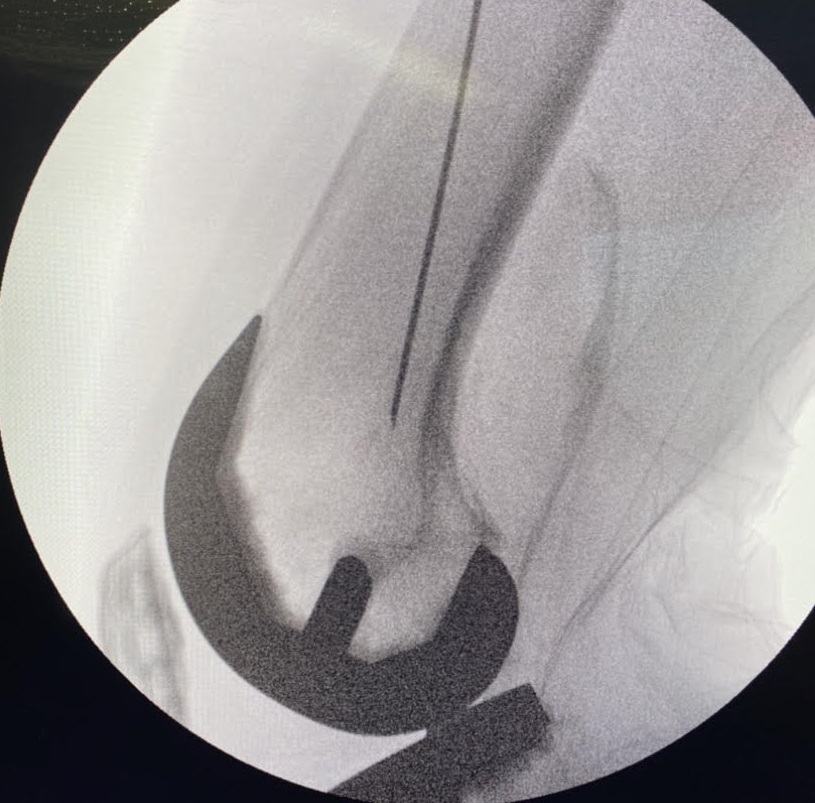
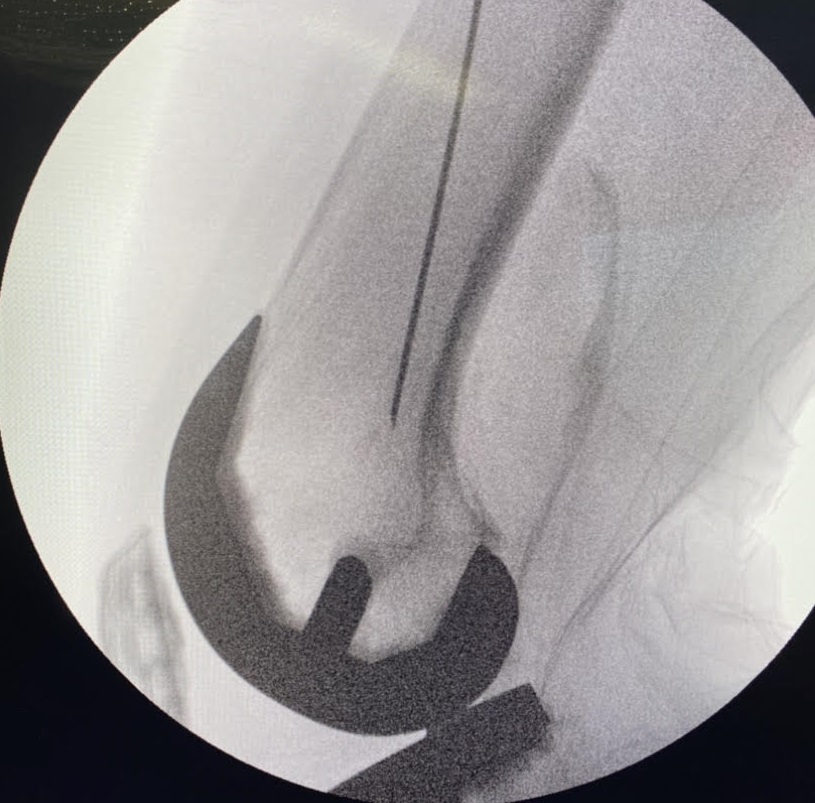
An example of lead placement is shown below in figure 1
Results
Patients 1 and 2 reported 65% and 70% pain relief, respectively, at completion of their 60-day treatment courses. Patient 3 reported 80% relief at one month during temporary treatment, followed by rapid recurrence of pain after lead dislodgement. After permanent implantation at the same targets, the patient reported sustained 65% relief at postoperative month two. Table 1 summarizes these distinct treatment courses and assessment points.
Discussion
In this series, all three patients experienced meaningful pain relief with PNS directed at the superior medial and superior lateral genicular nerves after TKA. Patients 1 and 2 reported 65% and 70% pain relief, respectively, at the end of the 60-day treatment period. Patient 3 reported 80% relief at one month. These results are encouraging, although the small number of patients and lack of a control group limit any conclusions regarding efficacy.
The response seen in patient 3 is of particular interest. Their pain improved substantially while the temporary leads were functioning and returned rapidly after lead dislodgement. Following permanent implantation at the same targets, their pain again improved, with 65% relief reported at two months. It demonstrates that 60-day PNS therapy may may be utilized as a trial to identify patients who are appropriate candidates for permanent implantation.
Recent reports provide additional support for investigating genicular nerve targets in this population. A 2025 report described genicular PNS targeting the superomedial and superolateral genicular nerves for chronic postsurgical knee pain, with greater than 70% pain relief reported during treatment and continued benefit after permanent implantation.7 A 2026 case series of five patients evaluated motor PNS for chronic postsurgical pain after TKA; three patients continued to report pain relief through six months following 60 days of treatment.8 Although the techniques and nerve targets differed from those used in our patients, these reports suggest that PNS may provide benefit that extends beyond the active treatment period.
The choice of the superior medial and superior lateral genicular nerves may be useful in patients with persistent, localized knee pain following TKA. However, chronic post-TKA pain has multiple potential causes, and not all patients are likely to respond to peripheral neuromodulation. Further study is needed to determine which patients are most likely to benefit and whether specific pain characteristics can be used to guide target selection.
Limitations
This series is limited by its small sample size of three patients and lack of a control group. Pain outcomes were based primarily on patient-reported percentage relief rather than standardized longitudinal measures of pain, function, quality of life, or medication use. Follow-up was also limited, particularly for patients 1 and 2, who were assessed at completion of the 60-day treatment period. The durability of benefit therefore remains uncertain. In addition, the lead dislodgement and subsequent permanent implantation in patient 3 represent the experience of a single patient and cannot be used to draw conclusions regarding complication rates or the predictive value of temporary PNS response. Larger prospective studies with standardized outcomes and longer follow-up are needed to better define the role of genicular PNS after TKA.
Conclusion
In this three-patient series, PNS targeting the superior medial and superior lateral genicular nerves was associated with reported pain relief in patients with chronic pain after TKA. Two patients reported 65% and 70% relief at completion of 60-day treatment. One patient experienced 80% relief at one month before temporary lead dislodgement and rapid pain recurrence, followed by sustained 65% relief at two months after permanent implantation. These observations warrant further evaluation of genicular PNS and longer follow-up to characterize persistence of benefit.