
Introduction
Postoperative pain following orthopedic spine procedures, including laminectomies, discectomies, and complex spinal fusions, is severe and challenging to manage.1–3 Patients frequently report the initial 48 hours after these surgeries as the most uncomfortable period of recovery. Extensive tissue dissection, muscle retraction, and manipulation of neurological structures result in nociceptive and neuropathic pain.2 Addressing both pathways is necessary for adequate analgesia and functional restoration. Historically, the cornerstone of postoperative analgesia in this patient population has been opioid pharmacotherapy.3 Intravenous patient-controlled opioid delivery systems were routinely utilized. However, systemic administration of high-dose opioids is associated with adverse effects, including postoperative nausea and vomiting (PONV), respiratory depression, ileus, excessive sedation, and prolonged hospital length of stay.4 These side effects impact hospital resources and delay early mobilization and discharge efforts. Furthermore, the global opioid crisis has prompted surgical specialties to minimize reliance on opioid prescriptions upon discharge.5 Consequently, institutional protocols are being revised to align with national stewardship guidelines.
In response, Enhanced Recovery After Surgery (ERAS) protocols have increasingly prioritized multimodal, opioid-sparing analgesic regimens.6 The primary goal is to target multiple pain receptor sites simultaneously. Multimodal analgesia utilizes additive and/or synergistic combinations of pharmacological agents, such as acetaminophen, non-steroidal anti-inflammatory drugs (NSAIDs), and gabapentinoids, alongside regional anesthetic techniques.7 This layered approach provides baseline analgesia that may reduce opioid requirements. Despite optimization of pharmacological pathways, breakthrough pain remains common, necessitating non-pharmacological interventions.8 TENS is a non-invasive adjunct with a favorable risk-to-benefit ratio for managing acute postoperative surgical pain.9 TENS devices are accessible, deployable at the bedside, and require minimal technical support.
TENS involves delivering low-voltage electrical currents to the skin via surface electrodes to stimulate peripheral nerves and modulate pain perception.9–12 The adjustable electrical pulse allows treatments to be tailored to individual tolerance and pain severity. While TENS has been utilized in chronic pain management and physical rehabilitation, its application in the acute postoperative phase of orthopedic spine surgery has gained renewed interest.11 The appeal of TENS includes its localized application, lack of systemic side effects, and potential for patient-controlled analgesia.12 Patient-controlled devices may improve autonomy during hospitalization. As surgical techniques in orthopedics evolve toward minimally invasive approaches, localized pain management modalities must adapt accordingly.13
The primary objective of this narrative review, therefore, is to evaluate current literature regarding use of TENS for postoperative pain management in orthopedic spine surgery. Synthesizing this data bridges knowledge gaps and offers practical recommendations for clinical practice. Through analyzing physiological mechanisms, clinical outcomes, implementation protocols, and limitations, this article aims to provide an evidence-based framework for spine surgeons and perioperative physicians. Standardizing the application of TENS has the potential to enhance postoperative recovery, to reduce opioid exposure, although improvements in patient satisfaction in spinal surgery populations require further study.14
Methods
A focused literature search was conducted via PubMed to identify relevant peer-reviewed studies, including randomized controlled trials, systematic reviews, and clinical guidelines, evaluating the use of TENS for acute postoperative pain management in orthopedic spine surgery. The search strategy utilized key terms such as “TENS,” “orthopedic spine surgery,” “postoperative pain,” and “multimodal analgesia” to capture literature detailing neurophysiological mechanisms, clinical outcomes, implementation protocols, and safety profiles. Articles were selected based on their evaluation of core clinical endpoints, including pain score reductions, opioid-sparing effects, functional recovery, and protocol optimization. The extracted data were subsequently synthesized into thematic categories, bridging underlying biological mechanisms with practical clinical outcomes across lumbar, thoracic, and cervical procedures to establish an evidence-based framework for clinical practice. This was a narrative review rather than a systematic review or meta-analysis. The cited literature spans 1965–2026. Spine-surgery studies were considered direct clinical evidence; studies of other procedures, chronic pain, and experimental mechanisms were used as contextual evidence and not as proof of postoperative spine-specific benefit.
Neurophysiological Mechanisms of Action
The analgesic efficacy of TENS involves neurobiological interactions within both the peripheral and central nervous systems. The foundational mechanism for TENS-induced analgesia is the ‘Gate Control Theory of Pain’, proposed by Melzack and Wall.15 According to this model, stimulation of large-diameter, myelinated A-beta afferent nerve fibers via TENS electrical current activates inhibitory interneurons within the substantia gelatinosa of the spinal cord’s dorsal horn.15,16 This activation inhibits nociceptive signals transmitted by slower, unmyelinated C fibers and thinly myelinated A-delta fibers, decreasing the propagation of pain signals to the thalamus and higher cortical centers.17 By intercepting these signals, the central nervous system can modulate pain perception.
Beyond the segmental spinal gating mechanism, TENS engages descending inhibitory pain pathways within the central nervous system. High-frequency (conventional) TENS (50-120 Hz) and low-frequency (acupuncture-like) TENS (2-10 Hz) activate partly distinct neurochemical pathways. Dynorphin/kappa-opioid mechanisms have been described in related high-frequency electroacupuncture research.18 However, TENS-specific experimental studies, largely in animals, more commonly associate low-frequency stimulation with mu-opioid receptors and high-frequency stimulation with delta-opioid receptors.19 Spinal GABA release and GABA(A)-receptor activation also contribute to TENS-induced antihyperalgesia.20 These inhibitory pathways dampen nerve excitability and provide analgesia. Moreover, evidence supports the importance of a strong, nonpainful intensity for clinical benefit.9
In orthopedic spine surgery, the local effects of TENS on paraspinal musculature and tissue hemodynamics are relevant. Mechanical disruption caused by surgical instruments leads to paraspinal muscle spasms, which exacerbate postoperative pain and limit early mobilization.21 TENS application over these muscles produces sensory paresthesia; motor responses depend on the stimulation parameters. Evidence for improved paraspinal muscle function derives mainly from chronic low-back-pain studies and remains uncertain after spine surgery.22 Low-frequency TENS increased cutaneous blood flow in healthy volunteers, but this does not establish improved surgical-site perfusion.23 Anti-inflammatory effects have also been reported in a rat knee-osteoarthritis model; their relevance to postoperative paraspinal tissues remains unproven.24
It has been hypothesized that the perioperative application of TENS may mitigate central sensitization, a neuroplastic process implicated in the transition from acute postoperative pain to chronic failed back surgery syndrome (FBSS).25 Experimental TENS studies support antihyperalgesic and endogenous opioid effects, but do not establish prevention of chronic pain after spine surgery.26 Modulating this afferent input aims to blunt the central nervous system response to surgical trauma. Consequently, pending further clinical validation, integrating TENS in the immediate postoperative period may provide acute analgesia; any prophylactic effect against long-term neuropathic pain remains unproven.27
Clinical Efficacy in Orthopedic Spine Surgery
The clinical efficacy of TENS in the immediate postoperative phase has been evaluated mainly in patients undergoing lumbar spine surgeries, including laminectomies and spinal fusions. Clinical studies suggest that adjunctive TENS may reduce postoperative pain or analgesic requirements, although study designs and stimulation parameters vary.11,14,21,28 Evidence from nonspecific chronic low back pain should be distinguished from acute postoperative evidence.29 Adequate dynamic analgesia remains an important goal, but consistent improvements in walking-related pain after spine surgery have not been established.14,21
A primary clinical endpoint in spine surgery is the reduction of postoperative opioid consumption. Evidence suggests a potential opioid-sparing effect of TENS as part of multimodal care.21,28 However, results from other orthopedic procedures are mixed; a randomized total knee arthroplasty trial did not demonstrate a significant reduction in analgesic use.30 Broader postoperative meta-analyses report reduced opioid use and some opioid-related adverse effects, including PONV, but reductions in respiratory depression or ileus after spine surgery have not been established.14 Findings on pulmonary recovery from abdominal surgery provide indirect evidence only.31 Effects on hospital length of stay (LOS) remain uncertain: the spine-surgery studies summarized by Lee et al. did not show statistically significant reductions, whereas the broader postoperative meta-analysis reported only a borderline difference.14,21
The implications of TENS on functional recovery and physical therapy milestones are relevant to orthopedic outcomes. Early ambulation is a core component of recovery following spinal arthrodesis.32 TENS may facilitate participation in physiotherapy by reducing movement-related pain, although supporting evidence includes abdominal surgery and does not establish earlier ambulation milestones after spine surgery.33 Studies of stimulation location support possible opioid-sparing effects, but do not establish prevention of muscle atrophy or earlier discharge after spine surgery.34 Prior to physical therapy sessions, TENS settings should specifically be strong with subnoxious intensity; meta-analytic data identify adequate intensity as an important determinant of benefit.11 Whether these analgesic effects translate into earlier discharge requires further study.
While most literature focuses on the lumbar spine, evidence regarding TENS in cervical and thoracic procedures remains limited. Methodological concerns in postoperative TENS studies, including randomization and blinding, warrant cautious interpretation.35 An early report included both cervical and lumbar laminectomy patients and described symptomatic improvement.36 However, the spine-surgery scoping review identified no cervical-only or thoracic-only trials, and comparable efficacy across spinal regions has not been established.21 Careful coordination with the surgical team during dressing application ensures optimal pad placement without compromising the sterile field. Selected clinical studies and evidence syntheses are summarized in Table 1.
Implementation Strategies and Protocol Optimization
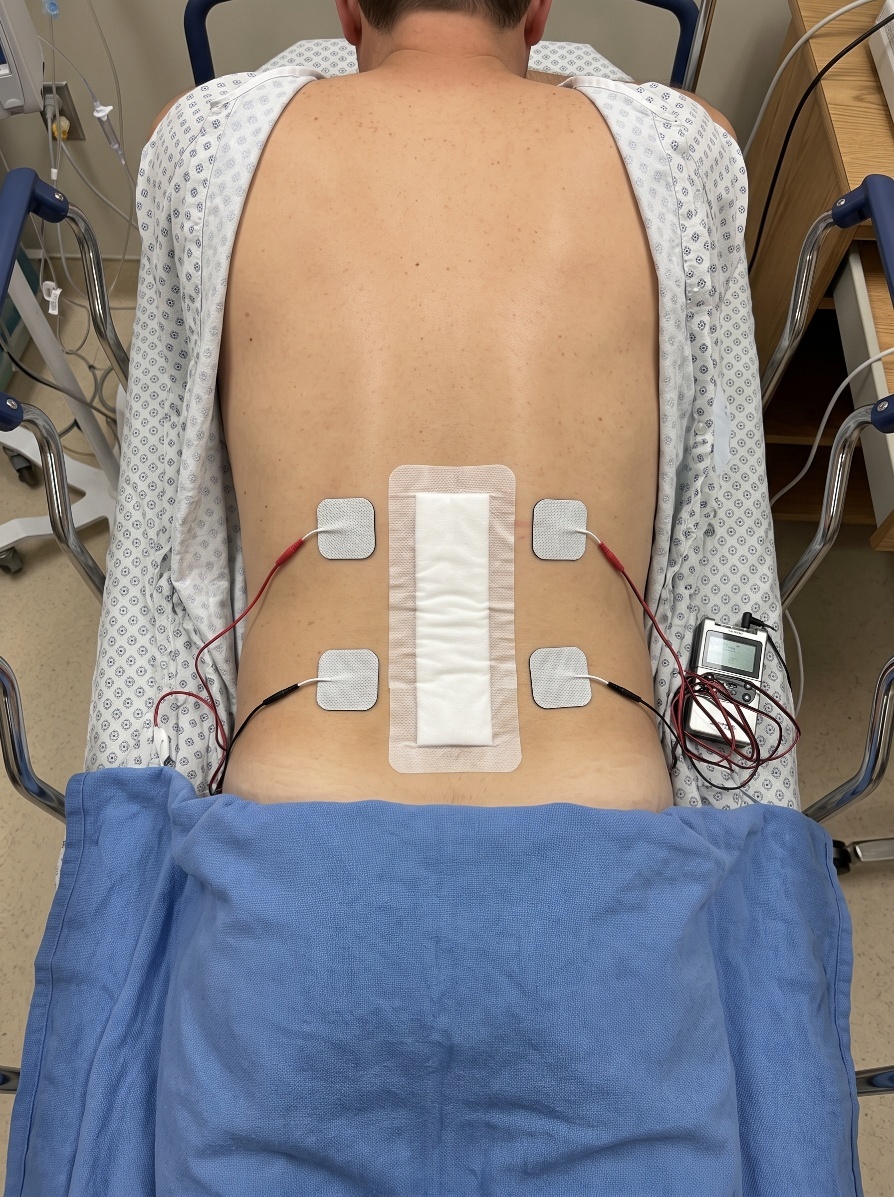
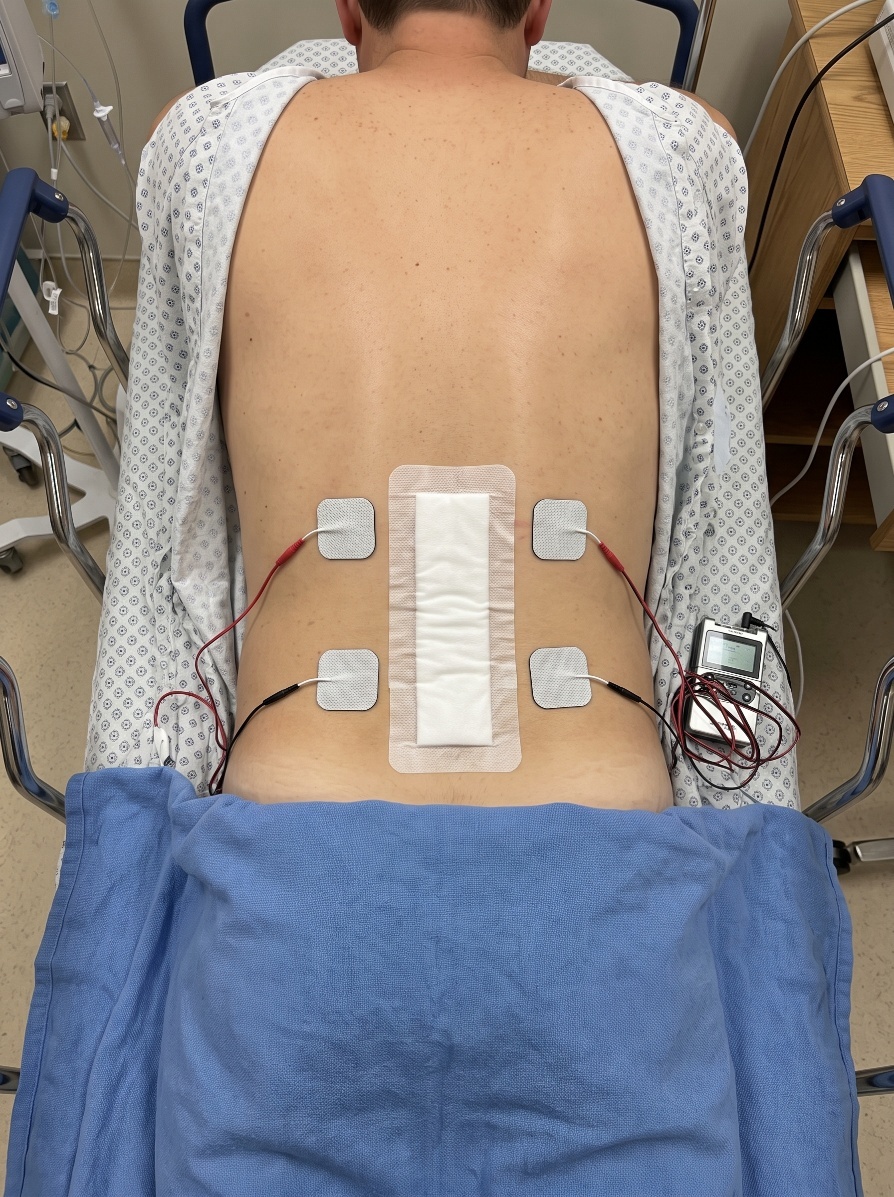
The successful integration of TENS into postoperative spine care hinges upon highly standardized implementation protocols, beginning with precise electrode placement. Haphazard deployment often leads to suboptimal results and frustration among clinical staff. Because surgical incisions and sterile dressings limit direct access to the most painful paraspinal tissues, dual-channel configurations may be used to surround the painful area.9,38 This dual approach ensures that the surrounding tissue receives adequate stimulation without disturbing the primary wound. Electrodes are typically placed paravertebrally, immediately adjacent to the sterile surgical dressing, targeting the painful region corresponding to the surgical level.9 Alternatively, some protocols advocate for placement along the trajectory of referred radicular pain, such as the posterior thigh or calf for lumbar surgeries, or utilizing classical acupuncture points (acupoints) as an alternative stimulation location.34,39,40 Mapping these pathways preoperatively ensures seamless application as soon as the patient arrives in the recovery bay.
Selecting optimal electrical parameters, including frequency (Hz), pulse width (µs), and intensity (mA), is critical for therapeutic success. Generic out-of-the-box settings are rarely sufficient for managing severe surgical pain. Current literature supports the use of high-frequency, sensory-level TENS (conventional TENS) for acute postoperative pain due to its rapid onset of action and favorable patient tolerability.9,41,42 Frequencies are generally set between 80-100 Hz, with pulse widths ranging from 100-200 µs.41 These ranges mirror the parameters associated with efficacy in meta-analysis, as opposed to the subtherapeutic settings common in negative trials.11 These are practical starting ranges rather than validated spine-specific thresholds. Intensity should be titrated to a level where the patient feels strong, comfortable paresthesia without inducing painful muscle fasciculations.42 Repeated fixed-frequency TENS can produce analgesic tolerance in animal models.43 Reassessing intensity and considering parameter variation may help maintain a strong, comfortable sensation, although an optimal strategy after spine surgery has not been established.9,41
The timing and duration of TENS application may influence clinical efficacy. Structuring a defined schedule prevents the therapy from becoming an afterthought on a busy surgical ward. Early application in the Post-Anesthesia Care Unit (PACU), once the patient is neurologically assessable and can report sensation, is a practical option rather than an established optimal timing strategy.9,21 Continuous application has been studied in other orthopedic procedures without consistent benefit.44 Intermittent 30 to 60-minute sessions, timed before or during physical therapy or ambulation, may be considered and adjusted to response; the optimal duration after spine surgery is unknown.9,21,33 Response should be assessed during stimulation and relevant activity. Preoperative TENS has been studied in inguinal hernia repair, but its benefit within spine-surgery ERAS pathways remains uncertain.45
A crucial, yet often overlooked, component of TENS implementation is patient education and multidisciplinary staff training. Technology alone cannot compensate for a lack of bedside instruction and support. Nursing staff must be adequately trained in electrode application, troubleshooting unit errors, and titrating intensities based on patient feedback.9 Furthermore, patient empowerment is maximized when patients are educated preoperatively on the purpose, mechanics, and safe operation of the TENS unit.9 Establishing expectations early reduces anxiety surrounding the new medical equipment. Patients may self-titrate the intensity within clinician-defined limits to maintain a strong, comfortable sensation.9 Practical considerations are summarized in Table 2.
These are pragmatic considerations, not a validated spine-surgery protocol; follow device instructions and local perioperative policies.9,21,33,41,46,47
Safety Profile, Limitations, and Future Directions
TENS is well regarded for its excellent safety profile, supporting its consideration as an adjunct in high-acuity postoperative settings. Appropriate screening and monitoring remain necessary. The most frequently reported adverse effect is localized skin irritation, which is typically mild contact dermatitis caused by the hydrogel adhesive on the electrodes.9,46 Symptoms usually improve after the offending electrodes are removed. Contact dermatitis can be easily managed by utilizing hypoallergenic electrodes or rotating the electrode placement sites periodically.46 To reduce the risk of skin injury, staff should ensure the electrodes are completely adhered to the skin without lifted edges, which can cause high-current density spots.46 Routine nursing checks of the contact areas effectively mitigate this isolated risk. TENS avoids systemic drug exposure, but comparative safety after spine surgery has not been established in large trials.9,21
Despite its safety, TENS is not universally applicable and carries specific contraindications and precautions. Identifying these exceptions during the preoperative screening process is mandatory. In patients with cardiac pacemakers or implantable cardioverter-defibrillators (ICDs), TENS may interfere with device sensing and should not be initiated without cardiology or electrophysiology assessment and review of manufacturer guidance. Suitability depends on the implanted device, stimulation site, and current path; monitored testing may be required.47 Furthermore, TENS should not be placed directly over the anterior neck to avoid vagus nerve stimulation or carotid sinus syncope.46 In spine surgery, particular caution must be exercised in patients who already have indwelling neurostimulation devices, such as dorsal column spinal cord stimulators (SCS), because of potential electrical interference; manufacturer-specific advice should be obtained.46 Consulting with the pain management team regarding existing implants ensures comprehensive perioperative safety.
A critical analysis of the current literature reveals several limitations that must be addressed in future research. Acknowledging these gaps is vital for the continued academic evolution of this modality. The primary methodological challenge in TENS research is achieving an effective double-blinded study design.48 Because active TENS produces a distinct sensory paresthesia, both patients and clinical evaluators can often distinguish between active treatment and sham units, introducing significant placebo and observer biases.49 Additionally, there is high heterogeneity among published studies regarding electrical parameters, electrode placement, and surgery types, making meta-analyses difficult to interpret definitively.50 Future research must standardize these variables to establish solid clinical guidelines.51 Findings from long-term TENS users and reviews of chronic or neuropathic pain should not be extrapolated directly to acute postoperative spine care.52–55
Looking forward, the economic considerations and technological advancements of TENS units will likely shape their future in orthopedic spine surgery. Lower medication and physical therapy use has been reported among long-term TENS users, but this does not establish cost-effectiveness after spine surgery.56 A recent orthopedic meta-analysis supports short-term analgesic and opioid-sparing effects, but did not establish savings from shortened hospitalization.37 Technologically, wearable, garment-integrated devices have shown preliminary usability in knee osteoarthritis; postoperative spine-specific benefits and effects on adherence remain to be established.57
Conclusion
The management of postoperative pain following orthopedic spine surgery demands a multifaceted approach that mitigates the risks of high-dose opioid therapy while facilitating early functional recovery. Relying on historical, single-modality pharmacological pathways is no longer optimal given the known systemic side effects. As discussed in this narrative review, TENS may serve as a useful, non-invasive, and non-pharmacological adjunct within multimodal analgesic pathways. By acting simultaneously on peripheral nerves via the Gate Control Theory and on central descending pathways via endogenous opioid release, TENS may reduce resting and movement-related pain, although results vary and spine-specific evidence remains limited.
Clinical evidence suggests an opioid-sparing effect of TENS, with reductions in some adverse effects reported in broader surgical populations. These potential benefits align with the goals of ERAS protocols, although improved mobilization and fewer complications after spine surgery require confirmation. Moreover, an additional benefit is that TENS could be readily used even after discharge home. When protocols are optimized regarding electrode placement, parameter selection (specifically high-frequency conventional TENS), and timing, the device may offer additional analgesia.
While the therapy is not without limitations, chiefly methodological challenges in blinding within clinical trials and minor skin irritations, the safety profile is favorable compared to pharmacological alternatives. Contraindications and precautions, particularly implanted electronic devices, should be assessed preoperatively and may require specialist input. As healthcare systems continue to prioritize value-based care and strict opioid stewardship, inexpensive and safe modalities like TENS may represent useful additions to perioperative care plans.
In conclusion, orthopedic spine surgeons and perioperative teams may consider individualized trials of adjunctive TENS, particularly after lumbar procedures; evidence is insufficient to recommend routine use across lumbar, thoracic, and cervical surgery. Adopting this technology requires minimal financial investment but its effect on recovery and cost-effectiveness requires further evaluation. Future research must prioritize large-scale, rigorously blinded, multicenter randomized controlled trials utilizing standardized parameters to definitively codify TENS guidelines. Furthermore, future studies could also investigate patients discharged home on TENS and their recovery benefits. By fully embracing advanced multimodal strategies, the orthopedic community can continue to improve patient safety, satisfaction, and long-term functional outcomes in the complex landscape of spinal surgery.
Acknowledgements
The authors would like to thank Dr. Lisa Wofford (Chief Anesthesiologist at Ben Taub General Hospital) for her guidance and continued support in developing this narrative review. Generative AI was used to assist with manuscript organization and improve grammatical clarity. All original ideas, writing, and substantive editing were developed and performed by the authors.