Introduction
Corticosteroid injections (CSI) are widely utilized for orthopedic and sports medicine (OSM) indications. Their ability to suppress inflammation and modulate the immune response has made them valuable in the treatment of a wide range of musculoskeletal conditions.1 CSI can reduce pain, improve function, and delay or prevent the need for surgical intervention, although degree and duration of pain relief is variable.2–4 CSI may be performed with or without image guidance, including ultrasound (US) and fluoroscopy. The use of US when performing CSI for OSM indications has demonstrated greater accuracy, efficacy and cost-effectiveness compared to landmark-guided injections.5–7 There is little consensus regarding the most effective type of corticosteroid for OSM indications, although triamcinolone acetonide, triamcinolone hexanoate and methylprednisolone have been shown to be the most common preparations utilized.8,9
Research on CSI for OSM indications has primarily focused on adults, while pediatric research has largely centered on rheumatologic indications. Consequently, evidence of the indications for CSI in pediatric patients with OSM conditions is extremely limited and is often extrapolated. Studies on the safety of CSI in pediatric patients with juvenile idiopathic arthritis (JIA) have shown that they are a safe and effective first-line treatment. Reported side effects are generally mild and include subcutaneous atrophy, skin hypopigmentation, periarticular calcifications, post-injection flare, and adrenal suppression due to systemic absorption.9,10 These side effects are similar to those reported in adults, in whom additional short- and long-term adverse events—such as osteonecrosis, insufficiency fractures, and progression of osteoarthritis—have been described.11 Although repeated intra-articular (IA) CSI in adults with osteoarthritis may be associated with accelerated cartilage loss, there is conflicting evidence regarding clinically significant structural progression or the need for joint replacement.12,13
Skeletally immature patients present unique considerations, as it remains unknown whether IA CSI administered near open growth plates affect growth and whether their developing tendons and joints are more susceptible to injection-related complications. Furthermore, long-term complications are of increased concern than in the adult population, as these individuals receive CSI at a younger age and have more time to develop potential CSI-related long-term effects. However, pediatric rheumatologic studies have shown that repeated CSIs may not cause joint damage, cartilage damage, or aseptic necrosis. These studies have demonstrated fewer cases of leg-length discrepancy in pediatric patients with JIA who received IA CSIs compared with those who did not.14–18 Nonetheless, the potential long-term effects of CSI in pediatric patients remain a concern.
Given the ongoing use of CSI for OSM in pediatrics, it is important to determine if CSI are safe and effective in this population, especially with the potential risk for long-term side effects and the lack of research evaluating CSI in this population. In this context, the primary aim of this systematic review is to describe the indications, safety, and efficacy of CSI for OSM conditions in pediatric patients.
Methods
This systematic review was performed in accordance with the methodologic approach outlined in the Preferred Reporting Items for Systematic Reviews and Meta-Analyses (PRISMA) in Exercise, Rehabilitation, Sport Medicine and Sports Science (PERSiST) statement.19 The study protocol was prospectively registered in the International Prospective Register of Systematic Reviews (PROSPERO) database (ID CRD420251035479) prior to the commencement of literature searching and screening.
Search Strategy
A medical librarian (LY) with expertise in biomedical science research comprehensively searched the literature for records including the concepts of “corticosteroid injection,” “pediatric,” “skeletally immature,” “sports medicine,” “orthopedic,” “safety,” “efficacy.” The librarian performed the searches on March 14, 2025, developing strategies that used a combination of keywords and controlled vocabulary across Embase.com (1947– ), Ovid MEDLINE (1946– ), Scopus (1823– ), the Cochrane Central Register of Controlled Trials (CENTRAL), SportDiscus (1930– ), ClinicalTrials.gov (1997– ), and grey literature sources (trial registries and conference abstracts). The fully reproducible search strategies for each database can be found in the Appendix.
Study Selection
Article screening was performed using Covidence (Veritas Health Innovation, Melbourne, Australia) systematic review management software. Pairs of two reviewers (SF, NH, RL, TS, JJ, WH) independently screened an equal share of titles and abstracts against the study inclusion criteria. In the event of a disagreement, consensus was reached through a third reviewer separate from the initial reviewer dyad. After title and abstract screening, full texts were assessed for eligibility by pairs of independent reviewers (SF, NH, RL, TS, JJ, WH), with assignments distributed evenly. In the event of a disagreement, consensus was reached through a third reviewer separate from the initial reviewer dyad.
Studies were included if the following conditions were met: (1) pediatric patients (age ≤18 years), (2) studies evaluating an intervention involving CSI administered in the following locations [IA, intra-cystic, intra-bursal, tendon, tendon sheath, paratenon, ligament, bone, fat pad, nerve, muscle, plantar fascia, finger pulley, intra-lesional (for OSM indication), spinal (for OSM indications - interlaminar epidural, transforaminal epidural, caudal epidural, IA facet joint, medial branch block, sacroiliac joint, selective nerve root, dorsal root ganglion)], (3) CSI administered for an OSM indication, (4) Level 1-4 studies, excluding systematic reviews. Studies were excluded if they met any of the following criteria: (1) non-English language, (2) non-human subject’s research, (3) non-OSM literature, (4) population included adult patients (>18 years), (5) injection was not a corticosteroid, (6) corticosteroid administration route was oral, intravenous, intramuscular, subcutaneous, dermal/topical, intranasal, ophthalmic, otic, or rectal, (7) case reports, systematic reviews with or without a meta-analysis.
Data Collection and Synthesis
Data were independently extracted by two reviewers using a pre-defined, customized form within Covidence. Any discrepancies in extracted data were resolved by a third reviewer, if needed. The extracted data included: study characteristics (author names, year of publication, geographic location, study design, sample size, and follow-up time); injection details [indication, location, medication type and dose, frequency, anatomic site, time from injury to injection, injection preparation (i.e., sterile, non-sterile), relevant prior imaging and use of image guidance (i.e., ultrasound, fluoroscopy)]; injection efficacy (outcome assessment tools); sport, sex, age [pre-adolescent cohort (less than 11 years old), adolescent cohort (11-18 years-old)], co-morbidities, race, ethnicity, time to return to sport, complications or adverse events attributed to the injection and duration of study follow-up. If data were not reported in the text, it was extracted from tables if present.
Due to high methodological and clinical outcome heterogeneity across the included studies, meta-analysis was not performed. Individual study demographics, CSI indications, adverse outcomes/complications, and CSI efficacy data (i.e., outcome measures) were analyzed qualitatively and reported using a narrative synthesis, including quantitative data where applicable.
Methodological Quality
The methodological quality of the included studies was assessed using the Newcastle-Ottawa Quality Assessment Tool (NOS) for non-randomized studies and National Institutes of Health, National Heart, Lung, and Blood Institute Quality Assessment Tool (NIH/NHLBIQAT) for case series.20,21
Results
Study Selection
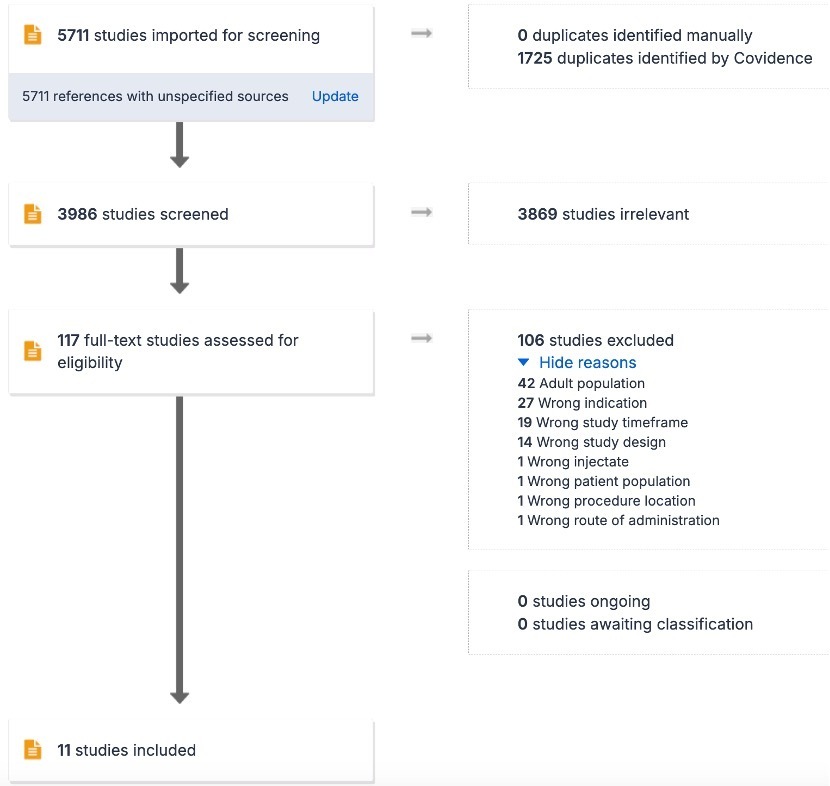
The PRISMA flow diagram is shown in Figure 1. The comprehensive search identified 5,711 records, 1,725 duplicates were removed, resulting in 3,986 unique citations included in the project library. A total of 117 full texts were assessed for eligibility. Forty-two studies were excluded due to including adult participants, 27 for the wrong indication, 19 for an incorrect study timeframe, 14 for the wrong study design, 1 for the wrong injectate, 1 for the wrong patient population, 1 for the wrong procedure location, and 1 for the wrong route of administration. A total of 11 full text studies met inclusion criteria.22–32
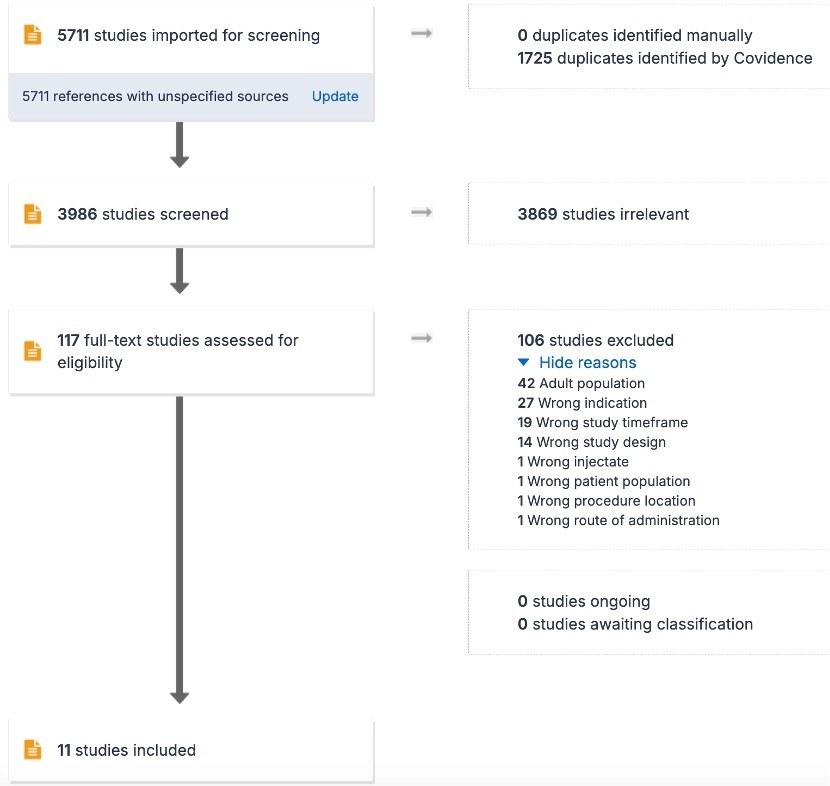
Figure 1.PRISMA Flow Diagram describing screening process for study selection.33 General Characteristics
The general characteristics of the 11 included studies are presented in Table 1. Females comprised 62.4% (184/295) of the study population, and 63.6% (7/11) studies included only adolescent participants. Injection sites varied and included the cervical region, spine/axial skeleton, pelvis, abdominal wall, wrist, hip, knee, and foot/ankle, with 18% (2/11) of studies involving intra-articular injections. Among the eight studies reporting injectate composition, all used a combination of a local anesthetic and glucocorticoid, most commonly lidocaine or ropivacaine and triamcinolone or methylprednisolone, respectively. Image guidance was reported in 36.4% (4/11) of studies, most frequently using ultrasound. One study reported using US and fluoroscopy for image guidance, although US was the primary imaging modality used during the final seven years of the study period.
Table 1.Main characteristics of included studies.
| Study Title |
Study Design |
Population |
Sample Size |
CSI Intervention |
Injection Location |
Anatomic Region |
| Zhao et al. |
Retrospective Chart Review |
Abnormal SCM found by neck US, with clinical manifestations and the diagnosis of CMT |
2599 kids (191/2599 received PT and CSI vs 2368/2599 received PT w/o CSI) |
glucocorticoid (total =< 20 mg) |
Sternocleidomastoid |
Neck/Cervical |
| Peterson et al. |
Retrospective case series |
Adolescents with axial back pain |
2 |
9 mL 0.25% bupivacaine, 40mg of methylprednisolone acetate. 0.5 - 1mL injected at each of the 5 trigger points along the lumbar paraspinals. |
Bilateral Lumbar Paraspinal Muscles |
Spine/Axial Skeleton |
| Ali et al. |
Retrospective case series |
Pediatric patients undergoing interventional modalities for the treatment of back pain associated with Baastrup's disease |
2 |
1st patient: 6ml of 0.2% ropivicaine and 60mg depo-medrol. 2nd patient: 1ml of 0.2% ropivicaine with 40mg Kenalog. |
1st patient: T11-L1 medial branch blocks. 2nd patient: L2-L3 interspinous process ligament |
Spine/Axial Skeleton |
| Finsen et al. |
Prospective cohort study |
Diagnosis of Chronic coccydynia in adolescent 11-17 yo |
358 total patients. 43 adolescents. 32 underwent treatment. 27 had injections. |
Mixture of lidocaine and corticosteroid |
Most painful level of the coccyx, usually the sacrococcygeal or Co1-Co2 level |
Pelvis |
| Akhnikh et al. |
Retrospective case series |
Pediatric patients with abdominal pain ultimately diagnosed with ACNES |
3 |
10 ml 0.5% levobupivacaine and triamcinolone 40 mg |
Rectus sheath at the point of maximum tenderness |
Abdominal Wall |
| Kifer et al. |
Prospective cohort study |
<18 y/o diagnosed 01/2014 - 06/2016 with ACNES by pediatric GI using physical exam and a positive Carnett's sign, referred to the anesthesiologist for confirmation of the diagnosis and treatment. |
38 |
40mg 1% lidocaine and 4mg dexamethasone |
Subfascial into the rectus abdominis muscle at the site of
the most severe pain (trigger point infiltration) |
Abdominal Wall |
| Siawash et al. |
Retrospective cohort study |
Adolescents 10-18 years, registered with the pediatric diagnosis code 3303, evaluated 2011-2012 and ongoing abdominal complaints with normal diagnostic tests performed by pediatrician. |
12/95 patients with chronic abdominal pain had ACNES (12 patients in injection cohort) |
4 mL 1% lidocaine, 40 mg methylprednisolone |
Underneath the superficial sheath of the rectus muscle |
Abdominal Wall |
| Batdorf et al. |
Retrospective cohort study |
1. Clinical symptoms of CTS. 2. Diagnosis of CTS by a physician. 3. Treatment at our institution.
4. Documented follow-up |
20 patients, 31 wrists |
Not Reported |
Carpal Tunnel |
Wrist |
| Murtha et al. |
Prospective cohort study |
Adolescents presenting to clinic with groin-based hip pain, had a positive anterior impingement test on clinical examination |
36 hips (10 in the injection cohort) |
40mg triamcinolone and local anesthetic |
Intra-articular hip |
Hip |
| Nakase et al. |
Retrospective cohort study |
Symptomatic type III bipartite patella confirmed by XR, US, and CT, with conventional conservative therapy (i.e., restriction of activities, immobilization, NSAIDs, PT) being ineffective for more than 2 months. |
14 patients (15 knees) |
3 mL of 1% lidocaine for local anesthesia, 2 mL of 1% lidocaine and 5 mg of triamcinolone acetonide |
Between the patella and free fragment, and fenestration of the vastus lateralis tendon and lateral retinaculum with 10 fenestrations after the injection. |
Knee |
| Zide et al. |
Retrospective case series |
Patients between the ages of 0-18 years with a radiographically confirmed diagnosis of the talocalcaneal coalition |
83 patients (125 feet) in the study. 25 patients (34 feet) received a subtalar injection. |
1 mL of 0.5% ropivacaine, 20mg triamcinolone, 20 mg methylprednisolone, or 40 mg methylprednisolone |
Lateral Subtalar Joint |
Ankle/Foot |
ACNES: Anterior cutaneous nerve entrapment syndrome
CTS: Carpal tunnel syndrome
SCM: Sternocleidomastoid muscle
CMT: Congenital muscular torticollis
Assessment of Methodological Quality
The methodological quality of the included studies is summarized in Table 2. Using the criteria described for the NOS for non-randomized studies and NIH/NHLBIQAT for case series, four (36.4%) studies were rated good,26–28,32 one (9.1%) study was rated fair,23 and six (54.5%) studies were rated poor.22,24,25,29–31
Table 2.Methodological quality assessment of included studies.
| Study |
Quality Assessment |
Grade |
| Zhao et al. |
NOS |
Poor |
| Peterson et al. |
NIH |
Poor |
| Ali et al. |
NIH |
Fair |
| Finsen et al. |
NOS |
Poor |
| Akhnikh et al. |
NIH |
Poor |
| Kifer et al. |
NOS |
Good |
| Siawash et al. |
NOS |
Poor |
| Batdorf et al. |
NIH |
Poor |
| Murtha et al. |
NOS |
Good |
| Nakase et al. |
NIH |
Good |
| Zide et al. |
NIH |
Good |
NOS: Newcastle-Ottawa Quality Assessment for non-randomized studies
NIH: NIH/NHLBI Quality Assessment Tool for case series
Indications for CSI
Study indications are summarized in Table 3. In the 11 included studies, CSI were administered for the following OSM indications: anterior cutaneous nerve entrapment (ACNES) (3), acetabular labral tears (1), axial back pain (1), Baastrup’s disease (1), carpal tunnel syndrome (1), coccydynia (1), congenital muscular torticollis (1), symptomatic bipartite patella (1), and talocalcaneal coalition (1).
Table 3.Indications for CSIs in the included studies.
| Indication |
Anatomic Region |
# of Relevant Studies |
| Congenital muscular torticollis |
Neck/Cervical |
1 |
| Chronic back pain |
Spine/Axial Skeleton |
1 |
| Baastrup’s disease |
Spine/Axial Skeleton |
1 |
| Coccydynia |
Pelvis |
1 |
| Anterior cutaneous nerve entrapment syndrome |
Abdominal Wall |
3 |
| Carpal Tunnel Syndrome |
Wrist |
1 |
| Hip labral tears / FAI |
Hip |
1 |
| Symptomatic bipartite patella |
Knee |
1 |
| Tarsal coalition |
Ankle/foot |
1 |
FAI: Femoral acetabular impingement
Safety Outcomes of CSI
Safety outcomes are summarized in Table 4. Nine studies reported adverse outcome data, with no adverse outcomes reported over their follow-up period. Study follow-up for all 11 studies ranged from 6 weeks to 31.8 years. Of the studies that reported adverse outcome data, the follow-up period ranged from 4 months to 64.4 months.
Table 4.Safety outcomes after CSIs for the included studies.
| Study Title |
Adverse Events |
Follow-up |
| Zhao et al. |
None reported |
12 months |
| Peterson et al. |
None reported |
9-11 months |
| Ali et al. |
None reported |
1 year |
| Finsen et al. |
None Reported |
12 months |
| Akhnikh et al. |
None reported |
1 year |
| Kifer et al. |
None Reported |
12 months (median: 1.7 years; range: 1 to 2.7 years) |
| Siawash et al. |
Not reported |
6 weeks |
| Batdorf et al. |
Not reported |
17.6 years (range 2.8 - 31.8) |
| Murtha et al. |
None Reported |
35.7 +/- 18.3 months (range: 11.7-64.4 months) |
| Nakase et al. |
None reported |
>4 months |
| Zide et al. |
None reported |
878 days |
Efficacy of CSI
Treatment outcomes following CSI, according to each study’s defined outcome measures, are summarized in Table 5. Outcome measures varied across studies and included resolution of pain or symptoms, return to play, and patient-reported outcome measures such as the modified Harris hip score (mHHS), Nonarthritic Hip Score (NAHS), the Victorian Institute of Sport Assessment-Patellar Tendinopathy (VISA) score, Numeric Pain Rating Scale (NPRS), and the Verbal Rating Scale (VRS).27,34 Definitions of recovery also differed between studies and included symptom resolution or achievement of clinically meaningful improvements in validated outcome scores.
Table 5.Recovery after CSI in the included studies.
| Study |
Measured Outcome |
Injection Sample Size |
Full Recovery |
Partial Recovery |
No Recovery |
Worsened |
Progressed to Surgery |
| Zhao et al. |
Difference in neck rotation between healthy and affected side within 5 degrees, resolved contracture |
191 |
60.2% (115/191) |
N.R. |
N.R. |
N.R. |
39.8% (76/191) |
| Peterson et al. |
NPRS |
2 |
Immediately after: 50% (1/2)
Months later: 0% |
Immediately after: 50% (1/2)
Months later: 100% (2/2) |
0 |
0 |
0% |
| Ali et al. |
Pain relief & return to play |
2 |
100% |
0% |
0% |
0% |
0% |
| Finsen et al. |
|
27 |
|
|
|
|
44% (12/27) |
| |
Pain resolution in the school classroom for those who only underwent injection |
|
30% (3/10) |
40% (1/10 much better, 3/10 somewhat better) |
30% (3/10) |
0% |
|
| |
Pain resolution in school physical exercise for those who only underwent injection |
|
40% (4/10) |
30% (2/10 much better, 1/10 somewhat better) |
30% (3/10) |
10% (1/10) |
|
| |
Pain resolution in general sports for those who only underwent injection |
|
55% (6/11) |
18% (1/11 much better, 1/11 somewhat better) |
27% (3/11) |
0% |
|
| Akhnikh et al. |
Resolution of pain |
3 |
100% |
0% |
0% |
0% |
0% |
| Kifer et al. |
Resolution of symptoms |
38 |
63% (24/38) w/ 1 injection
16% (6/38) w/ 2 injections
8% (3/38) w/ >=3 injections |
N.R. |
N.R. |
N.R. |
13% (5/38) |
| Siawash et al. |
VRS of satisfaction & pain intentsity |
12 (9 received lidocaine & methylprednisolone injection) |
22% (2/9) |
N.R. |
N.R. |
N.R. |
78% (7/9) |
| Batdorf et al. |
Resolution of symptoms |
Injections in 11/31 wrists |
46% (5/11) |
46% (5/11) |
9% (1/11) |
0% |
32% (10/31) |
| Murtha et al. |
Minimal clinically significant difference in the mHHS & NAHS |
17 hips (recovery measured in the 10 hips that did not progress to surgery) |
80% (8/10) |
20% (2/10) |
N.R. |
N.R. |
41% (7/17) of injected hips |
| Nakase et al. |
VISA Score |
14 patients (15 knees) |
60% (9/15) |
26.7% (4/15) |
6.7% (1/15) |
6.7% (1/15) |
2 patients, 3 knees (20%) |
| Zide et al. |
Pain relief |
25 patients (34 feet) |
18% (6/34) |
77% [53% (18/34) with moderate pain relief, 24% (8/34) with minimal pain relief] |
6% (2/34) |
N.R. |
35% (12/34) |
N.R.: Not reported
NPRS: Numeric pain rating scale
VRS: Verbal rating scale
mHHS: Modified Harris hip score
NAHS: Nonarthritic hip score
VISA: Victorian Institute of Sport Assessment
Necessity of Repeat CSI
The rates of patients who underwent a repeat CSI are summarized in Table 6. Three studies reported that patients had recurrence of symptoms following initial resolution or improvement. Six of the eleven (54.5%) studies reported the need for repeat CSI due to symptom recurrence or persistence.
Table 6.Need for repeat injections after CSI in the included studies.
| Study |
# Who Needed Repeat Injections |
# of CSIs Needed |
Time between Injections |
| Zhao et al. |
N.R. |
N.R. |
2-3 months |
| Peterson et al. |
100% (2/2) |
2 |
1-3 months |
| Ali et al. |
50% (1/2) |
4 |
1-2 years |
| Finsen et al. |
22.2% (6/27) |
2 (4 patients)
3 (2 patients) |
N.R. |
| Akhnikh et al. |
0% (0/3) |
0 |
- |
| Kifer et al. |
31.6% (12/38) |
2 (6 patients)
>=3 (6 patients) |
at least 1 month |
| Siawash et al. |
N.R. |
1-3 |
2 weeks |
| Batdorf et al. |
N.R. |
N.R. |
- |
| Murtha et al. |
N.R. |
N.R. |
- |
| Nakase et al. |
60% (9/15) |
2 (6 knees)
4 (3 knees) |
2-4 weeks apart |
| Zide et al. |
26.5% (9/34) |
2 (8 feet)
3 (1 foot) |
1-52 months |
Discussion
This systematic review assessed the indications, safety, and efficacy of CSI for OSM conditions in pediatric patients. Eleven studies were identified that met inclusion criteria in this systematic review.
The indications for CSI in pediatric OSM reported in the included studies - ACNES, acetabular labral tears, axial back pain, Baastrup’s disease, carpal tunnel syndrome, coccydynia, congenital muscular torticollis, symptomatic bipartite patella, and talocalcaneal coalition - demonstrate its broad utility in this population, though they do not capture the broad spectrum of indications treated with a CSI in pediatric OSM clinical practice. Numerous real-world pediatric OSM indications were not identified in this systematic review. This may be due to a lack of prior studies on this topic and due to our strict study inclusion criteria, which excluded all studies involving patients over 18 years of age.
Adverse outcome data was reported for 9/11 studies, with no adverse outcomes reported. Of the studies that reported adverse outcome data, the follow-up period ranged from 4 months to 64.4 months. The short follow-up time frame of most studies may not allow for development of the potential long-term side effects pertinent to the pediatric population. Beyond the commonly reported risks of CSI in the adult OSM population, skeletal immaturity and ongoing development of pediatric patients may make them uniquely susceptible to short- and long-term risks, including growth plate disruption, compromised tendon health, altered joint integrity, and potential effects on normal musculoskeletal growth. Thus, rigorous patient selection and the establishment of evidence-based treatment protocols are critical for this vulnerable population.
Evaluation of adverse outcomes was also limited by the heterogeneity of injection type. Most studies utilized soft tissue injections and only two studies utilized intra-articular injections. The included studies used various combinations of corticosteroids and anesthetics, each having varied biologic effects, which may also differ by the anatomic structure exposed. Local anesthetics have been shown to increase chondrocyte cell death, apoptosis, and necrosis with ropivacaine being the least chondrotoxic and bupivacaine being the most chondrotoxic. These chondrotoxic effects worsened when anesthetic was combined with betamethasone.35 Bupivacaine has been shown to increase necrosis of fibroblasts and tenocytes, while ropivacaine and triamcinolone did not demonstrate this effect.36 There has been mixed evidence regarding the biologic effects of corticosteroids on cartilage with some studies showing increase in cartilage loss following intra-articular CSI and others showing no significant difference in cartilage volume change.12,37 There is a paucity of research investigating the biologic effects of CSI in the pediatric population, although studies have not shown evidence of toxic effects on cartilage based on magnetic resonance imaging.16 This large variation in biologic effect based on injectate and involved anatomic structures suggests a wide range of possible secondary effects, although the clinical significance of these is chiefly unknown in pediatric patients.
Efficacy data were reported using a variety of outcome measures (e.g. symptom resolution, pain rating scale, or mHHS/NAHS). The heterogeneity of these measures precluded quantitative meta-analysis; therefore, these results were described qualitatively. Reported efficacy ranged from no response to resolution of symptoms. Progression to surgery after CSI ranged from 0% to 78%, and repeat CSI due to symptom recurrence or persistence was reported in 54.5% of studies. Like findings in adult orthopedics and pediatric rheumatologic literature, CSI may be effective for various OSM conditions in pediatric patients when used as part of a comprehensive treatment approach. Because image-guided, particularly US-guided, CSI has demonstrated greater accuracy and efficacy than landmark-guided injections, future pediatric studies should prioritize the use and reporting of image guidance. Consistent reporting of validated, condition-specific outcome measures will be essential to determine and compare treatment efficacy in this population. However, further research is needed to define the efficacy of CSI across the full spectrum of pediatric OSM indications.
This systematic review was limited by the small number of included studies and heterogeneity of the data reported. The methodological quality of the included studies was rated good for four studies, fair for one study and poor for six studies. This indicates that the included studies have study design limitations, a high risk of bias, and variable methodologies, which reduces the strength of their findings and highlights the need for higher-quality research. Moreover, a meta-analysis was not performed because the reported efficacy data were heterogeneous, which further limits the strength of this study’s conclusions.
Conclusion
CSI are used in pediatric OSM despite limited high-quality evidence guiding their use. Existing studies suggest potential clinical benefit with no reported adverse events; however, the literature is heterogeneous and does not fully reflect the range of indications encountered in practice. Important questions remain regarding the short- and long-term efficacy of CSI in reducing pain, improving function, and facilitating return to play, as well as how CSI compares with or complements treatments such as physical therapy or surgery. Further high-quality studies across a broader range of pediatric OSM indications, with standardized outcome measures and longer follow-up, are needed to better define the safety, appropriate indications, and overall efficacy of CSI in this population.
Author Contributions
All authors contributed to data curation, investigation, methodology, writing – original draft, and writing – review & editing. All authors reviewed and approved the final manuscript.
Author Disclosure
This systematic review does not contain a discussion of an unapproved or investigative use of a commercial product/device. The authors declare no conflicts of interest and do not have any financial disclosures. No funding was received.
Appendix
Full Search Strategies:
Embase
Date Searched: 3/14/2025
Applied Database Supplied Limits: [2005-2025]/py AND [humans]/lim AND [english]/lim
Number of Results: 2,281
Full Search Strategy:
(‘skeletal immaturity’/exp OR ‘pediatric orthopedics’/exp OR ‘pediatrics’/exp OR ‘child’/exp OR ‘preschool child’/exp OR ‘adolescent’/exp OR ((Skeletal* OR bone) NEAR/3 (immature* OR ‘under develop*’ OR underdevelop* OR growth OR ‘still grow*’ OR age* OR discordance* OR defficienc* OR delay OR ‘developmental anomal*’ OR ‘developmental arrest’ OR ‘developmental impairment*’ OR ‘developmental lag’ OR ‘maturation deficit*’)):ti,ab,kw OR ('chronological growth discrepanc*" OR ‘growth plate immaturity’ OR ‘incomplete skeletal evolution’ OR ‘retarded bone maturation’):ti,ab,kw OR (child* OR toddler* OR adolescent* OR teen* OR youth* OR adolescence OR girl* OR boy* OR juvenile* OR pediatric* OR paediatric* OR pediatry OR schoolboy OR schoolboys OR schoolchild OR schoolchildren OR schoolgirl OR schoolgirls):ti,ab,kw) AND (‘corticosteroid’/exp OR ‘betamethasone dipropionate’/exp OR ‘clobetasol propionate’/exp OR ‘dexamethasone sodium phosphate’/exp OR ‘fluocinolone acetonide’/exp OR ‘glucocorticoid’/exp OR ‘hydrocortisone acetate’/exp OR ‘methylprednisolone acetate’/exp OR ‘prednisolone acetate’/exp OR ‘triamcinolone acetonide’/exp OR (‘Betamethasone Dipropionate’ OR alphatrex OR becloson OR beloderm OR bepronate OR beprosone OR betacrem OR betamesol OR betazone OR cleniderm OR cortiderm OR cremirit OR cycloson OR dicortin OR diprocel OR diproderm OR diprolene OR diprophos OR diprosis OR diprosone OR diprotop OR flogoderm OR helpoderm OR maxisona OR maxivate OR mesonta OR metonate OR oviskin OR proson OR sernivo OR skizon OR soluderme OR ‘taro-sone’ OR topilene OR topisone OR ‘Clobetasol Propionate’ OR betasol OR betavate OR butavate OR clarelux OR clobaderm OR clobasol OR clobasone OR clobavate OR clobecare OR clobederm OR clobegalen OR clobenate OR clobesol OR clobeson OR clobet OR clobetan OR clobetaxon OR clobetazol OR clobevate OR clobex OR clobisdin OR clodan OR clonovate OR closanasol OR closol OR clovate OR cormax OR cortimax OR crinale OR crobate OR decloban OR delor OR dermasone OR dermatovate OR dermo OR dermol OR dermosol OR dermotyl OR dermoval OR dermovat OR dermovate OR dermoxinale OR dhabesol OR eczoria OR embeline OR etrivex OR forderm OR glevate OR impeklo OR impoyz OR ‘karison crème’ OR ‘karison crinale’ OR ‘karison salbe’ OR kloderma OR klonat OR lobate OR lobesol OR lobevat OR lotasbat OR medodermone OR novate OR pentasol OR primolux OR rivelin OR rizlasol OR rubocord OR rubocort OR stivate OR tasoprol OR temovate OR tenovate OR topifort OR tovet OR univate OR xenovate OR yihfu OR yugofin OR Corticosteroid* OR ‘adrenal cortex hormone*’ OR ‘adrenal cortical hormone*’ OR ‘adrenal cortical steroid*’ OR ‘adrenal steroid*’ OR ‘adreno cortical steroid*’ OR ‘adreno corticosteroid’ OR adrenocortical OR adrenocorticosteroid OR ‘cortical steroid’ OR ‘cortico steroid’ OR corticoid OR dermocorticosteroid OR ‘Dexamethasone Sodium Phosphate’ OR aacidexam OR colvasone OR dexadreson OR dexafree OR dexair OR ‘dexamethasone 21 disodiumphosphate’ OR ‘dexamethasone 21 phosphate’ OR ‘dexamethasone disodium phosphate’ OR ‘dexamethasone phosphate’ OR dexavet OR diodex OR etacortilen OR ‘hexadrol phosphate’ OR ‘maxidex ointment’ OR ‘neodecadron ophthalmic’ OR ophthasona OR semdexa OR soldesam OR ‘solu decadron’ OR soludecadrol OR soludecadron OR spersadex OR sterodex OR totocortin OR turbinaire OR wymesone OR ‘Fluocinolone Acetonide’ OR adermina OR alfabios OR ‘alvadermo fuerte’ OR aplosyn OR capex OR cervicum OR cinolon OR clofeet OR cortilona OR cremisona OR cynozet OR dermalar OR dermoflam OR dermoran OR dermotic OR esacinone OR flozet OR fluciderm OR flucinar OR flulone OR fluocet OR fluocid OR ‘fluocinolon acetonid’ OR ‘fluocinonide acetonide’ OR fluoderm OR fluolar OR fluonid OR fluonide OR fluotrex OR fluovitef OR fluquinol OR flurosyn OR flusonlen OR fluzon OR fusalar OR gelargin OR gelidina OR iluvien OR inoderm OR jellin OR lluvien OR localyn OR luci OR medidur OR ‘nasal synalar’ OR neosynalar OR otazem OR otoflamm OR otoken OR psoranide OR radiocin OR retisert OR sinaflana OR supralan OR synalar OR synandone OR synemol OR synotic OR syntopic OR trisyn OR yutiq OR Glucocorticoid* OR Glucocorticoidsteroid* OR Glucocorticosteroid* OR Glucocortoid* OR Glycocorticoid* OR Hydrocortisone Acetate OR ‘anusol hc’ OR ‘anusol-hc’ OR ‘aphilan dermangeaisons’ OR apocort OR barseb OR berlison OR biocort OR calacort OR caldecort OR ‘clear aid’ OR colifoam OR cortaid OR cortamed OR ‘cortef acetate’ OR ‘cortic cream’ OR ‘cortic-ds’ OR cortifoam OR ‘cortisol acetate’ OR dermacort OR dhacort OR dilucort OR dricort OR ekzemsalbe OR enkacort OR ‘fenistil hydrocortison’ OR ficortil OR glycortison OR ‘hemsol-hc’ OR hipoge OR ‘hy-cor acetate’ OR ‘hycor eye ointment’ OR hyderm OR hydrocortal OR ‘hydrocortison berco’ OR ‘hydrocortison dispersa’ OR ‘hydrocortison streuli’ OR hydrocortistab OR ‘hydrocortone acetate’ OR hydrocutan OR hydrosone OR lanacort OR litraderm OR ‘micort-hc’ OR mylocort OR pabracort OR pannocort OR ‘servicort topical’ OR sigmacort OR ‘siquent hycor’ OR steroderm OR stopitch OR wellcortin OR wycort OR ‘Methylprednisolone Acetate’ OR ‘depmedalone 40’ OR ‘depmedalone 80’ OR ‘depo medrate’ OR ‘depo medrol’ OR ‘depo medrone’ OR ‘depo-medrate’ OR ‘depo-medrol’ OR ‘depo-medrone’ OR ‘depo-moderin’ OR ‘depo-nisolone’ OR depomedrol OR depomedron OR depomedrone OR ‘depot medrate’ OR ‘epizolone-depot’ OR ‘medrol acetate’ OR ‘medrol enpak’ OR mepred OR ‘urbason retard’ OR ‘veriderm medrol’ OR ‘Prednisolone Acetate’ OR deppredalone OR econopred OR ‘flo pred’ OR ‘flo-pred’ OR ‘isopto cetapred’ OR ‘key pred’ OR ‘meticortelone acetate’ OR ‘ocu-pred’ OR omnipred OR optilon OR ‘poly pred’ OR ‘pred forte’ OR ‘pred mild’ OR predforte OR predmet OR ‘predni-ophtal’ OR prednigalen OR savacort OR ultracortensol OR ultracortinol OR ‘triamcinolone acetonide’ OR aftab OR aftach OR ahbina OR albicort OR ‘allegra nasal’ OR allernase OR allernaze OR aquatain OR aristocort OR aristoderm OR aristogel OR azmacort OR centocort OR cinolar OR ‘delphi crème’ OR ‘denkacort forte’ OR facort OR flutex OR flutone OR fougera OR ftorocort OR gemicort OR generlog OR kemzid OR ‘kena log’ OR kenac OR ‘kenacort a’ OR kenalog OR kenalone OR kenlog OR ‘kortikoid ratiopharm’ OR manolone OR maqaid OR metoral OR nasacort OR nasatrim OR ‘nasocor aq’ OR nincort OR oracort OR oralog OR oralone OR oramedy OR orrepaste OR panalog OR pokkortolon OR ‘polcortolon n’ OR respicort OR rhinisan OR shincort OR solodelf OR taioftal OR ‘telfast spray nasal’ OR tibicorten OR tibiocorten OR tramacin OR ‘tri anemul’ OR ‘tri-nasal’ OR triacet OR triacort OR triaderm OR triam OR ‘triam-denk’ OR triamalone OR ‘triamcinolide acetonide’ OR ‘triamcinolon acetonide’ OR triamcinolonacetonid OR triamcinolonacetonide OR ‘triamcinolone acetamide’ OR ‘triamcinolone acetonamide’ OR ‘triamcinolone acetonid’ OR ‘triamcinolone benetonide’ OR triamcinolone OR triamhexal OR triamvirgi OR trianex OR trianide OR triatex OR tricort OR tricortone OR tricot OR triderm OR tridez OR triesence OR trigon OR trikort OR trinolone OR trivaris OR trymex OR vetalog OR vistrec OR volonimat OR wp0508st OR xipere OR zilretta OR zuprata):ti,ab,kw) AND (‘injection’/exp OR ‘intraarticular drug administration’/exp OR (injection* OR shot OR intraarticular OR ‘Intra-articular’ OR IACIs):ti,ab,kw) NOT (‘chapter’/it OR ‘conference abstract’/it OR ‘conference paper’/it OR ‘conference review’/it OR ‘editorial’/it OR ‘letter’/it OR ‘note’/it OR ‘review’/it OR ‘short survey’/it OR abstract:ti OR editorial:ti OR letter:ti OR editor:ti OR review:ti)
Ovid Medline
Date Searched: 3/14/2025
Applied Database Supplied Limits: limit to (english language and humans and yr=“2005 - 2025”)
Number of Results: 1,668
Full Search Strategy:
((Exp Child/ OR exp Pediatrics/ OR exp Child, Preschool/ OR exp Adolescent/ OR ((Skeletal* OR bone) ADJ3 (immature* OR under develop* OR underdevelop* OR growth OR still grow* OR age* OR discordance* OR defficienc* OR delay OR developmental anomal* OR developmental arrest OR developmental impairment* OR developmental lag OR maturation deficit*)).ti,ab,kf. OR (chronological growth discrepanc* OR growth plate immaturity OR incomplete skeletal evolution OR retarded bone maturation).ti,ab,kf. OR (child* OR toddler* OR adolescent* OR teen* OR youth* OR adolescence OR girl* OR boy* OR juvenile* OR pediatric* OR paediatric* OR pediatry OR schoolboy OR schoolboys OR schoolchild OR schoolchildren OR schoolgirl OR schoolgirls).ti,ab,kf.) AND (exp Adrenal Cortex Hormones/ OR exp Betamethasone/ OR exp Clobetasol/ OR exp Dexamethasone/ OR exp Fluocinolone Acetonide/ OR exp Glucocorticoids/ OR exp Hydrocortisone/ OR exp Methylprednisolone Acetate/ OR exp Prednisolone/ OR exp Triamcinolone Acetonide/ OR (Betamethasone Dipropionate OR alphatrex OR becloson OR beloderm OR bepronate OR beprosone OR betacrem OR betamesol OR betazone OR cleniderm OR cortiderm OR cremirit OR cycloson OR dicortin OR diprocel OR diproderm OR diprolene OR diprophos OR diprosis OR diprosone OR diprotop OR flogoderm OR helpoderm OR maxisona OR maxivate OR mesonta OR metonate OR oviskin OR proson OR sernivo OR skizon OR soluderme OR taro-sone OR topilene OR topisone OR Clobetasol Propionate OR betasol OR betavate OR butavate OR clarelux OR clobaderm OR clobasol OR clobasone OR clobavate OR clobecare OR clobederm OR clobegalen OR clobenate OR clobesol OR clobeson OR clobet OR clobetan OR clobetaxon OR clobetazol OR clobevate OR clobex OR clobisdin OR clodan OR clonovate OR closanasol OR closol OR clovate OR cormax OR cortimax OR crinale OR crobate OR decloban OR delor OR dermasone OR dermatovate OR dermo OR dermol OR dermosol OR dermotyl OR dermoval OR dermovat OR dermovate OR dermoxinale OR dhabesol OR eczoria OR embeline OR etrivex OR forderm OR glevate OR impeklo OR impoyz OR karison creme OR karison crinale OR karison salbe OR kloderma OR klonat OR lobate OR lobesol OR lobevat OR lotasbat OR medodermone OR novate OR pentasol OR primolux OR rivelin OR rizlasol OR rubocord OR rubocort OR stivate OR tasoprol OR temovate OR tenovate OR topifort OR tovet OR univate OR xenovate OR yihfu OR yugofin OR Corticosteroid* OR adrenal cortex hormone* OR adrenal cortical hormone* OR adrenal cortical steroid* OR adrenal steroid* OR adreno cortical steroid* OR adreno corticosteroid OR adrenocortical OR adrenocorticosteroid OR cortical steroid OR cortico steroid OR corticoid OR dermocorticosteroid OR Dexamethasone Sodium Phosphate OR aacidexam OR colvasone OR dexadreson OR dexafree OR dexair OR dexamethasone 21 disodiumphosphate OR dexamethasone 21 phosphate OR dexamethasone disodium phosphate OR dexamethasone phosphate OR dexavet OR diodex OR etacortilen OR hexadrol phosphate OR maxidex ointment OR neodecadron ophthalmic OR ophthasona OR semdexa OR soldesam OR solu decadron OR soludecadrol OR soludecadron OR spersadex OR sterodex OR totocortin OR turbinaire OR wymesone OR Fluocinolone Acetonide OR adermina OR alfabios OR alvadermo fuerte OR aplosyn OR capex OR cervicum OR cinolon OR clofeet OR cortilona OR cremisona OR cynozet OR dermalar OR dermoflam OR dermoran OR dermotic OR esacinone OR flozet OR fluciderm OR flucinar OR flulone OR fluocet OR fluocid OR fluocinolon acetonid OR fluocinonide acetonide OR fluoderm OR fluolar OR fluonid OR fluonide OR fluotrex OR fluovitef OR fluquinol OR flurosyn OR flusonlen OR fluzon OR fusalar OR gelargin OR gelidina OR iluvien OR inoderm OR jellin OR lluvien OR localyn OR luci OR medidur OR nasal synalar OR neosynalar OR otazem OR otoflamm OR otoken OR psoranide OR radiocin OR retisert OR sinaflana OR supralan OR synalar OR synandone OR synemol OR synotic OR syntopic OR trisyn OR yutiq OR Glucocorticoid* OR Glucocorticoidsteroid* OR Glucocorticosteroid* OR Glucocortoid* OR Glycocorticoid* OR Hydrocortisone Acetate OR anusol hc OR anusol-hc OR aphilan dermangeaisons OR apocort OR barseb OR berlison OR biocort OR calacort OR caldecort OR clear aid OR colifoam OR cortaid OR cortamed OR cortef acetate OR cortic cream OR cortic-ds OR cortifoam OR cortisol acetate OR dermacort OR dhacort OR dilucort OR dricort OR ekzemsalbe OR enkacort OR fenistil hydrocortison OR ficortil OR glycortison OR hemsol-hc OR hipoge OR hy-cor acetate OR hycor eye ointment OR hyderm OR hydrocortal OR hydrocortison berco OR hydrocortison dispersa OR hydrocortison streuli OR hydrocortistab OR hydrocortone acetate OR hydrocutan OR hydrosone OR lanacort OR litraderm OR micort-hc OR mylocort OR pabracort OR pannocort OR servicort topical OR sigmacort OR siquent hycor OR steroderm OR stopitch OR wellcortin OR wycort OR Methylprednisolone Acetate OR depmedalone 40 OR depmedalone 80 OR depo medrate OR depo medrol OR depo medrone OR depo-medrate OR depo-medrol OR depo-medrone OR depo-moderin OR depo-nisolone OR depomedrol OR depomedron OR depomedrone OR depot medrate OR epizolone-depot OR medrol acetate OR medrol enpak OR mepred OR urbason retard OR veriderm medrol OR Prednisolone Acetate OR deppredalone OR econopred OR flo pred OR flo-pred OR isopto cetapred OR key pred OR meticortelone acetate OR ocu-pred OR omnipred OR optilon OR poly pred OR pred forte OR pred mild OR predforte OR predmet OR predni-ophtal OR prednigalen OR savacort OR ultracortensol OR ultracortinol OR triamcinolone acetonide OR aftab OR aftach OR ahbina OR albicort OR allegra nasal OR allernase OR allernaze OR aquatain OR aristocort OR aristoderm OR aristogel OR azmacort OR centocort OR cinolar OR delphi creme OR denkacort forte OR facort OR flutex OR flutone OR fougera OR ftorocort OR gemicort OR generlog OR kemzid OR kena log OR kenac OR kenacort a OR kenalog OR kenalone OR kenlog OR kortikoid ratiopharm OR manolone OR maqaid OR metoral OR nasacort OR nasatrim OR nasocor aq OR nincort OR oracort OR oralog OR oralone OR oramedy OR orrepaste OR panalog OR pokkortolon OR polcortolon n OR respicort OR rhinisan OR shincort OR solodelf OR taioftal OR telfast spray nasal OR tibicorten OR tibiocorten OR tramacin OR tri anemul OR tri-nasal OR triacet OR triacort OR triaderm OR triam OR triam-denk OR triamalone OR triamcinolide acetonide OR triamcinolon acetonide OR triamcinolonacetonid OR triamcinolonacetonide OR triamcinolone acetamide OR triamcinolone acetonamide OR triamcinolone acetonid OR triamcinolone benetonide OR triamcinolone OR triamhexal OR triamvirgi OR trianex OR trianide OR triatex OR tricort OR tricortone OR tricot OR triderm OR tridez OR triesence OR trigon OR trikort OR trinolone OR trivaris OR trymex OR vetalog OR vistrec OR volonimat OR wp0508st OR xipere OR zilretta OR zuprata).ti,ab,kf.) AND (exp Injections/ OR exp Injections, Intra-Articular/ OR (injection* OR shot OR intraarticular OR Intra-articular OR IACIs).ti,ab,kf.)) NOT (clinical conference.pt. OR comment.pt. OR consensus development conference.pt. OR editorial.pt. OR letter.pt. OR meta analysis.pt. OR review.pt. OR systematic review.pt. OR abstract.ti. OR editorial.ti. OR letter.ti. OR editor.ti. OR review.ti.)
Scopus
Date Searched: 3/14/2025
Applied Database Supplied Limits: PUBYEAR > 2004 AND PUBYEAR < 2026 AND (LIMIT-TO (LANGUAGE , “English”)) AND (LIMIT-TO (EXACTKEYWORD , “Human”))
Number of Results: 730
Full Search Strategy:
(((TITLE-ABS-KEY (injection* OR shot OR intraarticular OR “Intra-articular” OR iacis))) AND (((TITLE-ABS-KEY ((skeletal* OR bone) W/3 (immature* OR “under develop*” OR underdevelop* OR growth OR “still grow*” OR age* OR discordance* OR defficienc* OR delay OR “developmental anomal*” OR “developmental arrest” OR “developmental impairment*” OR “developmental lag” OR “maturation deficit*”))) OR (TITLE-ABS-KEY (“chronological growth discrepanc*” OR “growth plate immaturity” OR “incomplete skeletal evolution” OR “retarded bone maturation”)) OR (TITLE-ABS-KEY (child* OR toddler* OR adolescent* OR teen* OR youth* OR adolescence OR girl* OR boy* OR juvenile* OR pediatric* OR paediatric* OR pediatry OR schoolboy OR schoolboys OR schoolchild OR schoolchildren OR schoolgirl OR schoolgirls)))) AND ((TITLE-ABS-KEY (“Betamethasone Dipropionate” OR alphatrex OR becloson OR beloderm OR bepronate OR beprosone OR betacrem OR betamesol OR betazone OR cleniderm OR cortiderm OR cremirit OR cycloson OR dicortin OR diprocel OR diproderm OR diprolene OR diprophos OR diprosis OR diprosone OR diprotop OR flogoderm OR helpoderm OR maxisona OR maxivate OR mesonta OR metonate OR oviskin OR proson OR sernivo OR skizon OR soluderme OR “taro-sone” OR topilene OR topisone OR “Clobetasol Propionate” OR betasol OR betavate OR butavate OR clarelux OR clobaderm OR clobasol OR clobasone OR clobavate OR clobecare OR clobederm OR clobegalen OR clobenate OR clobesol OR clobeson OR clobet OR clobetan OR clobetaxon OR clobetazol OR clobevate OR clobex OR clobisdin OR clodan OR clonovate OR closanasol OR closol OR clovate OR cormax OR cortimax OR crinale OR crobate OR decloban OR delor OR dermasone OR dermatovate OR dermo OR dermol OR dermosol OR dermotyl OR dermoval OR dermovat OR dermovate OR dermoxinale OR dhabesol OR eczoria OR embeline OR etrivex OR forderm OR glevate OR impeklo OR impoyz OR “karison creme” OR “karison crinale” OR “karison salbe” OR kloderma OR klonat OR lobate OR lobesol OR lobevat OR lotasbat OR medodermone OR novate OR pentasol OR primolux OR rivelin OR rizlasol OR rubocord OR rubocort OR stivate OR tasoprol OR temovate OR tenovate OR topifort OR tovet OR univate OR xenovate OR yihfu OR yugofin OR corticosteroid* OR “adrenal cortex hormone*” OR “adrenal cortical hormone*” OR “adrenal cortical steroid*” OR “adrenal steroid*” OR “adreno cortical steroid*” OR “adreno corticosteroid” OR adrenocortical OR adrenocorticosteroid OR “cortical steroid” OR “cortico steroid” OR corticoid OR dermocorticosteroid OR “Dexamethasone Sodium Phosphate” OR aacidexam OR colvasone OR dexadreson OR dexafree OR dexair OR “dexamethasone 21 disodiumphosphate” OR “dexamethasone 21 phosphate” OR “dexamethasone disodium phosphate” OR “dexamethasone phosphate” OR dexavet OR diodex OR etacortilen OR “hexadrol phosphate” OR “maxidex ointment” OR “neodecadron ophthalmic” OR ophthasona OR semdexa OR soldesam OR “solu decadron” OR soludecadrol OR soludecadron OR spersadex OR sterodex OR totocortin OR turbinaire OR wymesone OR “Fluocinolone Acetonide” OR adermina OR alfabios OR “alvadermo fuerte” OR aplosyn OR capex OR cervicum OR cinolon OR clofeet OR cortilona OR cremisona OR cynozet OR dermalar OR dermoflam OR dermoran OR dermotic OR esacinone OR flozet OR fluciderm OR flucinar OR flulone OR fluocet OR fluocid OR “fluocinolon acetonid” OR “fluocinonide acetonide” OR fluoderm OR fluolar OR fluonid OR fluonide OR fluotrex OR fluovitef OR fluquinol OR flurosyn OR flusonlen OR fluzon OR fusalar OR gelargin OR gelidina OR iluvien OR inoderm OR jellin OR lluvien OR localyn OR luci OR medidur OR “nasal synalar” OR neosynalar OR otazem OR otoflamm OR otoken OR psoranide OR radiocin OR retisert OR sinaflana OR supralan OR synalar OR synandone OR synemol OR synotic OR syntopic OR trisyn OR yutiq OR glucocorticoid* OR glucocorticoidsteroid* OR glucocorticosteroid* OR glucocortoid* OR glycocorticoid* OR hydrocortisone AND acetate OR “anusol hc” OR “anusol-hc” OR “aphilan dermangeaisons” OR apocort OR barseb OR berlison OR biocort OR calacort OR caldecort OR “clear aid” OR colifoam OR cortaid OR cortamed OR “cortef acetate” OR “cortic cream” OR “cortic-ds” OR cortifoam OR “cortisol acetate” OR dermacort OR dhacort OR dilucort OR dricort OR ekzemsalbe OR enkacort OR “fenistil hydrocortison” OR ficortil OR glycortison OR “hemsol-hc” OR hipoge OR “hy-cor acetate” OR “hycor eye ointment” OR hyderm OR hydrocortal OR “hydrocortison berco” OR “hydrocortison dispersa” OR “hydrocortison streuli” OR hydrocortistab OR “hydrocortone acetate” OR hydrocutan OR hydrosone OR lanacort OR litraderm OR “micort-hc” OR mylocort OR pabracort OR pannocort OR “servicort topical” OR sigmacort OR “siquent hycor” OR steroderm OR stopitch OR wellcortin OR wycort OR “Methylprednisolone Acetate” OR “depmedalone 40” OR “depmedalone 80” OR “depo medrate” OR “depo medrol” OR “depo medrone” OR “depo-medrate” OR “depo-medrol” OR “depo-medrone” OR “depo-moderin” OR “depo-nisolone” OR depomedrol OR depomedron OR depomedrone OR “depot medrate” OR “epizolone-depot” OR “medrol acetate” OR “medrol enpak” OR mepred OR “urbason retard” OR “veriderm medrol” OR “Prednisolone Acetate” OR deppredalone OR econopred OR “flo pred” OR “flo-pred” OR “isopto cetapred” OR “key pred” OR “meticortelone acetate” OR “ocu-pred” OR omnipred OR optilon OR “poly pred” OR “pred forte” OR “pred mild” OR predforte OR predmet OR “predni-ophtal” OR prednigalen OR savacort OR ultracortensol OR ultracortinol OR “triamcinolone acetonide” OR aftab OR aftach OR ahbina OR albicort OR “allegra nasal” OR allernase OR allernaze OR aquatain OR aristocort OR aristoderm OR aristogel OR azmacort OR centocort OR cinolar OR “delphi creme” OR “denkacort forte” OR facort OR flutex OR flutone OR fougera OR ftorocort OR gemicort OR generlog OR kemzid OR “kena log” OR kenac OR “kenacort a” OR kenalog OR kenalone OR kenlog OR “kortikoid ratiopharm” OR manolone OR maqaid OR metoral OR nasacort OR nasatrim OR “nasocor aq” OR nincort OR oracort OR oralog OR oralone OR oramedy OR orrepaste OR panalog OR pokkortolon OR “polcortolon n” OR respicort OR rhinisan OR shincort OR solodelf OR taioftal OR “telfast spray nasal” OR tibicorten OR tibiocorten OR tramacin OR “tri anemul” OR “tri-nasal” OR triacet OR triacort OR triaderm OR triam OR “triam-denk” OR triamalone OR “triamcinolide acetonide” OR “triamcinolon acetonide” OR triamcinolonacetonid OR triamcinolonacetonide OR “triamcinolone acetamide” OR “triamcinolone acetonamide” OR “triamcinolone acetonid” OR “triamcinolone benetonide” OR triamcinolone OR triamhexal OR triamvirgi OR trianex OR trianide OR triatex OR tricort OR tricortone OR tricot OR triderm OR tridez OR triesence OR trigon OR trikort OR trinolone OR trivaris OR trymex OR vetalog OR vistrec OR volonimat OR wp0508st OR xipere OR zilretta OR zuprata)))) AND NOT ((TITLE (abstract OR editorial OR letter OR editor OR review))) AND PUBYEAR > 2004 AND PUBYEAR < 2026 AND (EXCLUDE (DOCTYPE , “re”) OR EXCLUDE (DOCTYPE , “le”) OR EXCLUDE (DOCTYPE , “cp”) OR EXCLUDE (DOCTYPE , “no”) OR EXCLUDE (DOCTYPE , “sh”) OR EXCLUDE (DOCTYPE , “ed”)) AND (LIMIT-TO (LANGUAGE , “English”)) AND (LIMIT-TO (EXACTKEYWORD , “Human”))
The Cochrane Library
Date Searched: 3/14/2025
Applied Database Supplied Limits: with Publication Year from 2005 to 2025, in Trials
Number of Results
CENTRAL: 930
Full Search Strategy:
([mh “Child”] OR [mh “Pediatrics”] OR [mh “Child, Preschool”] OR [mh “Adolescent”] OR ((Skeletal* OR bone) NEAR/3 (immature* OR “under develop*” OR underdevelop* OR growth OR “still grow*” OR age* OR discordance* OR defficienc* OR delay OR “developmental anomal*” OR “developmental arrest” OR “developmental impairment*” OR “developmental lag” OR “maturation deficit*”)):ti,ab,kw OR (“chronological growth discrepanc*” OR “growth plate immaturity” OR “incomplete skeletal evolution” OR “retarded bone maturation”):ti,ab,kw OR (child* OR toddler* OR adolescent* OR teen* OR youth* OR adolescence OR girl* OR boy* OR juvenile* OR pediatric* OR paediatric* OR pediatry OR schoolboy OR schoolboys OR schoolchild OR schoolchildren OR schoolgirl OR schoolgirls):ti,ab,kw) AND ([mh “Adrenal Cortex Hormones”] OR [mh “Betamethasone”] OR [mh “Clobetasol”] OR [mh “Dexamethasone”] OR [mh “Fluocinolone Acetonide”] OR [mh “Glucocorticoids”] OR [mh “Hydrocortisone”] OR [mh “Methylprednisolone Acetate”] OR [mh “Prednisolone”] OR [mh “Triamcinolone Acetonide”] OR (“Betamethasone Dipropionate” OR alphatrex OR becloson OR beloderm OR bepronate OR beprosone OR betacrem OR betamesol OR betazone OR cleniderm OR cortiderm OR cremirit OR cycloson OR dicortin OR diprocel OR diproderm OR diprolene OR diprophos OR diprosis OR diprosone OR diprotop OR flogoderm OR helpoderm OR maxisona OR maxivate OR mesonta OR metonate OR oviskin OR proson OR sernivo OR skizon OR soluderme OR “taro sone” OR topilene OR topisone OR “Clobetasol Propionate” OR betasol OR betavate OR butavate OR clarelux OR clobaderm OR clobasol OR clobasone OR clobavate OR clobecare OR clobederm OR clobegalen OR clobenate OR clobesol OR clobeson OR clobet OR clobetan OR clobetaxon OR clobetazol OR clobevate OR clobex OR clobisdin OR clodan OR clonovate OR closanasol OR closol OR clovate OR cormax OR cortimax OR crinale OR crobate OR decloban OR delor OR dermasone OR dermatovate OR dermo OR dermol OR dermosol OR dermotyl OR dermoval OR dermovat OR dermovate OR dermoxinale OR dhabesol OR eczoria OR embeline OR etrivex OR forderm OR glevate OR impeklo OR impoyz OR “karison creme” OR “karison crinale” OR “karison salbe” OR kloderma OR klonat OR lobate OR lobesol OR lobevat OR lotasbat OR medodermone OR novate OR pentasol OR primolux OR rivelin OR rizlasol OR rubocord OR rubocort OR stivate OR tasoprol OR temovate OR tenovate OR topifort OR tovet OR univate OR xenovate OR yihfu OR yugofin OR Corticosteroid* OR “adrenal cortex hormone*” OR “adrenal cortical hormone*” OR “adrenal cortical steroid*” OR “adrenal steroid*” OR “adreno cortical steroid*” OR “adreno corticosteroid” OR adrenocortical OR adrenocorticosteroid OR “cortical steroid” OR “cortico steroid” OR corticoid OR dermocorticosteroid OR “Dexamethasone Sodium Phosphate” OR aacidexam OR colvasone OR dexadreson OR dexafree OR dexair OR “dexamethasone 21 disodiumphosphate” OR “dexamethasone 21 phosphate” OR “dexamethasone disodium phosphate” OR “dexamethasone phosphate” OR dexavet OR diodex OR etacortilen OR “hexadrol phosphate” OR “maxidex ointment” OR “neodecadron ophthalmic” OR ophthasona OR semdexa OR soldesam OR “solu decadron” OR soludecadrol OR soludecadron OR spersadex OR sterodex OR totocortin OR turbinaire OR wymesone OR “Fluocinolone Acetonide” OR adermina OR alfabios OR “alvadermo fuerte” OR aplosyn OR capex OR cervicum OR cinolon OR clofeet OR cortilona OR cremisona OR cynozet OR dermalar OR dermoflam OR dermoran OR dermotic OR esacinone OR flozet OR fluciderm OR flucinar OR flulone OR fluocet OR fluocid OR “fluocinolon acetonid” OR “fluocinonide acetonide” OR fluoderm OR fluolar OR fluonid OR fluonide OR fluotrex OR fluovitef OR fluquinol OR flurosyn OR flusonlen OR fluzon OR fusalar OR gelargin OR gelidina OR iluvien OR inoderm OR jellin OR lluvien OR localyn OR luci OR medidur OR “nasal synalar” OR neosynalar OR otazem OR otoflamm OR otoken OR psoranide OR radiocin OR retisert OR sinaflana OR supralan OR synalar OR synandone OR synemol OR synotic OR syntopic OR trisyn OR yutiq OR Glucocorticoid* OR Glucocorticoidsteroid* OR Glucocorticosteroid* OR Glucocortoid* OR Glycocorticoid* OR Hydrocortisone Acetate OR “anusol hc” OR “anusol hc” OR “aphilan dermangeaisons” OR apocort OR barseb OR berlison OR biocort OR calacort OR caldecort OR “clear aid” OR colifoam OR cortaid OR cortamed OR “cortef acetate” OR “cortic cream” OR “cortic ds” OR cortifoam OR “cortisol acetate” OR dermacort OR dhacort OR dilucort OR dricort OR ekzemsalbe OR enkacort OR “fenistil hydrocortison” OR ficortil OR glycortison OR “hemsol hc” OR hipoge OR “hy cor acetate” OR “hycor eye ointment” OR hyderm OR hydrocortal OR “hydrocortison berco” OR “hydrocortison dispersa” OR “hydrocortison streuli” OR hydrocortistab OR “hydrocortone acetate” OR hydrocutan OR hydrosone OR lanacort OR litraderm OR “micort hc” OR mylocort OR pabracort OR pannocort OR “servicort topical” OR sigmacort OR “siquent hycor” OR steroderm OR stopitch OR wellcortin OR wycort OR “Methylprednisolone Acetate” OR “depmedalone 40” OR “depmedalone 80” OR “depo medrate” OR “depo medrol” OR “depo medrone” OR “depo medrate” OR “depo medrol” OR “depo medrone” OR “depo moderin” OR “depo nisolone” OR depomedrol OR depomedron OR depomedrone OR “depot medrate” OR “epizolone depot” OR “medrol acetate” OR “medrol enpak” OR mepred OR “urbason retard” OR “veriderm medrol” OR “Prednisolone Acetate” OR deppredalone OR econopred OR “flo pred” OR “flo pred” OR “isopto cetapred” OR “key pred” OR “meticortelone acetate” OR “ocu pred” OR omnipred OR optilon OR “poly pred” OR “pred forte” OR “pred mild” OR predforte OR predmet OR “predni ophtal” OR prednigalen OR savacort OR ultracortensol OR ultracortinol OR “triamcinolone acetonide” OR aftab OR aftach OR ahbina OR albicort OR “allegra nasal” OR allernase OR allernaze OR aquatain OR aristocort OR aristoderm OR aristogel OR azmacort OR centocort OR cinolar OR “delphi creme” OR “denkacort forte” OR facort OR flutex OR flutone OR fougera OR ftorocort OR gemicort OR generlog OR kemzid OR “kena log” OR kenac OR “kenacort a” OR kenalog OR kenalone OR kenlog OR “kortikoid ratiopharm” OR manolone OR maqaid OR metoral OR nasacort OR nasatrim OR “nasocor aq” OR nincort OR oracort OR oralog OR oralone OR oramedy OR orrepaste OR panalog OR pokkortolon OR “polcortolon n” OR respicort OR rhinisan OR shincort OR solodelf OR taioftal OR “telfast spray nasal” OR tibicorten OR tibiocorten OR tramacin OR “tri anemul” OR “tri nasal” OR triacet OR triacort OR triaderm OR triam OR “triam denk” OR triamalone OR “triamcinolide acetonide” OR “triamcinolon acetonide” OR triamcinolonacetonid OR triamcinolonacetonide OR “triamcinolone acetamide” OR “triamcinolone acetonamide” OR “triamcinolone acetonid” OR “triamcinolone benetonide” OR triamcinolone OR triamhexal OR triamvirgi OR trianex OR trianide OR triatex OR tricort OR tricortone OR tricot OR triderm OR tridez OR triesence OR trigon OR trikort OR trinolone OR trivaris OR trymex OR vetalog OR vistrec OR volonimat OR wp0508st OR xipere OR zilretta OR zuprata):ti,ab,kw) AND ([mh “Injections”] OR [mh “Injections, Intra-Articular”] OR (injection* OR shot OR intraarticular OR “Intra articular” OR IACIs):ti,ab,kw)
SportDiscus
Date Searched: 3/13/2025
Applied Database Supplied Limits: Limiters - Publication Date: 20050101-20241231
Number of Results: 20
Full Search Strategy:
- TI ((Skeletal* OR bone) N3 (immature* OR “under develop*” OR underdevelop* OR growth OR “still grow*” OR age* OR discordance* OR defficienc* OR delay OR “developmental anomal*” OR “developmental arrest” OR “developmental impairment*” OR “developmental lag” OR “maturation deficit*”)) OR AB ((Skeletal* OR bone) N3 (immature* OR “under develop*” OR underdevelop* OR growth OR “still grow*” OR age* OR discordance* OR defficienc* OR delay OR “developmental anomal*” OR “developmental arrest” OR “developmental impairment*” OR “developmental lag” OR “maturation deficit*”)) OR TI (“chronological growth discrepanc*” OR “growth plate immaturity” OR “incomplete skeletal evolution” OR “retarded bone maturation”) OR AB (“chronological growth discrepanc*” OR “growth plate immaturity” OR “incomplete skeletal evolution” OR “retarded bone maturation”) OR TI (child* OR toddler* OR adolescent* OR teen* OR youth* OR adolescence OR girl* OR boy* OR juvenile* OR pediatric* OR paediatric* OR pediatry OR schoolboy OR schoolboys OR schoolchild OR schoolchildren OR schoolgirl OR schoolgirls) OR AB (child* OR toddler* OR adolescent* OR teen* OR youth* OR adolescence OR girl* OR boy* OR juvenile* OR pediatric* OR paediatric* OR pediatry OR schoolboy OR schoolboys OR schoolchild OR schoolchildren OR schoolgirl OR schoolgirls)
AND
- TI (“Betamethasone Dipropionate” OR alphatrex OR becloson OR beloderm OR bepronate OR beprosone OR betacrem OR betamesol OR betazone OR cleniderm OR cortiderm OR cremirit OR cycloson OR dicortin OR diprocel OR diproderm OR diprolene OR diprophos OR diprosis OR diprosone OR diprotop OR flogoderm OR helpoderm OR maxisona OR maxivate OR mesonta OR metonate OR oviskin OR proson OR sernivo OR skizon OR soluderme OR “taro-sone” OR topilene OR topisone OR “Clobetasol Propionate” OR betasol OR betavate OR butavate OR clarelux OR clobaderm OR clobasol OR clobasone OR clobavate OR clobecare OR clobederm OR clobegalen OR clobenate OR clobesol OR clobeson OR clobet OR clobetan OR clobetaxon OR clobetazol OR clobevate OR clobex OR clobisdin OR clodan OR clonovate OR closanasol OR closol OR clovate OR cormax OR cortimax OR crinale OR crobate OR decloban OR delor OR dermasone OR dermatovate OR dermo OR dermol OR dermosol OR dermotyl OR dermoval OR dermovat OR dermovate OR dermoxinale OR dhabesol OR eczoria OR embeline OR etrivex OR forderm OR glevate OR impeklo OR impoyz OR “karison creme” OR “karison crinale” OR “karison salbe” OR kloderma OR klonat OR lobate OR lobesol OR lobevat OR lotasbat OR medodermone OR novate OR pentasol OR primolux OR rivelin OR rizlasol OR rubocord OR rubocort OR stivate OR tasoprol OR temovate OR tenovate OR topifort OR tovet OR univate OR xenovate OR yihfu OR yugofin OR Corticosteroid* OR “adrenal cortex hormone*” OR “adrenal cortical hormone*” OR “adrenal cortical steroid*” OR “adrenal steroid*” OR “adreno cortical steroid*” OR “adreno corticosteroid” OR adrenocortical OR adrenocorticosteroid OR “cortical steroid” OR “cortico steroid” OR corticoid OR dermocorticosteroid OR “Dexamethasone Sodium Phosphate” OR aacidexam OR colvasone OR dexadreson OR dexafree OR dexair OR “dexamethasone 21 disodiumphosphate” OR “dexamethasone 21 phosphate” OR “dexamethasone disodium phosphate” OR “dexamethasone phosphate” OR dexavet OR diodex OR etacortilen OR “hexadrol phosphate” OR “maxidex ointment” OR “neodecadron ophthalmic” OR ophthasona OR semdexa OR soldesam OR “solu decadron” OR soludecadrol OR soludecadron OR spersadex OR sterodex OR totocortin OR turbinaire OR wymesone OR “Fluocinolone Acetonide” OR adermina OR alfabios OR “alvadermo fuerte” OR aplosyn OR capex OR cervicum OR cinolon OR clofeet OR cortilona OR cremisona OR cynozet OR dermalar OR dermoflam OR dermoran OR dermotic OR esacinone OR flozet OR fluciderm OR flucinar OR flulone OR fluocet OR fluocid OR “fluocinolon acetonid” OR “fluocinonide acetonide” OR fluoderm OR fluolar OR fluonid OR fluonide OR fluotrex OR fluovitef OR fluquinol OR flurosyn OR flusonlen OR fluzon OR fusalar OR gelargin OR gelidina OR iluvien OR inoderm OR jellin OR lluvien OR localyn OR luci OR medidur OR “nasal synalar” OR neosynalar OR otazem OR otoflamm OR otoken OR psoranide OR radiocin OR retisert OR sinaflana OR supralan OR synalar OR synandone OR synemol OR synotic OR syntopic OR trisyn OR yutiq OR Glucocorticoid* OR Glucocorticoidsteroid* OR Glucocorticosteroid* OR Glucocortoid* OR Glycocorticoid* OR Hydrocortisone Acetate OR “anusol hc” OR “anusol-hc” OR “aphilan dermangeaisons” OR apocort OR barseb OR berlison OR biocort OR calacort OR caldecort OR “clear aid” OR colifoam OR cortaid OR cortamed OR “cortef acetate” OR “cortic cream” OR “cortic-ds” OR cortifoam OR “cortisol acetate” OR dermacort OR dhacort OR dilucort OR dricort OR ekzemsalbe OR enkacort OR “fenistil hydrocortison” OR ficortil OR glycortison OR “hemsol-hc” OR hipoge OR “hy-cor acetate” OR “hycor eye ointment” OR hyderm OR hydrocortal OR “hydrocortison berco” OR “hydrocortison dispersa” OR “hydrocortison streuli” OR hydrocortistab OR “hydrocortone acetate” OR hydrocutan OR hydrosone OR lanacort OR litraderm OR “micort-hc” OR mylocort OR pabracort OR pannocort OR “servicort topical” OR sigmacort OR “siquent hycor” OR steroderm OR stopitch OR wellcortin OR wycort OR “Methylprednisolone Acetate” OR “depmedalone 40” OR “depmedalone 80” OR “depo medrate” OR “depo medrol” OR “depo medrone” OR “depo-medrate” OR “depo-medrol” OR “depo-medrone” OR “depo-moderin” OR “depo-nisolone” OR depomedrol OR depomedron OR depomedrone OR “depot medrate” OR “epizolone-depot” OR “medrol acetate” OR “medrol enpak” OR mepred OR “urbason retard” OR “veriderm medrol” OR “Prednisolone Acetate” OR deppredalone OR econopred OR “flo pred” OR “flo-pred” OR “isopto cetapred” OR “key pred” OR “meticortelone acetate” OR “ocu-pred” OR omnipred OR optilon OR “poly pred” OR “pred forte” OR “pred mild” OR predforte OR predmet OR “predni-ophtal” OR prednigalen OR savacort OR ultracortensol OR ultracortinol OR “triamcinolone acetonide” OR aftab OR aftach OR ahbina OR albicort OR “allegra nasal” OR allernase OR allernaze OR aquatain OR aristocort OR aristoderm OR aristogel OR azmacort OR centocort OR cinolar OR “delphi creme” OR “denkacort forte” OR facort OR flutex OR flutone OR fougera OR ftorocort OR gemicort OR generlog OR kemzid OR “kena log” OR kenac OR “kenacort a” OR kenalog OR kenalone OR kenlog OR “kortikoid ratiopharm” OR manolone OR maqaid OR metoral OR nasacort OR nasatrim OR “nasocor aq” OR nincort OR oracort OR oralog OR oralone OR oramedy OR orrepaste OR panalog OR pokkortolon OR “polcortolon n” OR respicort OR rhinisan OR shincort OR solodelf OR taioftal OR “telfast spray nasal” OR tibicorten OR tibiocorten OR tramacin OR “tri anemul” OR “tri-nasal” OR triacet OR triacort OR triaderm OR triam OR “triam-denk” OR triamalone OR “triamcinolide acetonide” OR “triamcinolon acetonide” OR triamcinolonacetonid OR triamcinolonacetonide OR “triamcinolone acetamide” OR “triamcinolone acetonamide” OR “triamcinolone acetonid” OR “triamcinolone benetonide” OR triamcinolone OR triamhexal OR triamvirgi OR trianex OR trianide OR triatex OR tricort OR tricortone OR tricot OR triderm OR tridez OR triesence OR trigon OR trikort OR trinolone OR trivaris OR trymex OR vetalog OR vistrec OR volonimat OR wp0508st OR xipere OR zilretta OR zuprata) OR AB (“Betamethasone Dipropionate” OR alphatrex OR becloson OR beloderm OR bepronate OR beprosone OR betacrem OR betamesol OR betazone OR cleniderm OR cortiderm OR cremirit OR cycloson OR dicortin OR diprocel OR diproderm OR diprolene OR diprophos OR diprosis OR diprosone OR diprotop OR flogoderm OR helpoderm OR maxisona OR maxivate OR mesonta OR metonate OR oviskin OR proson OR sernivo OR skizon OR soluderme OR “taro-sone” OR topilene OR topisone OR “Clobetasol Propionate” OR betasol OR betavate OR butavate OR clarelux OR clobaderm OR clobasol OR clobasone OR clobavate OR clobecare OR clobederm OR clobegalen OR clobenate OR clobesol OR clobeson OR clobet OR clobetan OR clobetaxon OR clobetazol OR clobevate OR clobex OR clobisdin OR clodan OR clonovate OR closanasol OR closol OR clovate OR cormax OR cortimax OR crinale OR crobate OR decloban OR delor OR dermasone OR dermatovate OR dermo OR dermol OR dermosol OR dermotyl OR dermoval OR dermovat OR dermovate OR dermoxinale OR dhabesol OR eczoria OR embeline OR etrivex OR forderm OR glevate OR impeklo OR impoyz OR “karison creme” OR “karison crinale” OR “karison salbe” OR kloderma OR klonat OR lobate OR lobesol OR lobevat OR lotasbat OR medodermone OR novate OR pentasol OR primolux OR rivelin OR rizlasol OR rubocord OR rubocort OR stivate OR tasoprol OR temovate OR tenovate OR topifort OR tovet OR univate OR xenovate OR yihfu OR yugofin OR Corticosteroid* OR “adrenal cortex hormone*” OR “adrenal cortical hormone*” OR “adrenal cortical steroid*” OR “adrenal steroid*” OR “adreno cortical steroid*” OR “adreno corticosteroid” OR adrenocortical OR adrenocorticosteroid OR “cortical steroid” OR “cortico steroid” OR corticoid OR dermocorticosteroid OR “Dexamethasone Sodium Phosphate” OR aacidexam OR colvasone OR dexadreson OR dexafree OR dexair OR “dexamethasone 21 disodiumphosphate” OR “dexamethasone 21 phosphate” OR “dexamethasone disodium phosphate” OR “dexamethasone phosphate” OR dexavet OR diodex OR etacortilen OR “hexadrol phosphate” OR “maxidex ointment” OR “neodecadron ophthalmic” OR ophthasona OR semdexa OR soldesam OR “solu decadron” OR soludecadrol OR soludecadron OR spersadex OR sterodex OR totocortin OR turbinaire OR wymesone OR “Fluocinolone Acetonide” OR adermina OR alfabios OR “alvadermo fuerte” OR aplosyn OR capex OR cervicum OR cinolon OR clofeet OR cortilona OR cremisona OR cynozet OR dermalar OR dermoflam OR dermoran OR dermotic OR esacinone OR flozet OR fluciderm OR flucinar OR flulone OR fluocet OR fluocid OR “fluocinolon acetonid” OR “fluocinonide acetonide” OR fluoderm OR fluolar OR fluonid OR fluonide OR fluotrex OR fluovitef OR fluquinol OR flurosyn OR flusonlen OR fluzon OR fusalar OR gelargin OR gelidina OR iluvien OR inoderm OR jellin OR lluvien OR localyn OR luci OR medidur OR “nasal synalar” OR neosynalar OR otazem OR otoflamm OR otoken OR psoranide OR radiocin OR retisert OR sinaflana OR supralan OR synalar OR synandone OR synemol OR synotic OR syntopic OR trisyn OR yutiq OR Glucocorticoid* OR Glucocorticoidsteroid* OR Glucocorticosteroid* OR Glucocortoid* OR Glycocorticoid* OR Hydrocortisone Acetate OR “anusol hc” OR “anusol-hc” OR “aphilan dermangeaisons” OR apocort OR barseb OR berlison OR biocort OR calacort OR caldecort OR “clear aid” OR colifoam OR cortaid OR cortamed OR “cortef acetate” OR “cortic cream” OR “cortic-ds” OR cortifoam OR “cortisol acetate” OR dermacort OR dhacort OR dilucort OR dricort OR ekzemsalbe OR enkacort OR “fenistil hydrocortison” OR ficortil OR glycortison OR “hemsol-hc” OR hipoge OR “hy-cor acetate” OR “hycor eye ointment” OR hyderm OR hydrocortal OR “hydrocortison berco” OR “hydrocortison dispersa” OR “hydrocortison streuli” OR hydrocortistab OR “hydrocortone acetate” OR hydrocutan OR hydrosone OR lanacort OR litraderm OR “micort-hc” OR mylocort OR pabracort OR pannocort OR “servicort topical” OR sigmacort OR “siquent hycor” OR steroderm OR stopitch OR wellcortin OR wycort OR “Methylprednisolone Acetate” OR “depmedalone 40” OR “depmedalone 80” OR “depo medrate” OR “depo medrol” OR “depo medrone” OR “depo-medrate” OR “depo-medrol” OR “depo-medrone” OR “depo-moderin” OR “depo-nisolone” OR depomedrol OR depomedron OR depomedrone OR “depot medrate” OR “epizolone-depot” OR “medrol acetate” OR “medrol enpak” OR mepred OR “urbason retard” OR “veriderm medrol” OR “Prednisolone Acetate” OR deppredalone OR econopred OR “flo pred” OR “flo-pred” OR “isopto cetapred” OR “key pred” OR “meticortelone acetate” OR “ocu-pred” OR omnipred OR optilon OR “poly pred” OR “pred forte” OR “pred mild” OR predforte OR predmet OR “predni-ophtal” OR prednigalen OR savacort OR ultracortensol OR ultracortinol OR “triamcinolone acetonide” OR aftab OR aftach OR ahbina OR albicort OR “allegra nasal” OR allernase OR allernaze OR aquatain OR aristocort OR aristoderm OR aristogel OR azmacort OR centocort OR cinolar OR “delphi creme” OR “denkacort forte” OR facort OR flutex OR flutone OR fougera OR ftorocort OR gemicort OR generlog OR kemzid OR “kena log” OR kenac OR “kenacort a” OR kenalog OR kenalone OR kenlog OR “kortikoid ratiopharm” OR manolone OR maqaid OR metoral OR nasacort OR nasatrim OR “nasocor aq” OR nincort OR oracort OR oralog OR oralone OR oramedy OR orrepaste OR panalog OR pokkortolon OR “polcortolon n” OR respicort OR rhinisan OR shincort OR solodelf OR taioftal OR “telfast spray nasal” OR tibicorten OR tibiocorten OR tramacin OR “tri anemul” OR “tri-nasal” OR triacet OR triacort OR triaderm OR triam OR “triam-denk” OR triamalone OR “triamcinolide acetonide” OR “triamcinolon acetonide” OR triamcinolonacetonid OR triamcinolonacetonide OR “triamcinolone acetamide” OR “triamcinolone acetonamide” OR “triamcinolone acetonid” OR “triamcinolone benetonide” OR triamcinolone OR triamhexal OR triamvirgi OR trianex OR trianide OR triatex OR tricort OR tricortone OR tricot OR triderm OR tridez OR triesence OR trigon OR trikort OR trinolone OR trivaris OR trymex OR vetalog OR vistrec OR volonimat OR wp0508st OR xipere OR zilretta OR zuprata)
AND
- TI (injection* OR shot OR intraarticular OR “Intra-articular” OR IACIs) OR AB (injection* OR shot OR intraarticular OR “Intra-articular” OR IACIs)
ClinicalTrials.gov
Date Searched: 3/14/25
Number of Results: 82
Full Search Strategy:
Condition/disease: ((“skeletally immature*”) OR (“skeletal immature*”) OR pediatric* OR child* OR adolscen*)
Intervention/treatment: (corticosteroid OR “betamethasone dipropionate” OR “clobetasol propionate” OR “dexamethasone sodium phosphate” OR “fluocinolone acetonide” OR glucocorticoid OR “hydrocortisone acetate” OR “methylprednisolone acetate” OR “prednisolone acetate” OR “triamcinolone acetonide”) AND (injection* OR shot OR intraarticular OR “Intra-articular” OR IACIs)
Process:
-
Used benchmark publications
-
Used research question à searchable key concepts/terms then see if search terms are present in our benchmark citations
-
Terms: skeletally immature / pediatric + injection / corticosteroid injection + pediatric orthopedics / orthopedics / sports medicine
-
Remained broad to be inclusive
-
Date range: 2005-2025