
Introduction
Total hip arthroplasty (THA) is an established treatment for end-stage hip disease, providing substantial improvements in pain, mobility and quality of life. However, as the number of primary procedures performed increases and patients live longer with their implants, the requirement for revision total hip arthroplasty (rTHA) is also expected to rise. Contemporary modelling of United States Medicare data projected the annual number of rTHAs to increase by approximately 42% between 2020 and 2040 and to more than double by 2060.1 Earlier National Inpatient Sample modelling similarly projected a 43-70% increase in rTHA between 2014 and 2030, with particularly substantial growth anticipated among younger patients and revisions performed for infection.2 Although these projections arise from United States datasets and may not be directly generalisable to other healthcare systems, they illustrate the increasing clinical and resource burden posed by revision hip arthroplasty.
The indications for rTHA are heterogeneous and include instability, periprosthetic joint infection (PJI), aseptic loosening, polyethylene wear, osteolysis and periprosthetic fracture. In a recent analysis of more than 100,000 rTHA procedures performed between 2016 and 2022, dislocation and infection were among the most frequently recorded indications for revision, followed by periprosthetic fracture.3 This heterogeneity is important because the physiological and technical demands of revision surgery vary considerably according to indication. An elective component exchange for aseptic failure differs substantially from complex reconstruction for severe bone loss, revision for PJI or surgery following periprosthetic fracture. Consequently, both the opportunity for preoperative optimisation and the risks associated with delaying surgery are likely to vary between patients.
Although rTHA can provide meaningful improvements in pain, function and quality of life, outcomes are generally less favourable than following primary THA. Postler et al. demonstrated that patients undergoing revision surgery experienced significant improvements in patient-reported outcomes but achieved smaller gains in osteoarthritis, activity and quality-of-life measures than matched patients undergoing primary THA.4 Similarly, Zhang et al. found lower rates of clinically meaningful improvement and lower patient satisfaction following rTHA compared with primary THA.5 These findings emphasise that successful revision surgery depends not only on reconstruction of the implant and management of the underlying mode of failure, but also on the physiological reserve and preoperative condition of the patient.
Revision surgery also carries substantial perioperative consequences. Mortality following rTHA varies according to patient characteristics and the indication for revision; Laughlin et al. reported an overall two-year mortality rate of 19.5 per 1,000 revision procedures, with markedly greater mortality following revision for periprosthetic fracture.6 Revision surgery additionally places a considerable economic burden on healthcare systems. In a United Kingdom tertiary referral centre, Vanhegan et al. found that costs differed substantially according to revision indication, with septic revision and revision for periprosthetic fracture associated with particularly high costs, longer hospitalisation, greater blood loss and increased complications.7 As demand for rTHA rises, strategies capable of reducing preventable complications, length of stay and resource utilisation therefore have increasing clinical and economic importance.
Preoperative optimisation has consequently become an increasing focus within elective arthroplasty. Rather than regarding preoperative assessment solely as confirmation of fitness for anaesthesia, contemporary optimisation strategies aim to identify potentially modifiable factors before surgery and intervene where feasible. In primary total joint arthroplasty, factors including obesity, malnutrition, anaemia, diabetes, smoking and chronic opioid exposure have been associated with poorer outcomes and have been proposed as targets for preoperative intervention.8 However, evidence developed in primary arthroplasty cannot necessarily be extrapolated directly to rTHA. Revision patients frequently have greater comorbidity, chronic pain, reduced mobility, previous surgical exposure and more complex pathology, while septic and mechanically unstable cases may also provide substantially less time for optimisation.
Furthermore, optimisation encompasses more than medical comorbidity alone. Potential strategies include correction of anaemia and nutritional deficiency, modification of lifestyle factors, management of obesity and chronic disease, rationalisation of opioid use, psychological support, physiotherapy and exercise-based prehabilitation. These interventions are intended either to reduce specific perioperative risks or to improve physiological and functional reserve before major surgery. Despite the intuitive rationale for such measures, the extent to which they have been specifically investigated in rTHA remains unclear. In particular, there is a need to distinguish evidence demonstrating that a preoperative characteristic predicts poor outcome from evidence demonstrating that modification of that characteristic actually improves postoperative outcome.
The aim of this systematic review was therefore to evaluate the available evidence regarding preoperative optimisation before rTHA, with particular emphasis on potentially modifiable patient factors and interventions including physiotherapy, exercise and prehabilitation, lifestyle modification, nutritional optimisation, anaemia management, medication exposure, psychological health and optimisation of medical comorbidity. A secondary aim was to identify areas in which adverse prognostic factors have been described but evidence for effective intervention remains lacking, thereby defining priorities for future revision-specific optimisation research.
Methods
Study design and reporting
A systematic review was conducted to evaluate preoperative factors and optimisation strategies associated with outcomes following rTHA. The review was conducted and reported in accordance with the Preferred Reporting Items for Systematic Reviews and Meta-Analyses (PRISMA) 2020 guidance. The review focused on potentially modifiable preoperative factors, including anaemia, nutritional status, obesity, medication use, psychological comorbidity, lifestyle factors, medical comorbidities, physical function and structured perioperative optimisation pathways. Particular interest was given to interventions or exposures that could potentially be addressed before revision surgery.
Search strategy
A systematic literature search was performed using PubMed, MEDLINE and Embase from inception to September 2026. The search strategy was developed around three principal concepts: hip arthroplasty, revision surgery and preoperative optimisation. Procedure terms included “hip arthroplasty”, “hip replacement”, “THA”, “revision”, “revision arthroplasty”, “revision joint arthroplasty” and “revision total joint arthroplasty”. These were combined with terms including “prehabilitation”, “preoperative rehabilitation”, “preoperative physiotherapy”, “preoperative physical therapy”, “preoperative exercise”, “preoperative optimisation/optimization”, “preoperative care”, “preoperative management”, “preoperative preparation”, “patient optimisation/optimization”, “lifestyle modification”, “risk factor modification” and “modifiable risk factor”. Appropriate Medical Subject Headings and database-specific indexing terms were used where applicable. Boolean operators AND and OR were used to combine concepts, and each strategy was adapted to database syntax. No publication-date restriction was applied. Complete search strategies are presented in Supplementary Appendix 1.
Eligibility criteria
Studies were eligible if they investigated adults aged 18 years or older undergoing rTHA and assessed a preoperative factor, exposure, intervention or optimisation strategy in relation to postoperative outcomes. Studies containing both revision hip and knee populations were eligible where rTHA represented a defined component and the exposure was applicable to revision arthroplasty; hip-specific results were extracted preferentially where available. Potentially modifiable factors included anaemia and haemoglobin status, nutritional status and hypoalbuminaemia, vitamin deficiency, obesity and body mass index, preoperative opioid exposure, psychological comorbidity, renal and hepatic dysfunction, pulmonary and cardiovascular disease, physical function, and structured enhanced-recovery or optimisation pathways. Studies of preoperative physiotherapy, exercise or prehabilitation were also eligible.
Eligible studies were required to report at least one clinically relevant postoperative outcome, including medical or surgical complications, transfusion, PJI, treatment failure, reoperation or re-revision, mortality, length of stay, readmission, emergency department attendance, discharge destination or healthcare utilisation. Randomised controlled trials, prospective and retrospective cohort studies, case-control studies and other comparative primary clinical studies were eligible. Narrative or systematic reviews, editorials, commentaries, letters, case reports, conference or poster abstracts without sufficient full-text data and non-clinical studies were excluded. Studies involving only primary THA were excluded. Only English-language publications were included.
Study selection and data extraction
All records identified through the three databases were combined and duplicates removed before screening. Titles and abstracts were assessed against the predefined eligibility criteria, followed by full-text assessment of potentially eligible articles. Review articles identified during full-text assessment were excluded from the primary evidence synthesis but retained as background sources. The selection process was documented using a PRISMA 2020 flow diagram.
Data were extracted using a standardised framework, including author, year, country or database of origin, study design, study period, sample size, revision procedure, indication for revision, patient characteristics, preoperative exposure or optimisation factor, comparator, follow-up and relevant postoperative outcomes. Where available, adjusted and unadjusted effect estimates were recorded, including odds ratios (ORs), 95% confidence intervals (CIs), P values and area under the receiver operating characteristic curve (AUC). Proposed threshold values were also extracted. For mixed hip and knee populations, hip-specific sample sizes and estimates were extracted where reported; pooled results were not assumed to represent rTHA independently.
Outcomes, risk of bias and synthesis
Studies were grouped according to the principal preoperative factor investigated: haematological optimisation; nutritional and metabolic optimisation; opioid exposure; psychological health; obesity, functional status and general comorbidity; renal, hepatic and cardiopulmonary disease; and multimodal or enhanced-recovery pathways. A distinction was made between studies demonstrating an association between a potentially modifiable risk factor and outcome and studies providing evidence that modification of that factor altered risk.
Methodological quality of non-randomised cohort and case-control studies was assessed using the Newcastle-Ottawa Scale (NOS). Prediction-model studies were additionally considered using principles from the Prediction model Risk Of Bias ASsessment Tool (PROBAST), with attention to participant selection, predictor definition, outcome assessment, model overfitting, validation, calibration and discrimination. Additional concerns included retrospective design, residual confounding, administrative coding, mixed hip and knee populations and possible cohort overlap.
Considerable clinical and methodological heterogeneity was present across populations, exposures, outcomes, follow-up and statistical methods; therefore, quantitative meta-analysis was not considered appropriate and findings were synthesised narratively. Greater emphasis was placed on adjusted analyses and rTHA-specific findings. Potentially overlapping cohorts were not interpreted as fully independent confirmation of the same association. Ethical approval was not required because this review synthesised previously published data and involved no recruitment or access to identifiable patient information.
Results
Study selection
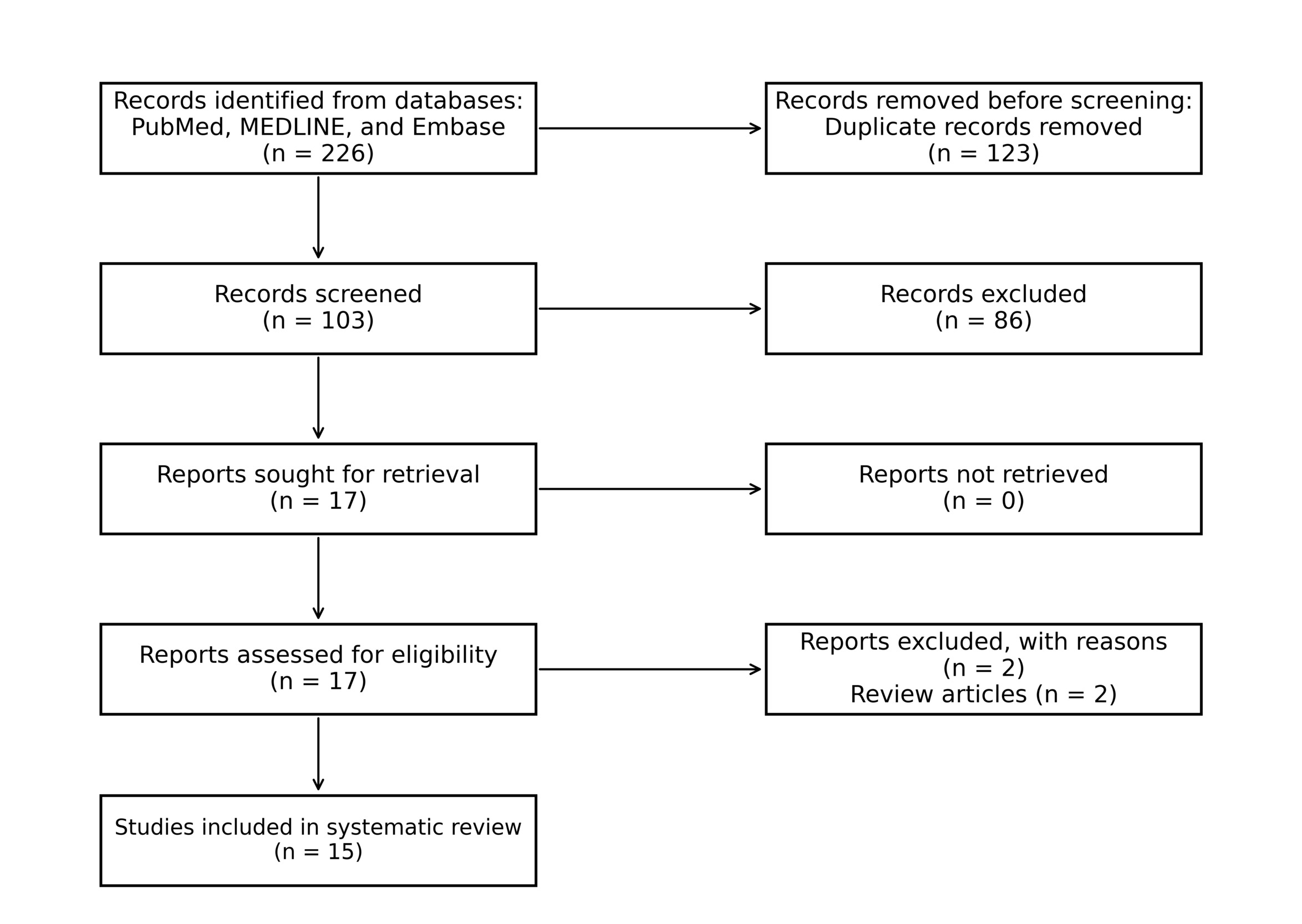
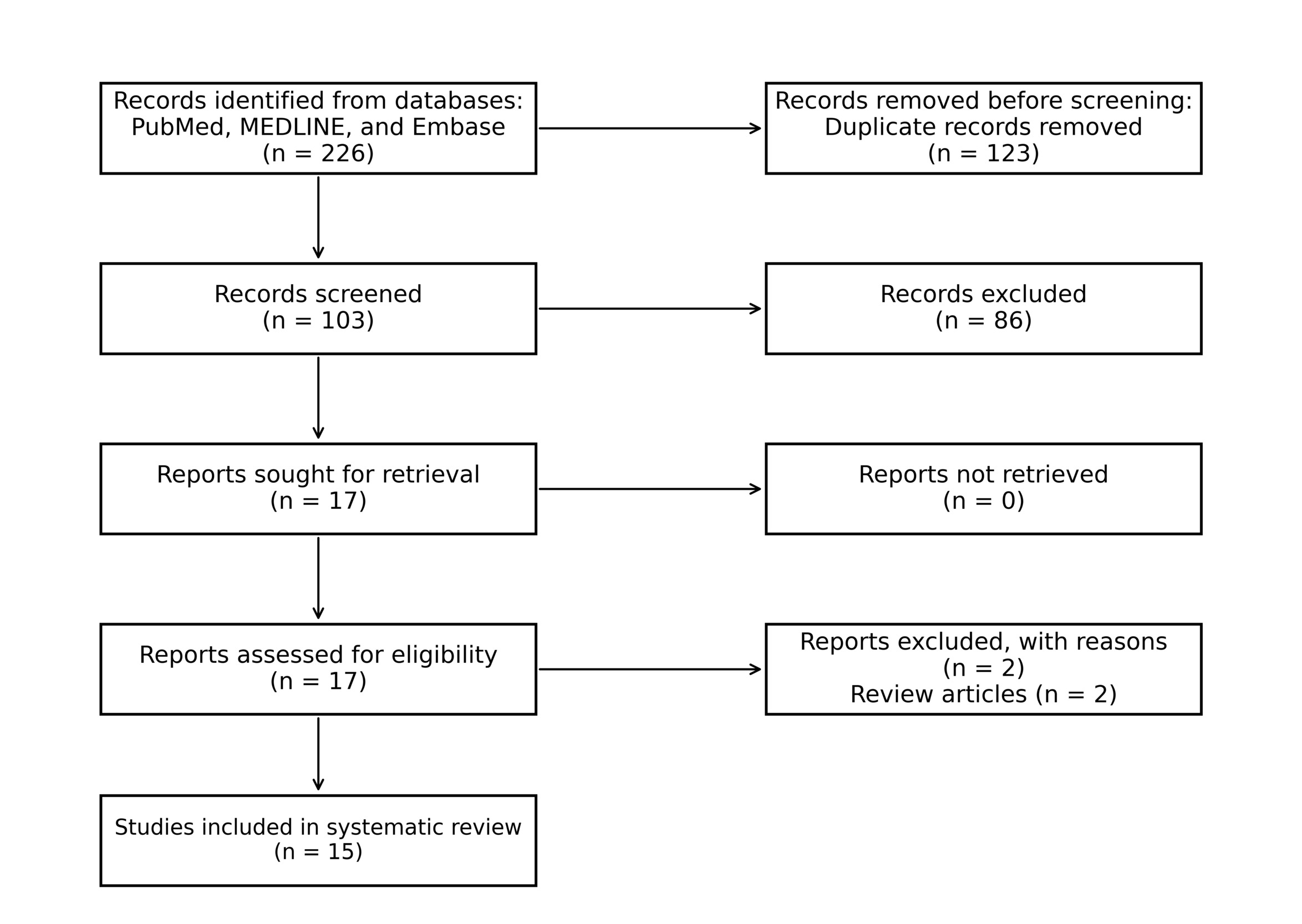
The database search identified 226 records across PubMed, MEDLINE and Embase. After removal of 123 duplicates, 103 unique records remained for title and abstract screening. Eighty-six records were excluded because they did not meet the inclusion criteria or were not relevant to the review question. Seventeen reports were retrieved and assessed for eligibility; two were excluded because they were review articles rather than primary clinical studies. Fifteen primary studies were therefore included in the final systematic review (Figure 1).
Study characteristics
The 15 included studies were published between 2017 and 2026 and were predominantly observational, comprising retrospective institutional cohorts, administrative or registry database studies, case-control analyses and prediction-model studies. No randomised controlled trial was identified. Several studies exclusively examined rTHA, whereas others included combined revision hip and knee populations. Both aseptic and septic revisions were represented. The main domains were anaemia and blood management; nutritional status; opioid exposure; psychological comorbidity; renal and hepatic dysfunction; obesity and overall comorbidity burden; pulmonary risk; and enhanced-recovery pathways. No eligible primary study directly evaluated a structured preoperative exercise or physiotherapy intervention specifically in rTHA. Study characteristics are summarised in Table 1.
Anaemia and blood optimisation
Anaemia was the most frequently investigated potentially modifiable factor. Gu et al. evaluated 8,932 rTHAs and 13,313 revision total knee arthroplasties and found a graded relationship between anaemia severity and adverse outcomes; after multivariable adjustment, moderate-to-severe anaemia was associated with more than fivefold greater odds of any 30-day complication after rTHA (OR 5.437, 95% CI 4.604-6.421; P<0.001).9 Two studies by Sutton et al. examined clinically useful haemoglobin or haematocrit thresholds.10,11 In 1,118 rTHAs, thresholds associated with lower likelihood of individual adverse outcomes ranged from approximately 11.8 to 12.7 g/dL, with strongest discrimination for intraoperative transfusion (AUC 0.770).10 In a related rTHA/rTKA cohort, thresholds associated with transfusion after rTHA were 13.0 g/dL in men and 12.0 g/dL in women; predictive performance was weaker for broader adverse events.11 These studies were derived from the same institution and overlapping 2019-2024 periods and were considered potentially overlapping rather than independent cohorts.
Rao et al. similarly identified preoperative haemoglobin as an independent predictor of perioperative allogeneic transfusion in 251 lower-extremity revision arthroplasties; infection and procedural complexity also increased transfusion risk, whereas tranexamic acid use was associated with lower odds (OR 0.47, 95% CI 0.23-0.98).12 In 1,345 elective aseptic rTHAs undertaken within six Danish fast-track centres, preoperative haemoglobin <=13 g/dL was also associated with prolonged admission and readmission.13
Nutritional status
Three studies examined nutritional markers. Guntin et al. evaluated 199 patients undergoing two-stage revision for PJI, including 69 hip revisions. Hypoalbuminaemia was not associated with overall or septic treatment failure but, when present before second-stage reimplantation, independently predicted mortality (OR 5.40, 95% CI 1.19-24.54; P=0.029) and increased length of stay.14 Traverso et al. found albumin <3.5 g/dL to be an independent predictor of failure after one-stage septic hip or knee revision (OR 5.64, 95% CI 1.26-25.18; P=0.023), while total lymphocyte count, haemoglobin, glucose and a composite malnutrition definition were not significant; model discrimination was modest (AUC 0.67).15 Traven et al., in 126 revision hip and knee arthroplasties, found low vitamin D associated with increased 90-day complications but not 30-day readmission.16
Opioid exposure and psychological comorbidity
Wilson et al. reported that 62.5% of rTHA patients had received an opioid prescription during the preceding year. Continuous preoperative use was associated with infection (OR 1.29), wound complications (OR 1.36), sepsis (OR 1.90), subsequent revision (OR 1.54) and greater healthcare utilisation. Patients with previous chronic exposure who subsequently experienced a six-month opioid-free interval had risks not significantly different from opioid-naive patients for reported comparisons.17
In a separate MarketScan study of 10,017 rTHAs, preoperative depression was independently associated with prolonged length of stay, non-home discharge, 90-day readmission, emergency department attendance, PJI, sepsis and subsequent revision.18 Pharmacologically treated psychiatric disease was also associated with prolonged admission and readmission in the Danish fast-track cohort.13
Renal, hepatic, pulmonary and general medical risk
Chen et al. assessed 8,898 aseptic rTHAs and found that eGFR <30 mL/min independently increased the odds of any complication (OR 1.447), cardiac complications (OR 3.344), transfusion (OR 1.623) and prolonged hospitalisation (OR 2.392).19 Kinnard et al. evaluated 7,102 aseptic rTHAs and 8,378 revision TKAs; liver disease was independently associated with major, wound and septic complications, transfusion, prolonged admission and readmission.20
Huang et al. analysed 112,735 revision THA admissions from the Nationwide Inpatient Sample and reported postoperative pulmonary complications in 2.62%, including pneumonia in 1.24%, acute respiratory failure in 1.31% and pulmonary embolism in 0.41%. Pulmonary circulatory disorders, fluid and electrolyte disorders, weight loss, heart failure, chronic pulmonary disease and renal failure were among associated factors.21 Rullan et al. evaluated 23,501 rTHAs and reported 30-day mortality of 0.69%; mortality increased substantially with age and comorbidity burden and was higher after septic than aseptic revision (1.03% vs 0.65%).22
Obesity, prediction and enhanced-recovery pathways
Klemt et al. developed four machine-learning models in 2,588 rTHAs, of which 408 (15.7%) underwent re-revision. ASA classification, BMI >35 kg/m2 and revision indication were among the strongest predictors; all models achieved AUC values >0.80.23 In the fast-track cohort, BMI >=35 kg/m2, use of a walking aid, advanced age, cardiac disease and previous revision were associated with prolonged length of stay, while pulmonary disease, psychiatric disease, low haemoglobin and walking-aid use were among factors associated with readmission.13 Median length of stay fell from 6 days in 2010 to 2 days in 2018, but 90-day readmission remained approximately 20% overall.13
Risk of bias and overall pattern of evidence
Risk-of-bias assessment is summarised in Table 2. Overall methodological quality was moderate, but no study was free from important limitations. Large database studies benefited from sample size and multivariable adjustment but remained susceptible to coding error, residual confounding and limited clinical granularity. Smaller single-centre studies were more vulnerable to selection bias and limited generalisability. Threshold and machine-learning studies carried additional concerns regarding overfitting, model validation and generalisability, and the two Sutton anaemia studies appeared to contain overlapping institutional cohorts.10,11
Across the evidence base, lower haemoglobin, hypoalbuminaemia, chronic opioid exposure, depression, severe renal impairment, liver disease, obesity and greater medical comorbidity were associated with poorer outcomes. However, most studies assessed prognostic associations rather than active optimisation. Evidence directly evaluating reversal of preoperative risk was limited; the opioid study provided observational evidence that an opioid-free interval was associated with attenuation of excess risk, and the fast-track study evaluated outcomes within an established enhanced-recovery system.13,17 No eligible study directly tested whether correction of anaemia, hypoalbuminaemia, vitamin D deficiency, obesity, depression or chronic medical disease improved rTHA outcomes, and no revision-specific study evaluated structured exercise-based prehabilitation or physiotherapy.
Discussion
Principal findings
This systematic review demonstrates that several preoperative patient factors are consistently associated with adverse outcomes following rTHA, but the strength and clinical meaning of these associations vary. Anaemia was the most consistently investigated potentially modifiable factor and was repeatedly associated with transfusion, complications, prolonged hospitalisation and readmission.9–13 Nutritional abnormalities, particularly hypoalbuminaemia, were associated with mortality, prolonged stay and failure in septic revision populations.14–16 Chronic opioid exposure and depression were associated with complications and increased healthcare utilisation, while renal dysfunction, liver disease, obesity, poor functional status and broader comorbidity burden further identified high-risk groups.13,17–23
The central limitation of the evidence is the discrepancy between the language of optimisation and the nature of the studies. Most were prognostic rather than interventional: they identified factors associated with outcome but did not demonstrate that correction of those factors reduced postoperative risk. A biomarker may therefore represent multimorbidity, systemic inflammation, frailty or disease severity rather than an independently reversible cause of complications. The present findings support systematic identification of high-risk patients and plausible targets for intervention, but they should not be interpreted as proof that normalisation of every abnormal preoperative variable will improve outcome.
Anaemia and patient blood management
Anaemia has the strongest and most consistent revision-specific evidence. Gu et al. demonstrated a graded association between anaemia severity and postoperative complications, while the Sutton studies proposed clinically meaningful haemoglobin and haematocrit thresholds and Rao et al. identified preoperative haemoglobin as an independent predictor of transfusion.9–12 Low haemoglobin also remained relevant within a dedicated fast-track pathway.13 These findings are biologically plausible because revision surgery may involve substantial blood loss, prolonged operating time, component removal and reconstruction.
The direction of these findings is consistent with the wider arthroplasty literature. Enhanced Recovery After Surgery recommendations for primary hip and knee replacement advocate identification and correction of preoperative anaemia, and meta-analytic evidence suggests that preoperative iron treatment in anaemic elective arthroplasty patients can reduce transfusion requirements and length of stay.24,25 In rTHA, however, current evidence does not establish that surgery should be delayed until a universal haemoglobin threshold is reached. The Sutton studies used simulated thresholds and overlapping institutional cohorts rather than prospective treatment assignment.10,11 Their values are therefore better regarded as risk-stratification signals than validated eligibility cut-offs. Prospective trials of iron replacement or comprehensive patient blood-management pathways specifically in rTHA are warranted.
Nutrition and metabolic optimisation
Hypoalbuminaemia was associated with mortality, prolonged hospitalisation and failure in septic revision cohorts, while low vitamin D was associated with 90-day complications in a smaller mixed hip and knee cohort.14–16 These findings are broadly consistent with primary arthroplasty evidence linking hypoalbuminaemia with infection, sepsis, transfusion, reoperation and mortality.26 Nevertheless, albumin is influenced by inflammation, infection, hepatic function, hydration and chronic disease as well as nutritional intake. In patients with PJI it may therefore be a marker of systemic illness rather than an isolated protein deficiency. Nutritional screening appears reasonable, but evidence that increasing serum albumin itself improves revision outcomes is lacking. Future studies should consider recent weight loss, dietary intake, sarcopenia and targeted nutritional interventions rather than relying on a single biochemical marker.
Opioid exposure and psychological health
Preoperative opioid exposure is one of the more clinically actionable findings. Continuous use before rTHA was associated with infection, wound complications, sepsis, re-revision and greater healthcare utilisation, while patients who achieved a six-month opioid-free interval had risk more comparable with opioid-naive patients.17 The direction of effect accords with systematic reviews in primary total joint arthroplasty showing worse patient-reported outcomes and higher complication or revision risk among preoperative opioid users.27,28 Although the observational design prevents attribution of causality, preoperative review of opioid dose, duration and indication, with planned rationalisation where clinically appropriate, is a reasonable component of multidisciplinary optimisation.
Depression was similarly associated with prolonged admission, non-home discharge, readmission, emergency attendance, PJI, sepsis and further revision after rTHA.18 Broader arthroplasty literature also associates depression with persistent pain, poorer satisfaction, adverse events and increased healthcare expenditure.29 Depression should not be considered a contraindication to revision surgery, but psychological assessment may identify patients who would benefit from optimisation of treatment, mental-health support, pain-management input and clearer expectation setting. Whether psychological intervention before rTHA modifies complications remains unknown.
Comorbidity, functional status and enhanced recovery
Severe renal dysfunction, liver disease, cardiopulmonary disease, obesity, impaired mobility and greater comorbidity burden were associated with adverse outcomes across several studies.13,19–23 These variables illustrate an important distinction between modifiable disease, modifiable consequences of disease and non-modifiable risk. Age, revision indication and number of previous revisions cannot be optimised; severe established renal or hepatic disease may also be only partly modifiable. Their value lies in directing anaesthetic or perioperative medicine input, medication review, correction of fluid or electrolyte abnormalities, discharge planning, informed consent and enhanced postoperative monitoring. Narrative work focused specifically on revision hip arthroplasty similarly highlights anaemia, obesity, malnutrition, diabetes, smoking, coagulopathy and infection-related factors as relevant considerations.30
The multicentre fast-track cohort provides evidence that enhanced-recovery principles are feasible in revision surgery: median length of stay decreased substantially, although 90-day readmission remained high and patient-specific risk factors continued to influence outcome.13 This suggests that revision pathways cannot simply replicate those developed for uncomplicated primary arthroplasty. A revision-specific pathway may need to integrate anaemia and nutritional assessment, medication and opioid review, optimisation of major organ disease, psychological screening, functional assessment, anaesthetic review and individualised discharge planning. Current ERAS recommendations for primary arthroplasty support several of these principles, including anaemia correction, education, smoking and alcohol modification, opioid-sparing analgesia and early mobilisation.24
The evidence gap for physiotherapy and lifestyle intervention
One of the most important findings was the absence of revision-specific intervention evidence for structured physiotherapy or exercise-based prehabilitation. This contrasts with primary THA, where recent systematic evidence has evaluated resistance training, home exercise, multidomain exercise, tele-prehabilitation and education.31,32 The relevance of these findings to revision surgery remains uncertain. Revision patients may have greater muscle deconditioning, chronic pain and functional decline and could potentially gain more from prehabilitation, yet infection, instability, periprosthetic fracture or severe implant failure may reduce the time available or make exercise unsafe. Elective aseptic rTHA therefore appears the most suitable initial population for prospective feasibility trials.
A similar gap exists for lifestyle interventions such as smoking cessation and alcohol reduction. These are commonly incorporated into primary arthroplasty optimisation pathways and are supported within ERAS guidance,24 but the present review did not identify primary revision-specific studies demonstrating improved rTHA outcomes following these interventions. Established general health recommendations remain reasonable, but the magnitude of any revision-specific benefit should not be overstated.
Clinical implications and future research
The findings suggest a practical three-part framework. First, potentially correctable abnormalities with plausible direct perioperative effects, particularly anaemia and selected nutritional deficiencies, should be identified sufficiently early to allow investigation and treatment.9–12,14–16 Second, modifiable exposures or conditions such as chronic opioid use, poorly controlled psychological illness, obesity and inadequately managed medical comorbidity may merit targeted intervention, although optimal strategies and timing are uncertain.17–21 Third, non-modifiable or incompletely modifiable risk markers such as age, previous revision burden, revision indication and severe established organ disease remain valuable for counselling and planning.13,19–23 This is preferable to rigid numerical eligibility criteria because rTHA ranges from limited elective component exchange to major reconstruction for infection, bone loss or periprosthetic fracture, where urgency and opportunity for optimisation differ considerably.33
Future research should shift from retrospective risk-factor identification towards prospective intervention testing. Priority areas include structured anaemia management, comprehensive nutritional assessment, opioid-reduction protocols, psychological support and multimodal optimisation bundles. Physical prehabilitation is a particularly clear unanswered question and could initially be studied in elective aseptic revision patients with sufficient lead time before surgery. Multicentre prospective designs should stratify by indication and procedural complexity and report outcomes including complications, transfusion, length of stay, readmission, discharge destination, functional recovery and cost-effectiveness.
Limitations
This review has several limitations. The evidence base was overwhelmingly retrospective and observational, limiting causal inference and leaving substantial potential for residual confounding. Several studies relied on administrative datasets with limited clinical granularity and dependence on coding accuracy.9,17–22 Mixed hip and knee populations were included where rTHA formed a defined component, and pooled findings cannot always be assumed to apply identically to revision hip surgery. Septic and aseptic revisions also represent clinically distinct populations; infection may itself drive anaemia, hypoalbuminaemia and systemic illness. Heterogeneity in exposures, outcomes and follow-up precluded meaningful meta-analysis. Potential cohort overlap existed between the two Sutton anaemia studies.10,11 Finally, restriction to English-language publications may have excluded relevant data. The absence of physiotherapy, exercise and lifestyle intervention studies should therefore be interpreted as a gap in revision-specific evidence rather than evidence that these approaches are ineffective.
Conclusion
Revision total hip arthroplasty is performed in a clinically complex and heterogeneous population in whom preoperative health status is strongly associated with postoperative outcome. Anaemia has the most consistent revision-specific evidence and represents a particularly plausible target for investigation and treatment. Hypoalbuminaemia, chronic opioid exposure, depression, obesity and significant renal, hepatic and cardiopulmonary disease also identify higher-risk patients and may inform intervention or perioperative planning.
However, the existing literature largely identifies who is at risk rather than demonstrating how that risk should be reduced. Most studies were retrospective and observational, and direct interventional evidence was limited. No eligible revision-specific study directly evaluated structured physiotherapy or exercise-based prehabilitation. Preoperative management of rTHA should therefore combine multidisciplinary identification and treatment of reversible abnormalities with optimisation of major medical and psychological comorbidity and risk-informed perioperative planning. Prospective multicentre interventional studies are required to determine which individual or multimodal strategies produce meaningful improvements in revision THA outcomes.
Acknowledgements
N/A
Author Contributions
Author contributions: Bekim Arifaj, Mohamed Habad, and Mubaraq Hamzat contributed equally to this work and should be considered co-first authors. Bekim Arifaj, Mohamed Habad, and Mubaraq Hamzat were responsible for conceptualization, methodology, literature searching, study screening, data extraction, risk-of-bias assessment, formal analysis, and drafting the original manuscript. Marek Webb and Eid-Christian Oweis contributed to study design, interpretation of findings and critical revision of the manuscript. All authors reviewed and approved the final manuscript and agree to be accountable for the integrity of the work.
Bekim Arifaj, Mohamed Habad, and Mubaraq Hamzat contributed equally to this work and share first authorship.
Conflicts of Interest
Conflicts of interest: none
Funding
Funding: none
Conference Presentation
Conference presentation: none