
I. INTRODUCTION
Total knee arthroplasty (TKA) is an effective treatment for managing end-stage knee osteoarthritis. Approximately 5% of patients suffer from severe osteoarthritis in both knees, with the condition being most common in elderly patients.1 Research shows that about a third of individuals who undergo unilateral knee replacement eventually require surgery on the contralateral knee within a few years.
Currently, there is no established guideline on the surgical approach for patients with advanced bilateral knee osteoarthritis. Many studies worldwide have investigated bilateral knee arthroplasty, recognizing it as a gold-standard treatment with relatively low complication rates. However, the adoption of simultaneous bilateral total knee arthroplasty (BTKA) remains limited, with reported rates ranging from 2% to 7%. Nevertheless, this dual procedure presents some advantages, such as faster rehabilitation, improved outcomes, and lower overall medical expenses than staged surgeries. The approach demonstrates strong potential as a cost-effective solution that enhances both clinical results and quality of life.2–5
The debate between the risks and benefits of simultaneous bilateral total knee arthroplasty (sim-BTKA) compared to staged bilateral total knee arthroplasty (stag-BTKA) or unilateral total knee arthroplasty (UTKA) remains ongoing. Proponents of bilateral total knee arthroplasty (BTKA) performed in a single procedure emphasize its benefits, such as lower overall costs, shorter combined operating time, a bilateral knee recovery phase at the same time, and improved patient outcomes; could be achieved without increasing the risk of complications.6 On the other hand, opponents caution that the procedure may lead to elevated risks during and after surgery, including higher rates of morbidity and mortality, and argue to perform it routinely.
Thus, we conducted the study with two main objectives:
-
To compare the outcomes between simultaneous bilateral total knee arthroplasty and staged bilateral total knee arthroplasty.
-
To assess the complications of simultaneous bilateral total knee arthroplasty and staged bilateral total knee arthroplasty.
II. METHODS
Subjects
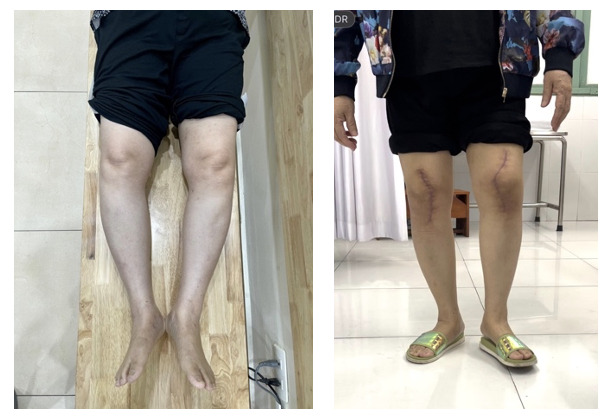
This research involved 38 patients (76 knees) diagnosed with primary knee osteoarthritis who had total knee arthroplasty (TKA) at Viet Duc University Hospital from November 2021 to March 2024. The study was split into two groups: 12 patients who had simultaneous bilateral total knee arthroplasty (sim-BTKA) and 26 patients who had staged bilateral total knee arthroplasty (stag-BTKA).
Inclusion Criteria
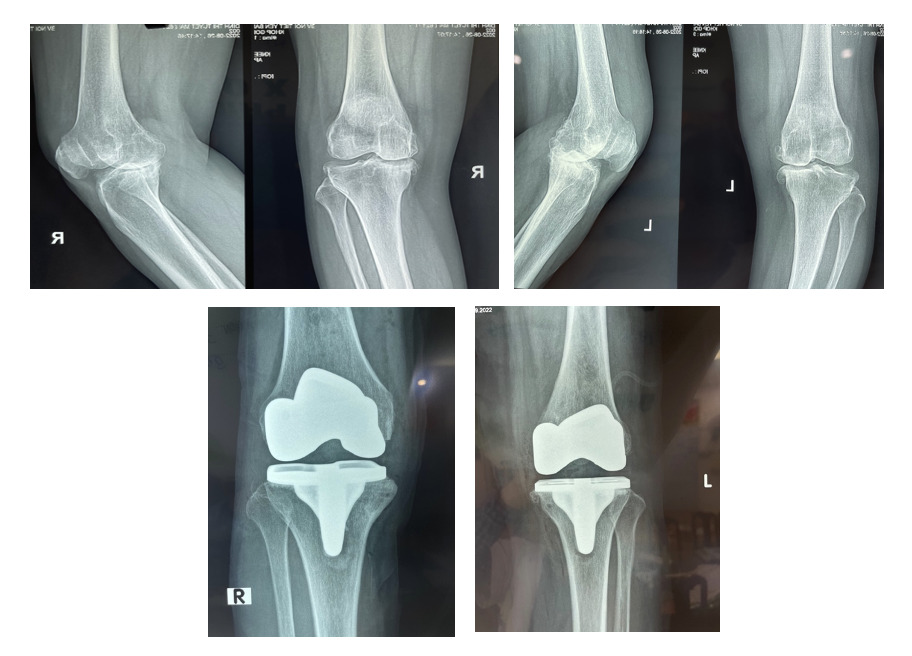
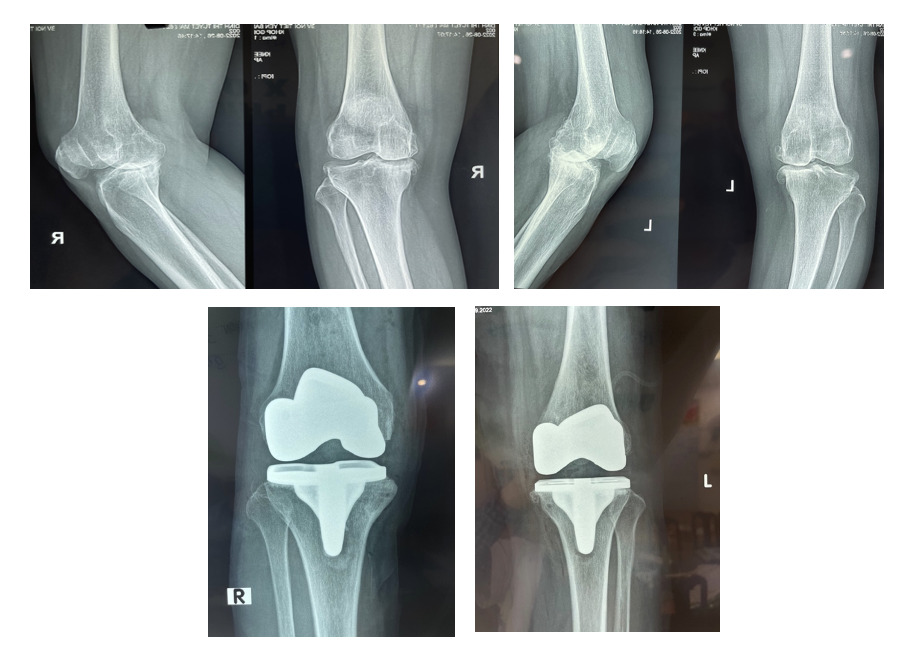
Patients were eligible for the study if they met the following criteria: they had primary knee osteoarthritis classified as grade III or IV based on the Kellgren and Lawrence classification, and were indicated for TKA. The procedure involved cemented total knee arthroplasty with posterior cruciate ligament removal and without patellar resurfacing. Only participants with full medical documentation and compliance with follow-up visits were studied.
Exclusion Criteria
Patients were excluded if they had undergone previous knee surgery, were rated ASA 3 or above according to the American Society of Anesthesiologists classification or lacked complete medical records. Also, patients who declined to participate were removed from the study.
Research Methodology
A retrospective, descriptive study design was conducted to compare clinical and functional outcomes between the sim-BTKA and stag-BTKA groups.
Technique
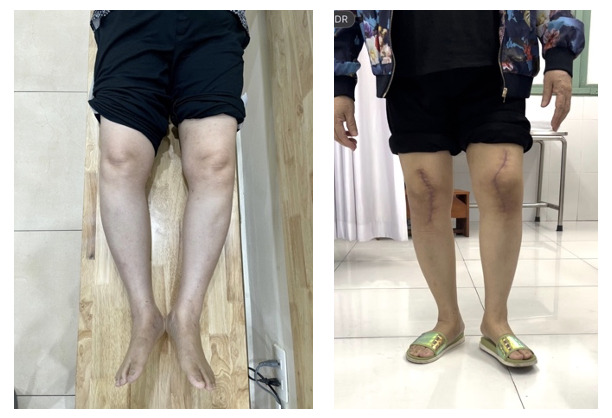
Total knee arthroplasty begins with the patient positioned supine, followed a midline skin incision. A medial parapatellar arthrotomy is used to expose the joint, allowing eversion or retraction of the patella. The distal femur and proximal tibia are then accurately resected using alignment guides. Trial components are inserted to assess alignment, soft tissue balance, and range of motion, with necessary ligament balancing performed. In the following step, the final prosthetic components are implanted using cemented fixation. The surgical site is irrigated, hemostasis is achieved, and the wound is closed in layers.
Postoperative Rehabilitation
All patients received spinal anesthesia and postoperative epidural analgesia for three days. The rehabilitation protocol was standardized and included both early and advanced exercises. In the early postoperative period, patients were encouraged to perform ankle dorsiflexion and plantarflexion, quadriceps and gluteal strengthening exercises, and heel slides to enhance circulation and prevent thromboembolism. By the first postoperative day, patients were assisted in sitting up, and by the second day, they were encouraged to stand with assistance. On the third day, patients were able to use the restroom and stroll with a walker. Before discharge, patients were given instructions on walking safely with crutches and carrying out daily activities on their own to ease their return to normal function.
Follow-up and Postoperative Evaluation
Postoperative evaluation included an analysis of demographic and clinical characteristics, such as age, gender, BMI, and ASA score. Perioperative parameters such as the volume of blood transfused (in ml), the length of the hospital stay (in days), and the surgical duration (in minutes) were recorded. Functional and pain outcomes were evaluated using the Visual Analog Scale (VAS 1-10) for pain and knee function scores, encompassing Knee Society Score (KS) and Knee Function Score (KFS).
Data Collection Method
Statistical analyses were performed using IBM SPSS Statistics version 22.0 (IBM Corp., Armonk, NY, USA). Continuous variables were expressed as mean ± standard deviation (SD) for normally distributed data and as median (interquartile range) for non-normally distributed data. Categorical variables were summarized as frequencies and percentages.
Normality of continuous variables was assessed using the Shapiro–Wilk test together with visual inspection of histograms and Q–Q plots. Age, body mass index, operative time, blood transfusion volume, and hospitalization cost satisfied normality assumptions and were compared using the independent-samples t-test. Length of hospital stay was not normally distributed and was analyzed using the Mann–Whitney U test. Categorical variables were compared using the Chi-square test or Fisher’s exact test, as appropriate.
Postoperative pain and functional outcomes (VAS, KS, and KFS) were assessed longitudinally. To account for within-patient correlations arising from repeated measurements over time, generalized estimating equations (GEE) with a Gaussian distribution, identity link function, and an exchangeable working correlation structure were applied. The models included treatment group, follow-up time, and the group-by-time interaction as fixed effects. The interaction term was used to determine whether changes over time differed between the simultaneous and staged BTKA groups.
A post hoc power analysis was performed using the 6-month Knee Society Score (KS) as the primary functional outcome. The analysis was based on the observed between-group difference, pooled standard deviation, a two-sided significance level (α = 0.05), and the available sample sizes. The achieved statistical power was 18.6%, indicating that this post hoc analysis had limited power to detect small-to-moderate between-group differences in the primary functional outcome.
There were no missing data for the variables included in the analysis. All statistical tests were two-sided, and a p-value < 0.05 was considered statistically significant.
III. RESULTS
General Characteristics
Our study found no statistically significant differences in age, gender, or body mass index (BMI) between the two groups. The average age in the simultaneous bilateral knee arthroplasty (sim-BTKA) group was 71 ± 8.7 years (range: 53–90), with 75% of patients being female, while the staged bilateral knee arthroplasty (stag-BTKA) group had an average age of 68.2 ± 6.7 years (range: 58–86), with a female prevalence of 84.6% (p = 0.281 and p = 0.66, respectively). Among the patients, those aged over 70 years accounted for 50% in the simultaneous group and 34.6% in the staged group. The overall BMI across both groups was 24.6, with overweight and obesity rates of 75% in the sim-BTKA group and 73% in the other group. The average BMI in the simultaneous group was 24.2, while in the staged group, it was 24.7, demonstrating no statistically significant difference (p = 0.534). (Table 1).
Comorbidities
In both knee arthroplasty groups, the prevalence of combined comorbidities, including hypertension, diabetes, or both, was 66.6% in the simultaneous bilateral knee arthroplasty (sim-BTKA) group and 69.2% in the staged bilateral knee arthroplasty (stag-BTKA) group, with no statistically significant difference (p = 0.253). Moreover, there was no notable difference observed between the groups (p = 0.542). All patients in both groups had ASA scores of 1 or 2, which could be regarded as comparable preoperative health statuses (Table 2). These findings suggest that medical conditions of patients undergoing simultaneous and staged knee arthroplasty were similar before surgery.
Evaluation of Surgical Characteristics, Function, and Postoperative Complications
In both the simultaneous bilateral knee arthroplasty group and the staged bilateral knee arthroplasty group, all patients (100%) received spinal anesthesia, postoperative epidural analgesia, the use of a tourniquet during surgery, and intravenous antibiotics until hospital discharge. The average operative time was significantly shorter in the simultaneous group (88.8 minutes) compared to the cumulative surgical time of 104.6 minutes in the staged group (p = 0.001). Although the mean blood transfusion volume was lower in the sim-BTKA group (371 mL) than in the stag-BTKA group (527 mL), the difference was not statistically significant (p = 0.275). The hospital stay duration was notably shorter in the sim-BTKA group, averaging 9.25 days, as opposed to a full 15.8 days for the stag-BTKA group (p = 0.02). Moreover, the total hospitalization cost was significantly lower in the sim-BTKA group, at 51.5 million VND (2000 USD), compared to 70.3 million VND (2760 USD) in the stag-BTKA group (p = 0.01). These findings indicate shorter operative time, reduced hospitalization, and lower direct hospitalization costs in the sim-BTKA group (Table 3).
Postoperative complications were observed in both groups. In the simultaneous bilateral total knee arthroplasty (sim-BTKA) group, one patient experienced transient peroneal nerve palsy. In the staged bilateral total knee arthroplasty (stag-BTKA) group, one patient developed a deep fungal periprosthetic joint infection, necessitating prosthesis removal.
No intraoperative complications were recorded in either group, including vascular injury, patellar fracture, lateral collateral ligament (LCL) injury, or tibial plateau injury. None of the following early postoperative complications occurred in either group: vascular occlusion, pulmonary embolism, deep vein thrombosis (DVT), or joint dislocation. Similarly, no late complications, including prosthetic loosening, periprosthetic fracture, or mortality, were observed during follow-up.
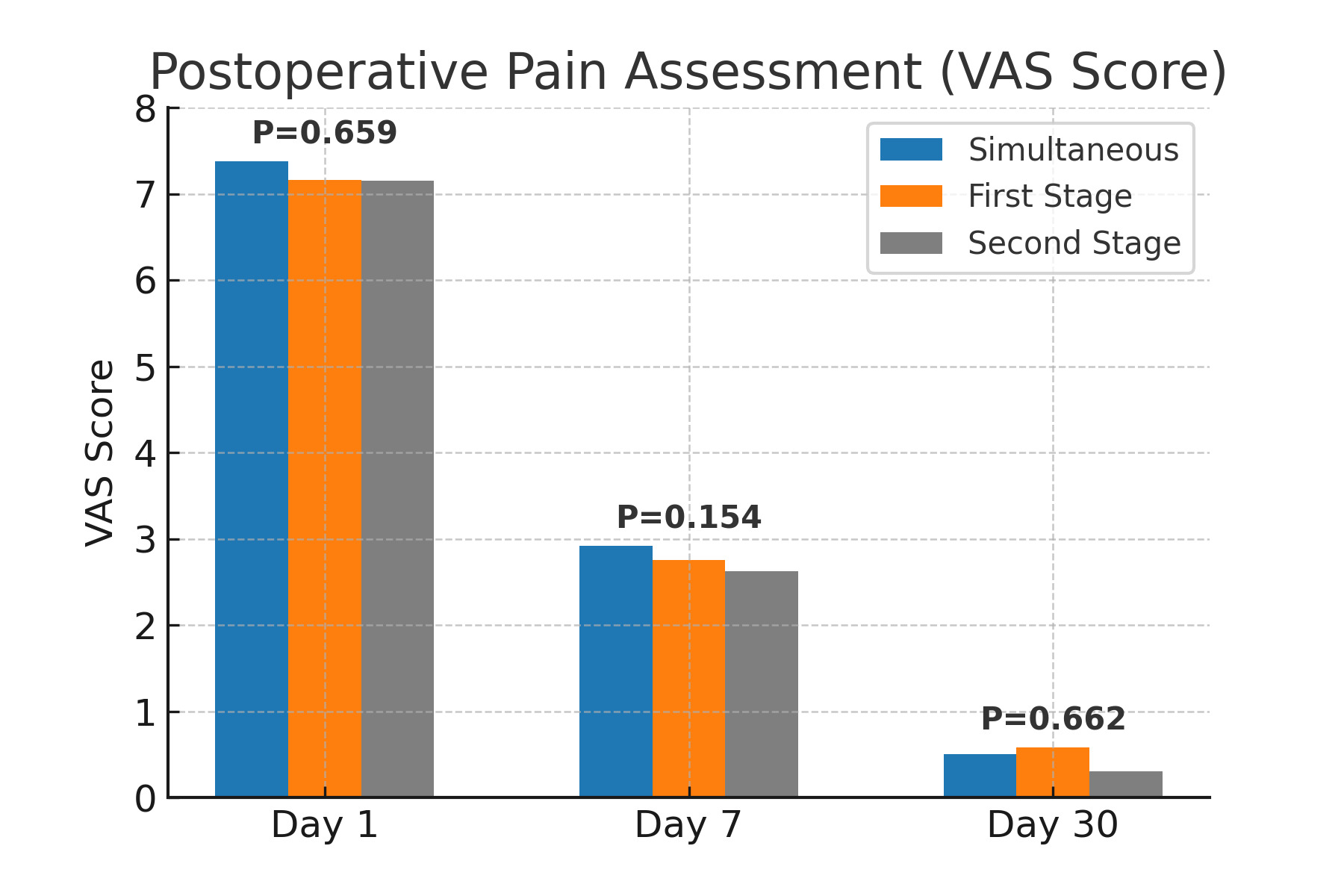
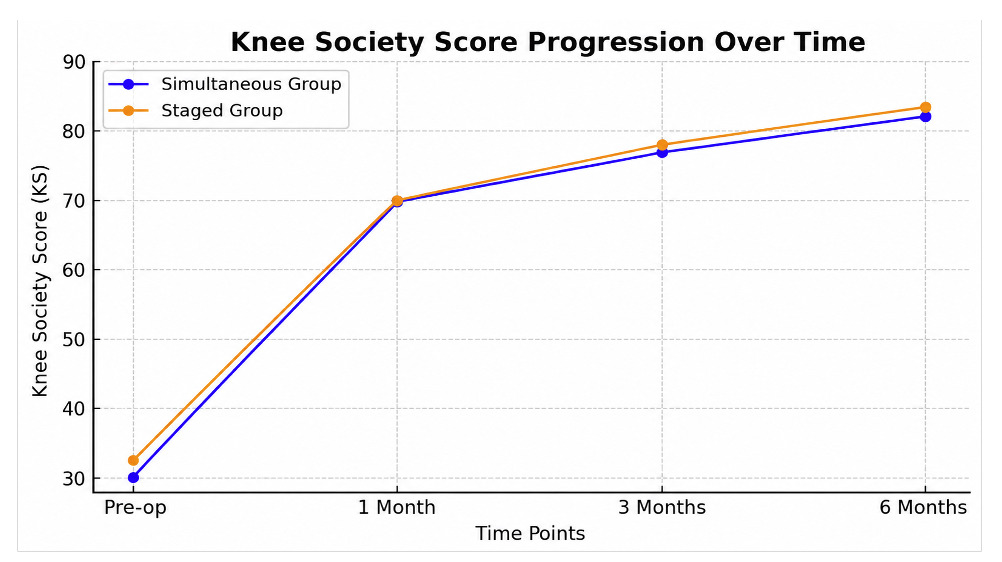
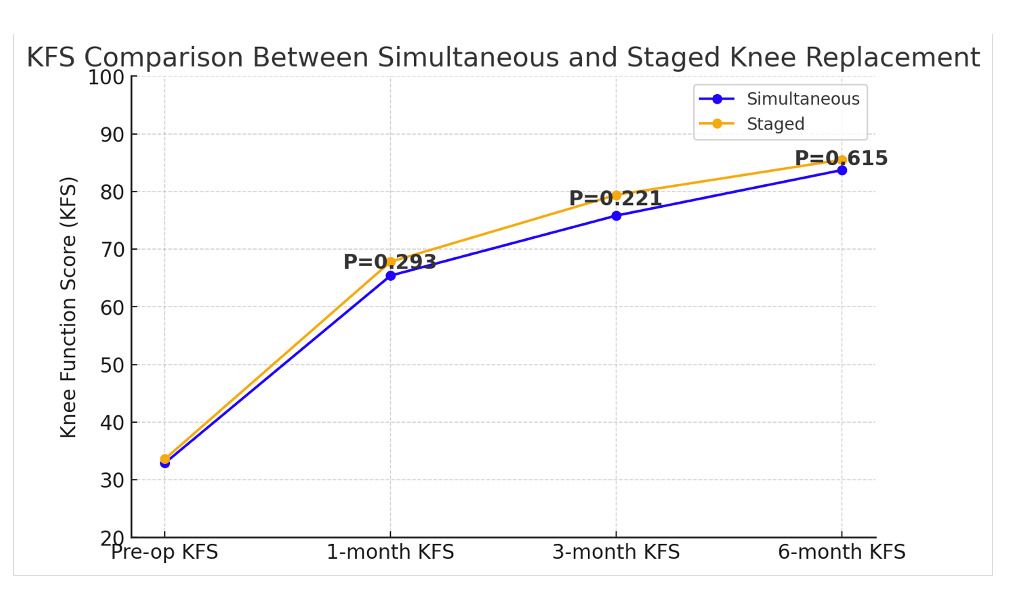
We assessed postoperative outcomes using the Visual Analog Scale (VAS 0 – 10) for pain and the Knee Society Score (KS), Knee Function Score (KFS).
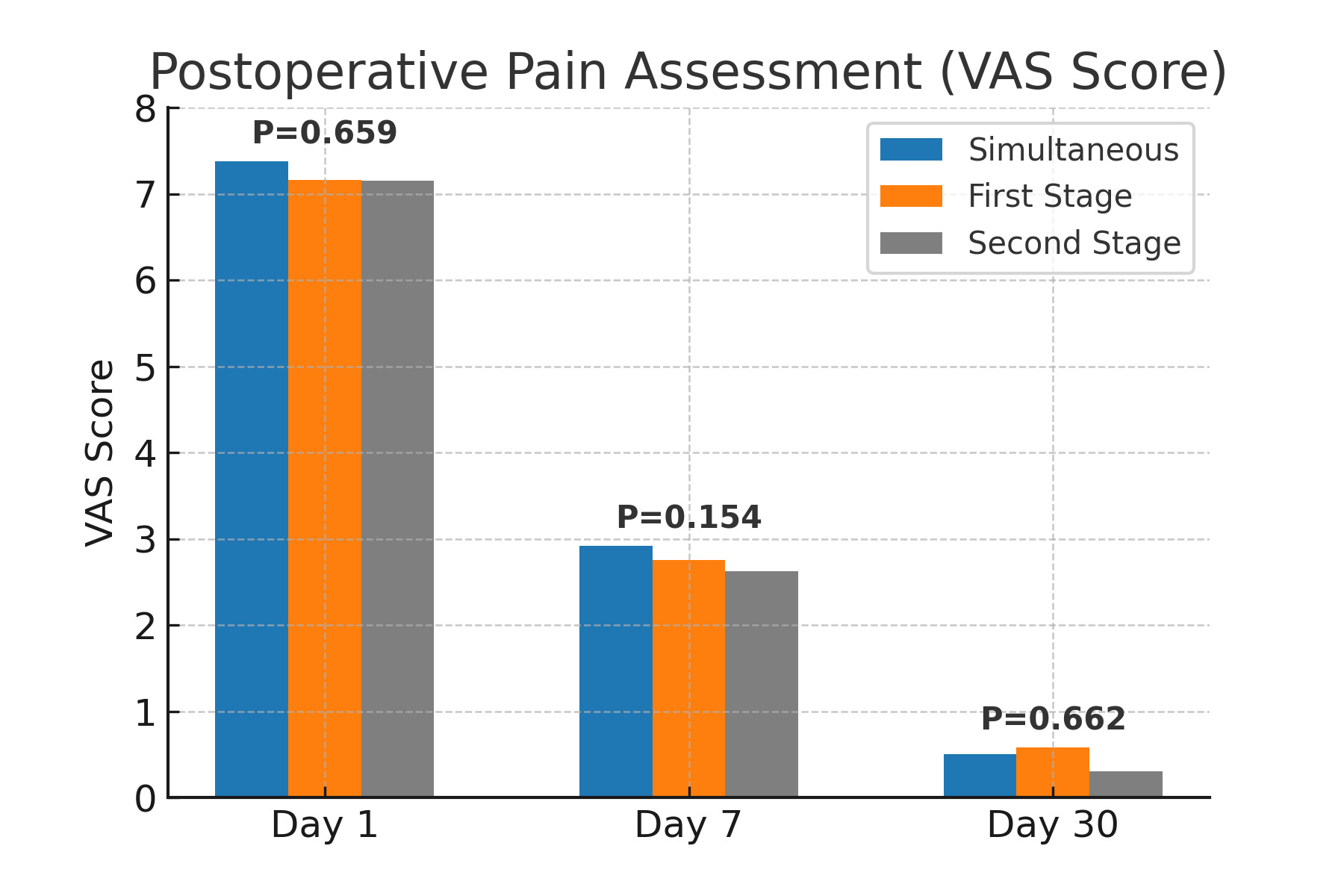
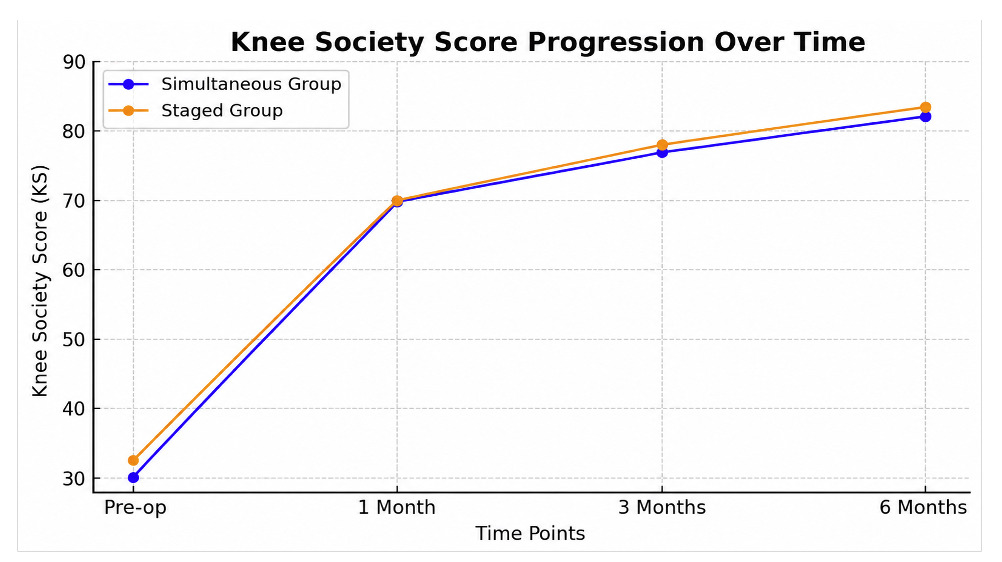
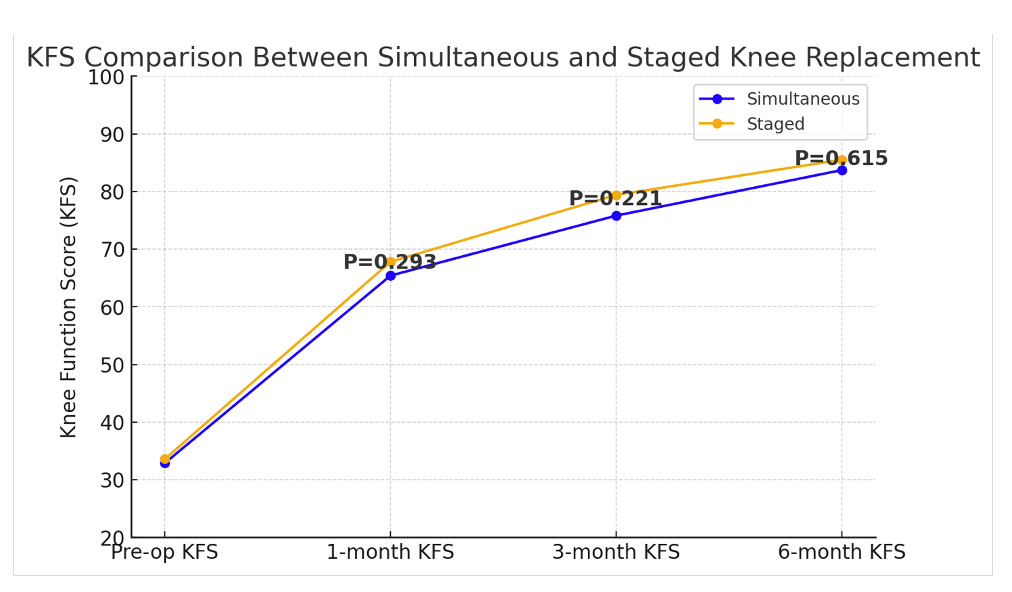
Generalized estimating equations (GEE) analysis demonstrated a significant effect of time for VAS, KS, and KFS (all p < 0.001), indicating substantial improvement throughout follow-up. However, the group-by-time interaction was not statistically significant for VAS (p = 0.261), KS (p = 0.989), or KFS (p = 0.268), suggesting that the trajectories of postoperative recovery were comparable between the simultaneous and staged BTKA groups.
A post hoc power analysis was performed using the 6-month Knee Society Score (KS) as the primary functional outcome. The analysis was based on the observed mean difference between groups, pooled standard deviation, a two-sided alpha level of 0.05, and the available sample sizes. The mean KS at 6 months was 82.92 ± 11.48 in the simultaneous BTKA group and 85.75 ± 4.01 in the staged BTKA group, corresponding to an observed mean difference of 2.83 points and a Cohen’s d effect size of 0.39. With 12 patients in the simultaneous BTKA group and 26 patients with available 6-month KS data in the staged BTKA group, the achieved statistical power was 18.6%. This indicates that the study was underpowered to detect small to moderate between-group differences in functional outcomes. Therefore, non-significant findings should be interpreted cautiously and should not be considered evidence of equivalence between treatment strategies.
IV. DISCUSSION
Total knee arthroplasty remains the standard surgical treatment for end-stage knee osteoarthritis. Recent advances in patient selection, perioperative optimization, and postoperative care have contributed to lower complication rates and renewed interest in simultaneous bilateral total knee arthroplasty (sim-BTKA), particularly among carefully selected elderly patients. Previous studies have reported comparable safety and efficacy outcomes following sim-BTKA in selected older patients. Ariga et al. demonstrated that patients aged 80 years and older achieved outcomes comparable to those of patients in their sixties and seventies, while Choi et al. suggested that sim-BTKA can be safely performed in patients older than 75 years with a low comorbidity burden.7–9
To ensure patient safety during the initial implementation of sim-BTKA at our institution, only patients with ASA grade I or II and well-controlled comorbidities were included. Previous studies have suggested that simultaneous BTKA may be safely performed in patients with low perioperative risk, whereas higher complication rates have been reported among patients with advanced age or higher ASA classifications. Abdalla et al. reported that sim-BTKA is a feasible option in carefully selected patients with ASA grade I or II and is associated with shorter hospitalization.10,11 In contrast, previous studies have reported increased perioperative morbidity and complication rates among patients with ASA grade III–IV and those of advanced age.12–14 All patients were carefully selected based on their American Society of Anesthesiologists (ASA) physical status classification, and all procedures were performed by the same experienced, high-volume surgeon. Lau et al. reported that lower surgeon volume was significantly associated with higher infection rates, longer operative times, prolonged hospital stays, increased transfusion rates, and poorer patient-reported outcomes.15
The principal finding of the present study was that sim-BTKA was associated with significantly shorter operative time, reduced length of hospitalization, and lower direct in-hospital costs compared with staged bilateral total knee arthroplasty (stag-BTKA).6 These findings are consistent with previous studies demonstrating improved healthcare resource utilization through a single hospitalization, anesthesia exposure, and rehabilitation period.16,17 Such advantages may be particularly relevant in healthcare systems facing increasing surgical demand and constrained inpatient resources. However, only direct hospitalization costs were evaluated in the present study; therefore, the findings should not be interpreted as a comprehensive economic evaluation.
Previous systematic reviews have extensively compared the safety profiles of simultaneous and staged BTKA; however, functional outcomes have received comparatively less attention.4,18 In the present study, substantial improvements in pain and functional outcomes were observed in both groups throughout follow-up. Although patients undergoing staged BTKA demonstrated slightly higher KS and KFS scores at several postoperative assessments, these differences did not reach statistical significance. Similar findings have been reported in previous studies evaluating functional outcomes following simultaneous and staged BTKA.19–22 Nevertheless, given the relatively small sample size and limited statistical power of the present study, the possibility of small but clinically meaningful differences cannot be excluded. Therefore, the absence of statistically significant differences should not be interpreted as evidence of equivalence between treatment strategies.
The longitudinal GEE analysis further supports this interpretation by demonstrating significant improvements in pain and functional scores over time in both groups without a significant group-by-time interaction. These findings suggest that both surgical strategies achieved similar patterns of postoperative recovery within the study period, although the limited statistical power precludes definitive conclusions regarding comparative effectiveness.
The postoperative pain scores observed in our cohort were lower than those reported in several previous studies. This may be attributable to the standardized multimodal pain management protocol employed at our institution, including epidural analgesia, cryotherapy, and multimodal pharmacologic analgesia.23,24 We also monitored postoperative anemia by performing complete blood counts every 2–3 days to ensure timely detection of anemia following surgery.25
Only one complication occurred in each treatment group. Because of the very low event rate, the present study was not adequately powered to compare complication profiles between procedures. Consequently, these findings should be interpreted descriptively rather than as evidence supporting comparable safety. Previous meta-analyses have reported inconsistent findings regarding the safety of simultaneous BTKA. Liu et al., in a meta-analysis including 73,617 patients, reported that sim-BTKA was associated with lower rates of deep infection and respiratory complications but higher risks of mortality, pulmonary embolism, and deep vein thrombosis compared with staged BTKA.4 Therefore, larger studies are required to further clarify the relative safety profiles of these treatment strategies.26–28
Several systematic reviews and meta-analyses have compared simultaneous and staged BTKA; however, evidence from Southeast Asian populations remains limited. To our knowledge, this is one of the few studies from Vietnam and Southeast Asia evaluating perioperative outcomes, direct hospitalization costs, and early functional recovery following bilateral TKA. Given the limited regional evidence currently available and the differences in healthcare systems, reimbursement policies, perioperative pathways, and patient characteristics across regions, these findings may provide valuable complementary data to existing meta-analyses that are predominantly based on Western populations.
This study has several limitations. First, its retrospective design may introduce selection bias. Second, the sample size was relatively small, limiting statistical power and reducing the ability to detect modest differences between groups. Third, only direct in-hospital costs were evaluated; indirect costs, rehospitalization costs, and long-term economic outcomes were not assessed. Finally, the study was conducted at a single institution, which may limit generalizability to other healthcare systems and patient populations. Consistent with the post hoc power analysis, the study was underpowered to detect small but clinically meaningful differences in functional outcomes and complication rates between the two treatment strategies.
VI. CONCLUSION
Simultaneous bilateral total knee arthroplasty was associated with shorter operative time, reduced length of hospitalization, and lower direct hospitalization costs compared with staged bilateral total knee arthroplasty in carefully selected ASA I–II patients.
Longitudinal analysis demonstrated significant postoperative improvements in pain and functional outcomes in both groups, without statistically significant differences in postoperative recovery trajectories between treatment strategies. However, because the study achieved only 18.6% statistical power for the primary functional outcome and included very few complications, these findings should not be interpreted as evidence of equivalent clinical effectiveness or safety profiles.
Larger prospective multicenter studies with adequate statistical power are warranted to confirm these findings and further evaluate long-term implant survival, complications, and cost-effectiveness.
VII. RECOMMENDATIONS
Overall, we suggest that simultaneous bilateral knee arthroplasty (simBTKA) should be performed at high-volume arthroplasty centers with experienced surgeons and a well-established multidisciplinary team to optimize patient outcomes and effectively manage complications. Careful patient selection is crucial, with a preference for those classified as ASA grade 1 or 2, to minimize perioperative risks and enhance recovery.
Ethical approval
The study was reviewed by the institutional ethics committee, which determined that formal ethical approval was not required because only anonymized retrospective clinical data were analyzed.
Funding
The authors received no specific funding for this work.